Genre

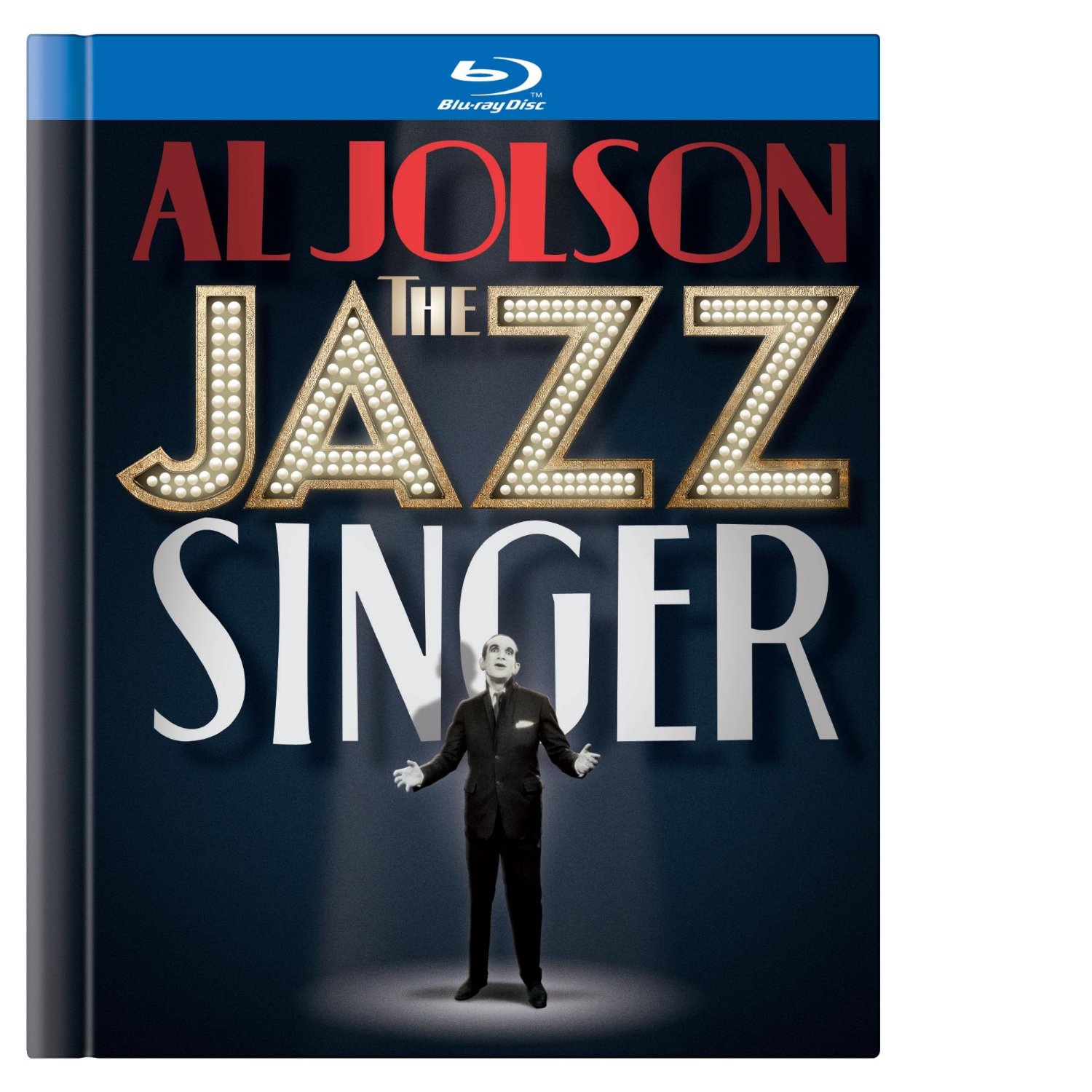
If you’re any sort of discerning cinephile — and if you’ve taken the time to visit our fine site, I’m going to assume you are — you’ve probably heard of The Jazz Singer. Of course, for the movie-going public in the late 1920s, The Jazz Singer was unlike anything they’d ever heard: the first feature-length motion picture with synchronized dialogue. Or, put more simply, the first “talkie.” Though you probably know it revolutionized the film industry, I’m betting it’s a lot less likely you’ve actually seen The Jazz Singer.

I liken it to Jackie Robinson’s place in sports history. Most of us know Robinson was the first African-American Major League baseball player in the modern era, but I suspect a much smaller number of us have seen footage of Robinson in action. Similarly, The Jazz Singer’s place in film history has been secure for decades, but even movie nerds with more than 700 titles in their collections (hi there) haven’t gotten around to watching it. Fortunately, Warner Bros. has released a spiffy new Blu-ray of the groundbreaking 1927 film to help remedy this situation.

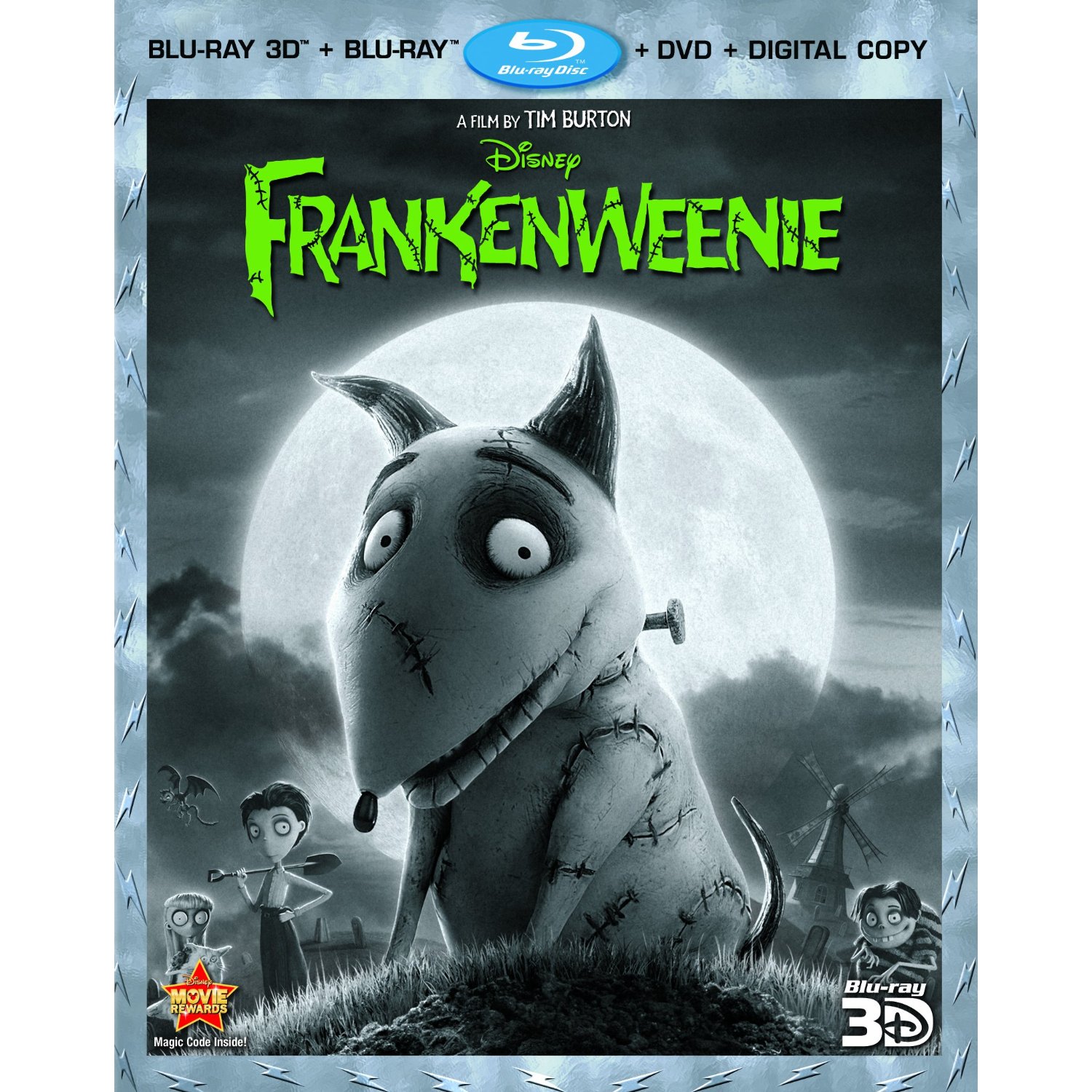
To his credit, Tim Burton has managed to keep the art of stop motion alive and well in Hollywood. He’s also proven that it can still be quite effective and just as commercial with such classics as A Nightmare Before Christmas. Since that time he’s had a modest number of hits and misses, but nothing that has come close to the holiday staple…until now. Frankenweenie is destined to become a Halloween tradition at our house, and I suspect I’m not alone.

Of course, Frankenweenie isn’t exactly a brand new idea. In 1984 Burton created a short film on the idea. It made the usual festival circuits and has shown up a couple of times as an extra on his more recent films. The original short certainly had its limitations, but it was a rather sweet little nugget that fans have been quietly enjoying for nearly 20 years. It’s actually a bit of a surprise that it’s taken the filmmaker this long to revisit the idea, but this time with a budget and running time geared for the mass audiences. Whatever the reasons for the delay, it was well worth the wait, particularly after Burton’s very disappointing take on Dark Shadows. While Frankenweenie might not completely redeem that colossal disappointment, it has gone a long way toward making me believe the filmmaker still has the wit and genius that have marked some of his earlier films.

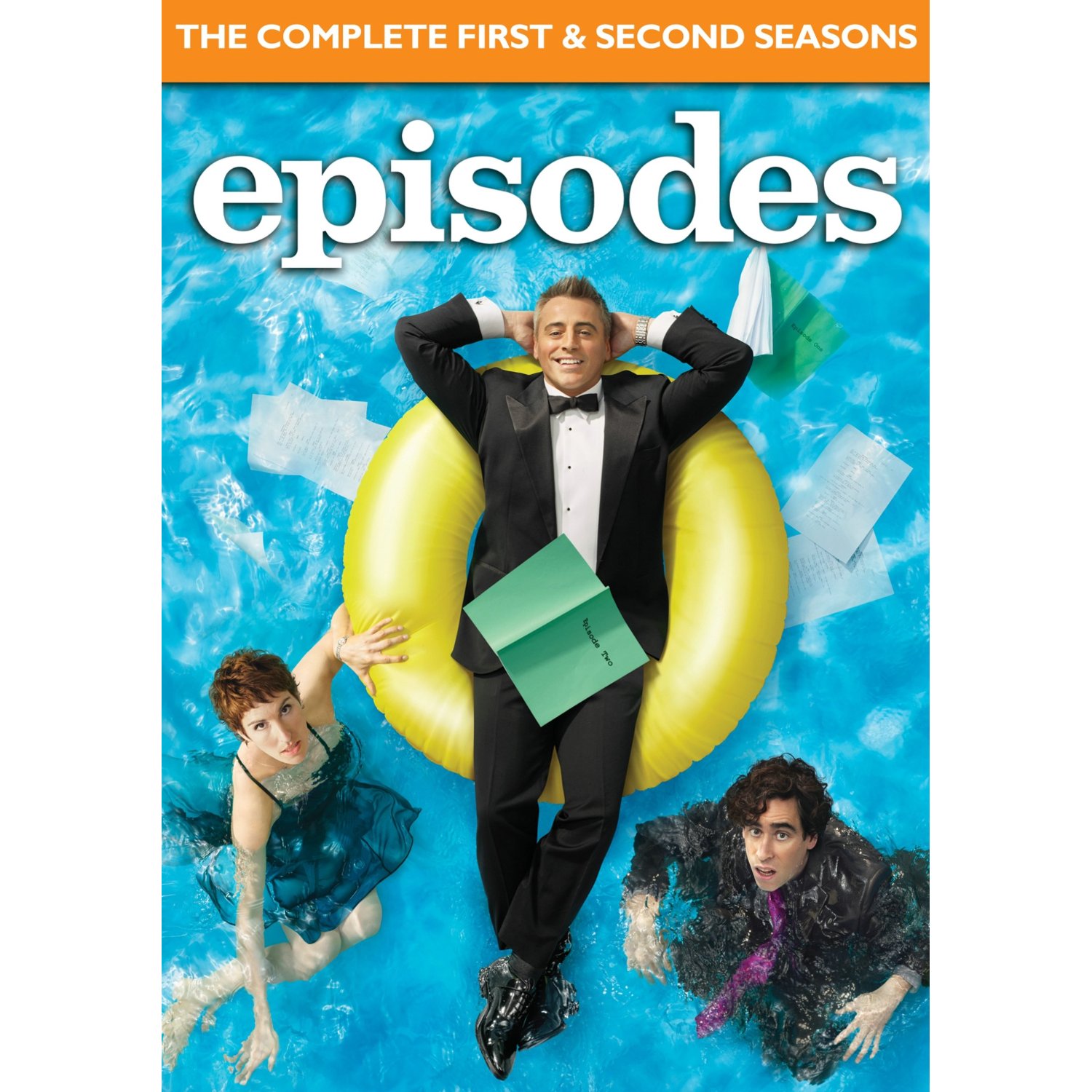
(I have covered the first season on this site already so this review shall begin with that one then segway into new write-up for Season 2):

A successful writing team, who also happen to be a married couple, are the creators of an award-winning show in the UK that has just completed after four seasons. An American network wishes to create a US version of the show. The couple are flown to LA, put up in a lavish mansion and are introduced to the Hollywood method of creating television…and it nearly destroys them.

When it comes to writer/director Spike Lee, he seems to have a very polarizing effect on the people who watch his films.  I’d like to consider myself a fan of most of his work.  For me  Clockers, Summer of Sam, and The 25 Hour rank at the top of my list of favorites.  He’s a director with a very distinct style and voice that sets him apart from most filmmakers.  But it’s that voice of his that often times gets him in trouble, whether it is in the message of his films or oftentimes comments he makes (most notably his comments on Tarantino and Django Unchained). As for Red Hook Summer, I wasn’t sure what to think of it, hearing mixed reviews from the festival circuit.  For me when I heard this was supposed to be a unofficial follow-up to Do The Right Thing, I was already looking forward to checking this out.

When we first meet Flik Royale (newcomer Jules Brown) he’s in the back of the cab coming into Brooklyn for the first time with his face hidden behind his iPad 2 as he films everything.  Flik comes from a middle class family in Atlanta, so of course this move to spend the summer with his religious grandfather is more than just a simple culture shock.  At first it’s hard to sympathize with Flik simply because he comes off as nothing more than a spoiled brat, but as the film moves along I found myself warming up to him more and more.

The following sentence is taken directly from the back of the Blu-ray case for Charlie Sheen’s latest small-screen vehicle: “Charlie thrives on the chaos in his life while still battling his own anger issues.” So it’s fair to say FX’s Anger Management isn’t afraid to blur the line between reality and fiction. It’s actually a good move because the latest TV show tailored specifically to Sheen’s talents doesn’t have much else going for it.

Anger Management, created by Bruce Helford (The Drew Carey Show), is loosely based on the 2003 Jack Nicholson/Adam Sandler film of the same name. (And I really can’t emphasize the word “loosely” enough; the only things the two have in common is that one of the characters is an anger management therapist and, um, it features humans.) Sheen stars as Charlie Goodson, activating a little-known clause in his contract that stipulates he can only play people named “Charlie.” In this case, his Charlie is a disgraced former baseball player turned therapist who counsels a motley crew of patients with anger management issues out of his home.

In the financial world, the term “arbitrage” refers to the possibility of risk-free profit at zero cost. This seems to be the goal for Robert Miller (Richard Gere), a hedge fund manager desperate to sell his business and retire. The reason for his desperation is that his business is completely broke due to a bad investment. This goal has completely consumed Robert, and it affects everything he does. Robert treats his employees like slaves, is nervous around his family, and regards his mistress as little more than a plaything. One night after the sale suffers yet another setback, he convinces his mistress to come with him to his country cabin. While driving her car, he falls asleep at the wheel and has an accident. Now he has something else to cover up. From then on, there’s nothing he won’t do — no lie he won’t tell, no depth he won’t sink to — in order to keep his secrets and keep his family in the dark.

Arbitrage turned out to be a lot better than I thought it would be. Gere takes what could easily be a static evil character and really fleshes it out. We may not like the things he does when his world starts falling apart, but we understand and almost — ALMOST — sympathize with him.

The Hippocratic Oath all doctors take is simple: “First, do no harm.” Dr. Martin Blake (Orlando Bloom) throws that ideal out the window when a young woman named Diane Nixon (Riley Keough) comes under his care. After getting treated like a nobody by his fellow doctors and disrespected by nurses he feels are beneath him, Diane is the first person who appreciates what Martin does and makes him feel special. As he treats her, Martin becomes obsessed with Diane, going so far as to alter her medication to keep her sick. As Martin’s obsession grows, his actions become more and more drastic.

This is supposed to be a dark thriller, and I suppose it is from a script standpoint. The Good Doctor has a decent (if slightly over-used) plot of girl-meets-stalker, with the interesting twist of the stalker being her attending physician. It could have been a good suspense movie like Kiss the Girls with the whole “I’m going to keep the girl I’m obsessed with close to me” vibe had someone given the cast some espresso to wake them up before the cameras started rolling.

“For every dark, a light. For every foe, a friend. For every question, an answer. For every key, a lock.”

And for every kid-centric animated program, a lucrative line of tie-in toys. Monsuno borrows liberally — the nicest way I know of saying “rips off” — from previous phenomena like Beyblade, Pokemon and Yu-Gi-Oh! Though it primarily exists to help sell derivative trading cards and action figures, the show establishes a surprisingly intriguing world in its first handful of episodes.

It’s hard to not appreciate a film that wastes no time jumping into the action, and with a title like Kill’em All you go in expecting the action to be piled on and non-stop.  I have to say I’m a little surprised this little film lived up to the title; after all most straight-to-DVD titles seem to be lackluster if not simply awful.  I’m also not saying this is a film that’ll be remembered too long either, but it is a B movie that delivers on the action and has Gordon Liu doing what he does best. After watching several of Bangkok’s elite assassins go about doing their dirty work and leaving a trail of bodies in their wake it is quickly followed by their capture.  At first when watching this I had thought they were being killed until we get to see them all gathered together in a massive concrete cell.  None of the professional killers seem to know one another; only a handful seem to know of one another which I found strange, after all how many elite assassins can one country have?  Well, it doesn’t take long till they discover they are all trapped in “the Killing Chamber”, a place where assassins and other people are brought to die.  What’s kind of cool is they are given a chance at freedom, but that chance only comes if they are the sole survivor of their captors’ game.

What follows are a series of duels to the death; as the survivors are whittled down, the desperation to survive becomes more intense.  The key three assassins Gabriel (Johnny Messner), Som (Ammara Siripong), and The Kid (Tim Man) are the only memorable survivors as they escape beyond the chamber and into a hellish warehouse filled with ninjas and numerous other bloodthirsty killers.  The fight choreography is fairly standard but is still fun, especially for those like me who pretty much get excited any time a ninja shows up.

In the same fashion as Batman Begins, Casino Royale the 21st Bond film ït starts over the franchise with a new outlook. Daniel Craig stars as James Bond in this film based on the 1953 novel by Ian Fleming, which hopes to rejuvenate the series by getting rid of some of franchise trademarks as well as the gadgets they supply. Grossing nearly 600 million dollars worldwide, Casino Royale was commercially a great success, but does the new bond fall short of past expectations, or does this reboot on the series provide for good cinema?

James Bond isn't yet an agent of double-0 status, but in order to accomplish this he is sent to Prague to assassinate a rogue agent who has been selling British secrets, as well as his associate. After accomplishing this, the film opening begins in traditional bond fashion with a fresh gun barrel sequence followed by the opening credits. Already the film appears to be a lot darker than past Bond films, and I have yet to hear a corny catch phrase as well.