Posted in: Disc Reviews by Archive Authors on November 27th, 2019
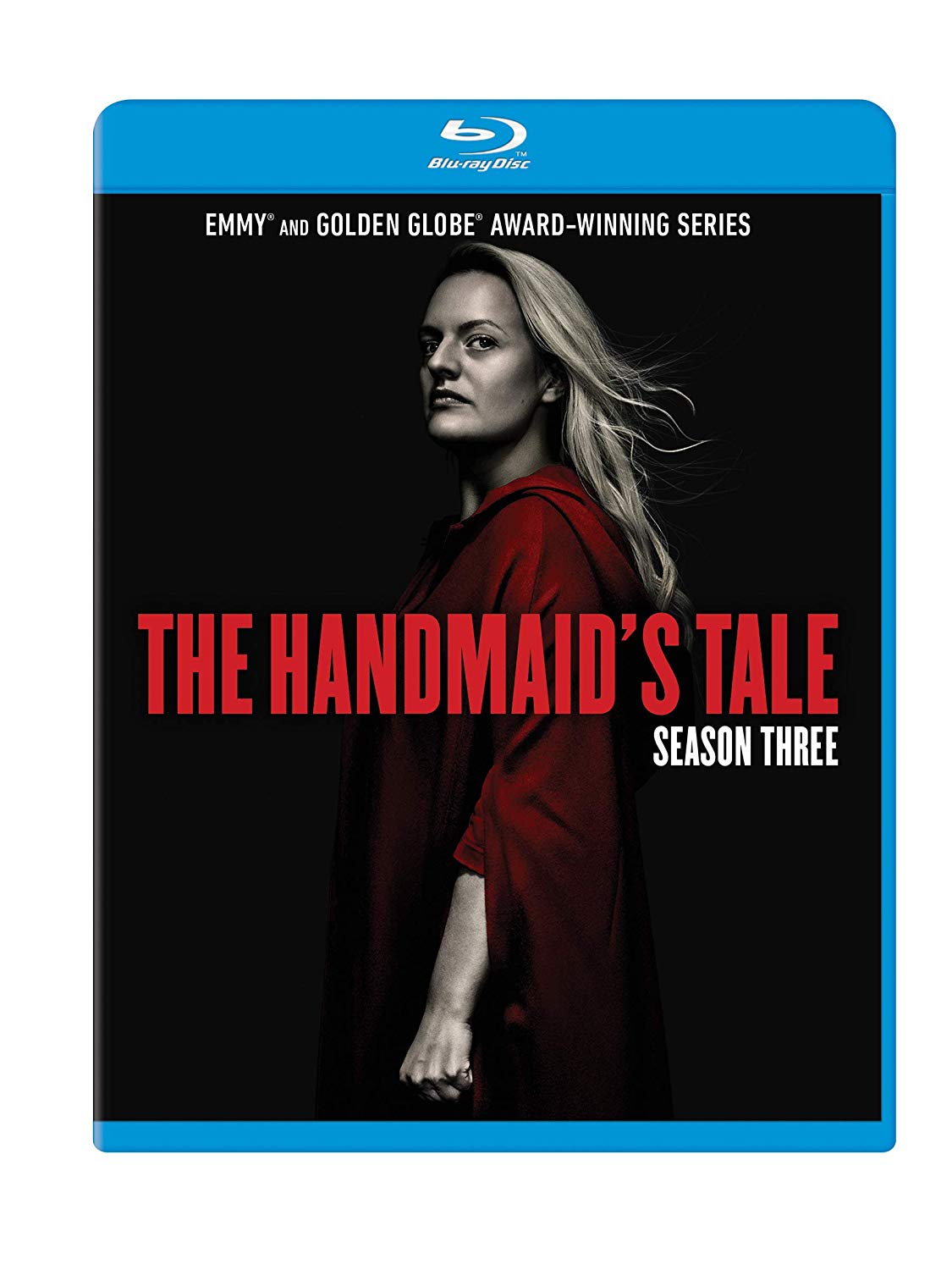
The most amazing thing about The Handmaid’s Tale — other than a powerhouse lead performance from the best actress working in television right now — is that this harrowing, suddenly timely cautionary tale about what happens when society falls asleep at the wheel is based on a story that was published more than 30 years ago. Of course, the show has a lot more going for it than impeccable timing. The Handmaid’s Tale is based on Canadian writer Margaret Atwood’s 1985 novel of the same name. Sometime in the not-so-distant future, the world is in chaos after environmental pollution and sexually transmitted diseases result in a catastrophic decline in human fertility rates. In the U.S., the result was Second Civil War, which led to the establishment of a totalitarian, Christian fundamentalist government known as Gilead. And while life isn’t exactly a picnic for anyone outside of Gilead’s elite ruling class, life is especially dire for women: they are not allowed to own property, work, handle money, or read. Much of this information is revealed in dribs and drabs over what is now three seasons.
The Handmaid’s Tale is created by Bruce Miller, a writer producer who worked on SyFy’s Eureka and The CW’s The 100. The former series offered a cracked-mirror, off-center version of reality, while the latter is a post-apocalyptic drama: both sensibilities proved extremely beneficial for Handmaid’s. A large share of the credit also goes to Reed Morano, who won a directing Emmy for her work on the pilot and established the show’s spellbinding visual tone by helming the first three episodes.
Posted in: Disc Reviews by Gino Sassani on November 22nd, 2019
"He picked me out of a pile of pups, a tangled mass of paws and tails. He'd stopped at the farm on his way home from the speedway at Yakima. Even back then, I knew I was different than other dogs. My soul just felt more human."
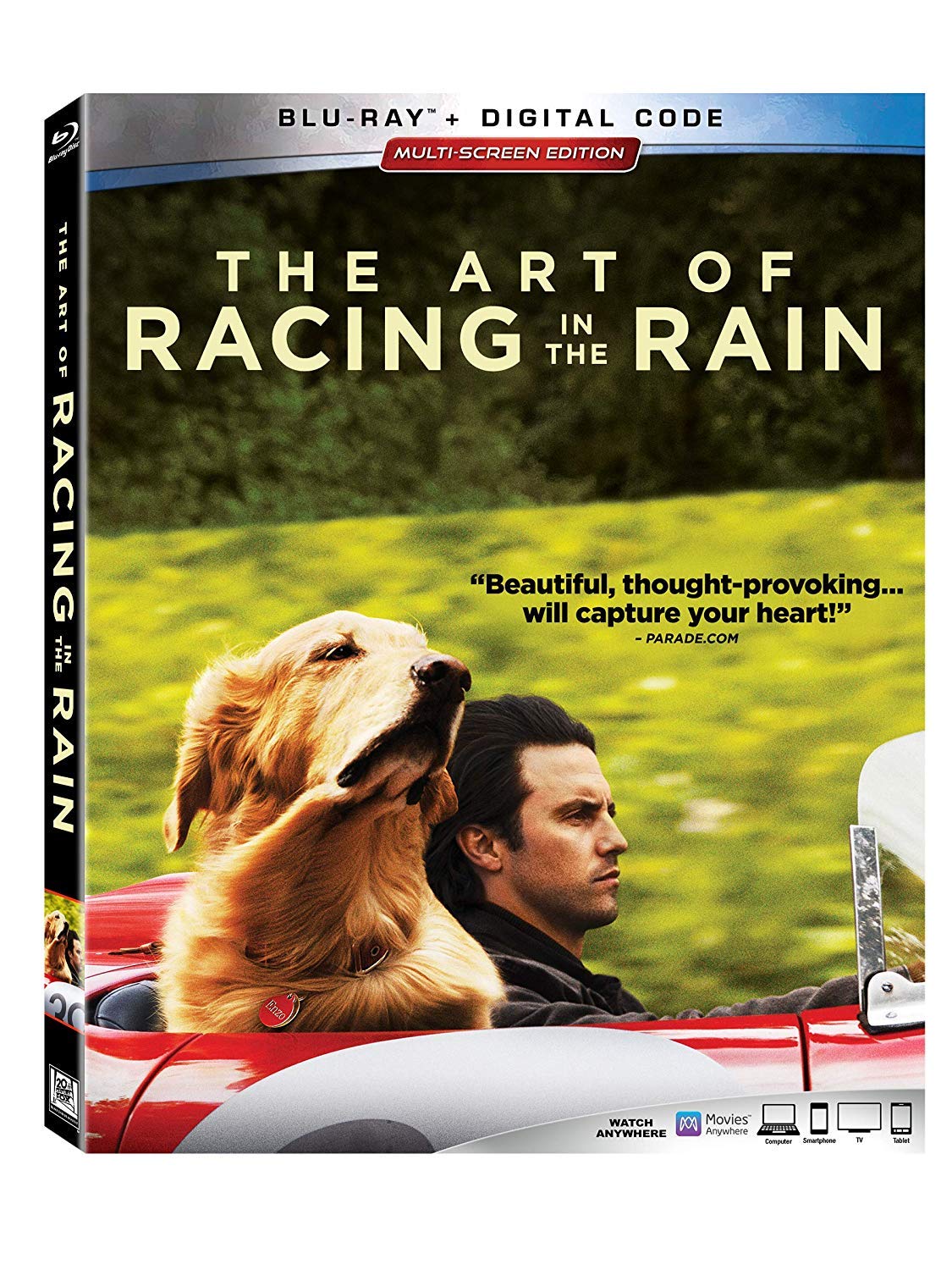
There was a time when this kind of film would have been reviewed by Baby, the German Shepherd/Chow who used to run security here at Upcomingdiscs as well as fill in for the occasional dog film review. Baby's gone, and we haven't yet trained Aurora the Siberian Husky who resides at Upcomingdiscs to pitch in on reviews. The problem is getting her to put her ball down long enough to pay enough attention, let alone write a review. But we're working on it. Until then these duties have fallen back to me, the occasional dog lover, which usually depends on what Aurora is up to at any particular moment. As Baby would have said: "Let's not talk about that right now." The task at hand is another talking dog film which followed quickly on the heels of A Dog's Purpose and its sequel A Dog's Journey along with the most recent A Dog's Way Home. It's a trend that has produced some emotional moments at the cinema for those of us who have spent a large part of their lives with our canine companions. This time out we have The Art Of Racing In The Rain, which is based on the novel by Garth Stein. If you're hoping to have that same kind of emotional ride that these other films brought, I think you'll be in for a little disappointment.
Posted in: Disc Reviews by Brent Lorentson on November 22nd, 2019
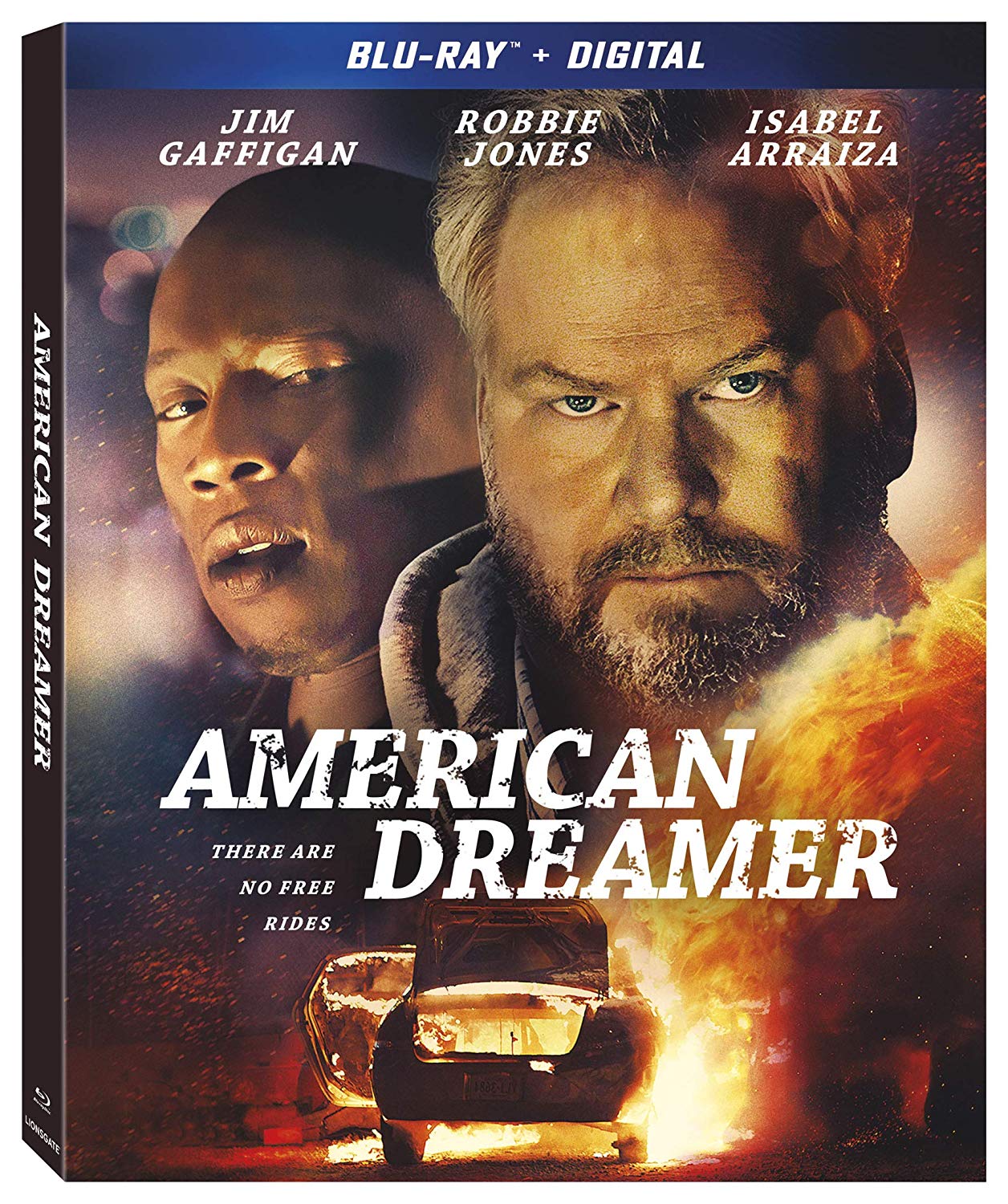
I have to be honest; when I got this title and saw that Jim Gaffigan was starring, I didn’t know what to expect, but I went into this film with some low expectations. I’m a fan of Gaffigan, and I own a few of his stand-up albums, but seeing him headlining a thriller, well, it was a tough leap for me. Now that I’ve seen the film, I got to say I’m impressed by what he pulled off with this film. That being said, as I was watching this film, I couldn’t help but see a similarity between Gaffigan and the late Philip Seymour Hoffman. I doubt this was intentional, and perhaps it’s just my subconscious attempting to make these connections, but Gaffigan’s performance in this film is on par with many of the performances we saw from Hoffman in his later years. As for the film, American Dreamer follows Cam (Gaffigan), a down-on-his-luck schlub who at one point was living the American dream: a good job, a nice home, and a wife and child. Then he lost his job, and everything else seemed to disappear around him. Now he’s a driver for a ride share company, where he struggles with paying child support and has had a bit of a mental breakdown. Early in the film we get to see him in a parking lot near an airport, watching as planes are coming and going, and its obvious Cam is dreaming of an escape from his life. He ends up getting a fare that has him driving a small-time drug dealer, Mazz (Robbie Jones) around town. The setup here seems simple, as it establishes who both of these men are, but over the course of one night we’ll see these men make some difficult decisions, and by the time the film ends, you will definitely feel differently about these characters.

After reading the blurb on the back of the Blu-ray and starting this film, I was a little worried that this would be something akin to Collateral meets Falling Down. When we see Cam come to his breaking point and he decides to kidnap Mazz’s son, sure, it’s a drastic leap for someone to make, but the way the writers and director handle this situation, it still remains in the realm of possibility. That pretty much is how the rest of the film plays out; there are a lot of worst-case scenarios that happen to both Cam and Mazz, and it’s what keeps the viewer on the hook. What I was most impressed by is how co-writer and director Derrick Borte wasn’t afraid to go dark with this film, because there are a few decisions made in this film that are pretty risky, and most filmmakers would avoid entering this territory, but personally I think it’s the risk that makes this film work. (It would be a huge spoiler if I were to say what this risk was.) But by taking that risk, the viewer knows anything can happen in this film. and it’s what literally kept me guessing at how this would all end for Cam and Mazz.
Posted in: Disc Reviews by Brent Lorentson on November 15th, 2019
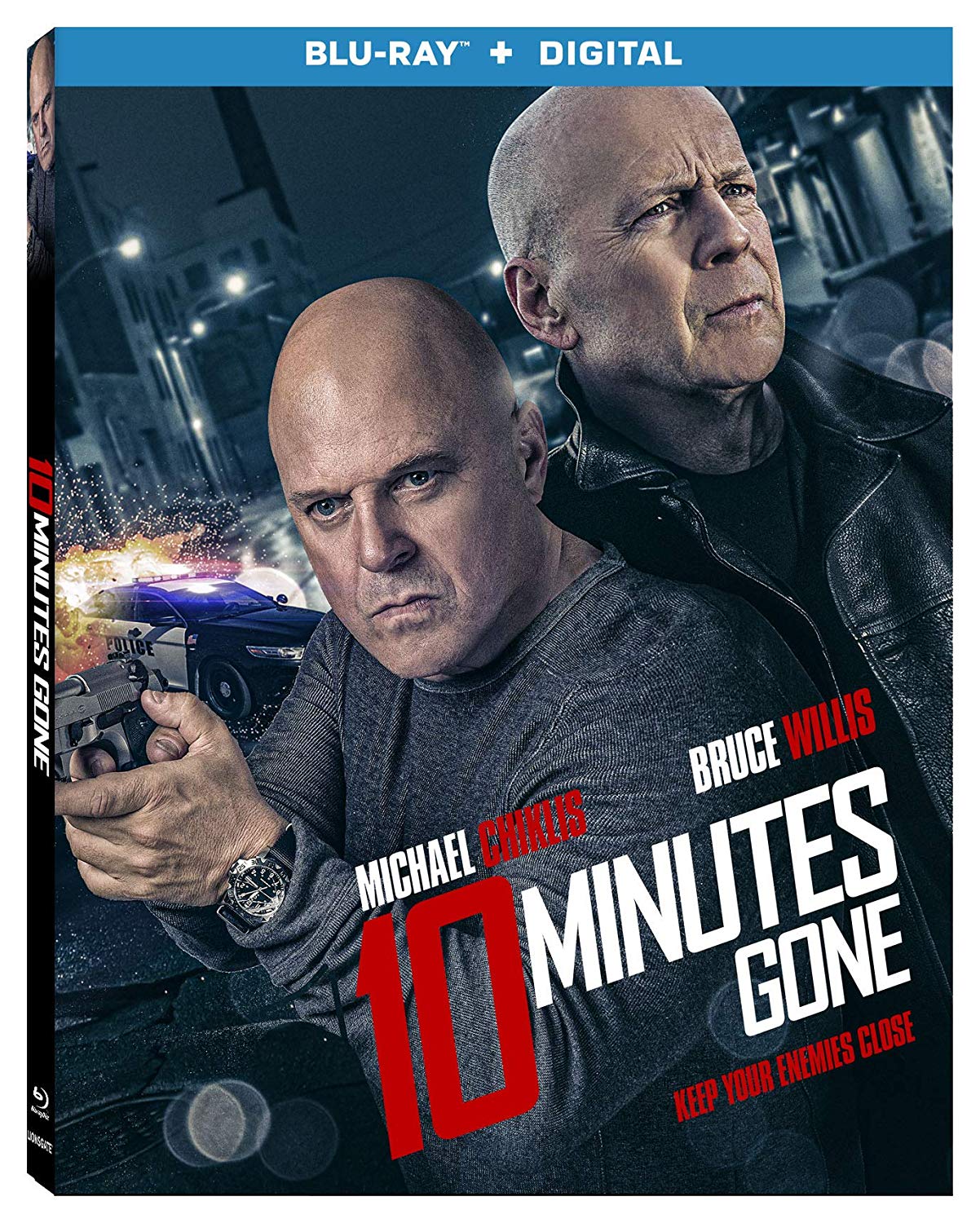
It’s frustrating seeing a film starring Michael Chiklis and Bruce Willis and knowing before you’ve even watched five minutes of the film that it’s not going to be good. I mean, come on; you have the star of The Shield and then an action movie icon, but neither can save this film. 10 Minutes Gone is one of those films where on paper it seems like a surefire hit, but somehow instead of a white-knuckle action thriller, the result is a snooze-fest that will keep you guessing as to why these actors signed on for this film. Frank (Chiklis) has been hired by Rex (Willis) to pull off what seems to be an easy heist. Frank and his team seemed to have thought of everything and have even put together some backup plans, but as expected, the heist ends up going bad, and in the process Frank is knocked out cold and loses 10 minutes. In this time he’s lost possession of the jewels, and he needs to figure out what happened to them before Rex has him killed. It’s not a bad idea for a movie, but it’s the execution of this film that is a mess. Willis and Chiklis do their best to make the dialog work, and at times the can make the scenes flow, but once the film shifts to any other character you start to wonder if this film was written by a 12-yea- old boy who just binged a bunch of older action/ detective films while chugging Red Bull and snorting lines of sugar.
The big mystery of the film is who set up Frank and his crew; the film does a good job at setting up a variety of suspects, though it doesn’t take much to figure things out. One thing, though, that is rather frustrating is when Frank goes to question one of his guys and the guy is “hiding out” at some underground gambling room. I have my issues with this character’s decisions already, but what is more distracting is how the scene is shot. The amount of lens flares in this sequence is nauseating. This might be one of the worst shot scenes I’ve seen in a film. Sure, Spielberg uses lens flares, and the world knows how JJ Abrams gets carried away with them, but this sequence is a technical marvel at how just about everything has a lens flare, and someone actually thought that this looked good and it wasn’t a distraction.
Posted in: Disc Reviews by Michael Durr on November 14th, 2019
Musical mockumentaries can often be hilarious. One has to look no further than Spinal Tap to see how funny it can be to blend music with comedy and shoot it like a documentary. However, it is a delicate balance between fun, smart jokes and perhaps going too far for a simple punchline. Today's film is Popstar: Never Stop Never Stopping, which has received a brand new steel book from the minds at Shout Factory. This 2016 film was considered a bomb at the box office, but it has found a home in disc and digital thanks to the gag-a-minute style of Andy Samberg and his supporting cast of musical celebrities and comedians. Let us take a look inside this limited edition and see if "Conner4Real" can take on a cult-like status with this film.
We open the story with Conner (played by Andy Samberg), who tells us about growing up and being dope. He then meets his two best friends, Owen (played by Jorma Taccone) and Lawrence (played by Akiva Schaffer) who later go on to form the rapping group, Style Boyz. Their first single is the tune Karate Guy. But as they grew up, the group was not as strong as originally thought. So they broke up, with Lawrence quitting the business and becoming a farmer. Owen became a DJ and tagged along with Conner. Conner became "Conner4Real" and went solo to huge acclaim. Despite his antics and habit of ending up in the tabloids, his music gathers a ton of fans and fame.
Posted in: Disc Reviews by Jeremy Butler on November 12th, 2019
"Luke Hobbs and Deckard Shaw. We have got unfinished business."
When Dwayne Johnson joined the Fast and Furious franchise, I thought the series couldn’t get any bigger, especially when he and Vin Diesel faced off in one of the best scenes ever in an action movie. Then Jason Statham appeared in the end credits of Fast and the Furious 6 shattering that glass ceiling, and he didn’t disappoint, proving to be one of the group’s biggest adversaries. Then there was the fact that the Statham-Johnson showdown trumped the Diesel-Johnson battle, thereby showing the former’s electric chemistry. It was only a matter of time until a spin-off film came about. Lo and behold, Fast and the Furious presents Hobbs and Shaw. Now, the film has been a source of controversy for the franchise, with both Diesel and Tyrese Gibson voicing their discontent about the delaying of their next installment in favor of this film. Needless to say, Johnson will not be taking part of the ninth installment of the series, but I doubt he is losing much sleep about that, especially when he has the makings of his own franchise with this film.
Posted in: Disc Reviews by Michael Durr on November 8th, 2019
We are back with another collector's edition from Shout Factory. This time we tackle the much celebrated Spirited Away, directed by Hayao Miyazaki, which was released in 2001, when it did so well that it ended up on our domestic shores in the following year. It was absolutely adored by critics, and here is a fun fact. I have never seen it. Little did I know that the American trailers I was seeing around this time were warping my idea of what the film was really about. Finally, after all of these years I have had the opportunity to watch and digest such a fantastic film.
Chihiro, a ten-year-old girl, is trying to relax in the back of her parents' car. They are on their way to a new city, with a new school, and the young girl is having none of it. As they search for the house where they are going to live, the father decides to use his four-wheel-drive and take off into the forest in hopes of making a shortcut. But rather than finding their new house, they end up at a long building with a dark tunnel that appears to go somewhere exciting according to the parents.
Posted in: Disc Reviews by Gino Sassani on November 7th, 2019
"This is where change begins."
We're a visual people, so most of you will recognize Taylor Sheridan from his role as a deputy chief of police in Sons of Anarchy when the controlled puppet regime had finally left the scene. It's not a remarkable role, and it's not a complete surprise that Sheridan found his calling more recently behind the camera. As a writer, his first script did hit it out of the park. Sicario is an awesome film populated with compelling and interesting characters who thrived on a broken system. That theme appears to have stuck with him, because the first season of Yellowstone appears to take us back in time to the days of open frontiers and cattle barons who struggled to keep their land amid lawless communities and raiding parties of American Indians who were portrayed as savage beasts who kill women and children in the middle of the night to become shadows of nightmares and the stories told to keep children in line. These themes are all there, but it takes place in a modern 2018 setting that does indeed make for an interesting new twist on an old idea. This is the dawning of the modern western where lands still stretch for miles and are still owned by a single family. It's Bonanza in the 21st century, and Kevin Costner thought enough of the idea to star in this television drama series for The Paramount Network.
Posted in: Disc Reviews by Gino Sassani on November 1st, 2019
Every generation has had its Christmas classics, films that have become as much a part of the holiday family traditions as Christmas trees and candy canes. For me it has been the more modern A Christmas Story with ol’ Carl Kolchak himself, Darren McGavin. Kids today have taken more of a shine to even more recent films, but for more than one generation, Christmas wouldn’t be the same without Frank Capra’s It’s A Wonderful Life. Since 1947 the film became a seasonal fixture in neighborhood movie houses across the fruited plain. In the 1970’s the film temporarily fell into the public domain and was played relentlessly on local television stations as each holiday came and went. Unfortunately, these were usually prints in horrible condition, so that scratches and splice marks became a part of the experience, not to mention ads for department stores touting their early bird specials. It is with that experience that I, as did most from my generation, become acquainted with Jimmy Stewart’s George Bailey. When the home video market began to bloom with VHS in the mid 1980’s, a better print resurfaced, so that the experience improved dramatically, along with the loss of those commercials. Of course, this new resource of home entertainment created a fight for the rights to the film to once again be restored to a single owner. It ended up being the film’s score that would allow the rights to be enforced once again. The crappy television prints disappeared, and by the early 1990’s, efforts to restore the film began.
These restoration efforts invariably turned to the controversial subject of colorization. If anyone remembers Ted Turner’s push to colorize RKO films, including King Kong, you will also remember how bad those films looked. The color was an added texture of hue covering the picture so that the subject’s textures and subtleties were obliterated. It was almost as if some child decided to finger paint all over the negative. There was nothing magical or at all realistic about the process. It’s A Wonderful Life has been colorized no less than three times. In both 1986 and 1989 the film got the colorized treatment, both failures. In 2007, It’s A Wonderful Life had been colorized by a new process developed by Legend Films. This new process allows films to be colorized naturally, retaining all of the detail and texture of the original print. These are the guys who are working with legendary Ray Harryhausen to colorize and restore many of his classics. The new process uses a 16-bit grayscale, which offers over 64,000 shades of just gray. The process, called “Photo-Real”, can reproduce HD quality pictures with stunning, lifelike color. I was a very cynical skeptic of the process and was prepared to rip this color print to shreds in my review. I was blown away by how natural the color looks. You will be hard pressed to believe this wasn’t an original color print. Not only are the colors realistic, but the print retains the particular color palette of the 1940’s, so that the film still looks like one from the correct era. I know you’ve seen incredibly bad colorization before, and it likely has made you unwilling to even give this one a chance, but you owe it to yourself to check it out. And this is the version you get on the Blu-ray copy of the film.
Posted in: Disc Reviews by Brent Lorentson on October 30th, 2019
“Thrill Me!”
When it comes to catch phrases, at least in this household “Thrill Me!” is easily the most used, and it’s all because of Night of the Creeps. I’m not quite sure how many times I’ve seen this film, but for me, when you name off classic horror films, this makes my top 10. I was only six when this film first came out, and I actually discovered it in the mid-90’s upon realizing it was directed by Fred Dekker who was responsible for The Monster Squad (the movie I blame and love for my introduction to horror). What I’m trying to get at is, I’m not sure if it is possible for me to be “objective” with this film. Night of the Creeps is simply a film that is fueled with nostalgia, but I feel has aged better than most horror films from the 80’s. For those who are fans of the film, at least the ones I’ve met, can agree on the film’s awesomeness and its fun B-movie campy-ness that manages to toe the line perfectly between remaining fun while playing a homage to the old 50’s monster films while being a legit horror film. Also there is Tom Atkins, who is a legend in my eyes because of this film.