Posts by Gino Sassani

"Life is not like the movies."

Maybe sometimes life is exactly like the movies. You know the old phrase of art imitating life and that kind of thing. That's exactly the territory that's covered in Steven Spielberg's latest film The Fabelmans. It's an autobiographical film where the names are changed to protect both the guilty and the innocent. It's also the first time that Spielberg has directed his own writing in over 20 years. In those 20 years Spielberg has become something of a movie-making machine, and I think he felt it was time that the machine walked away from the spotlight for a minute and allowed the man behind the machine to show his face again. It used to be about heart; lately it's been about box office, and more recently it's been about surviving after the hit the industry took with COVID. I think that Spielberg had a lot of things to get off his chest, and it looks like he might have found the time and place to do just that. While the film is a love letter to people who still think movies are a kind of wizard's magic, it was also a little bit of therapy for this particular wizard. Like all autobiographies, it's not really finished, and that's the most profound takeaway I had when the film ended.

"Like a river flows, Surely to the sea, Darling, so it goes, Some things are meant to be ..." 

Elvis Presley is often referred to as the King Of Rock and Roll, at least to his fans. There's no denying the impact that he had on the music scene. He was the first rock and roll star, to be sure. Colonel Tom Parker, his long-time manager and partner, created many of the marketing traditions that are commonplace in the industry today. He knew the value of his star, not only as a performer, but as a brand. For the first time, a musician's image and name started to appear on everything from bath towels to women's underwear. Fans are often split on their feelings for the self-styled Colonel, but Elvis would not have become the name brand he still is today without him.

"Good evening. Let me welcome you to this parlor of paintings. We offer them to you for your enjoyment and edification. Feel free to dwell on them at your leisure and in your own good fashion, but kindly don't touch, because here they frequently touch back."

When I mention the name Rod Serling, I'll bet that The Twilight Zone is the first thing that pops into your head. And why not? It would be very hard, indeed, to argue against the impact that The Twilight Zone has had on television. To say that the series was a milestone in that medium would be an understatement of the worst kind. When Rod Serling brought his landmark series to CBS in October of 1959, television was still very new. No one was quite sure what the future held for that magical box. For five years Rod Serling would enter our living rooms with the most bizarre tales we'd ever seen. But no matter how exotic and strange the stories might appear on the surface, Serling always brought our own humanity into vividly sharp focus before it was over. When the series had run its course, we didn't hear much from Serling for over a decade. He continued writing, of course. His screenplay for the 1968 Planet Of The Apes would lead to record breaking at the box office, but Serling's home was always that magical box, and it didn't take long for him to find his way back.

"It's uncensored, so language and sexual material is off the charts. So if that's not your style, you have been warned. No political correctness..."

It was the early 1990's, and record producer Russell Simmons got an idea and brought it to the folks at HBO. In a very short period of time, the half-hour show he created would become the highest-rated show in cable television history. He brought both the big names in black comedy as well as so many newcomers who have gone on to become big stars themselves. This was the days before streaming, and it came on Friday nights just as the folks who usually watch these things were out getting their entertainment live and in person. It was quite an accomplishment to get those folks to stay home and watch a half-hour television show instead. But that's exactly what happened, and while the series ended in 1997, in five short years it made both television and comedy history.

"It's a different world out there." 

Ray Donovan: The Complete Series is out from CBS Home Entertainment, and it includes all 82 episodes and the television movie that was released to make up for the sudden cancelation without a proper sendoff for the Donovan clan. You get 29 DVD's, and the set includes all of the extras from the individual season releases. You do have to deal with those large overlapped spindles, so I suggest you create another environment to store them.

Next year we hope to return to our usual 31 Nights Of Terror. This year we are going to offer you some Halloween Spotlight titles that would be a great idea to pick up for the scary season. So... we're still your October Night Mayor and here's a great idea for Halloween from our friends at Film Detective. 

"That's just the wind banging the door, pay no attention to it. Listen to this."

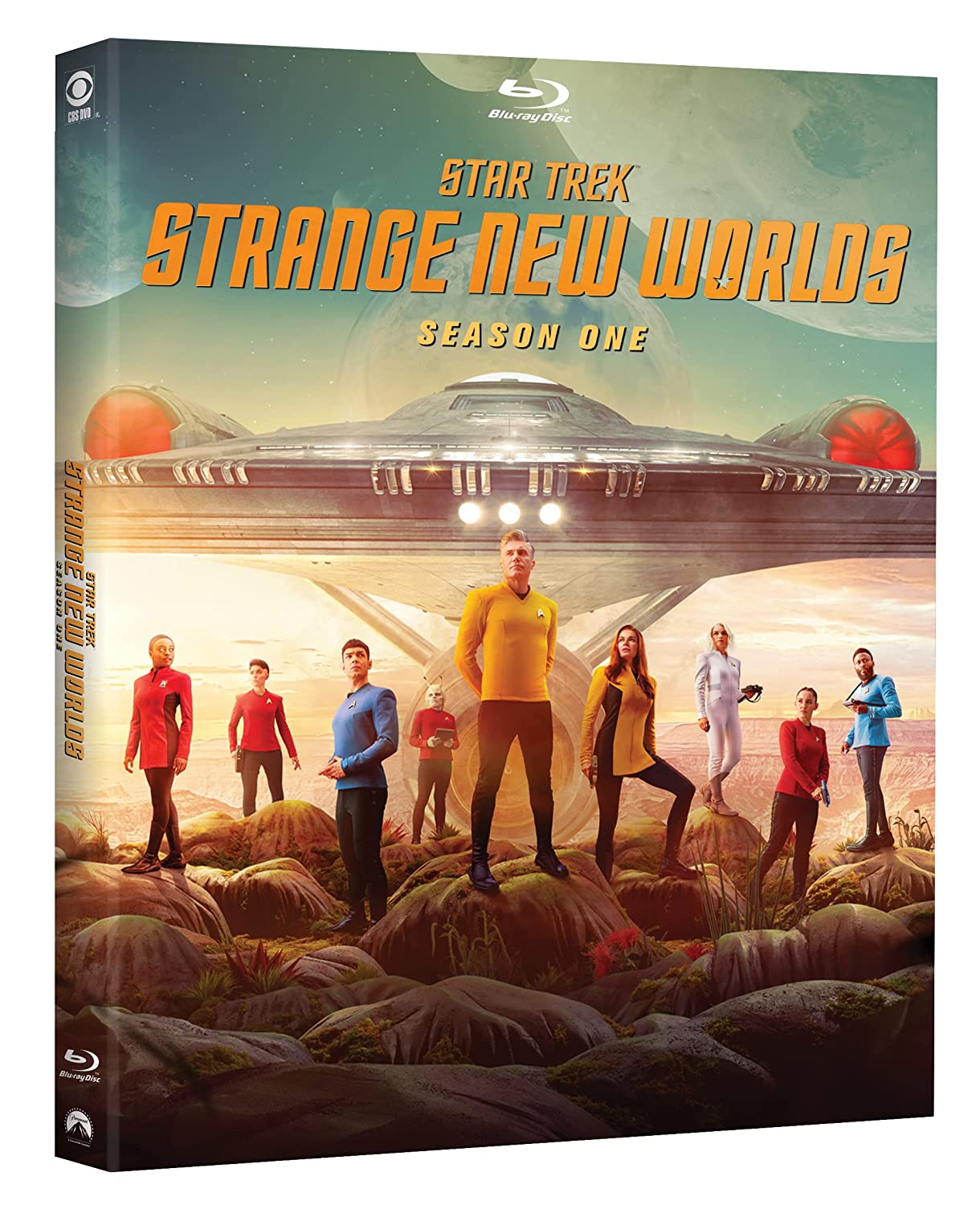
Next year we hope to return to our usual 31 Nights Of Terror. This year we are going to offer you some Halloween Spotlight titles that would be a great idea to pick up for the scary season. So... we're still your October Night Mayor and here's a great idea for Halloween from our friends at Paramount/CBS/Showtime. 

“Tonight’s the night, and it’s going to happen again and again. It has to happen …”

Next year we hope to return to our usual 31 Nights Of Terror. This year we are going to offer you some Halloween Spotlight titles that would be a great idea to pick up for the scary season. So... we're still your October Night Mayor and here's a great idea for Halloween from our friends at Paramount/CBS/Showtime. 

"You're traveling through another dimension. A dimension not only of sight and sound, but of the mind. It is the middle ground between light and shadow, between science and superstition. And it lies between the pit of one's fears and the summit of one's knowledge. You are now traveling through a dimension of imagination. You've just crossed over into The Twilight Zone."

"Look at them praying for a miracle that isn't coming. Who knows? Maybe it's my curse to leave one betrayal behind only to find a greater one here amongst the stars. They could have stopped this, but none of them had the strength to do what must be done. But I do."

Crossovers have been big events in the CW Arrowverse shows. They would involve characters from all or most of the current shows, and the episodes would play across the shows themselves. The events were always huge so that they required the combined force of the many DC heroes. Times have changed, and now The Flash is pretty much the only Arrowverse show left on the air. That creates a bit of a logistic problem for the whole crossover event idea. Or does it? This season there is a crossover, of sorts. It plays out over five episodes and includes characters from some other Arrowverse shows even though they are no longer on the air. The Flash begins its eighth season with a crossover event called Armageddon. It encompasses the first five episodes of the season and features characters from the other shows.

"For more than two decades, families across America gathered around the television every Sunday night to watch The Ed Sullivan Show. Both the country and its music underwent an enormous evolution over the course of those years, and the show not only kept up with the times, it informed them. The long and winding road of music history is full of forks, but from the 1950's through the early 70's, one stop was essential: The Ed Sullivan Show."

You can say that again. Ed Sullivan's Sunday night variety show first aired June 20th, 1948 and left the air March 28th, 1971. Three years after the show ended, Ed Sullivan passed away, and with him one of the most iconic faces of the entertainment industry. Think about how much America and music changed throughout those years. When Sullivan first started, the music industry was dominated by big bands like those of Benny Goodman and Duke Ellington. The songs were sung by the crooners like Frank Sinatra and Bing Crosby. When the show left the airwaves, the top songs were performed by Elton John, Rod Stewart, and The Rolling Stones. Along the way we picked up the likes of Elvis Presley, The Beatles, and Creedence Clearwater Revival. And Ed Sullivan was there to catch all of it live from his television stage every Sunday night for 1,068 shows. Ed Sullivan didn't just present acts that were popular. He introduced unknowns to the world, and appearing on Ed's show meant you were going places. He presented stars, but he made stars.