Posted in: The Reel World by Gino Sassani on February 22nd, 2020
Jack London’s 1903 novel The Call Of The Wild has become a great American classic that hasn’t been out of print ever in over 100 years. There have currently been over 1000 editions in every major language of the world. One of the aspects of its endurance is that it has such wild appeal. I read the book first when I was around 10 years old, and the imagery has remained throughout my entire life. I still consider it one of the best novels I have ever read. The novel also has great appeal among older readers because of the story’s engaging adventure elements, and, of course, the story is about a dog. London managed to bring the canine character alive with wonderfully visceral accounts of the dog, Buck’s life of adventure that includes both tragedy and triumph. The story has been to the screen both large and small several times to date including a classic 1935 film staring Hollywood legend Clark Gable. Every generation before and since (there was an earlier 1923 version) has witnessed at least one new version of the film. The most recent was a 2009 3D release that made it a kid film with Christopher Lloyd and Timothy Bottoms. Now The Call Of The Wild returns to the big screen as the first Disney release under the newly acquired Fox purchase to sport the entity’s new name, which drops the Fox name and is now merely 20th Century Studios. It’s somewhat the perfect film to bridge the old Fox with Disney, as this is very much a family film.
Buck is a family dog from a Southern plantation run by Judge Miller, played by West Wing star Bradley Whitford. Buck has a pretty good life but manages to get himself in a little trouble when he takes down the Thanksgiving feast that included multiple turkeys. That earns him a night outside instead of snuggling with a family member inside the mansion. It was an unfortunate time to leave the family pet outside for an evening. A gold rush in the Yukon area of the Canadian frontier creates a shortage of sled dogs, leading to huge prices paid for them. Buck is kidnapped and transported from his comfortable Southern life to the frigid wasteland of the Yukon Territory. Unfortunately for Buck, he learns that there are cruel people in the world who force him to submit from the body of a club. Along the way he helps an old man who dropped a harmonica and is treated, if for a moment, kindly again. Buck ends up with a couple who run a postal route and count on the dog sled team to get the mail out on time. But Buck has to learn that even among dogs there is cruelty, as the Siberian husky asserts his dominance over Buck and the rest of the pack. Buck fights against the leader and ends up becoming a new, more benevolent leader of the pack, and he soon adapts to the life of a postal sled dog. That is until the route is cancelled and Buck finds himself once again having to adjust to a new master, this time another who rules by the club. But loner John Thornton, played by Harrison Ford, is the harmonica man, and he remembers Buck and rescues him from the abuse, and the two bond as they follow an old map to a legendary gold claim where the settle into a wonderful summer of companionship. But Buck soon learns he requires a kind of companionship that Thornton can’t provide. And Thornton certainly understands why Buck is spending more and more time away from the cabin. He’s met a wolf pack and a beautiful white female wolf who can fulfill Buck’s newly discovered needs.
Posted in: Disc Reviews by Gino Sassani on February 21st, 2020
"This is a mental institution, Marshal. For the criminally insane. Usual isn't a big part of our day."
When I first saw Shutter Island ten years ago, I thought it was a good movie. I didn't think it was a great movie. Like many Martin Scorsese fans out there, I have developed certain expectations from his films. It isn't at all fair, but as I've said here many times, expectations are killers. I bathed too often in Scorsese's modern mob mythology that I think it took seeing The Irishman and being royally disappointed and then getting to see Shutter Island again thanks to this wonderful new steelbook 10th anniversary release on UHD Blu-ray in 4K. I also never thought Shutter Island could ever improve with age. It's got a wicked twist that occupies the final 40 minutes of the film, and no matter how good the performances might be, how could it possibly get better when you know what's coming? But again, I recall it being a good movie, so I welcomed the opportunity to revisit it after 10 years in 4K. Why not, right? I'm glad I did, and no matter how good you thought it was the first time, it's better the second time through. And I was absolutely wrong in my first evaluation. Shutter Island is not a good movie at all. It actually is a great film, and it's a shame that it's been relatively overlooked among Scorsese's films. And spoiler alert!!!!!!! The twist is even better when you know it's coming. (You thought I was going to spill some beans?)
Posted in: No Huddle Reviews by Gino Sassani on February 20th, 2020
"You're traveling through another dimension. A dimension not only of sight and sound, but of the mind. It is the middle ground between light and shadow, between science and superstition. And it lies between the pit of one's fears and the summit of one's knowledge. You are now traveling through a dimension of imagination. You've just crossed over into The Twilight Zone."
It would be very hard, indeed, to argue against the impact that The Twilight Zone has had on television. To say that the series was a milestone in that medium would be an understatement of the worst kind. When Rod Serling brought his landmark series to CBS in October of 1959, television was still very new. No one was quite sure what the future held for that magical box. But that box was part of an invasion. The television set would change the face of the world. It would become the social center of our homes. It would influence who we choose as our leaders. In 1959 those fortunate enough to already have television sets in their homes would become the first to see that future. They were given a glimpse of what life might or would be. It was a gift that has continued giving 50 years later. The franchise has been tackled often since Rod Serling's original. There was the ill-fated anthology film where different directors delivered takes on different stories that was overshadowed by a tragic helicopter crash that killed two Vietnamese actors and veteran actor Vic Morrow. Two years later the series returned to television with a surprisingly solid two years. In 2002 there was yet another very brief television effort. Now the show returns in the world of streaming from CBS's All Access network. Unfortunately, it might just be the least of the franchise's incarnations.
Posted in: No Huddle Reviews by Gino Sassani on February 18th, 2020
I'm always cautious when I approach a low-budget independent film. It's not that I don't expect them to be good. I have found countless gems over the years that not only exceeded my expectations but have been placed on a must-watch-again list. The thing I'm most cautious about is the level of ambition a limited experience director might shoot for. Obviously there has to be a great amount of drive and ambition to even try to make a movie. I know many filmmakers think reviewers are frustrated and failed filmmakers. I'm not one of them. I have a great deal of respect for anyone who puts together a story and a crew and often risks their own resources to make a film. I'm talking about the ambition in the film itself. As I was watching Cicada Song for the first time, I started to worry about just that. This is a very ambitious film that tries to tackle a lot of things at one time. Yet writer/director managed to pull it off and deliver a film far more compelling than I was expecting.
The idea appears simple on the surface, but it is not. Karen is played by Lyndsey Lantz. She's had to hold her head up because she has several strikes against her in this rural setting. She's gay and appears Hispanic and suffers the barbs from both designations. She manages a farm operation for a couple who aren't necessarily what they appear to be. If I'm being vague here, it's because there is so much nuance to this story that telling you too much will risk ruining what the film works so hard to accomplish. Karen first hears that a young girl has gone missing. She starts to ask questions and discovers the missing child might be related to one a year ago. Before long, her lover Annabelle (Mesa) has also gone missing. She ends up asking the wrong questions and eventually left for dead in the middle of a wood, where she shows incredible strength and determination to survive. Without revealing too much, I can tell you that you shouldn't be too quick to figure out the good guys from the bad guys. Things aren't always what they seem. Lyndsey Lantz does a fine job as Karen and has to carry a lot of the weight of the story both in the "present" and flash-forward scenes. Other standouts in the cast are Kim Reed as the owner of the farm Karen manages and Jenny Mesa, who plays Annabelle.
Posted in: Disc Reviews by Gino Sassani on February 18th, 2020
"It's a beautiful day in this neighborhood. A beautiful day for a neighbor. Would you be mine? Could you be mine?"
Anyone who was a kid from the 1960's to the 1990's and beyond recognizes Mr. Rogers and his neighbor song. The man defined children’s programming for television, and he did so from a small studio tucked away in Pittsburg, Pennsylvania for almost 40 years. There aren't many people living in this country who don't at least know who Fred Rogers was. It would be a complete waste of my space and your time to tell you very much about the man in these lines. Truthfully, you'll make the kinds of discoveries into the nature of who he was by spending a short 90 minutes watching the documentary Won't You Be My Neighbor that appeared last year. It will be time well spent no matter how little or much you think you know about him. But now hot on the heels of that incredible documentary comes a film staring Tom Hanks as the lovable neighbor we all used to wish we had. Recently Ancestry.com confirmed that Tom Hanks and Fred Rogers are related. Of course you have to go back the pre-revolutionary days of 1734 to find this elusive relative. But you won't have to time travel to spend a magical time with Mr. Rogers and Tom Hanks. In 2019, they happen to be the same man.
Posted in: Disc Reviews by Gino Sassani on February 18th, 2020
This is the film that literally started a trend. Within a decade, submarine films would make a huge comeback in the big-budget film industry. Titles like Crimson Tide, U-571, and K-19: The Widowmaker all took a little from Red October. Maybe the Cold War is over, but our fascination with that modern version of cowboys and Indians doesn’t seem to have waned much in the last nearly 20 years. While our relationship with Russia might be up and down over the last two decades, there is still a part of our culture that can’t seem to let go of that classic game of good guys and bad guys. It’s not unique to the former Soviet Union by any means. World War II has been over for more than 60 years, but the occasional Nazi bad guys still make their presence known from time to time. Maybe it’s those accents. Whatever the reason, the seemingly dated subject matter of Red October is never a liability to the film. When Red October came out, the Soviet Union had just fallen a mere two years earlier, and there were some who suggested the film was an inappropriate reminder of those recent bygone days and might even be considered a slap in the face to the new regime in Russia. Fortunately this was not one of those instances where Hollywood let its often hypocritical sense of political correctness get in the way of a great film.
Jack Ryan (Baldwin) is a CIA analyst. When he comes across a spy photograph of a new Russian submarine, the Red October, he becomes concerned about a new feature. It appears two very large doors, too big for torpedoes, have been added to the standard Typhoon class vessel. He travels to Langley and meets with his boss (Jones) to have the pictures studied. When it’s discovered that the pictures could be a “caterpillar drive”, a silent running technology, Ryan finds himself advising the President’s National Security Advisors. The ship is now out to sea, and the Russians appear to have gotten suddenly very nervous. Is the ship run by a rogue commander with glorious visions of nuking the US? Ryan thinks he wants to defect, and now he must convince an entire chain of command to give Ramius the chance to do just that. Ramius must avoid the entire Russian fleet and convince the Americans of his intentions.
Posted in: No Huddle Reviews by Gino Sassani on February 13th, 2020
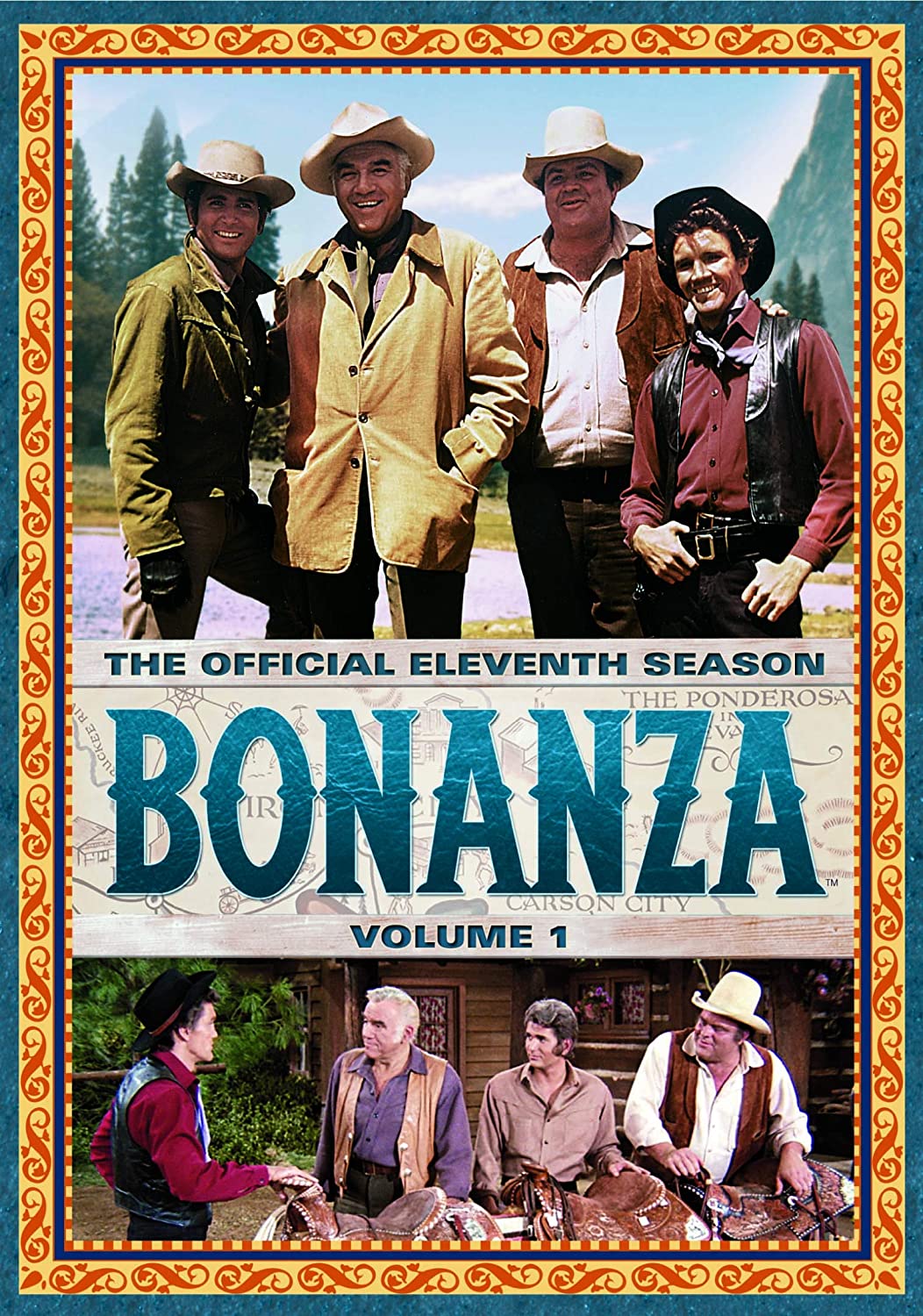
The setting for Gunsmoke was the by-now-famous Dodge City, circa 1870’s. Phrases like “get out of Dodge” would enter the popular lexicon as a result of this resilient series. Marshall Dillon (Arness) was charged with keeping the peace in Dodge City. The only other character to see the entire 20-year run was kindly Doc Adams (Stone). Star Trek’s own Doc, Leonard McCoy, took many of his traits from Doc Adams. He was the humanitarian of the city, always looking to help someone. Like McCoy, he had a taste for bourbon and a soft heart underneath a rather gruff exterior and was always ready with free advice. Dillon’s love interest throughout most of the series was Miss Kitty Russell (Blake). While there were certainly a few romantic undercurrents, the romance never came to fruition. Miss Kitty was a prostitute on the radio and was likely one here as well, but CBS chose to underplay that aspect of her character as a “saloon girl”. Finally Dillon’s faithful sidekick deputy was Chester (Weaver). Chester often found himself in trouble and was the naïve son figure to Dillon.
Gunsmoke was the longest-running scripted live-action television show in history until just this year when Law & Order Special Victims Unit started their 21st season. The series ran from 1955 to 1975. It still has the most episodes of any live-action scripted shows in history with 635 compared to SVU's 480. You have to understand that in the show's earlier years a series would roll out 35-40 episodes a year compared to a network average of 20 in 2019. A great number of shows air considerably less episodes in a season. At first it was a half-hour black-and-white show that evolved into a color hour by 1967. It actually started before the days of television, premiering on radio in 1952. Then it was William Conrad as the tough-as-nails Marshall Matt Dillon. When television came into its own, Gunsmoke made the jump to the bright living room box and made history. Westerns would ride across our small square screens for the next three decades, making it the most successful genre of that time, and it was Gunsmoke that started it all. The television version of Gunsmoke was originally conceived as a vehicle for John Wayne, who opted to remain in movies. Yet it was Wayne himself who suggested James Arness, and it turned out to be a career for the one-time “carrot” monster from The Thing. Gunsmoke started before all of the big westerns and was around when most of them had departed.
Posted in: The Reel World by Gino Sassani on February 8th, 2020
"I'm the one they should be scared of! Not you, not Mr. J! Because I'm Harley Freaking Quinn!"
For too many years now, the DCU (DC Universe) of films has been guilty of an overwhelming sense of foreboding and darkness. Of course, Chris Nolan pretty much started the trend, while Zac Snyder completely embraced the idea. The Chris Nolan Dark Knight films were a great success, and they should have been. The darkness works wonderfully with a character like Batman. But then Snyder and his DC film gang allowed this brooding darkness to inhabit all of their characters in feature films and never quite appeared to understand why the sometimes camp of the Arrowverse (The TV DC Universe) is so much more appreciated by fans. Wonder Woman stands out as the lone exception to this trend, and that's why it's so much better than the others. Now it seems the folks at the DCU are attempting to showcase their ability to be more flexible and less cookie-cutter. It started with Joker, which was one of the more disturbing comic book films to come along. Now DC has taken us in a completely opposite direction with the cumbersomely titled Birds Of Prey: And the Fantabulous Emancipation of One Harley Quinn. Working as a sort of apology for Suicide Squad and attempting to forge a DC version of Deadpool so that they can play in the R-rated waters of comicbookdom, Birds Of Prey manages to throw a ton of fun our way, even if the characters are obviously winking at the audience the entire way through.
Posted in: Podcasts by Gino Sassani on February 7th, 2020
Michael Starr is the director, writer and producer for the new drama feature film Cicada Song. The film stars Lindsey Lantz as Karen, a small town woman who asks the wrong questions and finds herself struggling to survive. It's a powerful film with a limited budget but not a limited imagination. It's an ambitious film, to be sure. The man behind it all is Michael Starr, a fellow musician who just might have hit it out of the park with his first feature film. I had a wonderful time with Michael talking about the film. He provided some nice insights into Cicada Song and the filmmaking process itself. You can listen in on our conversation. Just bang it here to hear my interview with Michael Starr.
After the interview make sure you check out the film.
Posted in: No Huddle Reviews by Gino Sassani on January 15th, 2020
"The heat is on..."
From the bouncing opening music by Glenn Fry to the final frame of Eddie Murphy's smile, Beverly Hills Cop has established itself as a classic. Now finally out on Blu-ray, the film shows us all over again why we fell in love with it almost 20 years ago. Murphy hasn't been as funny since, but we'll always have Beverly Hills and Axel Foley. There have been many attempts to revive the franchise. There was a failed pilot that would have had Axel as a captain and his son as the wise-cracking rookie detective. It never went beyond an as yet unseen pilot. Several attempts have been made at a fourth film, and a new one was recently announced, but that's now in limbo as Murphy has just announced he is quitting acting and going back to standup. The first film pulled in a impressive (for 1984) $315 million at the box office. The second pulled in almost exactly the same money. Things hit a snag with the third, which barely topped $100 million. Now Paramount has remastered the films in 4K but is only releasing the 4K/HDR version online. They aren't releasing it on UHD, and that's a mystery to me that I hope will be corrected soon.