DTS HD 5.1 MA (English)

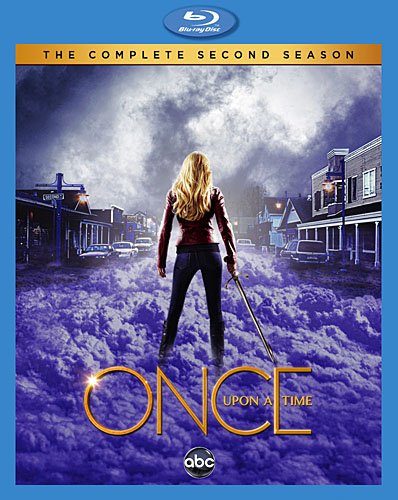
"There is a town in Maine where every storybook character you've ever known is trapped between two worlds, victims of a powerful curse. Only one knows the truth, and only one can break her spell."

ABC has had a very important asset going for it for years. It's one that the network has seldom taken any advantage of. That asset is its parent company. You see, ABC is part of the Walt Disney family. With the rich history of stories the studio has in its arsenal going back to the 1920's, it was only a matter of time before some clever people decided to find a way to use that rich history into a television series. That time has arrived, and the result is Once Upon A Time. It's the most clever and original series to hit the tube in a long time.

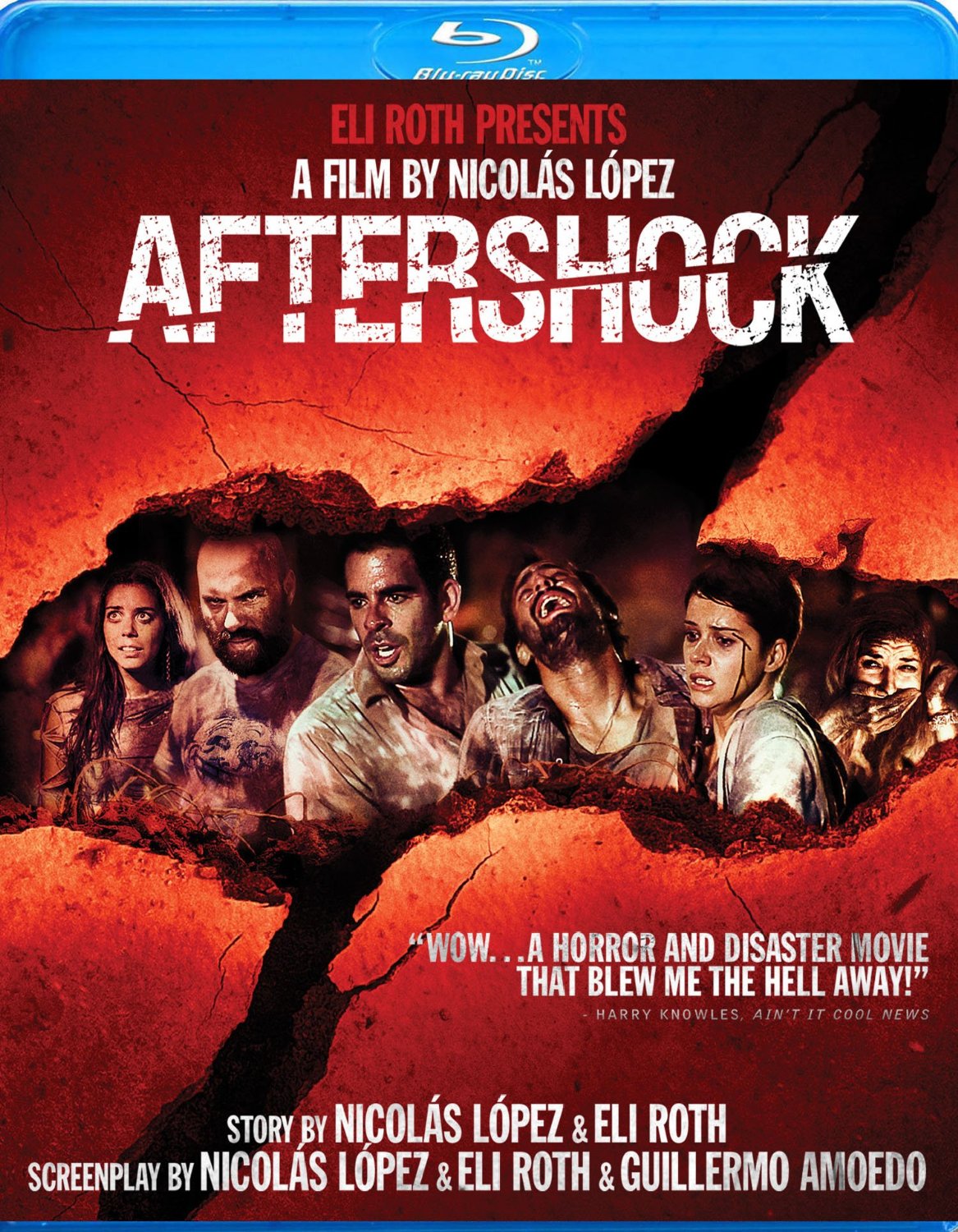
When you read that Eli Roth is part of the production team, the first thing you probably think about is the potential gore that will be associated with the project, and Aftershock is no exception, but there was also an interesting twist with this disaster flick: the involvement of a director who’s most known for his work in the romantic comedy genre, Nicolas Lopez, who’s most notable for his Que Pena Tu (translation: F*** my  (blank)) trilogy. He tries his hand at something new with this dark tale based in reality that highlights that the most frightening part of a natural disaster is not necessarily the disaster itself.

Two groups of travelers venture to Chile seeking a good time and get more than they could have ever expected. In the first group, Gringo (Eli Roth’s character, no real name given), an American, is led around the city by two natives: Ariel, who is recovering from a recent breakup, and spoiled rich kid Pollo. The two natives take it on themselves to show Gringo around and give him a trip that he will never forget.

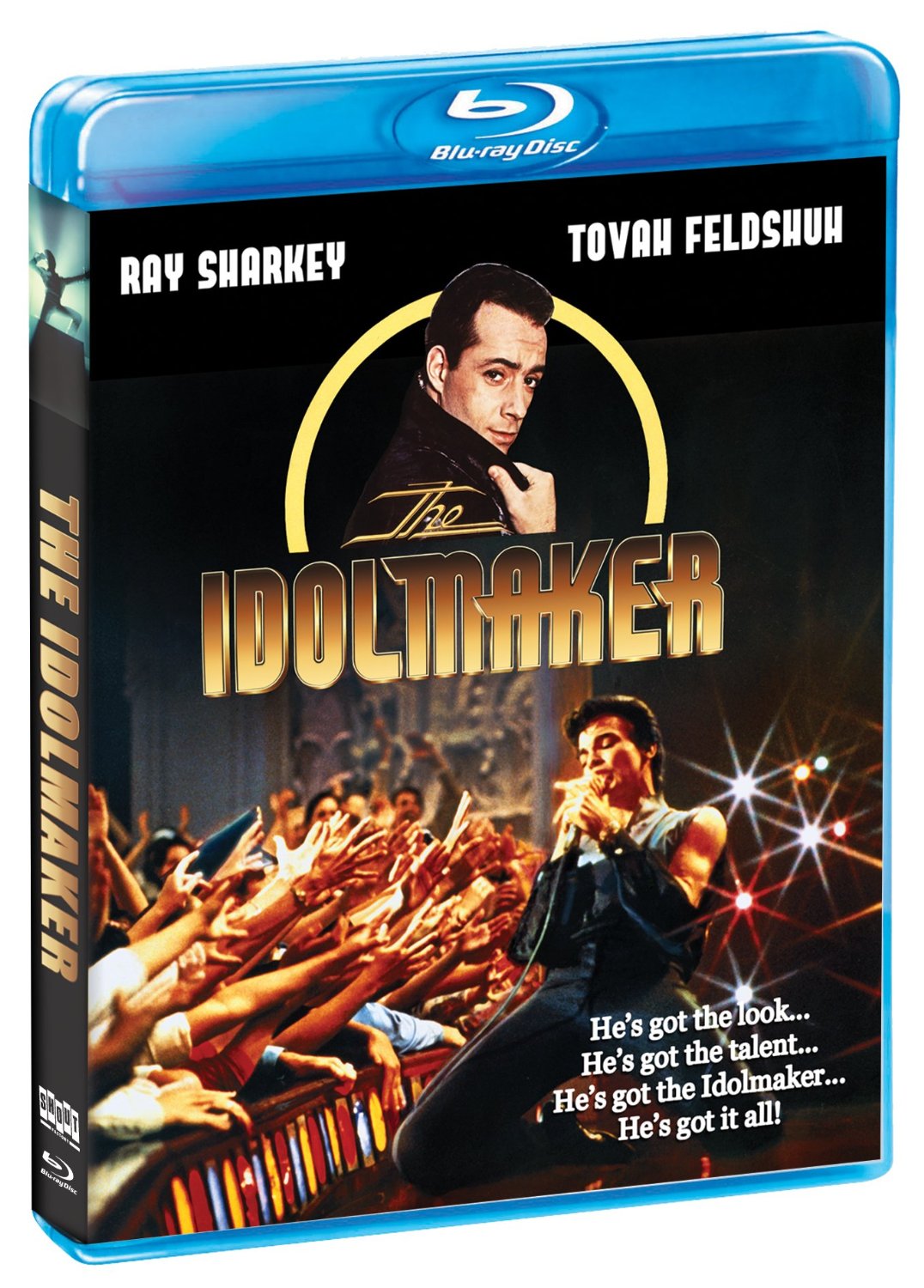
My best work is often done behind a computer or somewhere where my face is not on display. I am not the most handsome guy despite the fact I have been described by those of the female persuasion as otherwise. But I have talent, loads of it and I am always waiting for the next moment to show it off. Perhaps I can take a cue from our movie today, The Idolmaker and use my talent to make others around me stars. Maybe I should just go shave instead.

New York City, 1959. Check out the black leather jacket, red pants, Cuban heels and pantyhose style socks. This is one Vincent Vacarri (played by Ray Sharkey). He passes by Tommy (played by Paul Land) who is running a street con game for some extra money. Tommy catches up with him and tells him about his band which has a new lead singer named Jimmy Ryan. Vinnie complains that the singer does not have the look and that his blond hair is never going to work.

“Well, when you love someone you don’t have to be nice all the time.”

In this current age of message boards and morning-after recaps, the pressure is on to make your voice the loudest if you want to be heard in the wilderness of the Internet. For snarky TV critics, that often means declaring something is either the “Best ____ Ever” or the “Worst ____ Ever”, with little room for anything in-between. But even within these sharply-divided times, I believe HBO’s Girls — which is brilliant just as often as it is maddening — stands out as the most polarizing show on TV.

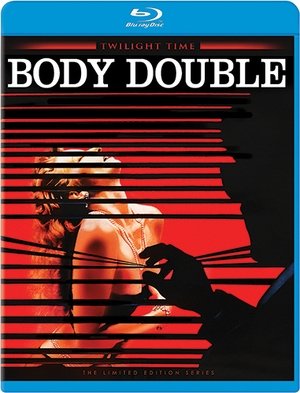
Plenty of movie critics out there like to praise the artsy movies like they are the second coming. We see it all too often. Critically acclaimed, revolutionary, captivating, all over used words to described the latest movie that often is nothing more than a good reason to sleep for two hours. For me, I love a different type of movie, in a generic term, the cult classic. A movie that is so awful, it is often fantastic in its own way. A frequent subsection of this is the campy erotic thriller. One of those films is on the docket today, and that film is the DePalma classic: Body Double.


Let's cue the scary music! Bring in the fog! As we roll back from the very fake graveyard, we see a rock and roll vampire (played by Craig Wasson) laying in his coffin. As he is about to hit his moment and rise from the grave, he gets an unfortunate case of claustrophobia. Cut! Cut! It appears the actor, Jake Scully is having issues on set. Director Rubin (played by Dennis Franz) wants to know what happened out there and Jake does his best to explain it away. They almost go back for a second shot but not before the graveyard catches on fire thus calling it quits for the day.

The time was that following the death of a good king, England was left without a clear heir to the throne. During the time without a king, England had descended into dark times. Suddenly as if through divine intervention a sword appeared in an anvil of stone. An inscription decreed that whosoever could remove the sword would become king. Think you’ve heard the story before? Well, of course you have. It is none other than the story of King Arthur. Most of us have heard the many stories. It shouldn’t have come as a surprise to anyone that Walt Disney himself was quite taken with the tale, when you consider it it’s about as natural a fit as one can find. Disney’s early works were replete with tales of seemingly ordinary people with extraordinary destinies. From Sleeping Beauty to Cinderella, Walt had put his own touch to many such tales.

Our story begins in this England of dark times. A wizard named Martin… eh, that’s Merlin … is sitting in his humble room awaiting the arrival of a special lad. Gifted with the ability to see forward in time, Merlin knows that this lad will soon be arriving, and it will be his responsibility to educate the boy. When the young man referred to as The Wart does arrive, it seems unlikely he could be destined for much of anything. He’s rather physically awkward and appears none too ambitious. Still, Marvin, that is to say, Merlin, takes on the task with an eagerness that becomes somewhat annoying to his companion, the owl Archimedes. The lessons involve for the most part magical transformations and a few catchy tunes. Before long “The Wart” aka Arthur finds and fulfills his destiny. This story is more about the journey than the destination. Arthur doesn’t have his encounter with the sword, often erroneously identified as Excalibur, until the last minutes of the film. There is a hint that more stories would follow, but they never really did.

“Once upon a time in New York City…”

Walt Disney might well have been the storyteller of more than one generation of kids. Is it any wonder that when we think of such characters as Winnie The Pooh or Peter Pan our minds conjure the images wrought by Disney animators and not necessarily the classic literature descriptions? That might not be the case with this Charles Dickens story, retold through Disney’s trademark animal point of view. Oliver & Company doesn’t appear to have had the staying power of films both before and after its time. After watching the film again, perhaps for the first time since its release 20 years ago, I can’t imagine why it has never quite caught on. From a popular culture standpoint the film has all of the elements that have led to other more beloved Disney classics. The Dickens story is a familiar one, read by most literature students as a matter of course. Many of the era’s biggest names lent their voice talents to the characters, including Billy Joel and Bette Midler. The songs are about as catchy as anyone might have hoped for. Just what was it that relegated this little seen Disney adventure to the bargain bin of animation classics?

For most modern moviegoers, Marilyn Monroe is probably more “famous for being famous” than she is for her cinematic body of work. (Of course, she’s also infinitely better known for an entirely different “body of work.”) That’s not totally fair because Monroe has at least one bona fide classic (Some Like It Hot) and a handful of indisputably indelible images among her movie credits. Those of you interested in exploring her filmography are in luck: Fox has just released two titles from her mid-1950s superstar peak on Blu-ray, including her femme fatale turn in Niagara.

Monroe stars as Rose Loomis, who is visiting Niagara Falls with her older, jealous, volatile husband George (Joseph Cotten). When the film opens, Rose and George are staying in a cabin reserved by Polly and Ray Cutler (Jean Peters and Casey Adams), but the Cutlers agree to take another room and give the seemingly troubled couple some space. Turns out George has good reason to be jealous: during a tour of the Falls, Polly spots Rose making out with another man. Eventually, we learn Rose and her lover plan to kill George and run away together.

Elvis Presley was easily one of the most impactful pop culture icons of the 20th century during his life, and that status has barely waned in the decades after his death. (Or “alleged death”, given the number of Elvis sightings each year.) Presley obviously made his most lasting mark in the world of rock and roll music (and fashion), but he also had a surprisingly fruitful film career. Though none of his movies turned out to be cinematic masterpieces and no one was confusing him with Marlon Brando, The King brought his charismatic presence to more than 30 movies between 1956 and 1969. He was 21 when he made his film debut in Love Me Tender.

Fox has just released the 1956 Western/Civil War drama on a nifty-looking Blu-ray. (More on that in the Video section.) The first thing that struck me about the black & white film is that Presley — arguably the most famous person in the country at the time — is not really the star.

The 1970s famously produced many of the most daring, diverse and groundbreaking classics in movie history. All-time greats like Scorsese, Spielberg, Polanski, Altman and Lucas either broke out or did some of their most exciting work during the decade. But, even among these titans, Francis Ford Coppola separated himself from the pack. Four films — The Godfather, The Conversation, The Godfather Part II, Apocalypse Now — four undisputed classics. Batting 1.000 during the greatest moviemaking decade of all time earns you a ton of slack. In Coppola’s case, it has gotten him enough slack to make up for the fact that nothing he’s done in subsequent years can touch his ‘70s output.

That’s not to say there isn’t plenty to enjoy in the rest of his filmography. The Outsiders helped launch the careers of more than a handful of Hollywood heartthrobs. His gothic, lush take on Dracula is impulsively watchable, although the scariest thing in the movie remains Keanu Reeves’ English accent. Even his warm adaptation of John Grisham’s The Rainmaker managed to rise above the crowded pack of ‘90s legal dramas. After The Rainmaker, Coppola didn’t direct another movie for 10 years.