Disc Type

"It's time for the biggest gladiator match of all time. Son of Krypton versus Bat of Gotham." 

In a summer chock full of blockbusters that are expected to defy box office records, dare I say this may be the most anticipated one of them all? When news about this film was first released, opposition rang out on both sides of the spectrum. Some argued that films that feature two characters facing off rarely work, especially when it comes to two heroes. I have to admit that I found myself agreeing with this argument. In my defense, this appeared to me as a clear strategic ploy to fast-track the introduction of the much-anticipated Justice League franchise. Now, albeit true, my resistance did waver upon watching the trailer. So as I sat in my seat, anxiously awaiting the lights to dim and the screen to illuminate, one question dawned (pun intended) on me: can the film live up to the hype?

They really don’t make horror films like they used to. I understand that each decade graces us with new, unique genre mechanics, but there is just something to be said about the horror elements found in 1980’s cinema. While Hellhole does not have any supernatural or modern science fiction qualities, it does carry the classic “mad scientist” narrative quite well. The film also boasts one of the silliest, yet terrifying, villains I have seen to date. Hellhole is a film that gracefully slips below the radar, but for the cult cinema connoisseur, the strong writing is really what makes this film a great find.

The film opens with Susan (Judy Landers) escaping from a home invasion: Her mother has stolen implicating bank statements from the doctor she works for, and a goon is attempting to get them back. The goon is none other than “Silk” (Ray Sharkey), a rather flamboyant hitman, clad in a studded leather suit, a long red scarf, and a silly hairdo. Susan knocks herself out and finds herself in an all-woman insane asylum, suffering from amnesia. Silk attains an orderly position at the hospital to wait for her memory to return. To my pleasant surprise, the plot did not end here. In fact, the film includes a parallel storyline to Silk: the board of medicine has hired a private investigator (Richard Cox) to take a position as an orderly in an effort to find incriminating evidence against the mad psychiatrist, Dr. Fletcher (Mary Woronov).

If there was a show I could recommend to someone who is looking for a smart thriller that doesn’t talk down to its audience, I couldn’t point to Person of Interest fast enough.  It’s a show that may be labeled sci-fi for some, yet its science and technology may not be so far off.  The idea of our government or private agencies using security cameras or our phones to monitor us is no longer just a rumor muttered around in circles of conspiracy theorists, but is quickly becoming a reality of day-to-day life. I kind of saw the show as a riff on the Batman story, subtract the cape and cowl and exchange it for a suit, then throw in a dash of George Orwell’s 1984, and you can see where the show got its start.  For those who have never seen the show, you are doing yourself a great disservice by not watching the show, and to step in during its fifth and final season, I believe it’s safe to say you’d be more than a little lost.  So what does creator Jonathan Nolan have to offer us in these final 13 episodes?  To get straight to the point, this might be one of the best final seasons for a show (at least since Justified) that I can recall seeing.

When we last saw John Reese (Jim Caviezel) and Harold Finch (Michael Emerson), they were struggling to compress and protect The Machine that they were able to code into a briefcase and onto several drives.  All this is while Samaritan has become fully functional as an artificially intelligent program that seems to be able to track anyone, anywhere with the aid of a secret government task force.  Not only does our team have to go underground, but now they are constantly in danger with targets on their back; their only protection is their manufactured identities The Machine created for them. (Still with me?)

You talk dreams to those kids, you better follow through.”

There's a (not-so) grand cinematic tradition of white knights riding into rough neighborhoods and inspiring the disadvantaged kids who are seemingly stuck there. We've seen this plot applied in everything from Hardball and McFarland USA to Sister Act 2. (Hey...no one said the white knight *has* to be white). For the most part, these movies are as formulaic as they are enjoyable. So one of the many wonderful things about New Zealand chess drama The Dark Horse is that its white knight hero is a complex, damaged, well-meaning figure who's actually in worse shape than the kids he's trying to help.

"It's time for the biggest gladiator match of all time. Son of Krypton versus Bat of Gotham"

In a summer chock full of blockbusters that are expected to defy box office records, dare I say this may be the most anticipated one of them all? When news about this film was first released, opposition rang out on both sides of the spectrum. Some argued that films that feature two characters facing off rarely work, especially when it comes to two heroes. I have to admit that I found myself agreeing with this argument. In my defense, this appeared to me as a clear strategic ploy to fast-track the introduction of the much-anticipated Justice League franchise. Now, albeit true, my resistance did waver upon watching the trailer. So as I sat in my seat, anxiously awaiting the lights to dim and the screen to illuminate, one question dawned (pun intended) on me: can the film live up to the hype?

I remember…”

On the surface, there's nothing particularly remarkable about Paul Dedalus, the French anthropologist at the center of My Golden Days. As he prepares to return to France after an extended work stint in Tajikstan, Paul reflects on a trio of key moments from his childhood and young adulthood. Much of what Paul recalls — the death of a parent, his first love, and the aching of a long-distance relationship — is completely relatable. Yet filmmaker Arnaud Desplechin aims to present Paul's life as the most romantic, tragic story ever told.

For a film called Joseph and Mary, the titular characters are little more than a footnote in the overall film in my opinion. Jesus has an even smaller role, which is a notable first for film when it comes to films that reference the character. I give it points for it focusing on less notable people rather than the big three. However, that said, execution of the project was a failure to launch due to predictable storyline and lackluster performances.

The first half of the film is underwhelming, merely the setup for the bigger aspect of the story, which is forgiveness. The film does a good job showing the evils that man is capable of, although a bit more gore would have improved getting that point across; however, I understand that is a family-friendly story and understand the necessity to keep matters PG. That said, the largest theme of the movie is the decision between choosing forgiveness or acting on vengeance. That is the dilemma that Elijah finds himself in. Having that as a theme served as more of a crutch for the film than asset if you ask me, especially given that it is a family-friendly story. I’m sure without much provocation you can figure out how things turned out, and that preconceived knowledge and the fact that matters didn’t deviate in the slightest is what diminishes much of the mystery of setup.

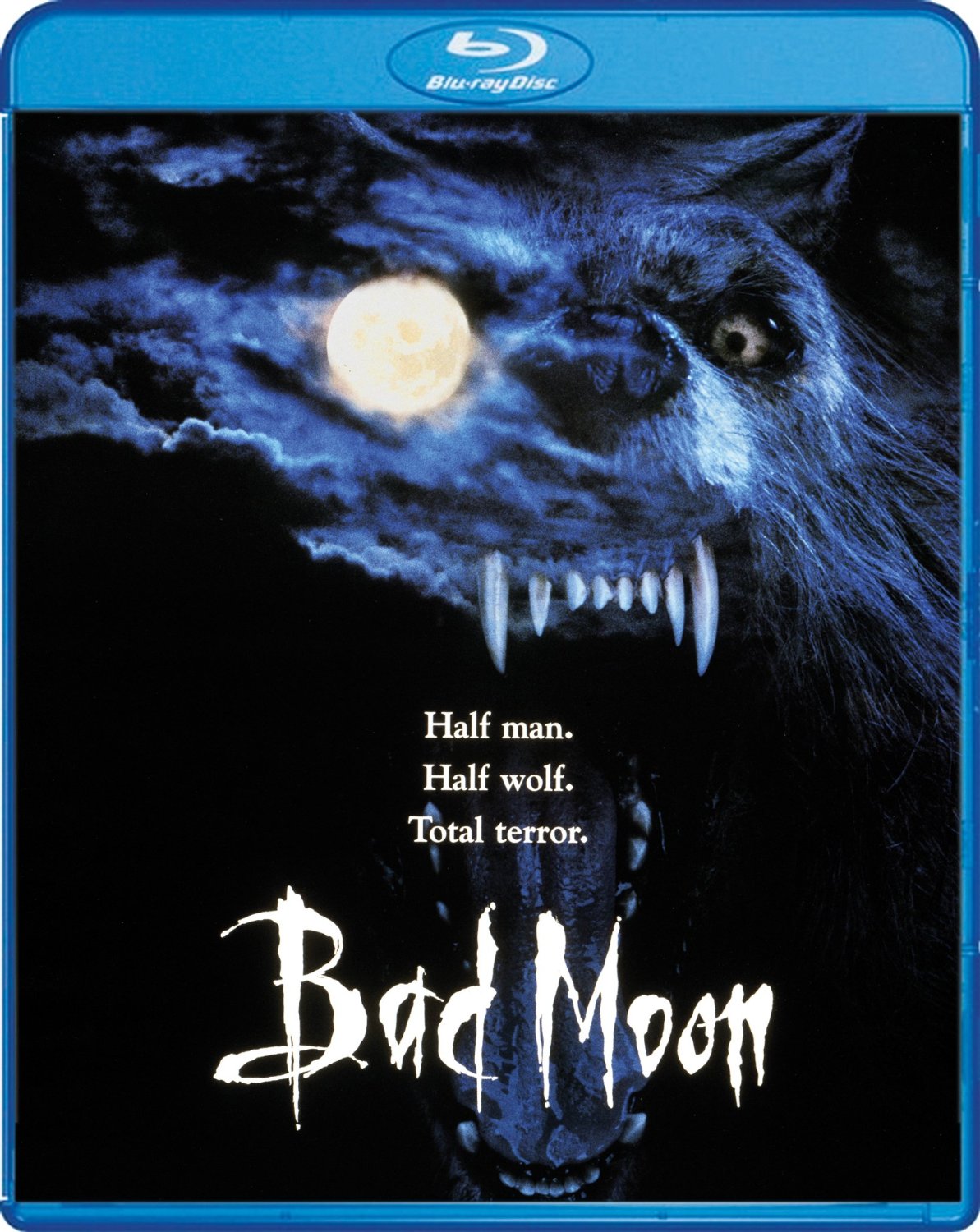
From the very beginning one can see there was great potential here. The show was based on a collection of books that appear to be quite popular. They're called The Outworld series, written by Canadian author Kelley Armstrong. The show avoided most of the standard clichés. No full moon reference at all here. The werewolves "change" at will or when emotionally charged (“you won't like me when I'm angry”). There are no silver bullets. These guys might be stronger and harder to kill than a human, but severe body trauma or blood loss kills them just like anyone else. No pentagrams or wolfbane to be found in the show. Such potential. After three years, the ride comes to an end with all of that potential unfulfilled. The werewolves might have been hard to kill. Alas, the show was not. 

Bitten told the story of Elena, played by Smallville's standout actress Laura Vandervoort. Elena is a werewolf. Any aspect of her normal life is long gone. The show long ago ceased in any attempts to have the character try to balance the two lives. The show was at its best when it told the story from the point of view of Elena. She's a unique character in this world. She's the only female werewolf known to ever exist. The idea is that women are not physically strong enough to survive the "change", and only boys carry the trait genetically. That puts Elena in a rather unique and clever place for both the show and werewolf mythology. Some might find it a bit sexist, but we won't go there.  Vandervoort is also a good enough actress to be interesting, and even at times compelling, in the role. There wasn't any help here from the writers, cast, or crew. The plot moved at an annoyingly slow pace, and after 10 episodes you look back and see just how little story was actually told. Now after three years the show ends, and I don't feel like the journey took me very far. Vandervoort is also getting frighteningly thin. Her face bones are protruding from her skin these days. She makes Calista Flockhart look like Orson Welles. I kept screaming at the screen, "Eat a burger, for crying out loud." Maybe it's just the Italian in me. 

I have just reviewed The Bible Stories: Jacob in which I may have left people hanging, because I teased the end of the story. Of course that only applies to people who have never read the Bible. The Bible Stories: Joseph will give you some of those answers if you never got to the Good Book. Jacob indeed survives and thrives, so God was good on his word. Jacob had many sons, but in this film he is older and played by Martin Landau, not Matthew Modine. Jacob had 12 sons with two wives and two handmaids who were all involved with the births. Jacob (also known as Israel) entered into a covenant with God to create a new nation of plenty and prosperity.

The Bible Stories: Joseph is the best of this series that I have reviewed. The story is very well told and extremely compelling, moving, and inspirational in real ways. The story starts in the middle by introducing Potiphar (Sir Ben Kingsley), the Pharaoh’s most trusted advisor, as he is looking over a potential new slave. The slave is Joseph (Paul Mercurio) who Potiphar buys in a fairly apathetic fashion, but this new slave becomes enormously profitable in short order. Everything that Joseph becomes involved with generates fantastic bounty and success. This is noticed first and foremost by Potiphar’s wife, Zuleika (Lesley Ann Warren) who gets Joseph more responsibilities, but what Zuleika really wants is more access to Joseph. When Joseph repeatedly refuses her advances, she accuses him of rape. By this time, Potiphar knows Joseph so well and values him so highly that he finds a way to avoid giving the death sentence that Zuleika demands. He sends Joseph to the prison, where his services become even more productive and beneficial. The story then weaves the earlier story of Joseph into the telling, the story of Joseph’s brother’s and their jealousy.

Ever since writer/director Jeremy Saulnier came out with his gripping revenge film Blue Ruin, fans have been patiently waiting to see what he’d do next.  If you have not had the chance to see Blue Ruin and you are a fan of the revenge genre, it’s a film that is certainly a must see and is one of the few films that lives up to the hype that surrounds it.  The problem with doing such a strong and powerful film so early in your career is that expectations seem to just skyrocket, and it seems there is just no way you can make everyone happy.  As a fan first and critic second, I know I’ve been guilty of doing this in the past, and it’s almost impossible to not get excited, and at the screening for this film, I know I was not the only one with high expectations.

On top of the high expectations, the group I viewed the film with was restless after having the film delayed as well, so this only seems to be another strike against the film before it’s even had a chance to play.  I mention all this for the simple reason that this film reminded me of the importance of shutting out all expectations and simply letting the film stand on its own merit.  This is important because I feel Saulnier knew the expectations he had, and instead of playing it safe, he did something that very few filmmakers are willing to do anymore; he simply made a movie that is not just gripping and intense, but most importantly, it was fun.