Anime

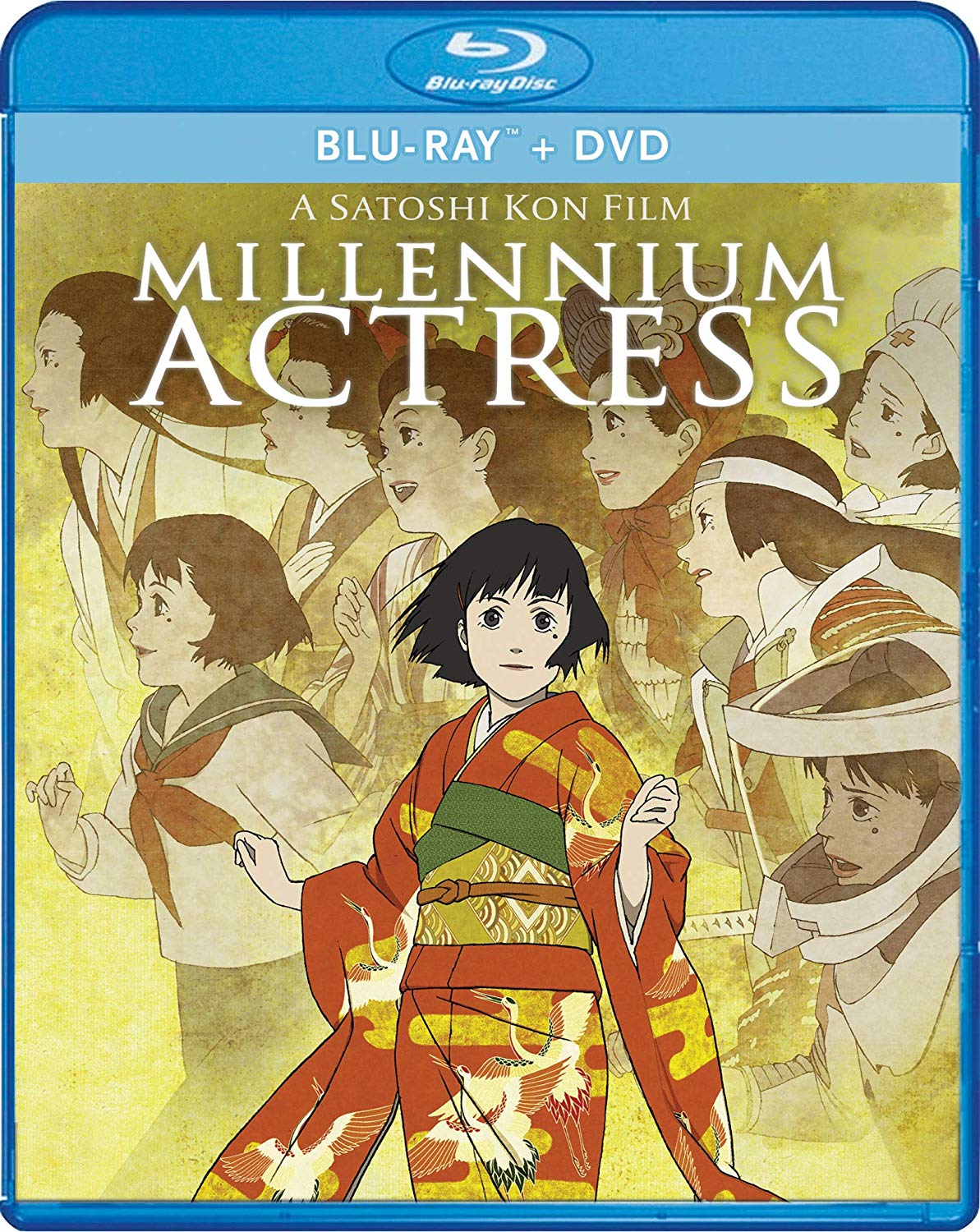
I think most people have had the fantasy of what a film of their life would look like through the camera lens.  The high points, the low moments, and everything in between.  Perhaps it would be boring (probably most of us), or just perhaps it would be brimming with excitement.  Whatever the situation, we just hope that somebody else would find it interesting or at least star our favorite actor or actress.  Today, we bring to you a review of an anime that tells the story of Chiyoko Fujiwara, an experienced actress, through one filmmaker Genya Tachibana's passion and the lens of  his cameraman, Kyoji Ida.

We are in space where a female astronaut says her goodbyes as her crew pleads with her not to go.  The countdown starts.  The screen shifts back to Genya Tachibana, who is watching this presentation, which we now realize is a film staring the great Chiyoko Fujiwara.  An earthquake shakes the film room  where Genya is watching.  It stops after a minute, and Kyoji Ida comes in and tells him that they need to go.  The filmmaker gets up and starts to follow.  He stops and then decides to rewind the tape he was watching.  As he leaves, we watch the monitor display various moments of Chiyoko's film career.  Cue credits and emotional music.

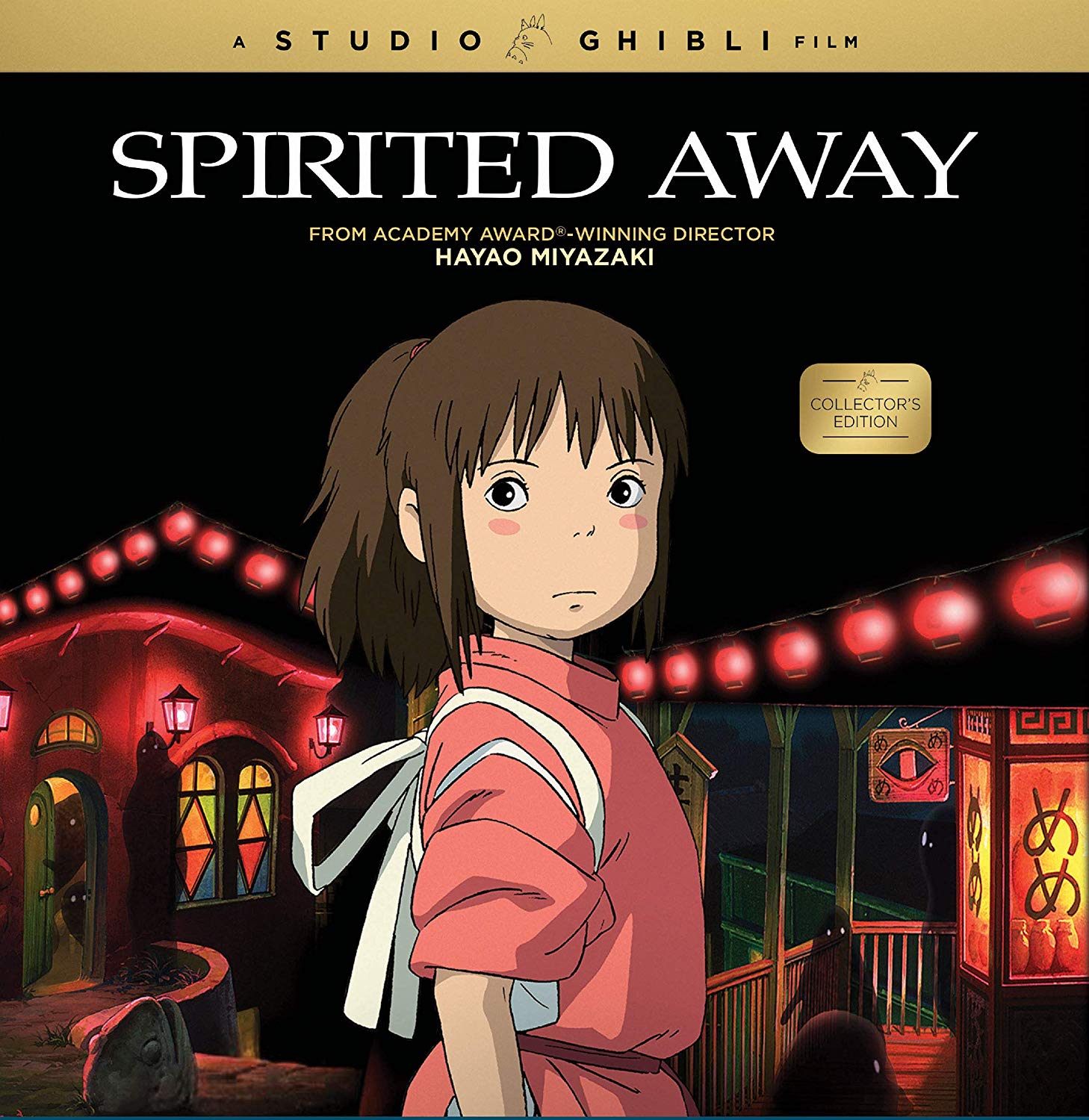
We are back with another collector's edition from Shout Factory.  This time we tackle the much celebrated Spirited Away, directed by Hayao Miyazaki, which was released in 2001, when it did so well that it ended up on our domestic shores in the following year.  It was absolutely adored by critics, and here is a fun fact.  I have never seen it.  Little did I know that the American trailers I was seeing around this time were warping my idea of what the film was really about.  Finally, after all of these years I have had the opportunity to watch and digest such a fantastic film.

Chihiro, a ten-year-old girl, is trying to relax in the back of her parents' car.  They are on their way to a new city, with a new school, and the young girl is having none of it.  As they search for the house where they are going to live, the father decides to use his four-wheel-drive and take off into the forest in hopes of making a shortcut.  But rather than finding their new house, they end up at a long building with a dark tunnel that appears to go somewhere exciting according to the parents.

As a kid growing up in the 70's and 80's, I quickly grasped the concept of a good short.  Whether it was a tiny piece before the movie started at my local cinema or a Looney Tunes cartoon on my 13-inch television, I saw how hard it was to capture the audience in the span of such a small frame of time.  However, when those directors are able to capture that lightening in a bottle, it can produce some amazing results.  Today, we are taking a look at Genius Party and Genius Party Beyond and see if a few of these fantastic directors can create a memorable slice of anime.

Genius Party and Genius Party Beyond are two collections of shorts released in 2007 and 2008 respectively.  It is twelve pieces by twelve different directors with different animation styles.  In the following bylines, I'll try to piece together what each of these takes are about and then have some broad comments after.

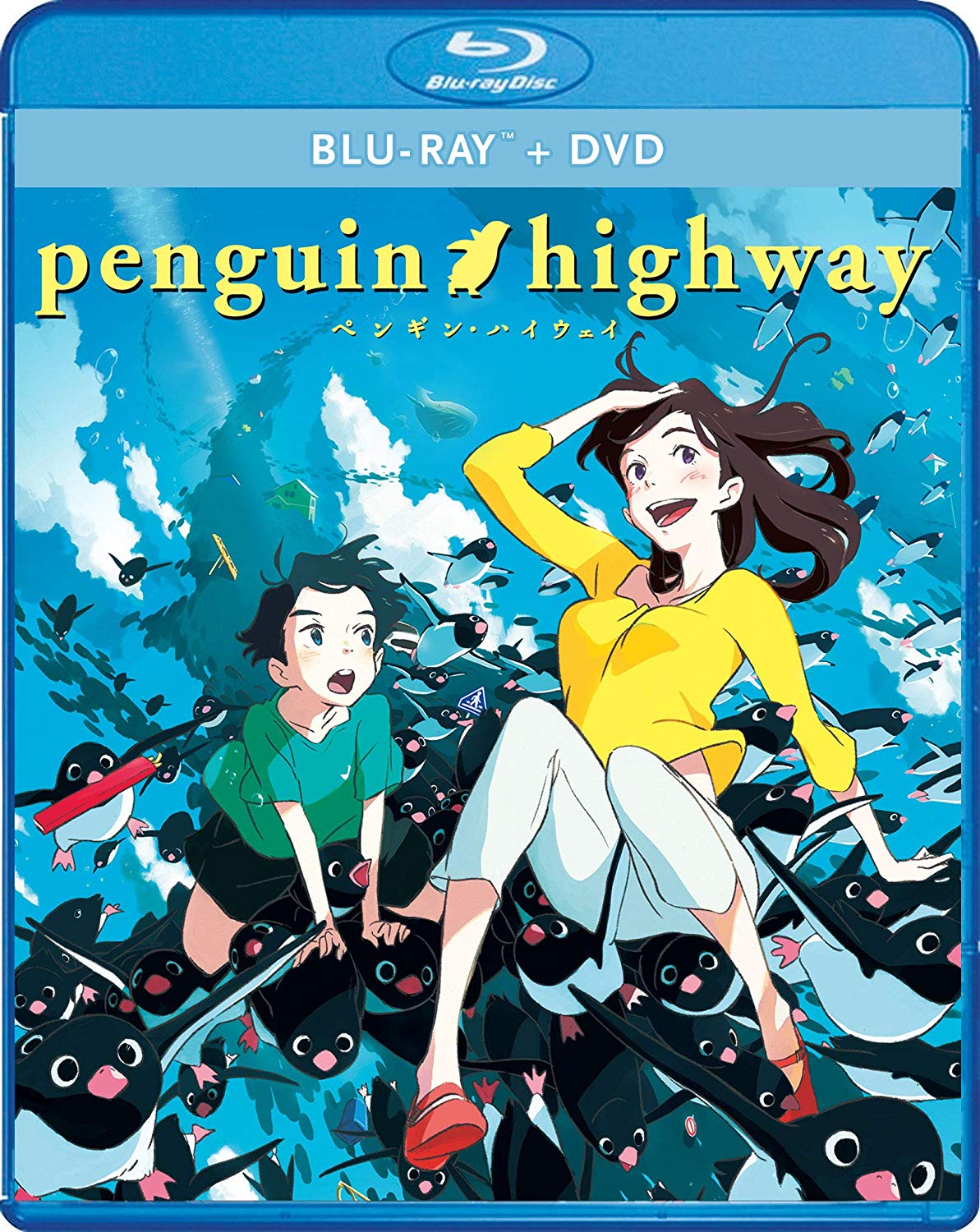
I think most men as they take on the journey from boys to men usually encounter a fascination with an older woman.  Usually it's nothing more than an infatuation, an impossible ideal that even the woman herself can't live up to.  But the ideal of what we think of her is important to our growth and vital to exploring our feelings.  In our film, Penguin Highway, we meet a boy who becomes fascinated with an older woman named Onee-San.  However, the mysteries surrounding this lady are numerous and turn this common coming-of-age story into something extraordinary.   Let us take a look.

It is June 29th; the temperature outside is a breezy 25 degrees Celsius (77 degrees Fahrenheit).  Aoyama is in the fourth grade.  He is smart, and he studies hard.  The student has a very bright future ahead of him.  Importantly, Aoyama is high on himself, but he is not conceited, and that's what makes him great.  On the way to school, he stops by a bunch of children his age who are looking out into the field.  There appears to be a gathering of something, but nobody can make it out.

My wife has been a part-time travel agent for roughly the last year or so.  In that time, I have learned much about airlines, cruise ships, and of course hotels.  I have also thanks to her guidance and knowledge been able to stay at a few nice hotels in the past year which were much more comfortable than I could have ever expected.  However, despite my travels with my lovely better half, I seriously doubt I will ever come upon a hotel quite like the one depicted in Okko's Inn anytime soon.  Let us spend the next few minutes looking at an anime where your lodging is the best part of your trip.

We open to a festival of sorts, called a spa by the locals.  Music is playing; it is time for a show.  We see a couple of people perform traditional dance numbers, while Okko, our main character, watches.  Her father and mother are also on hand to explain the traditions to our young heroine and how they wish they could be part of the show.  The show speaks to the theme and the spirit of "Welcoming Everyone".

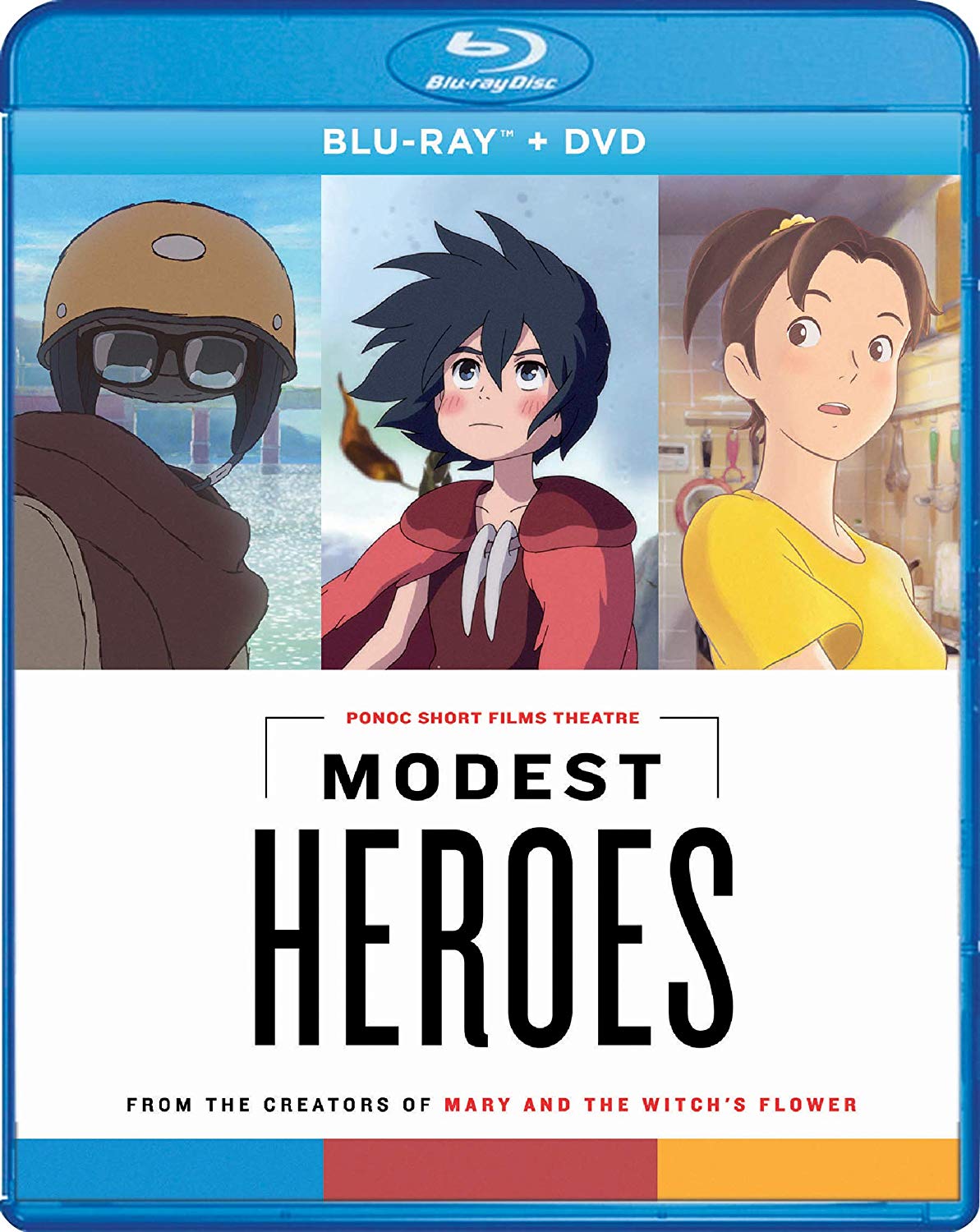
Short stories and films are often great ways to focus in on a singular theme. Whether you get yourself down to a few pages or fifteen minutes, you really get your message across instead of being misinterpreted across a longer medium. Disney and Pixar have done this for a number of years, and even though many have dismissed them as simple shorts or cartoons, it's often the part of the movie that holds the viewer in the strongest way. Japanese studios such as Studio Ghibli have done this as well. Studio Ponoc, founded in 2015 and fronted by Yoshiaki Nishimura, released the smash film, Mary & the Witch's Flower in 2017. Then last year, they came out with a trio of shorts for all of us to enjoy. Let's take a look.

Kanini & Kanino by Hiromasa Yonebayashi
There are birds singing and fairies flying. Streams are bubbling, and we are introduced to a family of crabs (who are depicted as tiny humans who can swim and breathe on land and in sea). There is the brother, Kanini, and the sister, Kanino. The mother is very pregnant and has gone away to the surface to give birth. Their father has stayed with the brother and sister to help them get food and protect them from threats of the sea. However, one day something sinister takes away the father, and it's up to the two kids to find and save him.

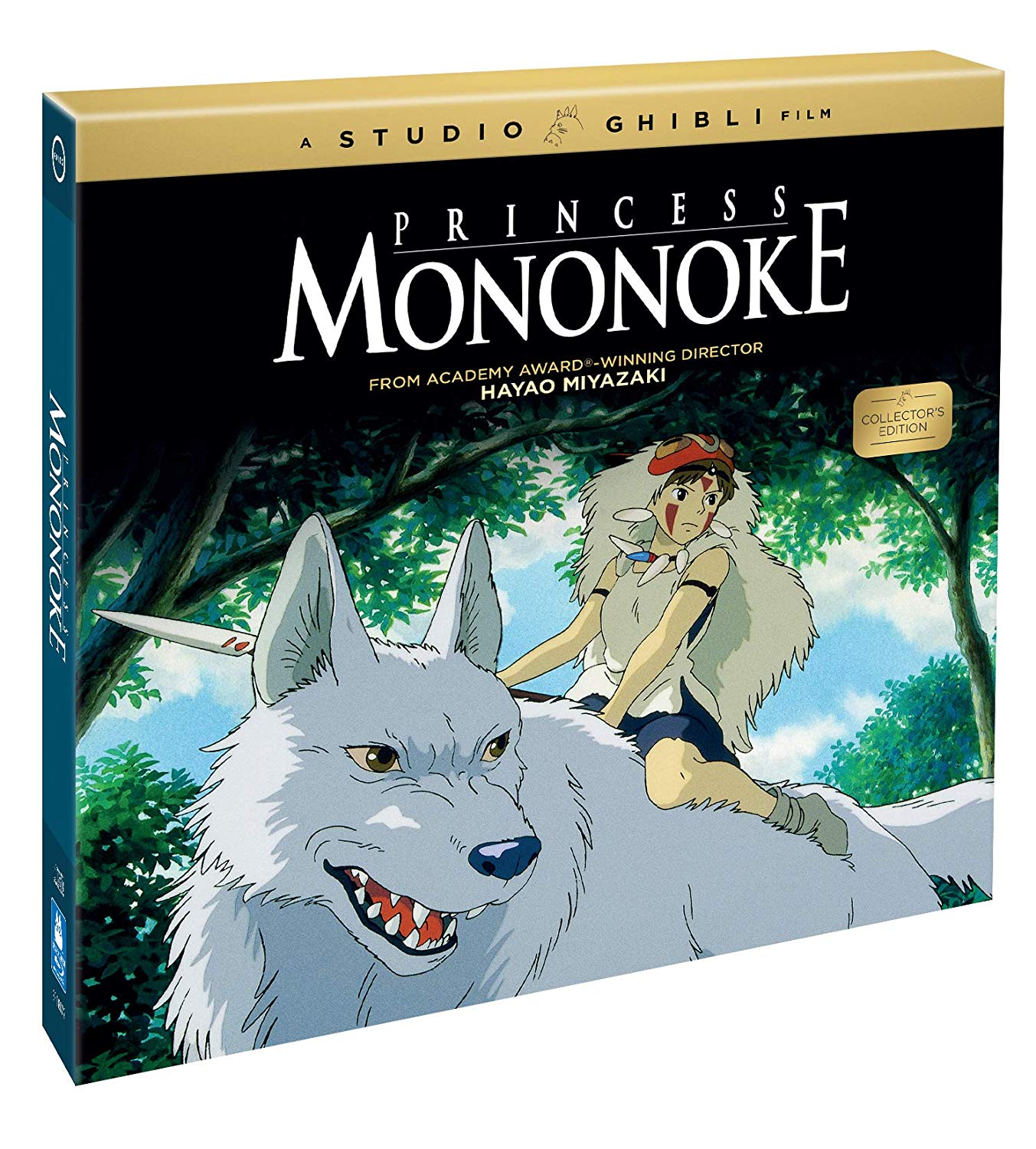
Hayao Miyazaki is an amazing Japanese animator and filmmaker.  His films include Kiki's Delivery Service, My Neighbor Totoro, and Howl's Moving Castle among other legendary pictures.  I can safely say I have enjoyed most of his films but unfortunately only owned a couple at the time of writing this review.  That's why I was quite astonished when this collector's edition of Princess Mononoke came across my desk.  I was ready to dive in with both feet and re-visit this movie that I had not seen since, well, almost twenty years ago.

In ancient times, the Land lay covered in forest.  Here dwelt the spirits of nature from time immemorial.  

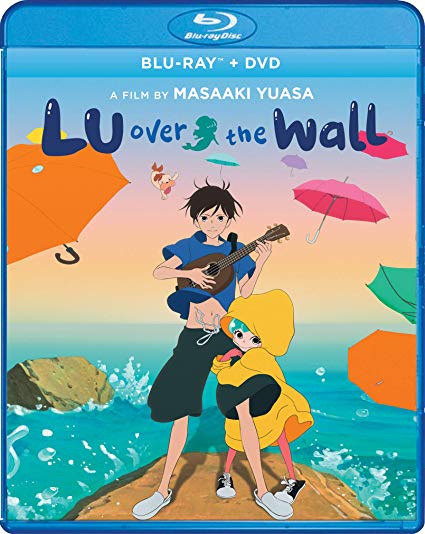
It is interesting to see two or more of a director's works in a short period of time.  One sees similarities, differences, and how the filmmaker hones his craft as they improve with every production.  Masaaki Yuasa is certainly one of those directors, and if you enjoyed my review on Night is Short, Walk on Girl,  then you will want to go ahead and read my review today on Lu Over the Wall.  While there are similarities, I can safely say that is quite the departure from the previous film.  Let us take a look in the animated world of merfolk and the people who live around them.

A boy taps his fingers next to a microphone for an Internet streaming session as we read the comments below his video.  There seems to be a lot of interest below his post including the potential for some band-mates should he ever want to expand his horizons.  We soon meet the boy named Kai as he shuffles downstairs to have breakfast with his grandpa and father.

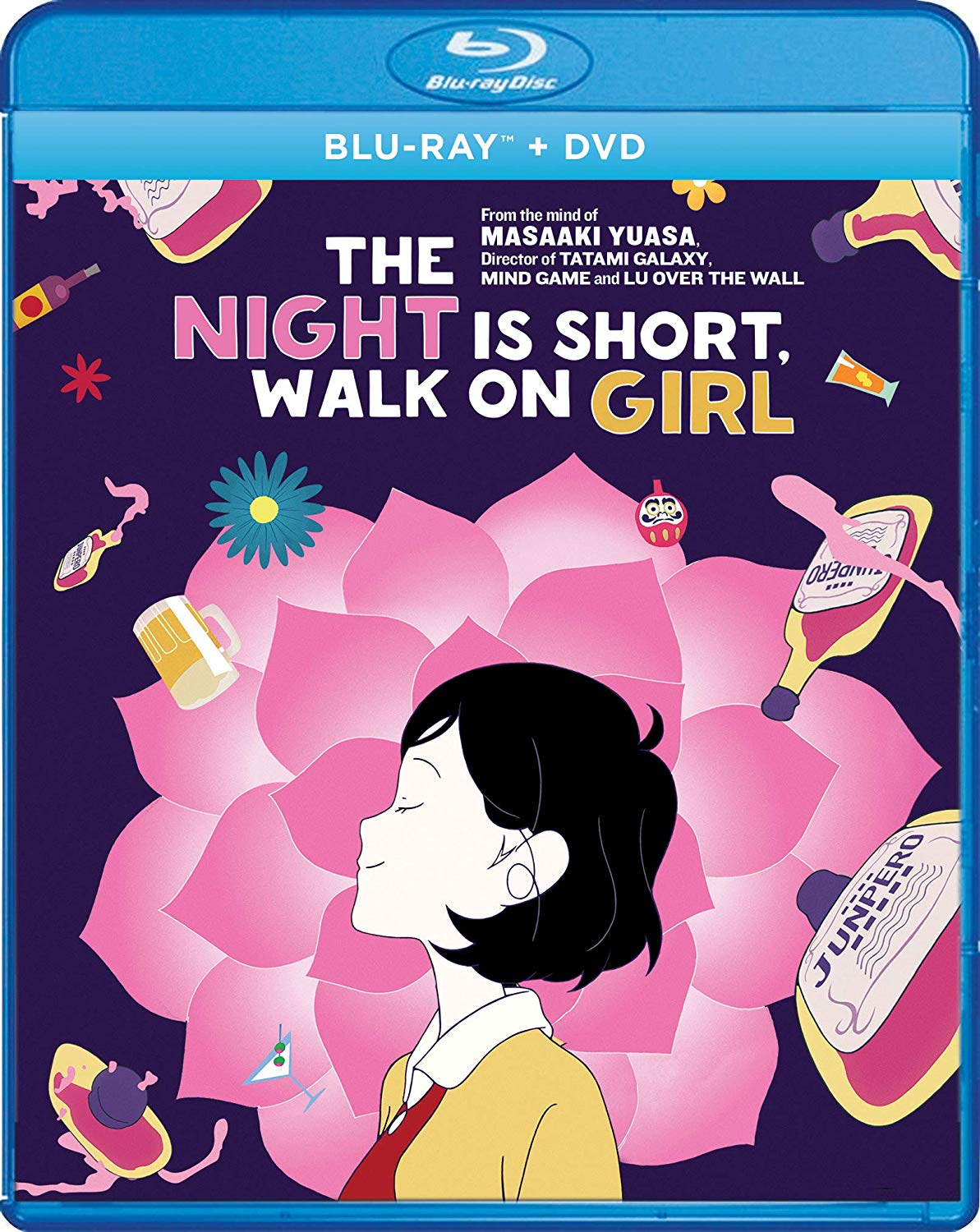
I have had many story ideas in my head for quite sometime.  Putting them on paper is indeed another thing.  One such story is a road trip between some friends that starts out normally, but little by little it becomes unraveled until it represents a tremendous and crazy affair.  Unfortunately, I only got through nine chapters, and it hasn't seen a word since.  Today's review is focused on an anime that is named The Night is Short, Walk On Girl.  It involves the story of a girl who starts a normal night drinking through town.  However, little by little the people and events around her become more extraordinary and bizarre as the night carries on.  Hopefully this one makes it well past the ninth chapter.

We visit a restaurant. A girl with black hair is drinking with her friends.  She stares endlessly into a bowl of soup until it turns into a bunch of eyeballs, and then we hear a train whistle.  The girl wishes to be out on the town instead of watching time pass.  The scene moves to another table where we meet Senpai, a teenager obsessed with the girl with black hair.  The School Executive Festival Head (who also apparently cross-dresses when the mood suits him) confronts Senpai with this accusation, but he denies it.

Young love is a wonderful concept that I wish could be sold and bought by the ounce, because I would either be rich or horribly addicted. Two people hopelessly absorbed by each other in a raging pool of hormones, bliss, and social media. It is a beautiful sight even if most of the time it is fleeting and gone in the blink of an eye. But what if you could change those decisions that made love lost and make it blossom again? Then you might just have Fireworks, a new Japanese anime from the producer of Your Name. Let's take a look.

We open to a boy and girl who are falling to the bottom of an ocean. The boy is trying to help the girl, who appears to be unconscious and about to drown. He shouts "Nazuna", and then we fade to black.