Genre

"Susie, one of the longest borders on earth is right here between your country and mine. An open border. Fourteen hundred miles without a single machine gun in place. Yeah, I suppose that all sounds very corny to you."

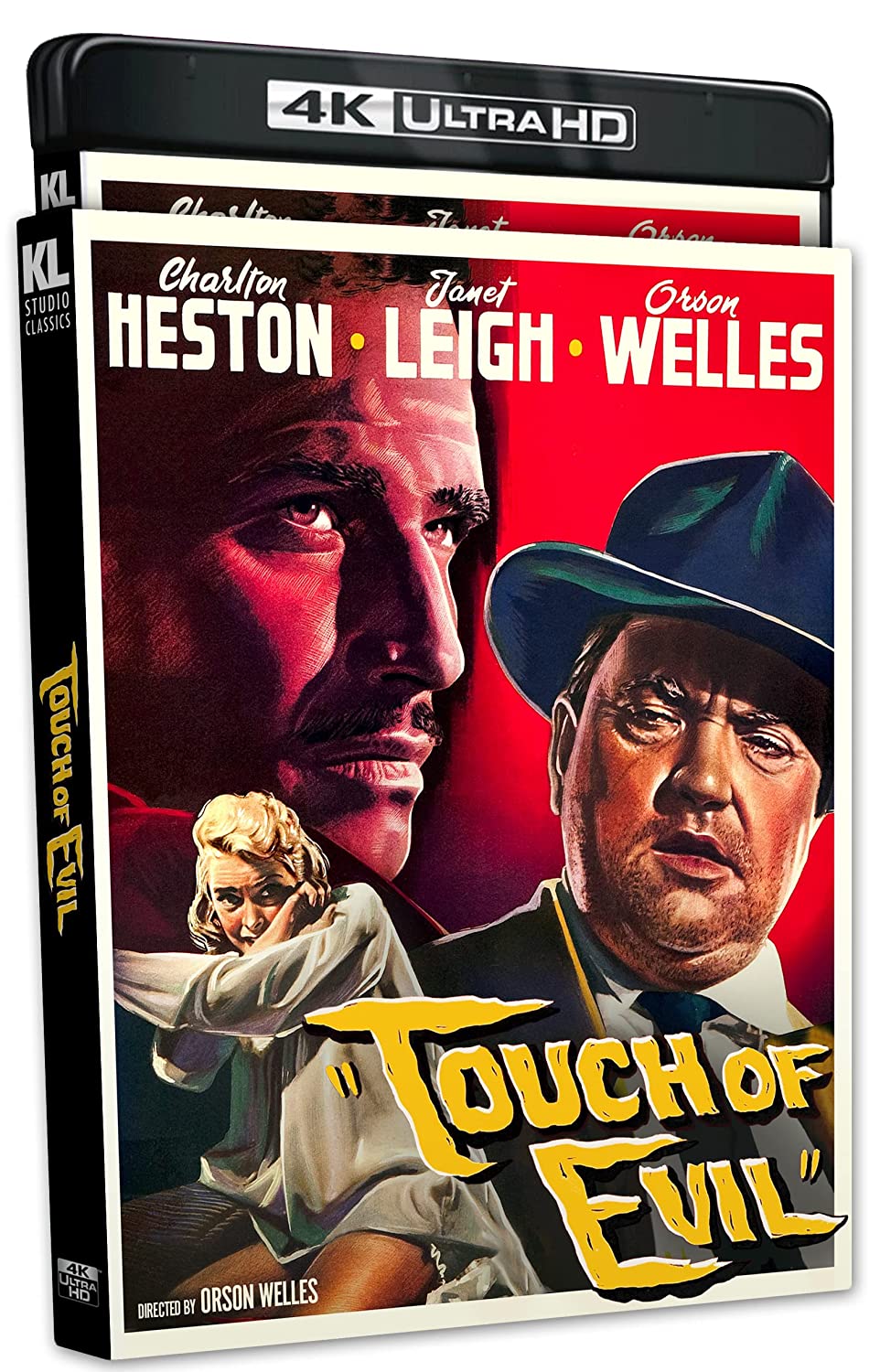
Orson Welles was a huge personality in Hollywood both in his stature and his work. Taking a controversial poke at media giant Randolph Hearst, he struggled against fierce odds to direct a film that is often considered the best, or at least one of the best films ever made. Of course, I'm talking about Citizen Kane. I happen to believe the first two Godfather films are better, but there's little doubt that Citizen Kane was a masterpiece. Because it was so good and because Welles never functioned well in the Hollywood system of his age, his other films often get overlooked. Touch Of Evil is one of those films, and in many ways it's just as good or better than Citizen Kane. Like that film and pretty much everything Welles ever did, it came with plenty of controversy and behind-the-scenes drama. But Welles was used to that by 1958, so he should have known better. Still, this is the guy who scared the crap out of this country 20 years earlier with the Mercury Broadcasting presentation of H.G. Wells' (no relation) War Of The Worlds. His infamy would follow him the rest of his life with one project or another.

After watching Tinker Tailor Soldier Spy, my mind wandered over to Inception, of all places. Remember how Ellen Page’s character pretty much only existed so other people could explain to her — and, by extension, us in the audience — the rules of the movie’s universe and what the hell was happening? Well, watching Tinker Tailor Soldier Spy for the first time felt a lot like what I imagine Inception would look like if Page’s novice architect hadn’t been in the script: words and items have dual meanings, characters have double (and triple) motivations, and good luck figuring out everything that’s going on in this complex world! The plot, however, is deceptively simple: veteran spy George Smiley (Gary Oldman) is called out of retirement to uncover a Soviet agent in the highest ranks of MI-6, the British intelligence service. (I’ll refrain from further discussing the plot so that I don’t give anything away, but also because there’s a decent chance I haven’t comprehended everything that happened. That being said, my second viewing of this movie went considerably smoother than the first.)

Things only get complicated when you realize that almost every person presented on screen — with the notable exception of a shy schoolboy — is a spy or possesses a critical piece of intelligence. (It’s no accident that we never get a clear look at George’s wife, Ann.) As a result, the audience is constantly kept off balance, not knowing who or what to believe since every character harbors layer upon layer of secrets. The movie doesn’t explore the toll this takes on its characters, but it doesn’t have to: it’s plain to see in their resigned faces.

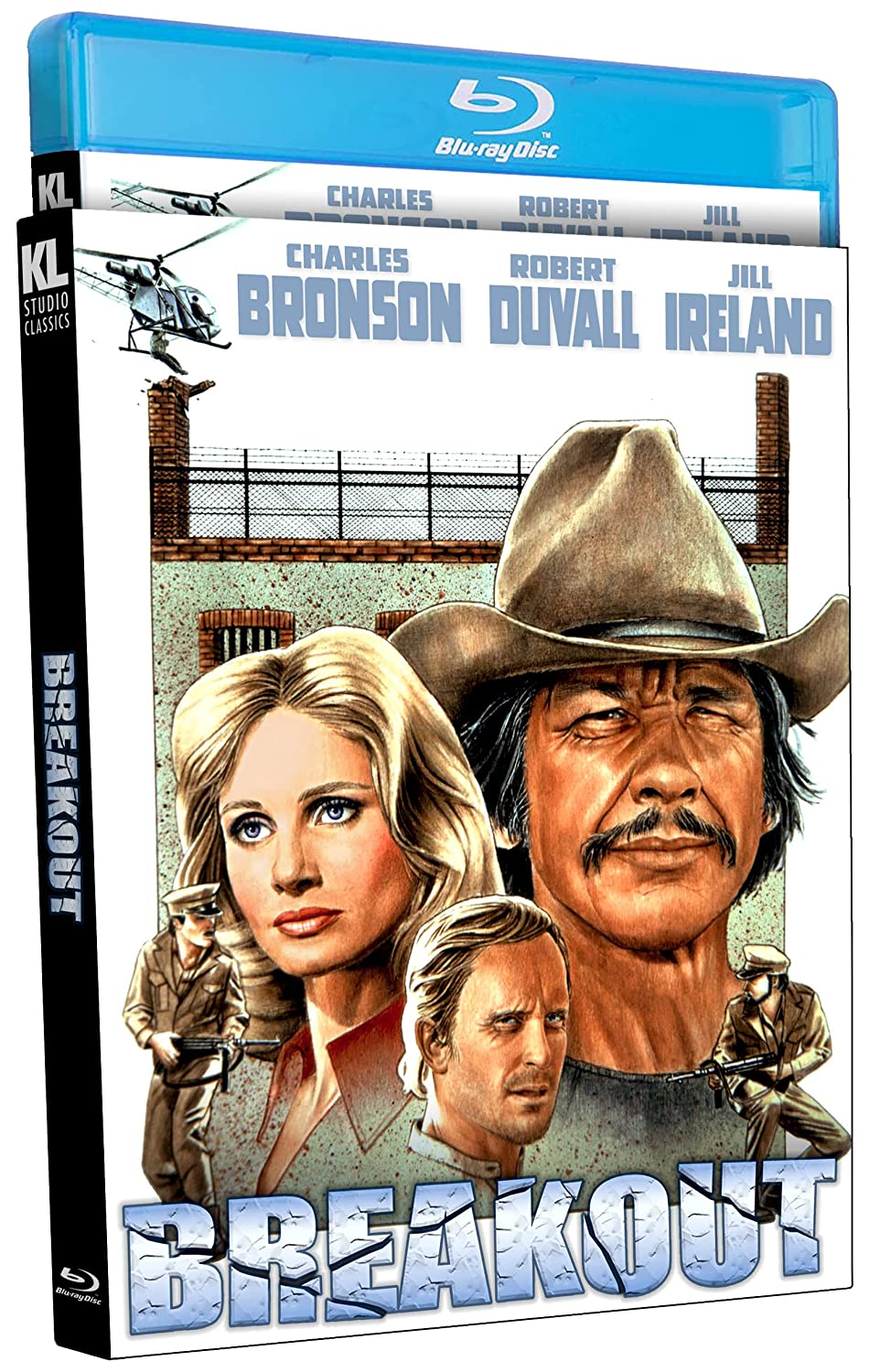
The year of 1975 was an interesting year.  I was born, Jaws was the top grossing film of the year, followed by One Flew Over the Cuckoo's Nest.  Other interesting films included Return of the Pink Panther, Three Days of the Condor, Rollerball, and The Adventure of Sherlock Holmes' Smarter Brother.  Somewhere after those films and others, we have a film called Breakout, which featured the action star Charles Bronson.  Fresh off his greatest film, Death Wish, Breakout would be one of the three films with Bronson that would come out during 1975 (other two being Hard Times and Breakheart Pass).  In Breakoutwe explore the topic of prison escape.  Let's make sure this one gets out with good behavior.

Mexico, 1971.  A bus drives through a small town.  Inside the bus are a couple of prisoners who are smiling at each other while two guards watch over them.  One of the prisoners hands over a bribe to the guard.  The guards hand them  some clean clothes.  The bus stops and the guards get out.  The prisoners also get out thinking their freedom is soon at hand.  The first prisoner runs off into the desert.  The guards hand the second prisoner a gun and tell him to shoot the first prisoner.  He shoots twice wildly but the third (and the fourth gunshot) hits him square in the chest, killing him.  Elsewhere, a briefcase is exchanged between two men and they shake hands.

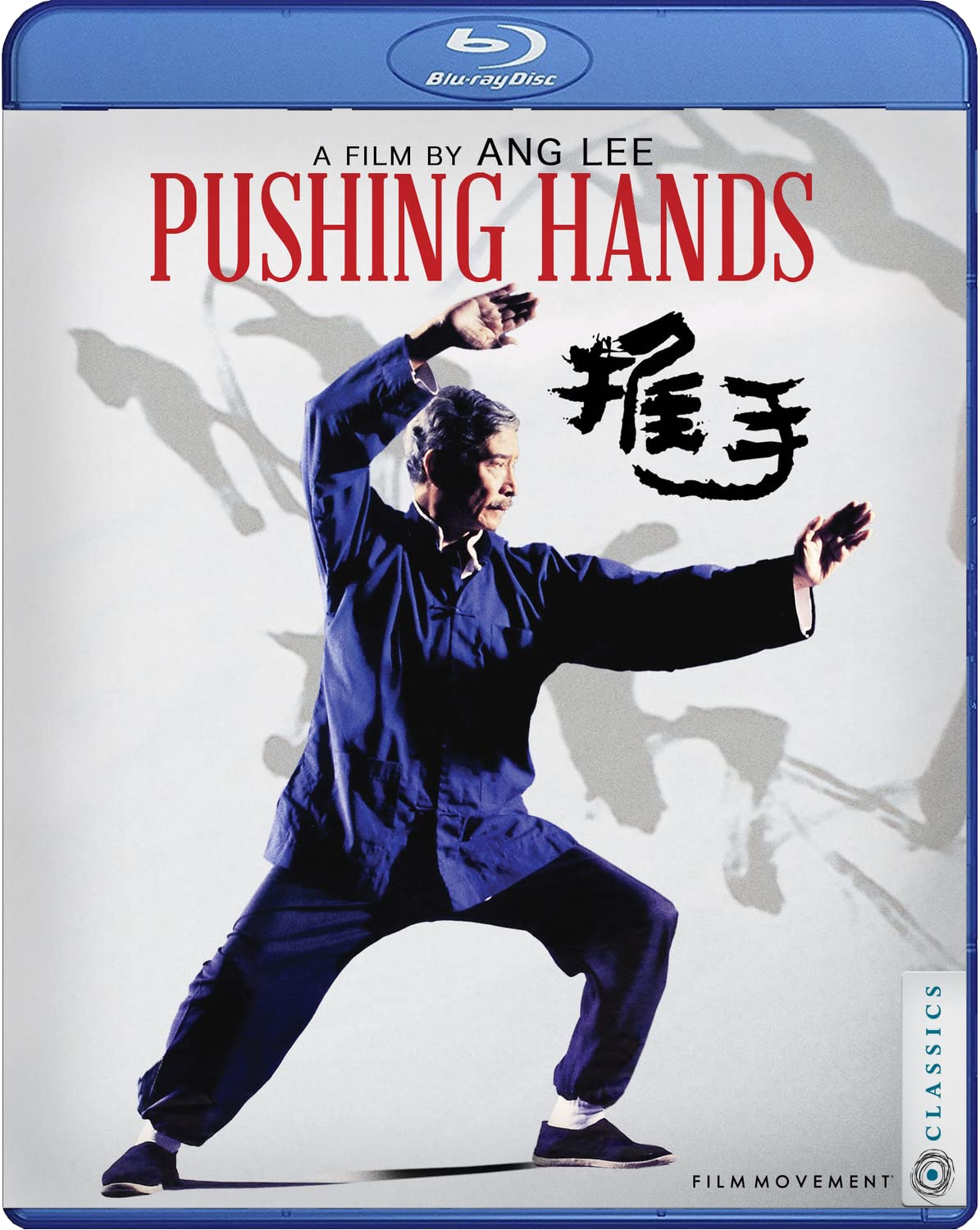
Director Ang Lee has come a long way since his 1991 debut film Pushing Hands.  When you look at Ang Lee’s impressive resume, the only film that stands out is sadly his only major misstep as a director, and that’s the 2003 film Hulk, the movie I feel audiences have been trying to forget and comic fans simply want to pretend doesn’t exist.  When you look at the rest of his resume, there are some impressive titles that have made a difference within the Hollywood cinema landscape.  Crouching Tiger, Hidden Dragon, Brokeback Mountain, and Life of Pi are just a few of his films that are standouts that were commercial successes but at the same time define his unique style and focus when it comes to character. Pushing Hands is character study that was released during the rise of independent cinema in the 90’s when film focused more on characters and finding unique voices that could tell great stories on a limited budget. What makes the film all the more unique is that it’s a martial arts film without the violence we’re used to seeing on the big screen, and instead its focus is more on the holistic methods of tai chi.

The film opens with Mr. Chu (Sihung Lung) and Martha (Deb Snyder), his American daughter in-law, at odds with one another.  The two butt heads most because of their cultural differences, and we get to see how difficult it is for them to live under the same roof. Back in China, Mr. Chu was a well respected tai chi master, but now he lives in America with no understanding of the language, living under his son’s roof, and he simply rejects the American way of living because he is stuck in his old ways. Martha is a housewife who is attempting to write her first novel but is thwarted by her father-in-law’s antics that are a constant distraction. Alex Chu (Bozhao Wang) is the dutiful son who is caught in the middle of being a loyal and loving husband while being the caretaker of his father. This dynamic and how it’s presented is very relatable for those in culturally blended families. If this was the only layer to the story the film would still be pretty good, but there is so much more going on that makes this a fun and charming viewing experience.

What do you get if you take The Sopranos and mix it with Animal Kingdom and place it in Ireland?  That’s pretty much the best way I’d go about describing the first season of the new AMC television show Kin. The show only runs for eight episodes, but I have to say this is the most satisfying gangster story I’ve seen in some time. No, I’m not about to say it is better than The Sopranos, but it definitely has the potential to be in the same league if the show continues with the momentum it has going for it. What’s a shame, though, is that with so many cable channels and streaming services out there, this is a show that has gotten lost in the mass of content, and it deserves to be recognized. The Kinsellas family is a small-time crime family based in Dublin. The family runs their business under Eamon Cunningham (Ciaran Hinds) who is pretty much The Godfather over all of Ireland. Mostly Cunningham deals with drugs, but literally if you are involved with any sort of crime, he’s still collecting on it. Then there is Frank Kinsella (Aidan Gillen, aka “Little Finger” from Game of Thrones) who is in charge of the Kinsella family and their small ring of criminal activity. Frank is a fun and complicated character who is a crime boss with a bad habit of using coke but also gay dating apps. Frank is also a family man who not only is trying to do what’s best for the Kinsella family, he has to also deal with his hotheaded knucklehead of a son, Erik “Viking” (Sam Keeley).  Amanda Kinsella (Clare Dunne) runs a car dealership that is used to help launder money for the family. Her husband, Jimmy (Emmet J. Scanlan) is one of the heads of the family who works beneath Frank. Frank’s brother, Michael (Charlie Cox) is recently released from prison, and he we can assume was the “heavy” for the family as we find out he’s responsible for a lot of deaths before his stint behind bars. And finally there is Bridget “Birdy” Goggins (Maria Doyle Kennedy), who is basically a family advisor. The power dynamics of this crime family are interesting, and how the show balances the “family” drama with the “crime” drama is definitely one of the show’s strengths.

Now that you’ve met the family, what is the show all about?

From the beginning of civilized history, the government regardless of where it resides has always preferred its society to conform, to act alike so that there is no trouble or dissenting.  It is far easier if people fall in line so that the ruling class can continue to prosper while its peasants struggle along.  Truth is that most citizens would rather not rock the boat, so they forsake their personality and their soul for another day that was like yesterday.  Even when there is conflict or angst within a society, it's often manufactured by the government in order to give its people a perceived outlet for their deepest and darkest emotions.  Today, we explore Privilege, a film that takes a look at the not so distant future where a British pop star takes the UK by storm, but little does the public know that the government is the one pulling the strings.

The narrator tells us that Steven Shorter (played by Paul Jones) is quite happy to be back in the UK after a successful American tour.  His adoring fans are being held back (well, most of them) from the pop singer.  He gives them the release they need from the state of the world and gives them an outlet for their emotion, which they gladly pour out for this musical icon.

"What's the word for when you're bad at expressing yourself...  Speechless."

The story has been around for centuries. After Dickens' A Christmas Carol and Shakespeare's Romeo And Juliet, it might well be one of the most imitated stories on film and television. There have been countless plays on the Cyrano themes, from The Brady Bunch to Friends. It's a timeless story first portrayed in a stage production by Edmund Rostand in 1897, but the story goes back to the life of an actual historic figure from the mid-17th century. Of course, his life has been highly made up and likely little to nothing remains of fact from the actual person. The play was a hit, and the general ideas presented there remain popular to this very day. Now there's yet another screen version based on a play written by Erica Schmidt, who happens to be the wife of Peter Dinklage's wife. I was honestly not looking forward to the new film adaptation of Schmidt's adaptation of Rostand's adaptation of literary works going back to the 17th century. It's frankly been done to death, and the last thing I wanted to see was Peter Dinklage, as good an actor as he is, with a huge nose walking around trying not to be laugh-your-butt-off funny. Unfortunately, it was awards season, and I needed to see anything I could get the chance to see before my own votes were due. Fortunately, the film wasn't anything like I expected, and if I had checked out the modern play in which Dinklage also played the character on stage, I would have known that and been much more open to seeing the film. It was duty that brought me to that press screening. It was the chance to see a truly great film again that led to me jumping at the opportunity to review this Universal Blu-ray release. And by the way, there aren't any large noses to be found anywhere in the film.

Easter 2021.  I'm sitting in a hotel room.  My wife and son are asleep in the adjoining room.  Meanwhile, I'm sitting in a chair flipping through channels on the television.  I come upon PBS where music is typically opera or symphony-based.  However, on this particular occasion, I am witnessing something far different.  A lady dressed in a red vinyl dress is playing guitar at the Austin City Limits.  It's clearly rock with a bit of indie and pop thrown in for good measure.  But it's unique all its own and familiar at the same time.  At first, I'm drawn in by her beauty, but I stay far longer once I hear her music and captivating sound.  Within days, I'm buying Masseduction  (and have bought several of her other CDs since then).  Her name is St. Vincent.  As it turns out, even before I was in that hotel room late at night, she was working on a mockumentary called The Nowhere Inn.  After the film falling victim in part to COVID for its release, it finally made it's way to Blu-ray.  Let's take a look.

A long, desolate highway.  A limo passes by with Annie Clark, also known as musician St. Vincent.  She is as it turns out doing just that: listening to music.  The driver up front rolls down the windowed partition and asks who she is, because he's never heard of her.  Annie tries to explain, but the limo driver just goes on and on about how neither he nor his friend have ever heard of her.  Eventually he rolls up the partition and Annie goes back to listening to her music.

Most people want to do the right thing.  It's usually far easier in your private life to do the right thing than it is, say, in a job environment where you have people constantly breathing down your neck.  They are far more interested in the company's pocketbook or their image to society than what is right and wrong.  Therefore, it often leads to a lot of decisions (especially those in places of power) that from a surface appear questionable.  It's even worse when that company or organization is in the public eye every moment of the day.  Today, we look at a film where an ex-cop has retreated to the mountains in search of a simpler life away from the grey choices of the police force.  All based on trying to do the right thing.  Let's take a look.

Charlie Waldo (played by Charlie Hunnam) stretches in the woods and sits in silence meditating on his life.  Meanwhile we get some ecological narration about the future state of the planet and how awful the United States is at preserving it.  (Trust me, kids, China is much, much worse.)  After a brief morning, Charlie goes right back to meditating.  He also washes his clothes the old fashioned way.  All of the sudden he is greeted by a beeping horn of a car.

The power of the media is indeed one of the most powerful forces on Earth.  They have the ability to manipulate regardless of where the truth actually lies.  This exists on all sides of the political spectrum regardless of country, creed, or faith.  It is truly sad that such fabrication actually exists and even more unfortunate that people will take it in hook, line, and sinker.  Our film today, Armageddon, takes place in France, but plays havoc with manipulating those all over Western Europe by using the media to instill fear.  Fear of mortality, fear of losing life, a fear that makes the strongest person into a blithering child.  Let us take a look.

A SOS car stops, and a repairman by the name of Louis Carrier (played by Jean Yanne) steps out.  He yells at his friend, Einstein (played by Renato Salvatori) who is picking up trash that he just inherited 250,000 bucks.  It seems that his brother died and left behind a life insurance policy.  Furthermore, it is his lucky break, and he is saying goodbye to his dear friend.  Einstein asks him what he is going to do, and Louis replies, "Make the headlines."  Let's roll those credits.