Anniversary Edition

"This is a mental institution, Marshal. For the criminally insane. Usual isn't a big part of our day."

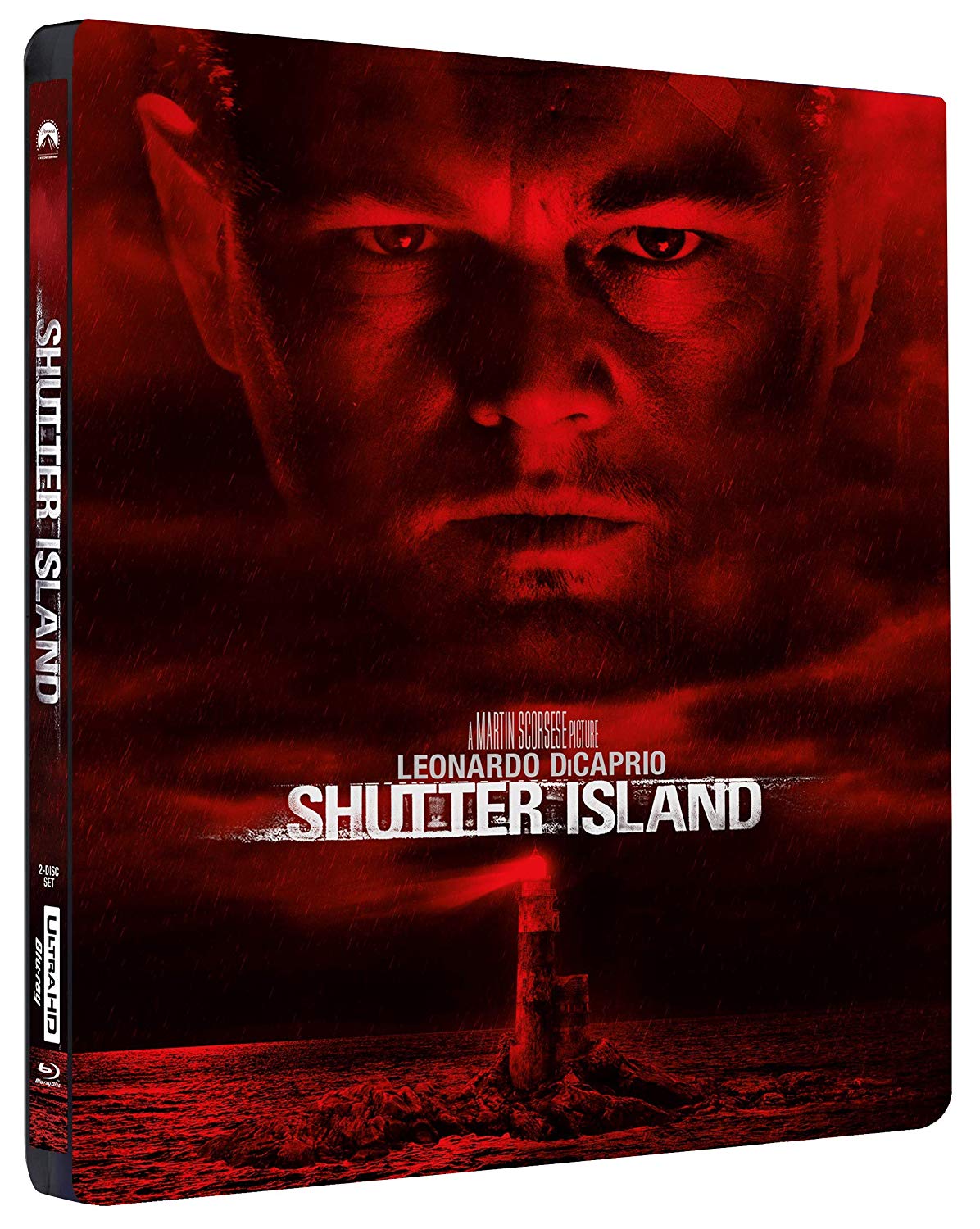
When I first saw Shutter Island ten years ago, I thought it was a good movie. I didn't think it was a great movie. Like many Martin Scorsese fans out there, I have developed certain expectations from his films. It isn't at all fair, but as I've said here many times, expectations are killers. I bathed too often in Scorsese's modern mob mythology that I think it took seeing The Irishman and being royally disappointed and then getting to see Shutter Island again thanks to this wonderful new steelbook 10th anniversary release on UHD Blu-ray in 4K. I also never thought Shutter Island could ever improve with age. It's got a wicked twist that occupies the final 40 minutes of the film, and no matter how good the performances might be, how could it possibly get better when you know what's coming? But again, I recall it being a good movie, so I welcomed the opportunity to revisit it after 10 years in 4K. Why not, right? I'm glad I did, and no matter how good you thought it was the first time, it's better the second time through. And I was absolutely wrong in my first evaluation. Shutter Island is not a good movie at all. It actually is a great film, and it's a shame that it's been relatively overlooked among Scorsese's films. And spoiler alert!!!!!!! The twist is even better when you know it's coming. (You thought I was going to spill some beans?)

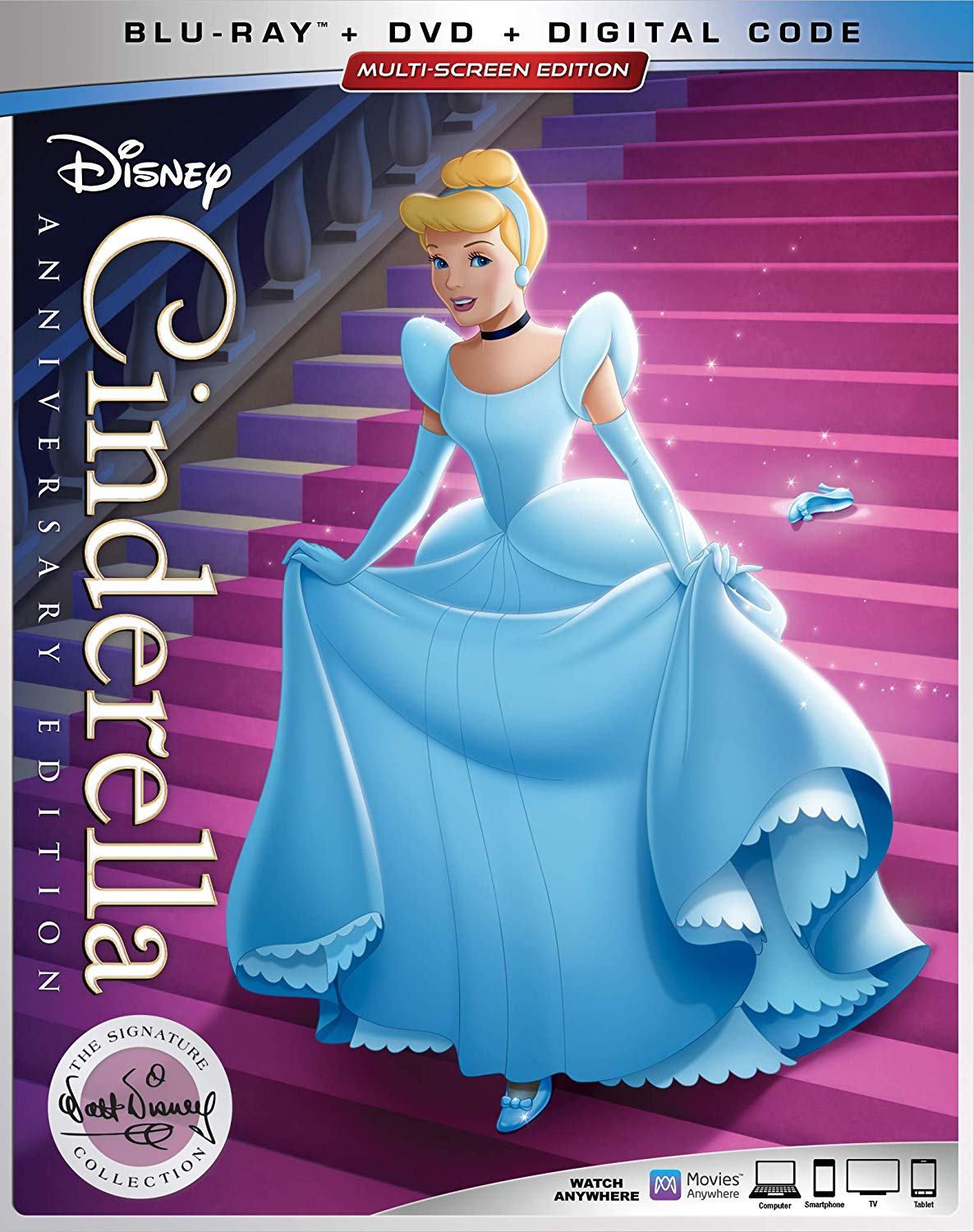
"Once upon a time in a faraway land, there was a tiny kingdom: peaceful, prosperous, and rich in romance and tradition. Here, in a stately chateau, there lived a widowed gentleman, and his little daughter, Cinderella. Although he was a kind and devoted father, and gave his beloved child every luxury and comfort, still, he felt she needed a mother's care. And so he married again, choosing for his second wife, a woman of good family, with two daughters just Cinderella's age, by name, Anastasia and Drizella. It was upon the untimely death of this good man, however, that the stepmother's true nature was revealed: cold, cruel, and bitterly jealous of Cinderella's charm and beauty, she was grimly determined to forward the interests of her own two awkward daughters. Thus, as time went by, the chateau fell into disrepair, for the family fortunes were squandered upon the vain and selfish stepsisters while Cinderella was abused, humiliated, and finally forced to become a servant in her own house. And yet, through it all, Cinderella remained ever gentle and kind, for with each dawn she found new hope that someday her dreams of happiness would come true." 

Snow White And The Seven Dwarfs put the Walt Disney Studios on the map. It's a literal truth. Walk had mortgaged his entire worth to make the film and used the incredible box office return to create what we today call Walt Disney Studios. But it wasn't quite the happily-ever-after fairy tale ending that Walt and his new studio might have hoped for. The studio churned out a couple of films that are classics today but didn't pull in the kind of money they needed to stay afloat. Both Pinocchio and Fantasia were masterpieces greatly appreciated today, but the years of WWII found little extra money for extravagances like going to the movies. The studio was in danger of closing, and they had pretty much one more shot to turn it around. Could lightning hit the same place twice? Cinderella proved that it could, and put the studio firmly back on solid ground.

“You know, the first time we met, I really didn’t like you that much.”

I didn’t become acquainted with When Harry Met Sally… until well after the Billy Crystal/Meg Ryan flick had established itself as a bona fide romantic comedy classic. (I was 7 when the film came out in 1989.) So when I finally got around to watching it in my late teens, the “I’ll have what she’s having”  punchlines and general set-up involving an unlikely romantic pairing felt overly familiar. I enjoyed it just fine, I definitely appreciated it, but I wouldn’t quite call what we had love. Shout Select, an imprint of Shout! Factory, has released a 30th anniversary Blu-ray of When Harry Met Sally… And after revisiting this film years later, I’m asking myself the same question that Harry and Sally ponder after being friendly for years: is this love?

Wonder what he's been smoking.”

When it comes to Cheech and Chong, you hardly have to wonder. What better way to celebrate 420 today than by revisiting Cheech and Chong's Up in Smoke, the OG stoner comedy? The film is celebrating its 40th anniversary this year, which Paramount has commemorated with this new edition. But how well does this high-larious comedy classic hold up in 2018?

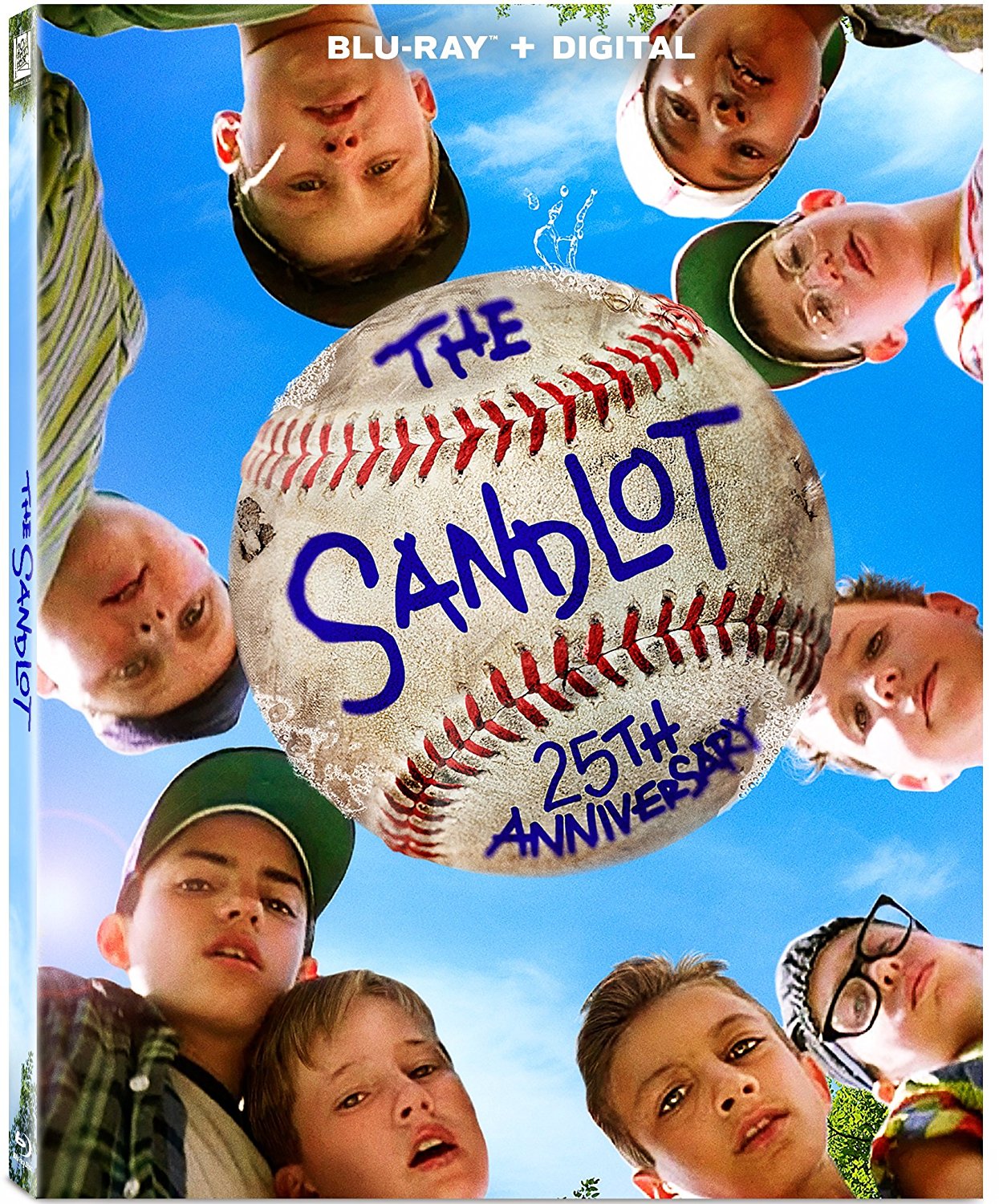
When The Sandlot first came out 25 years ago, I connected to the coming-of-age baseball story as strongly as Babe Ruth connected with one of his titanic, 400-foot homers. I grew up in baseball-obsessed Puerto Rico and I happened to be the exact same age as dorky protagonist Scotty Smalls. I’ve kept in touch with the film over the years, but Fox’s new 25th Anniversary Blu-ray re-release of The Sandlot was a great excuse to watch it from start to finish.

An adult version of Scotty Smalls recounts the story of his most memorable summer. As a fifth grader, Scotty (Tom Guiry) moved to a new town with his mom (Karen Allen) and stepdad (Denis Leary) just before the end of the school year. Scotty’s mom wants her sweet, nerdy son to actually get into a little bit of trouble during the summer, so he falls in with a group of kids who play baseball in a raggedy patch of grass called The Sandlot. The only problem is Scotty doesn’t even know how to throw a baseball. Fortunately, Scotty is taken in by Benny (Mike Vitar), the group’s leader and the best baseball player by far. During that one remarkable summer, the kids encounter a dream girl, arrogant Little Leaguers and a legendary canine menace known as The Beast, which swallows up any baseball that finds its way into his yard.

“We did it again!”

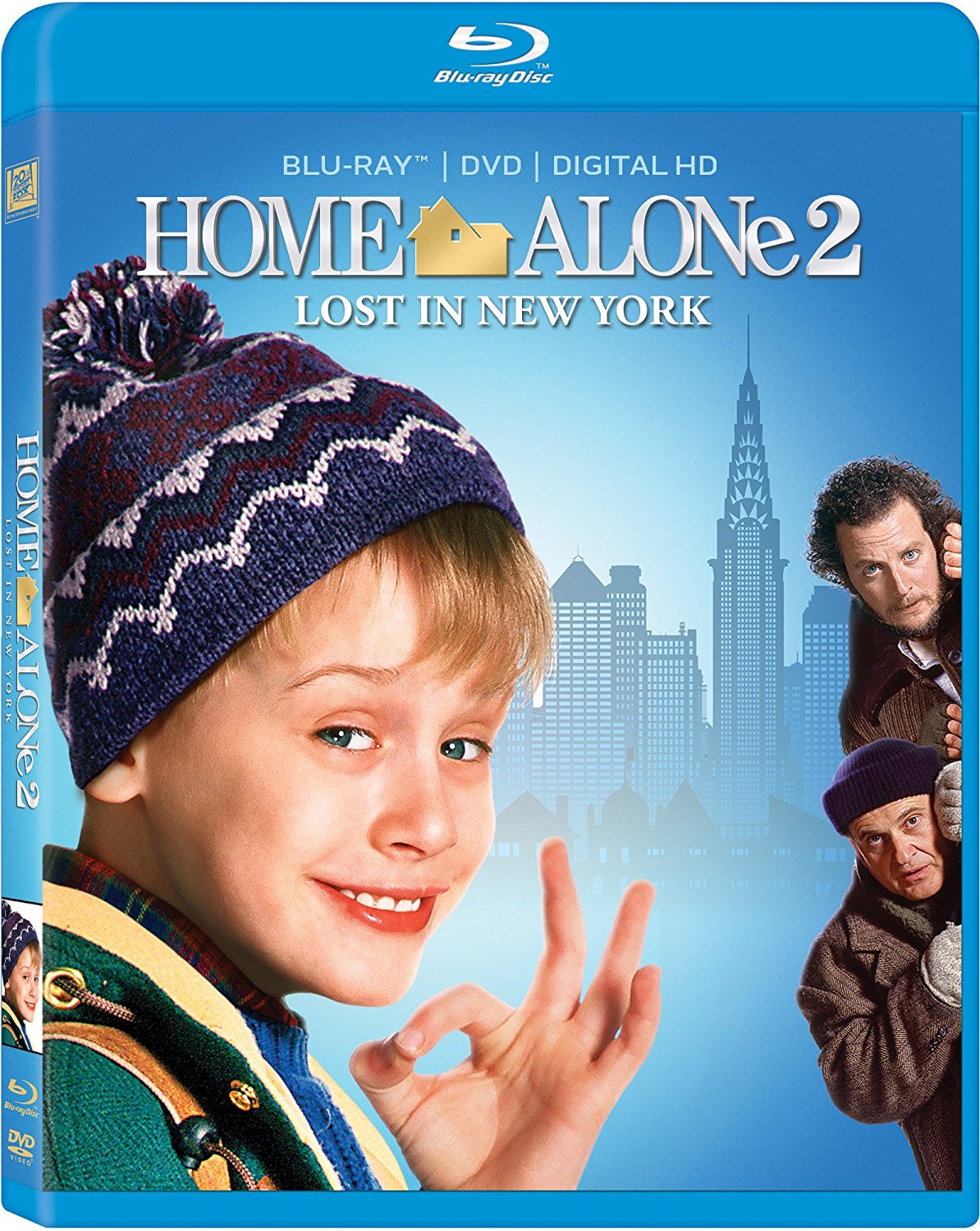
I can still remember sitting in a movie theater in Puerto Rico watching Home Alone 2: Lost in New York for the very first time. (With Spanish subtitles, of course.) I was basically the same age as Kevin McCallister — the precocious, pint-sized pre-teen played by Macaulay Culkin — and I’d pretty much worn out my VHS copy of Home Alone by the time the second movie was released. So it’s wild to think that this film is now old enough to rent a car! Fox has released a 25th anniversary Blu-ray of the blockbuster comedy sequel, and it’s a fun, fascinating re-watch for a variety of reasons.

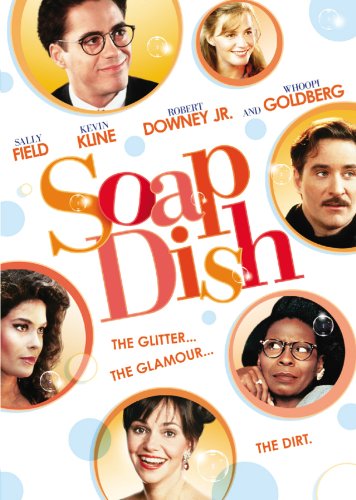
An aging soap opera starred, played by Sally Field, is the target of a jealous supporting cast and a conniving producer (Robert Downey Jr.). The head writer of her show (Whoopi Goldberg) seems to be the only ally she has as a former love's character (Kevin Kline) is recast to throw her off her game, along with a mysterious family member barging into her world and work life.

Soapdish relishes in Soap Opera story tactics just as much as it wishes to lampoon them. Twists, secrets, romance, backstabbing, tears, sex changes, melodramatic speeches...all of these elements are parodied in the show within the film, but also work their way into the real-life drama of these characters. The success of this film relies on being able to display how ridiculous soap operas can be while still selling the audience a complete (and often over-the-top) soap opera tale. This is truly a soap opera world as nothing is grounded in reality (Abandon all hope, Vittorio De Sica fans who enter here). The plot twists are painted in broad strokes and the physical comedy bits are motivated by pure nonsense. That considered, it is a truly funny journey peppered with some outstanding yet subtle visual gags (constantly panning past beefcake actors in the production hallways for example).

If you're reading this review, you must surely already know what the movie is about. We're talking, after all, about what must surely be the single most celebrated case of mistaken identity in the history of film. Cary Grant stands up in a lounge at just the wrong moment and is mistaken for a man who doesn't exist. That utterly perverse mix of chance and paradox, leading to ever more dangerous situations for Grant, in an ever more complicated tangle of battling conspiracies, is so utterly Hitchcockian, it might just as well be trademarked.

The film is also very funny, as so much of Hitchcock's work is. Of course, much of his humour is black as pitch, and that mordant wit is certainly still present here, but there is also a joviality to the proceedings, due in no small measure to the presence of Cary Grant. Unlike the Jimmy Stewart of Vertigo and Rear Window, whose screen image of fundamental decency makes the deeply flawed, pathological aspects of his characters even more painful and weighty, Grant here keeps things light, as his character is just as aware of the absurdity of his perils as we are, and is just as likely to be amused. But if this is Hitchcock working in a lighter vein, that astounding perversity keeps poking through. What are we to make, for instance, of that creepily close relationship Grant has with his mother?

“Greed is Good.”

No other cinematic phrase described the 1980’s better. And no other movie captures the financial corruption of the 80’s better than Oliver Stone’s Wall Street.

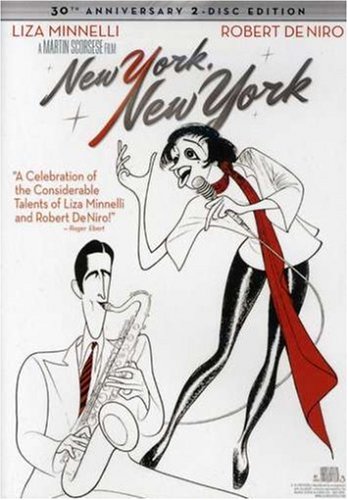
World War II has just ended, and the recently discharged Robert De Niro hits New York on the prowl for sex. He runs up against WAC Liza Minnelli, and the more she resists his advances, the more determined he becomes. There is more: he is a saxophonist, and she (of course) is a singer). So begins a tempestuous relationship between two artists whose enormous talents and equally enormous personalities mean they can neither live with nor without each other.

The idea of Martin Scorsese taking on the form of the classic musical is so bizarre that it had to happen, and here it is. Scorsese’s conceit is ingenious: all the conventions are there (the meet cute, the songs, the artificial sets and colours), but they collide with the naturalism of the performances and the emotions. A perfect case in point: wandering the streets at night, De Niro sees a sailor and his girl perform a dance together. It is a classic musical moment, but the only sound is that of a train passing. It is a scene of extraordinary beauty, grit, and cinematic truth. And it belongs in an extraordinary film.