Studio

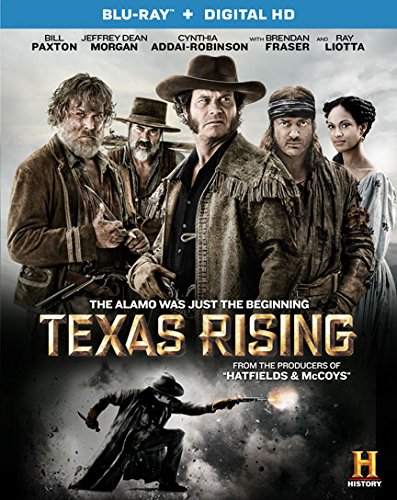
"1836, Republic of Texas. The Mexican territory is home to thousands of US settlers. Tensions rise as Comanche and Kawakawa fight to keep their lands. Outlaws roam free, and slaves are caught in the crossfire. Mexican General Santa Anna battles to reclaim the land. US President Andrew Jackson is hesitant to intervene, and Texas has no choice but to declare itself an independent nation... The Alamo in ashes, pioneers, Tejanos, Indians and soldiers have no choice: fight or die."

Houston, we have a problem. No, I'm not talking about an ill-fated and ill-numbered Apollo craft hobbled between the Earth and the Moon.
But that was the call that went out to General Sam Houston in 1836 as General Santa Anna massacred the residents of The Alamo and continued his bloody march through the newly-formed Republic of Texas. Only one man could lead an army against him, and he appeared inclined to do nothing at all. But it was all part of a skillful strategy that would turn the course of a war and North American history itself. He's the man the city was named for. This is how he lived up to that name. The story starts here.

If nothing else, The Curse of Downers Grove lives up (or rather down) to its morose title. It’s too bad because this (non-)thriller actually has a promising premise: every year, a supposed curse in the titular suburban Illinois town kills a senior at the local high school. The movie could’ve gone for darkly comic thrills or tried to construct a mystery around who the latest victim might be, to name just a couple of examples. Instead, this shoddy, inert flick squanders a variety of opportunities on the way to its preposterous conclusion.

The action here picks up with one week to go in the school year. Chrissie Swanson (Bella Heathcote) is a sharp, skeptical senior who doesn’t fully believe in the curse, despite witnessing the previous year’s victim plunge to his death. Did the curse kill him and the other teens or was it bad luck and good ol’ fashioned stupidity? I’m sure the fact that the high school was built on sacred Native American ground has nothing to do with anything.

The D Train was not what I expected...and thank goodness for that. The film boasts that it's from the “comedic geniuses who brought you Nacho Libre and Wayne's World,” although the only thing those two movies have in common is that they're both comedies with, um, people in them. Meanwhile, the glossy poster makes it look like an inspirational drama, which doesn't exactly mesh with the phallic-sounding title. In other words, there's nothing about The D Train that hints at the intriguing dramedy lurking underneath.

Dan Landsman (Jack Black) is the unpopular self-appointed chairman of his high school's alumni association. The group is struggling to lure former students to their upcoming reunion when Dan spots former cool kid Oliver Lawless (James Marsden) on TV in a Banana Boat sunscreen ad. (Given the comically inflated significance of the commercial, I assume/hope The D Train producers were handsomely compensated by Banana Boat.) The commercial is a light bulb moment for Dan: if he can get a “hot-shot” actor like Oliver to attend the reunion, more people will follow and Dan will be a hero to the committee colleagues who mock and shun him.

It is one of the most anticipated movies of the summer and another subject in the category of “can Tom Hardy do no wrong?” Mad Max: Fury Road is the reimagining of the iconic film that helped launch Mel Gibson’s career decades earlier. This is not new territory in Hollywood by any stretch of the imagination; remakes have happened so often in recent years that they have practically become their own genre. However, I would like to point out something that will hopefully set this film apart in the eyes of the audience: how often do you see a remake that is overseen by the creator of the original film that you know and love?

OK, OK, perhaps this is not entirely new territory as well, except I am certain that Mad Max fans all over the world leaped for joy when news broke that the architect of the originals, George Miller, had decided to helm the remake as well. Heck, it wouldn’t surprise me to learn that is the underlying reason that many of you folks intend to see the movie. And it is in that spirit that I would like to impart a piece of advice upon the future audience: put the past out of your mind when you are watching this. It is not a continuation, it is an origin story. Yes, I know that it seems like a simple concept, and maybe I am rehashing thoughts you have already had, but for argument’s sake, just do what I ask, and I promise you will have a far better experience.

You got the St. Louis blues, the Chicago blues, the gin house blues, the “my man done left me” blues...they all the same song, ain't they?”

By now, anyone who's seen a musical biopic realizes these films also whistle a pretty similar-sounding tune. The bad news here is that Bessie is no exception, rushing from one familiar Troubled Artist Beat (hardscrabble childhood, rise to stardom, substance abuse, troubled marriage, etc.) to the next. The really good news is that this HBO biopic of “Empress of Blues” Bessie Smith is elevated by some truly powerhouse performances.

And you thought the '80s were dead.”

The tongue-in-cheek tagline for this film is the first of many signs that this throwback slasher flick doesn't take itself too seriously. I've always thought the best parodies are the ones that show genuine affection, rather than superiority, toward the genre they're mocking. Lost After Dark sometimes wobbles as it walks the tricky tightrope between homage and legit horror movie, but there's no doubt the filmmakers enjoyed their many sleepless nights with the likes of Michael Myers, Jason Vorhees, Leatherface, and more.

So what will you be doing when the zombie apocalypse finally hits? Will you be fighting endlessly to survive? Will you be hoarding food and supplies? Will you be seeking out other survivors and band together? Maybe you'll just hole up somewhere and try and wait it out. Me? I'm going to find a solid generator, a high-definition television, an Oppo Blu-ray player, and all of The Walking Dead season sets I can get my hands on. You could consider it survival training, but I'm going to binge-watch one of the most unique shows in television history. Come to think about it, that's not all that different from what I'm doing now. I'm not going to let a little thing like the end of civilization keep me from catching the latest episodes. Now that's what I call must-see TV.

The first thing you should know about The Walking Dead is that it's unlike any television series you have ever seen before. The images here are intense, and the crew has been given a blank check to create this vision without the burden of censors looking over their shoulders. There are plenty of blood-and-gore effects that rival any of the Hollywood zombie films you've seen in the last few years. The makeup effects are handled by the very capable hands of KNB and supervised personally by Greg Nicotero (the N from KNB). KNB isn't treating this like a television production, and while I personally get tired of the cliché about making a movie each week, this one lives up to the hype. They aren't doing anything different here than they would do for a big-budget film. The zombies look incredible, and the effects are completely first-rate.

“This film was inspired by a court case, the public stages of which have been filmed, broadcast, reported and commented on throughout the media worldwide. Nonetheless, the characters portrayed in the film and all sequences depicting their private lives remain entirely fictional.”

The disclaimer that appears at the top of Welcome to New York is only the first indication that this flawed, unflinching drama — based on the Dominique Strauss-Kahn affair — seeks to blur the line between fact and fiction.

I guess I could use some of that magical happiness you always seem to have.”

David DeSanctis, the novice performer with Down syndrome making his feature film debut here, is easily the best thing about Where Hope Grows. Both the actor and the character he plays radiate genuine warmth and irrepressible positivity. Those qualities help boost this well-meaning redemption drama, which suffers from one too many storylines and an unintentionally appalling ending.

"There have been many authors throughout time. It's a job, not a person... Tasked with the great responsibility to record. To witness the greatest stories of all time and record them for posterity. The job has gone back eons from the man who watched the shadows dance across cave walls and developed an entire philosophy to playwrights who tell tales in poetry to a man named Walt."

OK, so you've tapped into almost every Disney classic story and quite a few that weren't Disney. The television show is still going strong. What are you going to do next? You turn to your brand new hits, of course. And if you happen to own the characters from the highest-grossing animated feature of all time, perhaps the decision is obvious. Yes, we're talking about Frozen. It's no surprise, really. If you watched the last season finale and the spots ABC has been running both on-air and online, you knew this was coming. There's been a lot of internet chatter about the decision. Many are happy. A few not so much. If you find yourself in the later camp, it's a done deal now, and you'll simply have to let it go.