Universal

"That's one small step for (a) man. One giant leap for mankind."

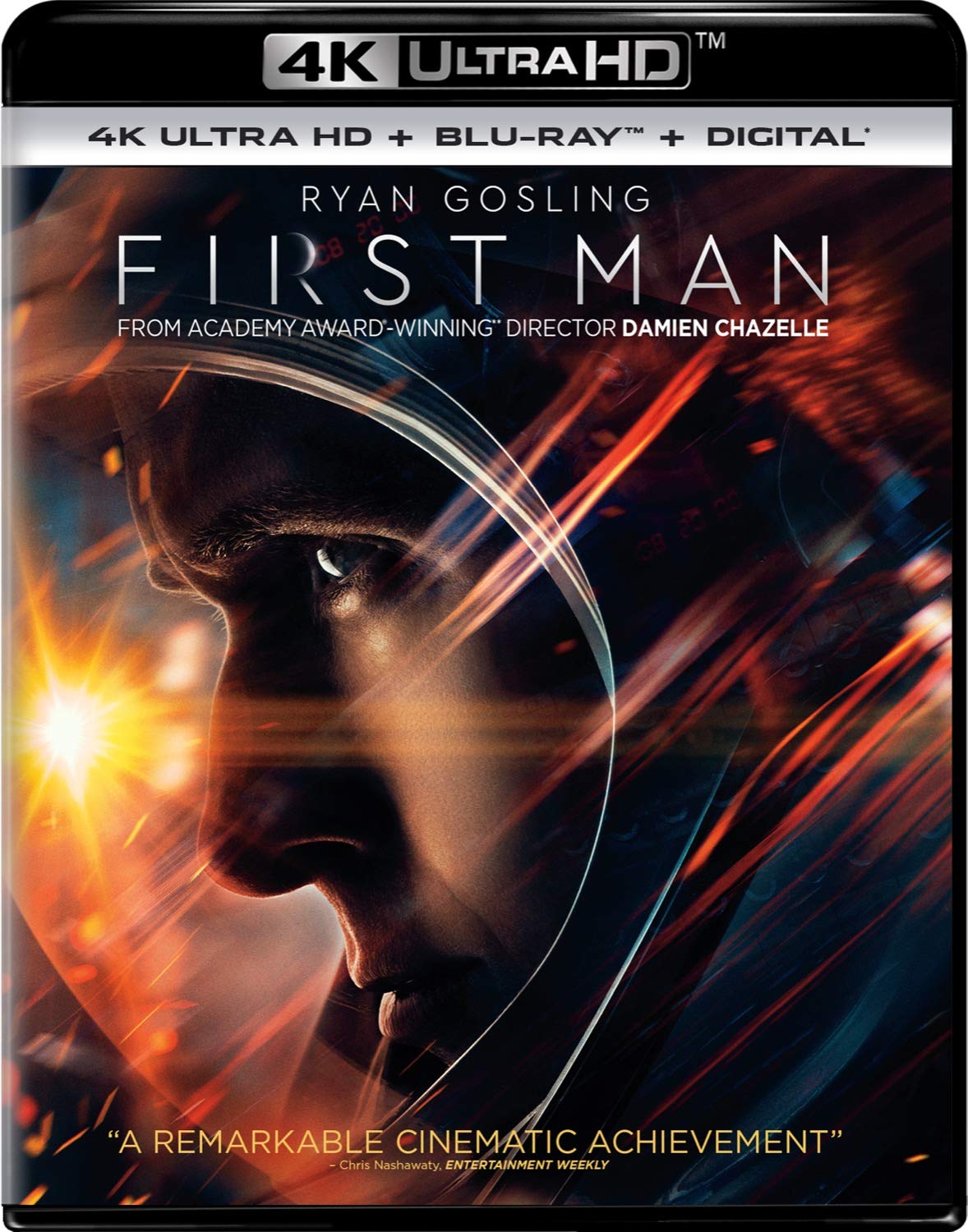
July 20th, 1969. If you were alive and even somewhat old enough to be aware of your surroundings, you likely still remember that date. There are many such dates in history; unfortunately so many of them revolve around tragic events like 9-ll or the attack on Pearl Harbor. But on that night I was eight years old, and I know exactly where I was. I was watching Walter Cronkite on television as he brought us the first landing on the surface of the moon. Today that's a bittersweet memory. For an 8-year-old boy it was a promise that has remained unfulfilled. If you had told that 8-year-old who just saw humans walking on the moon that 50 years later we would have gone no further, he would have been dumbfounded. If you told him that not only would we go no further but that we would stop going to the moon in just a few short years, he would have been devastated. I can only imagine what that first man on the moon thought about it all so many years later. The truth is that Neil Armstrong never traded on his celebrity. He kept mostly to himself for the rest of his life, and perhaps the only tragedy larger than our abandonment of the pursuit he risked his life for is that we know so little about the man whose name lives with the likes of Columbus. He's almost a forgotten hero. That's why First Man is such an important film that almost lives up to that legacy.

"I always knew he'd come back. In this town, Michael Myers is a myth. He's the Boogeyman. A ghost story to scare kids. But this Boogeyman is real. An evil like his never stops; it just grows older. Darker. More determined. Forty years ago, he came to my home to kill. He killed my friends, and now he's back to finish what he started, with me. The one person who's ready to stop him."

I was 17 years old when John Carpenter released The Shape, aka Michael Myers, on the world in 1978. It was a milestone film. Of course we didn't know we were watching something that would become so culturally huge. We were the target audience. Teens who were looking for some extra thrill in our films. These so-called slasher films became great escapes of fantasy to bring a date along. For a late-teen, there's no better way to spend an evening with a date than a film that might have her jump right into your lap. Great times. But the reason Halloween stands out from the crowded genre is because John Carpenter knew something about anticipation. He knew how to build towards a scare. And he understood how to use music, shadow, and pacing to truly immerse his audience into a film. I didn't watch Halloween in 1978. I experienced Halloween in 1978.


"The list is an absolute good. The list is life."

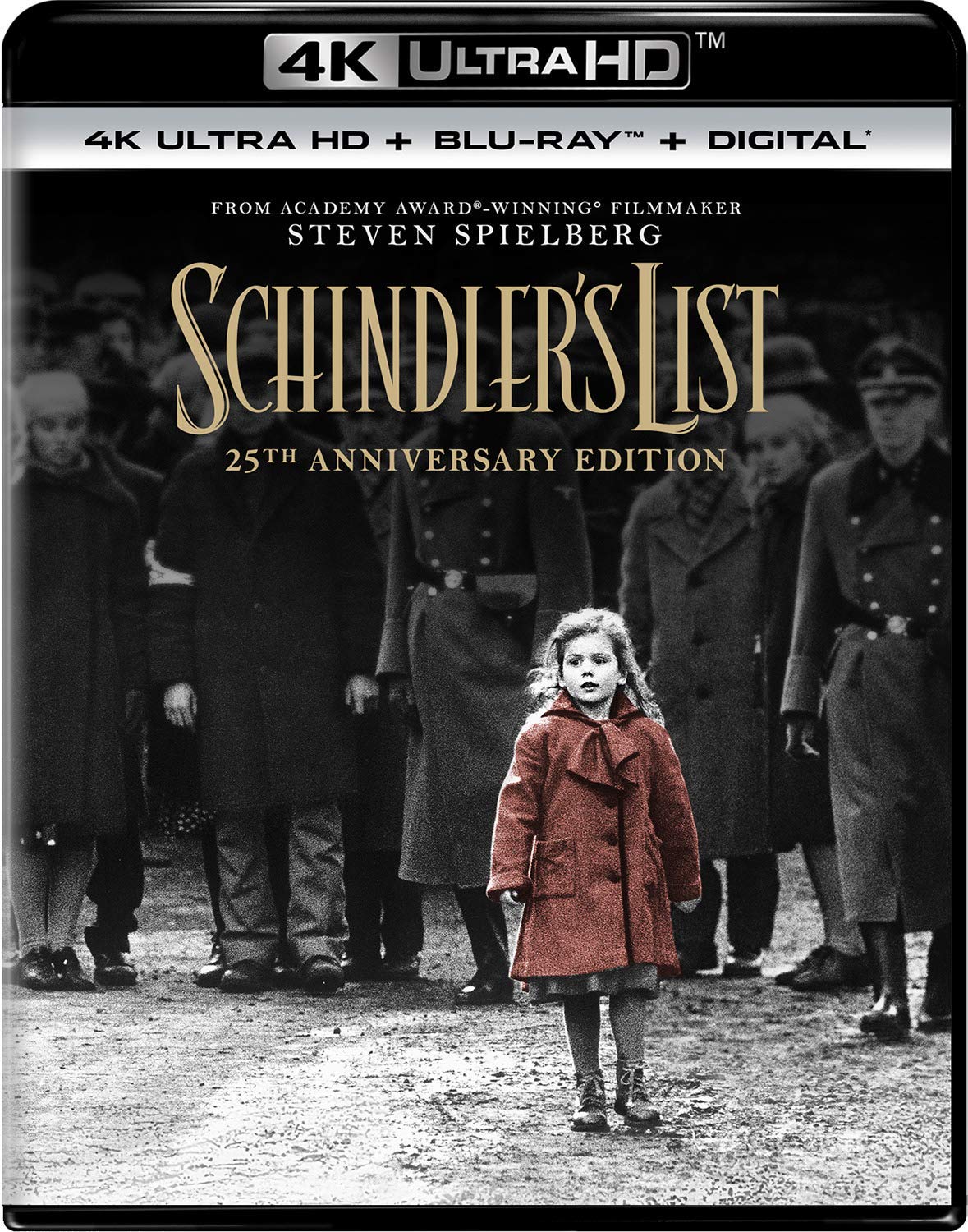
It had been nearly 20 years since I had seen Schindler's List. I believe this was only the second time I've watched it since seeing it in the theaters back in 1993. It's one of those films that doesn't lend itself to repeated viewings. It clocks in at over three hours, and the material is emotionally draining. That doesn't mean the film shouldn't be on everyone's shelf. It should. It should, because it tells a brutal story that civilization must never forget. It's clear that while the event remains in our collective memories, the reality of the Holocaust has been lost on too many people. Watch this film, and you will be completely amazed that anyone could throw words like Hitler or Nazi to describe anything that could be happening in American politics today. I'm convinced that the people who use those descriptions need to sit down for three hours and watch Schindler's List, maybe for the first time. It belittles this horrific moment in history to throw it about as a political hit or hate speech. There is nothing in our current American landscape that comes close to the reality of what happened to the Jews in World War II. Saying that there is shows amazing ignorance, an ignorance that this film goes a long way in dispelling.

“You kind of loud.”

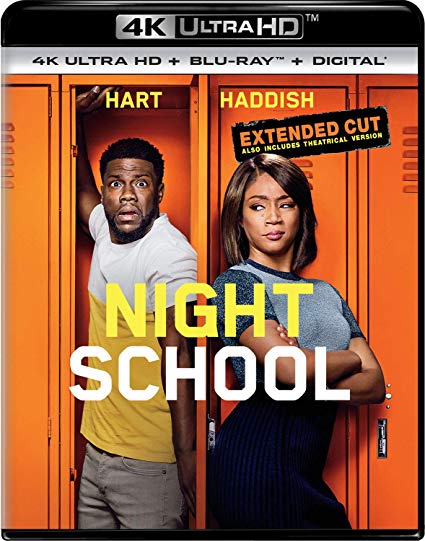
It made all the sense in the world on paper. Pairing Tiffany Haddish (coming off her outrageously profane, scene-stealing breakout in Girls Trip) with Kevin Hart (one of the shrillest most successful comedians in the world) seemed like a match made in loudmouth heaven. Instead, it turns out that almost all the creativity that went into Night School — which actually has a pretty decent premise — was limited to envisioning its two stars on a poster.

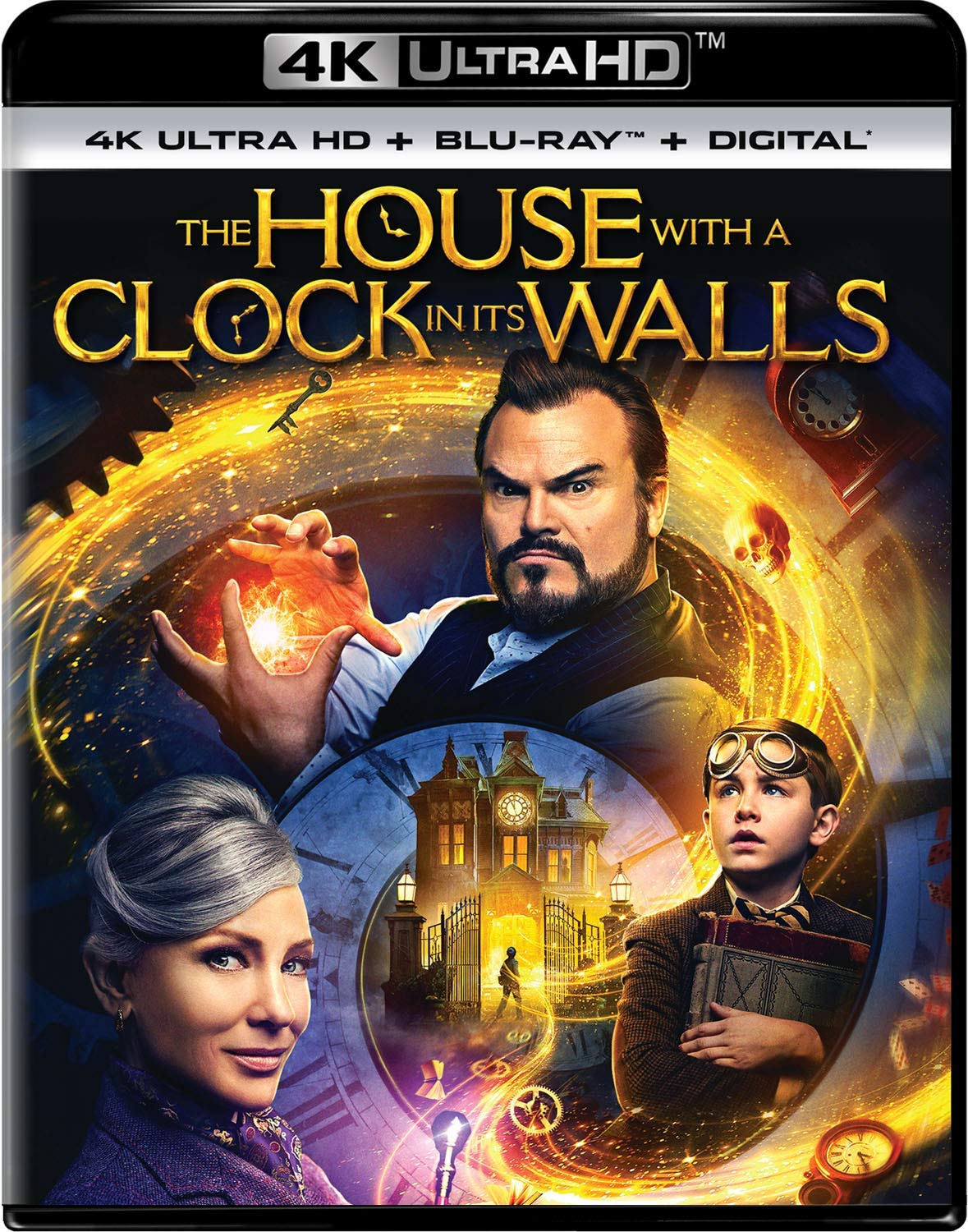
Children’s fairy tales have taken a new drift with the film The House with a Clock in Its Walls.  Packed with exciting action adventure, the movie, based on the book by John Bellairs, envisions the story with an incredible amount of CGI.  You could almost call the film animated, but that’s a good thing here as things go bump in the night, magic forms the basis, and solving the mystery becomes the prominent focus for older youngsters. Orphaned due to a car crash that took his parents, young Lewis Barnavelt (Owen Vaccaro) gets invited to live at his Uncle Jonathan’s (Jack Black) magical mansion. He’s a bit fearful of the old house with its grand stairway and many mysterious rooms, but Lewis sort of likes the flamboyance of the magician-turned-warlock.  There he’s introduced to Jonathan’s neighbor and best friend, Florence Zimmerman (Cate Blanchett), who assures Jonathan that he will enjoy living with his uncle.

Uncle Jonathan has only one rule for Lewis: he mustn’t open a special cupboard, ever.  Things go well for Lewis until it’s time he attend the local middle school.  There he’s the odd man out, as cliques have formed between the boys long before he came there.  Surprises abound in his new life, and when he helps Tarby (Sunny Suljic), one of the school kids running for class president, he feels he’s finally made a friend. But things are not what they seem to be, and it leads to Lewis breaking the one rule he had promised he wouldn’t.

If you were a child in the 1960's or 1970's, you were around at the golden age of the Christmas television special. We just celebrated the 50th anniversary of A Charlie Brown Christmas, and there were a ton of holiday charms that came and went each year. But there were a handful that became classics and found their way to the airwaves every year in December. Of course, A Charlie Brown Christmas became one of these, and it is indeed among the best. It was not the only special to become beloved by generations of viewers. Now Dreamworks has brought together seven of the most memorable of these classics. This was a wonderful trip down memory lane for me, as it will be for millions of children of all ages who looked forward to these event broadcasts each and every year. Now you can watch them whenever you want. And they might not be just for Christmas anymore.

Rudolph the Red-Nosed Reindeer (1964)

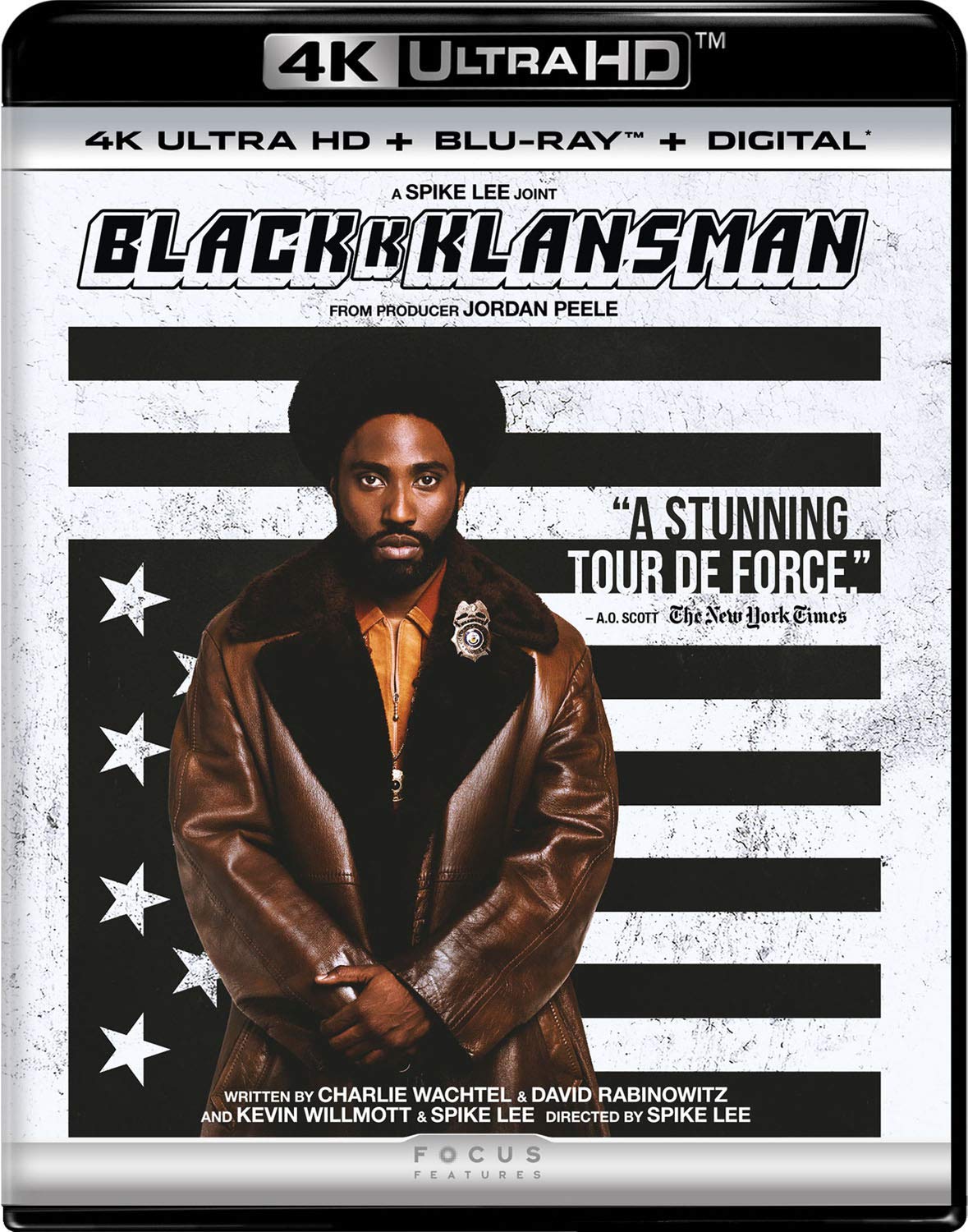
Ever since Do the Right Thing came out in 1989, Spike Lee has been a director that critics and fans have kept an eye on. Over the span of his career he’s done everything from music videos with Michael Jackson, to documentaries, to television shows, but mostly he’s made his claim to fame in film. His films have been all over the place as critical and box office successes. Inside Man to this day may be his biggest success financially, but of all his films it feels the least like a Spike Lee film.  The man has a distinct visual style; most of his films take place in New York, but the typical thing you’ll find in his films is the “black culture” and the topic of race relations.  With his latest film Blackkklansman, Lee ventures into some familiar territory, but for the first time in quite a while he delivers a movie with a strong message but also manages to be entertaining.

It’s the 1970’s when we meet Ron Stallworth (John David Washington). He’s in the middle of an interview to become the first black officer of the Colorado Springs police department. The interview is equally uncomfortable as it is amusing at the same time, and this kind of tone is what plays out over the course of the film.  Let me say from the start this film doesn’t shy away from delivering racial slurs that are pretty much spoken from start to finish of this film.  When Stallworth first gets hired, he’s stuck down in the records room, but it isn’t long before he is asked to help out on an undercover assignment that requires him to infiltrate a gathering where a prominent Black Panther member will be speaking.  This is a scene that is handled really well by Lee as we watch Stallworth listen to the speech; it’s also here where Stallworth meets a potential love interest, Patrice (Laura Harrier) who happens to be a black activist leader.

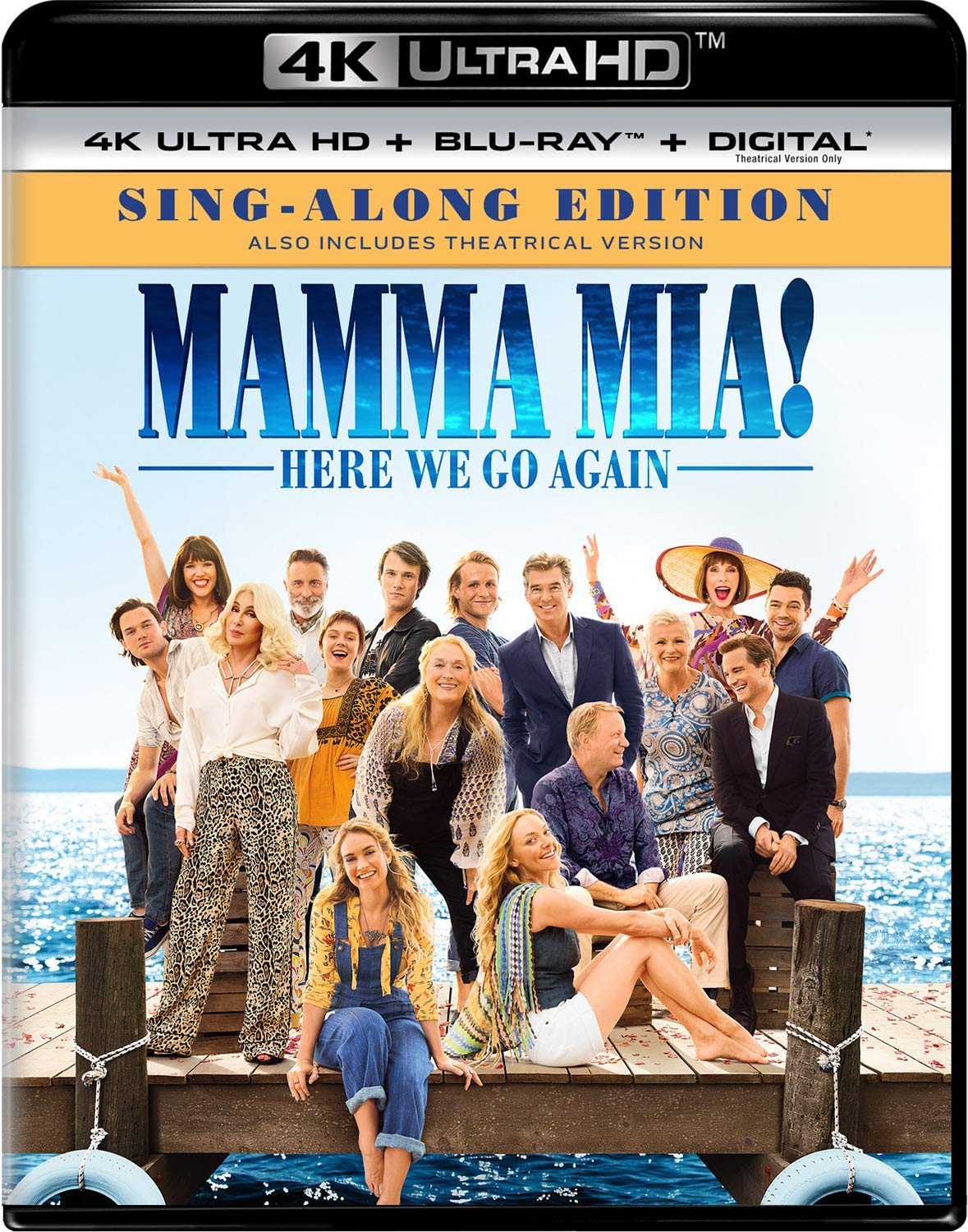
“I don’t know how to sing about love when I’m not feeling it.”

I have a surprising confession to make: I’m a huge movie musical nerd (that’s not the surprising part), but I thought the first Mamma Mia movie was absolutely terrible. Obviously, I was in the minority: the 2008 ABBA jukebox musical grossed more than $600 million worldwide. So the second least surprising thing about the perfectly-named sequel, Mamma Mia: Here We Go Again, is that it took 10 years to get the band back together. The first most surprising thing is that I actually thought this movie was...kinda good.

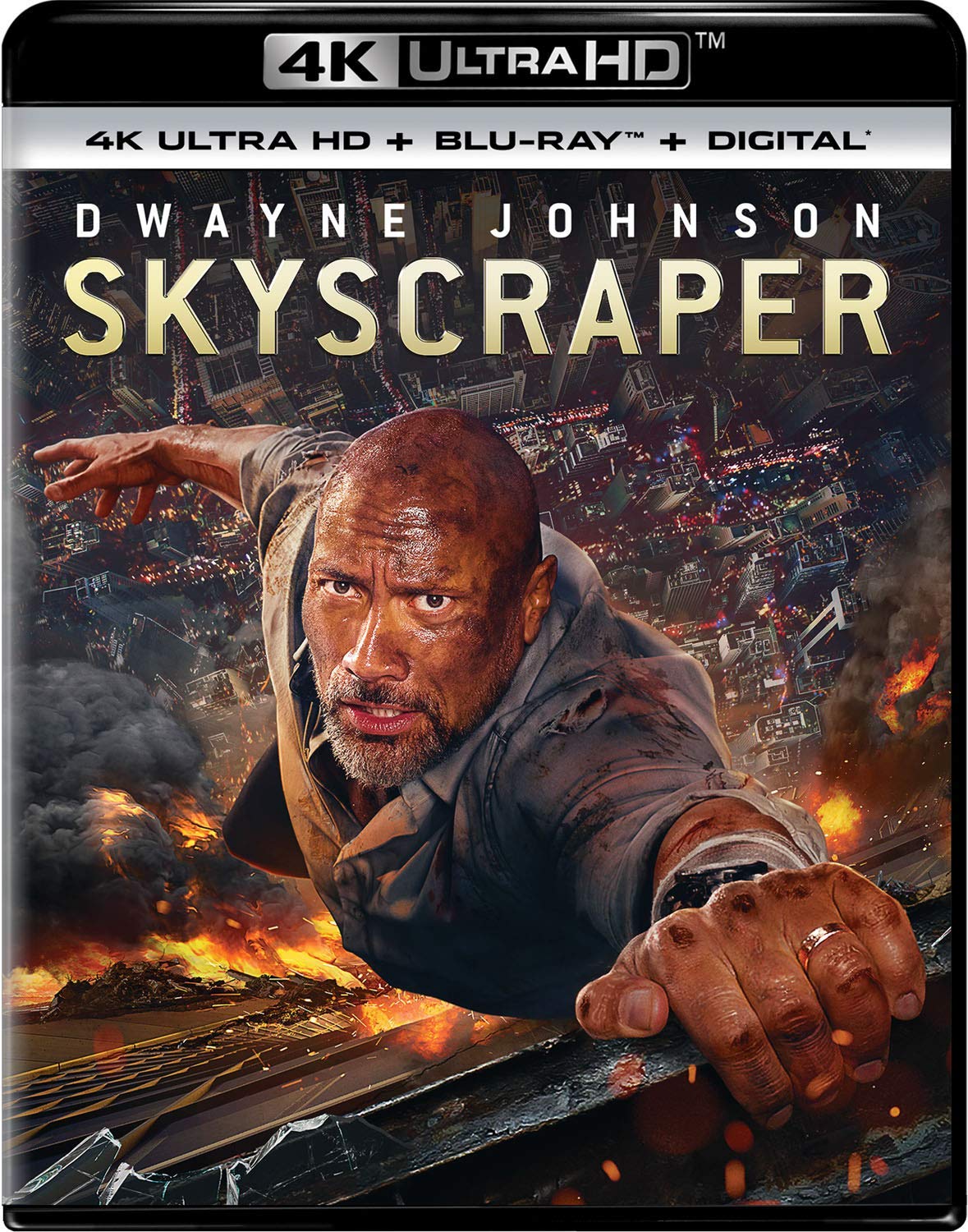
Dwayne Johnson appears to be a pretty busy guy. In addition to the HBO series Ballers about to enter its fourth season, Johnson puts out a couple or more films a year. We're not talking about small independent films, but rather huge, high-budget and big f/x films. Next year will see Jungle Cruise and Jumanji 2,  following with San Andreas 2, Suicide Squad 2, Black Adam, and a remake of Big Trouble In Little China, all arriving in the next couple of years. This year saw Rampage, which comes to home video next week. It's a busy life for Dwayne Johnson, who appears to have dropped "The Rock" from his name. I sure hope it didn't hit anyone on the head. Now he's starring in Skyscraper, which shamelessly combines elements of Die Hard and The Towering Inferno. In Skyscraper, Johnson shows us that he's intent on hanging around for a while... this time from 220 stories high.

This time around Johnson plays Will Sawyer, who used to be a SWAT team member until his last mission turned on a bad call and left him badly burned and with a missing leg. Ten years later he's recovered from the burns and is married with two kids to the nurse who took care of him back when he was injured, played by Neve Campbell. He runs his own security company and is about to get the biggest break of his second life. Another injured member of his old team, Ben (Schreiber), works for a wealthy Hong Kong building designer and gets Will the coveted job of certifying the building’s security and safety protocols for the insurance underwriters. He's just about to finish the job when he discovers there might be some grudges from his bad call, and there are absolutely some grudges against billionaire builder Zhaoa Long Ji (Han), and some nasty players have used him to disable the fire suppressant system and set fire to the 96th floor. It's not just his honor at stake now. He's been framed as the culprit, and his family is still in the building.

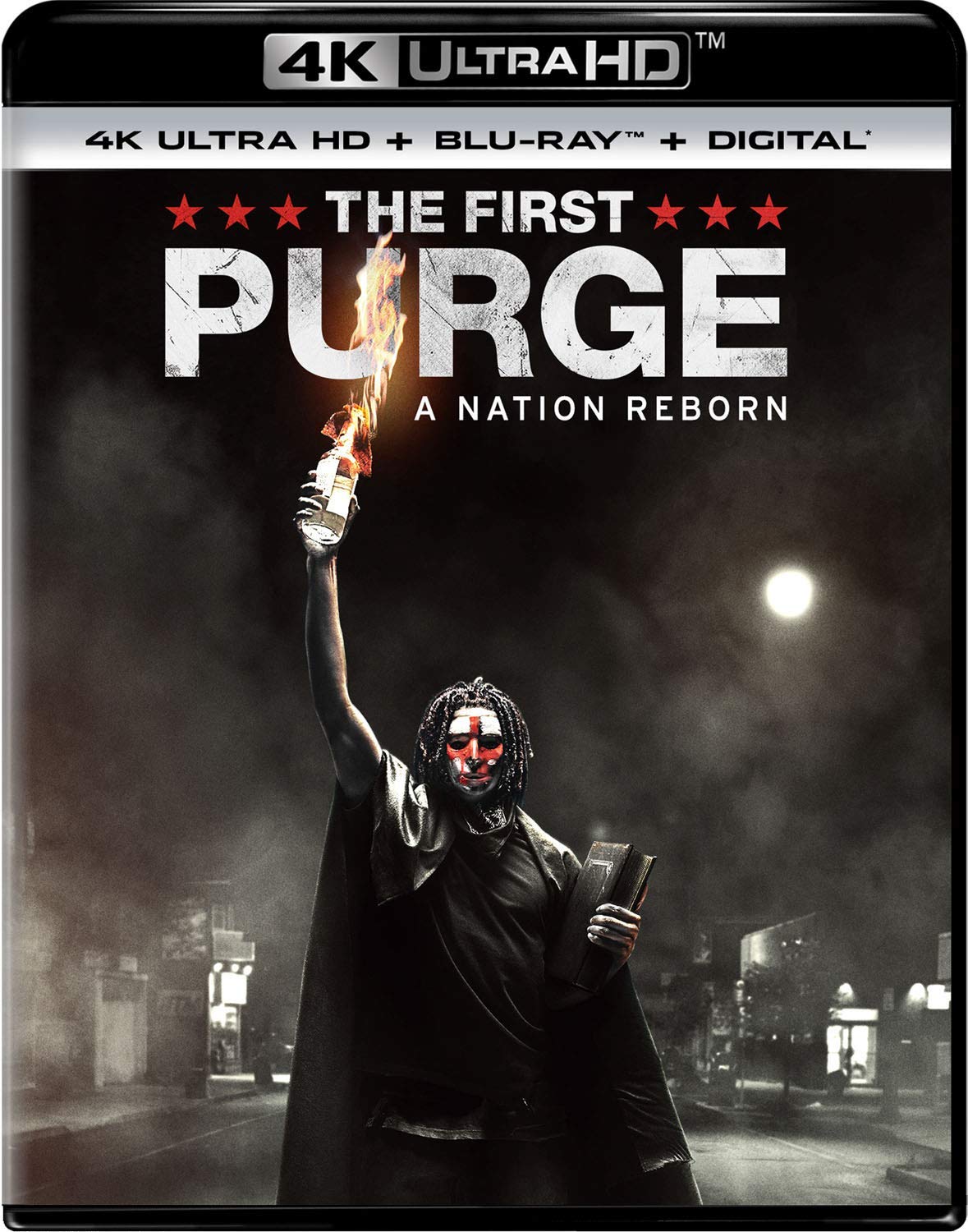
“This is the greatest s— show on Earth!”

The First Purge arrives in theaters a little more than five years after the (lowercase) first Purge rampaged into moviegoers’ consciousness as a nasty bit of R-rated, summer blockbuster counterprogramming. The movies are obviously quite popular, but I’ve never felt that any of them fully lived up to the killer concept at the center of this franchise. Unfortunately, that still holds true for The First Purge, which had a chance to deviate from the established formula in a variety of interesting ways, but ends up playing a lot like The First Three Purges.