Posted in: Disc Reviews by J C on July 15th, 2013
“You give me a uniform, you give me a number on my back — and I’ll give you the guts.”
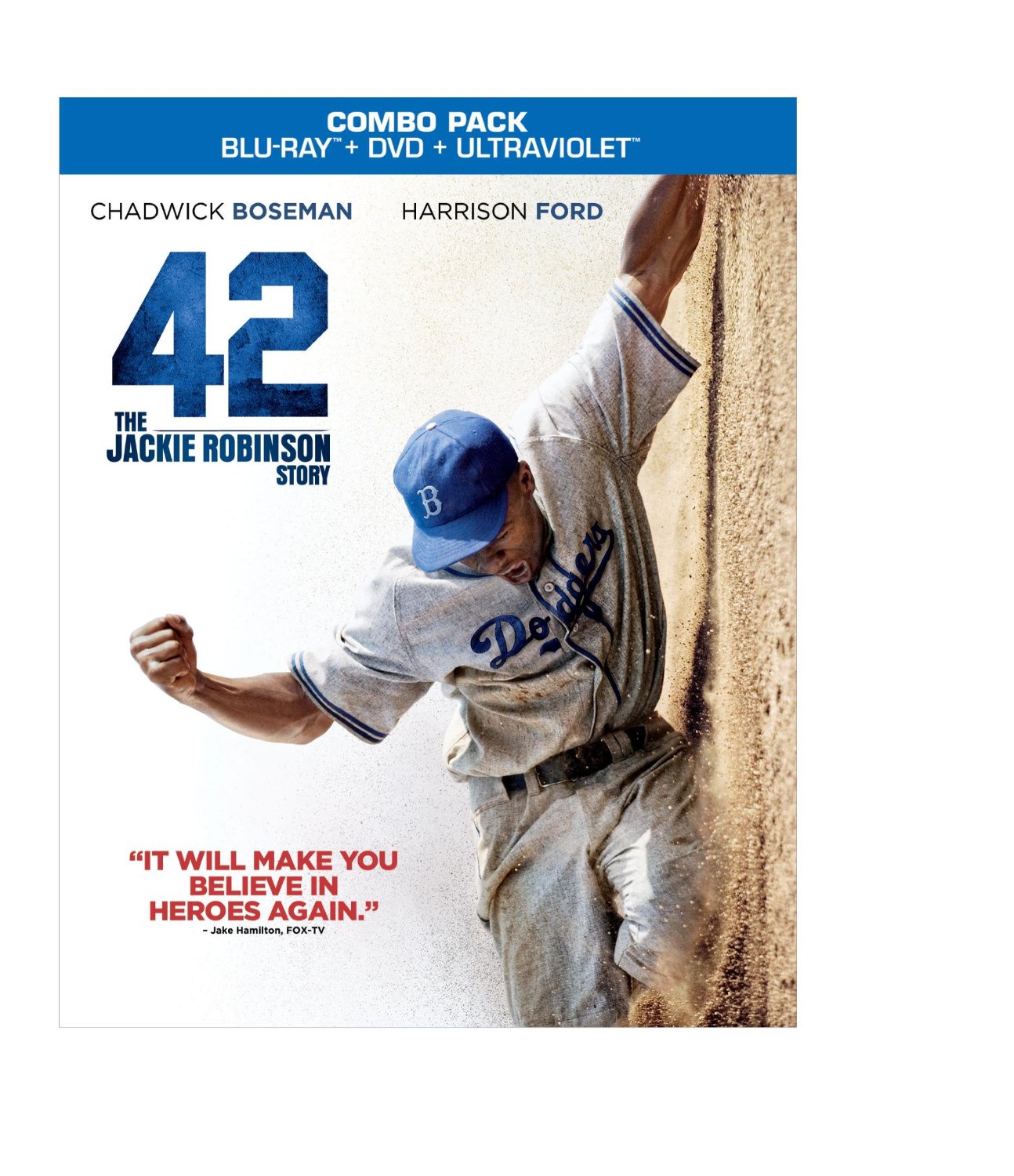
More than any sport, baseball is all about numbers. Unfortunately, some of those numbers — like 73 (home runs in a single season) and 500 (career homers) — mean a little less in light of the steroid era. Others, like 56 (Joe DiMaggio’s legendary hitting streak), seem destined to live on forever. The most significant number on that shortlist might be 42, worn by Jackie Robinson when he broke major league baseball’s color line on April 15, 1947. 42 — the film, not the number — is significant for a somewhat surprising reason. The movie succeeds as rousing, crowd-pleasing entertainment by functioning less as a straight-up biopic and more as the story of how Robinson became, arguably, the country’s first African-American crossover star.
Posted in: Disc Reviews by Gino Sassani on July 15th, 2013
It's hard to imagine that Sylvester Stallone and Walter Hill never crossed paths for an action movie in the early days of their careers. Both have established themselves as staples in the action movie genre, and they dominated the 1970's and 1980's. It seems like a dream come true that the actor and director have finally joined forces. Unfortunately, some dreams are actually nightmares, and if Bullet To The Head is any indication, the two stars would have been better off had they remained unaligned.
The story is based on the French graphic novel Du Plomb Dans La Tete by Alexis Nolent. I have never seen the book, so it would not be possible for me to compare the two. Here the story involves hit man James Bobo (Stallone). He's on a hit with his partner Louis (Seda). Things go smoothly until James decides not to kill a hooker witness. Is he going soft? Not really. It turns out the two have been set up by their boss Marcus Baptiste (Slater) who has sent another killer, Keegan (Momoa) to get rid of the team. James gets away, and now he wants to find out who set him up and killed his partner.
Posted in: Disc Reviews by J C on July 15th, 2013
Cruel blood sport or culturally-significant art form? That’s been the centuries-long debate surrounding the practice of bullfighting. Personally, almost everything I know about bullfighting comes from Ernest Hemingway stories and Looney Tunes. So Blood and Sand — a grand, cynical bullfighting drama/Technicolor spectacle from 1941 making its Blu-ray debut — was an eye-opening experience in more ways than one.
Blood and Sand is the story of Juan Gallardo (Tyrone Power), who we first meet as a bullfighting-obsessed child (played by Rex Downing) in Seville. Juan’s father was a legend in the sport — and the kid will eagerly break a bottle over the head of any pompous critic (like the one played by Laird Cregar) who disagrees — and the brash boy is obsessed with following in his footsteps. (He routinely sneaks onto a ranch at night to work on his skills.) Eventually, he runs away from home with a group of friends and travels to Madrid in the hope of becoming Spain’s greatest bullfighter.
Posted in: Disc Reviews by Jeremy Butler on July 10th, 2013
“There are only two reasons why a boat would go rogue. One is to defect, and the other is to start a war, and I don’t think we’re defecting. ”
Abraham Lincoln once said, “The best way to get rid of an enemy is to make him a friend.” That’s one way; however, Phantom proposes a different tactic: the best way to get rid of an enemy is to get someone else to do it. Which do you agree with more? Ed Harris and David Duchovny square off as two pieces on the opposite sides of the chess board locked in a submarine together with control of a nuclear warhead being the checkmate.
Posted in: Disc Reviews by Jeremy Butler on July 2nd, 2013
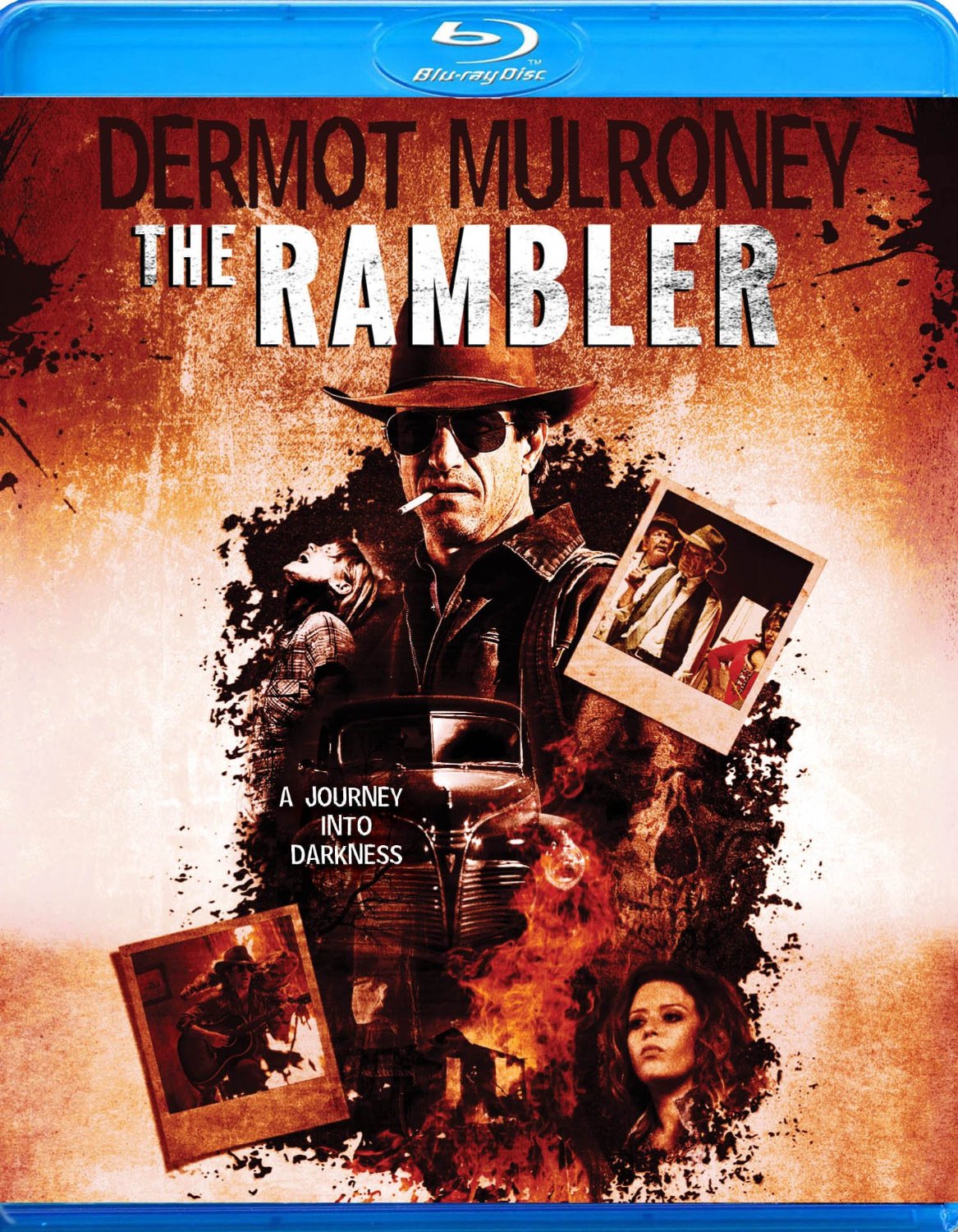
A fish has to swim, a bird has to fly, and a film has to entertain; those are the defining attributes for each of the listed subjects, and in my opinion The Rambler didn’t meet its obligation as a film. The Dermot Mulroney-led film is a series of happenings, each of which are unconnected and wide open for interpretation, only tied together by one monosyllabic character. It seems that the story is whatever you want to make it, but therein lies the rub: many people don’t go to films that require them to form their own interpretation. They are looking to have a story told to them, not tell it to themselves.
The Rambler opens up with our titular character (Dermot Mulroney) observing a house on fire. Next it jumps to behind prison walls where The Rambler has ended up (whether it was due to the fire is not really explained). Through a quick montage sequence, we are given a recap of the character’s life on the inside up until he earns his release: smoking in his cell, smoking in the cafeteria, and smoking in the exercise yard.
Posted in: Disc Reviews by J C on July 1st, 2013
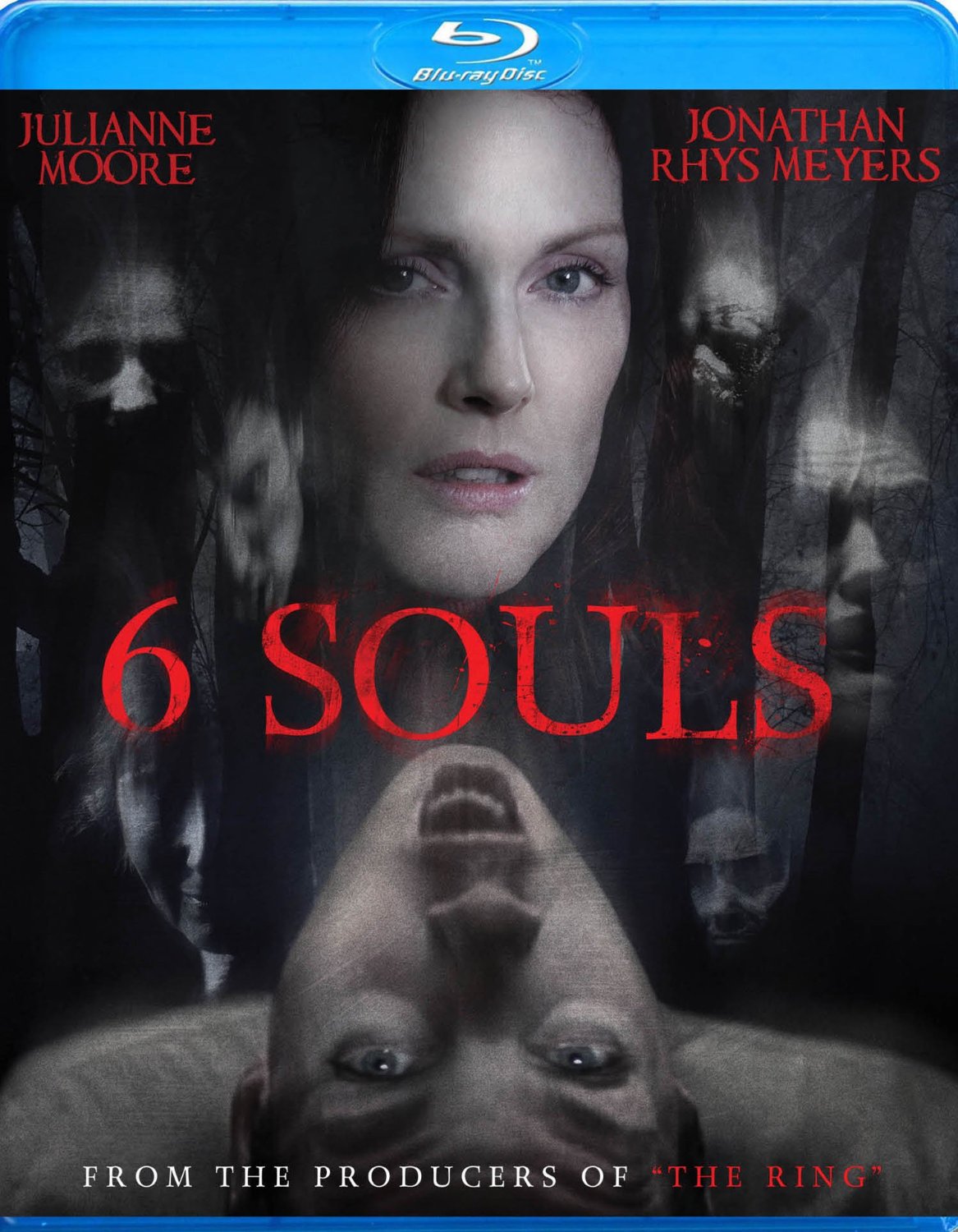
The medical community seems to be split on whether or not dissociative identity disorder — previously known as multiple personality disorder — actually exists. Well, I’m here to offer a definitive answer because I’ve just seen the dreaded disease in action after watching 6 Souls. The film can’t decide whether it wants to be trashy, watchable horror movie that regularly tries to jump-scare you out of your seat or a somewhat serious meditation on the science vs. faith debate.
Dr. Cara Jessup (Julianne Moore) would strongly disagree with my diagnosis. When we meet the widowed psychiatrist early on in 6 Souls, she’s expressing her belief that multiple personality disorder is a fad perpetuated by the media and pop culture. Cara’s father (Jeffrey DeMunn) is also a psychiatrist, and he’s playfully determined to prove his daughter wrong. He asks her to examine a seemingly timid young man named David (Jonathan Rhys Meyers) who becomes the much more aggressive Adam after a well-placed phone call. Even though Adam/David is very convincing, Cara wants to debunk the idea that he suffers from multiple personality disorder. As she investigates Adam/David’s background, she finds a common link between his personalities and realizes there might be more to come. (The movie isn’t called 2 Souls, after all.)
Posted in: Disc Reviews by Gino Sassani on June 26th, 2013
"My ears hear what others cannot hear; small faraway things people cannot normally see are visible to me. These senses are the fruits of a lifetime of longing, longing to be rescued, to be completed. Just as the skirt needs the wind to billow, I'm not formed by things that are of myself alone. I wear my father's belt tied around my mother's blouse, and shoes which are from my uncle. This is me. Just as a flower does not choose its color, we are not responsible for what we have come to be. Only once you realize this do you become free, and to become adult is to become free."
If you are a fan of director Chan-wook Park, you are used to the kinds of bizarre images and somewhat enigmatic story elements that dominate the landscape of Stoker. While none of the images here reach quite into the territory of Oldboy, it's hard not to plug into the disturbed nature of the film's themes and story. I left the movie with more questions than answers and a little bit lost as to how exactly I was going to approach this review. I had not seen Oldboy at the time of the viewing or since. I did go out of my way to get some exposure to the film's famous imagery through clips and stills. Even still, I've never been more confused about a film than I am about Stoker.
Posted in: Disc Reviews by William O'Donnell on June 25th, 2013
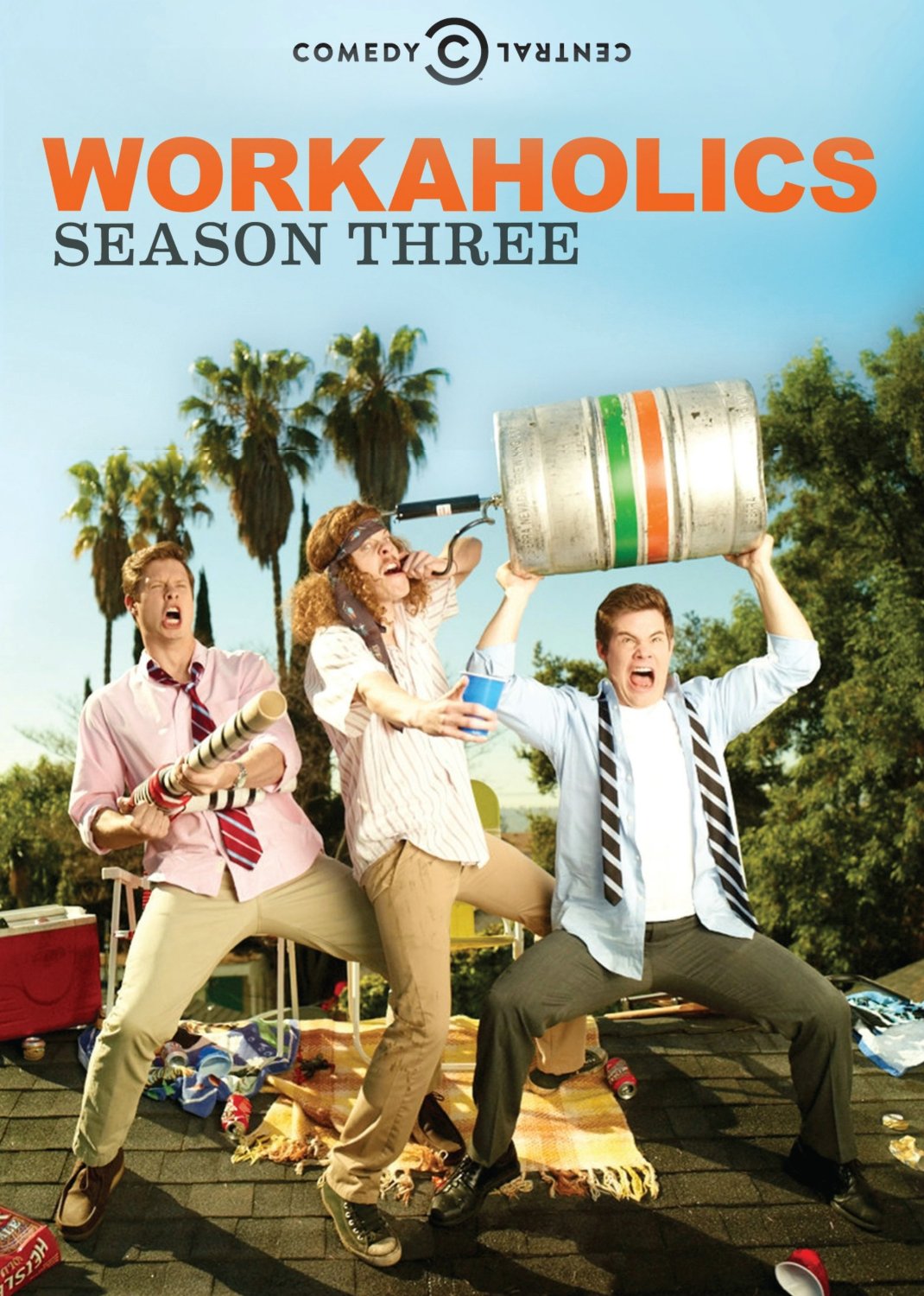
Every generation since “X” has lionized its slackers and frat boys with films (perhaps earlier if you look to Animal House as the beginning). Workaholics dances between this honouring of the stoner/slacker lifestyle and satirizing it. This show's third season is just like the previous two. Three best friends, Adam, Anders and Blake, spend their work days with pranks, pot and parties on their minds, and each episode showcases their adventures therein.
These three indulge in so much “bro” talk, which entails frequent use of the words “bro,” “dude,” and turning as many words as possible into slang, usually by shortening them to one syllable if possible. A whole scene may go by where their English has been massacred to the point where I feel as if they are speaking an entirely new language. While many times this would seem to be a way of relating to the keg-tapping demographic, it can reach such a preposterous level, such as when Adam talks about getting a girl to put her “H on his D,” that it becomes more of a lampooning.

Posted in: Disc Reviews by Gino Sassani on June 24th, 2013
"Welcome to the wonderful world of magic."
They say that the hand is quicker than the eye. Through the art of misdirection and skillful manipulation we have been awed by magicians ever since Glog made Ooof's club disappear somewhere in Mesopotamia circa 20,000 BC. It's not all skill, really. The truth is we've always wanted to be fooled. We're begging for "magicians" to tamper with our sense of reality. I don't know how fast the hand happens to be, but today we're fooled at the speed of 24 frames per second (unless you happen to be Peter Jackson). The magic happens every time we walk into a movie theater or put a shiny disc into our magic machines. And what do we enjoy even more than being "tricked"? We love to laugh. The Incredible Burt Wonderstone has just the right amount of sleight of hand to pull it off.
Posted in: Disc Reviews by Gino Sassani on June 20th, 2013
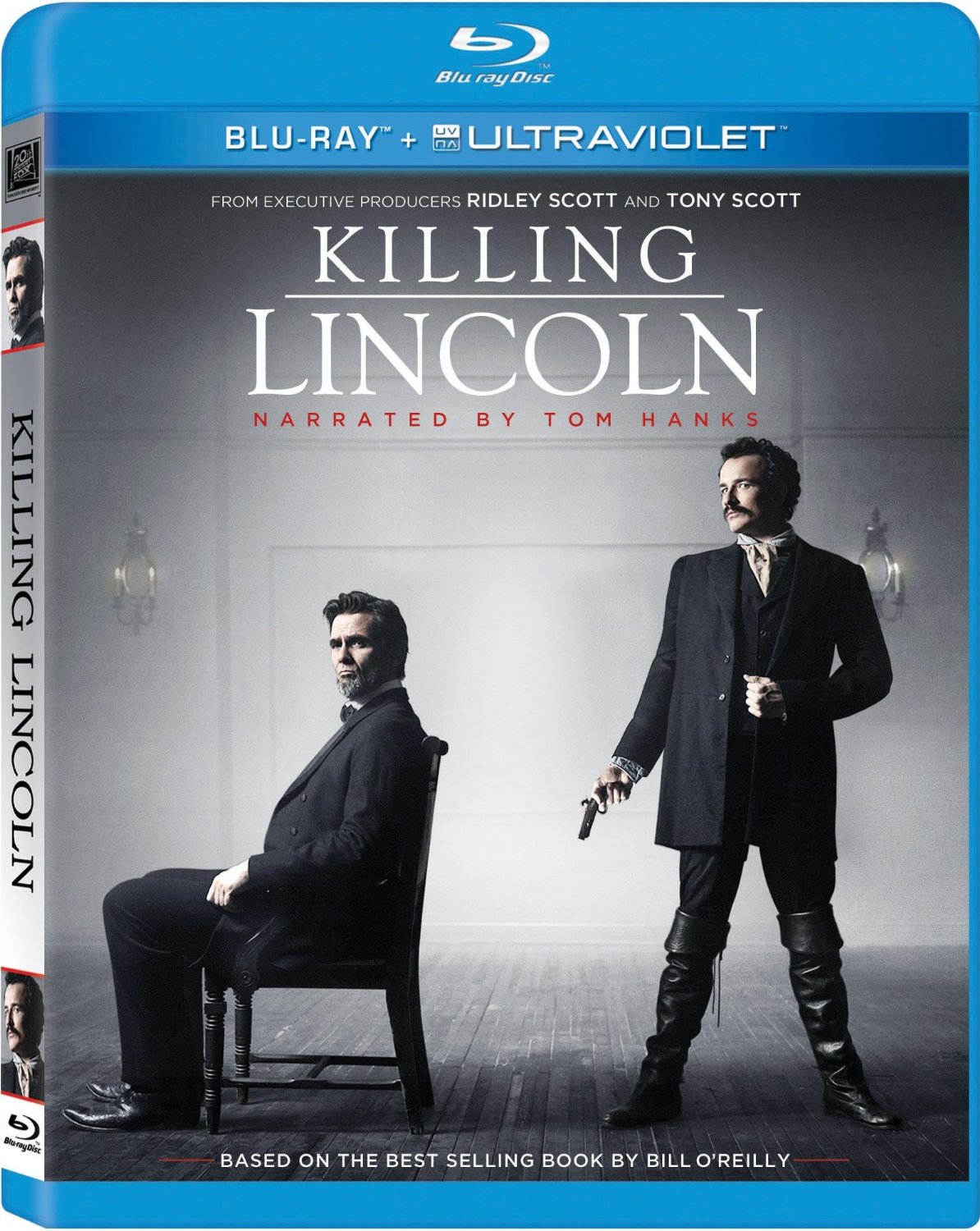
"On the evening of April 13th, 1865 John Wilkes Booth initiates his plan not only to kill Abraham Lincoln, but to decapitate the government of The United States."
Whatever you may think of Fox News or Bill O'Reilly, it would be a terrible mistake to discount seeing Killing Lincoln because of purely political leanings. The Department Of The Interior tried it when the book came out and underwent a campaign to keep the book from the public gift shops with claims of inaccuracies. Give O'Reilly credit for not taking the accusations lying down. He challenged any of the naysayers to point out these mistakes and, of course, nothing ever came out of the accusations. That's because the book is hauntingly accurate and tells a story most of you didn't get in your American History high school classes...unless you happened to have been in any of mine over the years. I can tell you not only as a film reviewer but a former history honors teacher and avid presidential reader that this account passes every test you can put to it. Of course, it's impossible to know every detail or intimate fact of an event we cannot witness. This comes as close as any production I've seen to date.