Posted in: Disc Reviews by Brent Lorentson on June 21st, 2019
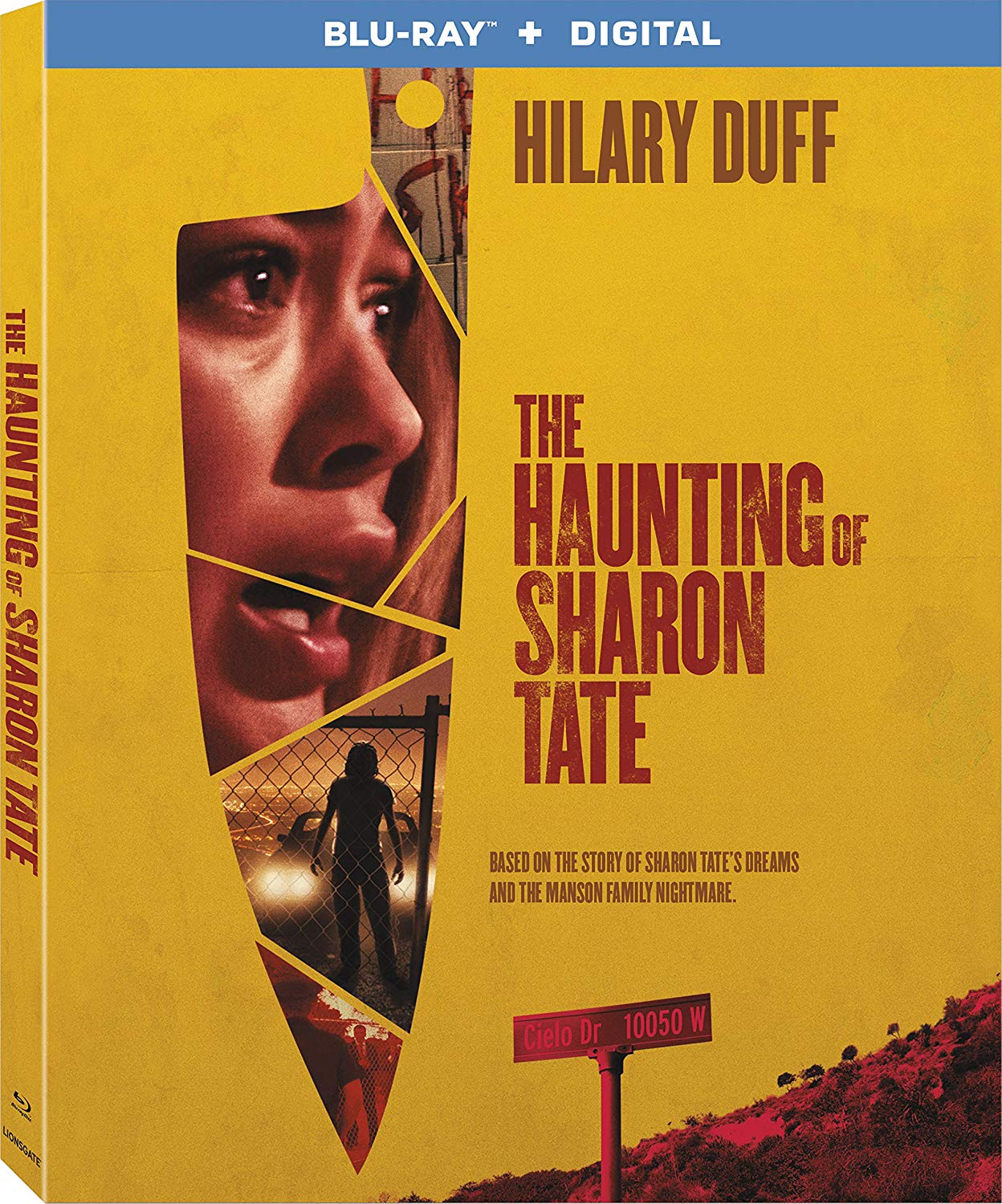
With the 50th anniversary of the murders committed by Charles Manson’s followers coming up in August, it’s no big surprise that we’re seeing films that focus on those events popping up on the big screen. Hollywood has always had a fascination with the crimes. After all, it involved a rising starlet, Sharon Tate, and director Roman Polanski was making a name for himself in the states after the success of Rosemary’s Baby. We all know what happened with Manson and his followers and the unfortunate fall Polanski took, despite managing to maintain a directing career long after the child rape accusations first percolated. It’s a tragic story all around, and it’s no surprise why it continues to fascinate people. Already there has been the film Charlie Says from Mary Harron (American Psycho), and next month we’ll be getting the long anticipated Once Upon a Time in Hollywood from Quentin Tarantino, whose film takes place around the time of the murders. But right now, the focus is on The Haunting of Sharon Tate, a film that takes the approach that Tate had predicted her murder because of dreams she had of the massacre long before they took place. It’s a film that poses the “what if?” question that if she had known what was going to happen, could she have changed the outcome. It’s not a bad idea, and it opens plenty of possibilities, but how does it turn out?
First let me say I’m all for films that attempt the alternate reality direction, playing with the notion of how things could have gone. I went into this film with an open mind and really just was hoping for something unique, something that could balance between horrific and entertaining. Considering this IS a true story, to go for a fun, campy slasher would just be in poor taste. Well, unfortunately, that’s sort of what this aimed to be, and it just fails miserably.
Posted in: Disc Reviews by Michael Durr on June 17th, 2019
Short stories and films are often great ways to focus in on a singular theme. Whether you get yourself down to a few pages or fifteen minutes, you really get your message across instead of being misinterpreted across a longer medium. Disney and Pixar have done this for a number of years, and even though many have dismissed them as simple shorts or cartoons, it's often the part of the movie that holds the viewer in the strongest way. Japanese studios such as Studio Ghibli have done this as well. Studio Ponoc, founded in 2015 and fronted by Yoshiaki Nishimura, released the smash film, Mary & the Witch's Flower in 2017. Then last year, they came out with a trio of shorts for all of us to enjoy. Let's take a look.
Kanini & Kanino by Hiromasa Yonebayashi
There are birds singing and fairies flying. Streams are bubbling, and we are introduced to a family of crabs (who are depicted as tiny humans who can swim and breathe on land and in sea). There is the brother, Kanini, and the sister, Kanino. The mother is very pregnant and has gone away to the surface to give birth. Their father has stayed with the brother and sister to help them get food and protect them from threats of the sea. However, one day something sinister takes away the father, and it's up to the two kids to find and save him.
Posted in: Disc Reviews by Gino Sassani on June 12th, 2019
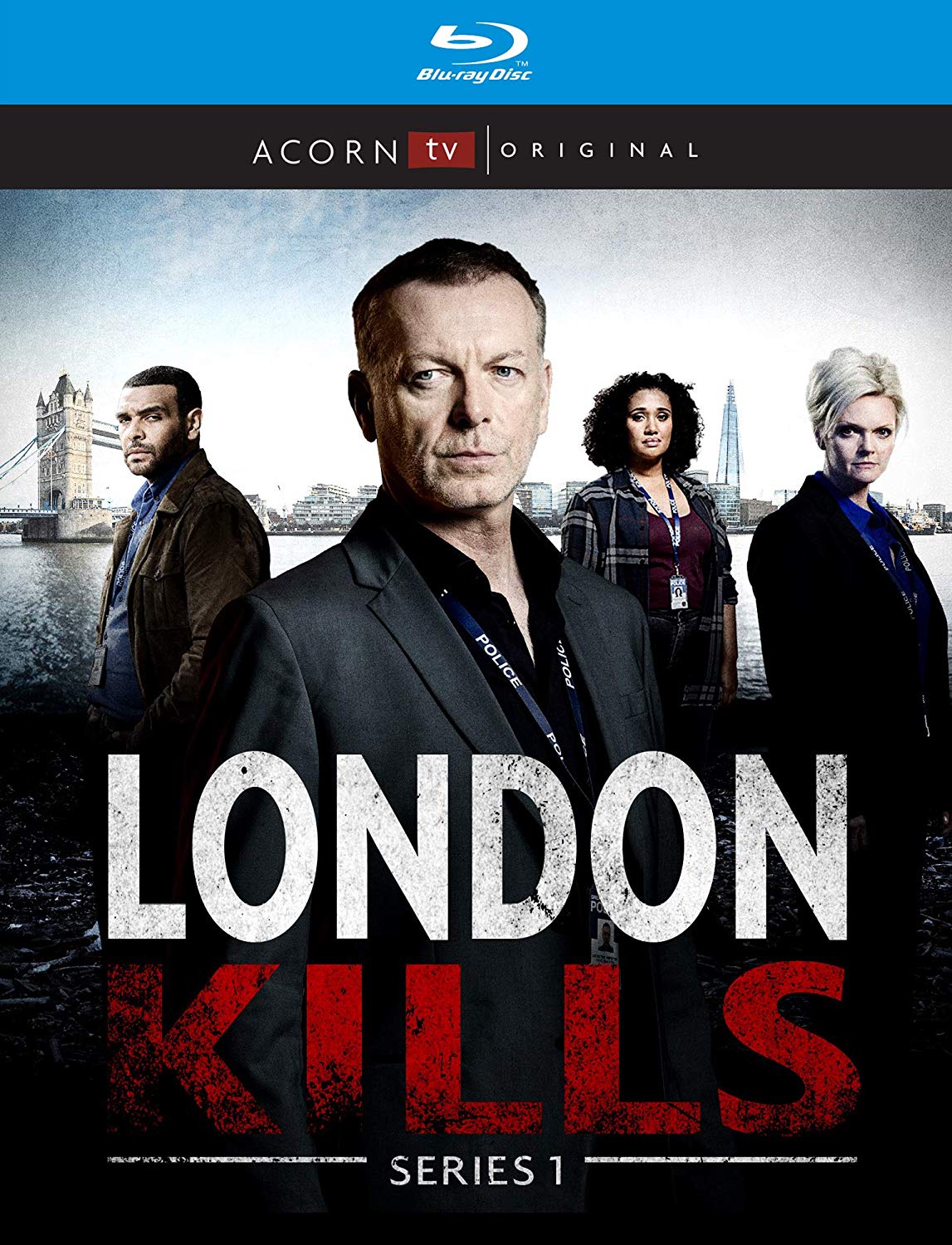
For many years Acorn Media has been the best source for a lot of those classic British drama shows that you've seen reviewed here and elsewhere. They've brought us some of the best British stars in some landmark work spanning decades of British broadcast. These shows were always something produced by someone else, most notably the BBC itself. So while we can be thankful to Acorn for distributing these shows particularly here in the United States, they haven't actually been responsible for the actual content. That all changes with the release of London Kills Series 1 from Acorn Media. For the first time the company has created its own straight-to-series production. If this first effort is any indication of what we might expect in the future, I'd say there is great promise here, and while I didn't find it quite as compelling as favorites like the George Gently series, I saw a ton of potential. There are some very good reasons why I didn't enjoy this as much as many others, and I'll get into that in a moment.
Hugo Speer is Detective Inspector David Bradford. He has been on leave because his wife has disappeared. Detective Sergeant Vivian Cole is played by Sharon Small, and she has been running the unit while he has been away. When her squad is called in on a grisly murder scene where a mutilated body is hung from a tree as if to suggest suicide, she fully expects to lead the investigation. But when Bradford shows up at the crime scene, she sees those plans dashed. There's absolutely some tension and even a bit of hostility between the two. It's equally obvious that they have some unpleasant history. Cole is also not so popular with her Detective Constable Rob Brady, played by Bailey Patrick. He's happy to see Bradford's return. He's also the squad's tech geek. Under Brady is Trainee Detective Constable Billie Fitzgerald, played by Tori Allen-Martin, who is appearing in her first show. It's her first day, and between the bizarre case and the newly arrived Bradford, she's going to get a running start on her career.
Posted in: Disc Reviews by Gino Sassani on June 7th, 2019
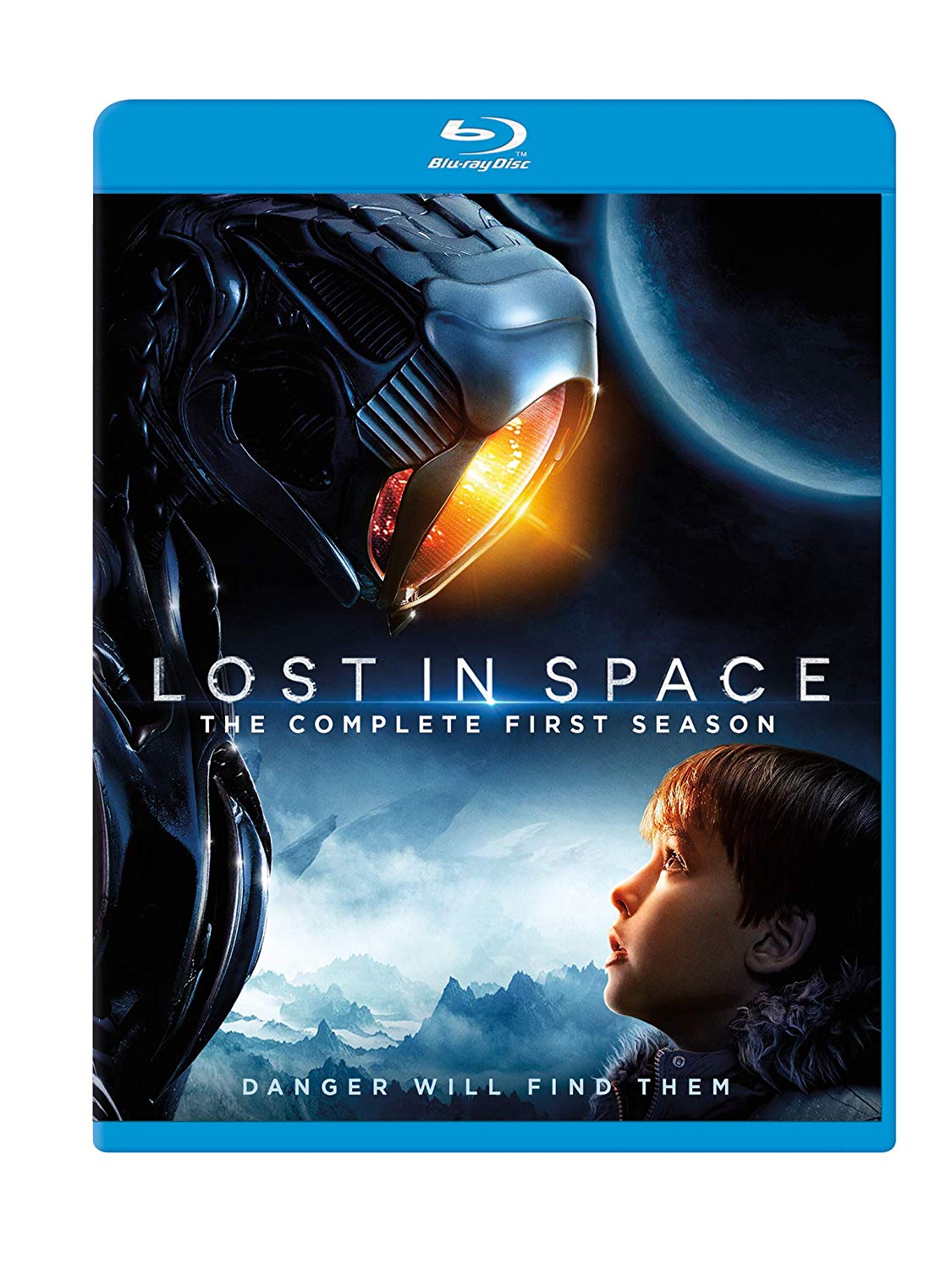
I'm constantly told that streaming services like Netflix are the way of the future. But it appears that to build that future it is necessary to look to the past with a television series from the 1960's that looked to the future, but itself was based on material from the past. If you're becoming a little dizzy, I get it. Of course, I'm talking about Netflix's reboot of the Irwin Allen television milestone Lost In Space. Allen originally pitched a serialized version of the famous Swiss Family Robinson story and was rejected. So he took that story and set it into the future and marooned the Robinson family not on a contested pirate's treasure island, but on a flying saucer marooned far from Earth. It lasted three seasons and introduced several phrases into the pop culture like "danger, Will Robinson" and "the pain, oh, the pain". Even if you've never seen an episode of the original show, you've heard these little references. And that's exactly what Netflix is counting on by delivering a modern take on Lost In Space now out on Blu-ray from Fox Home Entertainment.
There are as many differences in this version of the show as there are common elements. In this series John Robinson (Stephens) is not the mission commander. This time it's wife Maureen Robinson (Parker) who is not only in charge but designed the ship that they are lost within. The relationship couldn't be more different. John has been away most of the time as a soldier, and they are in the middle of splitting up. Things change when an object crashes to Earth on a Christmas Eve and is dubbed The Christmas Star. The impact triggers a series of ecological disasters, and the Earth is now becoming uninhabitable. Maureen Robinson becomes part of a program that designs a huge starship that carries hundreds of individual ships and thousands of colonists to a planet orbiting Alpha Centauri. That is also the destination of the original show. Of course, they never tell you they're going to a planet in either show. They merely use the star's name, which itself likely wouldn't be a safe place to land. The large ship the Resolute is attacked by a mysterious creature during it's 24th group of colonists. Ships are ejected, and many of these "Jupiters" crash on a fortunately sustainable planet. One such ship is the Jupiter 2 with the Robinson family aboard.
Posted in: Disc Reviews by Gino Sassani on June 5th, 2019
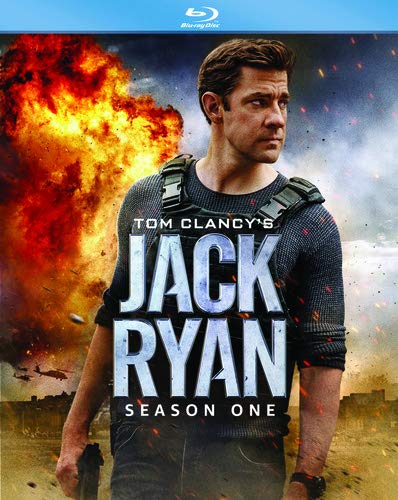
Witness the birth of -- actually make that rebirth of --one of the most popular action heroes in literature. Tom Clancy’s Jack Ryan has been a character of many jobs and many faces over the years. Baldwin, Ford, Pine, and Affleck have all stepped into the role of the man who has been a soldier, an analyst, an operative, and a president. What might appear as a clear advantage for this Amazon Prime streaming television show can be just as much a liability. When you throw in the Tom Clancy novels, comic books, and fan fiction, there is a ton of Jack Ryan history that pretty much gives us a story arc from his humble beginnings to extraordinary exploits and wearing the face of a few good performers. It's a tall order for the series and perhaps an even taller order for actor John Krasinski, who has created a nice little horror franchise with wife Emily Blunt on the side. I don't really have the time or energy to watch streaming shows and films. There's always a backlog here of discs that need to be , and I've created a rather comfortable viewing experience with my home theatre I call The Reel World. Our motto: Here there be monsters. So I have not had the opportunity to check out this show even though I've heard pretty solid things from my colleagues. Thanks to Paramount's production of the series and their release of the first season on Blu-ray, I've finally had my chance to see what all the talk's been about. Let's just say, I get it.
This series obviously has to update the character from his 1980's Cold War novel beginnings just as a couple of the films have had to. It's the current year, and Jack Ryan (Krasinski) is really just an analyst for the CIA. He checks financial transactions and has come upon some serious activity. He believes he has stumbled onto the biggest terrorist activity since 9/11. Now he has to convince his new team commander, James Greer, played by The Wire's own Bunk Wendell Pierce. Greer has recently been demoted, and his new post is really something of a censure for him, so he's not as receptive to Ryan's enthusiasm. It doesn't help that their first inadvertent meeting occurred on the streets with a bit of a near crash. Ryan goes over his head to freeze some bank accounts, and the resulting investigation puts the two uneasy coworkers in the field on the trail of a huge asset.
Posted in: Disc Reviews by Gino Sassani on May 31st, 2019
"So much has happened. I don't know where to start. First it was all the school shootings. Then these WiFi scooters showed up. And now we know that Manbearpig is real and we could all be dead in a matter of years."
That's true, but I suspect that when we are all dead and gone there will be two things we can count on continuing beyond the end of human civilization. The cockroaches will inherit the world, and they will all be watching South Park, the only television show still running. It's already been 22 years, and doesn't it feel like 50? I don't mean that in a mean way. I love South Park, but I'm starting to find it hard to remember what life was like without it. I'm convinced it will survive us all, and AI versions of Parker and Stone will be producing it until the planet is finally vaporized... and I'm not sure even that will stop this show.
Posted in: Disc Reviews by Brent Lorentson on May 29th, 2019
Did you ever wonder what it would be like if on the many journeys Forrest Gump took, one of them involved him trying to solve a young boy’s disappearance and eventual murder? I didn’t think so. I’m not trying to be funny, but for the most part that is basically the gist of A Dark Place, where we see a young man who is on the spectrum become obsessed with solving a murder. It’s not that people who are on the spectrum can’t be highly intelligent and problem solvers, but this film takes things to another level, to where disability or not, no one could get away with what occurs in this film. Sure, there are movies that are about escaping reality, and one shouldn’t judge it for its realism, but when a film is attempting to be a slice of life in this small town that is devastated by the loss of a missing child, well, there comes a point where the audience should be allowed to call BS.
When we first meet Donny (Andrew Scott), he’s a trash collector in a small town. He’s a likeable guy, but we see early on that he’s on the spectrum and most likely has OCD amongst other things. The way Scott plays this character makes him very likeable from the start, and that’s important, because as the film plays out he does some questionable things, and it’s important to see that they are done with the best intentions. Along for the ride is his partner, Donna (Bronagh Waugh) who is doing her best to break through some of Donny’s emotional walls and quirks. The moments between Donny and Donna are some of the best moments in the film, and it doesn’t take long to see the potential relationship between the two. Unfortunately, Donny is still carrying a torch for the mother of his child. To be fair, this side story of Donny attempting to pursue a relationship with his ex really brings down the story and serves to do nothing but attempt to make us feel sorry for the guy when that’s not even necessary. The movie is 89 minutes; time is simply wasted as though it were padding.
Posted in: Disc Reviews by Michael Durr on May 14th, 2019
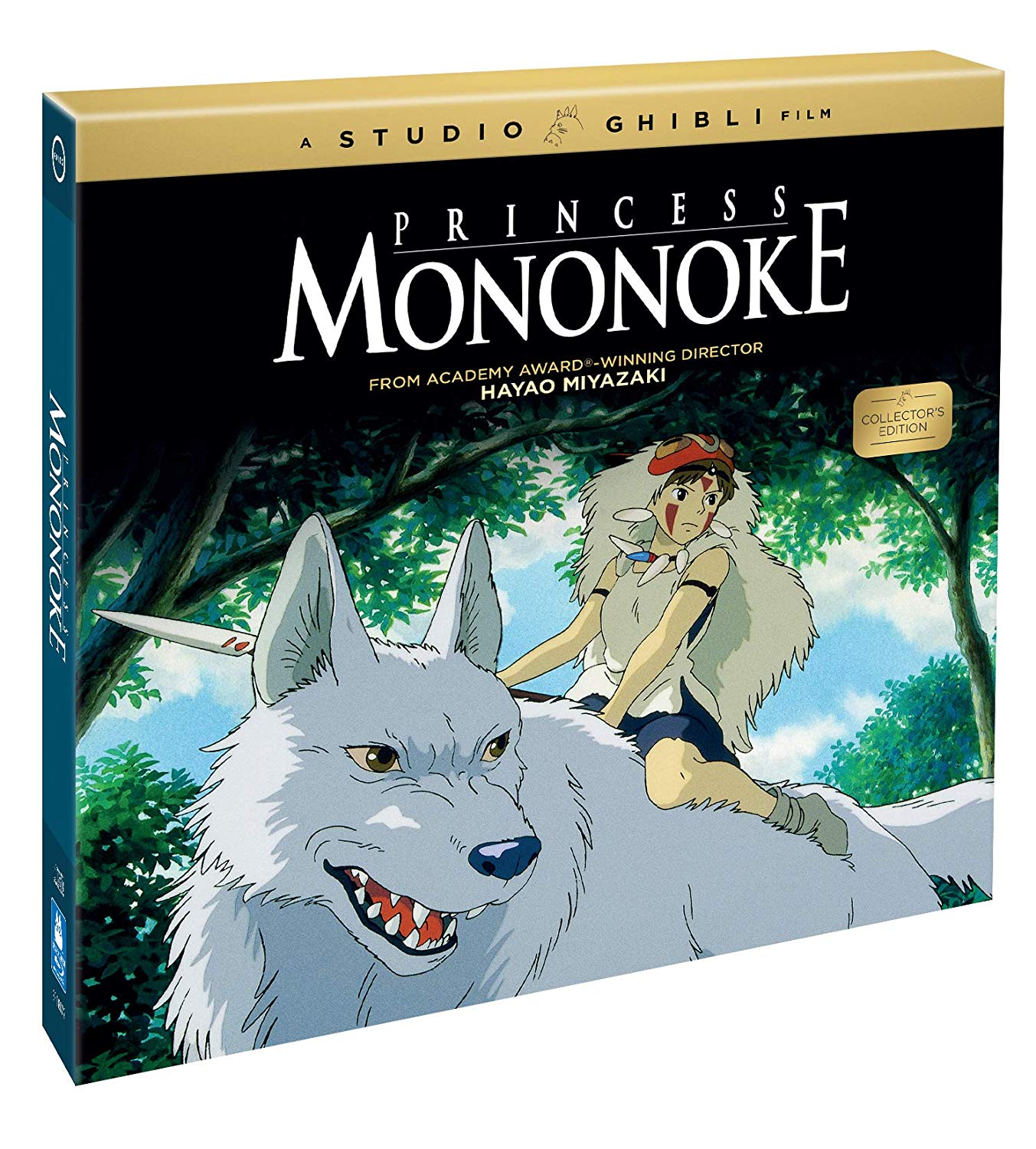
Hayao Miyazaki is an amazing Japanese animator and filmmaker. His films include Kiki's Delivery Service, My Neighbor Totoro, and Howl's Moving Castle among other legendary pictures. I can safely say I have enjoyed most of his films but unfortunately only owned a couple at the time of writing this review. That's why I was quite astonished when this collector's edition of Princess Mononoke came across my desk. I was ready to dive in with both feet and re-visit this movie that I had not seen since, well, almost twenty years ago.
In ancient times, the Land lay covered in forest. Here dwelt the spirits of nature from time immemorial.
Posted in: Disc Reviews by Gino Sassani on May 11th, 2019
"A clean girl is always attentive and dutiful. A clean girl embraces obedience. A clean girl is always humble and patient. A clean girl embodies sweetness. A clean girl is always temperate. A clean girl is honest and forthcoming. A clean girl gives the school loyalty."
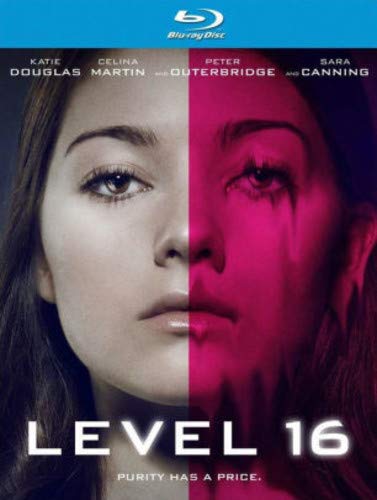
... and is thrifty, healthy, and wise. Watching the beginning of Level 16 reminded me a little bit of that Boy Scout Oath we used to stand and deliver in the gymnasium of Saint Margaret's when I was a young teenager. There are also several aspects of the film that reminded me a little of the disciplined regiment at Saint Margaret's Elementary School. But there's something more sinister afoot at Vestelis Orphanage than a few sadistic nuns packing yardsticks or a scout leader who smelled of stogies.
Posted in: Disc Reviews by Brent Lorentson on May 8th, 2019
In my review for The Hole in the Ground I talk about my feelings about the “Evil Kid” sub-genre. To sum it up, it’s pretty much my least favorite of the horror genres. Well, this week I got back to back reviews for movies in that genre, and I have to say, The Prodigy managed to surprise me. It brought in only $14 million at the box office with a production cost of about $9 million, and most of the critic reviews were not so kind to the film. Horror and critics really don’t get along so well, as history will show, mainly because for the longest time there has been a bit of a stigma attached to the genre. Thankfully things have started to change in recent years, but some critics still look at horror as nothing more than flashy B-rate cinema. Here at Upcomingdiscs I’d like to think we have always loved the genre and appreciate it at its most absurd and sometimes gory nature.
I bring this up because The Prodigy is something of a curve ball in its genre, and with its R rating I feel it’s earned its rating and has given us a character that is genuinely not just creepy but in fact terrifying while walking through scenes with a sweet innocent face. I needed to step away from the film and sleep on this review, because I have to admit I was a bit conflicted, but when I woke up there was still a moment in this film that stuck with me, and I’m a little more impressed by this.