Posted in: Disc Reviews by Michael Durr on April 4th, 2022
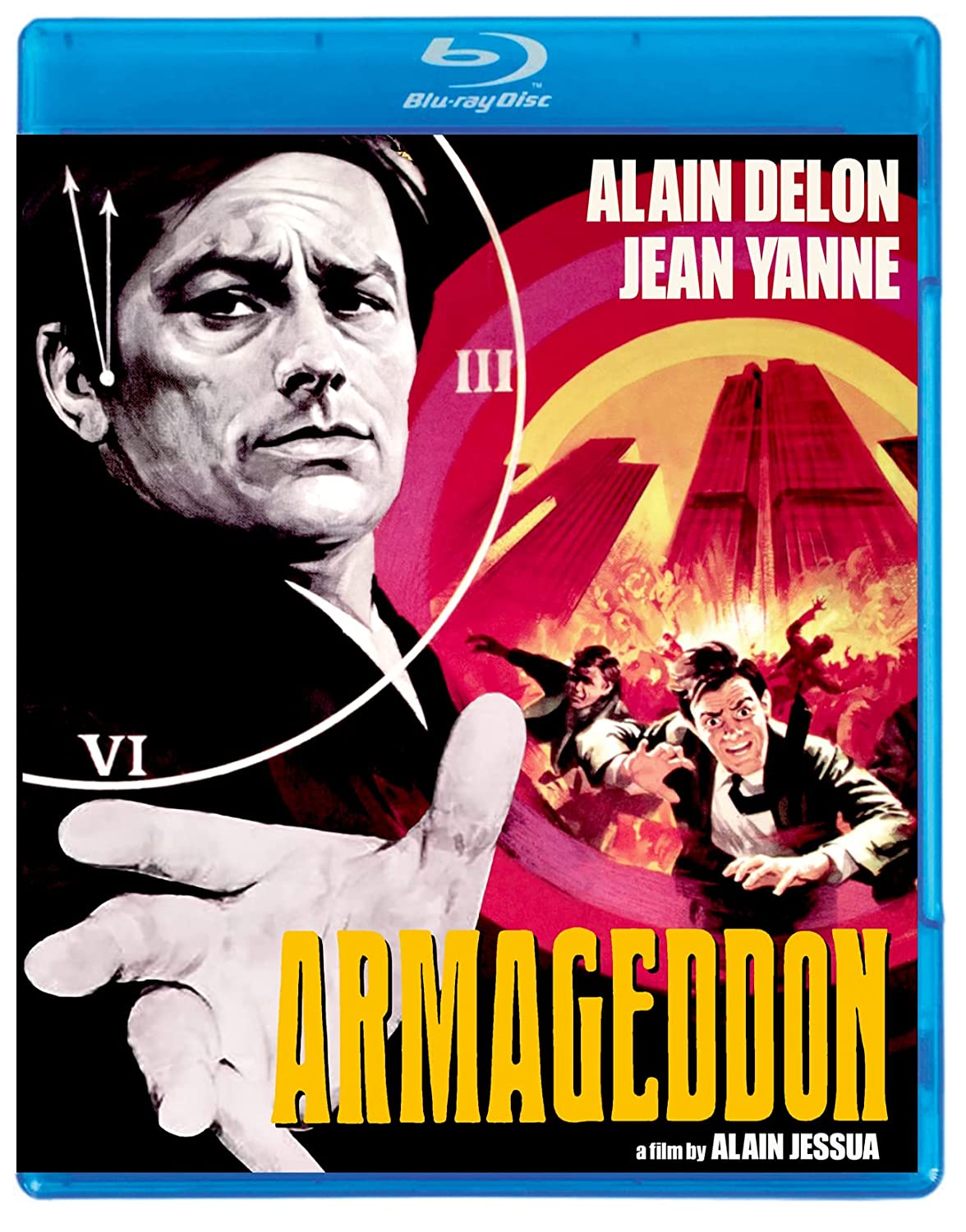
The power of the media is indeed one of the most powerful forces on Earth. They have the ability to manipulate regardless of where the truth actually lies. This exists on all sides of the political spectrum regardless of country, creed, or faith. It is truly sad that such fabrication actually exists and even more unfortunate that people will take it in hook, line, and sinker. Our film today, Armageddon, takes place in France, but plays havoc with manipulating those all over Western Europe by using the media to instill fear. Fear of mortality, fear of losing life, a fear that makes the strongest person into a blithering child. Let us take a look.
A SOS car stops, and a repairman by the name of Louis Carrier (played by Jean Yanne) steps out. He yells at his friend, Einstein (played by Renato Salvatori) who is picking up trash that he just inherited 250,000 bucks. It seems that his brother died and left behind a life insurance policy. Furthermore, it is his lucky break, and he is saying goodbye to his dear friend. Einstein asks him what he is going to do, and Louis replies, "Make the headlines." Let's roll those credits.
Posted in: Disc Reviews by Gino Sassani on March 31st, 2022
"Hello, Dexter Morgan."
It's been almost 10 years since everyone's favorite serial killer disappeared into a hurricane and left the airwaves with a somewhat unsatisfying series finale. It wasn't quite as bad as David Chase's ill-conceived hard cut that ended The Sopranos, but unlike David Chase, Team Dexter gets a second chance to get the ending right. With the death of actor James Gandolfini, Chase won't ever get the opportunity to give Tony Soprano a better exit. But Dexter gets the sendoff he should have had back in 2013 with the limited revival series Dexter: New Blood. The 10-episode run returns Michael C. Hall to the role of Dexter Morgan. You don't want to break into these episodes without taking time to watch the original series. That's going to set you back about 96 hours, but the investment is necessary if you're going to truly appreciate this return. You can check out our reviews of those previous seasons by banging it right here: Dexter Reviews. I'll wait....
Posted in: Disc Reviews by Gino Sassani on March 10th, 2022
"It's called life."
Kevin Costner plays John Dutton. The name itself recalls those years as a kid watching the myriad western shows that crossed our television screens throughout the 50's and 60's. He's the owner of Yellowstone Ranch, which takes up hundreds of square miles and borders on the national park of the same name, which we never do get to see. What we do see are the other borders of the Yellowstone. It borders a large and mostly impoverished Native American reservation. All of this takes place in the open ranges of Montana, where the Yellowstone Ranch looks very much like the fabled Shiloh of The Virginian. There's the big mansion where Dutton and some of his family live and the bunkhouse where the cowboys who work the cattle sleep, play cards, eat, and fight. Looking over the scenery, one can almost imagine you were back in the days of the untamed frontier. John Dutton might have some old-fashioned ideas of how to make a living, but he's a rich man who uses modern technology when it serves him.
Posted in: Disc Reviews by Gino Sassani on March 9th, 2022
"My name is Kara Zor-El. When I was younger, my home planet was dying. Saving it was hopeless. My father sent me to Earth to take care of my baby cousin who went before me, and I thought we were the only two survivors, and that everyone else from our planet was dead, including my father. I can't lose him again."
They say all good things must come to an end, and for the fans of CW's Supergirl, that end has finally arrived. Arrow started it all so many years ago and has been off the air a couple of years even though the CW DC universe has been coined The Arrowverse. The Flash will remain as the likely flagship for the joined universe with Legends Of Tomorrow, Superman and Lois, and unfortunately Batwoman keeping the last embers alive. I suspect that it will all close shop within the next two years. It's been a good run with some exceptional superhero television and some memorable characters, but we're in the home stretch, to be sure. But you can't just step in after a decade of Arrowverse unseen. If you have not seen the show before, you must at least go back and check out the previous five seasons. It'll be worth the time. You can also take a look at all of our reviews of Supergirl here: Supergirl Reviews.
Posted in: Disc Reviews by Brent Lorentson on March 4th, 2022
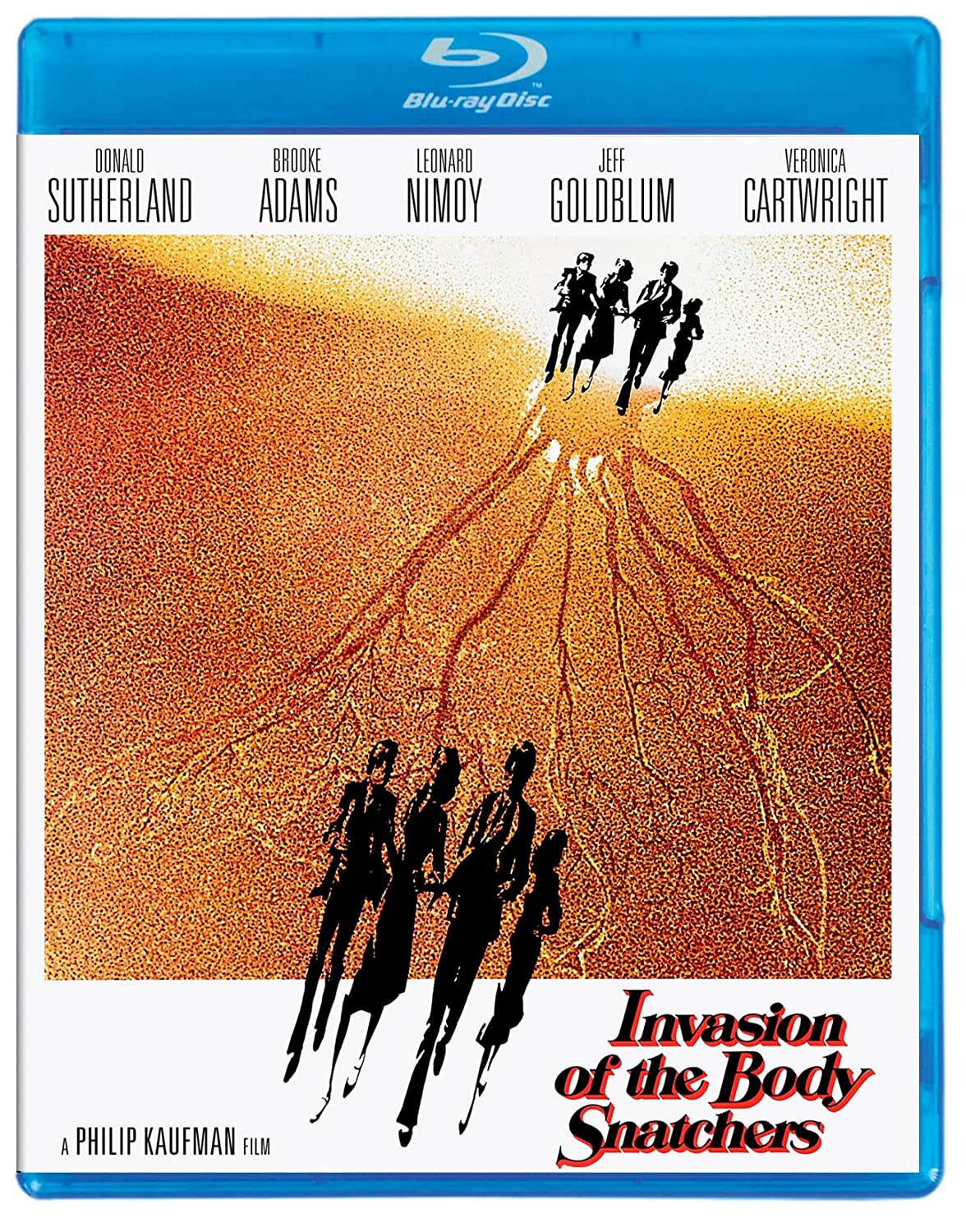
If I’m being honest, it’s been decades since I saw the 1956 Invasion of the Body Snatchers, and I’m not even sure I saw the whole thing, but I do remember the ending. It’s not that I feel it’s a bad film; I just have had no need to revisit it because I enjoy the 1978 version so much. The startling ending of this film is quite infamous. For those who haven’t seen it, I won’t spoil it for you, but it is a moment that has stuck with me since I first watched back in the old VHS days. Since the 1956 film has been out, there have been several takes on the material, and numerous bad knock-offs as well, but for me, the 1978 film with Donald Sutherland and Jeff Goldblum will always be the true classic in my eyes. Getting this title to review, it’s been ages since I’ve seen the film, so I was excited about revising this classic. I wasn’t sure it would hold up, but what surprised me most was simply how relevant the film remains with its themes of not conforming to the populace to even the paranoia about becoming a pod person in current terms infected with COVID.
The film opens up in space, spores traveling a great distance till finally falling to Earth and eventually spawning into small flowers and thus spreading from there. One of the highlights off the film’s opening few minutes is the cameo appearance of Robert Duvall as a priest who may be one of the first infected by the spores. The film then introduces us to Elizabeth (Brooke Adams). When she finds a strange plant she’s having trouble identifying, we as the audience knows that she shouldn’t be sniffing the flower and can already accept that she is doomed. To deflect our attention, Elizabeth starts to grow suspicious of her boyfriend Geoffrey (Art Hindle) when he starts acting strangely and she sees him meeting with other strangers from around the neighborhood.
Posted in: Disc Reviews by Gino Sassani on March 1st, 2022
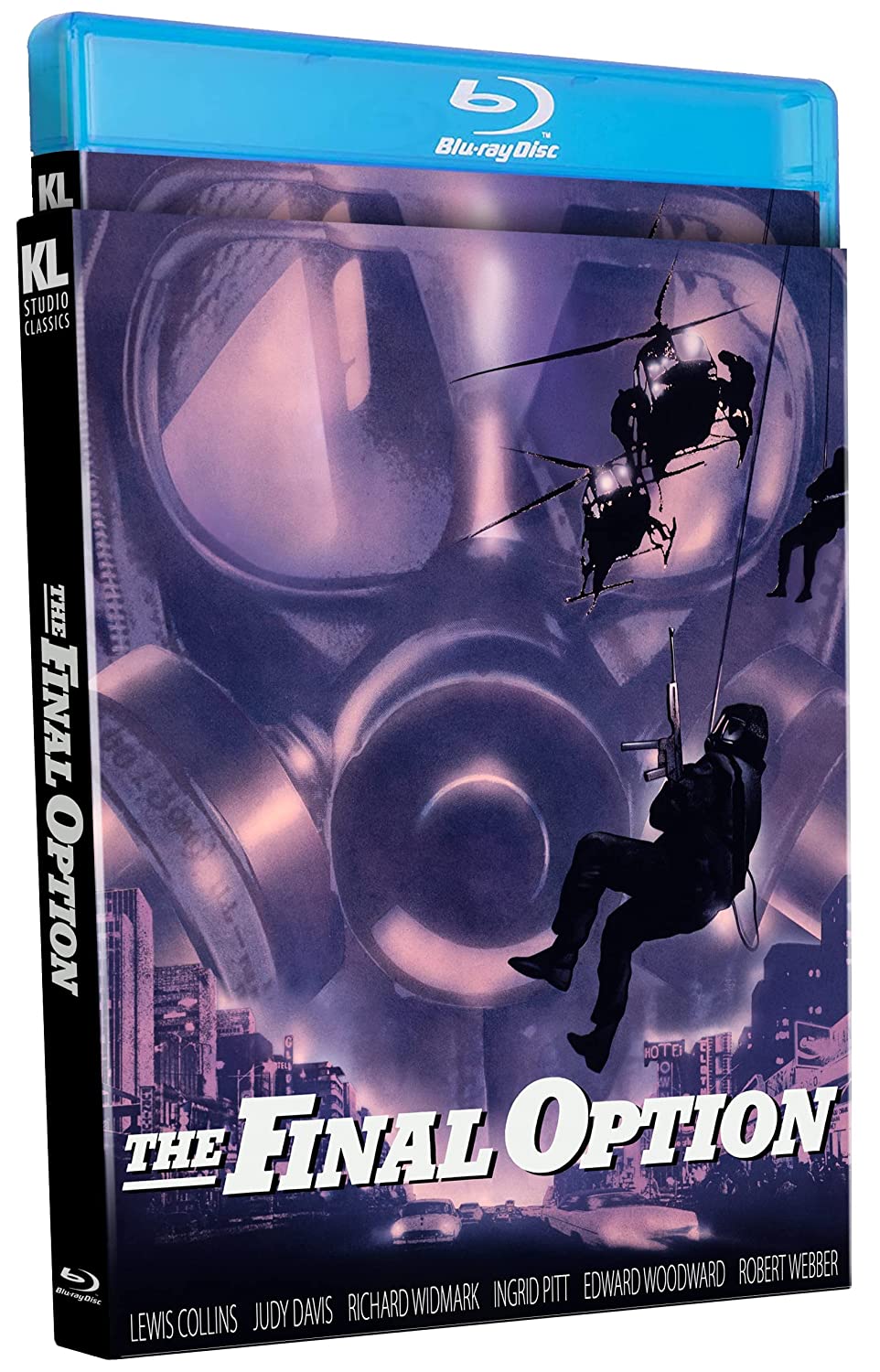
On May 5th 1980 film producer Euan Lloyd was on-hand for 17 minutes while the Iranian Embassy in London was raided by Britain's elite Special Air Service (SAS) to free hostages taken by a terrorist cell. He immediately ran back to his house and called his agent to register several film titles, including Who Dares Wins, which was the original shooting title and British release title of what in America came to be The Final Option. It's important to understand that it was never his intent to do a film about the exact event but use that inspiration to do a film that often mirrors that of the actual raid. Instead of using the actual terrorists and their motives, he felt it was important to make the story not about the bad guys so much as it would be a celebration of the bravery and actions of the SAS. He invited the actual SAS to participate. They declined but eventually offered him some under-the-table assistance when they saw what it was he was trying to do. Those motives have created a bit of a controversy over the film throughout the years, and Lloyd has been accused of making a right-wing propaganda film, which if you actually see the film, you'll quickly realize it is not. Now you have a chance thanks to KL Studio Classics and the Kino release of The Final Option.
The 1980 setting remains. This time the terrorists are domestic and have infiltrated a peace movement that has grown because of a new treaty Britain signs to allow American nukes on the islands. They use the framework of the legitimate movement to recruit and create the civil disorder they need to do something huge. That chance comes when they learn that several American Senate members and US cabinet members will be attending a dinner in their honor hosted by the Iranian embassy. But British Intelligence knows they are there, and they know something is up, so they start to prepare for the worst.
Posted in: Disc Reviews by Brent Lorentson on February 25th, 2022
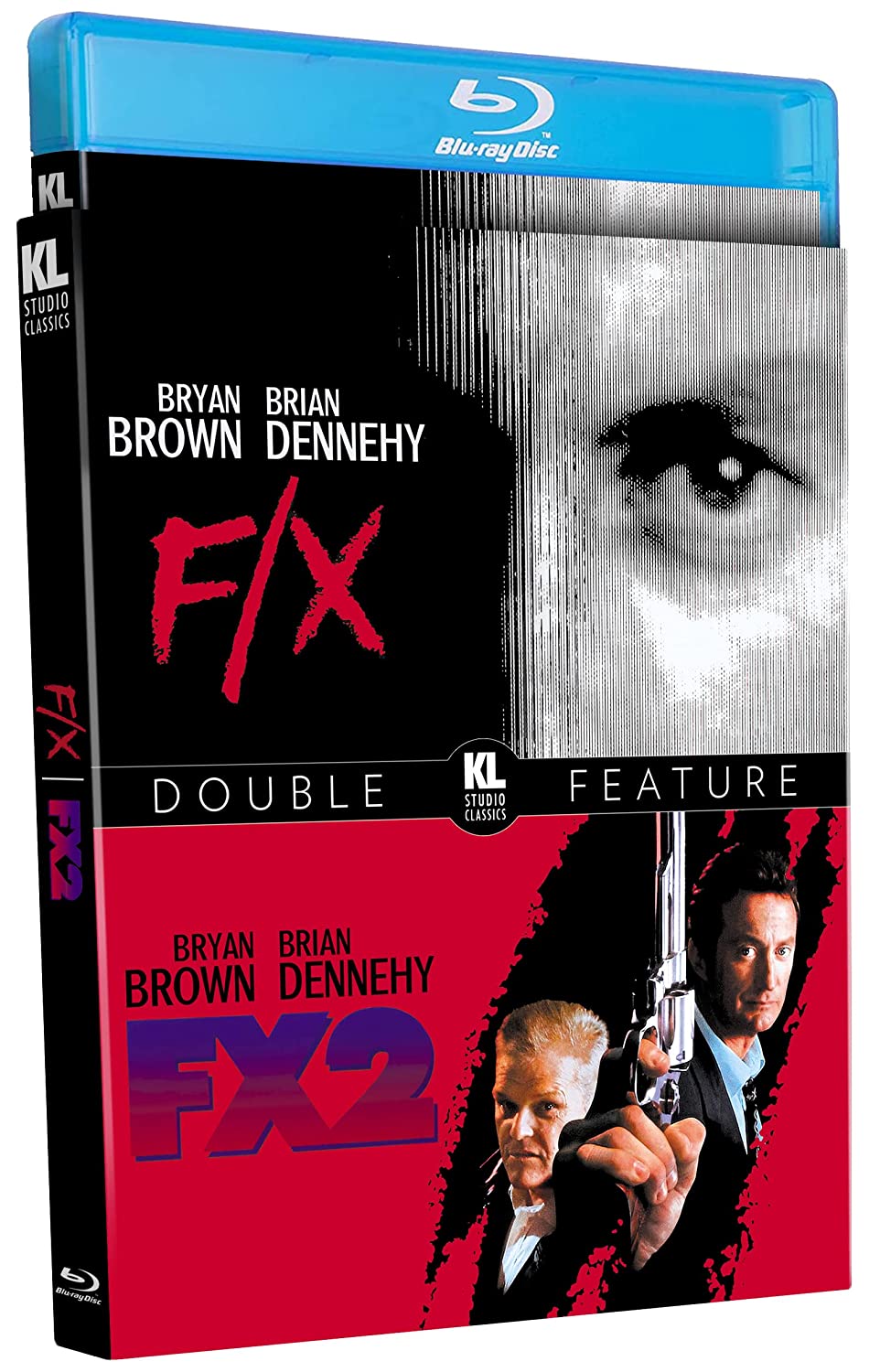
Kino Lorber has put together a fun double feature pairing the films FX and FX 2 for their Studio Classics line. These films are a bit of a relic of the past considering how much Hollywood has strayed away from the days of using practical effects to the more modern approach of CGI. Sure, when using CGI you can create just about anything the brain can imagine with the aid of a computer, but there is something about latex, props, and actual sets that have always made movies come alive and feel more grounded in reality. These effects wizards are capable of pulling off almost as much as anything a computer can, but it’s the supplies and setup on set that has made CGI a more acceptable approach in the industry. Over the years special effects and makeup artists in the industry have been contacted by the government to enlist their help in special operations. The film Argo (2012) explored this nearly a decade ago, but going a little further back to 1986 with the first FX film we got to see a fictionalized account of a “what if?” scenario, and the result was a fun film that spawned a sequel and even a TV series.
In this film, Hollywood special effects genius Rollie Tyler (Bryan Brown) is contacted by the Justice Department to help them stage the assassination of a crime boss, played by Jerry Orbach. As you would expect, things don’t go as planned, and Rollie finds himself being fingered as the trigger man, and if he has any chance of staying alive and out of prison, he has to use his unique set of skills to uncover the culprits.
Posted in: Disc Reviews by Gino Sassani on February 23rd, 2022
"And I thought we were pals."
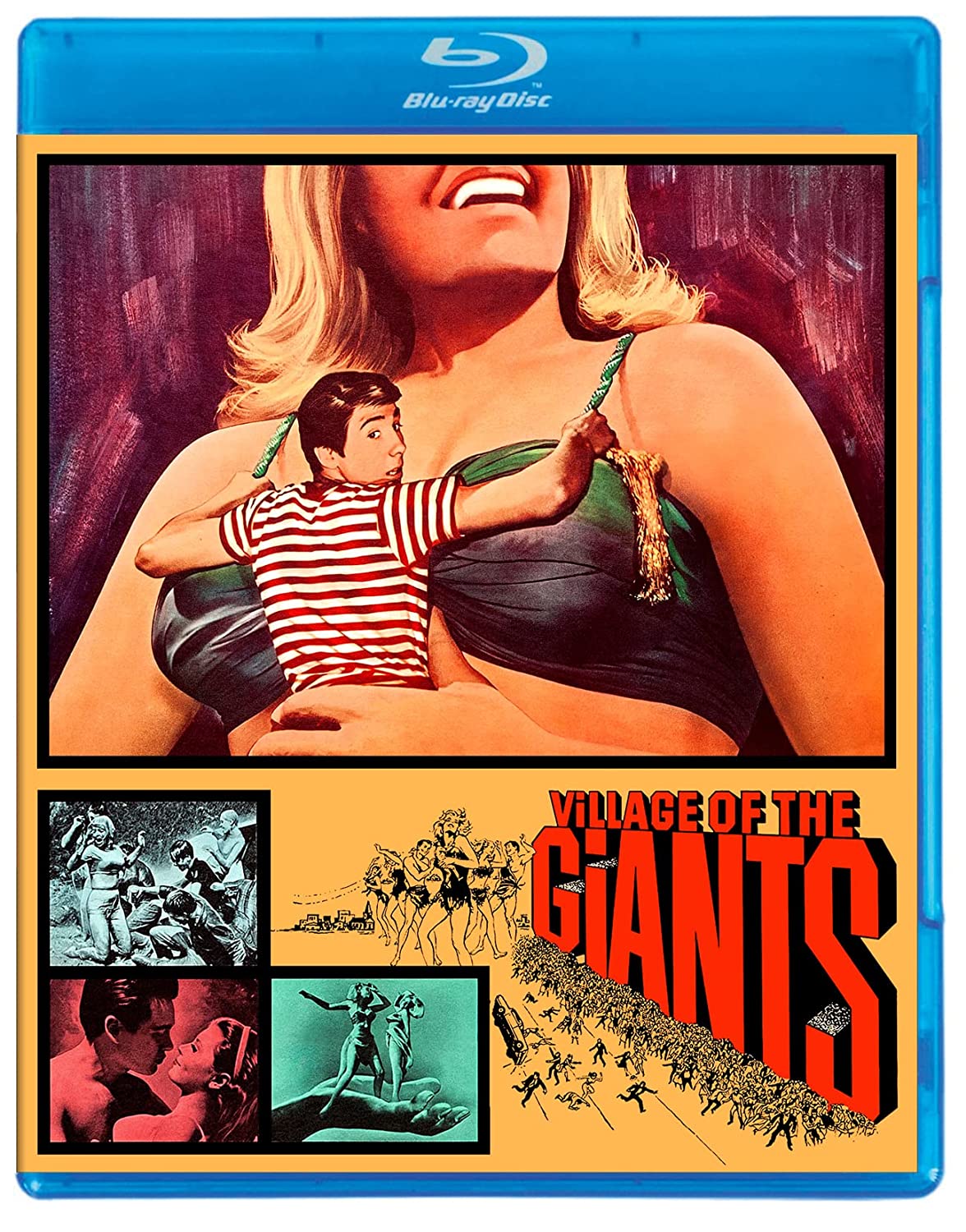
Bert I. Gordon and I shared a friend. He was one of Forry Ackerman's favorite people, and when I would see Forry, he never failed to mention Gordon. Bert I. Gordon was once the king of schlock. He was as much a marketing genius as he was a filmmaker. Like William Castle, he knew how to find something zany and odd which was just different enough to bring in the audiences. I saw most of his films of the 60's and 70's at drive-ins where most of his films were shown in those days along with many of the Hammer and AIP Poe films from Roger Corman. If you look at the B films in the science-fiction/horror genres from that time, you will find them dominated by Gordon, Corman, and Castle. Gordon often used stories in public domain so that he didn't have to pay a writer and he would adapt them with some clever "hip" idea and out would come a cheapie, but something that was always a hoot to watch. Previously you could only see Village Of The Giants in the television set where it was lampooned by those guys at Mystery Science Theater 3000, and I have that version. Now thanks to the folks over at Kino, there's a respectable version out on Blu-ray, and every schlock or Bert I. Gordon fan needs to pick this one up.
Posted in: Disc Reviews by Brent Lorentson on February 23rd, 2022
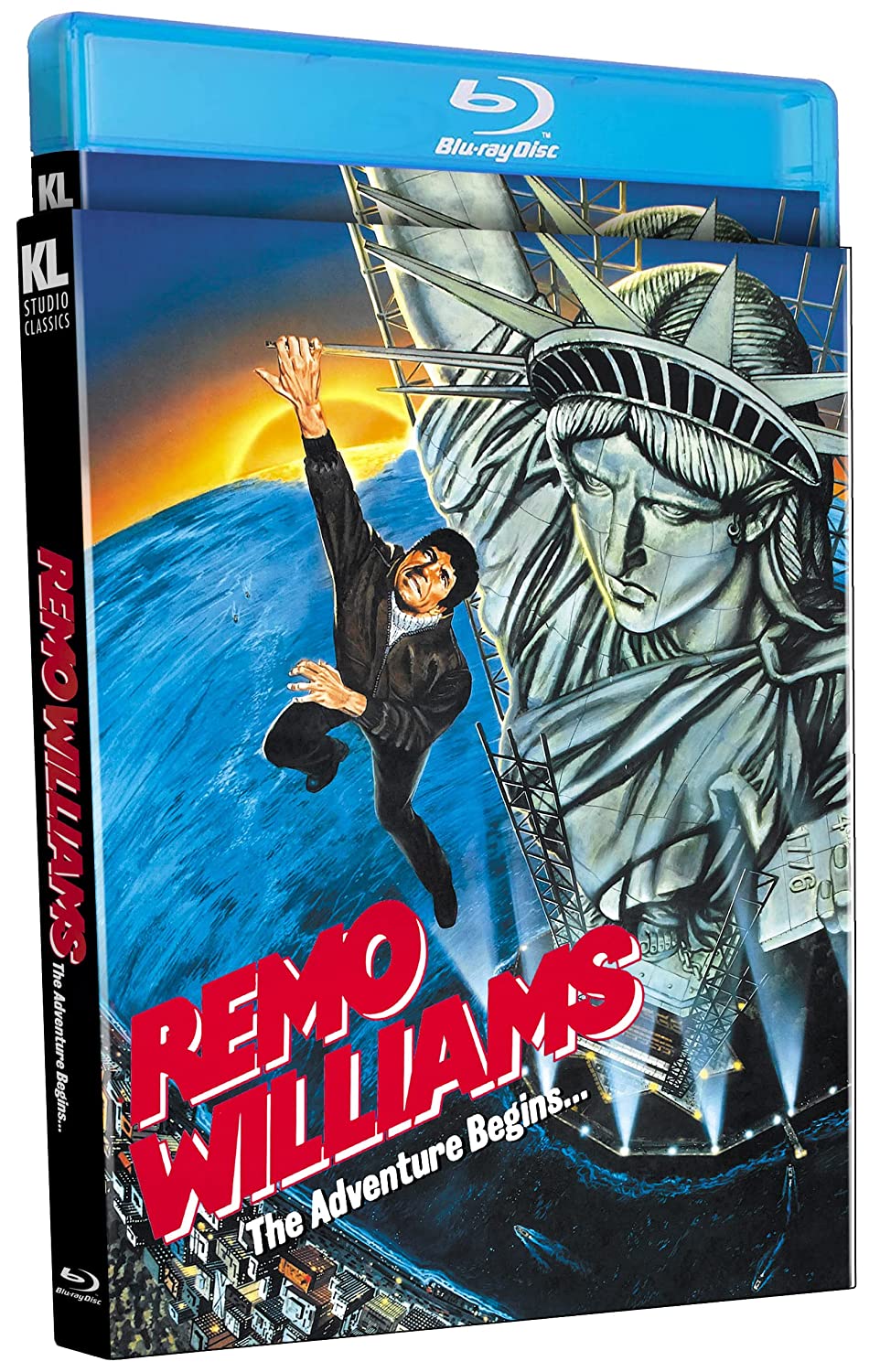
For me the promo art for Remo Williams: The Adventure Begins is without a doubt one of the most memorable VHS covers I can remember from my childhood. The hero dangling by one hand from the tip of the Statue of Liberty has always stuck with me. As a kid, when finally getting to see this over-the-top action sequence, it left an impression on me to the point that when I made my first trip out to Liberty Island as a kid, all I could do was stare in wonder at how they could have pulled off such a crazy scene. As I’ve gotten older, my impression of the film has changed, but this sequence is still up there when it comes to favorite action sequences of all time. Now Kino Lorber has put out a remastered copy of a film that has fallen through the cracks, though I know it does have a cult following. What are my thoughts on this action spectacle, and is it worth revisiting?
When Remo Williams was birthed as a film, it was intended to be the blue-collar American version of James Bond. It was adapted from a series of pulp novels called “The Destroyer” by Warren Murphy and Richard Sapir. It was an adventure series just like Doc Savage, The Shadow, and The Spider, and producer Dick Clark felt that it would be a great franchise to launch in the States. Wanting to capture the James Bond tone, they hired a screenwriter experienced with the Bond franchise, Christopher Wood (Moonraker and The Spy Who Loved Me) and then director Guy Hamilton (Goldfinger and Live and Let Die) to helm the film. With this collaboration, it is no wonder that the producers and studio thought they had a guaranteed hit on their hands, but unfortunately it seems the movie gods had other plans for the film.
Posted in: Disc Reviews by Brent Lorentson on February 16th, 2022
Kino Lorber has plundered the vaults of MGM and released one of the better known Charles Bronson films, Murphy’s Law. To me this is one of the Cannon classics where it was simply a fun tough guy film filled with everything that would make today’s woke audiences cringe. There is no way a film like this would get made now, and it’s a shame, because, well, this is pure escapism and is a good time from start to finish. I’m not saying that this film is perfect, but it captures the energy of what made Cannon films fun during the 80’s and early 90’s. Charles Bronson is playing Jack Murphy, a detective who has hit hard times with his wife wanting a divorce, though he’s not ready to give up on that relationship. Things are about to get much worse when Jack is framed for the murder of his ex-wife and her new boyfriend who runs an exotic dance club.Murphy gets locked up, and in the holding cell, as luck would have it, he’s locked up with Arabella McGee (Kathleen Wilhoite) who in the opening scene of the film we see stealing Jack’s car. Jack has to escape as a means to clearing his name, though he’s cuffed to Arabella, which of course makes things all the more difficult. This is definitely an odd-couple mash-up that we see a lot of during the 80’s where these characters are forced to be partners and bicker a majority of the film but in the end become partners. There isn’t even a mystery to who the killer is as we watch the psycho woman played by Carries Snodgress execute people without mercy. The only real mystery going on with her is why she is on her murderous rampage.
Part of what elevates this film from the others with the similar plot is the direction of J. Lee Thompson. While he isn’t exactly a household name, he’s got quite a few classics on his resume: The Guns of Navarone, Cape Fear (1962), Battle For the Planet of the Apes and another Charles Bronson classic 10 To Midnight. Pretty much he’s one of the go-to directors for tough guy films, and he simply knows how to make a good popcorn flick. While watching this film and looking at Bronson’s resume, there are a lot of similarities to Liam Neeson’s career in the past decade, and I wonder how much better some of his films could have been if they were put in the hands of J. Lee Thompson.