Video

A common thread in fairy tales and stories of long ago is for there to be a perfect female that is amazingly romanced by a not-so perfect male.  In fact, he is usually average, clueless, and clumsy beyond belief.  During the narrative, we realize that the female is only perfect on the outside and is somehow flawed on the inside.  In the end, they live happily ever after.  The story changes sometimes in details, genders, and other minor pieces of information, but is overall the same in theme.  Today, we explore White Snake, which is a prequel to the Chinese fable, Legend of the White Snake.  Let's take a look.

Feathers fall to the earth and sea; a giant snake slithers along the ground below.  The reptile goes behind a rock, and out the other side comes a beautiful girl named Blanca.  She starts to float and then chants magic words as she falls into white nothingness.  Strings with hands reach out to grab her from all sides and she struggles to break free.

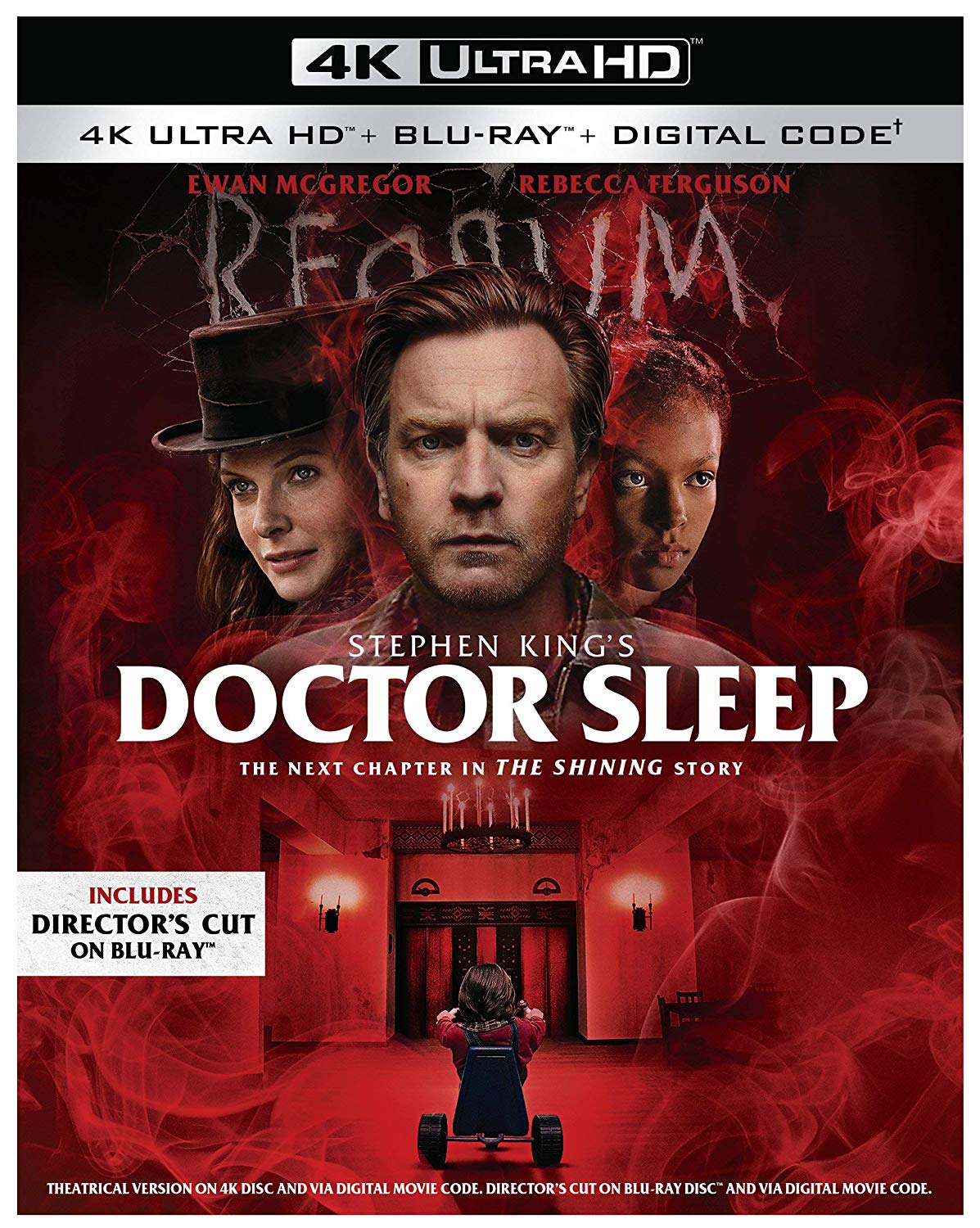
It would seem like audiences are suffering from a bit of Stephen King fatigue, as 2019 saw three theatrical releases of his films and each of them seemed to under-perform at the box office. Pet Sematary was a lackluster adaptation, and It Chapter 2 was fun, but still disappointing when considering how good the first was, and then there was Doctor Sleep, the long awaited sequel (depending who you ask) to The Shining.  When it comes to The Shining, I’m a fan of both King’s book but also of Stanley Kubrick’s take on the material.  King has always had his problems with the Kubrick version due to the many liberties taken with the material, and many people tend to forget how personal that story was for King and how it dealt with his own personal struggles with alcohol and addiction.  Because of all this, I believe it’s why the announcement of Doctor Sleep as a book and eventually a film was so shocking and even polarizing for some.  When I read the book, it was a fun and unexpected journey that eventually leads back to the Overlook, but most enjoyable was the journey on getting there as King created a sequel that delved more into what “the shining” is rather than simply return to a haunted hotel.  So how was the film, and how does the director’s cut differ from the theatrical cut?

For those unfamiliar with the story of Doctor Sleep, it follows Dan Torrance (Ewan McGregor), who is all grown up now but remains mentally and emotionally damaged from the previous events at the Overlook Hotel.  He’s followed in the footsteps of his father and has become an alcoholic and has done some horrible things along the way. It’s when he hits rock bottom that he meets Billy (Cliff Curtis), who helps him and takes him to an AA meeting which begins his long journey towards sobriety.  We also have a tribe of vampire like killers that call themselves The True Knot who are led by a powerful psychic named Rose “The Hat” (Rebecca Ferguson).  What makes The True Knot so terrifying is that they are a group, each with their own psychic skill type who prey upon those who also have psychic abilities, and to survive they literally feed on their psychic “steam”.  This “steam” is what makes them strong and helps prolong their lives, and to make this “steam” last, the more pain and fear they inflict on their victim the better it is.  As it turns out, “steam” is strongest in children, and this means that The True Knot is doing some horrible things to children as they travel in a caravan across the US.  This is where Abra Stone (Kyliegh Curran) comes in. She’s a young girl with powerful abilities who happens to psychically see the horrible death of one of the “steam” victims, and she reaches out to Dan for help.

“You'll die right here. On a frozen, blood-soaked battlefield, the moans of a generation of young men in your ears, dying in agony around you, for a lost cause. For a vile and wicked idea! For the sin of slavery! Can you hear them? God don't mean people to own people, Gideon!” 

Harriet Tubman, born Araminta Ross, is a staple of black history. Her deeds have been told and retold in history books for generations as one of the most successful conductors of the Underground Railroad, a network of anti-slavery activists and safehouses. Aside from her contributions to history, I knew very little about her individual history; that is a failing of mine. I’m not sure that an autobiographical film is the best avenue to correct this failing, given the propensity for things to be altered and sensationalize in order to draw crowds. However, even a sensationalized film has to have some basis in fact. Therefore, I am glad that this film made it into my queue, as it gave me a better understanding of Tubman’s accomplishment than I had previously. Bad Times at El Royale’s Cynthia Erivo takes on the monumental task of representing the historical figure on the silver screen, joined by Leslie Odom Jr. and Janelle Monae.


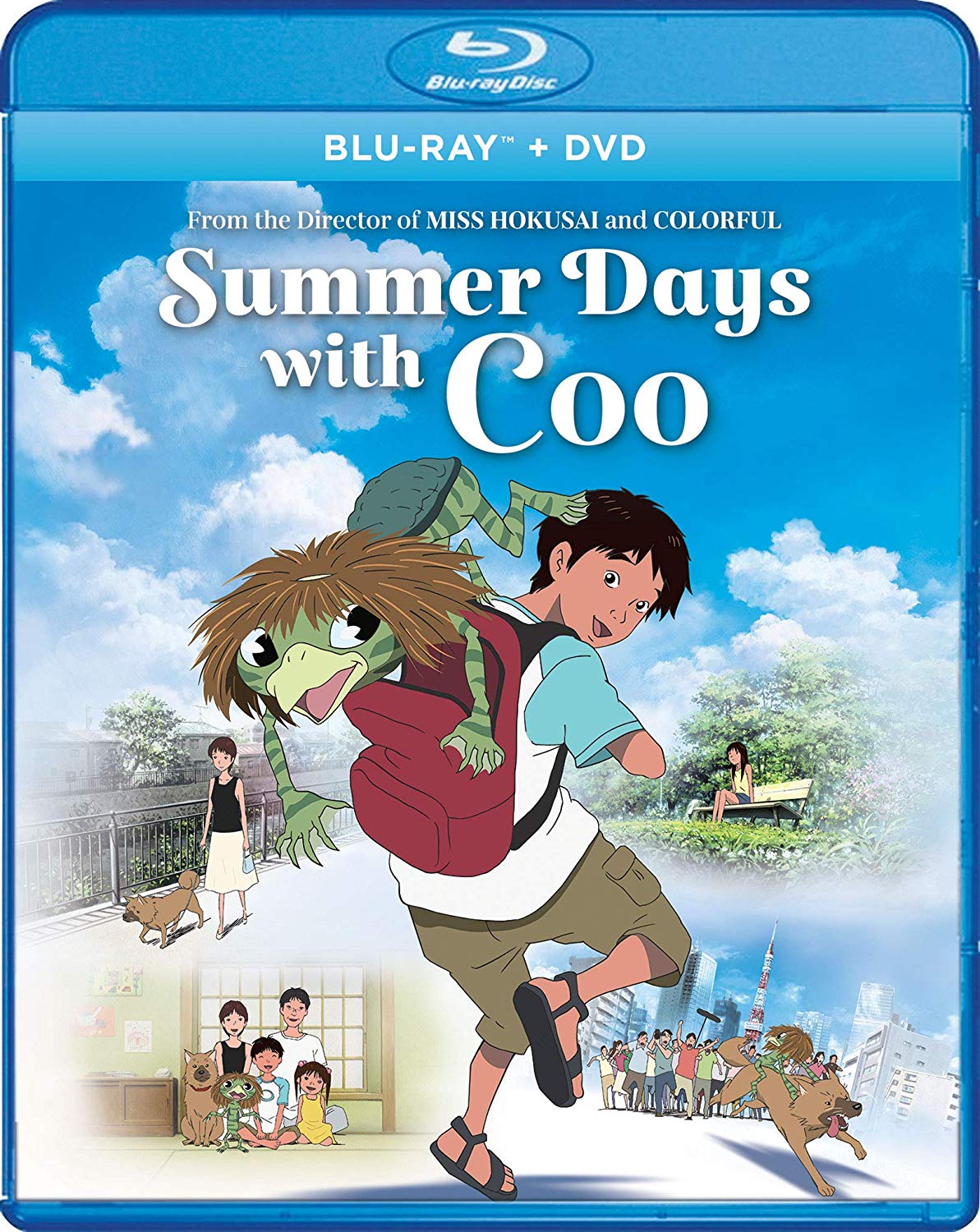
One of my main pet peeves in my life are the people who seem to hang on a celebrity's every word, or worse, a reluctant celebrity who gets pushed into the limelight because of a heroic deed or misdeed.  I have little desire to be famous (except to be published and recognized as a writer), but if I were, I am pretty sure I would labelled as a recluse and shun the public eye constantly.  Today, we explore Summer Days with Coo, a tale about a Kappa who is found by a boy after centuries of being fossilized. Then suddenly he gets thrust into the limelight with some unfavorable results.  Let us see what this one has to offer.

As we open, we hear a young kid ask his father about dragons.  The father talks about the creature, saying they are scary but are good sorts.  We then see the kid and his father and realize they are Kappas, water spirits or demons depending on your point of view.  Suddenly they hear a noise and realize that Lord Shimizu is coming their way.  The father tells the son to hide while he talks to the human.

I’ve gotten used to the cinematic disasters Bruce Willis has attached himself to over the past few years.  I’ll admit, I was surprised to see him in Motherless Brooklyn, and after his impressive performance in Glass, I had hoped he was going to attempt to get himself in to some higher caliber films.  Willis has stayed in shape, especially for an action icon who is getting up there in his years, and he still manages to have a presence when he appears on screen.  Sure, I get that we can’t expect him to keep throwing himself out of exploding buildings and having elaborate fight scenes. In a perfect world, I’d love to see him be able to revisit the role of Joe Hallenbeck in a The Last Boy Scout sequel. Heck, while staying on the nostalgia train, I’d be on board with a Hudson Hawk sequel over some of these direct-to-video films he’s been doing.  Getting back to Trauma Center, we have a new direct-to-video action film that features Willis attempting to save a young girl’s life who happened to be at the wrong place at the wrong time. Is the film worth checking out, or is it one you should simply pull the plug on and avoid?

Madison (Nicky Whelan) and her little sister, Emily (Catherine Davis) have relocated to Puerto Rico after their family has been struck with tragedy.  Madison is struggling to do what she can to take care of her sister, but it’s been a bumpy road for the two of them.  Emily also has asthma, which means in cinema terms, at any moment she can die if she’s overly excited.  As it turns out, it’s an asthma attack that lands Emily in the hospital where she needs to stay the night so she can be monitored.  While this family drama is going on, there are a pair of corrupt vice cops who are trying to locate a snitch who has evidence on him that could put the two away.  This introduces Lt. Wakes (Willis), who is asked to check in on the informant and ends up discovering the dead body of the informant.

“They're creepy and they're kooky, Mysterious and spooky, They're altogether ooky, The Addams Family.” 

That is for those who read my Addams Family double feature post regarding the Addams Family theme song. Of course that is merely the first verse of the song. Have no fear, as the animated film features the full version. It must be kismet, as I had the privilege of reviewing the animated film so soon after reviewing the double feature, though I suspect that this was by design. Though this cartoon does not fit the traditional view of what a horror film is, I would argue that the subject matter is more than enough to grant it entry. Featuring a lighter tone than its subject material, this incarnation is an enjoyable experience that can be shared with the whole family, which was my experience as I was able to bring my daughter to the film with me, and I’m happy to say it got her stamp of approval.

During the 1950’s, being a private investigator wasn’t always a safe and sure way to make a living. But it was a popular way to make some cash for returning soldiers or ex-police officers. During these times things were beginning to modernize, and the world was becoming more dependent on advancement in the skyline. With these changes, corruption and deceit became more evident, and private investigators became more popular. When Frank Minna’s (Bruce Willis) agency gets a chance to make some real money, things begin to get ugly fast. In his crew there is Lionel Essrog (Edward Norton), an orphan with Tourette's syndrome that Frank took under his wing when Lionel was 13; they have been friends ever since. Then there is Tony Vermonte (Bobby Cannavale), Gilbert Coney (Ethan Suplee), and Danny Fantl (Dallas Roberts). Frank has known these guys for many years and trusts them with helping to investigate the cases for his company.

When a job goes awry, the team has to discover what went wrong and how far this assignment will actually take them. Lionel takes the initiative and starts on this case that will bring him among the very powerful and the group these power-hungry men want to take down. Following the breadcrumbs brings Lionel in many directions, but it all somehow centers on Laura.

When we last saw the Mistress of Evil (which also happens to be the title for the sequel) she was more of a hero rather than a villain. However, the sequel sees her return to her previous status as the feared fairy that ruled the Moors. How quickly people forget her contributions. Though not traditionally scary, the film features plenty of magic and carnage courtesy of Jolie. Additionally, the film features the return of Elle Fanning, Sam Riley, and Harris Dickson as Aurora, Diaval, and Prince Philip. With the addition of Chiwetel Ejofor and Ed Skrein, as well as Michelle Pfeiffer as Queen Ingrith, Philip’s mother, who gives Maleficent a run for her money for the title of Mistress of Evil. In the five years that have passed since then the original film, Aurora has continued to reign as Queen of the Moors and is beloved by her subjects, and especially by Prince Phillip, who works up the courage to propose marriage. Aurora accepts, but then comes the hard part: telling their parents. For Phillip the difficulty comes from her mother, who feels that their people have a right to pillage the Moors and worries about losing her son to Aurora, who rules the land she would like to acquire. For Aurora, the difficulty is much more challenging, as she has the unfortunate task of telling her godmother, the protector of the Moors, Maleficent. Though initially opposed to the idea, Maleficent grants her permission. However, this is only the beginning of their troubles.

At a formal dinner to celebrate the union, heated words lead to a declaration of war between the two kingdoms, as well as a curse. As a result, a rift is formed between Maleficent and Aurora, who sides with her new family. Adding to the situation, Maleficent suddenly learns that she is not alone in this world, as she discovers more like her and her origins.

Back in the 80’s and 90’s it was a glorious time for crazy, over-the-top action films. The names that most notably come to mind when I think of this time in action cinema are Don Simpson and Jerry Bruckheimer.  They were the guys who knew how to make a popcorn action film: Beverly Hills Cop, Days of Thunder, Bad Boys, and many more. While Line of Duty isn’t quite in the same league of these films, it definitely has its roots in these films, and for a VOD action film, well, this film is all kinds of absurd fun.   Director Steven C. Miller has had some duds over the span of his career, though I did enjoy his take on Silent Night, but Line of Duty shows that the man is capable of helming a white-knuckle action film if given a proper budget and script to work with. When it comes to Aaron Eckhart, I’m kind of surprised we don’t see him as the lead in more tent pole action films.  Sure, many of us know him for his turn as Harvey Dent in The Dark Knight, but he’s a guy with so much untapped talent. It was nice to see it on display in this film. Frank Penny (Eckhart) is a disgraced cop who is responsible for getting a kid killed and is now stuck working as a beat cop.  It doesn’t take long for the film to ramp up as Frank is caught up in a foot chase with a suspect involved with the kidnapping of the chief of police’s daughter.  There is a lot of running in this opening act, and things go bad to worse for Penny when he’s put in a situation where he kills the only lead to finding the kidnapped daughter.

Miller does a good job at sucking us into Penny’s world and sympathizing with him, but the film unfortunately takes a miserable turn with the introduction of millennial, social media reporter Ava (Courtney Eaton).  Maybe I’m showing my age, but geez, was I annoyed by the introduction of this character. Even worse is the character Clover who runs the site Ava reports for.  I know it’s only January, but I’m quite certain the character Clover will be the worst character of the year, from her actions and dialog in the film, she’s basically the millennial character everyone rolls their eyes in annoyance over.

This is yet another war film that is “based on true events”.  Considering how long troops have been over in Afghanistan, it’s no surprise how many films seem to be coming out about the subject.  I’ll admit going into this film I didn’t exactly have high hopes, but I’m pleased to say not only did the film not disappoint; I found myself actually enjoying it. Granted this is no 1917, but it’s definitely better than the dumpster fire film that I reviewed about a month ago called D-Day.  The Kill Team follows new recruit Andrew Briggman (Nat Wolff), who is wide-eyed and ready to see combat, but once he is confronted with the very human side of the war that the troops are facing, well, his conscience begins to weigh him down, and things only get more complicated for him as his time in Afghanistan stretches on.  From the start, the film seems to have a very idealistic view on how the soldiers can and should act, and it’s this “moral compass” that gets in the way of telling the story.  When it comes to war films that delve into the cruelty that occurs, you can’t let morals dictate the story. It’s the equivalent of doing a western where the bad guy wears the black hat and the good guy wears white.  Sure, you’re spelling it out for your audience, but when depicting real life, it’s never quite that easy to tell wrong from right.

The film wastes no time in getting us into the story, as we see Briggman on his last day being a civilian to him being in Afghanistan.  He seems disappointed that instead of seeing combat he’s stuck with his team travelling to villages attempting to build relationships with them, but things quickly go sideways after an explosive takes out his Staff Sergeant.  It doesn’t take long before a replacement comes in, and it’s Staff Sergeant Deeks (Alexander Skarsgard) who comes in to make some changes to the unit. He’s not about being friendly with villagers; instead, he’s ready to hunt down some bad guys responsible for making bombs that have killed numerous soldiers over the year.  Here’s the thing: I was onboard for this being about a military unit simply out for blood killing potential terrorists. If you’re going to do a film about morally corrupt soldiers, I figure you just go all in and make them a ragtag team of anti-heroes.  Well, writer and director Dan Krauss had other plans, and instead focuses on the inner termoil Briggman is going through about his unit murdering “innocent” people.  Because Krauss previously directed a documentary about soldiers that were involved with the same situation, he uses his insight to deliver a very grounded take on the subject matter.