The Reel World

Howard Hughes used to be a very big deal for a very long time. Warren Beatty was a big deal for a long time as well, and they have a lot in common. They were both renowned horndogs. Hughes was not only extremely rich, but enormously famous. The Hughes Tool Company, which was instrumental to the oil industry, was the original source of his wealth, but Howard Hughes became better known for his forays into the movie business and aviation industry. There has already been a movie about Hughes called The Aviator starring Leonardo DiCaprio, but Warren Beatty has been working on a Hughes movie since the 1970’s when he frequented the Beverly Hills Hotel where Hughes had multiple bungalows. Beatty lived a similar kind of fantasy life and identified with Hughes. Beatty has become notorious for taking a long time between projects because of a nearly legendary perfectionism. It has been 18 years since Beatty’s last film. He has been rumored to have done many projects over the years but rejected them all. This may be Beatty’s swan song, since he is now 79 years old. Beatty looks pretty good and seems as sharp as ever. And one of the things that becomes clear immediately is that Beatty understands that both Hughes and Beatty himself are pretty much past history.

The focus of the movie Rules Don’t Apply is two young lovers. One is Frank Forbes (Alden Ehrenreich, a huge hit in Hail Caesar and the star of the upcoming Hans Solo movie) and Marla Mabrey (Lilly Collins, The Mortal Instruments, Mirror, Mirror). Collins is the daughter of Phil, by the way. She also is a dead ringer for a young Elizabeth Taylor at times. Mabrey is one of numerous ingénues that Hughes has acquired much like he acquires companies. Forbes is one of Hughes staff drivers with aspirations for much greater things. Forbes is assigned to driving Mabrey immediately after her arrival in Hollywood with her mother. This is 1958 Hollywood, which coincidentally is about the same time that Beatty had arrived to make his mark. The loving depiction of the time is clearly personal for Beatty. The depiction of 1958 is perhaps more vibrant than I would have imagined possible, and during the course of the movie which takes place over a number of years into the 1970’s we get a similar loving look at numerous world locations.

"There are days that define your story beyond your life. Like the day they arrived..."

The problem is that this starts out with the kind of story we've seen a thousand times before. The alien invasion theme is nothing new. H.G. Wells was describing it back in the 19th Century with War Of The Worlds. Unrelated Orson Welles scared the crap out of a depression-era radio audience with the same story. Independence Day gave us a brilliantly visual story that also begins the same way: alien ships begin to take strategic positions around the world. Here we go again, right? Wrong. We should have guessed from the beginning that when director Denis Villeneuve tackles a genre, he's going to turn it on his head. We’d seen him do it before. Last year's Sicario gave us a "war on drugs" film that wasn't like anything that came before it. Prisoners could have looked like a Taken sequel. I mean, how many ways can a tough guy deal with a kidnapped daughter? Of course, Villeneuve showed us there was at least one more way. He does it again with an alien first-contact film that is a blend of The Day The Earth Stood Still, 2001 A Space Odyssey, and maybe a little bit of the Twilight Zone classic To Serve Man, without the special sauce recipe. But mostly it's a cerebral journey that mines much of the same ground that Christopher Nolan did with Interstellar. Except that Villeneuve did a better job. Oh, and he spent $120 million less to do it. You still might be scratching your head when you leave, but you will also have some wonderful themes to ponder on the drive home. Arrival might well be one of the best films I'll see in 2016.

Heroes like the Avengers protect the world from physical dangers. We safeguard it against more mystical threats.”

Back in 2008, Iron Man was entrusted with kicking off Phase One of Marvel's Global Takeover Cinematic Universe. The film centered around an arrogant hero brought low who builds his own costume — and essentially creates his own superpowers — by scraping together spare parts in a cave. As the years have gone by and Marvel's brand of superheroism has proven to be infinitely more bulletproof than comic book characters who are actually impervious to gunfire, the studio has earned the right to get a little Strange.

Just when you thought you’ve seen it all when it comes to films about World War II, Mel Gibson helms a film that hits you with such an emotional wallop that I’ll say it right now: just hand the man the Oscar for this film.  It’s only November; how can I be so sure of this? Well, of course there are some titles to keep an eye on as we enter award season, but I honestly can’t imagine a title coming out that can achieve what Gibson did.    I’m sure by now you’ve seen the ads for the film that draw comparisons to Saving Private Ryan.  It’s a bold statement, but I’m writing this to say that Hacksaw Ridge isn’t the best war film since Saving Private Ryan, it is a superior film to it as well.  I honestly can’t think of a war film that has ever balanced the raw violence of war while maintaining the humanity of its characters and draw out so much emotion.  It’s based on a true story, and the only injustice I see is that this film wasn’t made sooner.

Desmond Doss (Andrew Garfield) isn’t like most guys enlisting for the war; he’s not bloodthirsty and out to avenge our country after the attack at Pearl Harbor.  Desmond is a man who has been overcome with the sense of duty to honor and protect his country, only the problem is, he refuses to touch a weapon in the process.  Instead he sees that he can help by being a combat duty medic on the front lines.  It’s a notion his superiors and fellow comrades see as ludicrous.  But Desmond refuses to back down from his principles, even when his platoon has mostly turned on him and the Army is ready to court-martial him.  Why would a man go through such lengths and risk losing so much, simply because he won’t carry a weapon?  That’s where the front half of the film pays off.

“Mankind is the cancer of its own body. Do you love humanity enough to save it?”

I remember when I was first introduced to the character of Robert Langdon. I was a late bloomer to the story, not having read the book. My first introduction came from the film. I had just graduated high school, and instead of engaging in the customary family dinner that usually precedes the event, I opted in favor of going to the see The Da Vinci Code. That is a decision that I have never regretted. Fortunately, I didn’t need to skip anything important to see Angels and Demons, and it is a good thing, as the film missed the mark with me. Now here we find ourselves on the cusp of Langdon’s redemption with Inferno.  Will the third film in the trilogy be enough to make people forget about the second one? Is Tom Hanks still convincing in what is becoming one of his most recognizable roles?

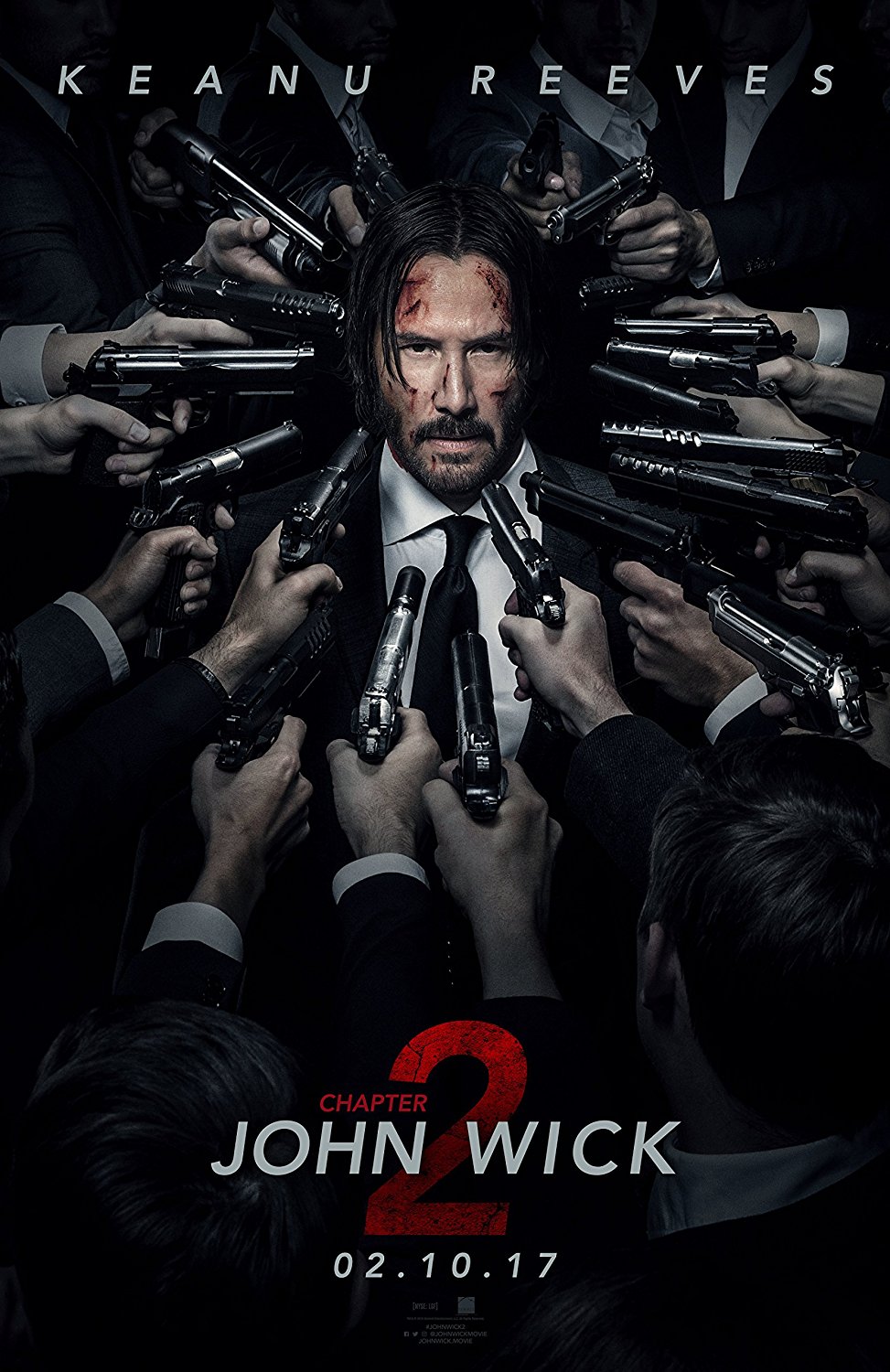
Forbes magazine called Jack Reacher and author Lee Childs as the strongest brand in publishing as much for his over 100,000,000 in sales and billion dollar imprint as for the strong loyalty of fans and favorable ratings of the readers. The 21st Jack Reacher novel, Night School, is coming out in a couple of weeks (which I’m sure Simon & Shuster would thank me for mentioning, but they don’t need my help), and Reacher fans will buying in droves. The second Reacher movie will be out on November 21.

One of the first things I want to address is that Lee Childs had been actively involved in the picking of Tom Cruise to be Jack Reacher. It was a controversial decision, but Childs rightly said there are no big movie stars who could accurately portray the physical characteristics of Reacher. I personally am 6 ft. 4in tall and 250 pounds, so I could be a close proximity except for the fact that I am not a movie star nor could I disable eight opponents simultaneously. The closest movie star I could name who approximates Reacher’s physical dimensions is Vince Vaughn, and I doubt anyone would say he is as big a movie star as Tom Cruise (box-office-wise, that is). Five Mission Impossible movies alone demonstrate that Cruise’s box office is as strong as ever based on their increasing popularity.

David Hare is an extremely prolific and ambitious playwright. He has written over 30 plays, but he has also done television and screenplays as well as directing in all three mediums. One of his first screenplays was an adaptation of his play, Plenty, which starred Meryl Streep, in 1985. He also wrote the screenplay for an adaptation Michael Cunningham’s Pulitzer Prize-winning novel, The Hours, which starred Meryl Streep as well. He also wrote the screenplay for The Reader, which was nominated for numerous awards and was about a woman guard in a German concentration camp and starred Kate Winslet. It should also be noted that he has been nominated and won awards in all these media and was also knighted in 1998. But David Hare is first and foremost a great playwright, and his meticulous ability to mold character nuance is legendary.

Denial is a true story based on the book History on Trial: My Day in Court with a Holocaust Denier by Deborah E. Lipstadt. Lipstadt (Rachel Weisz) is confronted at one of her lectures by David Irving (Timothy Spall) and insists he has been libeled in her books. Irving had written numerous historical books from 1963 to 1996. In the beginning, Irving’s work was highly regarded by many but controversial because of his unduly high favoritism of the Third Reich. By 1996, when he confronted Lipstadt, he was perceived as a racist. He brought suit against Lipstadt in England for libel. The movie primarily focused on the preparation for the trial and the aftermath. In fact, the movie spends most of its time trying to vacillate between truth, delusion, and confusion. The legal system is in fact a perfect illustration of this idea, because truth and logic are not necessarily the best way of winning. Lipstadt’s solicitor (who with her barrister makes up one half of English legal defense team) insists that she not testify even though he completely supports everything she says about Irving. The strategy means that allowing Irving to actually question her would validate the ridiculous notion of denying the holocaust. The film becomes an examination of how to defeat people who are delusional. The film is maybe one of the best examinations of the inner workings of preparing for a defense case since Reversal of Fortune in 1990 about Claus Von Bulow. We live in an anti-intellectual age where many falsehoods and half-truths are widely circulated in the media. This movie is rigorously intellectual about how most people will support ideas they know are false or rationalize positions that are embarrassing.

It would seem as though Ben Affleck is finally starting to shed the stigma of doing bad films.  He’s been on a roll since he took on the role of George Reeves in Hollywoodland and has also in the process become an accomplished director.  When the trailer first dropped for The Accountant, I wasn’t sure what to expect, but as you look at the laundry list of talent that fills the cast, it quickly became a film I had my eye on.  What is surprising is despite their being franchises that seem to cover the same territory ie: Jack Reacher and the Jason Bourne films, is there room for another lone-wolf-killing-machine film?  Before going into this it was a question that bothered me; heck, I’m already burnt out of the Jason Bourne films, and with a new Jack Reacher film on the horizon, the saturation is noticeable.  But thankfully The Accountant didn’t just come out swinging but exceeded all expectations and has raised the bar for this brand of action film.

Christian Wolff (Ben Affleck) is, as the title would lead you to believe, an accountant.  He runs his own firm and is exceedingly good at what he does when it comes to solving accounting problems people may have.  He’s exceptional at solving problems, and what makes this all the more impressive is he does all of this as a high-functioning autistic.  This may be one of the first times I’ve seen a character with a disability on screen, but not once is it ever played as a way to sway sympathy; instead it’s just another layer to this character.  We see the everyday hell Wolff goes through, but we also see how far he’s come from his childhood after his mother gives up hope and abandons her family.

My husband used to tell me I have an overactive imagination...”

The idea at the core of The Girl on the Train is equal parts provocative and relatable: a lonely commuter observes an attractive couple from a distance and imagines what their seemingly perfect lives must be like. Anyone who's ever done any people-watching will recognize the appeal of inventing a backstory for a stranger, and the story is a healthy reminder that things are never quite what they seem from the outside. But despite a powerhouse lead performance, this Train is ultimately derailed by an unsatisfying mystery and a lack of flair that causes this potentially juicy story to lose steam as it chugs along.

It really doesn’t seem so long ago that all the major news networks were showing footage of the destroyed oil rig in the Gulf of Mexico that was pumping out gallons upon gallons of oil into the ocean.  The BP oil rig disaster was all we could talk about in April of 2010, and all of us at home were left wondering if they’d ever plug up that hole and stop the leakage of oil that would go on to destroy hundreds of miles of beach coast property as well as cause long-lasting effects on the fishing industry.  Everyone was looking for someone to blame, and plenty of it went to BP.  While this made for engaging news for a while, it never seemed like a story that Hollywood would want to invest in and make a film about. Now it’s 2016, and Deepwater Horizon is a big-budget blockbuster about to hit the big screen with some of Hollywood’s heavy hitters.  With Peter Berg (Friday Night Lights, Lone Survivor) at the helm as director and with the material in the back of my head, I was thinking this could be a film to keep an eye on as award season is about to kick into high gear.  Unfortunately, I don’t think this is quite the film I expected, and it has me wondering what could have been.

While the story does focus on the tragedy on the oil rig Deepwater Horizon, it’s Mike Williams (Mark Wahlberg) who we are following on most of this journey.  Mike is just your regular guy at home with his wife, Felicia (Kate Hudson) and their daughter.  When we first meet them, it’s the morning he’s set to travel out to the rig, and he’s saying his goodbyes since life on the rig keeps him away from home for weeks at a time.  Not much time is wasted here, but it does a good job of setting up the emotional bond we’ll need for this character once all hell breaks loose down the road, but of course we have a scene that conveniently sets up the looming disaster as his daughter discusses a school project with her dad.  It’s not a new method to use foreshadowing, but as I continued to watch I found myself wanting the film to simply move it along and stop beating it over our heads. We even get hints of bad omens as the rest of the crew comes together and travels out to the rig, enough where a superstitious person would have conveniently avoided this particular trip if possible.