Uncategorized

Konstantinos Koutsolitas is a visual effects supervisor for American films like Guardians of the Galaxy and 300: The Rise of an Empire. You might have guessed by his name that he is Greek, so it is natural that his first directing effort would be Greek. The Winter is about a struggling writer who tries to hide his failures that he left behind in London from his noisy and intrusive family. Dimitri Gounaras (Vangelis Mourikis) moves back to the deserted ancestral home of his father, which has been abandoned for some time. There is madness in the house, or perhaps just in members of his family, and there are ghosts lurking, real or imagined.

The film meanders back and forth from a slacker comedy to a dreary existential nightmare. It references H.P. Lovecraft and The Shining most directly. It plays out with tenuous reality evolving into out-and-out animated dream images. The imagery is sometimes raw and sometimes playful. There are lots of making-of documentaries included which show how much care was given to the imagery.

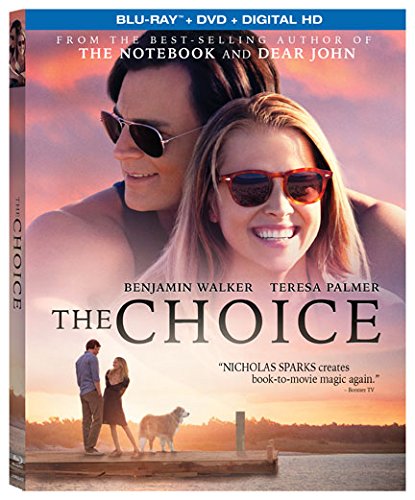
With The Choice, there have now been 11 movies based on the work of mega-selling author Nicholas Sparks. (Eat your heart out, John Grisham.) However, I'm pretty sure that even the most ardent Sparks fan/apologist caught on to the author's formula about 8 or 9 tearjerkers ago, and practically every one of those clichés is in full force here. But while The Choice calls back to the most successful Sparks adaptation, the movie also explores a less glamorous side of romance that we're not used to seeing on screen.

Now pay attention...because I'm about to tell you the secret of life.”

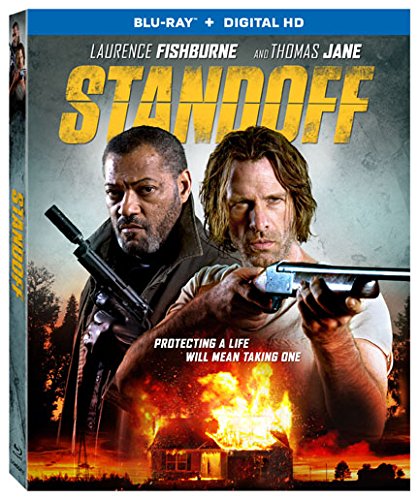
The setup is actually quite elegant in its simplicity: a man protects his house — and the terrified little girl who bursts into it one day — from a cold-blooded killer. Despite becoming a bit tedious in its middle section and a little improbable during the finale, Standoff absolutely lives up to its title. The movie is carried by a pair of strong lead performances and subtly effective stylistic touches from its first-time director.

What's more important: the life of a stranger or the future of your family?”

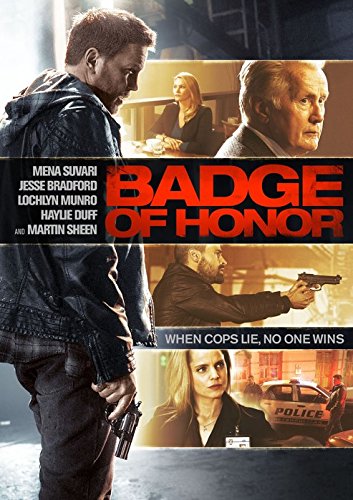
Ever since Narc and Training Day became critical and financial successes, it seems everyone has tried to follow the formula of corrupt cops and their partners trying to do the right thing.  Factor in the society outlook on dirty cops; Badge of Honor at first glance would appear to be a sure-fire hit. Unfortunately, it’s a misfire that never seemed to have much of a chance. When we first meet Jessica (Mena Suvari), she is a beat cop who is called in with her partner checking in \on a domestic disturbance report.  Things get out of hand, and her partner overreacts with extreme force and beats a suspect.  The story jumps ahead, and we now see Jessica working for internal affairs.  It’s her first case that the film wraps around in a sadly predictable way.  Two narcotics officers, Mike (Jesse Bradford) and David (Lochlyn Munro) move in on a bust that goes bad, and in the process an innocent teenager is killed.  David seems well-intentioned when he tries to help cover it up for his partner, but things quickly get out of hand.

Even with Suvari as one of the leads, it’s unfortunate we don’t get to see more of her and the life she leads outside of being a cop.  It’s been a while since I’ve seen Suvari in a solid leading role, and for the screen time she has here she does a great job at selling the part of being a cop who can handle her own.  It’s this execution of the role that has me wishing there was more of her, because everything else just seemed like we’ve seen it all before.

Deadpool may be one the most singular and unique characters in the history of comic book lore. His character has a very rabid fan base among the elite of Marvel comic nerddom, and they have been watching very carefully to see that he has been treated properly by the Hollywood people. He hasn’t been in the past, but more about that later. He may not be the biggest name in the Marvel universe, but he might be the most extreme. Just in case you live in a cave or under a rock, the Marvel universe is inexorably taking over the actual universe with films like The Avengers, Iron Man, Thor, Captain America, Ant-Man, Spider-Man, X-Men, Guardians of the Galaxy, The Hulk, Wolverine, Daredevil, and on and on. To get back to what happened to Deadpool in the past, we go to the movie X-Men Origins: Wolverine. This also gets into the 20th Century Fox vs. Disney battle over the rights of Marvel characters (which is actually only a small part of the picture, since Columbia owned Spider-Man for a long time ,but let’s not go down that rabbit hole). Lots of hard-core comic book fans were incensed at how far 20th Century Fox was straying from the origins and substance of the source material with the X-Men movies, but especially in the case of Deadpool, who is sacred to many. I shouldn’t say sacred, but what can you do, since the character of Wade Wilson (A.K.A. Deadpool) is very profane and NSFW.

Let’s discuss Ryan Reynolds for a moment. Reynolds has been a Deadpool fanboy for years and is specifically mentioned in the comics in a description of Wade Wilson as a cross between Reynolds and a Shar Pei. It should be noted the main characteristics of the Deadpool comics is that it has strong content in both sex and violence that is relentlessly full of silly fun and that Wilson is fully aware that he is in a comic book and talks to the reader in a self-aware manner. So Reynolds played Wilson in the X-Men Origins: Wolverine movie, and Fox did not show proper concern for the concerns of the core fans, and hysteria ruled. Reynolds then took it upon himself to try to get a proper Deadpool movie made (again, I shouldn’t say proper). I think this time they got it right (and when I say right, I mean wrong in all the best possible ways).

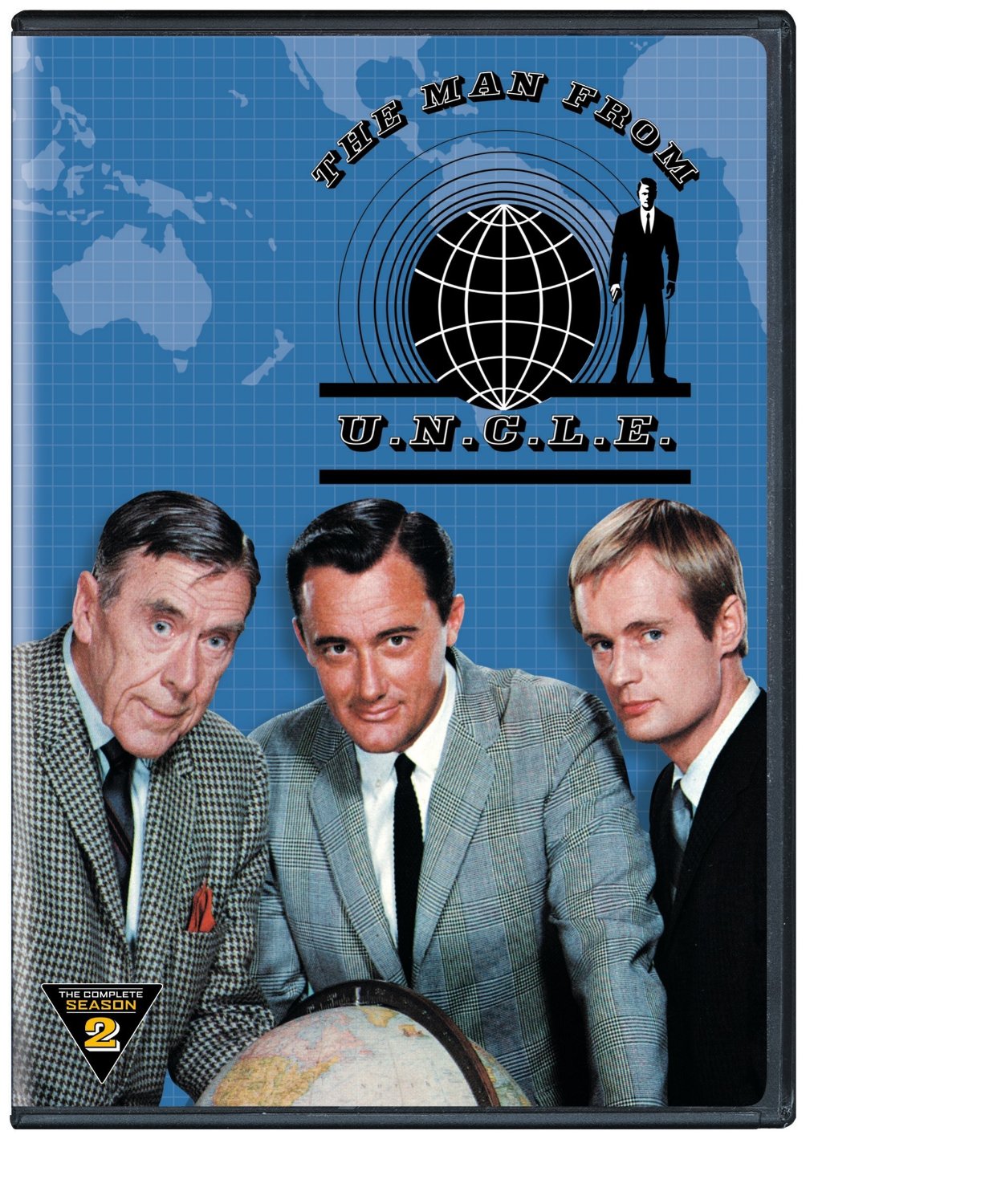
Say Uncle. That’s U.N.C.L.E., otherwise known as the United Network Command for Law and Enforcement. Starting in 1964, The Man From U.N.C.L.E. was one of a flurry of shows to take advantage of the new James Bond craze. It featured many of the same elements as the super-spy films. You had sophisticated spies in tuxedos. There were plenty of gadgets. And there were constant threats of world domination, mostly from the evil counter organization, THRUSH. The two top spies for the good guys were Napoleon Solo (Vaughn) and Illya Kuryakin (McCallum). The Bond references were never subtle and always intentional. Ian Fleming himself consulted on the show and named Napoleon Solo after a Bond character. Together Solo and Kuryakin would travel around the globe, saving the world from almost certain doom. The series ran for four years. In 1983 there was talk of bringing the show back. Apparently the two stars were still up to the task, and both could have used the work. Thus was born the television film and potential pilot: The Return Of The Man From U.N.C.L.E.: The Fifteen Year Affair. The pilot didn't take off, and the project appeared dead until it was revived once again as a feature film reboot of the franchise ala Mission: Impossible. There was also a short-lived spin-off called The Girl From U.N.C.L.E. that starred Stephanie Powers as the first female field agent for the organization.

When the show began, it was more of a one-man mission as Solo lived up to his name. The first few episodes saw little of Kuryakin, who was more of a base analyst. The show was also failing miserably in the ratings. It was going up against two powerhouse shows in McHale's Navy and The Red Skelton Hour. The network was ready to pull an early plug on the spy show. Instead, there were two fateful changes made. The show was moved to a new timeslot, eventually landing in the Friday timeslot where it flourished. The other change brought David McCallum's character into more of a partnership with Solo. Solo would remain the lead, but the team created a nice chemistry that would carry the series for the rest of its run and beyond.

Ever since Twilight and The Hunger Games have taken off to become successful young-adult franchises, it would seem studios have scooped up just about every young-adult property in hopes of catching this magic (or money) in a bottle.  While these cash-cow franchises continue to pop up, it sadly seems these dystopian titles lack the quality of their predecessors and bring nothing new to the screen either.  When it comes to The 5th Wave, we are given a little hope that perhaps this time, now that the villains are aliens, that we may get something new; unfortunately, this is a wave that smacks its audience in the face with more of the same old story we’ve been tired of for some time.

We open with Cassie Sullivan (Chloe Grace Moretz) on the run through the woods with a rifle in hand.  While scavenging a gas station for supplies, she stumbles upon a wounded man.  The two engage in a standoff as she struggles to decide if the man she is facing down is really a man or perhaps the enemy.  Let’s just say she squeezes the trigger, and we flashback to how the world got so messed up in the first place.  For me I see the cold open for this film, and I expect that perhaps this is going to be a film that delves into what makes us human, or characters conflicted by killing monsters hiding in the shape of humans.  Well, we sort of get that, but the troubling thing is that the film plays out more from the perspective of a sociopath rather than a complex individual holding onto her humanity.

I Believe In Unicorns is a small independent movie that few people will see. It’s the kind of film experience people don’t see much of because the culture is saturated with pre-packaged product. That’s probably a bad thing. The film is by writer/director Leah Meyerhoff, and one of the stars is her mother, Toni. Leah doesn’t have much of a resume aside from a number of shorts, one of which is included on the DVD. Twitch is an early inspiration for the feature film. In both versions, Toni plays a wheelchair-bound woman cared for by her teenage daughter. This is clearly a very personal project for Leah and Toni, who is afflicted with MS. The disease has become a very big part of both of their lives. Multiple Sclerosis (MS) is an increasingly debilitating autoimmune disease that attacks the central nervous system. In both cases the teenage daughter shows stress and depression from the extraordinary responsibility placed on her.

I Believe in Unicorns is a fairly subdued and depressing story. The style is drowsy, dreamy, and downbeat, and drifts in and out of various states of indeterminate reality. Nothing spectacular, but at times it seems that we are stuck in a teenage girl’s brain. Throughout the film a very low-tech Claymation unicorn is a demonstration of a very sad fantasy world. There is actually lots of stop-motion animation throughout. Almost everything in the movie is in service to setting a continuing mood of uncertainty and confusion. Most of the story, what there is of it, is just following Davina (Natalia Dyer) as she runs off with a boy, Sterling (Peter Vack). The time is indeterminate, but some time before cell phones, and when Polaroid cameras were commonly in use. Sterling is kind of a punk with long flowing hair. The two of them just float through a kind of childish dream of romance.  They drift on the road, having fun doing anything for their immediate pleasure. Everything about them seems unformed, which seems appropriate for teenage lovers.

As soon as you see the opening credits to The Last House, you have a pretty idea that you're not in Kansas anymore, which was quite strange for me, since I'm supposed to be in Florida. Director Sean Cain lets you know up front that the film will challenge your ability to keep up. It doesn't help that you get an intercut of actor Ezra Buzzington spouting some kind of philosophy that makes no sense, partly because you can't  understand everything he's even saying. Sadly, the film doesn't come with subtitles, so it appears that Cain just doesn't want you to get comfortable at all. Well... mission accomplished. So, is that a good thing or a bad thing?

As the film proper begins, we get to know a hooker named Love (Walsh). Yeah, typical hooker stage name, except Love is her real name, while her "hooker" name is Barbara. Already I think someone has seen way too many Kevin Smith films. She's fallen in love with one of her clients. Ned (Mewes) spends money for her time to give her a break from having to do what hookers do best. He finally convinces her to quit the sordid life and be with him full time. Of course, that isn't going to go over well with Sonny (Forcinito), her pimp. He has already committed her and two others to a private party for the night. So Love's going out on one last job before going straight. If that doesn't sound familiar, you're not watching enough movies.

"A long time ago in a galaxy far far away..."

It sure does seem like it was a long time ago since Star Wars was actually very good. It doesn't matter if you thought Empire or Jedi was the last good film; few people that I've encountered mentioned the more recent trilogy in the same sacred breath as those original films. Star Wars gave us swashbuckler adventure in the spirit of the early serials. Then it was about a mythical epic story that swept a generation into its colorful universe. What George Lucas created in the late 1970's will never die. But before long it became more about the creator and less about engaging the fans. The attitude turned into  "this is my franchise and I'll do whatever the heck I want to do with it." First he changed elements of the first films, most notably the "who shot first" controversy over Hans Solo and Greedo. It was as if Lucas was truly feeling like God now. Lucas giveth and Lucas taketh away. The prequel trilogy was all about getting theaters to change to digital and presenting films that shouted wildly, "Look at me". Many scenes were so crowded with visuals that it wasn't even possible to take it all in. The technology began to overshadow the story. And it was always made worse that Lucas didn't seem to care at all what we thought. Star Wars no longer belonged to us.