“Of course I have issues; that’s my father.” 

When I walked out of the theater in 2014 after seeing Guardians of the Galaxy I knew I had just seen something special, and knowing a sequel was already guaranteed had me excited to see what was next for this band of misfits.  Since the release in 2014 the film hasn’t just become my favorite Marvel film; it is one of my favorite films, period.  So as photos and trailers began to trickle out, I began to wonder if Guardians of the Galaxy Vol. 2 could actually hold up to the first.  For many the first film was a surprise hit that no one saw coming, something so toe-tapping fun between the soundtrack and action scenes, but most importantly it was the chemistry of the Guardians that had won over the audiences.

It is always interesting to see how the history of cinema weaves its way back into the art form, especially when it is incorporated into the narrative itself. For example E. Elias Merhige’s  Shadow of the Vampire (2000) constructs its narrative around a fictional filming of F.W. Murnau’s  Nosferatu (1922). Recently, Gary Oldman announced his interest in writing and directing Flying Horse, a biopic of Eadward Muybridge, one of the founding fathers of moving images as we know them. Cinema is the only art I am aware of that artists take strides to be self-reflexive for the sake of appreciation of the medium. Apocalypse Child (2015) toys with self-reflexivity, but in a very unique way: It portrays cinema as a quasi-mythical presence through alluding to Francis Ford Coppola’s hellish stretch of filming Apocalypse Now (1979) in the Philippines.

I thought it was dull...unless it was supposed to be a satire.”

Television has been trending toward shorter, more self-contained stories. Successful shows like American Horror Story, Fargo, American Crime, and others reboot themselves every year with new characters and storylines in an attempt to offer viewers something fresh each season. The Affair seemed ready-made for that formula: each season could've followed different adulterous encounters in a wide variety of settings. Instead, the perspective-shifting Showtime drama is determined to chronicle the far-reaching effects of a single Long Island dalliance. So while the show brushes up against some interesting relationship dynamics, it feels like it has stretched a thin concept beyond its breaking point.

"Man, we'll die with you. Just don't ask us to do it twice."

Remember the old days of the action movie? Those films where someone like Stallone or Schwarzenegger would run around and take out armies of bad guys while barely breaking a sweat. You know the kind of movie I'm talking about. The ones where the hero goes up against a hail of bullets and explosions and manages to pick off the bad guys without catching a single slug himself. These were the days when a guy like Bruce Willis could fall thirty floors, get a spike impaled in his ribcage, have a ton of concrete wall fall on his head, and get run over by a truck, but still manage to take out the bad guy while muttering some witty little catchphrase that we would all be repeating, because if we could deliver the line just right that meant we were tough guys too

When’s the last time you saw a good dog movie with love, devotion, and heroism?  Not the animated type, but one that stars dogs doing some awesome stunts, creating the love for animals and even inspiration.  Well, you can find all that and more in the movie A Dog’s Purpose, a fun, adventure of a dog’s life that runs full circle.  It’s fun for the whole family, but don’t be surprised when your youngster starts begging for a new furry friend. After escaping from a cage, a starving young pup gets saved by Elizabeth (Juliet Rylance).  Her son Ethan (Bryce Gheisar) wants to keep the dog, and after an intervention with his father, Elizabeth wins out.

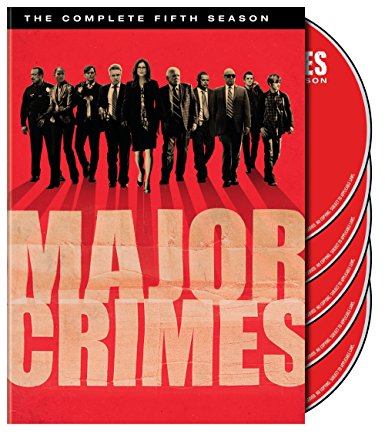
This week's Round Up stars a group of muscle-bound action movie all-stars like we've never seen them before! Lionsgate was kind enough to spare copies of The Expendables and The Expendables 2 in 4K, so be sure to check back soon for our reviews. And speaking of icons of yesteryear, Paramount has taken (dance) steps to ensure that John Travolta's big screen breakout stays alive thanks to Saturday Night Fever: 40th Anniversary Director's Cut. (Our longtime friend Michael Durr came out of retirement to review this one.) Time Life goes to war with Bob Hope Salutes the Troops, while Passion River Films gets in touch with its artistic side in Saving Banksy. Finally, CBS/Paramount rolls the dice with Vega$: The Complete Series, while Universal spotlights some four-legged friends with A Dog's Purpose.

Now it's time for your weekly reminder before signing off: if you’re shopping for anything on Amazon and you do it through one of our links, it’ll help keep the lights on here at UpcomingDiscs. See ya next week!


Even though I was born in 1975, I don't remember a thing until I was about 5 years old, therefore I missed most of the "Disco" era. My dad would play music from the 70's, but that consisted of Led Zeppelin, Queen and Black Sabbath among other bands; no disco in sight. But one faithful day in my middle school years, I did find my mother's record and 8-track collection. There was some Barry Manilow, Julio Iglesias, and something called the Bee-Gees. I wouldn't say anything crazy like it turned my life around, but after listening, I clearly understood. I clearly understood that my mother was crazy and I was much better off listening to Whole Lotta Love. Anyway, we have a movie to review, let's continue with Saturday Night Fever.

By 1978 the television detective model had been nearly complete and possibly already a cliché. Dan Tanna might have well been the complete model as far as the formula goes. It was almost as if you could go down a checklist and, like Dr. Frankenstein creating a monster, you would check off the necessary elements. The scripts could then almost write themselves, and you let the show fly on autopilot for three seasons or so until someone decides to look behind the curtain.

The early 1930’s was an excellent time for production of horror films. 1931 saw the classic productions of Frankenstein and Dracula, and 1932 The Mummy and White Zombie. These are all what I would call genre-defining films: they have refined the formulaic plots (mad scientist, supernatural threat) that came before them, but did so while incorporating the famous images we see today. Think about it; 80 years later and we still see Frankenstein’s monster with a flattened head and bolts, or Dracula with the jet-black widow’s peak and cape. As iconic as these films have become, there are countless productions that have flown under the radar of popularity. Frank R. Strayer’s The Vampire Bat is one such film that is worthy of more attention.

This is an announcement. This is not a review. We will likely have one posted as the unit is made available to us soon.

MENLO PARK, California – April 24, 2017 – OPPO Digital announced that its UDP-205 4K Ultra HD Audiophile Blu-ray Disc player is available for purchase. A step-up version of the recently released UDP-203, the UDP-205 brings top-of-the-line audio performance to a universal player that supports 4K Ultra HD Blu-ray and many other digital audio and video formats.

The OPPO UDP-205 carries many of the same features as the UDP-203: playback of 4K Ultra HD Blu-ray, regular Blu-ray, Blu-ray 3D, DVD-Video, DVD-Audio, SACD, Audio CD and many other formats; High Dynamic Range (HDR10) and firmware upgradable to Dolby Vision; dual HDMI outputs – HDMI 2.0 for UHD and HDMI 1.4 for audio; and an HDMI 2.0 input port for external streaming devices or set-top boxes.