




“You know the results of the latest Gallup Poll? Half the country never even heard of the word Watergate. Nobody gives a shit. You guys are probably pretty tired, right? Well, you should be. Go on home, get a nice hot bath. Rest up … 15 minutes. Then get your asses back in gear. We’re under a lot of pressure, you know, and you put us there. Nothing’s riding on this except the, Oh, first amendment to the Constitution, freedom of the press, and maybe the future of the country. Not that any of that matters, but if you guys f’ up again, I’m going to get mad. Goodnight.”
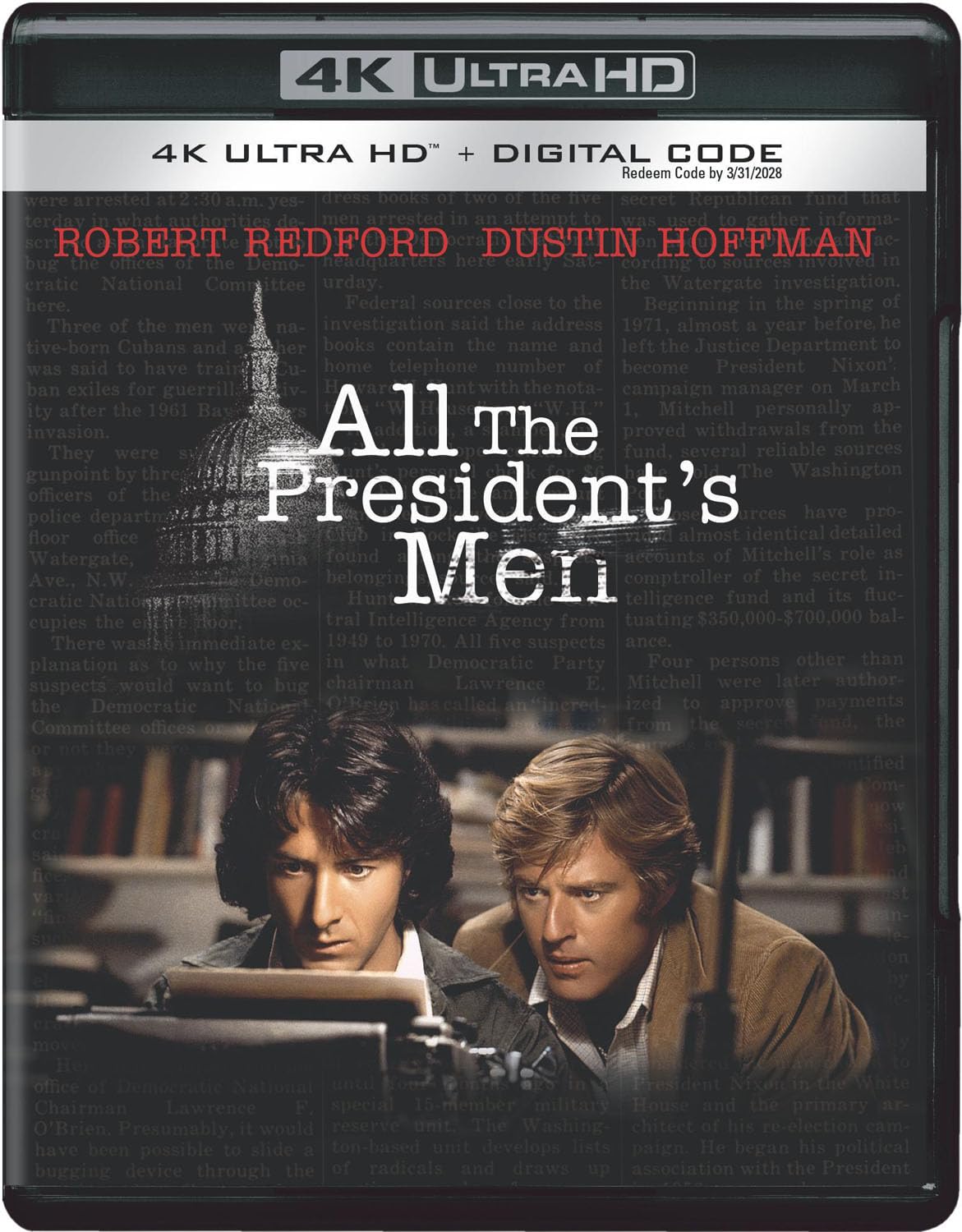
The more things change, the more they remain the same. Most of you were not born when Richard Nixon became the first American president to resign from his office in disgrace. But the truth is that it changed our political culture forever. It’s hard to believe that there was a time when most Americans put aside their own ideologies and had a respect for the office of the President of the United States. Even if you did not vote for or particularly like the man, there was a reverence and an almost sacred aura that surrounded the position. All of that has changed, and while it’s easy to blame the groups we have fighting each other now, it started a long time ago when a couple of Washington Post journalists stumbled into the biggest story in our nation’s political history. Carl Bernstein and Bob Woodward are the reporters who became iconic in their field as they took what appeared to be a routine break-in to an office and rode it to the resignation of a very popularly elected president. They put it in a book and then the movie of the same name. Now Warner Brothers has put All The President’s Men on UHD Blu-ray in 4K, and if you haven’t seen it, you need to. It’s one of the most important films ever made.
“Be careful how you write it.”
It all started with a nighttime break-in at the Democratic National Headquarters office in the Watergate Hotel & Office building. Five men, most of them Cubans, were caught placing bugs in the office. Bob Woodward (Redford) has his interest piqued when he discovers the “burglars” had a lot of cash, a walkie talkie, and were suddenly represented by a huge law firm. As he began to investigate, another reporter was interested and wanted in. That was Carl Bernstein. None of these guys were big names, and they didn’t know each other. Woodward hadn’t been a reporter for a year, and Bernstein was close to getting fired from the Washington Post. Thanks to their editor, Harry Rosenfeld, played by Jack Wardon, they were encouraged to see where the story went. The two didn’t even really like each other, but both could smell something huge, and they managed to become pretty good partners along the way. Each step took them closer and closer to the truth and traced it all to the aptly named CREEP, which was the Committee to RE-Elect the President. They followed the cash, and helped by the historically enigmatic Deep Throat, were guided to the top of the White House administrators and maybe even President Nixon himself.
“They volunteered he was innocent when no one asked them if they were guilty.”
The story of how the film got made goes back to Robert Redford. He’d first heard about Watergate while doing a press tour for his film The Candidate. It interested him enough that he called Woodward and Bernstein and eventually encouraged them to write a book. Once the book was written, Redford went to Warner Brothers for the half million dollars it would take to buy the screen rights. They agreed to put up the money if Redford agreed to be in the film as well as be the producer. He was also to agree to do two more Warner Brothers films. The deal was made, and Robert Redford would become Bob Woodward. But where do we find Carl Bernstein? Many thought he’d go to his old pal Paul Newman. But it appeared another young actor was also after the film rights. That young actor was Dustin Hoffman. The team was a match made in heaven.
“Who the hell are Woodward and Bernstein?”
To prepare for their roles, the two actors spent almost four months working every day with their real-life counterparts. When Woodward and Bernstein went on leave to work on yet another book, Redford and Hoffman actually filled in for them at the paper. The Washington Post was very cooperative but drew the line when permission was sought to film in their newsroom. Chief Editor Bill Bradlee believed it would be too disruptive and was honestly skeptical of what kind of movie they would make. So it cost another half million to build those offices.
The film’s casting was as perfect as you’ll find in any production. Not only did we have solid leads, but all of that time learning together built such a great and natural chemistry with these two guys. Redford got them to learn each other’s lines as well so that they could finish each other’s sentences and leave the other actors a little off guard, and it worked. It didn’t hurt to have the likes of Martin Balsam as Howard Simons, another editor shepherding the couple. He brought the authority needed to keep all of this anchored in reality. Jason Robards was reluctant to take the role as Editor Chief Ben Bradlee because he knew him a little and didn’t like playing real people in fear of messing it up. What was he thinking? Mess it up? He was the mentor, the father figure, and often the devil’s advocate here. Hal Holbrook plays mostly in the shadows as the secret informant Deep Throat. He would only meet in a darkened garage after Woodward signaled him. For decades the real identity of Deep Throat was a huge public debate, up there with “Where is Jimmy Hoffa?”. In 2006 at 91 years old and shortly before he died, FBI Deputy Director Mark Flint admitted to being the secret source. Now if only we can find that Hoffa guy.
The film has developed an entirely new reason to pad its accomplishments. It was filmed just as the events were finally out there just two years after Nixon’s resignation and downfall. But today it’s a time capsule. This was the newsrooms of the 1970’s. Typewriters clatter all around. Reporters are working stationary rotary phones, and if you were looking for a guy and all you had was a name? You started looking through dozens of phone books from around the country. No Google. No cell phones. No spellcheck and Word software. In those days you wore out your shoes going from interview to interview. You spread large amounts of sheets on the floor to get a better look. This was intended to be a contemporary film, and it was. Today it’s quite different.
The film takes us only so far. It gets to the point when most of us knew what Watergate was. The actual cascade of events that led to Nixon leaving in disgrace are shown as typed headlines as we end watching the partners hard away typing out the rest of the story. But Watergate is the scandal we measure all others by. Ever ask yourself why scandals have “gate” after them? In football the Patriots filmed other teams’ workouts, and it was called “Spygate” . Now you know where it comes from. The Watergate Hotel still stands, and there is a museum there if you ever want to check it out for yourself.
Video
All The President’s Men is presented in its original aspect ratio of 1.85:1. The ultra-high-definition 2160p image is arrived at by an HEVC codec with an average bitrate of 75 mbps. The ultra high definition gets most of its bump from the fact that this is a 35mm shoot so was native 4K. The funny thing is that it really looks like a modern period piece film. You get that authentic 1970’s film stock with its unique colors, particularly reds and greens, with a little HDR bump here. The D.C. locations really jump out at you here in sharp contrast to the harsh fluorescent lighting of the newsroom that just washed all of the colors away and adds a static sterility to it all. Of course, black levels get to really bump here. Those rainy nights out on the Washington streets, but particularly Hal Holbrook hiding in the shadows of a parking garage. The shadow definition is perfect here, and Willis’s minimal lighting shines big-time.
Audio
The DTS-HD Master Audio Stereo audio presentation is bare-bones. There’s really no need for anything else. We get the clatter of the typewriters for atmosphere, and this is really there to serve the dialog. There’s also a bit of silence here, and the score is also quite subtle. Is it show-off stuff. No, it’s not … but the movie is.
Special Features
There is only the UHD disc with some extras.
The first two feature CNN’s Dana Bash and Jack Tapper talking about journalism and ethics. Who the hell thought these guys knew anything about honest journalism? What a waste of disc bandwidth. The real meat comes in the stuff ported over from previous versions. That’s the good stuff. Even if you already have it.
Final Thoughts:
The film took a few well-earned Oscars. Jason Robards took Best Supporting Actor, William Goldman took best screenplay, George Jenkins took Best Art Direction, and it took Best Sound. It should have won for Best Cinematography. The film was shot by Gordon Willis, who also shot all three Godfather films. His use of lighting earned him the nickname of the Prince Of Darkness. In other years it would have easily captured Best Picture, but it couldn’t go the distance with Rocky. “You ever heard of him?”
