Gay/Lesbian

It has been a very long time since I have done a film or television review thanks to a wonderful thing known as life.  Life often gets in the way of even the most basic hobbies but is often rewarding, or at least pretends to be.  So, surely the first review I have had in such a long time will be a wondrous one full of majestic characters and a stirring plot worthy of rousing ambition to the sounds of chaotic beats.  *Looks across at package*  Hazbin Hotel Season One on Blu-ray.  *Googles the synopsis*  *Sighs deeply*  I mean, if my editor wanted me to stay in quasi-retirement, he should have said so.  At least the chaotic beats part seems to be accurate.  Let's take a look.

Are we familiar with the story of the angel Lucifer and Lilith, the first woman?  No?  Well then, let's go over it.  Lilith was the first woman with Adam, and she left that man because he was controlling (mmmm hmmm).  She then shacked up with the angel Lucifer instead.  Then they gave Eve, the second woman, free will through the famous apple.  This created Hell, and then those two, Lucifer and Lilith, were sent there as punishment.

My knee shall bow to none but to the king.”

In 1996, Aussie filmmaker Baz Luhrmann unleashed a star-studded, outrageously modernized version of “Romeo and Juliet” that retained William Shakespeare's original language while replacing the story's swords with gleeful gunplay. But five years earlier, Derek Jarman — an English director who left his mark on both stage and screen — beat Luhrmann to the Elizabethan punch with an even more provocative update of “Edward II,” a play written by Shakespeare contemporary Christopher Marlowe.

“The nail that sticks out gets hammered down.”

Freak Show centers on a flamboyant, fish-out-of-water teen who doesn’t fit in among his fellow high schoolers. The movie — a promising directorial debut from Trudie Styler, aka the wife of legendary musician Sting — works best when it finally lands on the notion that practically every teenager feels like a “freak” at one point or another. It’s a good, worthwhile message; the problem is other aspects of this film are about as subtle as Billy’s wardrobe and makeup choices.

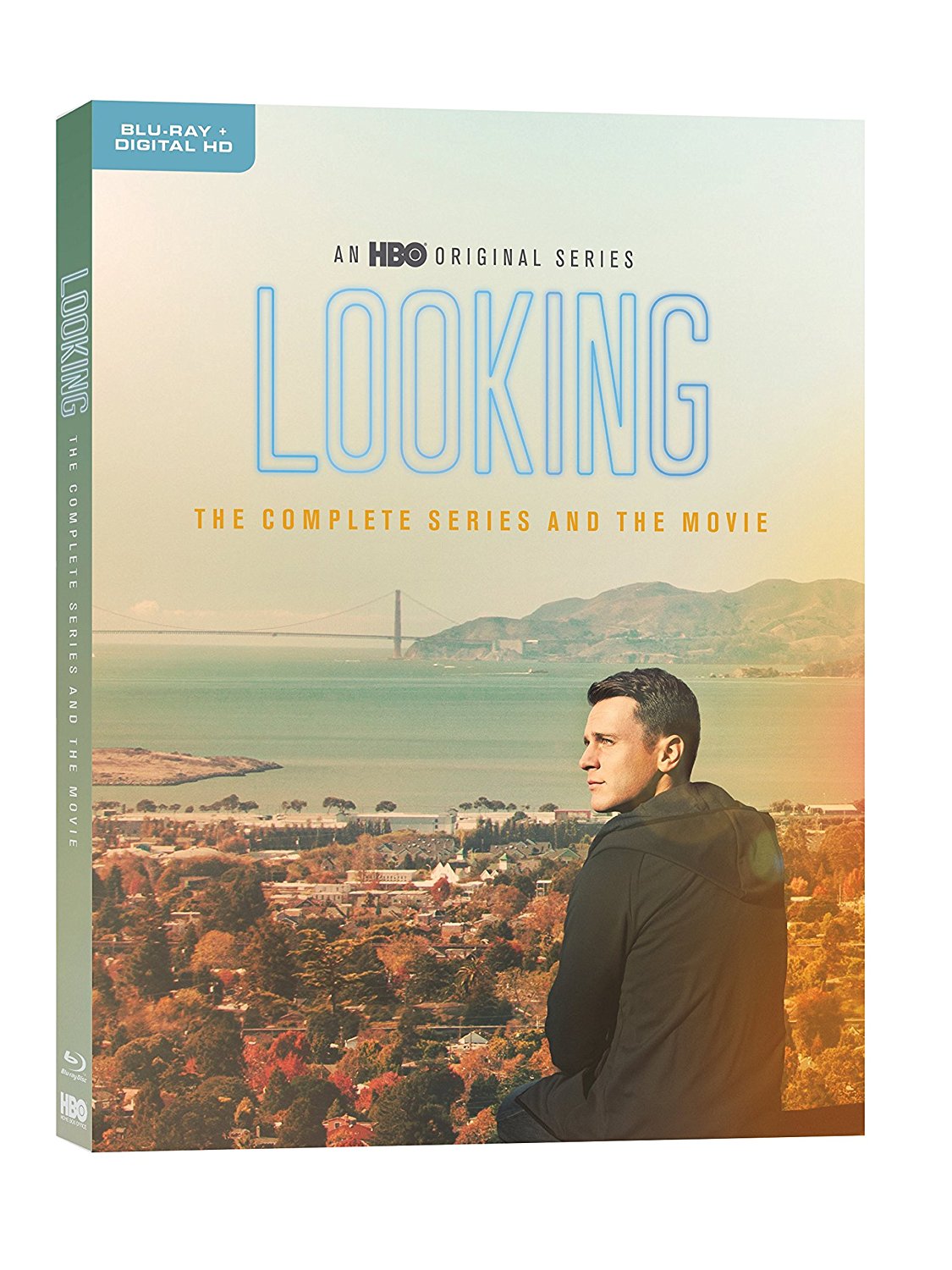
The most remarkable thing about Looking might have been how thoroughly unremarkable it was. The HBO dramedy — which followed the love lives of three gay friends in San Francisco — sidestepped any sort of headline-grabbing sensationalism. However, Looking was often low-key to the point that it bypassed being funny or particularly entertaining. The latter point was a bigger issue early on since the show's naturalistic tone made Looking more engrossing as the series progressed and deepened its roster of characters. You can see for yourself how the show got better as it went along now that HBO has released the entire Looking saga — two seasons and a movie — in one handy Blu-ray set.

I don't know if either of us are very good at being who we think we are.”

The story is the star in Freeheld, which chronicles a same-sex couple's fight for equality. The film is based on the Oscar-winning documentary short of the same name and follows Laurel Hester, a New Jersey cop with terminal lung cancer, as she attempts to pass her pension benefits to domestic partner Stacie Andree. Despite being a modest production, Freeheld was able to enlist some top-drawer acting talent. Unfortunately, it also attracted a risk-averse team of filmmakers who tell Laurel and Stacie's story in a thoroughly rote and uninspired manner.

The movie begins in 2002 with Laurel (Julianne Moore) bailing her partner Dane (Michael Shannon) out of a jam during a sting operation. This opening is meant to illustrate that Laurel is an exceedingly capable police officer, but the clumsily-staged sequence has the unfortunate side effect of shining a light on director Peter Sollett's limitations. (Same goes for a subsequent storyline involving a double homicide that is equally clunky.) Laurel is also a lesbian who worries about someone at her job finding out about her sexual orientation, so she drives to Pennsylvania to take part in social activities. That's where she meets Stacie (Ellen Page), a younger woman who sparks Laurel's interest.

Being a woman's hard work.”

Femininity — the quality and essence of being a woman — is at the forefront of The New Girlfriend, a gender-bending and genre-bending offering from French director Francois Ozon. The film is a curious mix of farce, rom-com hijinks, frank sexuality, and serious drama about loss. The formula isn't always cohesive, but it makes for an intriguing twist on the old “boy meets girl” story.

The most remarkable thing about Looking might be how thoroughly unremarkable it is. This is a double-edged sword for HBO's dramedy, which follows the love lives of three gay friends living in modern-day San Francisco. The series sidesteps the headline-grabbing sensationalism that accompanies many other shows that prominently feature gay characters. (Looking at you, Ryan Murphy.) On the other hand, Looking is often low-key to the point that it bypasses being funny or particularly entertaining. What the series does have on its side is a naturalistic tone that makes the show more engrossing and immersive as the first season progresses.

Looking follows the lives of Patrick (Jonathan Groff), a lovelorn, 29-year-old video game level designer; Agustin (Frankie J. Alvarez), a 31-year-old artist's assistant — and a frustrated artist himself — in a committed relationship; and Dom (Murray Bartlett), a 39-year-old waiter with a preference for younger guys who is at a personal and professional crossroads in his life. The series opens with Patrick bumbling his way through an anonymous sexual encounter in a park before going on a disastrous first date with a different guy, Agustin deciding to move in with boyfriend Frank (O.T. Fagbenle), and Murray mulling over a career move away from the food industry and into real estate.

“Could you please reduce your level of hysteria?”

There is a lot of yelling and a lot of outrage in The Normal Heart. The film chronicles the confusing, terrifying onset of the HIV-AIDS crisis in the early 1980s and how a group of gay men (and one intrepid doctor) in New York fought to draw attention to the deadly disease. Their efforts are alternately frustrating and futile, which leads to a higher decibel level for much of the movie’s second half. Thankfully, The Normal Heart is shrewd enough to note that there’s more than one way to make a point. More importantly, the film does a strong job of illustrating the different ways the yelling and outrage were justified.

After dating an endless string of duds and dolts, Jessica Stein has finally found someone smart, funny, kind, compassionate and attractive enough to meet her impossibly high standards. Much to Jessica's chagrin, however, it turns out her ideal match is a woman. Kissing Jessica Stein, the 2001 independent romantic comedy created by stars Jennifer Westfeldt and Heather Juergensen, is equal parts insightful and frustrating. You have a new chance to see for yourself now that the film has made its Blu-ray debut.


Jessica (Westfeldt) is 28 years old, which (in her mind) is basically 30. She's a harried copy editor for the New York Tribune who hasn't had a date in a year. Jessica is constantly reminded of her romantic futility by her mother Judy (Tovah Feldshuh) — who is always trying to fix her up with a nice Jewish boy — and her jerky boss/ex-boyfriend Josh (Scott Cohen).

Did you know The Birdcage is the all-time, highest-grossing movie in the U.S. that features a gay lead character? It’s true! Given the drastically increased pop culture visibility of the LGBT community in the 18 years since its release, it’s a bit of a surprise the film still holds that distinction. On the other hand, I’m not too shocked because I’ve been laughing at this funny farce since it first came out in 1996. So I was delighted to see it finally make its long-overdue Blu-ray debut.

We’ll get to the Blu-ray particulars in a bit, but I really do want to spend a fair amount of time talking about this deeply silly, deeply fascinating project. For starters, how about the fact that Robin Williams’ first “straight man” role in a comedy didn’t come until he was cast as a gay nightclub owner?