Posted in: No Huddle Reviews by Archive Authors on November 17th, 2015
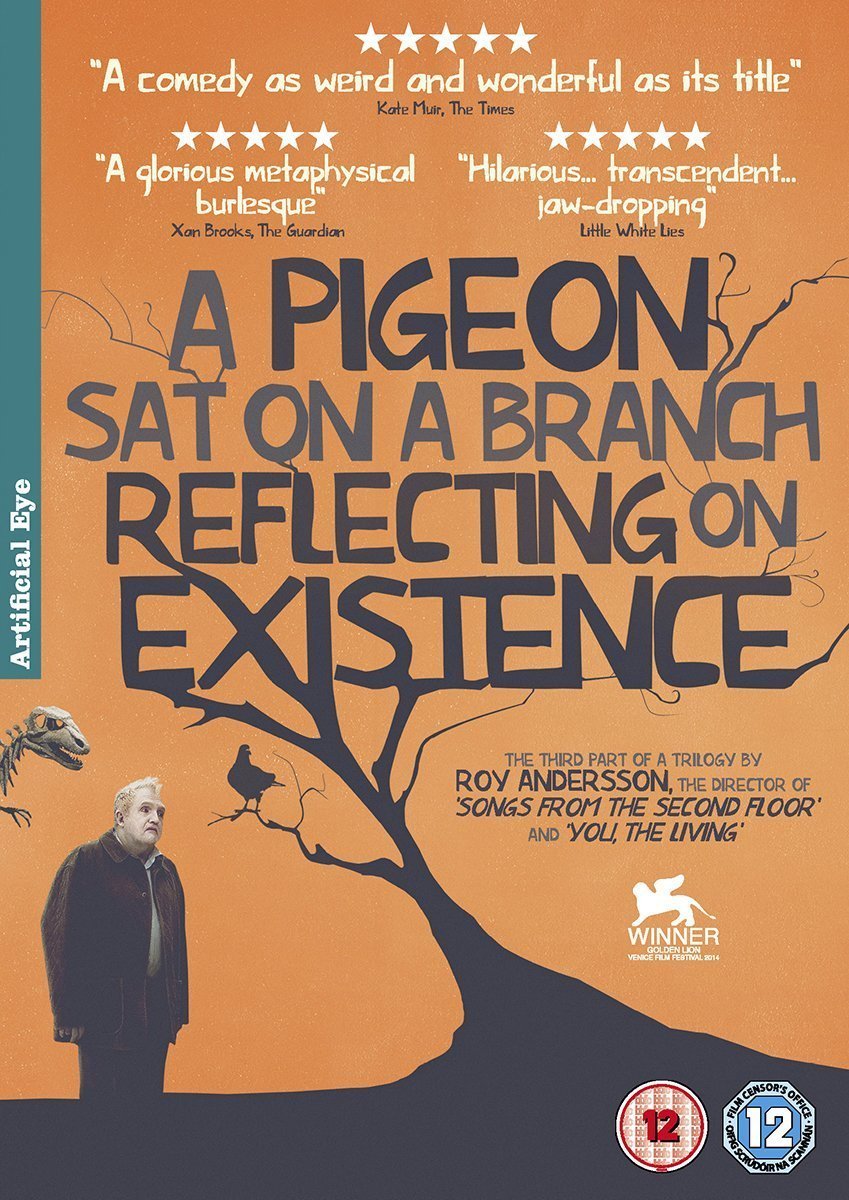
A Pigeon Sat On A Branch Reflecting On Existence is the title of a Swedish film that won the top award at Venice Film Festival. Many critics think it is one of the best movies of the year. It is also a movie that relatively few people will see. The main reason most people won't see it is because it is an extremely odd film. It could be called boring and fascinating in the same breath. The film is made up a series of master shots depicting events that have very little narrative clarity. Some characters show up periodically but with little sense that their actions have any potency or potential purpose. The title suggests an underlying philosophy of existential confusion. The pigeon is only depicted briefly twice in the film, but the idea is that a pigeon would have very little understanding of human behavior. The film also shows that human beings have very little understanding of human behavior. The various people who float through the movie all seem disconnected to anything that is happening to them. This is the final film in a trilogy by Roy Andersson including You, The Living (2007) and Songs From The Second Floor (2000). It is staged like a series of mini-plays with the characters barely moving in many instances, seemingly caught in some surreal dream. Many events don't seem to relate to others, but two hapless brothers are the most noticeable. They sell novelty items (vampire teeth with extra long fangs, laugh bags) because they want people to have fun. No one in this movie has any fun for even one second. The film is somewhat funny, depicting characters that are hopelessly grim and disconnected, but there are some moments that are bleakly horrifying while they are hallucinatory and confusing. The most obvious and chilling example is a group of slaves being led into a giant rotating drum that is sitting on top of a fire pit that has been set ablaze. It is done by soldiers for a group of finely dressed elderly people staring on dispassionately, totally unaffected by the horror. Another setting is a bar populated mostly by women who are suddenly besieged by the Swedish king and soldiers from two centuries earlier. They institute and implement edicts that long ago lost their relevance. The clear intent of the director is to confuse and alienate a modern audience with an uncomfortable pace and sense of unsettling illogic.
This is clearly a film that is only for seekers of unusual art. Some people will want to see it a few times to decipher the strange tableaux. There is a unique beauty to the crazy display of static boredom, but the average moviegoer will certainly walk away confused and alienated after the first viewing. The film is for sophisticated tastes, but is not easy to recommend to anyone. Intellectuals will respond to the droll absurdity that outlines a society that is dead but still attempting to exist in a zombie-like fashion. The message is subtle and open to interpretation, but it clearly shows modern life as hopelessly suffocating.
Posted in: Disc Reviews by Archive Authors on November 11th, 2015
I don't think there has ever really been a great film about a great writer. We naturally compare their lives to works of great fiction. Great fiction tends to distill the tedium and awkwardness out of real life. Real life can be exhausting in the day-to-day disappointments that can sometimes be wrapped in small victories. David Foster Wallace was a great writer. This is almost universally acknowledged. David Foster Wallace no longer is because he hung himself in 2008 at age 46. Many people who were in his life are now very protective of him and his privacy. They are angry at the idea of a movie being made about his life. Authors like J.D. Salinger and Thomas Pynchon have spent their lifetimes being reclusive, but the fact that they had published and provoked our thought means we are entitled to explore their lives. The problem always will be rising to the occasion and doing justice to the thoughts they provoked.
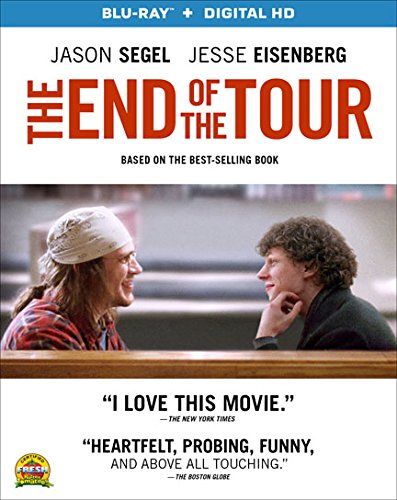
The End of the Tour is about five days a reporter for Rolling Stone spent with Wallace. The journalist was David Lipsky, who had written a novel of his own and was clearly in the grips of some hero worship. The hero he met was self-conscious to a nearly painful degree. He also seems to be struggling to be an average guy. I don't think the movie is a good indication of what Wallace was really like. But then, let's just look at this as a movie first. As I said, I don't think the author should be protected and hidden from us because he had faults and deficiencies. I think we should keep an open mind as to what the truth really is. I have listened to interviews done with Wallace, and he always comes off as reflective, thoughtful, truthful, intelligent, profound, and open-minded. I think the intention of this movie was to reveal a more unvarnished view of the writer.
Posted in: No Huddle Reviews by Archive Authors on November 9th, 2015
Dustin P. Anderson
Our story follows Davide, a scientist who is trying to exorcise aliens out of the bodies of people who have been abducted. One day Davide is visited by a strange girl who says that she is possessed by an alien. Davide and his team look into it and are startled when they find out that this girl is royalty, and possessed by a leader among the aliens. I would love to give you more explanation, but after sitting through this movie twice, I still cannot make heads or tails of what is going on. I have never been so confused while watching a movie. The small bits and pieces I could understand were that there is a guy who is trying to use the human soul to force out aliens who have taken control of a host body. After that I know that the main character used the help of the Catholic Church in order to purify the host body which was taken over by the alien invader. This makes sense in a loose sort of way; church and soul go hand in hand I guess. Still don’t understand how barcodes are supposed to help purify the soul. Still don’t understand why the end scene needed to take place during a rave. Still don’t understand the entire end of the movie. Still don’t understand why heroin was needed to knock the aliens out. After sitting through this movie twice I could only connect two things, the church and the soul. There are times where there is something sexual happening, and it is almost completely unexplained, like when a possessed girl just kisses some other random girl with no lead-up or explanation as to why they are kissing. It seems like things are just sexual for the sake of being sexual, like when someone says ”just a little orgy between kids” in response to a group of our characters randomly making out to hide an alien. It feels as though at least thirty minutes of explanation was missing from this movie. I shouldn’t have been surprised though; the synopsis on the back of the DVD didn’t even make sense.
Posted in: The Reel World by Archive Authors on November 7th, 2015
It is widely believed that the early 70’s was a great renaissance for American film. Part of the reason for this is that society was in upheaval, and the studios had lost their way trying to understand the American public. Young filmmakers were allowed to come in and do what ever they wanted. Sometimes it worked. Sometimes it didn't, but there was real freedom in the anarchy of the times. Then movies like Jaws and Star Wars changed the industry again, and the money managers were back in control. Today, the studios run things based on formulas and templates. There are still interesting independent films being made, but they are strictly treated as fringe dwellers.
I Smile Back is a throwback to an old style 70’s classic drama in all its raw power. There are lots of interesting things to say about what's happening here, but the big focus is the startling and attention-getting performance by Sarah Silverman. Silverman is well known as a comedian, and through that medium it was always obvious that she was bashing against the limits of what was acceptable and expected. Her subject matter was confrontation and abrasion, which she subverted through her charming good looks. It was always obvious she needed to branch out and explore beyond the somewhat limited confines of comedy. In I Smile Back, she has succeeded in an astonishing and spectacular fashion, but I really don't want to focus only on Silverman's performance. Everything she is doing is completely in sync with the style of the movie and the story that is being told. It is a harsh and raw exploration in every way. It is the story of a suburban Westchester housewife but without any Hollywood phoniness in its depiction. Music is used very sparingly. Scenes are constructed around awkward moments. All the cliche elements that we have seen in this type of movie have been stripped away. The connection to many 70’s movies is an unpolished feel we just don't see much anymore.
Posted in: No Huddle Reviews by Archive Authors on November 3rd, 2015
Dustin P. Anderson
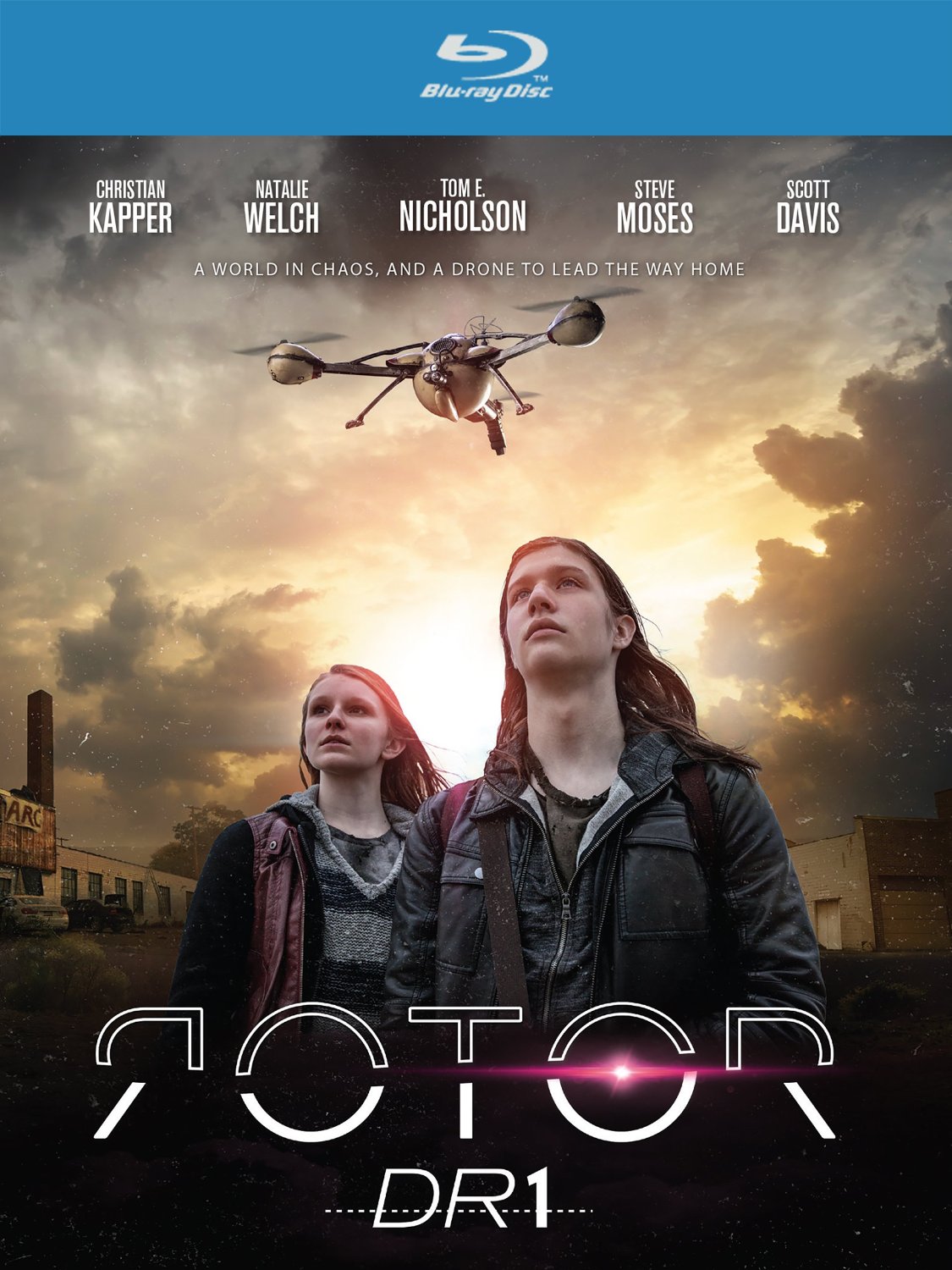
Our story follows Kitch, one of only a few survivors from a deadly outbreak that has devastated much of the world. Kitch makes his living by taking down drones and stripping them for parts. The most valued part is Arcanum pellets, which have taken over as currency in this bleak future. One day, after trying to sell some Arcanum pellets to reclaim a camera that was stolen from him, he meets a drone marked with DR1 . Kitch thinks that this drone will lead him to his father, who was last seen trying to find a cure for the plague that ravaged the world. On his travels to find his father, he is joined by the niece of a gangster who is hunting them. The two search for Kitch’s dad together while trying to avoid her uncle and protecting DR1.
Posted in: No Huddle Reviews by Archive Authors on November 3rd, 2015
“Sometimes it’s better not to touch your dreams, take it from someone who knows.”
In the first season of Showtime’s Californication, we were introduced to David Duchovny’s character, bitter yet upbeat writer Hank Moody. Hank, after moving to Los Angeles on the heels of his first novel – a critical darling entitled “God Hates Us All” – has recently lost his long-time love and, by extension, his daughter, to a straight-arrow bore who makes his girlfriend Karen (Natascha McElhone) feel safe.

Posted in: Random Fun by Archive Authors on October 25th, 2015
The Black Knight satellite is one of many tantalizing so-called true tales that are circulating on YouTube and various cable outlets like the History Channel. I say so-called true tales because many believe stories about aliens are total nonsense. But not everyone believes so. A National Geographic survey says 77 percent of all Americans believe there are signs that aliens have visited Earth. A Harris poll says 68 percent of all Americans believe that Jesus is the son of God. A HuffPost/YouGov poll shows that 45 percent believe in ghosts and 64 percent believe in life after death. A 2009 CBS poll said 78 percent believe in the afterlife. I could go on, but it is all in the same general range.
Thousand of movies of all kinds have played with our imagination on these subjects. Steven Spielberg is one of the most famous filmmakers to deal with these subjects both as a director and a producer. Here is a list of some of the movies and TV shows that Spielberg has been involved with: E.T. The Extra-Terrestrial, Close Encounters of the Third Kind, all of the Indiana Jones movies, Poltergeist, Young Sherlock Holmes, All the Transformer movies, Extant, Falling Skies, all the Men in Black movies, Terra Nova, Cowboys and Aliens, Super 8, Hereafter, The Lovely Bones, Monster House, Taken, Casper, Always, batteries not included, Amazing Stories, War of the Worlds and Night Gallery. That's just one person's output on ghosts and aliens. It is a topic that is endlessly dealt with. And with the current climate of internet blogging, there is an endless amount of material that was not easily available before, like the Black Knight satellite. That's just the tip of the proverbial iceberg. So many movies are dealing with this information. Transformers is a perfect example, with depictions of robot bases on the moon and alien robots precipitating the mass extinction event of most species on Earth 68,000 years ago. The last Superman movie, Man of Steel, showed an ancient rocket ship buried in the North Pole. This stuff isn't new. H.P. Lovecraft wrote a story called In the Mountains of Madness nearly a hundred years ago that led to stories like The Thing, which has been made into a movie three times so far (although a recent faithful big-budget adaption stalled because of giant ego clashes).
Posted in: No Huddle Reviews by Archive Authors on October 24th, 2015
Dustin P. Anderson
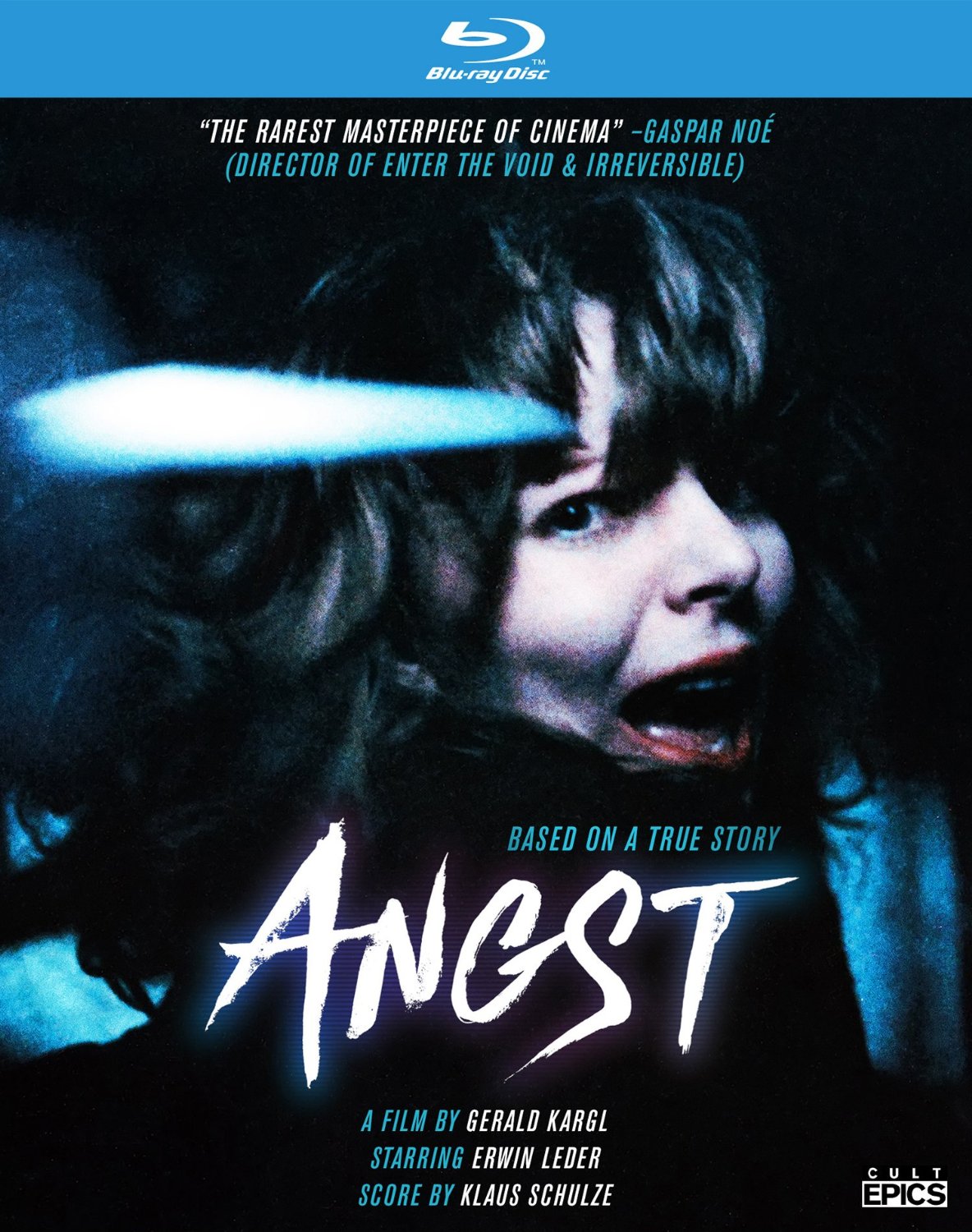
As far as a synopsis for this movie goes, there isn’t too much to it. We are given a brief look inside the mind of a real-life serial killer. A psychopath has been given a conditional release from jail and is only interested in satiating his lust for killing. After some failed murder attempts, the killer finds an empty house and waits for the occupants to come home. This movie has a lot to say, while being easy to summarize. The story is basic, but there is so much more to it than just the events that take place. It does a great job at making the killer seem more human when we see how clumsy he is at killing people. During the killer’s beginning inner monologue, he states, “this time he won’t get caught,” which, I thought meant he had some grand scheme in place to kill a bunch of people and never see the inside of a jail cell again. The killer actually has no plan; he gets caught up in his passion for murder and bumbles almost every one of his attempts; for instance, when he is caught untying his shoelace the shoelace is in the condemning position used for strangling someone. I also like that the inner monologue of our killer matches the person he is killing; it makes it seem like he is offering an explanation of why he is killing this certain person. When he kills a man in a wheelchair, he starts speaking of his father/stepfather; when he is tying up a young girl he is talking about his sister, etc. This movie is the closest thing to describing to the general public why certain killers do the things that they do, and it is the most disturbing thing I have seen in a while, which makes it an amazing horror movie.
Posted in: No Huddle Reviews by Archive Authors on October 23rd, 2015
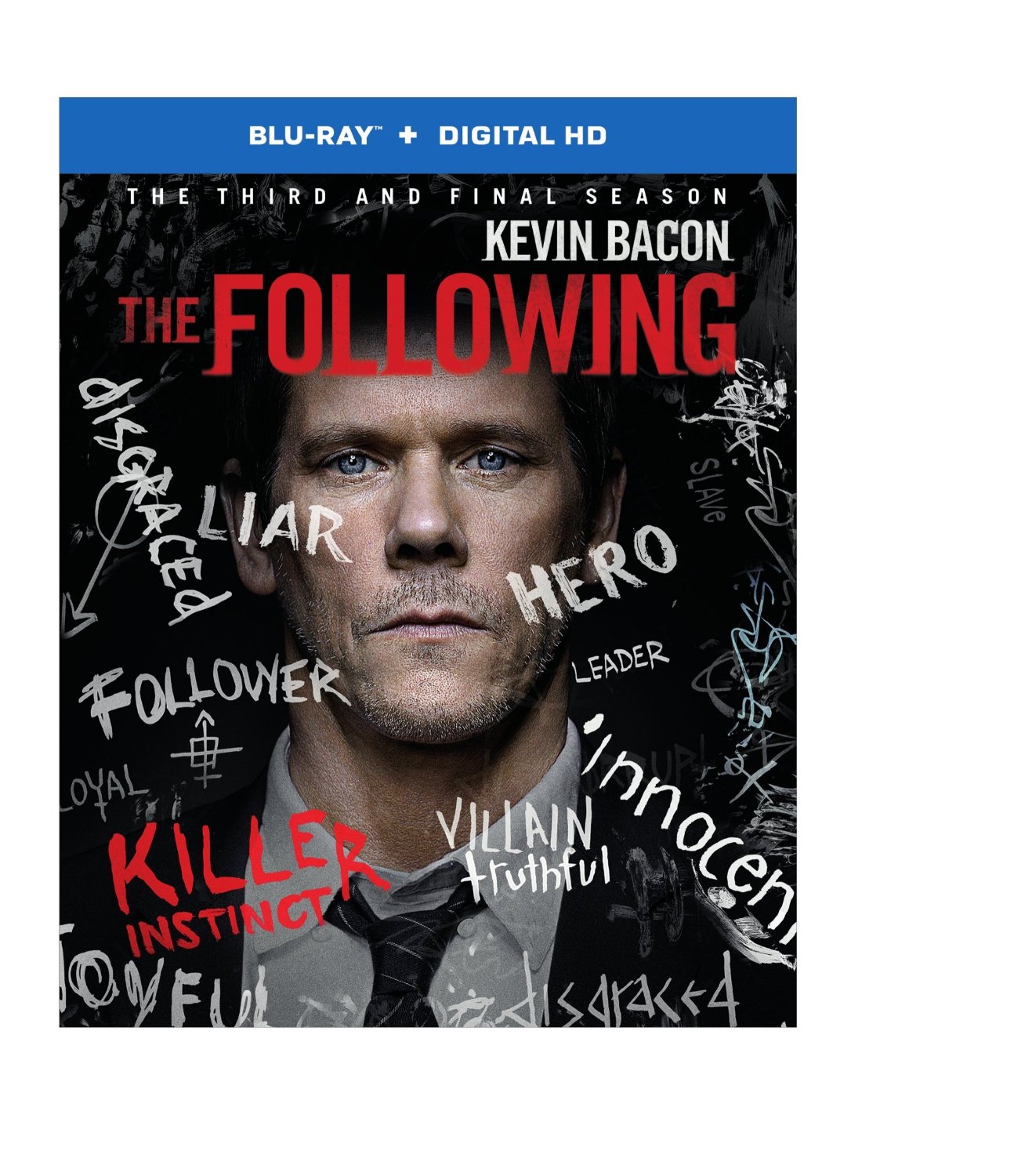
"Looks like the crazy is starting."
Actually, it started three seasons ago. The creator of Dawson’s Creek and The Vampire Diaries, Kevin Williams, delivers a thriller that is a bold new entry in the crime drama for television. The Following was 15 episodes of nail-biting bliss that kept the viewer guessing and riveted long after its gut-wrenching cliffhanger season after season. For a while I was beginning to wonder if Williamson had lost his touch with the Scream series, but what you’ll discover here is that Williamson may just be the king of creating and penning one of the darkest serial killers on the small screen.
Posted in: The Reel World by Archive Authors on October 22nd, 2015
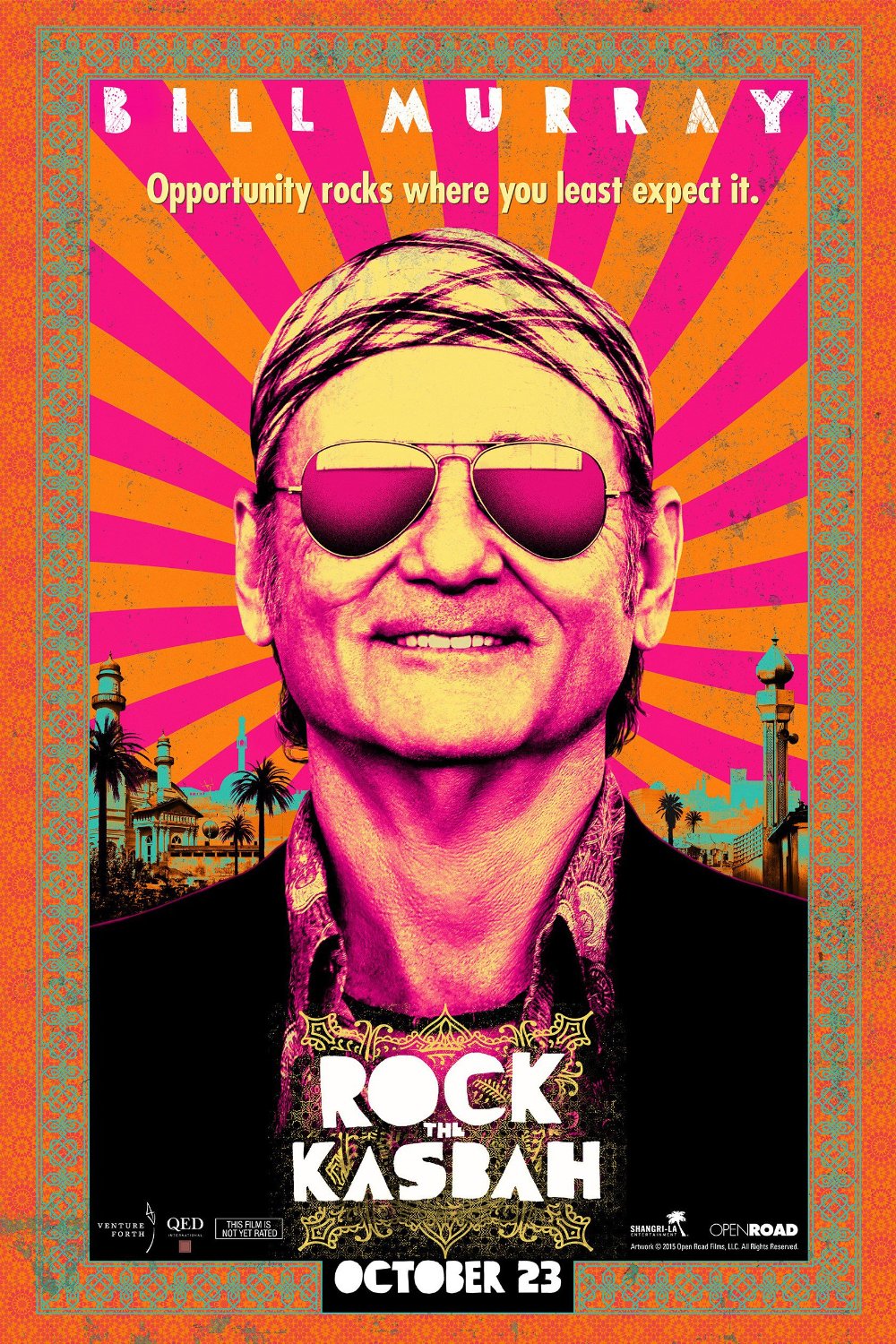
That's Rock the Kasbah with a K. It was probably decided to do that spelling so as not to be confused with the hit song “Rock the Casbah” by the Clash when googling. The movie is about a down-on-his luck music manager who goes to Afghanistan on a U.S.O. Tour. There is a great scene early on when the aforementioned manager visits his daughter by sitting outside her window as she lectures him that there are no casbahs in Afghanistan. It's a perfect metaphor for a character who has obviously screwed up his life so much that he can't even go into his ex-wife's house. The music manager, Richie Lanz, is played by Bill Murray and may be his best comedy performance in years. Murray is famous for not having a manager, publicist, or agent, so it's funny seeing him playing a low-rent version of all three. The film was written by Mitch Glazer (Magic City) who had a big hit years earlier with Murray called Scrooged. It is directed by Barry Levinson, who had a long string of big hits in 80's and 90's like Diner, Good Morning Vietnam, Rain Man, Bugsy, Sleepers, and Wag the Dog and has gone on to producing a lot of television. Levinson's more recent films have been a bit bizarre. The Humbling (2014) with Al Pacino, What Just Happened (2008) with Robert DiNiro, Bruce Willis and Sean Penn, Man of the Year (2006) with Robin Williams, and Envy (2004) with Jack Black and Ben Stiller are all examples of ambitious projects that had tilted, offbeat sensibilities which had trouble connecting with audiences. Rock the Kasbah might seem like that kind of project as well, but it turns out that a crazy combination of elements has mixed together surprisingly well.
I say that this is Murray's best comedy performance in years, but it also might be one of his most nuanced and fully-developed as well. Murray's screen appearance have been erratic and full of variety, as if he's busy living life and movies are something that he just squeezes into his schedule. There have been a variety of types of roles from clearly dramatic like his portrayal of F.D.R. in Hyde Park on Hudson and Olive Kitteridge (for which Murray just won an Emmy) to roles in just about anything that Wes Anderson or Jim Jarmusch put out.