Posts by Archive Authors

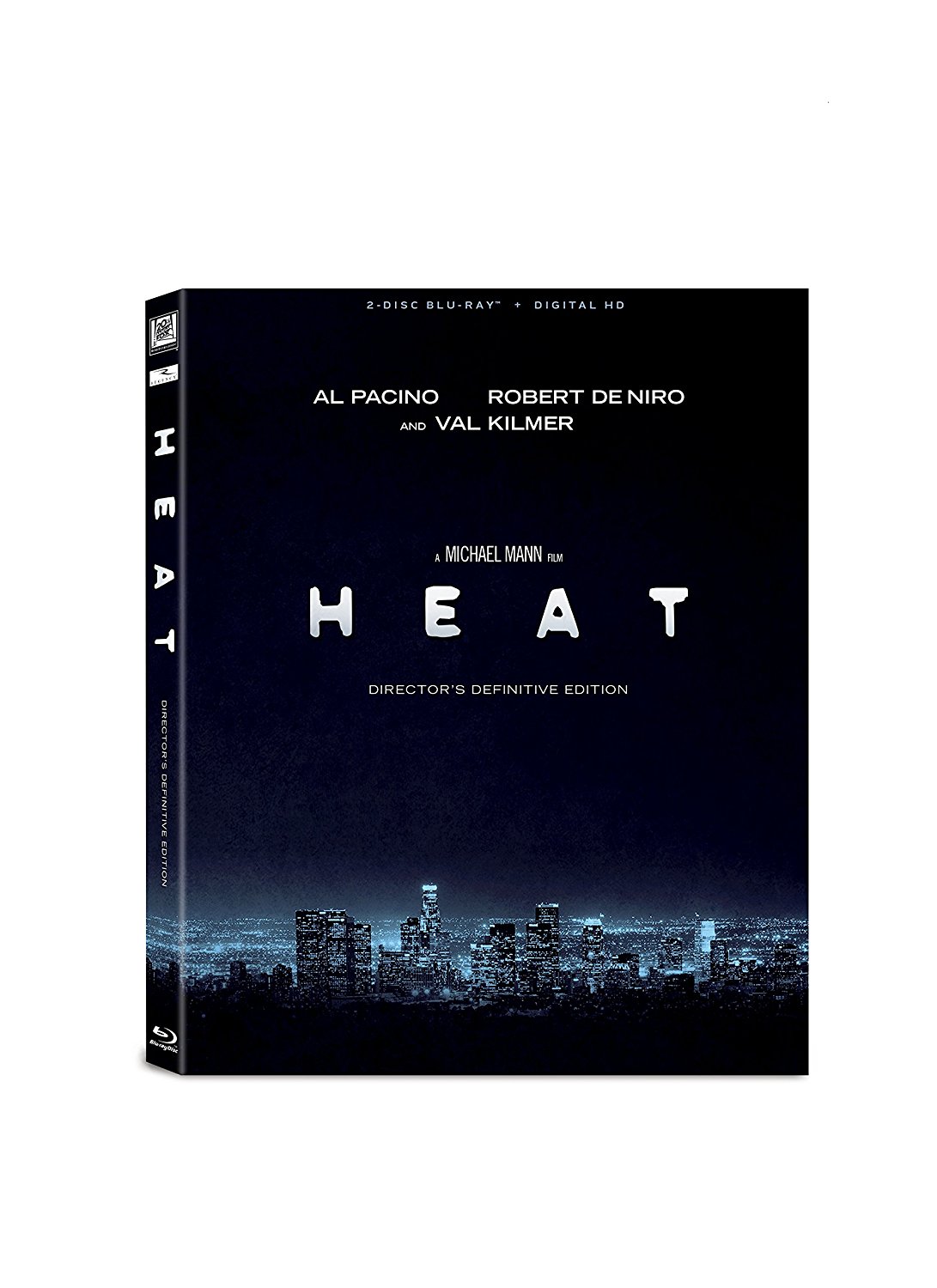
There was a 20th anniversary edition of Michael Mann's Heat planned a couple of years ago by the folks at Warner Brothers. There was hope of a 4K restoration and more. The rights ended up reverting to 20th Century Fox before any of that could happen. Now Fox has released something they are calling The Director's Definitive Edition, but it is the same cut and print of the film as used in the last Warner Brothers' Blu-ray release. So I really can't tell you what is definitive except for a couple of new and more recent bonus features.

Pacino plays a cop who is tracking a group of robbers, among them Val Kilmer (Wonderland) and Tom Sizemore (Saving Private Ryan), a group headed by DeNiro. The group receives offers for work from Jon Voight (Runaway Train), and they rob anything from gold to coins to bearer bonds. They are all ex-cons, and know all the ropes. They are a highly professional crew, which you see in the opening moments of the movie, despite the addition of a new man to the crew. What also helps to differentiate this from a usual cops-and-robbers movie are the secondary plotlines of the families involved. Pacino’s is clearly distant and breaking (played by Diane Venora and Natalie Portman), while DeNiro doesn’t have one to speak of, despite an emerging romance with Edy (Amy Brenneman, Judging Amy). At three hours, there are some unnecessary scenes involving a banker (played by William Fichtner), but the underlying message is that almost all of the actions in the movie do not involve just the primary characters, but also friends and loved ones of those characters. Kilmer’s wife in the film, played by Ashley Judd, desperately wants to get him out of his line of work, as she wants to start a new life for her family. An ex-con (Dennis Haysbert, 24) is stumbled upon working in a greasy spoon, and offered a chance to work by DeNiro. Haysbert’s character wants to be right, but runs into so many obstacles from it that he takes the job, only to wind up perishing in what results in a massive gunfight in the heart of Los Angeles while a bank robbery is being pulled.

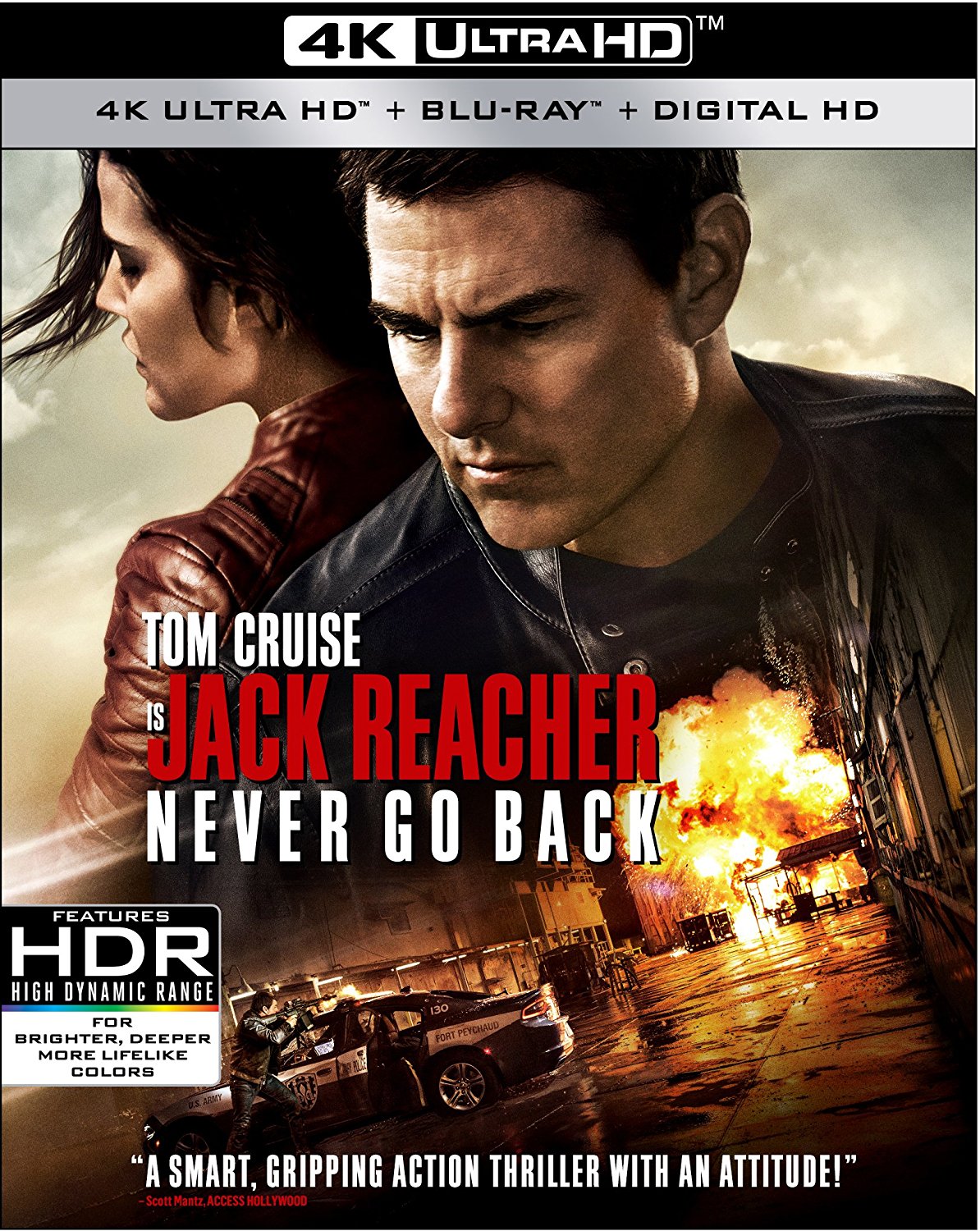
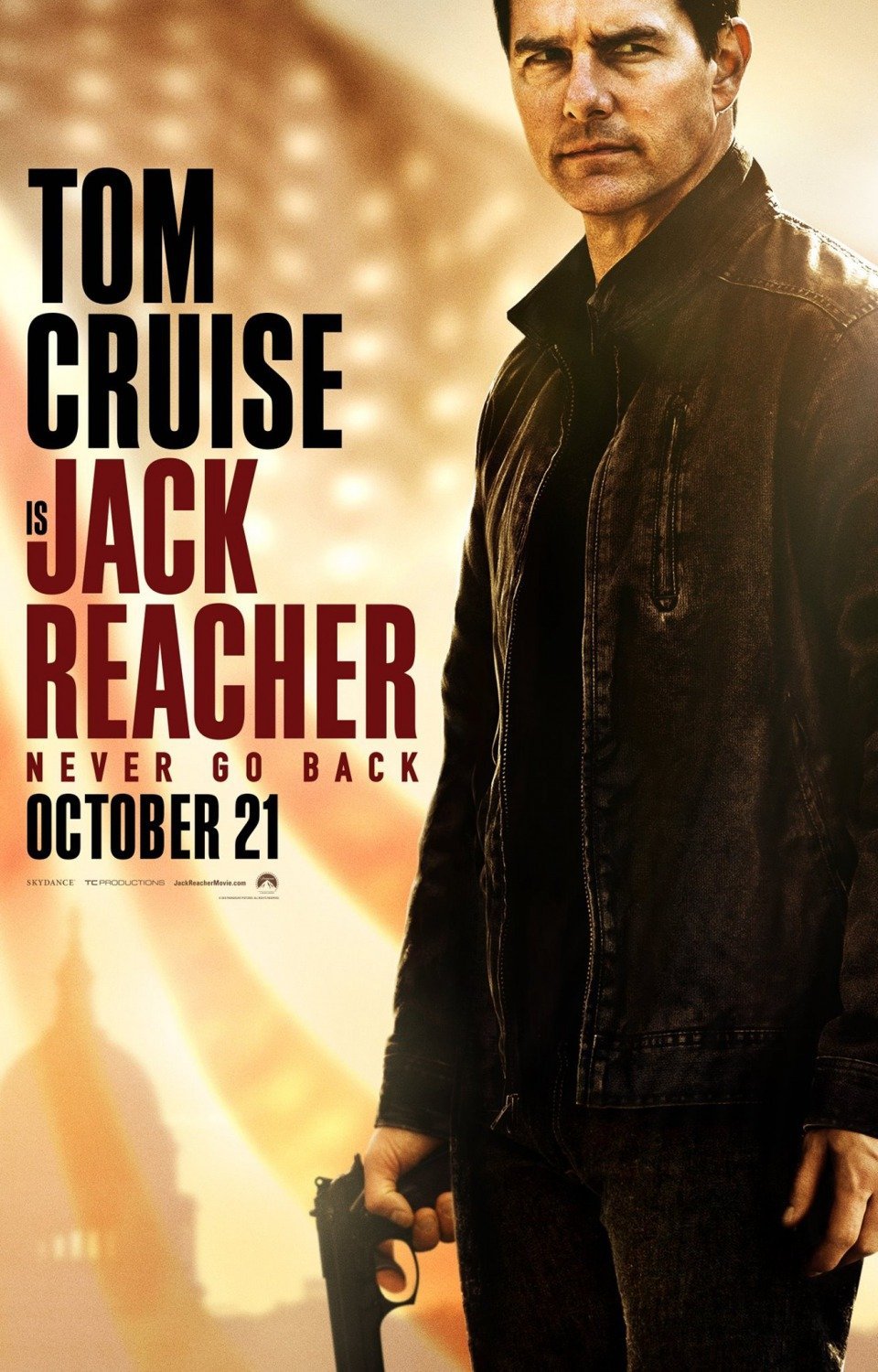
Forbes magazine called Jack Reacher and author Lee Childs the strongest brand in publishing as much for his over $100,000,000 in sales and billion-dollar imprint as for the strong loyalty of fans and favorable ratings of the readers. The 21st Jack Reacher novel, Night School, is coming out in a couple of weeks (which I’m sure Simon & Shuster would thank me for mentioning, but they don’t need my help), and Reacher fans will be buying in droves. The second Reacher movie will be out on November 21. One of the first things I want to address is that Lee Childs had been actively involved in the picking of Tom Cruise to be Jack Reacher. It was a controversial decision, but Childs rightly said there are no big movie stars who could accurately portray the physical characteristics of Reacher. I personally am 6 ft. 4in tall and 250 pounds, so I could be a close proximity except for the fact that I am not a movie star nor could I disable eight opponents simultaneously. The closest movie star I could name who approximates Reacher’s physical dimensions is Vince Vaughn, and I doubt anyone would say he is as big a movie star as Tom Cruise (box-office-wise, that is). Five Mission Impossible movies alone demonstrate that Cruise’s box office is as strong as ever based on their increasing popularity.

By next week, there will be 21 books to read, which contain a lot of developing characterization. The essential information about Jack Reacher is that he retired as a major at 36 and now roams the country with no luggage. It has been said the books can be read out of sequence.

Howard Hughes used to be a very big deal for a very long time. Warren Beatty was a big deal for a long time as well, and they have a lot in common. They were both renowned horndogs. Hughes was not only extremely rich, but enormously famous. The Hughes Tool Company, which was instrumental to the oil industry, was the original source of his wealth, but Howard Hughes became better known for his forays into the movie business and aviation industry. There has already been a movie about Hughes called The Aviator starring Leonardo DiCaprio, but Warren Beatty has been working on a Hughes movie since the 1970’s when he frequented the Beverly Hills Hotel where Hughes had multiple bungalows. Beatty lived a similar kind of fantasy life and identified with Hughes. Beatty has become notorious for taking a long time between projects because of a nearly legendary perfectionism. It has been 18 years since Beatty’s last film. He has been rumored to have done many projects over the years but rejected them all. This may be Beatty’s swan song, since he is now 79 years old. Beatty looks pretty good and seems as sharp as ever. And one of the things that becomes clear immediately is that Beatty understands that both Hughes and Beatty himself are pretty much past history.

The focus of the movie Rules Don’t Apply is two young lovers. One is Frank Forbes (Alden Ehrenreich, a huge hit in Hail Caesar and the star of the upcoming Hans Solo movie) and Marla Mabrey (Lilly Collins, The Mortal Instruments, Mirror, Mirror). Collins is the daughter of Phil, by the way. She also is a dead ringer for a young Elizabeth Taylor at times. Mabrey is one of numerous ingénues that Hughes has acquired much like he acquires companies. Forbes is one of Hughes staff drivers with aspirations for much greater things. Forbes is assigned to driving Mabrey immediately after her arrival in Hollywood with her mother. This is 1958 Hollywood, which coincidentally is about the same time that Beatty had arrived to make his mark. The loving depiction of the time is clearly personal for Beatty. The depiction of 1958 is perhaps more vibrant than I would have imagined possible, and during the course of the movie which takes place over a number of years into the 1970’s we get a similar loving look at numerous world locations.

Forbes magazine called Jack Reacher and author Lee Childs as the strongest brand in publishing as much for his over 100,000,000 in sales and billion dollar imprint as for the strong loyalty of fans and favorable ratings of the readers. The 21st Jack Reacher novel, Night School, is coming out in a couple of weeks (which I’m sure Simon & Shuster would thank me for mentioning, but they don’t need my help), and Reacher fans will buying in droves. The second Reacher movie will be out on November 21.

One of the first things I want to address is that Lee Childs had been actively involved in the picking of Tom Cruise to be Jack Reacher. It was a controversial decision, but Childs rightly said there are no big movie stars who could accurately portray the physical characteristics of Reacher. I personally am 6 ft. 4in tall and 250 pounds, so I could be a close proximity except for the fact that I am not a movie star nor could I disable eight opponents simultaneously. The closest movie star I could name who approximates Reacher’s physical dimensions is Vince Vaughn, and I doubt anyone would say he is as big a movie star as Tom Cruise (box-office-wise, that is). Five Mission Impossible movies alone demonstrate that Cruise’s box office is as strong as ever based on their increasing popularity.

Shirley MacLaine and Jessica Lange are two great women of American film, and living legends. It is always a pleasure to see them work. They both have won shelves of awards including Best Actress Oscars. But they both have also been in bad movies. The process of being a creative artist is always a journey where you take a leap through a hoop with the hopes of doing good work. It also becomes difficult for actresses, even for living legends, to get good work as they grow older. But films about older people are important too. All movies can’t be about young attractive new faces being forced on you with little understanding of who they are. We all know who Shirley MacLaine and Jessica Lange are. They are part of our collective history. They are like our family. It makes us feel good when they keep going and do good work. Lange especially has been hitting career highs with her recent work on multiple seasons of American Horror Story. Lange has won numerous awards for that alone. But eventually it is time to move on to new risks. I forgot to mention that Demi Moore is also in this movie.

Wild Oats is a movie that premiered on the Lifetime network. That can be perceived as a bad sign, but it doesn’t necessarily have to, in a case like this. In this case, it is an opportunity to showcase a type of film that doesn’t get made much anymore; films that celebrate old age. It is also a film that went through numerous difficulties getting made. It had so many difficulties getting made that Shirley MacLaine wrote a book about it. It’s called Above the Line and is the latest in a long line of bestsellers written by MacLaine.

Vampyres (2015) is a remake of Vampyres (1974). It is important to note that right here at the start. They have a strong similarity, and the latter film is clearly a homage and loving duplication. It should be stated that the new version is not better, but the two films have identical essential elements. That would be naked lesbian flesh-eating, blood-obsessed predators. The original was fairly groundbreaking in its almost fetishistic content. This version has more nudity and sex scenes. I would safely say that if you like naked blood-soaked sex scenes, you will enjoy it, but aficionados of horror classics will likely be pickier. The initial problems have to do with the writing and acting which is not Oscar caliber. I can get to that later. This is basically an English-language Spanish production. The biggest difference maybe the landscape of the Spanish countryside is not as evocative and lush as the original English location.

May Heatherly and Caroline Munro are two classic horror actresses who show up but with very little effect to the story. Colin Arthur is an established makeup artist and was involved with the original production.

David Hare is an extremely prolific and ambitious playwright. He has written over 30 plays, but he has also done television and screenplays as well as directing in all three mediums. One of his first screenplays was an adaptation of his play, Plenty, which starred Meryl Streep, in 1985. He also wrote the screenplay for an adaptation Michael Cunningham’s Pulitzer Prize-winning novel, The Hours, which starred Meryl Streep as well. He also wrote the screenplay for The Reader, which was nominated for numerous awards and was about a woman guard in a German concentration camp and starred Kate Winslet. It should also be noted that he has been nominated and won awards in all these media and was also knighted in 1998. But David Hare is first and foremost a great playwright, and his meticulous ability to mold character nuance is legendary.

Denial is a true story based on the book History on Trial: My Day in Court with a Holocaust Denier by Deborah E. Lipstadt. Lipstadt (Rachel Weisz) is confronted at one of her lectures by David Irving (Timothy Spall) and insists he has been libeled in her books. Irving had written numerous historical books from 1963 to 1996. In the beginning, Irving’s work was highly regarded by many but controversial because of his unduly high favoritism of the Third Reich. By 1996, when he confronted Lipstadt, he was perceived as a racist. He brought suit against Lipstadt in England for libel. The movie primarily focused on the preparation for the trial and the aftermath. In fact, the movie spends most of its time trying to vacillate between truth, delusion, and confusion. The legal system is in fact a perfect illustration of this idea, because truth and logic are not necessarily the best way of winning. Lipstadt’s solicitor (who with her barrister makes up one half of English legal defense team) insists that she not testify even though he completely supports everything she says about Irving. The strategy means that allowing Irving to actually question her would validate the ridiculous notion of denying the holocaust. The film becomes an examination of how to defeat people who are delusional. The film is maybe one of the best examinations of the inner workings of preparing for a defense case since Reversal of Fortune in 1990 about Claus Von Bulow. We live in an anti-intellectual age where many falsehoods and half-truths are widely circulated in the media. This movie is rigorously intellectual about how most people will support ideas they know are false or rationalize positions that are embarrassing.

In 1997, $17.3 million dollars (or $25.5 million adjusted for inflation) was stolen from Loomis, Fargo & Co in Charlotte, N.C. It was the second largest cash robbery on U.S. soil after a Loomis Fargo armored car robbery by the driver earlier in the same year for $18.8 million in Jacksonville, Florida. The facts of the robbery and subsequent events are pretty ridiculous, and now Hollywood has made an out-and-out silly farce out of something that in reality was a silly farce. After having seen the movie, I tried to compare actual events with the insane stupidity that happened in the movie. That was actually my biggest problem with the movie. If they had tried to adhere closely to reality, it might have played funnier.

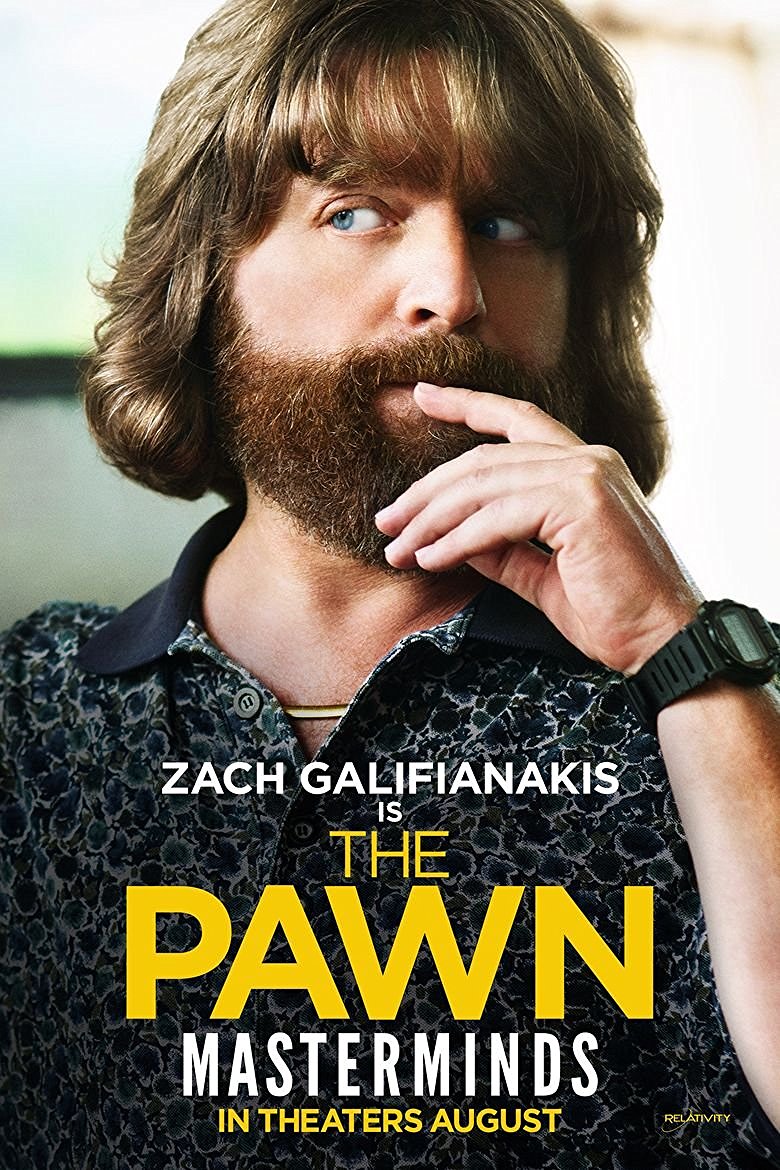
Masterminds was directed by Jared Hess (Napoleon Dynamite, Nacho Libre) who has disappeared after his last two movies tanked. Almost everyone would agree that Napoleon Dynamite is a brilliant comedy. It is inspired from start to finish, but it was a small independent film, and now he’s directing a much bigger budget film. The film stars Zack Galifianakis (The Hangover I, II and III), Owen Wilson (Night at the Museum I, II and III), Kirsten Wiig (Despicable Me I and II, Bridesmaids, Ghostbusters, SNL),  Jason Sudeikis (Horrible Bosses I and II, We're The Millers, SNL), Leslie Jones (Ghostbusters, SNL), Kate McKinnon (Ghostbusters, SNL) and many other well known crazy comic actors. All these stars are aggressive scene stealers and fall all over each other (literally) to act ridiculous. The main character is David Scott Ghantt (Galifianakis). Almost all the real life names are used, and the actual Ghantt consulted on the movie. Ghantt was one of the few employees of the armored truck company with keys to the vault. He is targeted to be the pawn of a massive robbery even though the movie portrays him as a helpless sap. Steve Chambers (Wilson) manipulates Kelly Campbell (Wiig) to manipulate Ghantt to do 95% of the work involved. Ghantt is not in love with his strange fiancé, Jandice (McKinnon) and falls for Kelly's halfhearted flirtations which is the main motivation for the robbery. Once the robbery has been successfully achieved (although with enormously stupid stunts and miscalculations before that happens), Ghantt is sent to Mexico with $20,000. Eventually Chambers decides to send a hit man (Sudeikis) who has a pathological pleasure in the execution of his duties.

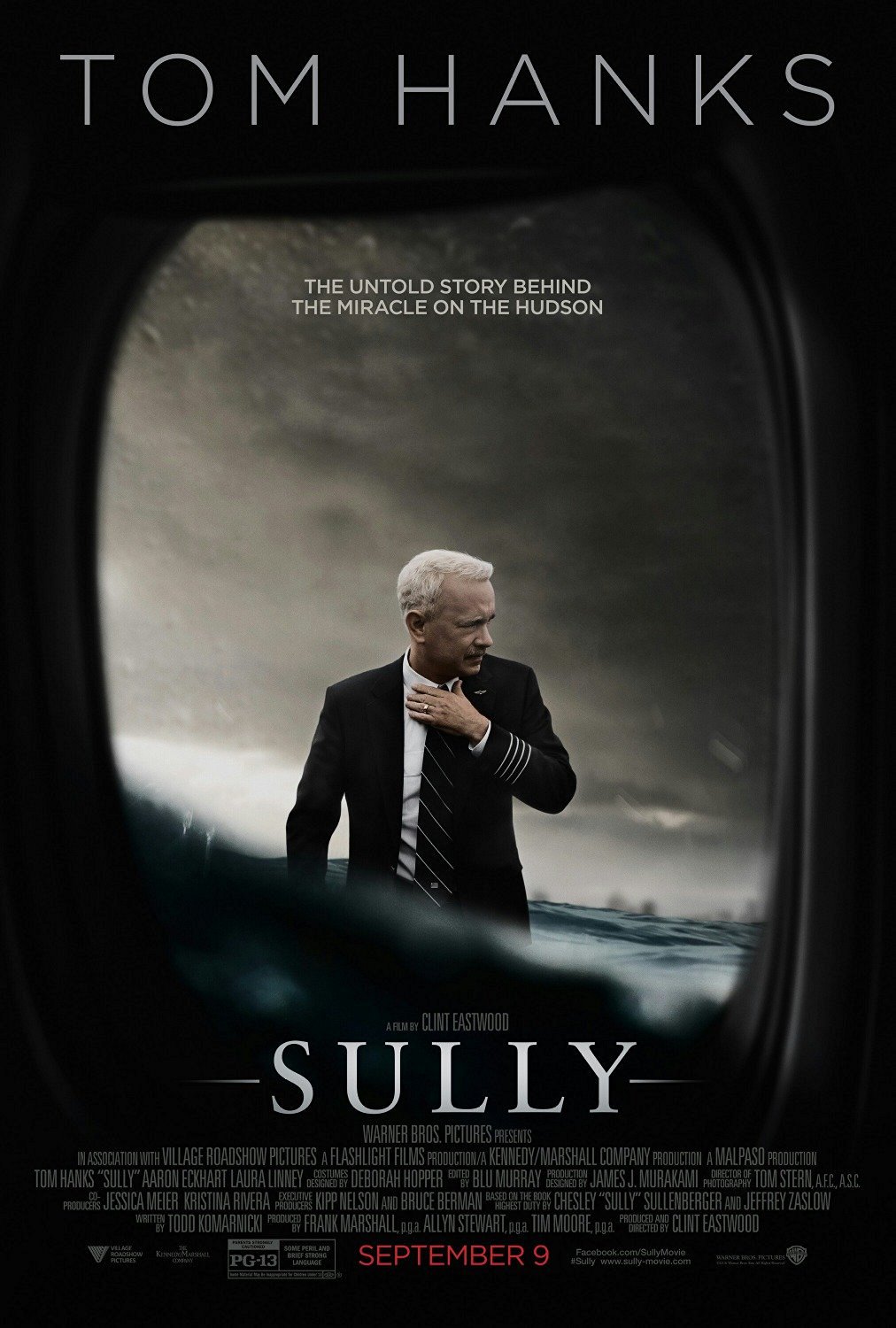
Clint Eastwood is 86 years old. He is also one of the best film directors working today. His latest film shows no signs of a man winding down his life, let alone his career. I obviously hinted that most other actors (or directors) his age have long ago died or checked into a nursing home. Eastwood looks lean and mean and still directs that way. Eastwood is interesting, as well, because he tends to pick projects that are outside the Hollywood studio corporate thinking. In other words, Eastwood is his own man and does pretty much anything he wants. His films as an actor and director have courted controversy way back to the days of Dirty Harry and A Fistful of Dollars. His films as a director and his personal political views are always full of contradictions that suggest a vibrant, searching mind. Sully is Eastwood’s latest film, starring Tom Hanks, and it is deceptively complex as well. On one level, Sully is a textbook depiction of a famous true life event.

On January 15, 2009, Captain Chesley “Sully” (Tom Hanks) Sullenberger piloted a US Airbus A320 from LaGuardia airport. Three minutes into the flight both engines are unprecedentedly hit by a flock of Canada geese (which is the subject of a pretty good joke later in the film) and created 208 seconds of hell for Sullenberger and the other 154 human beings on the US Airways flight. The film starts with a bang, with Sullenberger struggling to control the plane under the worst possible circumstances. This is part of the nightmares that hound the rigorously professional pilot. The fact is that the world is full of people who do difficult and dangerous jobs, and piloting a giant passenger airliner is certainly one of them. But the film also pays tribute to hundreds of other first responders who have to rush to life-and-death emergencies every day. Much of the film is given to second-guessing a top professional who has given a life time of exemplary service. It is fair to compare Sully to Flight starring Denzel Washington, except this time the Captain wasn’t doing cocaine. In this case, we have a serious and earnest man questioning himself despite knowing from years of experience that he has done the right thing. We see the crash played over and over again from different perspectives and with different outcomes, constantly forcing us to think how we would react in a crucial once in a lifetime crisis. Many of the depictions come from the nightmares of Sullenberger showing how thousands might have died if he had crashed into midtown Manhattan. It goes without saying that this has echoes of 9/11, and much of that is addressed head on. It comes back to the fact that Eastwood is his own man. He is one of the few people who could make such a rigorously square movie and pull it off. This is a movie about an honest man with a lifetime of proven integrity forced to defend himself in front of the whole world. This is also a big part of the movie. The world judges someone in an instant in this media-obsessed world.

The First Monday in May is a documentary that traverses many worlds. It caters to mass culture but also explores the inner sanctums of high art. What is art? This is one of the questions the movie asks. In this case, it examines the ignored stepchild of high art, which is fashion and costume design. The Costume Institute of the Metropolitan Museum of Art languished in the basement for many years, never truly respected. Something called the Met Gala has changed all that. It is one of the most important social events of the New York City social scene. The invitation list is ruthlessly trimmed every year to only include the most glamorous and relevant celebrities. It is also one of the biggest fundraising events that the museum has. This movie is full of celebrity faces and the inside world of the likes of Lady Gaga, Cher, Jennifer Lawrence, George Clooney, Bradley Cooper, Rihanna, Beyonce, Jessica Chastain, Kim and Kanye, Anne Hathaway, Katy Perry, the Olson twins, Helen Mirren, Larry David, Miley Cyrus, Selena Gomez, and on and on  and on and on. It is definitely a place to be seen, and only in the very finest fashion statements possible. But the Met Gala has a purpose, and that is to bring respect to a part of the culture that is not seen as true art. The superstar editor of Vogue, Anna Wintour, is the powerhouse behind the event. The other half of the equation is Andrew Bolton, who is the current head of the Metropolitan Museum of Art’s Costume Institute. The beginning of the movie covers the enormous success that Bolton had with the Savage Beauty exhibition in 2011. It was a tribute to the work of Alexander McQueen, who had hung himself in 2010. It was such a success that it was an albatross around Bolton’s neck as he tried to mount an exhibition that could possibly top it.

The First Monday in May spends much of its time following Bolton around the world as he prepares a massive new exhibit, China: Through The Looking Glass. It also follows Wintour as she presides over the massive job of both running Vogue and supervising the “Super Bowl” of the social season. Two superstar directors are also brought in, Baz Luhrmann (Moulin Rouge) to consult on the Gala, and Kar-Wai Wong (In The Mood For Love) to consult on the exhibit. There are probably more big names in this movie than any other movie you are likely to see, but in situations that would be considered behind the velvet rope.