Posted in: No Huddle Reviews by Archive Authors on June 15th, 2016
I previously reviewed Season 3 of Sisters in May of this year, so Sisters lovers, you can go back and review. In dealing with this season, I am going to focus on character, because as much as any show can, this show focuses on the differences between people who are very close with ties of family and love. Sisters is well known to be a women’s show, and I wouldn’t disagree, nor would I intimate that it is a bad thing to be labeled as such. So many shows have been focused on an assumed male dominance in society, but Sisters was a show that brought the power of women to the forefront. It was also one of the first shows to show a female audience had an important demographical significance. But I don’t want to make this an ideological dissertation. I am simply going to look at the purity and relevance of the show, even today. The show originally ran for six seasons from 1991 to 1996, but it still resonates as a special and unique show. It was far from perfect, but its positive qualities cannot be denied. It may have been little more than a nighttime soap opera with undertones of comic absurdity. It also was in the forefront of issues at the time including dealing with rape, AIDS, and parental rights.
The characters were the focus, and each character had a unique perspective. Alex (Swoozie Kurtz) is the eldest sister who is well off, self-centered, and superficial but constantly deals with adversity with unknown reserves of strength. Teddy (Sela Ward) is impulsive, free-spirited, and strong-willed. She often takes a combative and argumentative stance but is always there for anyone who needs her. Georgie (Patricia Kalember) is stable, centered, and family-oriented but has been given to bouts of severe depression. Frankie (Julianne Phillips) is a workaholic businesswoman and youngest sister who has hidden insecurities and is hypercritical of all her failures. The husbands were somewhat secondary figures, but Georgie’s husband, John (Garret M. Brown) was the most consistent presence over the life of the show. John was stable and reliable and loving, but his marriage did have ups and downs nonetheless. The second most consistent male presence on the show was Mitch (Ed Marinaro), who was originally married to Teddy and then switched over to Frankie. Mitch was best known for being a little pigheaded and emotionally stunted but ultimately striving to be the best person he could be.
Posted in: The Reel World by Archive Authors on June 6th, 2016
A Bigger Splash is a remake of a 1969 French film called La Piscine (The Swimming Pool) starring Alain Delon, Romy Schneider, and Jane Birkin. It was popular in its time and was challenging and mysterious but will not register in the memory of modern moviegoers. A Bigger Splash retains the same sense of adventurous storytelling and compelling ambivalence. A Bigger Splash stars Ralph Fiennes (Lord Voldemort from the Harry Potter series and the new “M” in James Bond movies Skyfall and Spectre), Tilda Swinton (a remarkable character actress who is different in every film), Dakota Johnson (Anastasia Steele in Fifty Shades of Greys) and Matthias Schoenaerts (Far From The Madding Crowd, The Danish Girl). That cast is dynamic by itself, and they are used to maximum effect. Ralph Fiennes, especially, is absolutely outstanding. He has never played a part like this before. His character could be described in many ways, because his moods shift radically.
Harry Hawkes (Fiennes) is a manic and effervescent record producer (The Rolling Stones and Mick and Keith are named-dropped). Marianne Lane (Swinton) is vacationing with her lover, Paul De Smedt (Schoenaerts). She is a famous rock star and is recovering from throat surgery. Paul treats her with love and devotion as she rests at a beautiful Mediterranean beach villa. Her ex-husband and former producer, Harry, descends on a plane and calls her without notice. He brings a formerly neglected and precocious daughter, Penelope Lanier (Johnson). Marianne seems very happy to see Harry, but Paul expects their peace and quiet will be totally unsettled. Harry is overwhelmingly charming and fun-loving, almost excessively so. His energy is almost off the charts at times. A true highlight is when Harry takes some boring bossa nova off the record player and changes to The Rolling Stones Emotional Rescue which Harry says he produced. Harry then starts to do a full-scale extended and uninhibited imitation of Mick Jagger’s dancing in the living room. It is an insane and electric sequence, but it is one of many that contribute to a long and slow build of indefinable tension.
Posted in: The Reel World by Archive Authors on May 30th, 2016
The Lobster could easily be in contention for one of the weirdest movies you’ll ever see. It’s certain to be the weirdest movie of this year. It isn’t weird in a pointless or flashy way. It isn’t weird just for the sake of being weird. It is low-key and tastefully filmed. It seems to fit comfortably in the tradition of absurdist or surrealistic comedy/drama. If you are familiar with the works of Kafka or Bunuel or Beckett or Pirandello or Ionesco or, more recently, Charlie Kaufman, you’ll understand the nature of absurdist cinema. Of course, Rhinoceros by Ionesco, Metamorphosis by Kafka, or Naked Lunch by William S. Burroughs are examples of people who transform into animals or insects. The Lobster does not attempt to portray these transformations very literally, although we do see animals representing people throughout the movie. The comedy is gentle, but insane and relentless in its constant twisting of logic. You won’t always laugh out loud, but your mouth is likely to be agape half the time. The film is built on a long collection of purposeful inanities drolly presented. It creates an alternate reality which is gentle in presenting its bizarreness and violence.
David (Colin Farrell) has been dumped by his wife, which forces him to go to a resort hotel with his brother, who is now a dog. David has 45 days to find a mate from the inhabitants of the hotel who are also without partners. If he doesn’t complete the task of finding a mate, he will be turned into the animal of his choice. In David’s case, that would be a lobster, which he chose for various logical reasons. In fact, David almost seems resigned to the fact that that will be his fate, and that’s fine with him. David’s reasoning, along with everyone else’s in the hotel, is faulty. The main difference is that David seems content and resigned to his fate.
Posted in: The Reel World by Archive Authors on May 27th, 2016
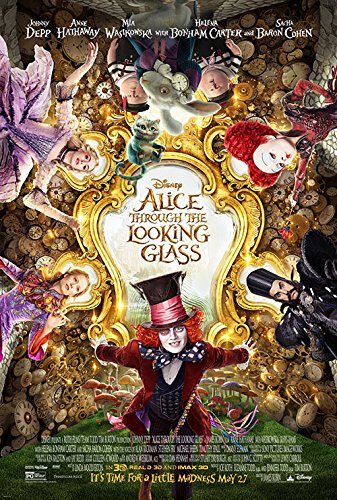
Alice Through The Looking Glass is the sequel to Alice In Wonderland. Alice In Wonderland is a proven blockbuster of all time. It is part of the billionaire club in total box office gross. It is number 23 on the all-time biggest films list with a total box office of $1,025,500,000. It is obvious then that a sequel would have to be made. Alice in Wonderland was a Tim Burton film, his biggest in fact. Needless to say, Lewis Carroll’s creation is a time-worn classic favorite, but neither movie is very faithful to the books. The fact that this isn’t a Tim Burton film is actually a big deal. There doesn’t seem to be anyone talking about why he didn’t include Burton. Burton is always very busy, and he is one of the producers of the film. The director this time is James Bobin. Nobody important. He directed some television and two Muppet movies. Sounds just like the kind of person the corporate heads at Disney can control to turn out product. I’m sure Tim Burton is someone who insists on total creative control, and that means Disney can’t have control. And Disney now is the biggest octopus in Hollywood with control of the Marvel universe and Star Wars. If a film makes over a billion dollars a sequel is required as soon as possible, but it has been six years since Alice In Wonderland came out. It sounds like the corporate hotshots got impatient to get some product out.
Alice Through The Looking Glass brings back all of the cast members from Alice In Wonderland, including the late Alan Rickman. Johnny Depp, Anne Hathaway, Helena Bonham Carter, and Mia Wasikowska are the main stars, with Sasha Baron Cohen joining the cast. The scriptwriter Linda Woolverton has returned as well. But I think the film lacks the guiding finesse of Tim Burton. Tim Burton is not the strongest director in the world, but he does have a unique vision. It is obvious this film tried to graft Burton’s vision onto the director Bobin’s work. The CGI effects are stunning, of course. That isn’t enough to make a satisfying film. A film should be created with a clear and pure artistic vision. This film seems all sound and fury, signifying nothing. Johnny Deep’s Mad Hatter is front and center. The Hatter has descended into a life-threatening depression because he can’t get over the death of his family. Alice (Wasikowska) tries to wrest control of time from a character literally called Time (Cohen) in an attempt to bring the Hatter’s family back alive. It is not in any way something that resembles the original stories by Lewis Carroll.
Posted in: Disc Reviews by Archive Authors on May 26th, 2016
There are many films that depict the ferocity and cataclysmic power of the vast ocean. It is a fearsome display that cannot be imagined in any way that compares to the reality of the experience. The Perfect Storm, Life of Pi, The Guardian, and Titanic are just a few examples of disasters at sea. It is the United States Coast Guard’s job to rescue distressed people under severe emergencies at sea. The Finest Hours is a depiction of a true-life sea rescue under the most challenging and horrifying conditions. It is known as the most successful small boat rescue ever recorded. When I say small boat, it is the rescue boat I’m talking about, but the ship they were singlehandedly sent to rescue was a gigantic T2 tanker Pendleton, which had split in half on open seas. Part of the problem was that another tanker had already split in half a few hundred miles away, and all resources had already been diverted in that direction. The second tanker was an afterthought that was tackled by a relatively inexperienced crew. To repeat the true-life situation, T2 tankers SS Mercer and SS Pendleton were split in half off the New England coast. The Pendleton had lost radio communication and was only identified by an alert citizen from the shore.
The Finest Hours is a Walt Disney film, and I think Walt would be proud. The film takes place on February 18, 1952, and all of the American values that were part of this country at the time are on display. It is a very old-fashioned film in both look and approach. The only difference is that modern-day technologies are fully utilized to show an amazing true-life display of courage that would have been impossible to do in 1952.
Posted in: Disc Reviews by Archive Authors on May 26th, 2016
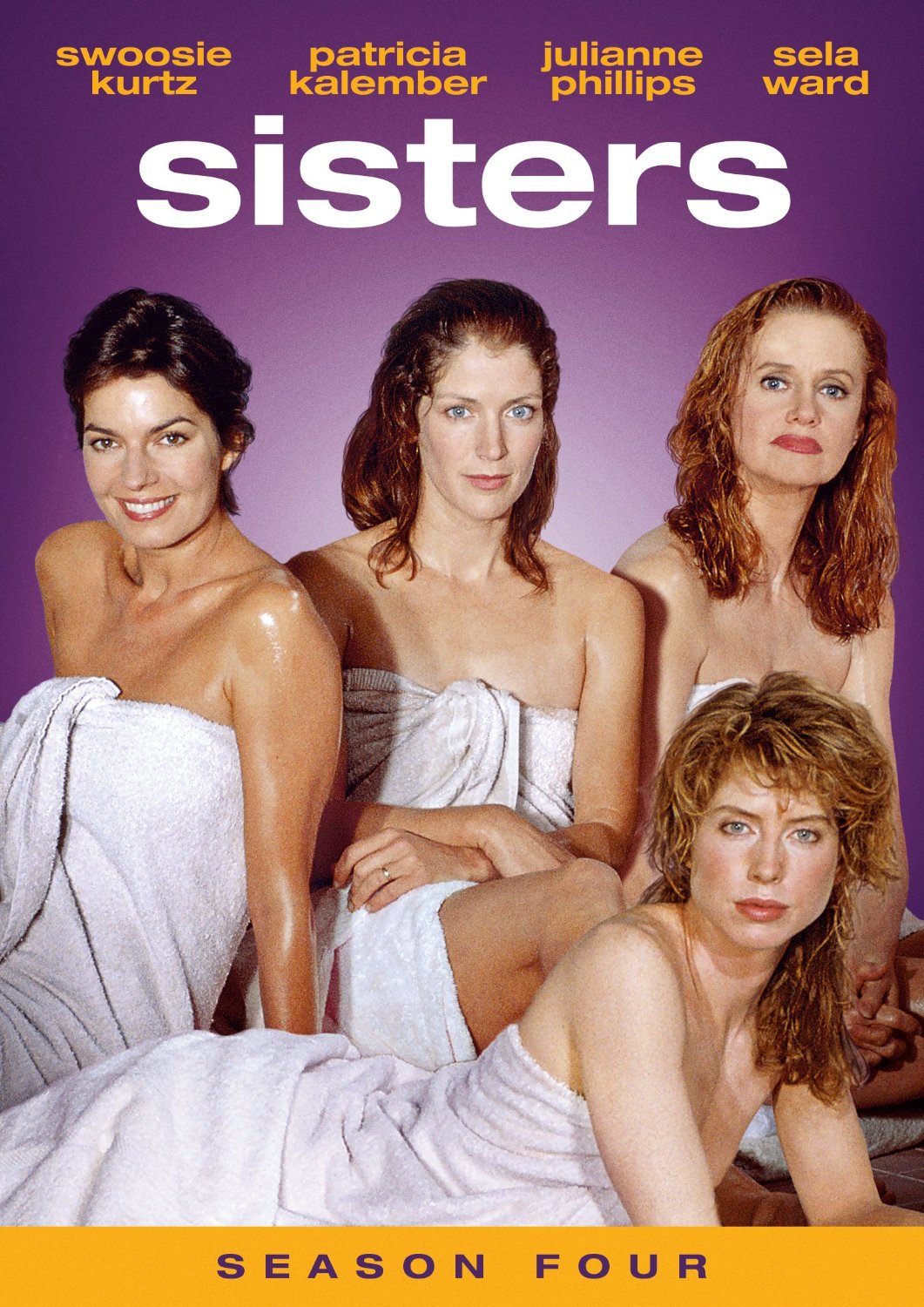
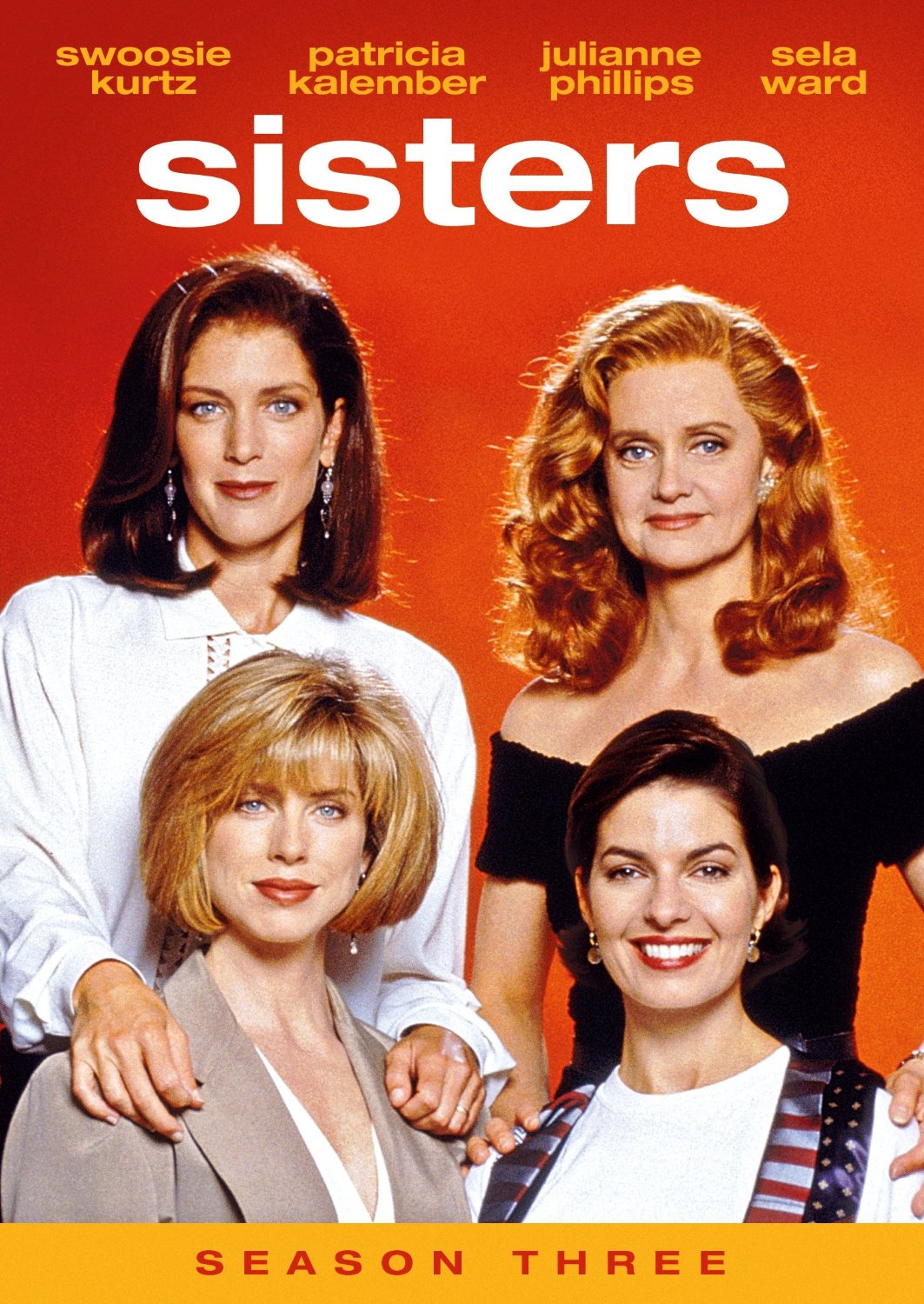
I have just binge-watched 34 ½ hours of television. That’s 47 episodes and two seasons’ worth. That’s a lot more episodes than most TV shows today. The binge was season three and season four of an acclaimed series from 1991 to 1996. It received eight Emmy nominations, and it is considered the first demographic hit because of its strong female viewership. It revels in all the glories of wonderful Winnetka, Illinois. The deceased father of the Reed sisters named them Alex, Teddy, Georgie, and Frankie. The father was obviously expecting boys and was severely disappointed. If you haven’t guessed yet, the show was Sisters.
Of course, no man should watch this show, because you might get an estrogen overdose. It is a maximum dose of over-the- top melodrama, humor full of corn and cheese, and lots of warm family love. Everything that can happen to four sisters is likely to happen to these sisters over six seasons. I am writing about season three this time. But check back in the very near future about more excitement from season four.
Posted in: Disc Reviews by Archive Authors on May 26th, 2016
Konstantinos Koutsolitas is a visual effects supervisor for American films like Guardians of the Galaxy and 300: The Rise of an Empire. You might have guessed by his name that he is Greek, so it is natural that his first directing effort would be Greek. The Winter is about a struggling writer who tries to hide his failures that he left behind in London from his noisy and intrusive family. Dimitri Gounaras (Vangelis Mourikis) moves back to the deserted ancestral home of his father, which has been abandoned for some time. There is madness in the house, or perhaps just in members of his family, and there are ghosts lurking, real or imagined.
The film meanders back and forth from a slacker comedy to a dreary existential nightmare. It references H.P. Lovecraft and The Shining most directly. It plays out with tenuous reality evolving into out-and-out animated dream images. The imagery is sometimes raw and sometimes playful. There are lots of making-of documentaries included which show how much care was given to the imagery.
Posted in: Disc Reviews by Archive Authors on May 19th, 2016
"Some of the best love stories start with a murder."
Deadpool may be one the most singular and unique characters in the history of comic book lore. His character has a very rabid fan base among the elite of Marvel comic nerddom, and they have been watching very carefully to see that he has been treated properly by the Hollywood people. He hasn’t been in the past, but more about that later. He may not be the biggest name in the Marvel universe, but he might be the most extreme. Just in case you live in a cave or under a rock, the Marvel universe is inexorably taking over the actual universe with films like The Avengers, Iron Man, Thor, Captain America, Ant-Man, Spider-Man, X-Men, Guardians of the Galaxy, The Hulk, Wolverine, Daredevil, and on and on. To get back to what happened to Deadpool in the past, we go to the movie X-Men Origins: Wolverine. This also gets into the 20th Century Fox vs. Disney battle over the rights of Marvel characters (which is actually only a small part of the picture, since Columbia owned Spider-Man for a long time, but let’s not go down that rabbit hole). Lots of hard-core comic book fans were incensed at how far 20th Century Fox was straying from the origins and substance of the source material with the X-Men movies, but especially in the case of Deadpool, who is sacred to many. I shouldn’t say sacred, but what can you do, since the character of Wade Wilson (A.K.A. Deadpool) is very profane and NSFW.

Posted in: The Reel World by Archive Authors on May 8th, 2016
Should you pursue your dreams at any cost? If your life seems bleak and hopeless, should you go for broke and bet everything on what you believe? These questions are even more relevant to people who are creative artists, because they will often be told that their dreams are hopeless and unattainable. The rewards can be great, but the odds of succeeding are easily a million to one. Sing Street takes place in 1985 and is about young kids writing songs and making music videos. The parents, Robert (Aiden Gillian, Petyr “Littlefinger” Baelish from Game of Thrones) and Penny (Maria Doyle Kennedy, Siobhan Sadler from Orphan Black) are struggling like almost everyone in Dublin in those days. They have to send their younger son, Cosmo (Ferdia Walsh-Peelo) to the free Catholic school run by the priests called Synge Street instead of the expensive fee-based school he had been going to. The older stoner brother, Brendan (Jack Reynor, Transformers: Age of Extinction) has already quit college, so that helps out with expenses as well. Before I go any further, I must say that this film strikes a brilliant balance early on between hard reality and dreams and fantasy. It is a funny, touching, and exhilarating entertainment above all else. It harkens back to all those movies over the years like Footloose and Fame that just want kids to have fun.
The 1980’s were when music videos and mainstream rock music really picked up steam. Hall and Oates, Duran Duran, and The Cure are all musical reference points in this movie. Cosmo is struggling to cope with problems at home and problems at the new school. His one bright spot is the beautiful teenage girl who lives across the street from the school. Raphina (Lucy Boynton) is sophisticated and stylish and says she’s leaving soon to be a model in London, but she lives in a home for orphaned girls. Cosmo gets her to believe that he’s in a band and that he’d like her to be in a video. It’s all a lie, but Cosmo soon gets to making it a reality. That’s why most kids want to become musicians, isn’t it? To get the girl.
Posted in: No Huddle Reviews by Archive Authors on April 28th, 2016
“To all things, there is a purpose. It was the time of judges. The Lord had punished the children of Israel for their sins against him. He had delivered them into the hands of the Philistines.”
The timeframe of Samson and Delilah is around 1075 B.C. Samson, like many characters in the Bible, is chosen by God but is far from perfect. The stories of many characters in the Bible are ones of sinners, and they must always try to overcome their flaws with God’s help and intervention. Samson was given the strength of 100 men and was chosen to deliver the Jewish people from their oppressors, the Philistines. Samson grows up knowing that he was chosen, but he is not ambitious and is somewhat vain and lustful. His general nature is good, and he is often pulled in different directions. Samson’s parents, Mara (Diana Rigg, The Game of Thrones) and Manoach (Paul Freeman, Raiders of the Lost Ark) want to protect their son from the war that is to come. A village girl, Noemi (Jane Arikan) represents those who want to spur Samson to fulfill his destiny. Samson is portrayed by two actors, Jonathan Rhys Meyers (The Tudors) as the young Samson and, in greater detail, Eric Thal (The Puppet Masters) as the older Samson.