Posted in: The Reel World by Archive Authors on August 20th, 2016
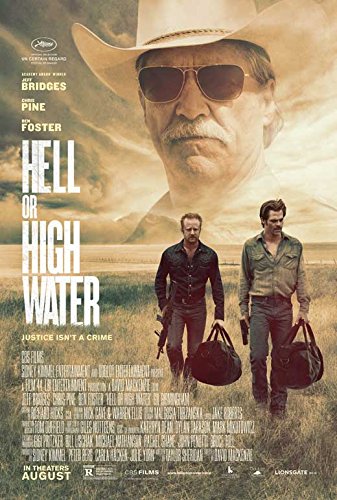
Taylor Sheridan is an actor. Let’s change that. Taylor Sheridan was an actor, and now he’s a writer. He’s a terrific writer. He’s the kind of writer that actors are going to be seeking out and critics are going to love. But he’s also made hard-boiled genre action pieces. He’s coming out of nowhere and getting everything right. He was a series regular on Sons of Anarchy and Veronica Mars, but he’s going to be in much greater demand as a screenwriter. His first film, Sicario, was one of the top ten films of last year, due in large part to his brilliant script (and also to everyone else involved with the movie, like director Dennis Villeneuve and cinematographer Roger Deakins). His new film as a writer is Hell or High Water. Both films demonstrate a clear of understanding of the hardcore action film but also show the deceptively sure undercurrents and perceptive intellectual understanding of the grand scheme that creates the violence in our society.
Two brothers in Texas have had a hard time in life. One, Tanner Howard (Ben Foster, Warcraft, The Finest Hours), has been away in jail for robbing banks. The other, Toby Howard (Chris Pine, The Finest Hours, Star Trek I, II and III) had been taking care of their dying mother. That task is done, because the mother has died, and the family farm is going to be foreclosed on in the coming months. Tanner is the bad brother, but they love each other, and they are both tired of life. Toby joins Tanner in robbing banks because it might be a way to save the banks. Anyone who has seen movies in the last 100 years knows that banks are often the villains in these kinds of movies. They are the giant vultures of society waiting for weakness to take from the poor and struggling. Movies like the Grapes of Wrath and Bonnie and Clyde are famous examples. Does that make bank robbers good people? No, they are criminals, but there is a clear dynamic of muddied morality. This is a cruel, brutal world, and time and time again the only people who survive are those who fight for their lives. Toby is doing it with a clear goal in his mind. He will save the farm for his two sons that he never sees. His ex-wife hates him, but he has nothing else in his life but his kids. He also believes there is oil on the land, and his sons will have the life he never had if he can find it. So they go on a bank-robbing spree.
Posted in: No Huddle Reviews by Archive Authors on August 11th, 2016
When I think of the Bible, I don’t think of northern Ontario. But there is an appetite for Christian-themed movies, and Canada is one of the most cost-effective places to produce movies. They have studios and sets up there, so it isn’t the worst idea in the world to go there to make any movie, even movies that take place in a very arid, hot, and dusty place. I have reviewed a group of Biblical films that Ted Turner produced for the TNT Network in the 1990’s. They were fairly well made, and, yes, they were made pretty close to the original locations. This new group of Biblical films is not quite up to those standards. I am reviewing The Apostle Peter: Redemption, but the same company has also produced Joseph and Mary, so we can probably expect more.Peter The Redemption follows the story of Peter (John Rhys-Davies, The Lord of the Rings I, II and III, Raiders of the Lost Ark) when he is lying in a Roman prison at the end of his life. He is still plagued by guilt for how he acted when Jesus was taken to the cross to die. The Roman Empire is ruled by the viscious and insane emperor Nero (Stephen Baldwin, The Usual Suspect, Bio-Dome). Two people, Susanna (Brittany Bristow) and Martinian (Steve Byers, The Man in the High Castle) find themselves shuttling back and forth from the court of Nero to the dudgeon of Peter. Susanna is a court servant of the empress Poppaea (Bobbie Phillips, Showgirls, Murder One). I should mention that Bobbie Phillips is playing probably the most complicated character in this film. At times she is sweet and understanding, but she also enables her husband’s numerous infidelities. Eventually she is downright despicable, which probably makes it OK that she was one of the fully nude showgirls from infamous Hollywood debacle, Showgirls. Martinian is a hardworking and honest Roman soldier who slowly falls in loves with Susanna and becomes a follower of Jesus.
I should stop now and say that this not a very good movie. I say that because most of us have a reasonable standard for what we can accept. We already know the standards have been lowered by making a Biblical movie in northern Canada. The acting is OK and mostly professional. I want to single out one person who stands out for chewing up the scenery. That would be Stephen Baldwin (one of the famous Baldwin brothers) who has been good in movies as long as he plays a mouth-breathing thug or near moronic goofball. In this case he plays a famously ruthless monster who killed somewhere between 100,000 and 1,500,000 people during his reign depending how you interpret history. That was a very healthy number back in those days. Baldwin is very central to this story and plays the part like a mafia mob boss. He looks like a bad hairdresser. The reason I say this is that it is a good example of how details of a production can accumulate and make a movie a disaster. The story also is somewhat unfocused and the production values marginal. So overall, I have to give this a low rating even though everyone involved probably had good intentions.
Posted in: The Reel World by Archive Authors on July 23rd, 2016
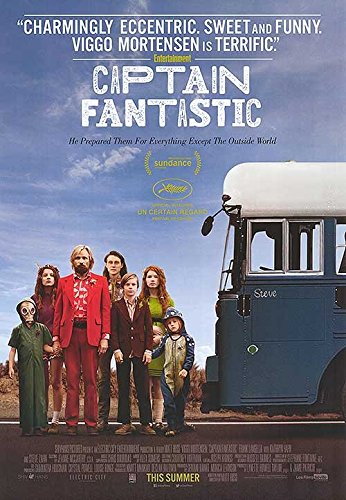
Captain Fantastic has nothing to do with Elton John. (It turns out that’s not entirely true, because director/writer/actor Matt Ross (Big Love, Silicon Valley) found out his mother played Captain Fantastic and the Brown Dirt Cowboy all the time, and it must have imbedded itself in his subconscious). The story in the movie starts in a very Lord of the Flies way, with camouflaged faces hidden amongst the leaves of the woods. They are children, and one of them leaps from the bush with a knife and cuts a deer’s neck. There are seven children and they all belong to Ben (Viggo Mortensen, Lord of the Rings). The oldest boy has killed the deer, and Ben baptizes him in blood and says he is now a man. This would lead one to think this is some kind of radical cult. Anything dangerous and deranged is soon dispelled. It is simply a father teaching his children survival skills. It is a father holding his family together and bonding with them and loving them and passing on knowledge. Ben’s form of home schooling is extremely rigorous and intellectual. This has been a lifestyle for a very long time. His wife has recently gotten very ill and is not with them anymore, living in the woods. Then she dies. Her father, Jack (Frank Langella, The Americans) hates Ben and says he will have Ben arrested if he comes to the funeral, but Jack’s wife, Abigail (Ann Dowd, The Leftovers, The Masters of Sex), hopes a compromise can be formed. Ben decides he won’t go to the funeral, but the children are furious and sad about this. Eventually Ben relents, and they take an old converted bus and hit the road.
The movie is absolutely beautiful. It is a celebration of both nature and a way of life that has almost disappeared. The family is like no family you are likely to know. This becomes especially apparent when they visit family members on the way. Harper (Kathryn Hahn, Transparent, Parks and Recreation), Dave (Steve Zahn, Treme, Modern Family) and their two boys are a typical American family, and they couldn’t be more different than Ben’s brood. In fact, Ben’s philosophies and methods might be considered controversial, so I won’t reveal much about them and let you discover for yourself. If you go see this film, you can decide if it’s a good family or not. Ben is mostly a very reasonable and civilized person, but it is not to say he compromises his principles in any way.
Posted in: The Reel World by Archive Authors on July 23rd, 2016
Café Society looks absolutely gorgeous. Every camera setup finds a new authentic location that suggests a time and place long ago. The lighting and cinematography by Vittorio Storaro (Last Tango in Paris, Reds, Apocalypse Now) are sumptuous and delicious. The story is novelistic like an F. Scott Fitzgerald magnum opus. Woody Allen has had a long and very productive career. He is definitely at a stage when he should have slowed down, but he doesn’t. Café Society is not Woody’s magnum opus, but it certainly feels like he is reaching for it. It has depth and complexity. It is funny at times but is generally filled with ache and regret. The film is crammed with story and beautiful moments. When one thread seems resolved, it moves on yet again to another. All of Allen’s themes drift through the conversations of the characters, but they seem to have less conviction than they ever had. There seems to be a consistent lack of solidity to these lives. It seems like things matter, but then you come to accept that they don’t. There are so many characters I can hardly begin to list them.
The main character is Bobby Dorfman (Jessie Eisenberg), and his family is central to the story. Bobby’s mother, Rose (Jeannie Berlin) tries to get him to go to Hollywood to work for Phil Stern (Steve Carell), her brother and a big-shot Hollywood agent. Another important thread to the story is that of Jessie’s brother, Ben (Corey Stoll), who is a gangster who eventually becomes the owner of a fancy night club. Café Society winds its way from New York to Hollywood and back again. The other central thread is the story of Vonnie (Kristen Stewart), who is a sweet and unpretentious girl who becomes an object of desire for more than one man. Stewart, by the way, has never been better. She radiates warmth and charisma, her smoky eyes and shy smile recalling famous Hollywood movie stars of the past. She does not play a movie star here, but a secretary without great ambitions.
Posted in: No Huddle Reviews by Archive Authors on July 18th, 2016
I have just reviewed The Bible Stories: Jacob in which I may have left people hanging, because I teased the end of the story. Of course that only applies to people who have never read the Bible. The Bible Stories: Joseph will give you some of those answers if you never got to the Good Book. Jacob indeed survives and thrives, so God was good on his word. Jacob had many sons, but in this film he is older and played by Martin Landau, not Matthew Modine. Jacob had 12 sons with two wives and two handmaids who were all involved with the births. Jacob (also known as Israel) entered into a covenant with God to create a new nation of plenty and prosperity.
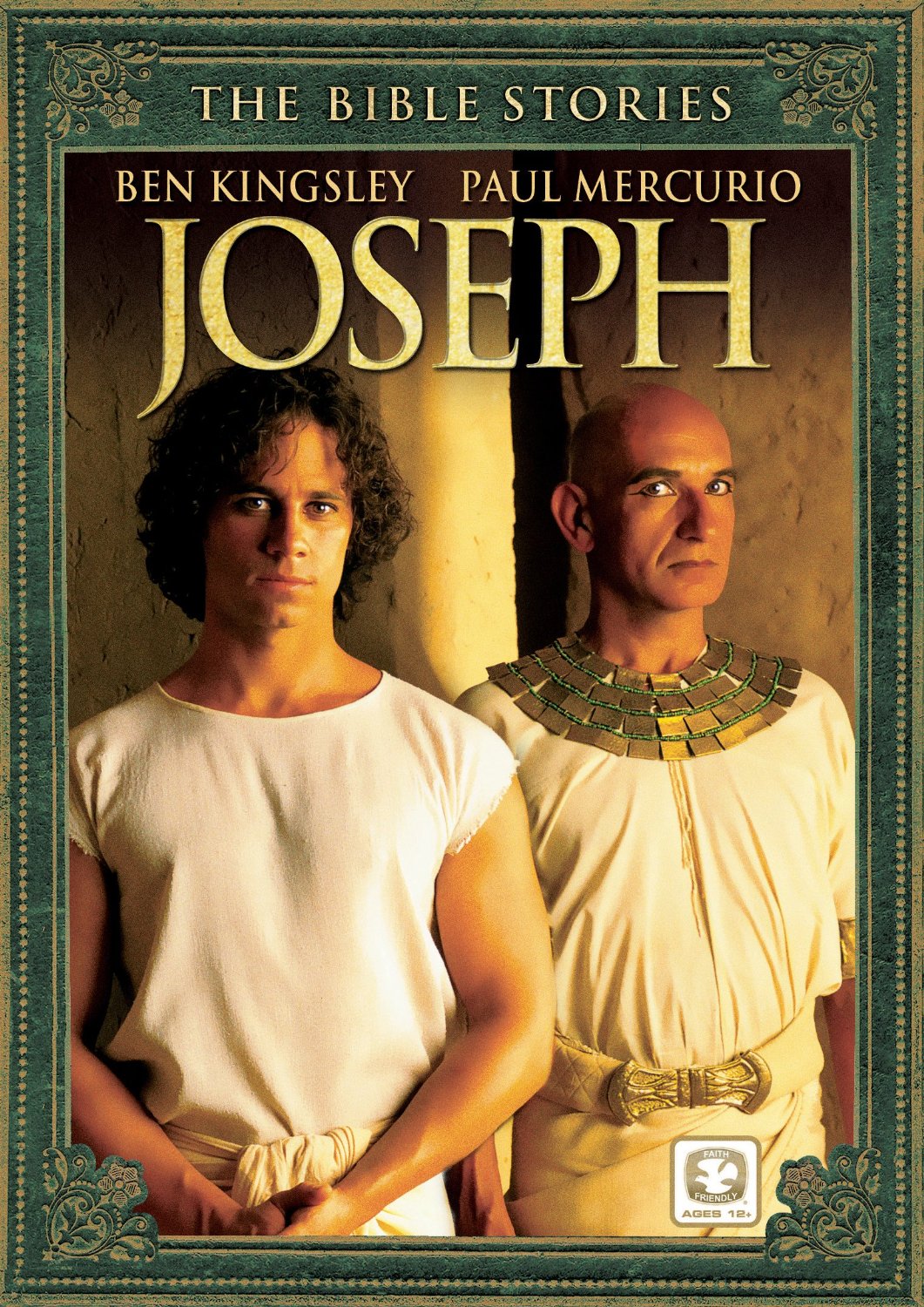
The Bible Stories: Joseph is the best of this series that I have reviewed. The story is very well told and extremely compelling, moving, and inspirational in real ways. The story starts in the middle by introducing Potiphar (Sir Ben Kingsley), the Pharaoh’s most trusted advisor, as he is looking over a potential new slave. The slave is Joseph (Paul Mercurio) who Potiphar buys in a fairly apathetic fashion, but this new slave becomes enormously profitable in short order. Everything that Joseph becomes involved with generates fantastic bounty and success. This is noticed first and foremost by Potiphar’s wife, Zuleika (Lesley Ann Warren) who gets Joseph more responsibilities, but what Zuleika really wants is more access to Joseph. When Joseph repeatedly refuses her advances, she accuses him of rape. By this time, Potiphar knows Joseph so well and values him so highly that he finds a way to avoid giving the death sentence that Zuleika demands. He sends Joseph to the prison, where his services become even more productive and beneficial. The story then weaves the earlier story of Joseph into the telling, the story of Joseph’s brother’s and their jealousy.
Posted in: No Huddle Reviews by Archive Authors on July 12th, 2016
I have previously reviewed movies from the Bible Stories collection including Samson and Delilah and David. I also reviewed Abraham, which was one of the earliest stories in the Bible but not as early as Noah or, of course, Adam and Eve. The Bible Stories: Jacob (or The Bible Collection: Jacob) follows up on the story of Abraham, since Jacob is his grandson. I have also just watched The Bible Stories: Joseph which I will review later, but I mention it because Joseph is Jacob’s son.
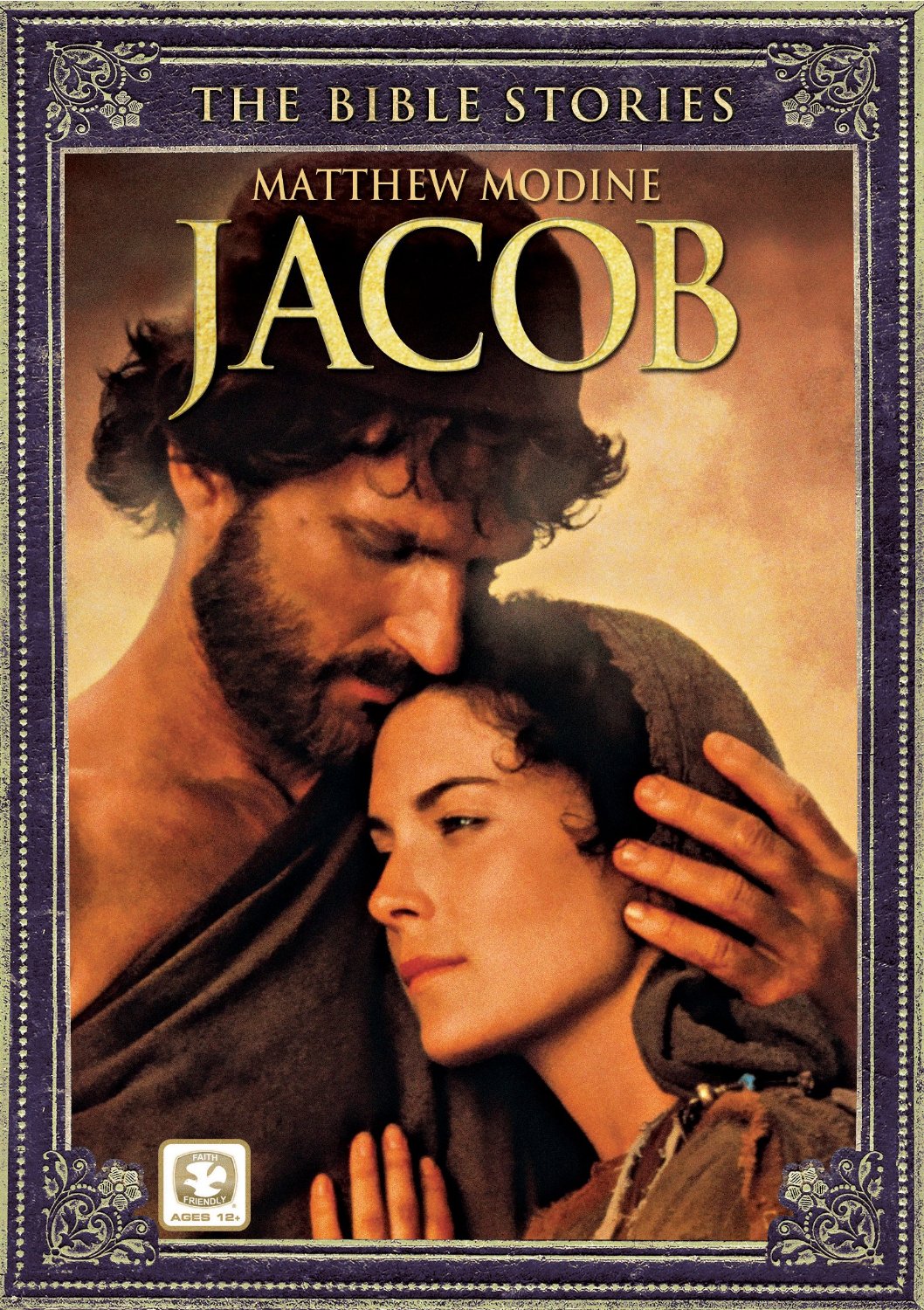
Isaac (Joss Ackland) had two sons who were very different, Esau (Sean Bean) and Jacob (Matthew Modine). Esau is the first born and seems a natural leader. Esau is a great hunter and fighter who is pursued by many women in the area. Jacob is a shepherd who is gentle and somewhat unsure of things. Jacob is favored his mother, Rebekah (the famous Greek actress Irene Pappas, The Guns of Navarone, Zorba the Greek). Esau is the natural choice of his father, Isaac. Rebekah says that she had a vision when she was pregnant that the elder will serve the younger. Jacob is uncertain and hesitant about many things but at times seems to covet the role of heir. Esau makes a deal to give his inheritance away for porridge that Jacob is making. Time passes and Isaac grows old and blind, and it is time to pass on leadership of the tribe. He is to give his blessing to Esau. Rebekah conspires to deceive Issac and have him give the blessing to Jacob. Jacob reluctantly agrees. The plan succeeds but infuriates Esau who vows to kill Jacob when Isaac dies. Rebekah persuades Jacob to take provisions and a dowry for marriage to the land of her brother, Laban (Giancarlo Giannini, Casino Royale, Hannibal). During his journey, Jacob is robbed by one his brother’s warriors. Jacob arrives in Harran penniless. Before he arrives, though, he has a vision in which God speaks to him and tells Jacob that Jacob will always be safe and prosperous. Laban welcomes his nephew but is disappointed that he has arrived empty-handed. Jacob has already been smitten by the younger daughter of Laban, Rachel (Lara Flynn Boyle, Twin Peaks, Red Rock West, Men in Black II). Laban proposes that Jacob be an indentured servant for seven years to earn Rachel. Jacob agrees. After the seven years are over, Laban ingeniously deceives Jacob by secretly consummating a marriage in the dark to the older daughter, Leah. Jacob is furious. He has brought great prosperity to Laban’s house, and Laban proposes that Jacob can have both his daughters, but he must work another seven years to earn Rachel yet again.
Posted in: The Reel World by Archive Authors on July 11th, 2016
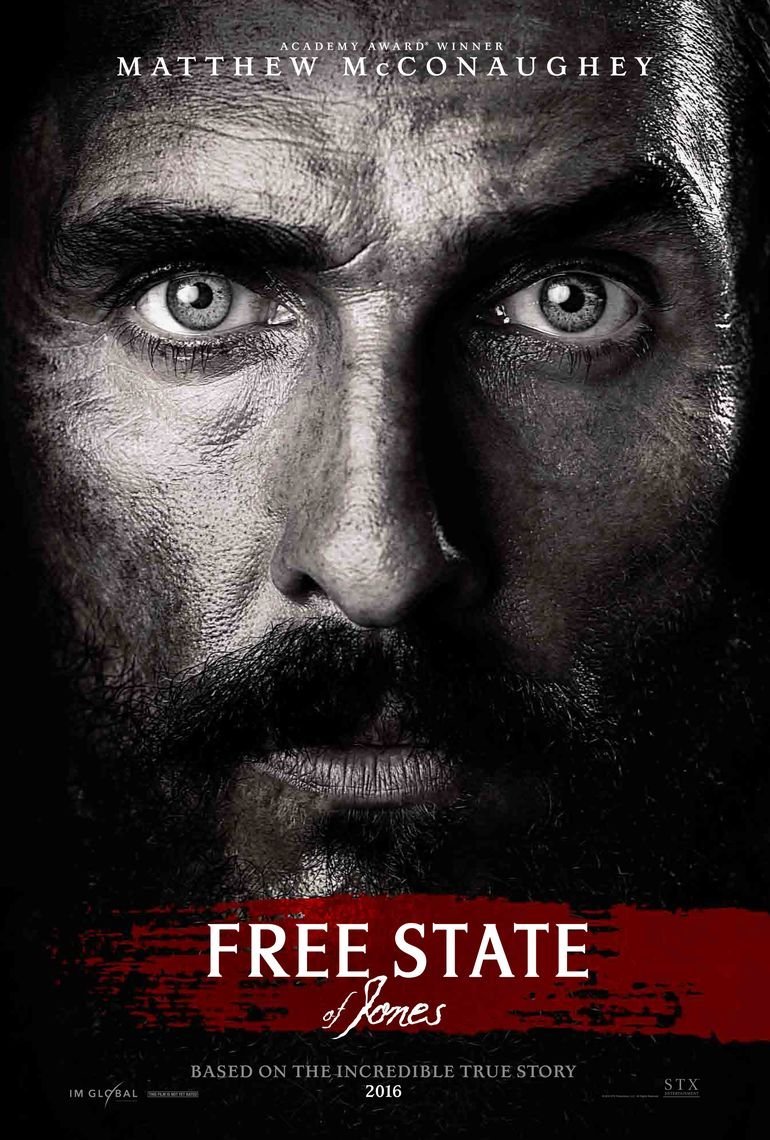
I am somewhat angry right now. I am increasingly stunned at what is being praised in this culture. We are trapped in an era that is supposed to be enlightened but is ladled on top with layers of rotting organic material (which is a euphemism for a rather rude word). There seem to be no interest in certain things that are very important and increasingly relevant to us. There are subtleties and complexities about ourselves that we don’t understand and that is why the world is still enmeshed in violence and madness. I am talking about people who should know better. People who pontificate and tell us what we are supposed to think. Critics. Pundits. Prognosticators. I am one and I try to stand apart and formulate my own thoughts but it is difficult when you feel alone sometimes. The Free State of Jones has been called boring. It is not. It is one of the best historical films I have seen for a while. It is the best film of the year so far. 12 Years a Slave was a magnificent film and I would say The Free State of Jones is better. All sorts of modern entertainment is paraded before us, and it is all somewhat repetitive and pointless. It is mindless entertainment. I will try not to get too specific because I don’t really object to mindless entertainment. What I do object to is that when all this mindless, jaded and scattered opinion then turns its back on anything academic and well researched. Many historical films are somewhat staid and a little boring. The Free State of Jones is not one of those films. It is a war film and a film of constant conflict and battle that takes many forms. It is complex and unexpected in its story telling. It is brilliantly acted by everyone from the smallest part to the man who plays Newton Knight (Matthew McConaughy).
Knight is the central character of the film. His story is true and part of forgotten history. Forgotten history is all that history that they deliberately don’t tell us. It is an amazing, vital and important story. Knight was a fearsome fighter and a man of unbreakable will and keen intellect. He was also a poor farmer in Mississippi during the Civil War. His journey was to organize a rebellion against the confederacy. Years before Communism he created a pocket in the South that existed to band all the poor and disenfranchised together to share in a common goal. The story takes remarkable turns and I was honestly surprised how much depth, complexity and relevance was brought to the story. I will not even try to summarize it. If you like history, I cannot recommend the film highly enough. If history bores you, then you are likely a boring person. True history is full of guideposts to learn from. Our world is in turmoil because too many leaders have not learned the lessons of history.
Posted in: No Huddle Reviews by Archive Authors on July 9th, 2016
In 1983, The Dresser was nominated for five Oscars for Best Actor for Tom Courtney and Albert Finney as well as Best Adapted Screenplay, Best Director, and Best Picture. In 1980, it was also nominated for Best Play in both Britain’s West End and on Broadway in New York. It is a showpiece for the best actors in the world. It revolves around two characters: a great Shakespearean actor who is struggling with the fear of oncoming mortality and his close personal servant who tries to hold his master together. It is a brilliant vehicle for any great actor. Since it first came to prominence, there have been talks about a new attempt to reinterpret the material. It has now been done for the Starz and BBC channels and is out on video. And as brilliant as the first two actors were, I was surprise how much richer this new version has made the material seem.
Sir Anthony Hopkins is Sir. Sir Ian McKellan is Norman. The person who especially impressed me was Hopkins. He has spent a number of years coasting in various roles, but in this case all sorts of reserves of shading and character emerge. He is absolutely stunning, in maybe one of the best performances of his life. That being said, McKellan shines as well in a part that is much showier in many respects.
Posted in: No Huddle Reviews by Archive Authors on July 7th, 2016
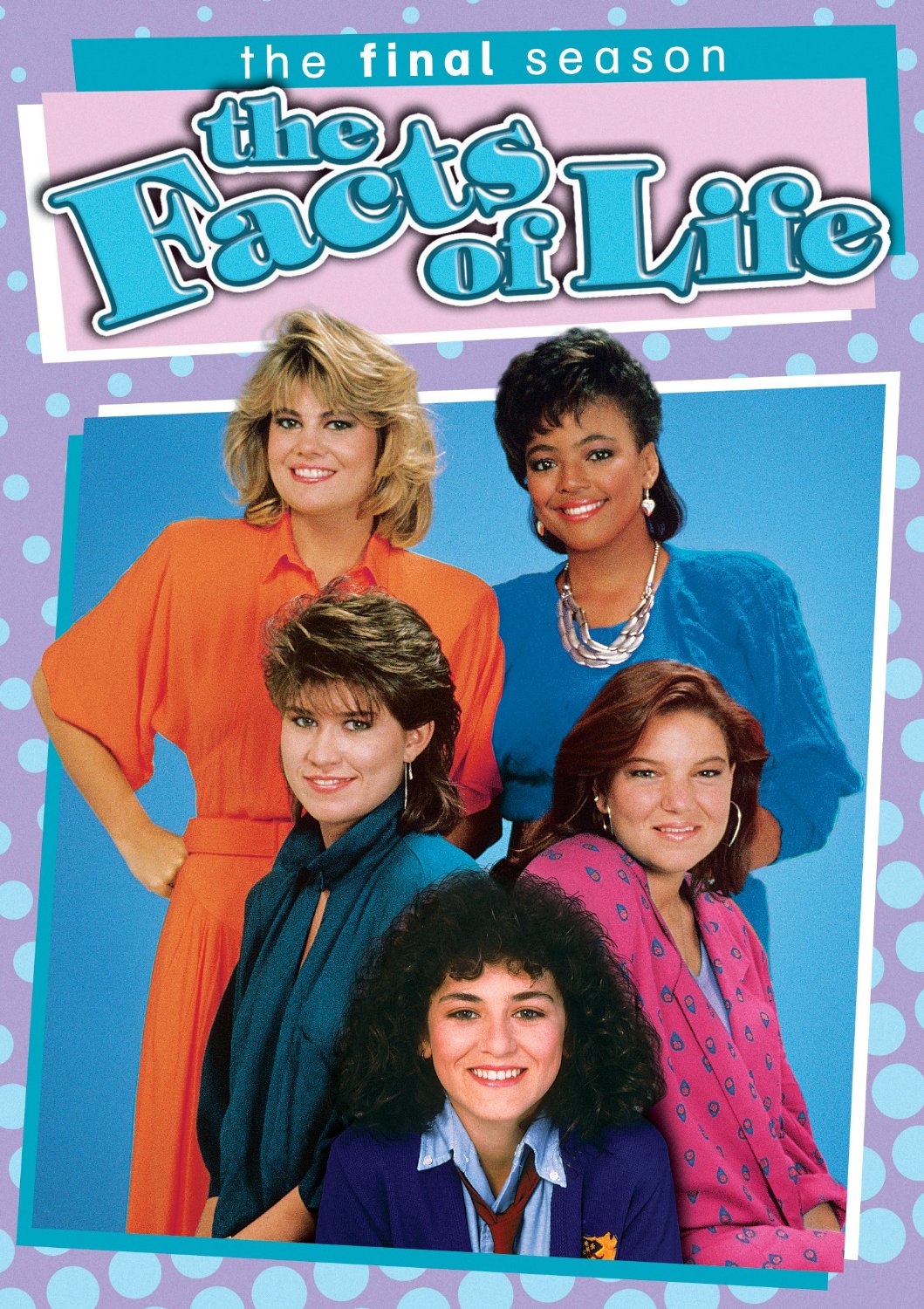
I wrote about The Facts Of Life before (Season 7 in October 2015 and Season 8 in February of 2016). The final season (Season 9) made it one of the longest-running sitcoms up to that time. It was never a number one show, but was consistently popular over the years. There is no George Clooney (Clooney had moved on to Rosanne) in the final season, or Charlotte Rae (who was just tired and left in Season 7). The focus in Season 9 was on the four girls, Blair Warner (Lisa Welchel), Jo Polniaczek (Nancy Mckeon), Natalie Green (Mindy Cohen), and Dorothy ‘Tootie’ Ramsay (Kim Fields), because they were growing up and becoming adults. This led to the whole season being a lead-up to potential spinoffs. They did introduce a new young character, Pippa Mckenna (Sherri Austin), who was a feisty part exchange student/part runaway from Australia. Cloris Leachman returned after joining in Season 8 as the replacement house mother. Mackenzie Austin also returned as the precocious Andy Moffett. But the focus on the girls was about them growing up and moving on. Engagements, marriages, premarital sex, adult jobs, college, and moving to new locations were part of the main storylines of the final season. The Facts of Life was originally a spinoff of the popular Different Strokes. The whole focus of the final season was could The Facts of Life be spun off? One episode had Natalie moving to New York to live with roommates including Richard Greco and David Spade. In another episode, Blair purchases their old school, Eastland, which included student cast members Juliette Lewis, Mayim Bialik, and Seth Green
All the girls were essentially adults and all had serious boyfriends. We finally got to see the mysterious Snake (Robert Romanus from Fast Times at Ridgemont High), the fabled boyfriend of Natalie, which was the focus of the parental warning episode. Jo developed a relationship with a somewhat unstable former pianist, Rick Bonner (Scott Bryce), which bounced in uncomfortable directions. Blair seemed to finally find a match in someone who was her complete opposite, Casey Clark (Paul Provenza), but eventually her somewhat inflexible nature seemed to work against her. ‘Tootie’ seemed to have a secure sense of herself and pursued her dreams of marriage and career in a clear-headed manner.
Posted in: The Reel World by Archive Authors on July 6th, 2016
If a film is highly original, that is usually a good thing. If it completely defies logic, that might be good or bad, depending. If it defies common sense and intelligence, that would be a bad thing. Swiss Army Man does all of those things. It is tantalizing with possibilities that are explored, but frustrating in execution. It is rude and unpleasant, and not in a good way. Some people will respond to its ridiculous rudeness in a positive way, like the way that most children laugh when someone farts. That is not the real problem with this movie. The real problem is a lack of inherent logic to much of what occurs. One could say that it is a result of the obvious insanity of the main character of the movie, Hank (Paul Dano). I would suggest that the filmmakers might not have fully understood what they were trying to convey. I think they were caught up in the execution and got lost along the way. The main themes of the movie are alienation, loneliness, and insanity, but our framework for judging these characters is so skewed as to make it impossible to interpret what is actually happening. Some parts are clearly psychotic delusions, but other parts just seem silly tangents by the filmmakers that seem stylistically playful for no effect whatsoever. I can say I like some of the more bizarre moments from time to time, but the effect of the film as a whole is repulsive.
I don’t disagree with the point that films like these should be encouraged, because we are at a point in modern culture that we are being smothered under tons of pablum. Swiss Army Man stands out because it is reactionary to what is going on in the modern culture. It is gross, chaotic, and strange. I welcome things that are offbeat. But in this case, I was turned off. Some of it is genuinely funny in a real way as well as being bizarre, but much of the movie drifts off into confusion. I doubt I am going to ruin anything by revealing the plot, but if I did, it wouldn’t make any sense. It starts with Hank getting ready to hang himself in the mouth of a cave on a deserted beach. Just before he kicks the bucket, he sees another human being washed up on the beach. It is Manny the corpse (Daniel Radcliff of Harry Potter fame). Manny becomes someone with whom Hank develops a very complex relationship. Often Manny demonstrates numerous useful talents, mostly revolving around his flatulence. Slowly Manny starts to show signs of life and even intelligence. Then we are not sure what is happening. Hank is also obsessed with a woman he saw on a bus once, Sarah (Mary Elizabeth Winstead). And are we actually on a deserted island, or just down the hill from Sarah’s house?