Posts by Brent Lorentson

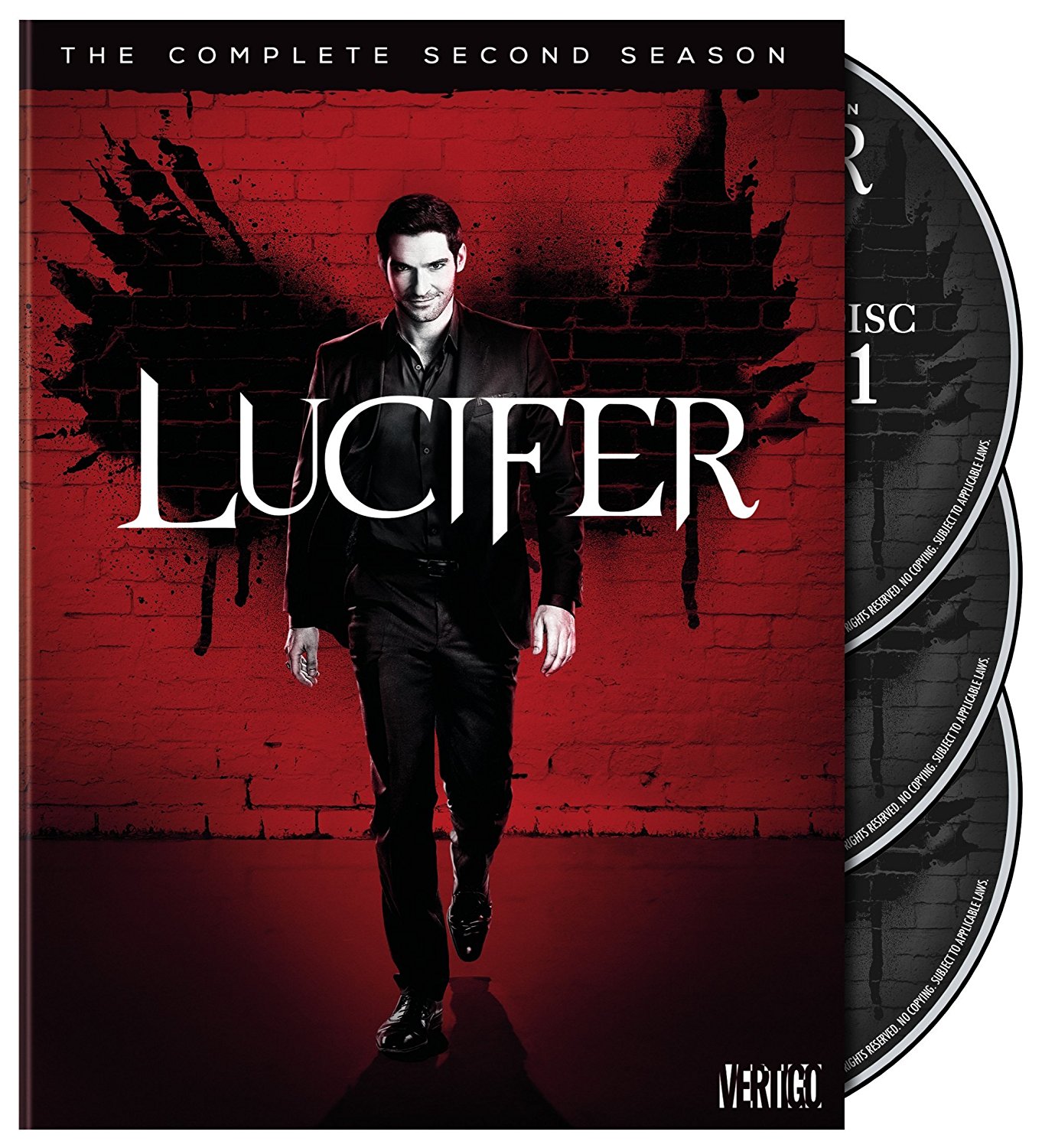
It seems there is no end in sight for comic book properties being bought and turned into movies or television series. Lucifer is one of the newer properties getting the television treatment, and personally this was a title I was looking forward to. With Tom Kapinos (Californication and Dawson’s Creek) at the helm, this seemed like it would be a good fit, though one thing did nag at me. When you have a show called Lucifer and it is about the devil taking a vacation on Earth, is broadcast television really the proper outlet? As a fan of Californication I was excited to see what Kapinos would do with the material and for the most part the show doesn’t disappoint. (Though it would seem with season 2, Kapinos has stepped away from the show to some degree.) Now with the second season hitting DVD shelves, I’m happy to say that show has found its voice and is a helluva lot of fun.

Lucifer Morningstar (Tom Ellis) is indeed the devil and has been vacationing on Earth for a few years with no real desire to go back home. He’s a ladies’ man who runs LUX, one of the hottest nightclubs in Los Angeles. But along with living the playboy lifestyle, he’s also a consultant with the LAPD. Lucifer’s brother, Amenadiel (D.B. Woodside) is an angel that has been tasked by God to not only look after Lucifer but to bring him back to his rightful place in Hell. The rivalry between the two brothers has simmered down this season and that’s actually nice because the pair actually have a good chemistry together.  But then again nothing can unite two people feuding more than a mutual enemy, and for these guys their enemy is their mother. Turns out their mother is the Goddess of all Creation and takes the form of Charlotte Richards (Tricia Helfer), a corrupt defense attorney. Naturally, drama and chaos ensue.

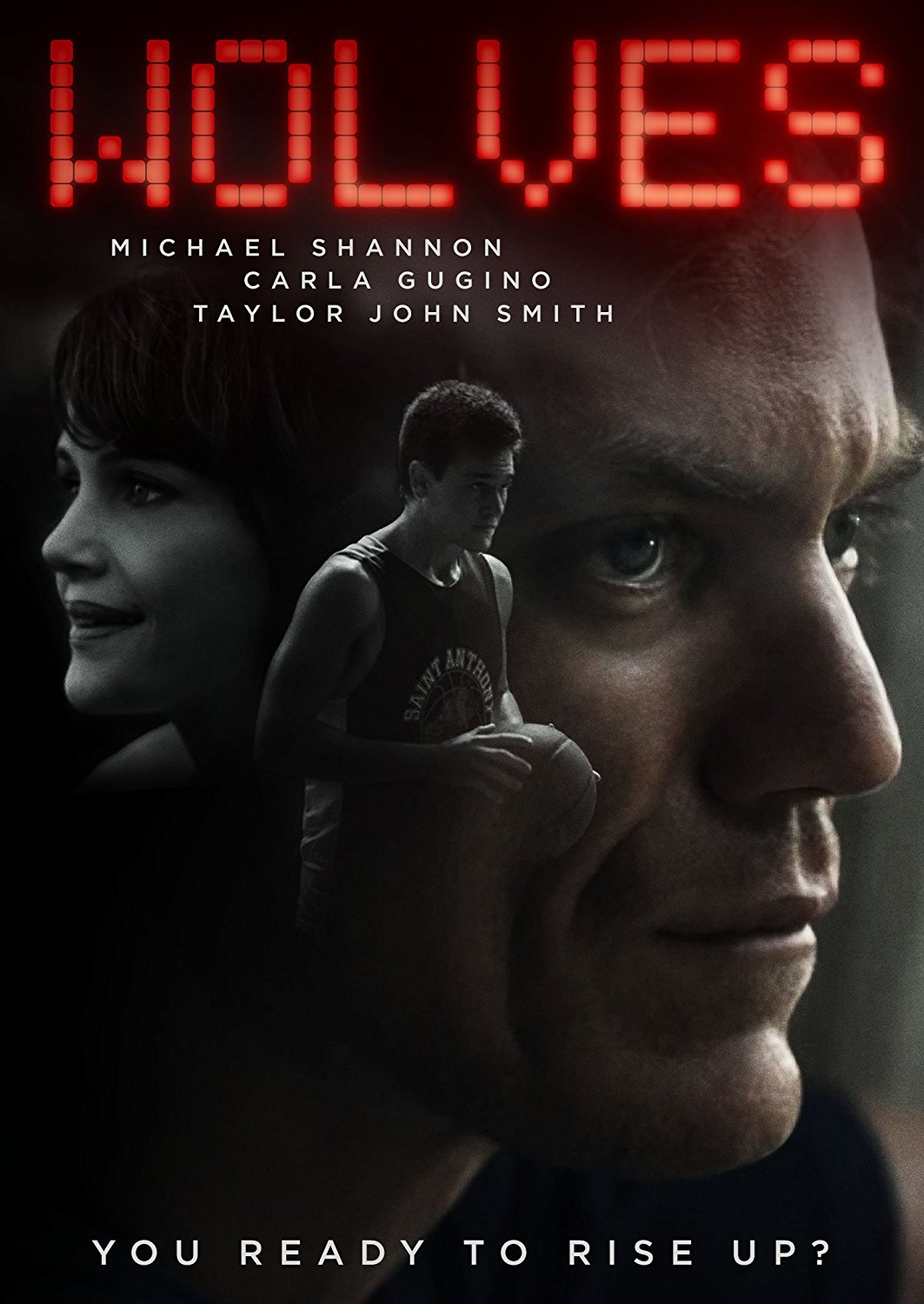
I used to be a basketball fan back in the '90s when Michael Jordan was a God on the court and you had Larry Johnson as “Grandmama” before Madea was ever a thing. Every year, some sort of inspirational sports story seems to come out. And for the most part it seems, whether it's basketball or another sport, it’s generally the same story. But every once in a while one of the films will break the mold and give us something special. Don’t get to excited: I’m not saying Wolves is one of those films, but it is at least better than most of the other films of its ilk. I can still watch an NBA game and enjoy it, but it’s just not the same for me. I bring this up because, honestly, I was worried my lack of passion for the game could influence my thoughts. But as any good sports film should do, the story manages to transcend the sport and deliver engaging drama off the court. Unfortunately, there is a bit more drama than this film can handle.

Anthony (Taylor John Smith) goes to private school in Manhattan and is the star player on the school’s basketball team. As their season is winding down and the playoffs are in sight, he is being scouted by Cornell University, where Anthony has dreams of attending. Even as a standout, his coaches and family have concerns that he lacks the aggression it takes to be the next level standout he has the potential to be.

“Of course I have issues; that’s my father.” 

When I walked out of the theater in 2014 after seeing Guardians of the Galaxy, I knew I had just seen something special, and knowing a sequel was already guaranteed had me excited to see what was next for this band of misfits.  Since the release in 2014 the film hasn’t just become my favorite Marvel film; it is one of my favorite films, period.  So as photos and trailers began to trickle out, I began to wonder if Guardians of the Galaxy Vol. 2 could actually hold up to the first.  For many the first film was a surprise hit that no one saw coming, something so toe-tapping fun between the soundtrack and action scenes, but most importantly it was the chemistry of the Guardians that had won over the audiences.

A few minutes of watching the news lately will reflect an ongoing division in race, but the one divide that seems to be more prevalent is the one between blue- and white-collar Americans. The Purge franchise has tapped into this and the exploitation of the classes being ramped up to a high degree. But personally I feel that’s a franchise that still is missing a rawness that never quite allows you to feel that it is real; it’s like a dark fairytale of what may come in the distant future. Union Furnace, instead, takes a more grounded approach to the upper class taking advantage of those in need and presents what could be a terrifying reality going on in small town America. While I appreciate the sense of realism,I have to admit I wish it wasn’t so gun-shy and afraid to take us into this dark hole of humanity. How dark does it go? It all depends if you’re willing to play along.

Cody (Mike Dwyer) is a down-on-his-luck car thief who has debts all around but simply has no way of paying them off. It’s bad to the point he knows a beatdown — if not a bullet — is in his near future. When Cody crosses paths with a slick southern gentleman (Seth Hammond), he is offered a way out and even the chance to make more money: all he has to do is agree to show up at a certain location. When Cody does arrive, he’s taken to a room full of other strangers where they are asked to play along in an all-or-nothing game. Each round, the money they win will increase, but if they lose they take home nothing.

Following the success of The Conjuring, it was no surprise that sequels would follow, but I have to admit seeing an Annabelle film was a bit unexpected. While The Conjuring was based on true events (as true as one may or may not wish to believe in the paranormal), Annabelle was mostly a work of fiction. I’ll admit I’m a bit of the fan of the Warrens and have read plenty about their investigations, and I certainly feel their life is ripe for the Hollywood treatment along with the hundreds of case files they developed over the years.  While the first Annabelle did well at the box office, it took a beating by critics, but those involved at the studio see that there is still money to be made as they continue to expand the franchise.  With spinoffs in the works, a film about the Nun entity as well as a film about The Crooked Man, and with a Conjuring 3 in the works, a lot is riding on the success of Annabelle: Creation.

The film appropriately opens with the creation of the Annabelle doll; we see that it is the first of its kind, handcrafted by Samuel Mullins (Anthony LaPaglia).  Samuel is a good husband and a good father; we get to watch him playing a game with his daughter, one that will be familiar to those who saw the previous film. Sadly, a tragic accident occurs and she is killed.

It’s difficult to be original and innovative when it comes to tackling a haunted house film. Ghost stories have been around for ages and told just about every way you can imagine, so what do you do to give the audience something they have never seen before? After coming back from directing Pete’s Dragon, writer/ director David Lowry a delivers a small intimate film that manages to take the haunted house story and makes it something unique from all the rest. Though when I say unique, and when I say innovative this may not be a positive for some. The film begins by introducing us to a couple played by Casey Affleck and Rooney Mara; their characters are simply credited as C & M.  Early on we see them interrupted from their sleep after hearing a crash on the piano, the pair investigate the noise but of course find nothing. The film does a great job at pulling us in early on by creating a creepy unsettling atmosphere.  From the start what helps set the tone is its boxy 1.33:1 aspect ratio, this is something that may seem distracting but it’s a crucial storytelling device that is used so effectively here, I have no doubt we’ll see more of this down the road.

It’s when C (Affleck) dies in a car accident that the story begins to take shape.  We watch from a distance as M (Mara) goes to the morgue to identify her husband. The scene doesn’t cut away as we watch her go through the emotions of nervousness, shock and grief. As the sheet is pulled back over to cover C, the camera continues to hold…and hold…and hold till suddenly we see C sit up with the sheet still covering him. We watch him roam the corridors of the hospital with the sheet covering his body, two black slits for his eyes, though all we see is black.  C is faced with the white corridor of light which we are to believe is to be heaven or whatever you’d like it to be, but C doesn’t enter it and instead continues to walk. His walk takes him back home; a home that we will eventually see is where he seems to wish to remain.

An action film with a running time of 89 minutes should mean that it’s going to be lean on the story and keep things moving at a fast pace.  S.W.A.T: Under Siege delivers just that, but unfortunately in the process delivers something that we’ve seen many times before.  The film is being branded as a sequel (by name only) to S.W.A.T (2003), the film with Colin Farrell which was an adaptation from the TV series from the 70’s.  S.W.A.T: Under Siege has nothing to do with any of the previous incarnations, and has relocated from sunny California to Seattle Washington. But is the film worth checking out?  Well I’m not a fan of sequels that go straight to DVD, but this film does dangle a wild card for the audience that convinced me to give this a shot, Michael Jai White (Spawn, Black Dynamite).

It’s the 4th of July and the S.W.A.T unit is ready to have a short and easy day so they can get home and enjoy the holiday with their families.  But what kind of an action movie would it be if the holiday didn’t take a turn for the worse with terrorists and a lot of gun fire?  The team gets a call about a big shipment that’s being made at a shipping yard, with the DEA taking lead they head to the warehouse that turns out to be something more dangerous than it seems. After an intense firefight, instead of finding drugs or guns in a shipping container, they find a man The Scorpion (Jai White).

Ever since Lionsgate acquired the Vestron Video collection and has been re-releasing these remastered titles, I have to say I’ve been in nostalgia heaven.  I remember seeing these VHS boxes in the horror section at my nearby video store and renting many of these to get my weekly horror fix. Waxwork was always a box cover I always appreciated, but one of the most memorable was Warlock, because in the sea of black VHS boxes with gory box art, Warlock was this white box with the mysterious Julian Sands and this menacing shadow in red. I even remember seeing the trailer attached to my VHS copy of The Monster Squad, and I always dug the trailer for the film, but it took forever for me to finally get to see the film. Now jumping ahead two decades later, I’m getting to review this trilogy. I have to say this is the title from the Vestron series I’ve been the most looking forward to.

Director Steve Miner (Friday the 13th 2 & 3) helms the first film in the series  from a script by David Twohy, who would go on to create the little sci-fi gem Pitch Black.  Despite how the cover art may look for this film, and even though it is about a warlock (Julian Sands) hoping to eradicate all existence, the film really doesn’t play out as a horror film.  In many ways the film feels more so like The Terminator or Highlander. Not that this is a bad thing, but the trailers are a bit misleading.

John Wick was an action film that seemed to sneak up on everyone. Sure, it had a great trailer, but I don’t think anyone expected to walk away from just how great it actually was. What made it so effective weren’t just the well-choreographed fights and the stylish look of the film, but it was the characters that while over the top, were also ones the audience could relate to. Atomic Blonde is helmed by half the directing team that gave us the first John Wick, and from what the trailers first teased us with, I came into it with hopes we’d get something special.  While on the surface I can’t say that this film surpasses John Wick, what it does is stand alone for being a culturally and socially important film as it delivers not just the ultimate badass female in an action film, but I believe the first that belongs in the LBGT community.  It’s a big deal what this character represents, but how does the rest of the film fare throughout the fistfights and shootouts?

It’s the fall of 1989 in Berlin when we are introduced to Lorraine Broughton (Charlize Theron). She’s bruised and battered as she enjoys an ice bath.  The Cold War is coming to a close as the Berlin Wall is closer than ever to coming down.  She is an agent with MI:6 and is being debriefed by her superior, Eric Gray (Toby Jones) and a member of the CIA, played by John Goodman.  The debriefing is a combative one. Obviously we can tell she’s been through hell, and she begins to tell her story from the previous days as she attempted to complete her mission.

When Christopher Nolan has a new release, it’s an event to get excited about. There are few directors I can say this about. Sure, there are directors that I like, but still there are few who manage to capture what makes going to the cinema an experience. Dunkirk is his latest cinematic opus. Despite it being his shortest film, with the exception of The Following; this is the first time he has shot a film entirely in IMAX form. What’s the big deal? Well, aside from the picture being twice the size of the regular format, what he does with these cameras is deliver a beautifully striking picture of destruction and survival.  There’s a lot of buzz going around with this film, and already it’s being looked at as the first real Oscar contender of the year.  Is the film worth the hype?  Is it really Nolan’s best picture?

Christopher Nolan is widely known for his Dark Knight Trilogy, as well as Inception and Interstellar.  While I’m a fan of these films, it’s his film Memento that has always stuck with me as his most inspired work, a film that plays with a timeline to serve the overall experience of the film.  Dunkirk is yet another film that unfolds over the course of three timelines to tell its story of heroism and survival. While I appreciate Nolan’s attempt to be innovative with this storytelling technique, it’s definitely something I feel harms the overall film, because as the film unfolds we jump from one scene in the afternoon to another scene at night, and the sequences are edited to in such a way that tonally they coincide, but visually it’s jarring.  But still that’s not the greatest fault I find in the film; instead, it’s that I feel we are missing the entire first act of the film.