Posts by Brent Lorentson

“Cauliflower.” 

When Steven Soderbergh announced his retirement from directing films in 2013, it was an announcement that was followed by shock and disappointment for fans and others in the industry.  He was a workhorse who managed to deliver a variety of art house titles (The Girlfriend Experience) and then numerous successful blockbusters (Ocean’s 11, 12 & 13) that seemed to always allow him to make films by his own rules. Soderbergh makes his return to film with a heist film that uses West Virginia as its backdrop and NASCAR as its target. It’s familiar subject matter, but it’s the characters that separate this film from the rest of the pack.

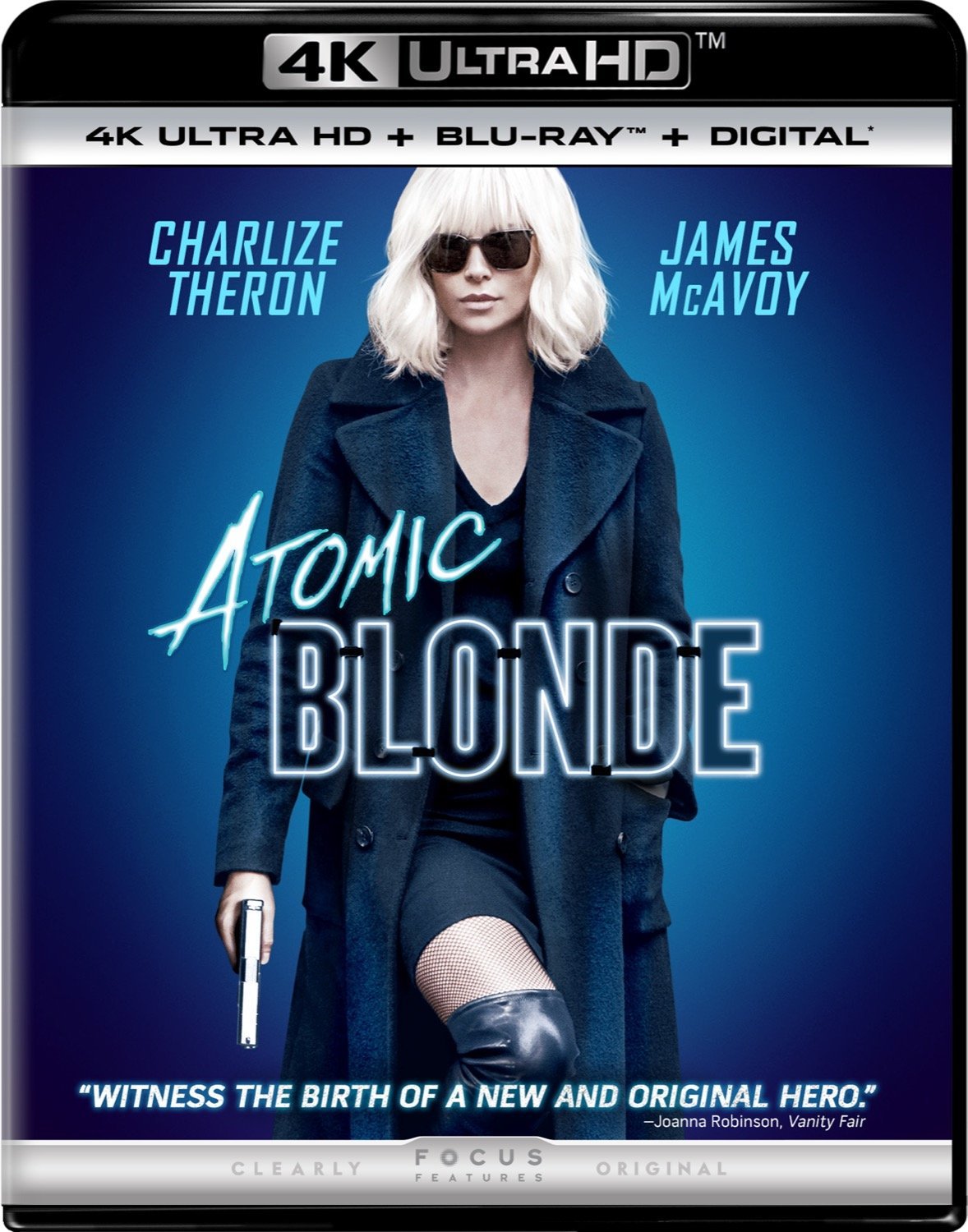
John Wick was an action film that seemed to sneak up on everyone. Sure, it had a great trailer, but I don’t think anyone expected just how great it actually was. What made it so effective weren’t just the well-choreographed fights and the stylish look of the film, but it was the characters who while over the top, were also ones the audience could relate to. Atomic Blonde is helmed by half the directing team that gave us the first John Wick, and from what the trailers first teased us with, I came into it with hopes we’d get something special.  While on the surface I can’t say that this film surpasses John Wick, what it does is stand alone for being a culturally and socially important film as it delivers not just the ultimate badass female in an action film, but I believe the first that belongs in the LBGT community.  It’s a big deal what this character represents, but how does the rest of the film fare throughout the fistfights and shootouts?

It’s the fall of 1989 in Berlin when we are introduced to Lorraine Broughton (Charlize Theron). She’s bruised and battered as she enjoys an ice bath.  The Cold War is coming to a close as the Berlin Wall is closer than ever to coming down.  She is an agent with MI:6 and is being debriefed by her superior, Eric Gray (Toby Jones), and a member of the CIA, played by John Goodman.  The debriefing is a combative one. Obviously we can tell she’s been through hell, and she begins to tell her story from the previous days as she attempted to complete her mission.

When it comes to Victorian era serial killers, Jack the Ripper is pretty much a household name. Whether you know much about the terror he caused in White Chapel, all these years later you still know the name and what he did. With The Limehouse Golem, the filmmakers create a more sinister serial killer and deliver a Hammer-esque murder mystery.  I’m all for a dark murder mystery, and when a film is channeling other successful films like Seven and From Hell, you’d imagine that you’d be witnessing a terrifying gory spectacle. The result, however, left me frustrated, as the film seems to pull from other films but never quite presents an engaging story to go along with the quirky mix of characters.

When we meet Lizzie (Olivia Cooke), she is being accused of murdering her husband. As the film progresses, we get to see how her story unfolds and her aspirations to be a theatrical star.  Her tale intertwines with the rise of a brutal serial killer who has been terrifying the city of London who has been dubbed The Golem. To attempt to squash rising fears and solve the murders, Inspector Kildare (Bill Nighy) is assigned the case. Kildare is paired with a young detective George Flood (Daniel Mays), who attempts to update Kildare with all the evidence of the case. It seems Flood and his fellow officers were inept in gathering evidence, as Kildare seems to uncover some fairly obvious clues of his own. What ties Lizzie to Kildare is the possibility that she is being charged with murdering Kildare’s prime suspect. All the evidence seems to point to Lizzie’s dead husband, so he goes to her to hear her story. Of course things are more complicated than they originally seem.

Ever since Birdman was released, it seems many filmmakers have been attempting to pull off the continuous take and outdo all the others.  It was impressive when we all saw it the first time, but since then everything just seems like a bad knockoff.  The newest film to follow this trend is Bushwick.  While the camera work in the film does allow for an immersive experience, honestly it felt like I was in a first-person shooter video game, which was cool, but it seemed like the camera work was a distraction from the story.  This is a frustrating film. On the technical side there is a lot to appreciate, but the moment you start looking at the story, the film seems to simply fall apart.

The film opens up with Lucy (Brittany Snow) coming home from college to visit her family.  What she comes home to is a city at war.  Immediately my question is this: in a time of people being so connected through their cell phones and various social media outlets, how is it Lucy seems to be unaware of what is going on?  We’re supposed to believe this battle just broke out, but so many of the people battling on the streets seem to be all too organized for this to have just occurred.  Why are the streets not packed with cars full of people trying to leave the city? For a while all we see are people shooting at anyone and everyone as Lucy does her best to avoid gunfire and try to reach her grandmother’s house.

As a director, George Clooney just hasn’t managed to reproduce the magic he had in his first effort Confessions of a Dangerous Mind.  I keep hoping that we’ll get another film at that caliber, but it seems over and over it is a swing and a miss.  Now he has his new film Suburbicon, and this could be his most divisive work to date.  There is nothing wrong with adding a social commentary to a film, but sometimes adding it can be a distraction from the film.  In the case of Suburbicon, it is a tale of two films that couldn’t be any more different from each other.  First we have a tale of a family attempting to keep their lives together following a home invasion, and then we have the story of a black family moving into a white neighborhood and the backlash that follows.

The original script was penned by Joel and Ethan Coen. This was initially what got me curious about the film, since I’ve been a fan of their work for some time.  With George Clooney’s history with the Coens in the past, I figured he would be a good fit to bring their work to the screen.  The first red flag should have been that George Clooney and his long-time writing partner Grant Heslov have writing credits to the film.  This isn’t a jab at their work, but writing-wise they wouldn’t be the go-to pair I’d pick to rewrite the Coens, since they have their own very distinct style.  As expected, you can see the jarring difference in style and tone in the film.

When I first heard about The Snowman, this was a movie that got me excited, that we could possibly have a great thriller to look forward to. At one point Martin Scorsese was attached to direct the film. He eventually backed out of the project, though he is still credited as an executive producer for the film. To step in for the directing duties, Tomas Alfredson got the call, and it’s his involvement that initially got me excited. Back in 2008 Alfredson directed Let the Right One In, which I consider to be one of the greatest horror films to be released in decades. It’s hard for some directors to meet expectations when their first films are such a success. Many may not have heard of Let the Right One In because of it being a foreign film that had a small release in the states, but the remake Let Me In (which he didn’t direct) sure made an impact. Then with the lackluster success of Tinker, Tailor, Soldier, Spy I was beginning to wonder if possibly he had only just gotten lucky and that he perhaps wasn’t the success I’d imagine he would be. Now it isn’t fair to place the success or failure of a film upon one person when there are so many others involved in the making of a film, but when it fails, someone has to be blamed.  I come out saying this because The Snowman isn’t just a bad film; it is an epic disaster like nothing I have seen before.

The film was adapted from a bestselling mystery novel by Jo Nesbo. Personally I’ve never read the book, but from what I understand the book was to be the start of a series, which would mean the film was possibly meant to be a springboard for a franchise.  There is no possibility for this to happen, though thankfully we’re in a time where Hollywood has enjoyed rebooting films that don’t need the reboot treatment. Perhaps this story can be given a second chance to succeed. Alfredson has come out and publically announced that perhaps 15% of the script was never even shot due to time and budget constraints.  Is he simply trying to cover his own backside? That is most likely the case, but as I watched this jumbled mess I found myself believing him, because there are simply points in the story that make no sense, and you have to imagine the script, while adapting the book had to already cut away story points.

When it comes to hearing the name Loch Ness, just about everyone will think about the giant lake where “Nessie” the mythical monster inhabits. Whether you are a believer or not thousands converge to the Scottish Highlands location in hopes to be one of the lucky ones to catch a peak of the elusive beast. But the Loch Ness I am talking about is a beast of a whole other ilk. Thought the TV series does take place in a small tourist town that thrives on the legend that haunts the cold water, the series instead is about a serial killer that has been unleashed upon the town and given its residents something more to fear other than a giant monster that roams the lake.

A group of friends decide that they want to play a hoax by creating a fake plesiosaur carcass and placing it along the lake shore.  While using fake innards that salvaged from the local slaughter house it is later discovered a human heart managed to somehow get mixed up in the remains.  With a human heart found and no body, this of course sends an uneasy shock-wave through the town. Detective Annie Redford (Laura Fraser) is tasked with leading her first murder investigation in a town that rarely has experienced its share of violence and it doesn’t take long before a body is found (not one that belongs to the missing heart) and it is understood that they have a serial killer on their hands. Investigator Lauren Quigley (Siobhan Finneran) is called in to take lead of the investigation where she also brings criminal psychologist Blake Albrighton (Don Gilet) to assist.

It’s hard to believe it was way back in 1992 when Buffy the Vampire Slayer was first introduced to audiences. It was a title I had missed in the theaters, but I remember picking it up at our local mom-and-pop video store.  With the title being what it was, to go in expecting more than a cheesy horror comedy filled with stakes, fangs, and witty dialog would be on the viewer.  I wasn’t a huge fan of the film when I first saw it. I sort of felt like it was a film that was trying to be Fright Night, but let’s face it, there are very few vampire films that are as cool.  It’s been over two decades since I last visited the film; how does it hold up?  Well, to be honest, it’s grown on me quite a bit.

Kristy Swanson plays Buffy, the vampire slayer that attempts to juggle a social life as a cheerleader while discovering that she is also a vampire slayer.  She’s one of the girls who would fit in perfectly with the girls from Clueless and is the typical 90’s pretty girl, but this film works well at developing an arc that turns her into a badass by the time the closing credits roll.  While she’s more concerned with impressing her friends and trying to stay fashion-forward, we see that vampires are killing off fellow classmates and many others around town.

For the most part it seems the summer blockbusters tend to be sequels, superhero films, or CGI bonanzas that are simply eye candy to get us to the dark auditoriums to escape the heat. It’s rare that something comes along that is so clever and fresh as Baby Driver.  Personally I’ve been a fan of Edgar Wright from the moment I first saw Shaun of the Dead; he was a writer and director who I felt knew how to make films fun. When he was set to direct his dream project Ant-Man, I was excited to see him finally get a chance to do a giant tent-pole studio film, but weeks before filming was set to begin, he got pulled away and replaced. When it was announced he was working on an action-comedy named Baby Driver, well, I was excited, but the film’s title had me scared, fears of him doing something along the lines of Baby’s Day Out ran through my mind, but then as the cast started to assemble, I couldn’t help but get excited. Kevin Spacey, Jamie Foxx, Jon Hamm, Jon Bernthal … and these were simply the co-stars.  Then when the first trailer dropped, this became the title of the year for me to keep an eye on. While this might not be the kind of film that gets nominated for best picture, for me this had potential to simply be an experience, the kind of fun you hope to have when you see a movie.

So who is Baby? Ansel Elgort heads this film with the title name, and for most he’s a guy who’s come out of nowhere. He’s been in The Divergent series and The Fault in our Stars, but Baby Driver is his first step into the spotlight, and as I mentioned above, he is surrounded by some major talent. The casting of Baby is key. Picking a relative unknown works, because the audience doesn’t know what to expect from this guy, and this works in the film as he’s surrounded by some dangerous heavy hitters in the crime world and they see this kid with his I-pod, they can’t help but wonder what’s up with this guy. Our intro to Baby Driver, wastes no time at showing us just what Baby can do as he is the getaway driver for a bank heist in Atlanta.

When a film like The Survivalist comes along, you somewhat have an idea what to expect when it’s being marketed as a “dystopian thriller”. I like these kinds of films, but for the most part many of them are just not very good and are just a carbon copy of previous dystopian films that came out prior to it.  For years I’ d say the Mad Max series was the gold standard on what you should want to be. Waterworld at least attempted to be Mad Max, but rather than a desert wasteland it went the direction of the high seas. The Survivalist goes another direction; rather than a barren wasteland, or the ocean, it instead plunges deep into the wilderness after society has apparently collapsed and food has become scarce.

The film follows a man who is simply credited as the survivor (Martin McCann), and we see him dragging a body away and dumping it into a shallow grave. It’s an ominous opening that has the viewer questioning if this is a guy we should root for or not, but following this scene we go on to see his daily routine in his boring isolated life. Apparently one of his routines is having a little private time with himself, and the camera has no problem shying away from this. This goes up there as one of the most pointless gratuitous nude scenes I’ve seen at least since the opening sequence of Nocturnal Animals. I’m far from a prude, but I’m a believer that everything we see on the screen should have some meaning to drive the story forward. This instead just became a distraction.