1080p

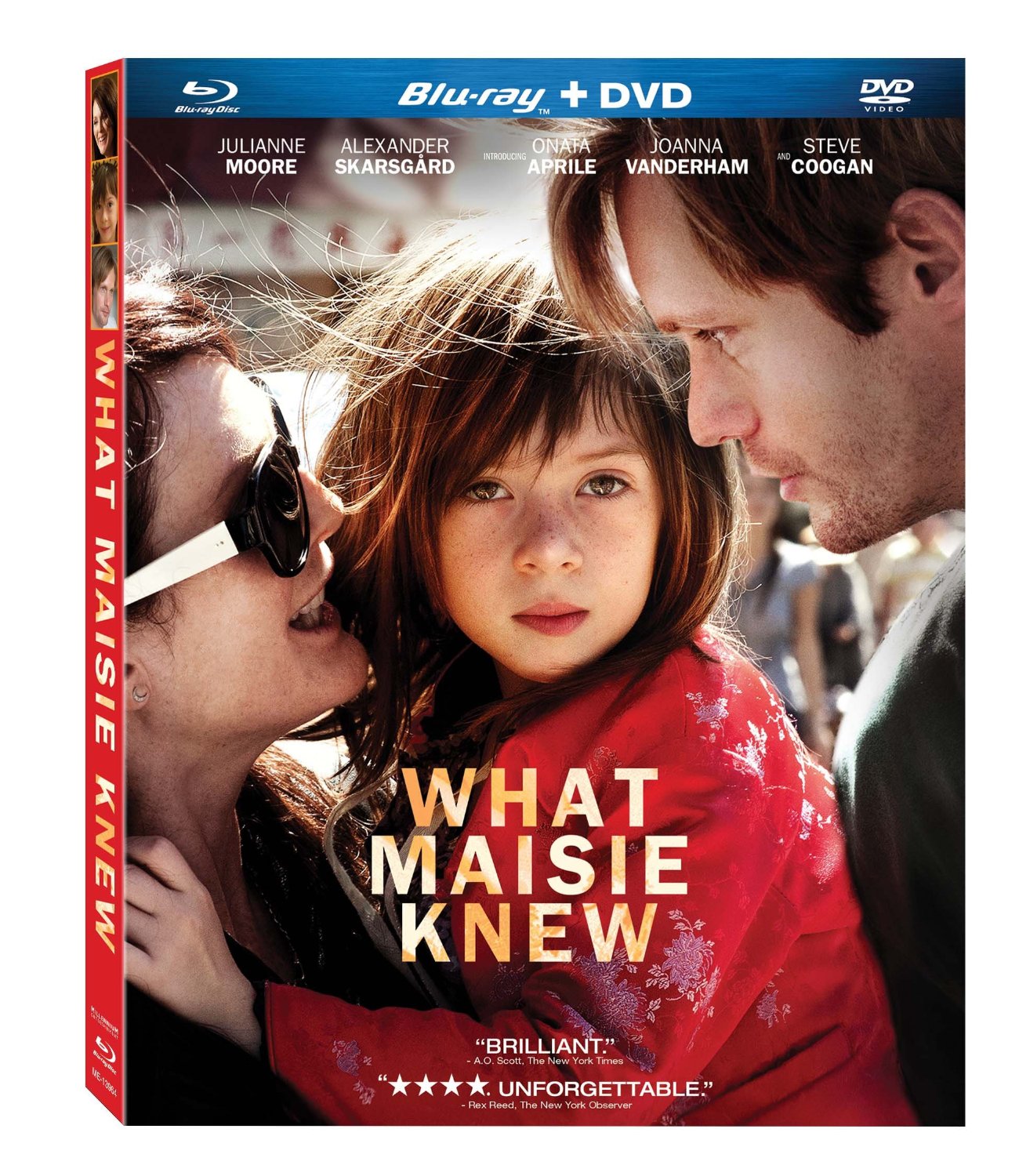
For those who don't know, I have been married twice in my life. I am currently going through my second divorce. At nearly thirty eight years old, I have lived the relationship life of arguably several lifetimes but something usually keeps me coming back. Am I done with love? Only time will tell. Today's blu-ray review is about a six year old girl who sees life through the divorce of her mother and father. Something tells me we are in for a very long and bumpy ride.

Susanna (played by Julianne Moore), a mom puts her six year old daughter, Maisie (played by Onata Aprile) to bed. Susan decides to sing "Rock a Bye Baby" to the daughter before breaking out the acoustic guitar and playing a few gentle chords as Maisie slowly goes to sleep. The day begins again or rather we see Maisie paying for some pizza as we hear a heated argument in the background.

The time was that following the death of a good king, England was left without a clear heir to the throne. During the time without a king, England had descended into dark times. Suddenly as if through divine intervention a sword appeared in an anvil of stone. An inscription decreed that whosoever could remove the sword would become king. Think you’ve heard the story before? Well, of course you have. It is none other than the story of King Arthur. Most of us have heard the many stories. It shouldn’t have come as a surprise to anyone that Walt Disney himself was quite taken with the tale, when you consider it it’s about as natural a fit as one can find. Disney’s early works were replete with tales of seemingly ordinary people with extraordinary destinies. From Sleeping Beauty to Cinderella, Walt had put his own touch to many such tales.

Our story begins in this England of dark times. A wizard named Martin… eh, that’s Merlin … is sitting in his humble room awaiting the arrival of a special lad. Gifted with the ability to see forward in time, Merlin knows that this lad will soon be arriving, and it will be his responsibility to educate the boy. When the young man referred to as The Wart does arrive, it seems unlikely he could be destined for much of anything. He’s rather physically awkward and appears none too ambitious. Still, Marvin, that is to say, Merlin, takes on the task with an eagerness that becomes somewhat annoying to his companion, the owl Archimedes. The lessons involve for the most part magical transformations and a few catchy tunes. Before long “The Wart” aka Arthur finds and fulfills his destiny. This story is more about the journey than the destination. Arthur doesn’t have his encounter with the sword, often erroneously identified as Excalibur, until the last minutes of the film. There is a hint that more stories would follow, but they never really did.

“Once upon a time in New York City…”

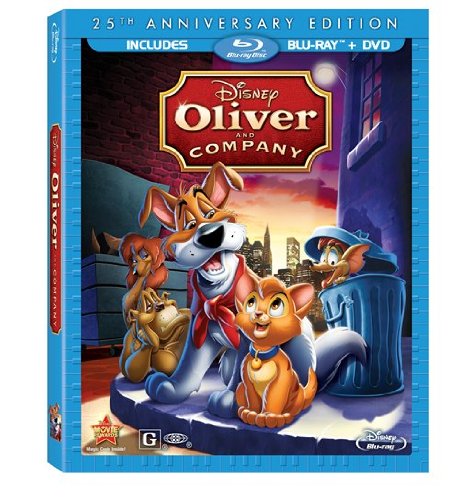
Walt Disney might well have been the storyteller of more than one generation of kids. Is it any wonder that when we think of such characters as Winnie The Pooh or Peter Pan our minds conjure the images wrought by Disney animators and not necessarily the classic literature descriptions? That might not be the case with this Charles Dickens story, retold through Disney’s trademark animal point of view. Oliver & Company doesn’t appear to have had the staying power of films both before and after its time. After watching the film again, perhaps for the first time since its release 20 years ago, I can’t imagine why it has never quite caught on. From a popular culture standpoint the film has all of the elements that have led to other more beloved Disney classics. The Dickens story is a familiar one, read by most literature students as a matter of course. Many of the era’s biggest names lent their voice talents to the characters, including Billy Joel and Bette Midler. The songs are about as catchy as anyone might have hoped for. Just what was it that relegated this little seen Disney adventure to the bargain bin of animation classics?

"Space... the final frontier. These are the voyages of the starship Enterprise. Its continuing mission, to explore strange new worlds. To seek out new life and new civilizations. To boldly go where no one has gone before."

With the success of Best Of Both Worlds, Star Trek: The Next Generation would make frequent use of the season-ending cliffhanger. Believe it or not, that wasn't so common in those days. The fourth season ended with part one of Redemption.

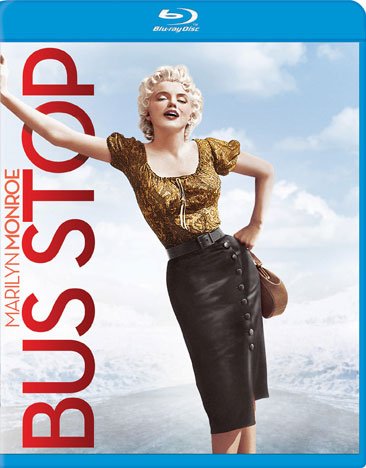
For most modern moviegoers, Marilyn Monroe is probably more “famous for being famous” than she is for her cinematic body of work. (Of course, she’s also infinitely better known for an entirely different “body of work.”) That’s not totally fair because Monroe has at least one bona fide classic (Some Like It Hot) and a handful of indisputably indelible images among her movie credits. Those of you interested in exploring her filmography are in luck: Fox has just released two titles from her mid-1950s superstar peak on Blu-ray, including her turn as an ambitious showgirl in Bus Stop.

The film quickly introduces us to Beauregard “Bo” Decker (Don Murray), a naïve and socially tone deaf cowboy. For the first time in his life, Bo is venturing out of the Montana ranch where he was raised to compete in a rodeo in Phoenix. Bo’s friend and father figure Virgil (Arthur O’Connell) tries to encourage the 21-year-old man-child to find a nice girl to settle down with, but Bo is only interested in finding his one perfect “angel.”

"Space... the final frontier. These are the voyages of the starship Enterprise. Its continuing mission, to explore strange new worlds. To seek out new life and new civilizations. To boldly go where no one has gone before."

The fourth Season of Star Trek: The Next Generation erased any doubts that the show could stand on its own. The series had developed its own characters and situations that allowed the show to somewhat separate itself from the confines of the original series. The Best Of Both Worlds cliffhanger and fourth season resolution would become one of the top-ranked episode of all of Star Trek, and with a shot across the bow from the Borg, Star Trek: The Next Generation had truly arrived.

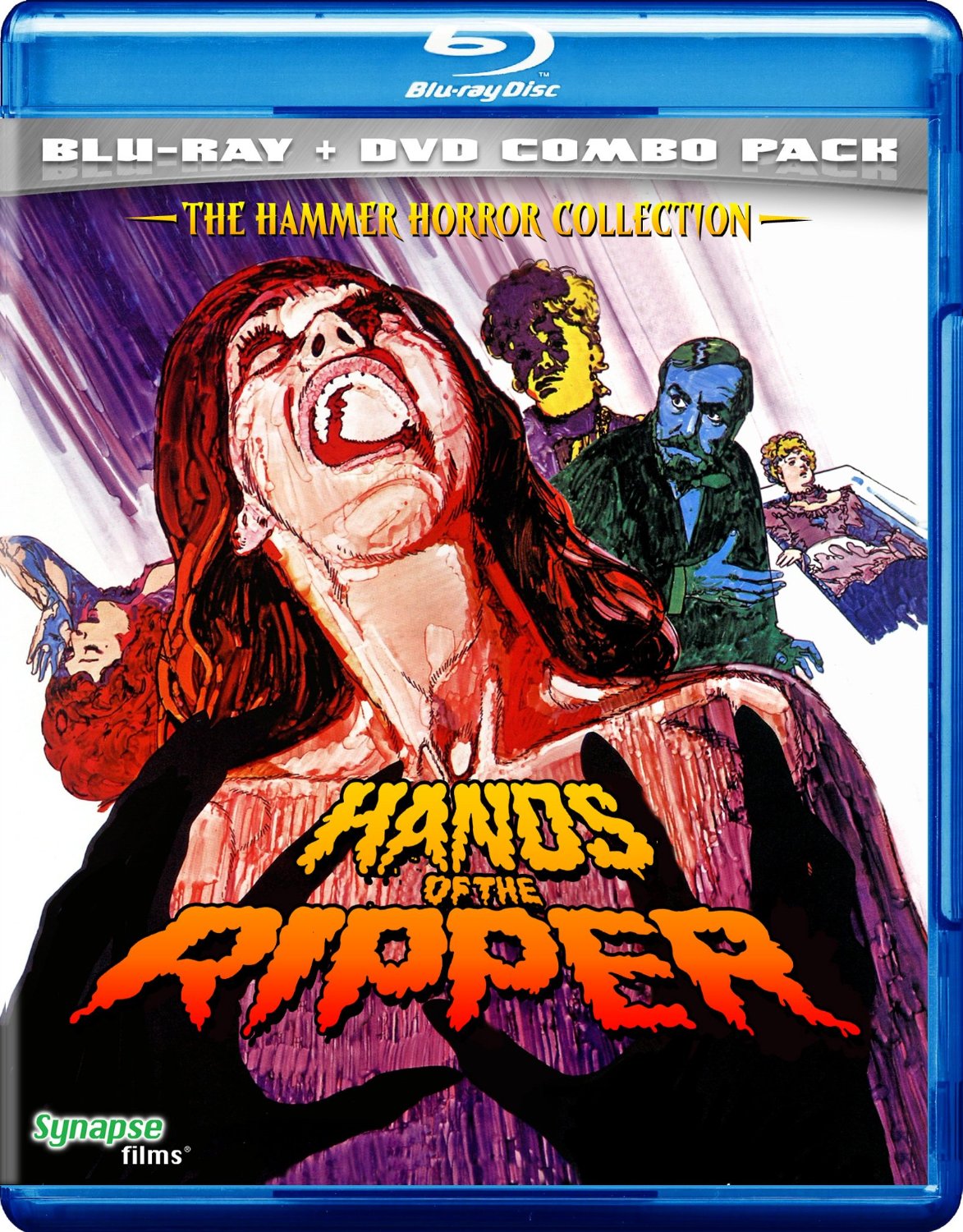
In the 1950's and 1960's Hammer picked up where Universal had left off. They became the studio for the very best in horror films. With names like Lugosi, Karloff and Chaney finally reaching the end of their reign, Hammer offered up the likes of Christopher Lee and Peter Cushing. They resurrected all of the famous Universal monsters in their own image. Now we had a new cycle of Dracula, Frankenstein, The Wolf Man and The Mummy. While the films were somewhat low-budget and released mostly through the drive-in circuit, these films made a bloody splash with horror fans all over the world. But by the time the 1970's had begun, the studio was falling behind in the horror genre. Anthony Hinds had left the studio, and with him went some of the passion for the horror films that made Hammer famous. The studio heads became more interested in other kinds of films, and the horror department languished for a time.

While the studio was still bringing back the monsters that had made it famous, there was a decided effort to return to their own roots with the psychological thriller, and one of the best turned out to be Hands Of The Ripper. Hammer was certainly in decline, but Hands Of The Ripper had the advantage of being shot at England's famous Pinewood Studios where other more illustrious films were also in production at the time. Sets were utilized from The Private Lives Of Sherlock Holmes and more notably James Bond. M's office would be completely recognizable here, complete with the padded door. These sets and production advantages allowed Hands Of The Ripper to go beyond the cost-cutting measures in place at Hammer during this time. It ends up being one of the studio's richest and most atmospheric films.

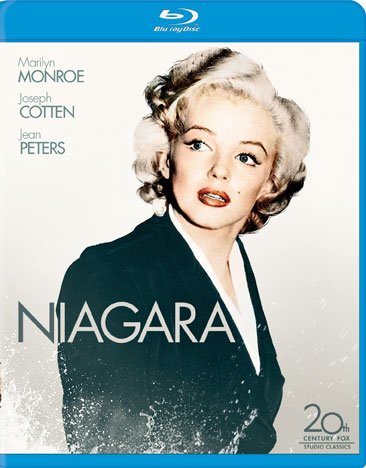
For most modern moviegoers, Marilyn Monroe is probably more “famous for being famous” than she is for her cinematic body of work. (Of course, she’s also infinitely better known for an entirely different “body of work.”) That’s not totally fair because Monroe has at least one bona fide classic (Some Like It Hot) and a handful of indisputably indelible images among her movie credits. Those of you interested in exploring her filmography are in luck: Fox has just released two titles from her mid-1950s superstar peak on Blu-ray, including her femme fatale turn in Niagara.

Monroe stars as Rose Loomis, who is visiting Niagara Falls with her older, jealous, volatile husband George (Joseph Cotten). When the film opens, Rose and George are staying in a cabin reserved by Polly and Ray Cutler (Jean Peters and Casey Adams), but the Cutlers agree to take another room and give the seemingly troubled couple some space. Turns out George has good reason to be jealous: during a tour of the Falls, Polly spots Rose making out with another man. Eventually, we learn Rose and her lover plan to kill George and run away together.

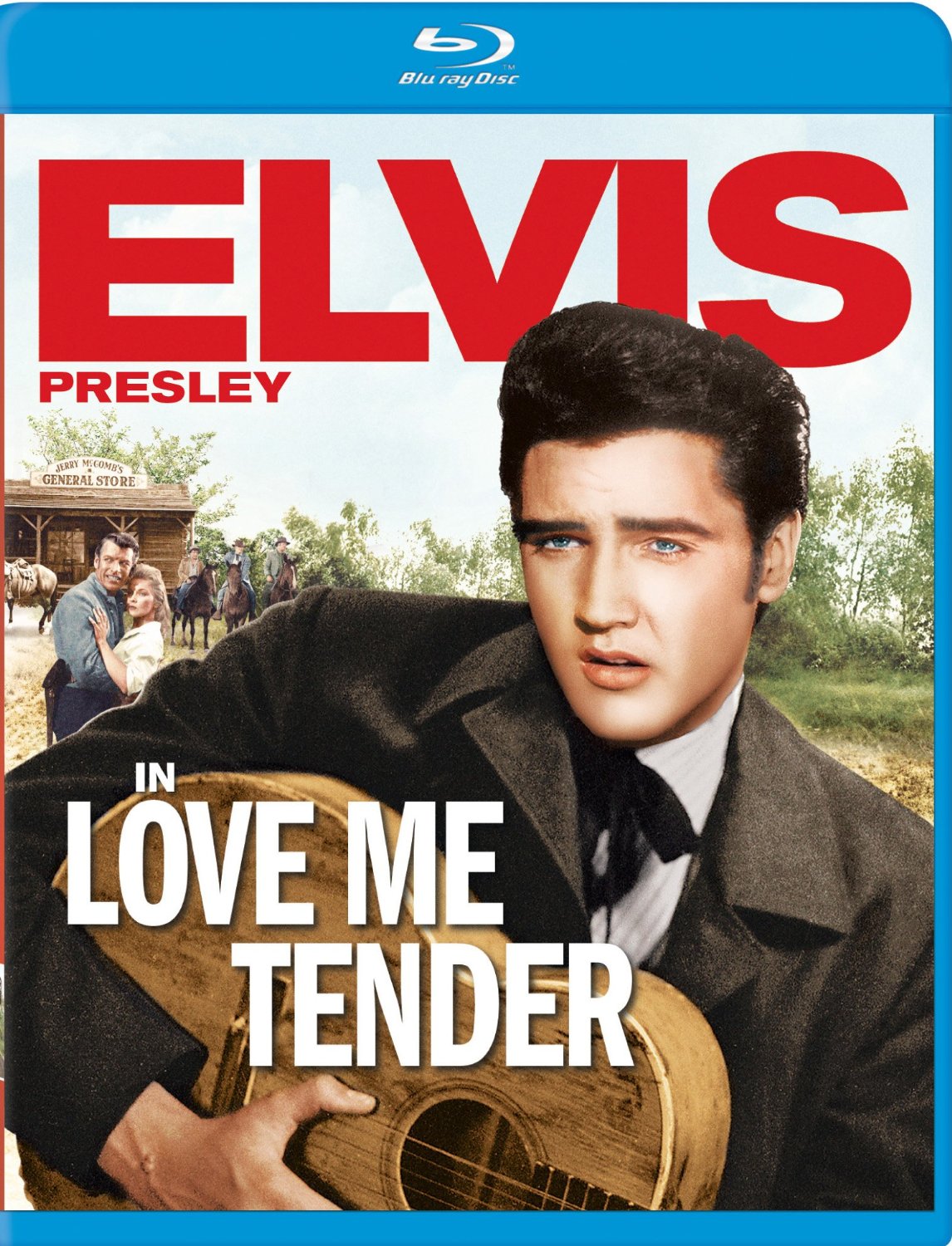
Elvis Presley was easily one of the most impactful pop culture icons of the 20th century during his life, and that status has barely waned in the decades after his death. (Or “alleged death”, given the number of Elvis sightings each year.) Presley obviously made his most lasting mark in the world of rock and roll music (and fashion), but he also had a surprisingly fruitful film career. Though none of his movies turned out to be cinematic masterpieces and no one was confusing him with Marlon Brando, The King brought his charismatic presence to more than 30 movies between 1956 and 1969. He was 21 when he made his film debut in Love Me Tender.

Fox has just released the 1956 Western/Civil War drama on a nifty-looking Blu-ray. (More on that in the Video section.) The first thing that struck me about the black & white film is that Presley — arguably the most famous person in the country at the time — is not really the star.

I was not looking forward to this sequel at all. Now, to those who saw the film in theaters and loved it, before you get bent out of shape, allow me to explain why. See, I don’t react to change very well, and after seeing the first film and liking it, let’s just say that I had certain reservations after learning that much of the original cast wouldn’t be returning (not to mention news of the worst kept secret about the demise of one of the characters). Needless to say when I sat down to watch Retaliation, I wasn’t expecting to enjoy. Happy to say that after watching it, I’m eating crow.


Retaliation resumes sometime after the original movie. Duke (Channing Tatum) is now leader of his own team which includes Roadblock (Dwayne Johnson), Lady Jaye (Adrianne Palicki), Snake Eyes (Ray Park), and Flint (DJ Cotrona). After completing a successful mission, the team returns to base camp and awaits extraction. Dropping their guard, the group enjoys downtime; however, when a security patrol arrives ahead of schedule, it does not go unnoticed.  Their suspicions are proven right, as a massive assault devastates the camp. Unable to adequately defend themselves, the team suffers heavy casualties including a vital and precious member of the team. (I’m sure you’ll have no trouble figuring out who.)