Dolby: Atmos

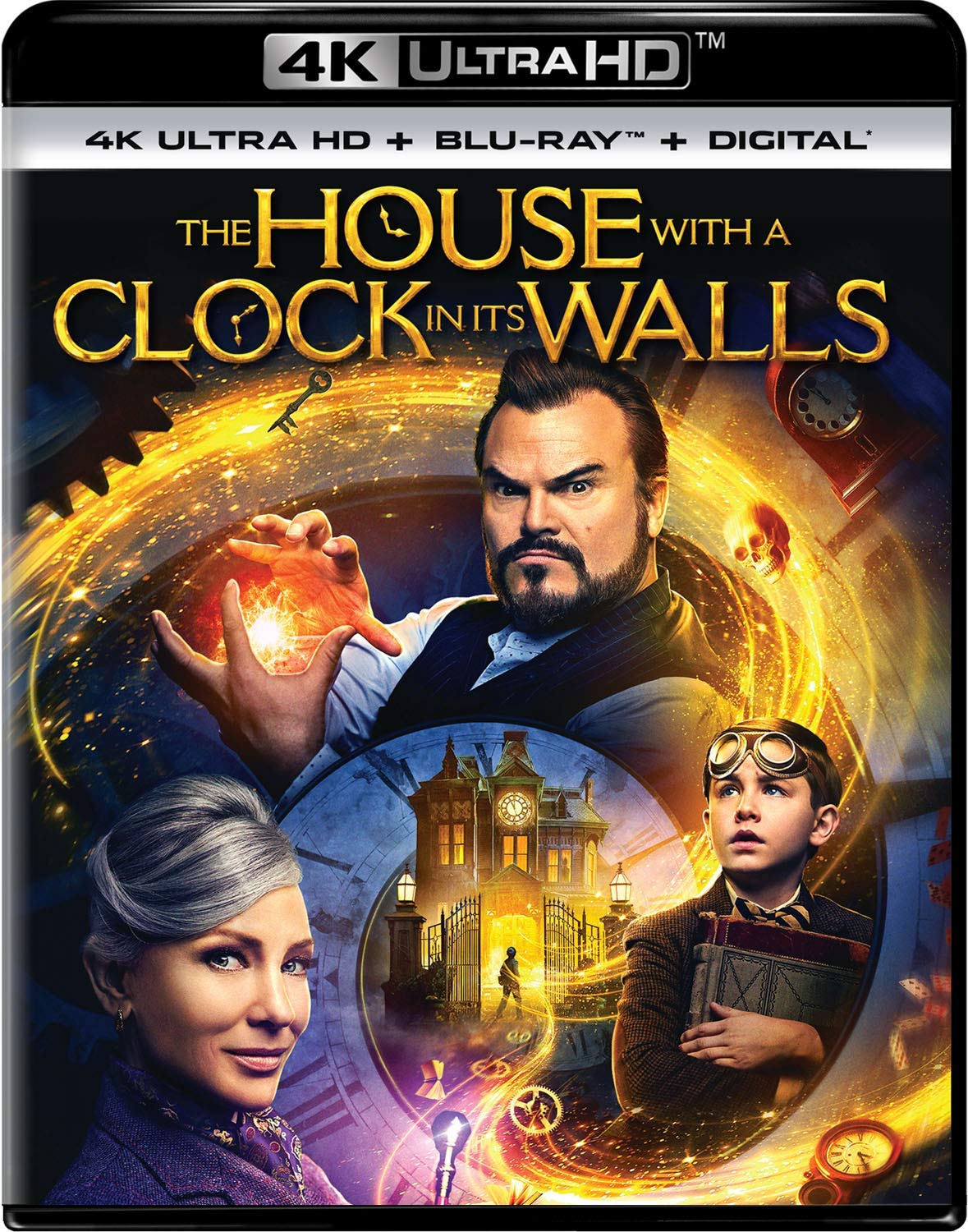
Children’s fairy tales have taken a new drift with the film The House with a Clock in Its Walls.  Packed with exciting action adventure, the movie, based on the book by John Bellairs, envisions the story with an incredible amount of CGI.  You could almost call the film animated, but that’s a good thing here as things go bump in the night, magic forms the basis, and solving the mystery becomes the prominent focus for older youngsters. Orphaned due to a car crash that took his parents, young Lewis Barnavelt (Owen Vaccaro) gets invited to live at his Uncle Jonathan’s (Jack Black) magical mansion. He’s a bit fearful of the old house with its grand stairway and many mysterious rooms, but Lewis sort of likes the flamboyance of the magician-turned-warlock.  There he’s introduced to Jonathan’s neighbor and best friend, Florence Zimmerman (Cate Blanchett), who assures Jonathan that he will enjoy living with his uncle.

Uncle Jonathan has only one rule for Lewis: he mustn’t open a special cupboard, ever.  Things go well for Lewis until it’s time he attend the local middle school.  There he’s the odd man out, as cliques have formed between the boys long before he came there.  Surprises abound in his new life, and when he helps Tarby (Sunny Suljic), one of the school kids running for class president, he feels he’s finally made a friend. But things are not what they seem to be, and it leads to Lewis breaking the one rule he had promised he wouldn’t.

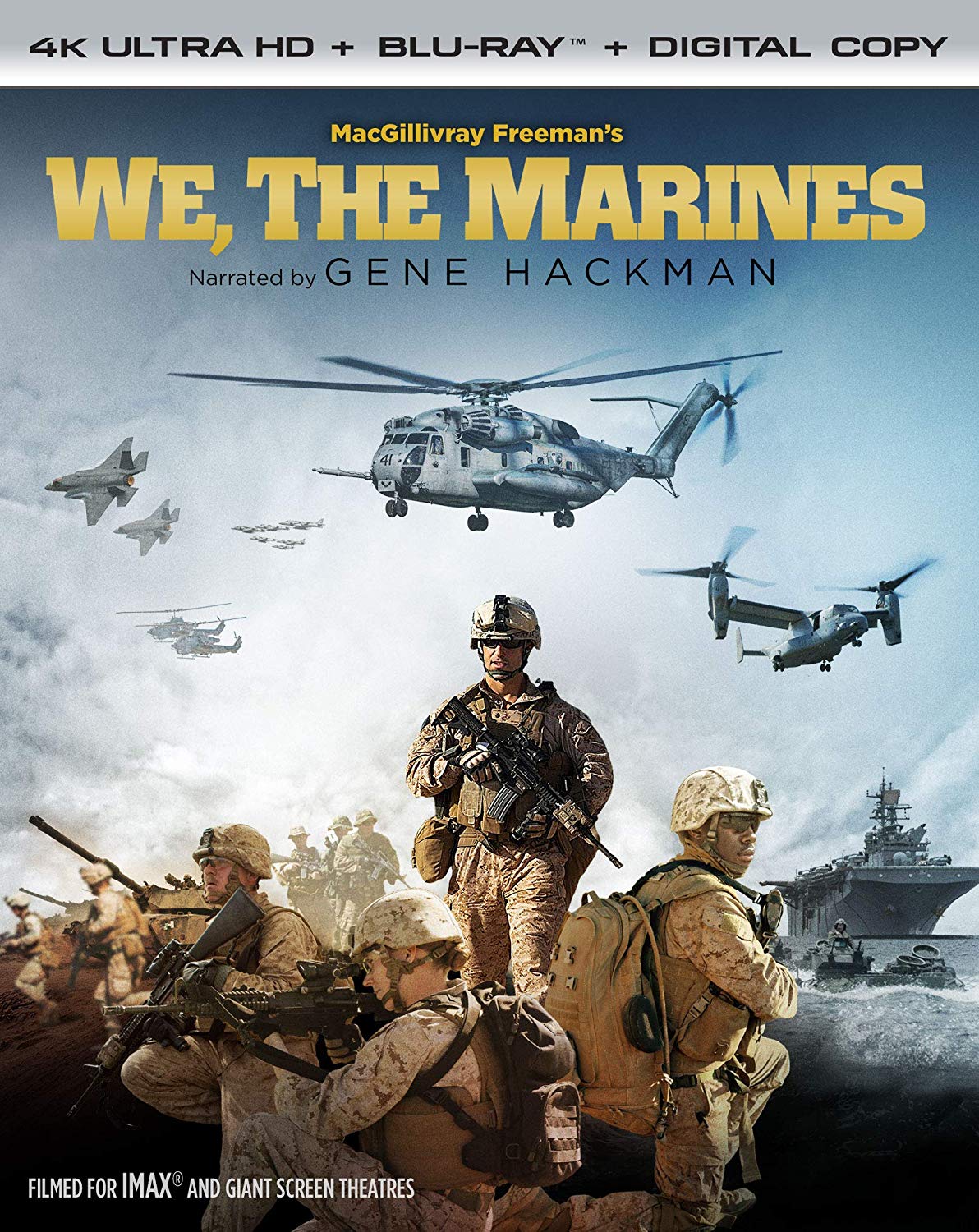
"These young men and women are going on a long journey. One that goes around the globe and back to the foundations of our nation. Once you're in the Corps, you're in the Corps all your days on Earth."

Gene Hackman narrates an IMAX look into what it means to be a United States Marine. He's the perfect choice, and not because he has such a distinctive and authoritarian voice, but because he was also once a Marine. There's an element of pride in the narration that just can't be faked.

“They destroyed the man I was, but then I was reborn. And this time I came out breathing fire.”

Season 1 of Westworld — HBO’s mega-budget adaptation of Michael Crichton’s 1973 film of the same name — spent a lot of time exploring the nature of reality and humanity through a high-tech theme park’s robotic hosts. And while the show still has plenty of time for those themes, the second season can be tidily summed up with a phrase that nods to another Part II of an iconic sci-fi franchise: The Hosts Strike Back.

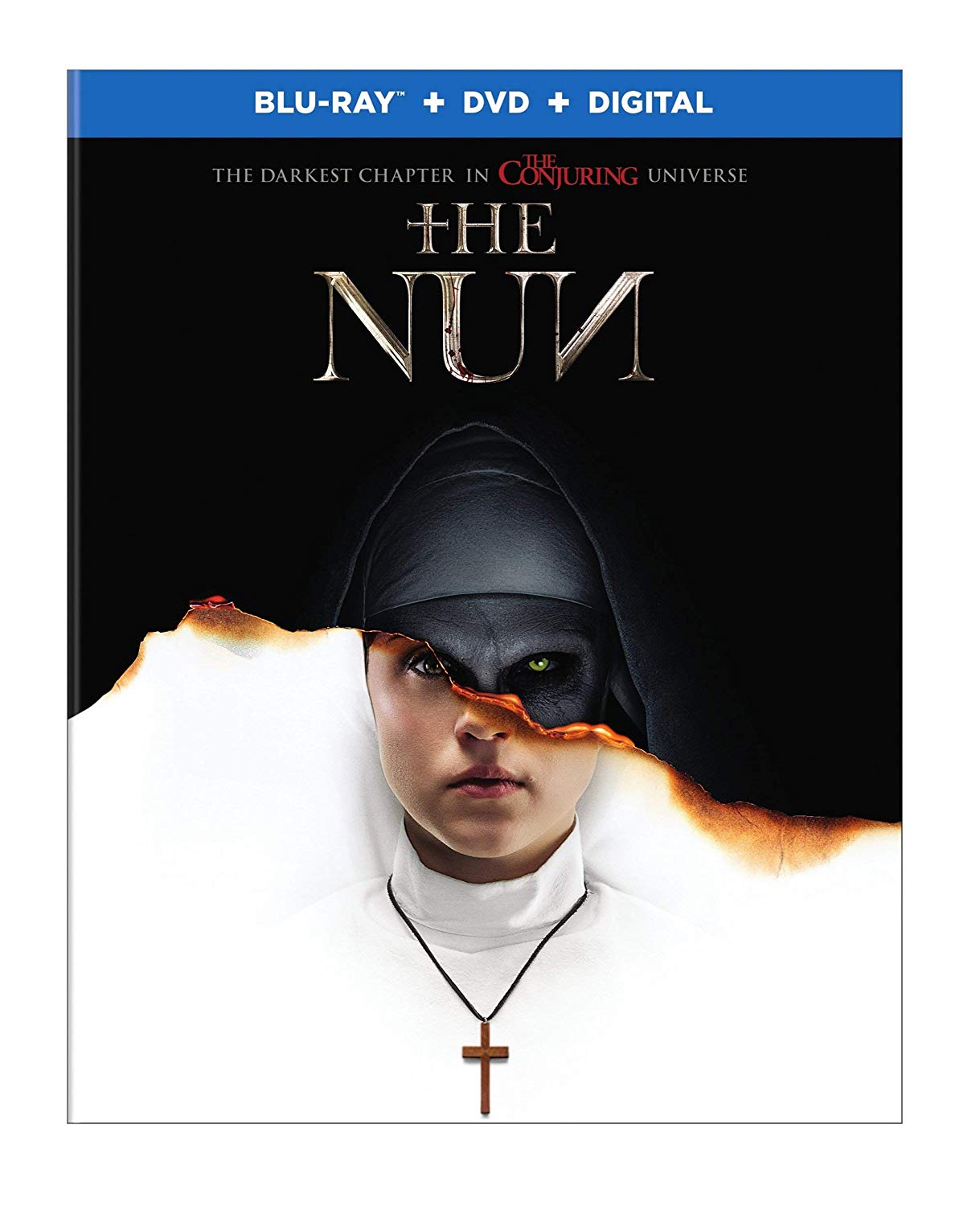
As a fan of The Conjuring films, I keep hoping that these spinoff films will manage to step up and be on par with The Conjuring, but instead they just keep letting me down.  But that doesn’t stop the hordes of fans from still seeing these films; after all, the pair of Annabelle films were box office hits, and The Nun had a nice theatrical run as well, earning over $110 million.  The Nun is a bit of a departure, as it takes us back to 1952 and is set in Romania to deliver a gothic horror story that seems as though it’s a bit of a nod to the old Hammer films from the 1950’s on into the 1970’s.  Does the film deserve its box office success? Well, thankfully I didn’t have to take a vow of silence, and I can tell you all about it.

The film wastes no time in setting the tone and delivering the terror as we see a pair of nuns walk through the bowels of an abbey in Romania as they open a big, scary door that has the inscription “God Ends Here”. Obviously whatever is beyond this door is bad, but why these nuns are so gung ho about opening this door and going inside isn’t explained (at least until much later on into the film).  It’s no surprise that the result of opening this door causes bad things to occur, one of which is a nun killing herself as she sees The Nun coming towards her.  This sparks an investigation by the Vatican to be led by Father Burke (Demian Bichir) and Sister Irene (Taissa Farmiga).

"Loyalty is tricky. It's a moving target."

As the summer wound down from the season's requisite anchor film blockbusters, there was increasing room for a few independent films that will make their way from the festival circuit to fill the newly vacated screens at your local multiplex. For some it was to attain eligibility for the year-end award season. For others it was a short window to turn a profit from what was conceived more as a work of art. For others it was a chance to become a sleeper hit. And for others yet, an opportunity to deliver a social message on the larger soapbox of the big screens. Blindspotting appears to be on the cusp of all of these things. But perhaps it came a little early for any awards consideration, and at a time where it was still competing with the mega-films of the summer. There's no doubt that the film attempts to hit us with a message, but it falls just short of that accomplishment. Blindspotting works best as a character study, and it's in that mode that the film almost approaches compelling.

Ever since Jaws splashed onto the screen back in 1975, Hollywood has been attempting to follow its success, and though some films have been valiant efforts, nothing seems to come close to the Spielberg classic.  Sure effects have come a long way over the years, and through the Hollywood magic of special effects they can create a more realistic-looking shark, but to be fair many of the film’s more memorable moments don’t even have the shark on screen.  When I first heard about The Meg, it was going to be in the hands of Eli Roth of Cabin Fever and Hostel fame. This seemed to be like a good pairing that would result in a blood-fest filled with shark carnage that would leave shark fans pleased, but eventually the studio decided to pass, and the project seemed almost dead in the water.  I had known about the film’s struggles to get made for years but hadn’t known that it went back to the 90’s when the rights to the book by Steve Alten had been first purchased.  When the studio signed Jon Turteltaub (National Treasure), it was clear they were aiming to produce a summer tent-pole film, and as my excitement grew, I caved and started reading The Meg series that Alten had published, and I was hooked.  I’ve been looking forward to this film for a while. Could it possibly live up to my expectations? Well, it came close.

The film opens up with Jonas Taylor (Jason Statham) as he is on a deep-sea rescue mission.  While he and the few members of his crew are searching for survivors on a wrecked sub, there seems to be something in the water with them that is attacking the sub.  All we know is that it is something massive, and it forces Taylor to have to make a quick decision that results in several casualties.  It’s years later when a scientific research team is exploring the Mariana trench and is planning to dive deeper than ever before, past a layer that was believed to be frozen.  It’s when the dive team passes beyond this cold layer that we see some beautiful effects as this underwater world we are getting to explore with the team is filled with numerous deep-sea dwellers, though it doesn’t take long before the team is attacked.  Apparently Jonas is the only one available who can possibly save the deep-sea crew; as it just so happens one the crew members turns out to be Taylor’s ex-wife Lori (Jessica McNamee).  This is also the point where it’s discovered Taylor’s claim that the prehistoric megalodon is haunting the deep sea turns out to be true. Why Taylor would make this jump in reasoning from what we saw in the opening scene is beyond me, but I’ve accepted this is a popcorn ride, not something we’re meant to dwell on.

Ever since Do the Right Thing came out in 1989, Spike Lee has been a director that critics and fans have kept an eye on. Over the span of his career he’s done everything from music videos with Michael Jackson, to documentaries, to television shows, but mostly he’s made his claim to fame in film. His films have been all over the place as critical and box office successes. Inside Man to this day may be his biggest success financially, but of all his films it feels the least like a Spike Lee film.  The man has a distinct visual style; most of his films take place in New York, but the typical thing you’ll find in his films is the “black culture” and the topic of race relations.  With his latest film Blackkklansman, Lee ventures into some familiar territory, but for the first time in quite a while he delivers a movie with a strong message but also manages to be entertaining.

It’s the 1970’s when we meet Ron Stallworth (John David Washington). He’s in the middle of an interview to become the first black officer of the Colorado Springs police department. The interview is equally uncomfortable as it is amusing at the same time, and this kind of tone is what plays out over the course of the film.  Let me say from the start this film doesn’t shy away from delivering racial slurs that are pretty much spoken from start to finish of this film.  When Stallworth first gets hired, he’s stuck down in the records room, but it isn’t long before he is asked to help out on an undercover assignment that requires him to infiltrate a gathering where a prominent Black Panther member will be speaking.  This is a scene that is handled really well by Lee as we watch Stallworth listen to the speech; it’s also here where Stallworth meets a potential love interest, Patrice (Laura Harrier) who happens to be a black activist leader.

When a disease begins targeting and killing children, you fear for the future of the generation. However, when the children whosurvive develop dangerous abilities, you fear for yourself. That is the situation that Ruby Daly finds herself in. To compound her issues, not only does she have powers that she can’t control, but among the powerful her abilities are among the rarest and strongest. Amandla Stenberg stars in this film based on a young adult novel series. Anyone else sensing a franchise in works. Unfortunately, despite the vacuum let behind by Twilight, Hunger Games (which our star was a part of), and the recently ended Maze Runner, I’m not so sure that The Darkest Minds will be the vehicle to fill the gap. Overall it was a solid opening, but I left the film with more than a few unanswered questions.

Ruby Daly is ten years old when her life changes forever. A disease that targets children ravages the world, killing a large percentage of the world’s children. Those who survive the disease developing abilities varying from enhanced intelligence to mind control. Fearing the threat, the government locks away the children. Ruby is one of those children. Classified by color (Green, Blue, Gold, Red, and Orange, with Orange considered the most dangerous and are to be executed on sight), Ruby is the rarest and considered the most dangerous, so she hides in plain sight and in constant fear until she is freed by a group looking to exploit her abilities. Mistrusting her would-be saviors, she runs away and happens upon a group of children who have escaped a similar circumstance.

The Matrix (1999) was a landmark film in the Sci-Fi genre. While its box office intake was dwarfed by Episode 1, it was The Matrix that had people talking. Andy and Larry Wachowski’s story of a post-apocalyptic world where humans serve as biological generators of energy for the machines that rule the planet challenged people’s perceptions of what reality was. Computer hacker extraordinaire Neo (Reeves) has this gut feeling that life isn’t all that it seems to be. Turns out he’s right in a big way. A group of revolutionaries led by the thought-to-be-mythical Morpheus (Fishburne) open his eyes to the Matrix.

The Matrix, it turns out, is nothing more than an elaborate computer-generated reality intended to mollify humanity who are in reality nothing more than sheep, or in this case a renewable energy source, to feed the machines that have inherited the Earth. Morpheus believes Neo is “The One”, a prophesized savior who can bend the Matrix to his own will, who will eventually lead humanity out of slavery. What follows is enough eye candy to give an army of Swiss chocolate factory workers diabetes.

“I don’t know how to sing about love when I’m not feeling it.”

I have a surprising confession to make: I’m a huge movie musical nerd (that’s not the surprising part), but I thought the first Mamma Mia movie was absolutely terrible. Obviously, I was in the minority: the 2008 ABBA jukebox musical grossed more than $600 million worldwide. So the second least surprising thing about the perfectly-named sequel, Mamma Mia: Here We Go Again, is that it took 10 years to get the band back together. The first most surprising thing is that I actually thought this movie was...kinda good.