Posted in: Disc Reviews by Archive Authors on January 13th, 2015
The internet is destroying everything. It seems crazy, but it's true, and most people know it. I mean that so many businesses have been destroyed by the tremendous growth of the internet and its insidious and unchecked influence. The newspaper business, music business, broadcast business and probably the movie business have been fundamentally and permanently altered. Men, Women and Children addresses how it affects each and every one of us on a daily basis. We're all aware of this. It's our lives now, and it wasn't 10 years ago. Texting on iPhones is so addictive with some people that they are oblivious to how obnoxious it is. Most of us are aware, on some level, how much computers and phones are sucking away what used to be our lives. We know it, but the die is cast. That's the problem with Men, Women and Children. We know everything already, and this movie shoves it down our throat. The subject is definitely timely, but too much of what happens in this movie is like a parade of clichés.
Jason Reitman (Juno, Up In The Air, Thank You For Smoking) is a good director, but he has been losing his touch, citing films like Labor Day and Young Adult. This film is packed with good actors, but they all seem wasted, even Adam Sandler. Sandler is the big star here, making another stretch into dramatic territory. Sandler has done very good work in other people's movies before like Punch Drunk Love, Reign On Me and Spanglish, but not here. Here he is a limp, washed-out nothing, which is what the character demands but still is not a good thing to see. Most of the other good actors like Rosemarie DeWitt, Jennifer Garner, Judy Greer, J.K. Simmons, Dean Norris, Ansel Elgort, Dennis Haysbert and Emma Thompson here seem wasted with predicable and dreary functions in aid of a boring puzzle.
Posted in: Disc Reviews by Archive Authors on January 13th, 2015
The internet is destroying everything. It seems crazy, but it's true, and most people know it. I mean that so many businesses have been destroyed by the tremendous growth of the internet and its insidious and unchecked influence. The newspaper business, music business, broadcast business and probably the movie business have been fundamentally and permanently altered. Men, Women and Children addresses how it affects each and every one of us on a daily basis. We're all aware of this. It's our lives now, and it wasn't 10 years ago. Texting on iPhones is so addictive with some people that they are oblivious to how obnoxious it is. Most of us are aware, on some level, how much computers and phones are sucking away what used to be our lives. We know it, but the die is cast. That's the problem with Men, Women and Children. We know everything already, and this movie shoves it down our throat. The subject is definitely timely, but too much of what happens in this movie is like a parade of clichés.
Jason Reitman (Juno, Up In The Air, Thank You For Smoking) is a good director, but he has been losing his touch, citing films like Labor Day and Young Adult. This film is packed with good actors, but they all seem wasted, even Adam Sandler. Sandler is the big star here, making another stretch into dramatic territory. Sandler has done very good work in other people's movies before like Punch Drunk Love, Reign On Me and Spanglish, but not here. Here he is a limp, washed-out nothing, which is what the character demands but still is not a good thing to see. Most of the other good actors like Rosemarie DeWitt, Jennifer Garner, Judy Greer, J.K. Simmons, Dean Norris, Ansel Elgort, Dennis Haysbert and Emma Thompson here seem wasted with predicable and dreary functions in aid of a boring puzzle.
Posted in: Disc Reviews by J C on January 12th, 2015
“Writers are a ridiculous class of people who make everything about themselves.”
For many, the current face — and oft-naked body — of “writers who make everything about themselves” is Lena Dunham, the creator/star/writer/director of HBO's Girls. The equal-parts brilliant and maddening quarter-life crisis comedy became one of the most polarizing shows on TV over its first two seasons, as self-involved heroine Hannah Horvath sought love and a career as a writer in NYC. At the start of season 3, Hannah has both of those things...which is why I'm astounded — and, frankly, pretty impressed — that she remains as egotistical as ever.

Posted in: Disc Reviews by J C on January 6th, 2015
The most remarkable thing about Looking might be how thoroughly unremarkable it is. This is a double-edged sword for HBO's dramedy, which follows the love lives of three gay friends living in modern-day San Francisco. The series sidesteps the headline-grabbing sensationalism that accompanies many other shows that prominently feature gay characters. (Looking at you, Ryan Murphy.) On the other hand, Looking is often low-key to the point that it bypasses being funny or particularly entertaining. What the series does have on its side is a naturalistic tone that makes the show more engrossing and immersive as the first season progresses.
Looking follows the lives of Patrick (Jonathan Groff), a lovelorn, 29-year-old video game level designer; Agustin (Frankie J. Alvarez), a 31-year-old artist's assistant — and a frustrated artist himself — in a committed relationship; and Dom (Murray Bartlett), a 39-year-old waiter with a preference for younger guys who is at a personal and professional crossroads in his life. The series opens with Patrick bumbling his way through an anonymous sexual encounter in a park before going on a disastrous first date with a different guy, Agustin deciding to move in with boyfriend Frank (O.T. Fagbenle), and Murray mulling over a career move away from the food industry and into real estate.
Posted in: Disc Reviews by Archive Authors on January 1st, 2015
What if two radio guys sat around and made up a movie on the air? In this case it actually wasn't radio guys, because they weren't broadcasters, but podcasters. I guess the fine distinction between broad and pod is that pod goes out to the world through the internet. It's kind of like Indie radio. Kevin Smith is a very indie guy and even calls his podcast a smodcast. Smith and his buddy, producer Scott Mosier, were doing their smodcast and talking about a post on GumTree.uk about roommate advertisements. It evolved into crazy talk about what might happen. The guy in one ad said he would like his roommate to wear a walrus suit from time to time.
Kevin Smith is synonymous with the advent of the modern independent film movement since his film Clerks opened 20 years ago. Smith has always been a clever writer and an interesting geek/nerd hero deeply immersed in all things lowbrow and counterculture. He runs a comic book store among other things and even had a reality series based in the store. He does seem to be going a bit crazy over the last few years, and part of that seems to be his dive into heavy marijuana use. I believe he wasn't always a heavy user. I don't mean to imply that marijuana makes you crazy, but in his case it led him down some strange and paranoid roads. Smith did a movie a few years ago called Red State, which was part of a rant against Hollywood. He was taking that movie on the road and releasing it by himself. With Tusk, Smith is going back to normal, but only in the broadest sense of that word.
Posted in: Disc Reviews by J C on December 18th, 2014
“Everybody's sad or angry or lying or cheating.”
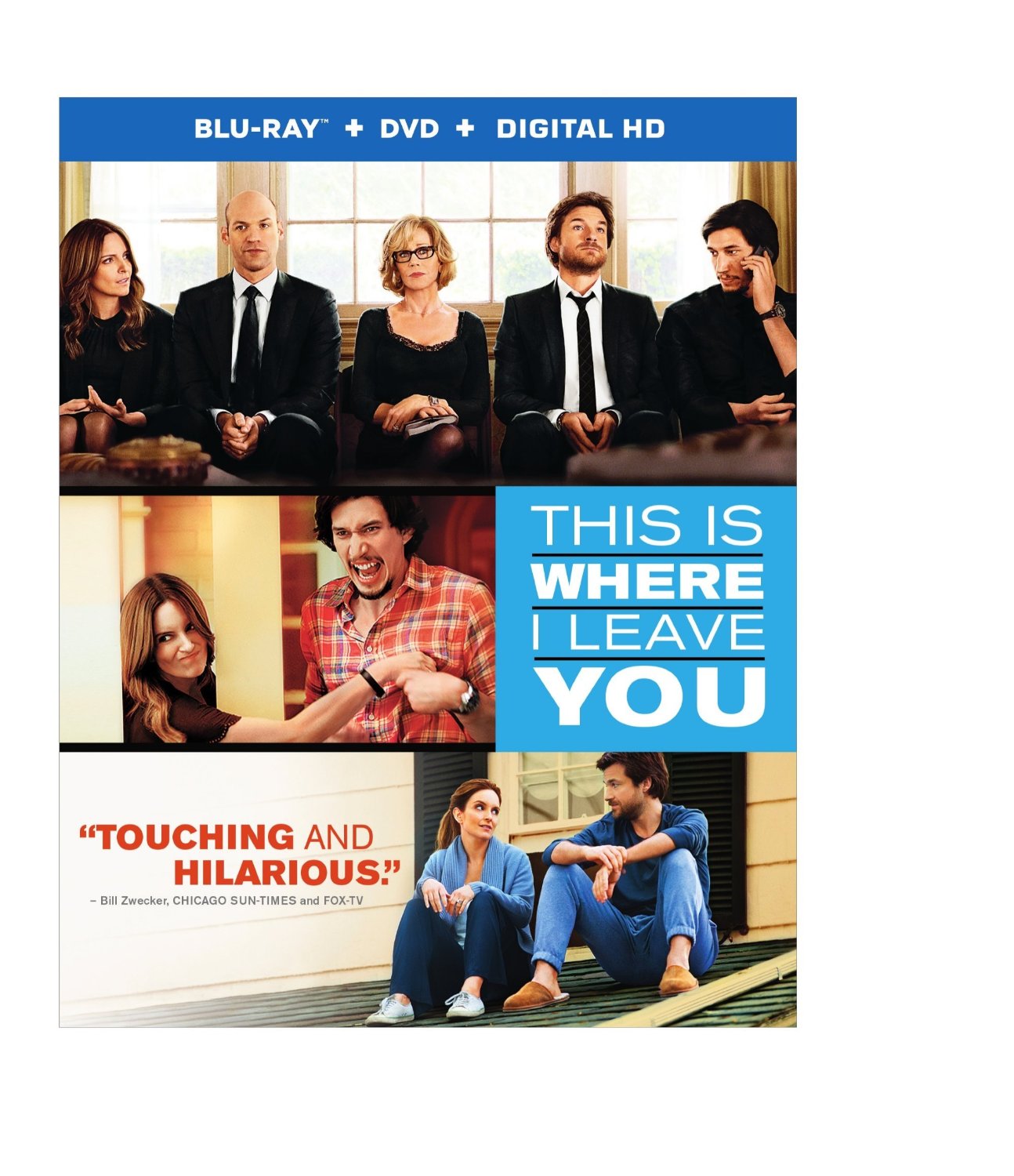
That seems to be the state of the four adult Altman children even before they are thrust back together following the death of the family patriarch. This Is Where I Leave You has all the makings of a great dysfunctional dramedy. It has a terrific cast and is based on the very popular book by Jonathan Tropper, who wrote the screenplay. Yet the movie comes up well short of delivering on its promise. Despite some strong acting, a handful of funny beats, and a passing similarity to another ensemble movie where characters who were formerly close are brought back together by a funeral, this movie is less Big Chill and more “Big Shrill.”
Posted in: Disc Reviews by J C on December 16th, 2014
“You know what the sad thing is? We’re a good team.”
Up until they teamed up to star in The Skeleton Twins, there was nothing sad about the team of Kristen Wiig and Bill Hader. Regardless of how you feel about the quality of Saturday Night Live in recent years, Wiig (the only cast member to earn an Oscar nomination — for co-writing Bridesmaids — while still appearing on the show) and Hader (with "Stefon" and a laundry list of impressions that ranged from Alan Alda to Al Pacino) were clear standouts. So you'd expect their first post-SNL big-screen team up to be a laugh riot. That's not exactly the case.
Posted in: Disc Reviews by J C on November 21st, 2014
Breaking news: anyone who goes to see movie called Into the Storm is probably more interested in “the Storm” than they are in any of the people running away from it. The good news is the film understands this, to an extent, and clocks in at a slender 89 minutes. Of course, the titular Storm doesn’t appear for every one of those 89 minutes. This is very bad news because Into the Storm is populated with characters and storylines that are both forgettable and irritating. It’s basically Twister with somewhat better effects, but much less interesting people.
Into the Storm is mostly set in and around the fictional town of Silverton, Okla. A group of storm-chasers — led by cranky, road-weary Pete (Matt Walsh) — has been struggling to film tornadoes, and Pete is taking out his frustrations on the entire team. That includes data-driven meteorologist Allison (Sarah Wayne Callies), who steers the team toward Silverton. The decision looks like a bust until a dissipating system comes back with a vengeance. The storm erupts during a high school commencement ceremony, where Vice Principal Gary Fuller (Richard Armitage) realizes his oldest son is missing (and very inconveniently hanging out in an abandoned paper mill with his would-be dream girl). Gary eventually crosses path with the storm chasers, who help him in his quest to find and rescue his boy.
Posted in: Disc Reviews by J C on November 19th, 2014
Laughing out loud and getting startled out of your wits are two of the most visceral reactions you can have as a moviegoer. For a director to elicit either reaction is challenging enough, which is why I was so delighted to be feeling both during the thrilling, funny finale of Housebound. It’s an even more impressive feat when you consider it was accomplished by a first-time filmmaker working on a shoestring budget.
We first meet Kylie Bucknell (Morgana O’Reilly) as she and an accomplice comically fail to steal money from an ATM. She is a professional screw-up who has battled alcohol and meth addiction. Instead of sending Kylie to her umpteenth rehab program, the judge sentences her to eight months of house arrest at her family’s rustic home. Given Kylie’s unpleasant childhood memories there and the fact that she now has to share space with batty, blabbermouth mom Miriam (Rima Te Wiata), it seems like Kylie might have preferred spending time in prison.
Posted in: Disc Reviews by Gino Sassani on November 18th, 2014
"If anybody gets up, they're dead. Anybody moves, they're dead. Anybody makes a sound before I leave this movie, ..."
You get the idea. These are the words of one John Wojtowicz, better known as The Dog. On August 22, 1972 he attempted to rob a Chase Manhattan bank in order to finance his male lover's sex change operation so that he could become a woman. The heist was about as amateur as the come and went horribly wrong from the start. In a matter of minutes the bank was surrounded by a swarm of police units and a growing mob of bystanders. In the hours that followed, The Dog interacted with the crowd, gave a radio interview, and managed to whip the crowd into a frenzy by throwing thousands of the bank's dollars out of the front door. If this all sounds familiar to you, it should. While you may not have heard of these exploits directly, you surely saw the movie Dog Day Afternoon. Al Pacino played John Wojtowicz, and now you know where he got the nickname The Dog.