Disc Type

Remember when you were a kid and one of your friends would come over and ask if you could come out and play? You would head for the door with a grin from ear to ear, because you knew you were about to have a blast. You might not have had any idea what it was you were going to do. Often you made it up as you went along. It didn't matter. You just knew fun times were on the other side of your front door. That's exactly how I felt going to catch The Avengers: Age Of Ultron. It was as if Joss Whedon had come to my house and asked me to come out and play. And it wasn't just Joss. He brought a whole bunch of his cool friends, and they brought a ton of really cool toys. From that point it didn't matter so much to me what was going to happen exactly. Phasers were set to good times, and I knew I was going to have fun. Age Of Ultron did it to me just like the many Marvel films before it. I didn't want it to end. I often joke that the only thing wrong with instant gratification is that it takes too long. Now I have to wait another year before most of these characters will assemble once again in Captain America: Civil War.

The film opens with the action already flying. This time there's no time spent "getting the band back together". The Avengers are in a snowy forest where they are attacking a Hydra base. It is here that they first encounter two new enhanced humans (it is verboten to use the term mutant because of Marvel's deal with Fox). Wanda (Olsen) and Pietro  (Taylor-Johnson) Maximoff are working for Hydra because they blame Tony Stark (Downey, Jr.) for the death of their parents and the destruction of their village. Pietro has super speed and is known in the comics world as Quicksilver. Wanda has crazy psychic and telekinetic powers and is known as The Scarlet Witch. She gets into Tony's head and brings him a horrible vision of a tragic future.

"Life's short and then you die. And then... then you have make some decisions. You can skulk around, lamenting all that you've lost, trying to keep yourself numb and isolated. Or you can embrace who you are."

For years I've been hearing about how "hot" vampires were on television and in the movies. It all appeared to start with Buffy the Vampire Slayer, but it actually goes back a lot longer ago. Zombies, on the other hand were the sole property of feature films, usually extreme low-budget affairs. AMC's The Walking Dead has changed all of that. Suddenly zombies are very hot and populating one of the highest rated shows on television. Add a spin-off, and the domination continues. It wasn't going to take long for someone else to join the field. Enter iZombie, and we're off and running.

by Dustin P. Anderson

Charlie Brown and his gang of friends are at it again; this time the crew must go to France for a foreign exchange program. Before his journey begins, Charlie Brown receives a strange letter from France telling him to come and stay at a Chateau. Little does Charlie Brown know, he is going to an infamous Chateau in this small French community, which is notorious for not allowing visitors. Charlie Brown and Linus sleep outside in a stable with no sign of anyone actually living at this place, but they are still provided food each morning by some unknown entity. It is up to Charlie Brown to find out who this person is, and why he has been forced into sleeping under such conditions.

by Dustin P. Anderson

Our series follows Mikey and his friends as they thrown into the digital world while trying to save a strange creature from certain death. This creature is a Digimon that leads him to encountering a strange, intangible voice which gives him the choice of saving the hurt Digimon or walking away. Mikey chooses to save him and in turn receives something known as a Fusion Loader, and is transported into the digital world. Once there, it is revealed to Mikey that the hurt Digimon is seeking to become the ruler of the Digiverse so he can protect all of his fellow Digimon from the evil overlord, Lord Bagra, conquering lands one by one. Facing insurmountable odds, it is revealed that Mikey has one thing the evil conqueror doesn’t: his Fusion Loader. This Fusion Loader is capable of fusing together all types of Digimon to create one new, more powerful being. With the Fusion Loader in hand, and his friends by his side, Mikey sets off to right the wrongs caused by the overlord.

"My name is Ichabod Crane. In 1781 I died on the battlefield, but I was saved by a mysterious spell cast upon me by my wife Katrina. Now I've been reawakened 250 years later in a land I no longer recognize. And fate has led me to Miss Abigail Mills., a young police lieutenant. Investigating baffling mysteries, our real mission is in danger, and the apocalypse may be upon us, our destinies entwined."

Fans of the tale The Legend Of Sleepy Hollow will recall that Ichabod came to encounter the headless horseman in one of the first American horror tales ever written. Irving was a contemporary of our founding fathers, including another Washington who happened to play a big part in a little skirmish with the Brits that came to be known as the American Revolution here and the Great Colonial Rebellion over there. Thanks to the new series Sleepy Hollow, we discover that the British weren't the only ones we were fighting. It's a story of independence we hadn't heard before. It's a fresh take on an old idea that dates back to Kolchak: The Night Stalker. The second season is out on Blu-ray now, and I recommend you check it out. Just don't mix it up with that American history text. We history teachers frown on that kind of thing, you know.

Yet another film from the Sundance Film Festival has been distributed to Upcomingdiscs headquarters. Noaz Deshe’s White Shadow was nominated for the World Cinema Grand Jury Prize in the “Dramatic” category, and while it didn’t win, it is very easy to see why this film is a strong contender. The film is beautifully shot and edited, paying a lot of attention to lighting and color. White Shadow tells the story of Alias, a young albino boy living in Tanzania, who must flee his home after the murder of his father. There is a danger to all albinos in the area as a local witch doctor harvests their organs for his various potions. His mother sends him to live with her brother in the city, but Alias soon learns trouble follows him everywhere he goes.

Noaz Deshe really created a name for himself as an auteur with this film. He is credited as director, writer, cinematographer, editor, and composer. While he did work with a team of people, the quality of the film produced by a man taking on that much responsibility is commendable. Deshe is truly a passionate artist when it comes to filmmaking. That being said, the story does drag a little bit, but overall the film is such a treat for the eyes that a slow story can be overlooked.

“Jane’s life was now the stuff of telenovelas.”

As someone who grew up in a Spanish-speaking household, I have a love-hate relationship with telenovelas. Most of the time, I can appreciate — and heartily laugh at — their inspired, over-the-top campiness. But sometimes I honestly feel a little embarrassed that this broad, ridiculous junk easily represents the most visible outlet for stories featuring Hispanic actors/characters. I’m also insulted by the implication that Hispanic audiences don’t want more nuanced TV options. The great thing about The CW’s Jane the Virgin is that it works both as an outrageous nighttime soap and a sharp, good-hearted satire.

Dennis Hopper was probably a friend of James Dean, since he appeared in two of Dean's three films, Giant and Rebel Without a Cause. It's hard to tell about Hopper, because he went through so many changes over the years. In the fifties and early sixties, he was clean-cut and quiet. After Dean's death he started to acquire a rebellious streak, famously confronting director Henry Hathaway on the interpretation of a scene requiring 80 takes. It nearly destroyed Hopper's career early on, but John Wayne got Hopper on two other Hathaway westerns, and fences were mended in the Old West. Around the time one of those westerns (True Grit) came out, another film came out starring Hopper. It was Easy Rider, which Hopper also directed and co-wrote. Easy Rider basically changed all the rules in Hollywood due to its enormous success. It is in the wake of Easy Rider's success that The American Dreamer was made.

Hopper was an accomplished photographer in the sixties, having been published in Vogue and other magazines as well as doing extensive portrait work of people like Martin Luther King, Jane Fonda, Tina Turner, and Andy Warhol. Hopper was also an accomplished painter and a very successful art collector. All of this figures into the portrait of the man that comes out in The American Dreamer. Hopper was clearly being pulled in many directions by his impulses, including increasing abuse of drugs and alcohol. He was nothing if not multidimensional and was probably frequently lost in one of those other dimensions.

"To understand what I'm about to tell you, you need to do something first. You need to believe in the impossible. Can you do that? Good. Because all of us, we have forgotten what miracles look like. Maybe because they haven't made much of an appearance lately. Our lives have become ordinary. But there is someone out there who is truly extraordinary." 

It's become so much easier to believe in the impossible in recent years. The guys over at Marvel have created an amazing theatrical universe where we escape into the comic book world of heroes at least a couple times a week. DC hasn't managed to wow us in our theater seats so much recently. What they have been able to do is deliver hours of wonderful escapism television every week. That's where the DC miracles are happening, first on Arrow and now Gotham and... The Flash. This is the decade when comic book pages truly come to life before our very eyes.

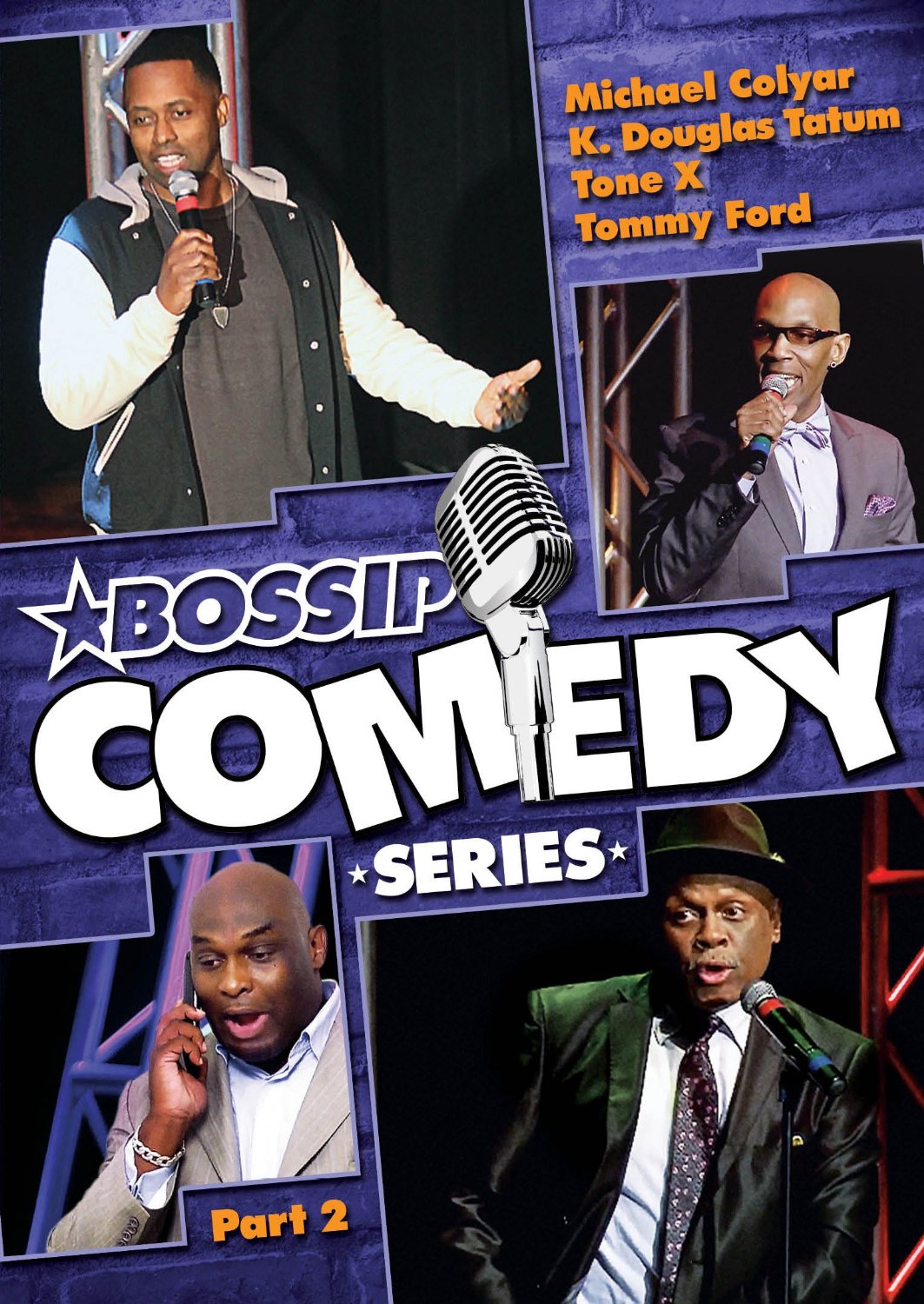
Fair warning, this comedy is much shorter than I was originally led to believe. The cover of this disc gives the deceitful impression that you audience will be treated to at least three performances and one host; however, as it turns out you must read the fine print, as this disc is merely Part 1. I am usually an advocate of the saying leave the people wanting more; however, that saying only applies when you have sufficiently hooked the audience, which this stand-up special fails to do, making the possibility of engaging in Part 2 very unlikely.

The first downfall for this special comes from the format, as the performances of the host as well as the comedian (the host is also a comedian; however, evidence of that remains unseen) are intercut between a recurring skit as well as what appears to be a tutorial in slang. The skit does prove to be entertaining in the first and last incarnation; however, its placement between comedy sets at first make it more of a nuisance than anything else. It would have likely been better received as a preshow or an aftershow addition rather than chopped up and injected throughout the runtime.