Posted in: Disc Reviews by Gino Sassani on May 27th, 2020
"Control is an illusion, you infantile egomaniac. Nobody knows what's gonna happen next: not on a freeway, not in an airplane, not inside our own bodies, and certainly not on a racetrack with 40 other infantile egomaniacs."
Back in 1986 a young Tom Cruise teamed with director Tony Scott for Top Gun. The film ended up pulling in over $170 million. A sequel appeared out of the question, but that wasn’t going to stop this box office dynamic duo from figuring something out. They decided to just refilm Top Gun. So, if jets go fast, what else goes fast? Before long someone realized that racing cars go fast. So, before you know it Tom Cruise was once again teaming with Tony Scott as a cocky young upstart, this time in the race game. If you watch the two films back to back, the code really isn’t that hard to break. All of the same plot points and beats are exactly the same, just in a new environment. The public wasn’t fooled then; the film took in less than half what Top Gun brought. You shouldn’t be fooled now. Days Of Thunder is Top Gun redux.
Posted in: No Huddle Reviews by Jeremy Butler on May 26th, 2020
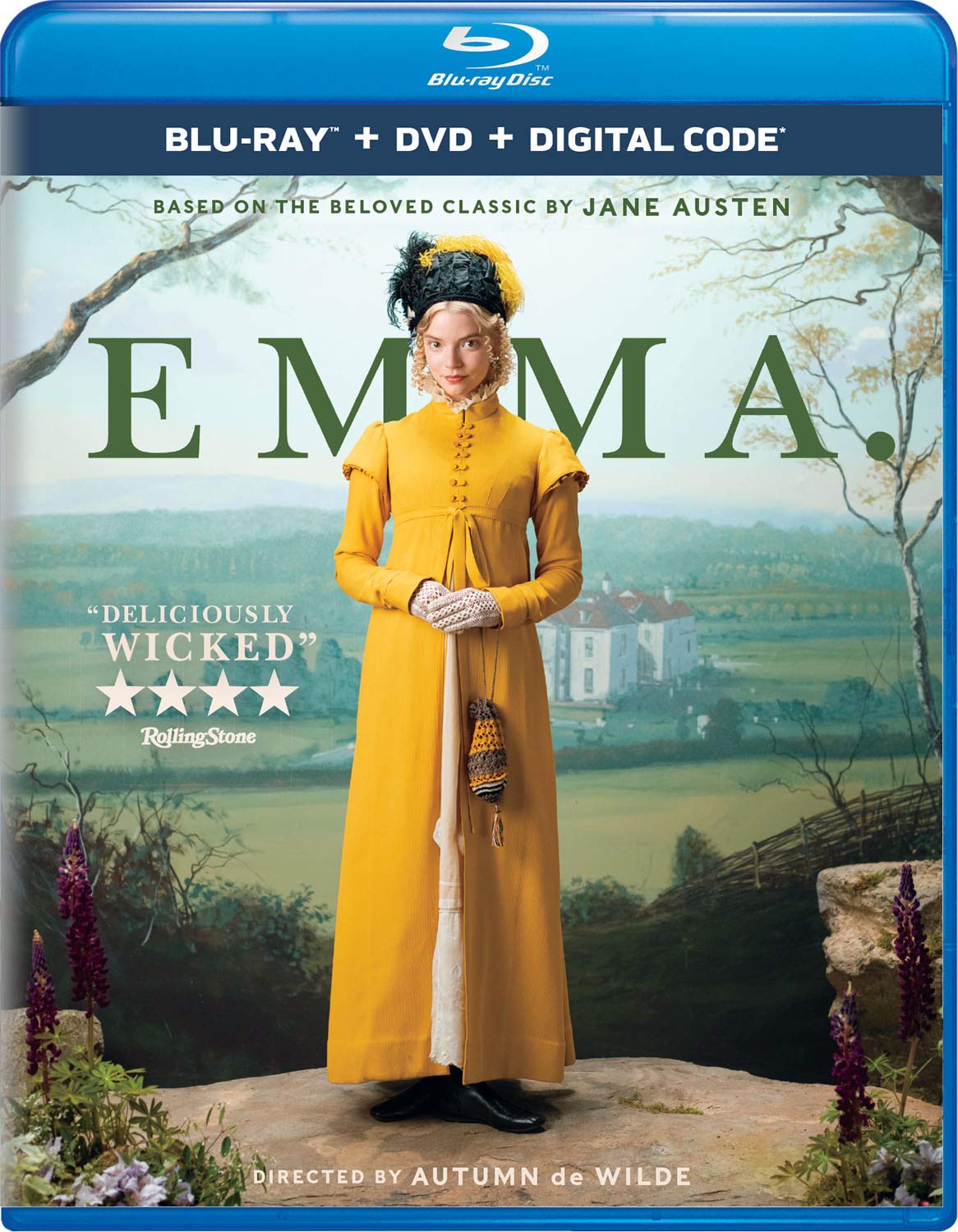
Jane Austen is a novelist from the 18th century whose novels continue to stand the test of time; though she gained prominence during her lifetime, I would dare say that she has become very fashionable, with many of her novels being required learning for most schools or at the very least on the summer reading list. Her credits include Sense and Sensibility, Pride and Prejudice, and Mansfield Park; however, the novel that serves as the basis for the film we are reviewing today may be her most famous work, Emma. This property is no stranger to adaptation, having been adapted in the form of a 1996 television film starring Kate Beckinsale, as well as that same year into a theatrical film starring Gwyneth Paltrow. This time around, the film stars Anya Taylor-Joy in the titular role. Though this is not the film I was hoping to see Taylor-Joy in this year (this is my subtle ploy to demand the release of The New Mutants), I must admit that she does a fine job of taking on the role that has already been tackled by top talent. Granted, this is not the type of movie that I am normally drawn to; it is my wife’s bread and butter, so naturally it was an experience that we shared. Basically a period piece romantic comedy, as anticipated it was a big hit with her, and fortunately there was some humor for me to appreciate as well.
Posted in: Disc Reviews by Archive Authors on May 23rd, 2020
"On March 3, 1969 the United States Navy established an elite school for the top one percent of its pilots. Its purpose was to teach the lost art of aerial combat and to insure that the handful of men who graduated were the best fighter pilots in the world. They succeeded. Today, the Navy calls it Fighter Weapons School. The flyers call it: TOP GUN."
Back around the time I was born, when Tom Cruise had an ounce of sanity, a little movie called Top Gun swept across the globe, raking in over $350,000,000 worldwide, as well as sparking an interest in the US Navy and everything Tomcat, Skyhawk, and MiG related. Ever since its original release, Top Gun has kept a hold on its audience, being played almost weekly, and now it makes its way into the world of ultra high definition with its release on UHD Blu-ray. The timing couldn't be any more obvious. The long-anticipated sequel has been in production, and while delayed by the global circumstances, the film will be arriving soon (at least in release terms). This is a pretty good way to get you up to speed, pun intended. The film isn't alone in cashing in on the Tom Cruise upcoming slate of both the Top Gun sequel and two Mission Impossible films being shot at the same time. This is one of three Cruise films getting the 4K release treatment along with Days Of Thunder and the Spielberg remake of the War Of The Worlds George Pal film. Once the box office returns you're going to be getting a lot of Tommy, so these films are intended to put you in the mood and get the party started a little early.
Posted in: Disc Reviews by Archive Authors on May 20th, 2020
"No one would have believed in the early years of the 21st century that our world was being watched by intelligences greater than our own; that as men busied themselves about their various concerns, *they* observed and studied, the way a man with a microscope might scrutinize the creatures that swarm and multiply in a drop of water. With infinite complacency, men went to and fro about the globe, confident of our empire over this world. Yet across the gulf of space, intellects vast and cool and unsympathetic regarded our planet with envious eyes and slowly, and surely, drew their plans against us."
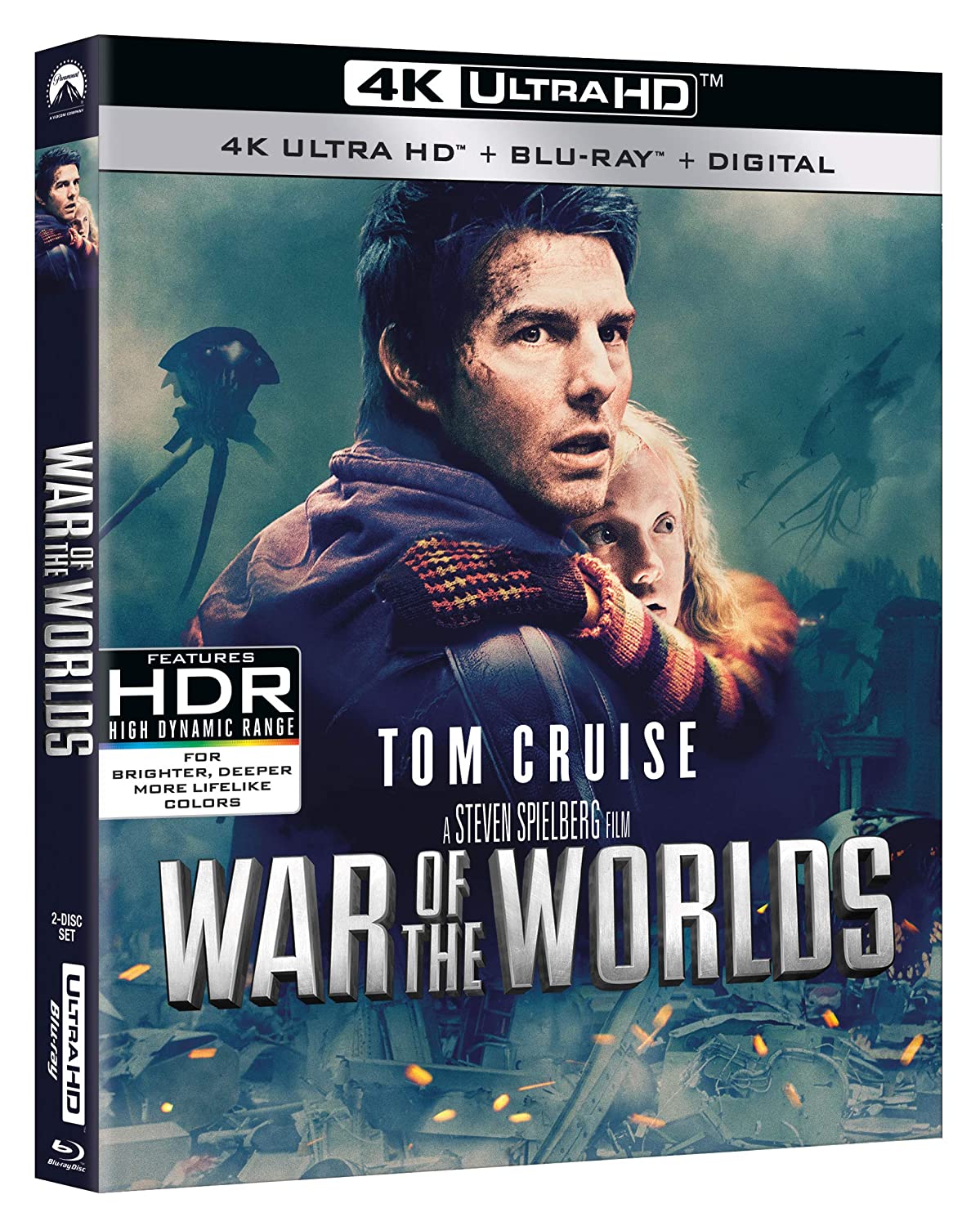
Ray Ferrier (Tom Cruise) is a middle-aged divorcee with a blue-collar job and a rundown home in the New Jersey suburbs. When his ex-wife unexpectedly drops his estranged kids—ten-year-old Rachel (Dakota Fanning) and sixteen-year-old Robbie (Justin Chatwin)—off for the weekend, Ray is less than pleased. He’s always struggled with his parental duties, but now finds it increasingly difficult to communicate with his children. However, events beyond his control are about to force Ray to come to terms with his responsibilities. Bizarre lighting storms herald the arrival of alien tripods, which explode from beneath the Earth’s surface and begin dispensing death and destruction on the surrounding countryside. Narrowly avoiding the first attack, Ray returns home, grabs his kids, and embarks on a frantic journey across country to find their mother in Boston.
Posted in: Disc Reviews by Gino Sassani on May 13th, 2020
"Soldiers, Sailors, and Airmen of the Allied Expeditionary Force: You are about to embark upon the Great Crusade, toward which we have striven these many months. The eyes of the world are upon you. The hopes and prayers of liberty-loving people everywhere march with you... I have full confidence in your courage, devotion to duty, and skill in battle. We will accept nothing less than full victory. Good Luck! And let us all beseech the blessing of Almighty God upon this great and noble undertaking."
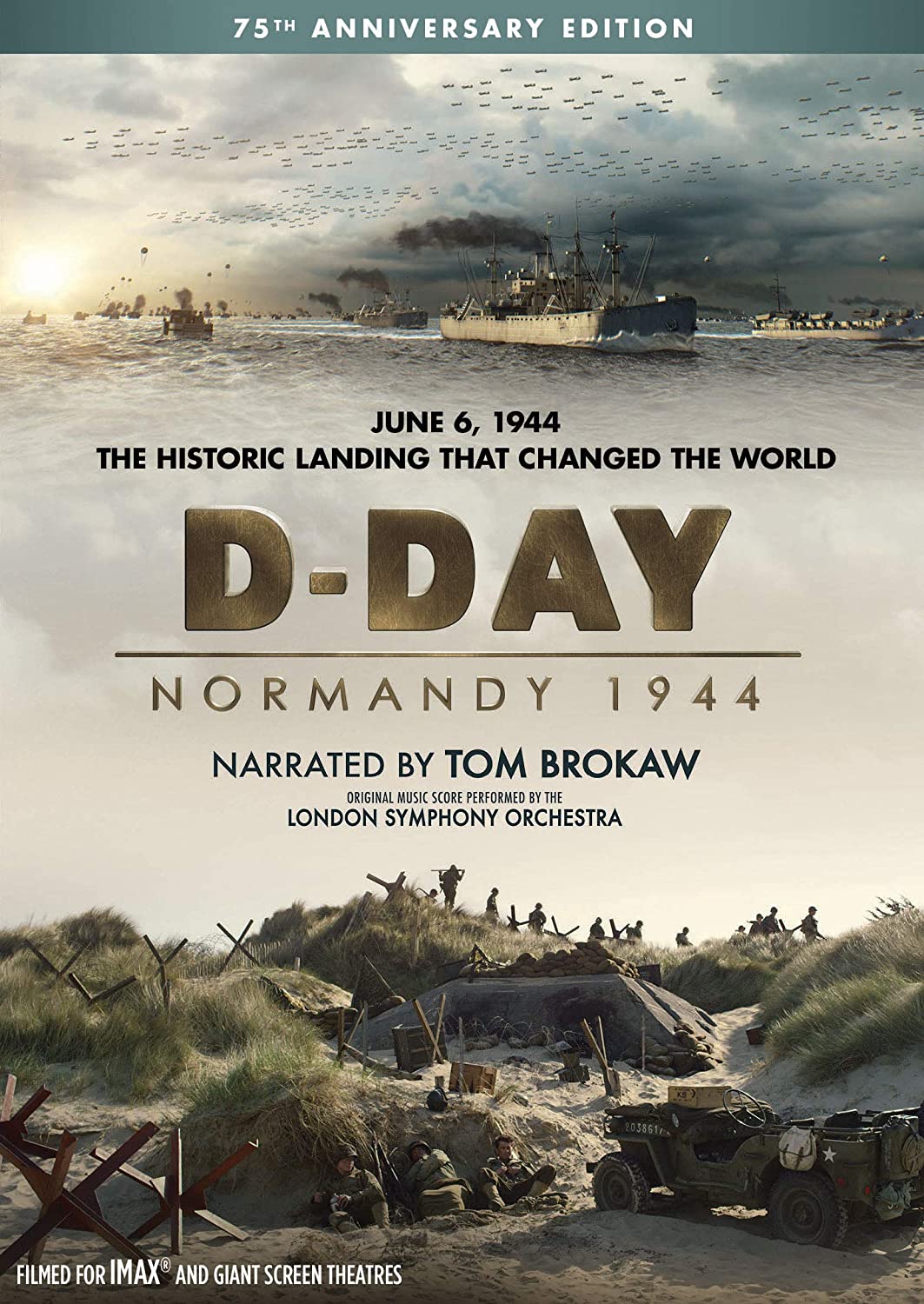
They've been called The Greatest Generation, and who are we to argue the point? Sitting here writing reviews from my comfortable seat in a state of the art home theater, I'm in no position to lay claim to the title. They fought in the bloodiest conflict in modern human history. Over 20 million were killed. That's a staggering number. If you're like me, it's not even real. I invite you to bear witness to one of the most important events in American history. World War II brought America out of the shadows of isolationism and onto the world stage as a leader and eventual superpower. D-Day was one of the momentous moments of both the war and America's transformation. There have been many documentaries and complete series events that have tried to chronicle this time in American and world history.
Posted in: No Huddle Reviews by Jeremy Butler on May 11th, 2020
So I had an interest in this film since I saw the preview for it; Blake Lively cast in her own revenge film. I know there is no shortage of this type of film. Luc Besson has actually made a career out of this type of film archetype, with each film being excellent in my opinion. Lively has never attempted anything of this nature, which I always find intriguing, to see an actress stretch her creative muscles. Sadly, I wasn’t able to convince my wife or my friends of the film’s potential, so on the rare occasion that I attend movies in a personal nature, I wasn’t able to steer anyone towards seeing this film with me. I mean, Blake Lively, Jude Law, and Sterling K. Brown -- you would have thought I wouldn’t have to do that much convincing, but sadly everyone I showed the trailer to felt that the film’s premise had been done before. I won’t dispute that there have been several films that are similar, but in my opinion, The Rhythm Section brings a unique grittiness to the genre. It took some type to see the film, and though I do feel that the film rushed its conclusion, I thoroughly found it enjoyable, and the mentor/mentee dynamic between Law and Lively was a huge selling point for the film.
Posted in: No Huddle Reviews by Gino Sassani on May 7th, 2020
"Good evening. My name's Wayne. Some of you may have seen me before. I hope so. I've been kicking around Hollywood a long time. I've made a lot of pictures out here. All kinds. Some of them have been westerns, and that's what I'm here to tell you about tonight. A western. A new television show called "Gunsmoke". When I first heard about the show "Gunsmoke", I knew there was only one man to play in it. James Arness. He's a young fellow, and may be new to some of you. But I've worked with him, and I predict he'll be a big star. And now, I'm proud to present "Gunsmoke"."
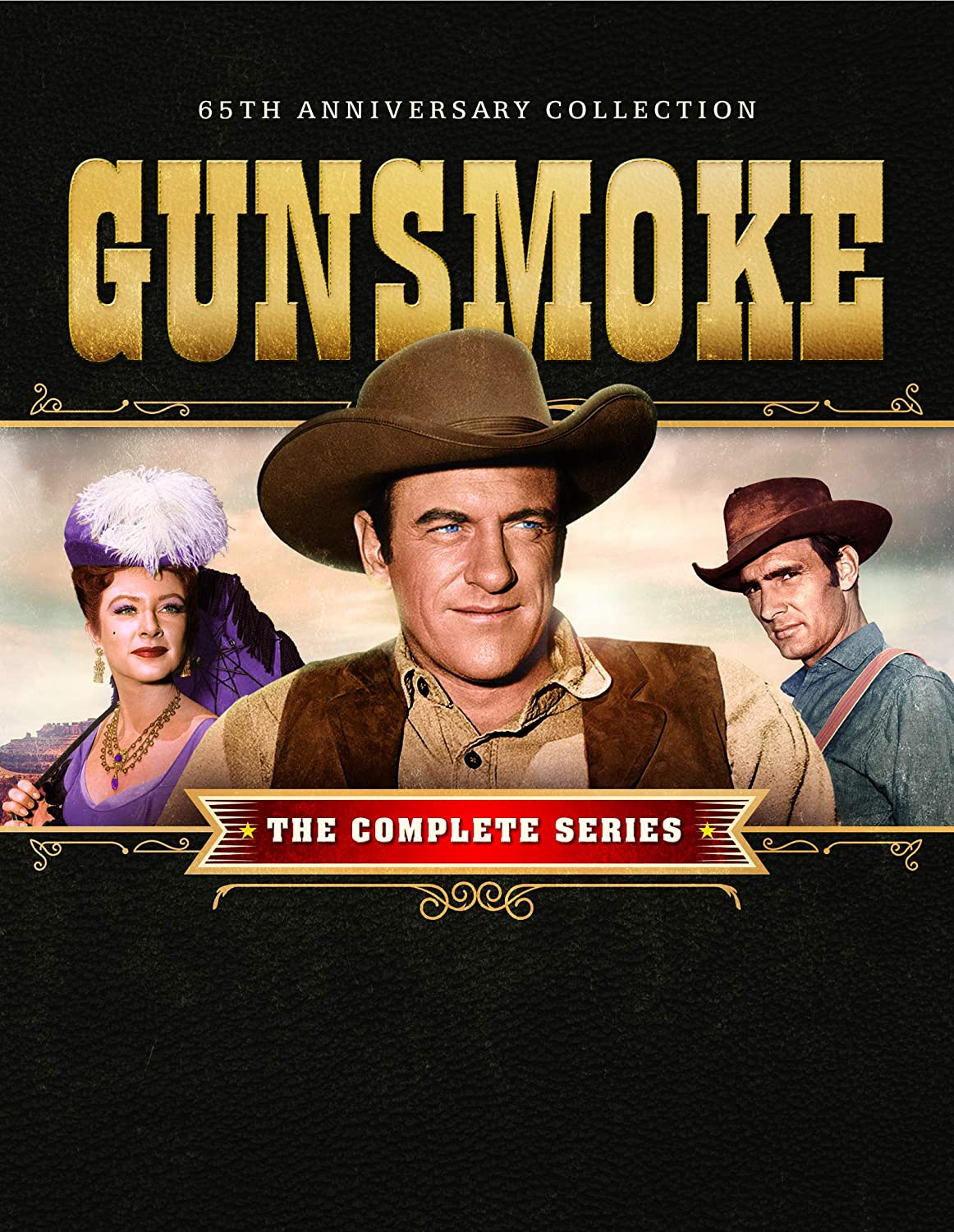
That was John Wayne introducing the television audiences of 1955 to Gunsmoke. Gunsmoke fans have had a long wait to get the full series on DVD, and that long wait is finally ended. If you have been picking up the seasons as they have been released along the way, sometimes in half-season sets, you only had a season remaining to complete your collection. If you waited or have become a recent fan of the classic western, another alternative has presented itself. CBS has released the entire 20 seasons in one collection. Even if you have been collecting all along, you should consider selling or gifting your single or half-season sets and opt to have them all in one place anyway. Those cases take up a lot of room on the DVD shelf, and while this collection isn’t exactly tiny, it does take up less space, with an option to store on its side where it takes up very little shelf space, but you’ll need almost 13 inches of headroom on your shelf. Even on its side it's a good third less space than all of those cases. The design is simple and quite functional. Inside of a strong cardboard case you'll find the 20 seasons split out over six large plastic cases. The seasons are contained in the following six groups: 1-4, 5-7, 8-9, 10-12, 13-15, 16-20. The boxes avoid those stacked spindles, a choice I highly approve of. The box is an attractive case that looks like it's leather-bound with a panoramic color photograph of the main characters on one side.
Posted in: No Huddle Reviews by Gino Sassani on May 7th, 2020
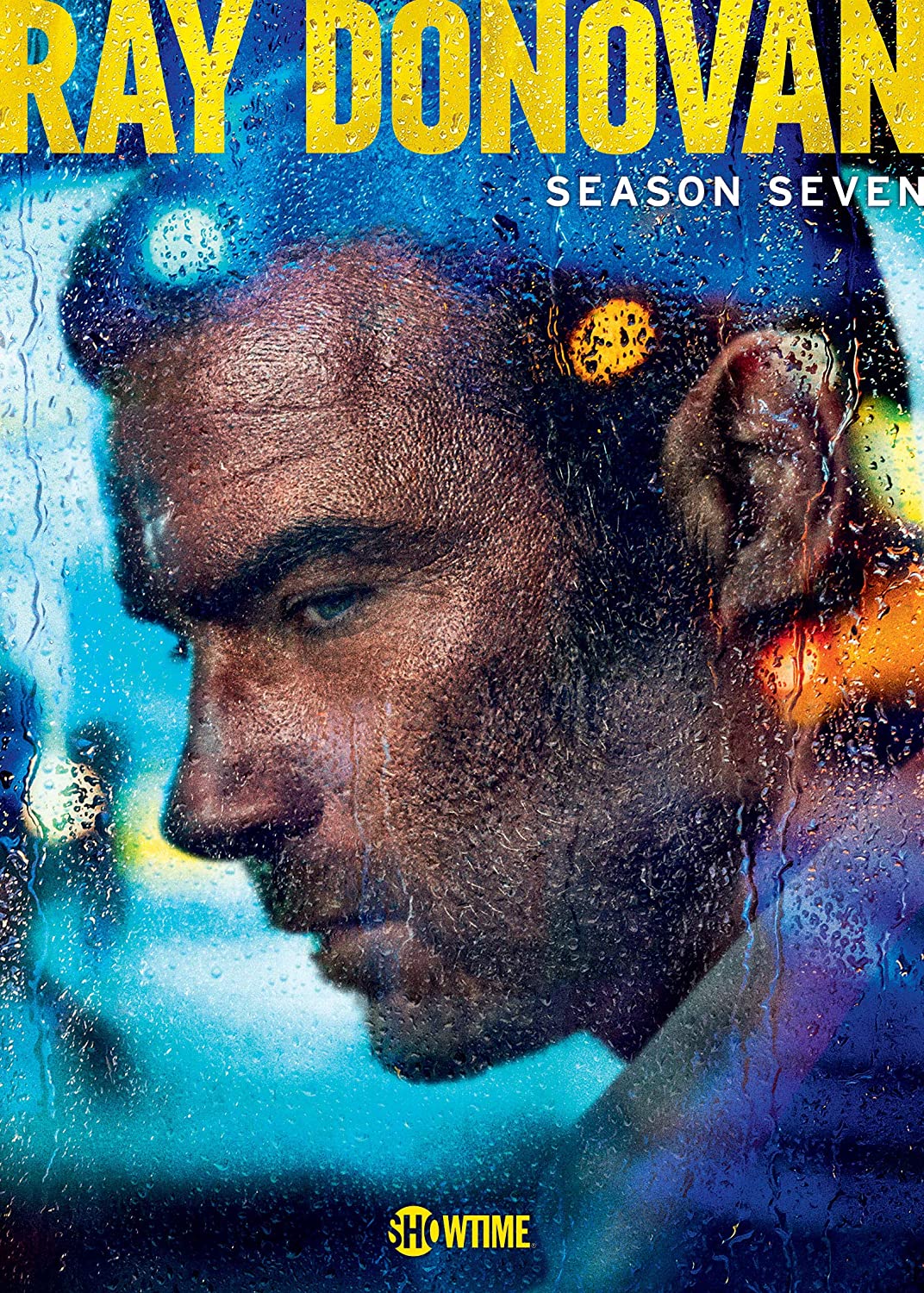
For all intents and purposes, Season 7 is the final season of Ray Donovan. The end came rather suddenly and after it was too late to create and film some kind of satisfying finale for the series. The cast and crew were taken by surprise, so you can imagine how the fans of the show are taking this. To make matters worse, the last episode, while not a complete cliffhanger, leaves too many strands of thread that weren't connected. There's nothing satisfying about this finale, and that created waves in the world of fandom. Star Trek is famous as being the first television show that a network cancelled and then brought back because of a huge letter-writing campaign that flooded network executives and pushed them into an unprecedented action for that time. The show was brought back. Imagine what those rabid fans could have done today with the internet and social media. The call has gone out, and while Showtime has made no move to offer any kind of reversal or concession, the show's star reached out with a somewhat cryptic message of hope. He assured fans that the Donovan family isn't finished just yet. What that reprieve might be, there isn't a clue offered, but it's doubtful at this point that the show will return as an 8th season. The likely scenarios include a Showtime film like we saw recently for Deadwood. There's a shot at a feature film at the theatres, which is where Star Trek's original crew ended up. There's always a chance of a revival mini-series like we've seen over at Fox for The X-Files and Prison Break. I don't know what form it might take, but I do believe the characters will return in some way. Unfortunately new global circumstances have placed pretty much all television shows, films, and other outlets for entertainment in doubt, at least in the short term. Eventually we will get out of this, but I suspect Ray Donovan won't be the first priority out of the gate. Fans are going to have to be patient here. I believe it will happen, but I'm as equally convinced that it won't happen soon. So for now you're going to have to savor these last 10 episodes for a while, and this DVD release gives you the means to do just that.
Posted in: No Huddle Reviews by Gino Sassani on May 1st, 2020
Paramount is borrowing an old idea from Walt Disney Studios and making it a bit more modern. They’re digging into their vault of classic films and doing 4K restorations and releasing them under the new Paramount Presents banner. Now, as much as I’d like to see actual 4K UHD releases, I suspect that these are intended to be feelers for various classic films to try to gauge the demand for these trips into the archives. I also suspect that the titles that show the most promise will likely end up seeing a UHD release. It’s actually a pretty good plan and a chance for you to “vote” with your dollars and show each film what kind of interest still exists. I’m sure some will falter and fall by the wayside, while a few polished gems will show the kind of promise that calls for the 4K release. Now the restoration work is done, and it’s just a matter of printing some discs. So here’s a look at the first three films served up for consideration. Each is sold separately and comes in a cardboard case covering the plastic case that folds out to reveal a release poster for said film. The presentations are nice and geared toward the collector.
Posted in: No Huddle Reviews by Jeremy Butler on May 1st, 2020
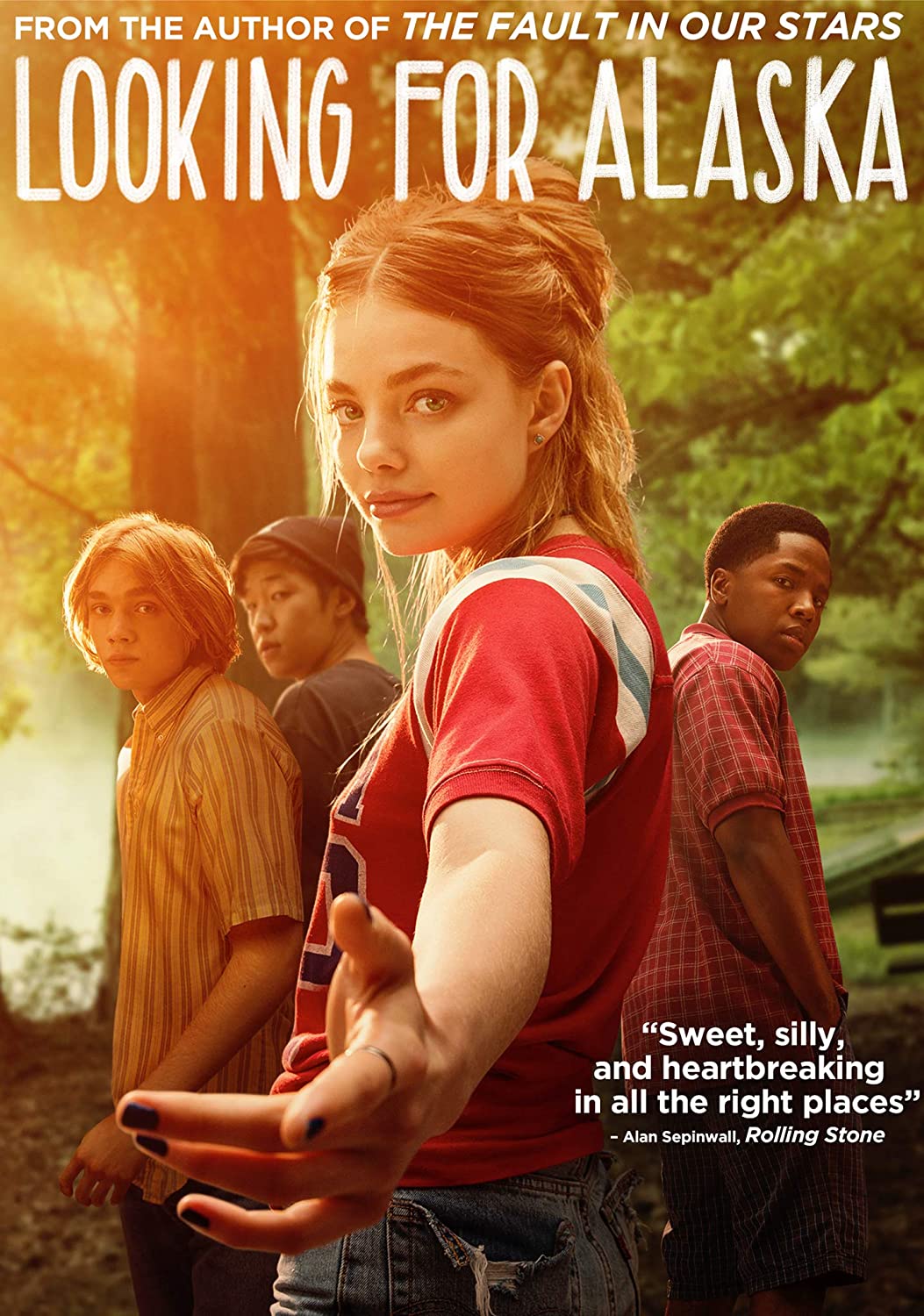
“If you take Alaska’s genetic code, add her life experiences, and relationships she had with people, and then you take the size and shape of her body, you do not get her.”
First impressions were that this was an experience that could by shared with my daughter. However, it wasn’t long before she found herself sent away due to the mature nature of the content. Little did I know that this series was Hulu’s answer to Netflix’s 13 Reasons Why. That said, though there are clear correlations between the two properties, such as they are both based on popular novels and cover highly emotional and serious topics such as suicide and the importance of connection with people. Looking for Alaska manages to infuse some levity into its plot. This inclusion goes a long way towards solidifying the limited series’ (as I understand it, there are no plans for another season) individuality and providing an enjoyable balance to what comes to a somber conclusion.
“If people were rain, I was drizzle and she was hurricane.”