Genre

“I thought this was a family show.”

“Well, it depends on your family.”

"Every ambition has a dark side."

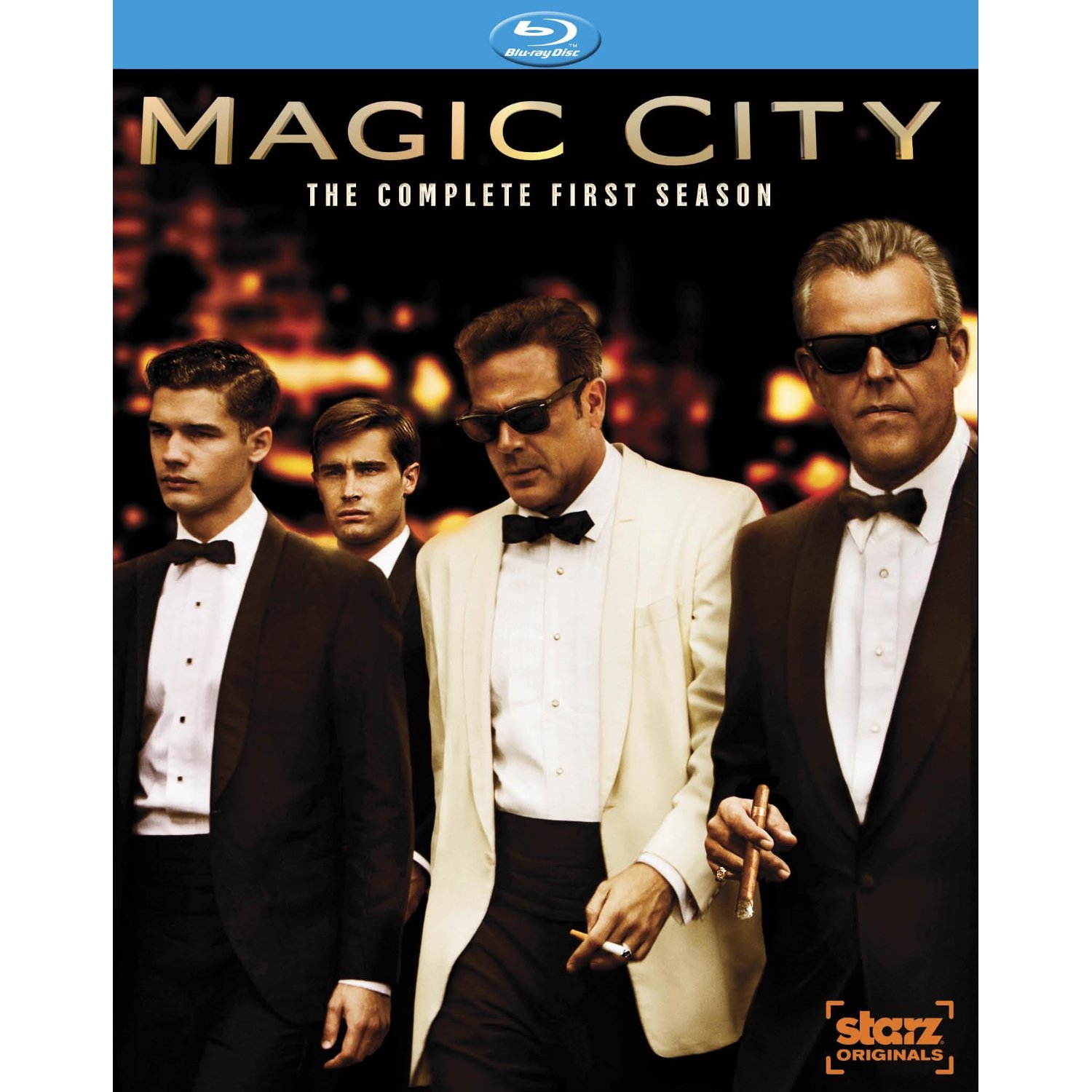
And that includes the world of the cable television series. The world of cable series has brought us some of the most ambitious and compelling television shows we've ever seen. There's no censor board to answer to, so that means the shows have the freedom to expand into visual areas that have long been taboo on network shows. Nudity, sexuality, language, and even violence are often huge parts of these kinds of shows. Because there isn't really a ratings pressure, the shows can also cater to more specialized audiences. Of  course, it's not completely true there are no ratings issues. For these networks it's getting the carriers to distribute their networks, and for some it's signing up premium members. There's little doubt that HBO did enjoy subscriptions completely tied to having The Sopranos. But that kind of programming is no longer rare. It no longer shocks us with its novelty, and the standards for quality have been established at a high level. When you watch a cable show, you don't just expect R material. You expect film-quality production values on the small screen. You also expect quality writing and compelling drama. In the case of Starz new Magic City, you'll have to settle for 2 out of 3. You get the edgy R material and outstanding production values. Unfortunately, the series misses more than it connects on the compelling drama front.

Among the more unjustly ignored performances was Jack Nicholson’s turn as union boss Jimmy Hoffa in Hoffa. Fox finally decided to put out the Danny DeVito-directed, David Mamet-written film on DVD. Mamet’s script seems to romanticize Hoffa, portraying him as more of a union man, as one who was forced to make deals that could compromise his integrity, but he overlooks his integrity in order to help benefit the American working man. The story is told in the point of view of Hoffa aide Bobby (DeVito), a fictitious character whose flashbacks are used to help us see how Hoffa perhaps should be viewed, as opposed to the punchline in some jokes we may make now.

As is usually the case with Mamet’s screenplay, the dialog is well-written and engrossing, and Nicholson’s portrayal of Hoffa is both powerful and persuasive. You see him with a prosthetic nose and hairpiece, along with a couple of dental devices that get the look of Hoffa down to a T. In DeVito, a longtime real-life friend, one who knows his ins and outs, Nicholson pulls out all the stops. Recent Nicholson performances seem to glide along on a gentle stride, using the occasional (and very effective) use of his noteworthy eyes. But in Hoffa, he’s a guy who is clearly more animated, as the role dictates, and it’s a much more dynamic performance than you’re used to seeing. Is Hoffa historically accurate? Probably not, and God knows there are more informed people who will tell you so. However, DeVito does manage to use the time period where Jimmy feuded openly with Robert Kennedy to great effect, using the congressional hearings as an interesting start of a plot device that helps provide an interesting hypothetical on Hoffa’s possible Mafia ties. With an outstanding supporting cast including Robert Prosky (Hill Street Blues), the late JT Walsh (Sling Blade), Armand Assante (Q & A) and a very young John C. Reilly (Chicago), the movie’s overall impact is very clearly felt.

“Did you pick your feet in Poughkeepsie?... Have you ever been to Poughkeepsie?... When you were in Poughkeepsie, you sat on the edge of the bed, didn’t you? You put your fingers between your toes and you picked your feet…. If I can’t bust you on this other thing, I’m going to bust you for picking your feet in Poughkeepsie.”

There can be no argument on this point. The 1970’s was a golden age for the cinema. When you think about the iconic characters and films the decade produced, it’s hard to contradict the point. Films like The Exorcist, The Godfather (both parts), Jaws,  Dirty Harry, Star Wars, Superman The Motion Picture, The Sting, Rocky, Deliverance, Apocalypse Now, Alien, One Flew Over The Cuckoo’s Nest, and yes, The French Connection. They redefined film genres. The slasher film was born in the 1970’s. Their influence is felt on nearly every film today, and inspired nearly every new filmmaker to come along in the years since. Yes, there were golden eras before then, but I’m not sure there’s been one since. Of course, there have been truly great movies since, but can you remember a decade with that kind of a run?

Direct to Video movies is usually just a clever term to mean “We have a small budget and B-List stars so we are going to skip the theater and go straight to video and hope to capitalize on the people who might pick this up on a very slow Friday night.” Today’s review is about a man simply known as the “Courier”. It could be a ripoff of the Transporter. It might be a mailman who handles packages by day and the ladies by night.
Bad B-Movies aside, let’s see how this one plays out.

We start this bright day with an amusement park. A wristwatch shows six minutes left. Let’s go over the cast of characters shall we? We have a grieving woman in peril, a deadbeat carnival owner and a gunman sitting on top of a rollercoaster. Wait, who’s down there? Why, it is the Courier (played by Jeffery Dean Morgan), he is here to deliver the goods for the banker’s daughter. What, are they not allowed to use train tracks anymore (federal regulations and all)?

“I don’t want to grow older, to become marginalized and ignored by society. I don’t want to be the first person they let off the plane in a hostage crisis.”

Normally, a movie has to have the words “Harry” and “Potter” in its title to attract the caliber of British acting talent assembled for The Best Exotic Marigold Hotel. The characters in the film may be in the twilight of their lives, but the performers who play them are at the top of their game.

When I started to review this film, I thought I would come up with a hokey beginning to celebrate the 31 Nights of Terror. That might have worked if I had reviewed It’s the Great Pumpkin Charlie Brown or a Lindsey Lohan movie, but to be truthful there is not much humor in this movie to be had. So let us skip the theatrics for at least one review and go straight into reviewing Bedevilled.

The movie starts with a story when vegetarianism was the way to go and the narrator went to camp for four days. The first day, they decided to talk a walk and they were showed various plants and told they could eat them. Some did, some did not. Later at night when they asked where the food was, the instructor said “Did you not get your fill during the walk?” The people laugh. They pull up to a scene where they see two thugs beat up a young girl and then chase her. The girl runs up to the car where the group of people is to ask for help. Unfortunately, they roll up the window and we fade to black.

"Sometimes dead is better."

From the rather twisted mind of Stephen King, Pet Sematary is actually one of my favorites of his horror novels. It’s scary to think the story was never meant to be published and only offered up to finish a contract with his earlier publisher. As has been the Stephen King plague at nearly every turn, something ends up lost in the translation. In the novel, the deeper subtexts that King is so adept at take several hundred pages to set up and ultimately pay off. Unfortunately a mere couple of hours of celluloid never …seem to scratch the graveyard surface soil. Pet Sematary is, sadly, a definitive example. While the original work taunts us with its mystic undertones that always seem far more believable than they ought to be, the film lays down a path as overgrown as the one leading to the titular graveyard. At first the two works are not so convergent, and a great deal of hope is to be had. Soon, however, the movie descends into the typical shock horror film so common in recent years. Startles and zombies begin to dominate the experience, while the story’s deeper and far more frightening elements lie as dead as the bones of the neighborhood pets.

"All the food here is fried. The whole town smells like mold. But they could use a good doctor; one who cares about her patients."

And that’s how a cynical New York doctor courageously puts aside a few (mostly true) stereotypes about the South and decides to stick around fictional BlueBell, Alabama. I’m just grateful the people behind Hart of Dixie exercised some restraint and didn’t call their show Southern HOSPITALity.

"It's funny. Some people never get to know the folks next door. They share a fence and nothing else. And we've shared everything. How did we get to be so lucky?"

Fans of Desperate Housewives have considered themselves lucky to have shared many a night with their television neighbors on Wisteria Lane. But like all good things, the ride has come to an end, and it's time to take up residence somewhere else.