Genre

This is the film that literally started a trend. Within a decade, submarine films would make a huge comeback in the big-budget film industry. Titles like Crimson Tide, U-571, and K-19: The Widowmaker all took a little from Red October. Maybe the Cold War is over, but our fascination with that modern version of cowboys and Indians doesn’t seem to have waned much in the last nearly 20 years. While our relationship with Russia might be up and down over the last two decades, there is still a part of our culture that can’t seem to let go of that classic game of good guys and bad guys. It’s not unique to the former Soviet Union by any means. World War II has been over for more than 60 years, but the occasional Nazi bad guys still make their presence known from time to time. Maybe it’s those accents. Whatever the reason, the seemingly dated subject matter of Red October is never a liability to the film. When Red October came out, the Soviet Union had just fallen a mere two years earlier, and there were some who suggested the film was an inappropriate reminder of those recent bygone days and might even be considered a slap in the face to the new regime in Russia. Fortunately this was not one of those instances where Hollywood let its often hypocritical sense of political correctness get in the way of a great film.

Jack Ryan (Baldwin) is a CIA analyst. When he comes across a spy photograph of a new Russian submarine, the Red October, he becomes concerned about a new feature. It appears two very large doors, too big for torpedoes, have been added to the standard Typhoon class vessel. He travels to Langley and meets with his boss (Jones) to have the pictures studied. When it’s discovered that the pictures could be a “caterpillar drive”, a silent running technology, Ryan finds himself advising the President’s National Security Advisors. The ship is now out to sea, and the Russians appear to have gotten suddenly very nervous. Is the ship run by a rogue commander with glorious visions of nuking the US? Ryan thinks he wants to defect, and now he must convince an entire chain of command to give Ramius the chance to do just that. Ramius must avoid the entire Russian fleet and convince the Americans of his intentions.

This movie truly took me by surprise; I was expecting another vapid romantic comedy tale without any original thoughts or concepts, but actress Emma Watson showed that she had something else in mind for this story that she penned herself. Based on the popular song by Wham! (yes, the exclamation point was necessary), Last Christmas follows the story of a girl who goes in the opposite direction of a new lease on life following a confrontation of her own mortality, and it takes a handsome stranger to help her see and appreciate the gift that she has been given. I know that it is not one hundred percent original, but it isn’t a premise that has been beaten to death, and there are some elements that keep it fresh. The manner in which the story unfolds is unique, and there is a twist that that took me by surprise. Not only did it take me by surprise, it utterly devastated my wife, who become a little bitter afterwards. Despite the effect the twist had on her, she couldn’t deny that this film starring Emilia Clarke and Henry Golding was very enjoyable. Writer/Actor Emma Watson also rounds out the cast as Clarke’s mother from the old country.

Kate works a dead-end job at an all-year-round Christmas-themed store in central London. She is basically homeless, bouncing from one friend’s couch to the other after wearing out her welcome wherever she lands. All the while she is chasing her dream of being an actress; however, even with this endeavor, she doesn’t fully put her heart into it. One day, she notices a handsome stranger (Henry Golding) standing outside the store looking up. When she confronts him as to what he is doing, he charms her with his unusual observations about there surroundings, causing her to chalk him up to being a random weirdo.

A common thread in fairy tales and stories of long ago is for there to be a perfect female that is amazingly romanced by a not-so perfect male.  In fact, he is usually average, clueless, and clumsy beyond belief.  During the narrative, we realize that the female is only perfect on the outside and is somehow flawed on the inside.  In the end, they live happily ever after.  The story changes sometimes in details, genders, and other minor pieces of information, but is overall the same in theme.  Today, we explore White Snake, which is a prequel to the Chinese fable, Legend of the White Snake.  Let's take a look.

Feathers fall to the earth and sea; a giant snake slithers along the ground below.  The reptile goes behind a rock, and out the other side comes a beautiful girl named Blanca.  She starts to float and then chants magic words as she falls into white nothingness.  Strings with hands reach out to grab her from all sides and she struggles to break free.

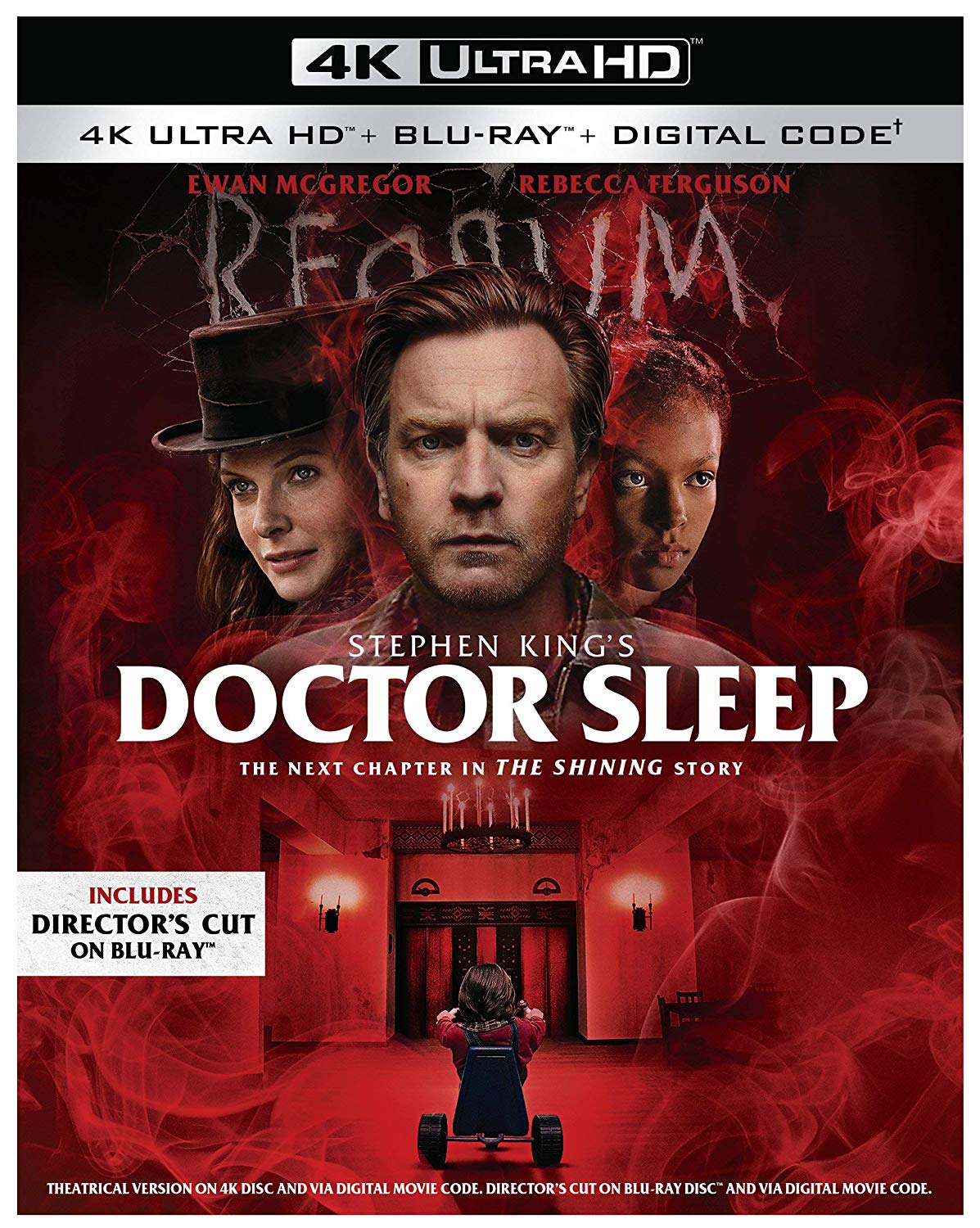
It would seem like audiences are suffering from a bit of Stephen King fatigue, as 2019 saw three theatrical releases of his films and each of them seemed to under-perform at the box office. Pet Sematary was a lackluster adaptation, and It Chapter 2 was fun, but still disappointing when considering how good the first was, and then there was Doctor Sleep, the long awaited sequel (depending who you ask) to The Shining.  When it comes to The Shining, I’m a fan of both King’s book but also of Stanley Kubrick’s take on the material.  King has always had his problems with the Kubrick version due to the many liberties taken with the material, and many people tend to forget how personal that story was for King and how it dealt with his own personal struggles with alcohol and addiction.  Because of all this, I believe it’s why the announcement of Doctor Sleep as a book and eventually a film was so shocking and even polarizing for some.  When I read the book, it was a fun and unexpected journey that eventually leads back to the Overlook, but most enjoyable was the journey on getting there as King created a sequel that delved more into what “the shining” is rather than simply return to a haunted hotel.  So how was the film, and how does the director’s cut differ from the theatrical cut?

For those unfamiliar with the story of Doctor Sleep, it follows Dan Torrance (Ewan McGregor), who is all grown up now but remains mentally and emotionally damaged from the previous events at the Overlook Hotel.  He’s followed in the footsteps of his father and has become an alcoholic and has done some horrible things along the way. It’s when he hits rock bottom that he meets Billy (Cliff Curtis), who helps him and takes him to an AA meeting which begins his long journey towards sobriety.  We also have a tribe of vampire like killers that call themselves The True Knot who are led by a powerful psychic named Rose “The Hat” (Rebecca Ferguson).  What makes The True Knot so terrifying is that they are a group, each with their own psychic skill type who prey upon those who also have psychic abilities, and to survive they literally feed on their psychic “steam”.  This “steam” is what makes them strong and helps prolong their lives, and to make this “steam” last, the more pain and fear they inflict on their victim the better it is.  As it turns out, “steam” is strongest in children, and this means that The True Knot is doing some horrible things to children as they travel in a caravan across the US.  This is where Abra Stone (Kyliegh Curran) comes in. She’s a young girl with powerful abilities who happens to psychically see the horrible death of one of the “steam” victims, and she reaches out to Dan for help.

“You'll die right here. On a frozen, blood-soaked battlefield, the moans of a generation of young men in your ears, dying in agony around you, for a lost cause. For a vile and wicked idea! For the sin of slavery! Can you hear them? God don't mean people to own people, Gideon!” 

Harriet Tubman, born Araminta Ross, is a staple of black history. Her deeds have been told and retold in history books for generations as one of the most successful conductors of the Underground Railroad, a network of anti-slavery activists and safehouses. Aside from her contributions to history, I knew very little about her individual history; that is a failing of mine. I’m not sure that an autobiographical film is the best avenue to correct this failing, given the propensity for things to be altered and sensationalize in order to draw crowds. However, even a sensationalized film has to have some basis in fact. Therefore, I am glad that this film made it into my queue, as it gave me a better understanding of Tubman’s accomplishment than I had previously. Bad Times at El Royale’s Cynthia Erivo takes on the monumental task of representing the historical figure on the silver screen, joined by Leslie Odom Jr. and Janelle Monae.

One of my main pet peeves in my life are the people who seem to hang on a celebrity's every word, or worse, a reluctant celebrity who gets pushed into the limelight because of a heroic deed or misdeed.  I have little desire to be famous (except to be published and recognized as a writer), but if I were, I am pretty sure I would labelled as a recluse and shun the public eye constantly.  Today, we explore Summer Days with Coo, a tale about a Kappa who is found by a boy after centuries of being fossilized. Then suddenly he gets thrust into the limelight with some unfavorable results.  Let us see what this one has to offer.

As we open, we hear a young kid ask his father about dragons.  The father talks about the creature, saying they are scary but are good sorts.  We then see the kid and his father and realize they are Kappas, water spirits or demons depending on your point of view.  Suddenly they hear a noise and realize that Lord Shimizu is coming their way.  The father tells the son to hide while he talks to the human.

I’ve gotten used to the cinematic disasters Bruce Willis has attached himself to over the past few years.  I’ll admit, I was surprised to see him in Motherless Brooklyn, and after his impressive performance in Glass, I had hoped he was going to attempt to get himself in to some higher caliber films.  Willis has stayed in shape, especially for an action icon who is getting up there in his years, and he still manages to have a presence when he appears on screen.  Sure, I get that we can’t expect him to keep throwing himself out of exploding buildings and having elaborate fight scenes. In a perfect world, I’d love to see him be able to revisit the role of Joe Hallenbeck in a The Last Boy Scout sequel. Heck, while staying on the nostalgia train, I’d be on board with a Hudson Hawk sequel over some of these direct-to-video films he’s been doing.  Getting back to Trauma Center, we have a new direct-to-video action film that features Willis attempting to save a young girl’s life who happened to be at the wrong place at the wrong time. Is the film worth checking out, or is it one you should simply pull the plug on and avoid?

Madison (Nicky Whelan) and her little sister, Emily (Catherine Davis) have relocated to Puerto Rico after their family has been struck with tragedy.  Madison is struggling to do what she can to take care of her sister, but it’s been a bumpy road for the two of them.  Emily also has asthma, which means in cinema terms, at any moment she can die if she’s overly excited.  As it turns out, it’s an asthma attack that lands Emily in the hospital where she needs to stay the night so she can be monitored.  While this family drama is going on, there are a pair of corrupt vice cops who are trying to locate a snitch who has evidence on him that could put the two away.  This introduces Lt. Wakes (Willis), who is asked to check in on the informant and ends up discovering the dead body of the informant.

“They're creepy and they're kooky, Mysterious and spooky, They're altogether ooky, The Addams Family.” 

That is for those who read my Addams Family double feature post regarding the Addams Family theme song. Of course that is merely the first verse of the song. Have no fear, as the animated film features the full version. It must be kismet, as I had the privilege of reviewing the animated film so soon after reviewing the double feature, though I suspect that this was by design. Though this cartoon does not fit the traditional view of what a horror film is, I would argue that the subject matter is more than enough to grant it entry. Featuring a lighter tone than its subject material, this incarnation is an enjoyable experience that can be shared with the whole family, which was my experience as I was able to bring my daughter to the film with me, and I’m happy to say it got her stamp of approval.

During the 1950’s, being a private investigator wasn’t always a safe and sure way to make a living. But it was a popular way to make some cash for returning soldiers or ex-police officers. During these times things were beginning to modernize, and the world was becoming more dependent on advancement in the skyline. With these changes, corruption and deceit became more evident, and private investigators became more popular. When Frank Minna’s (Bruce Willis) agency gets a chance to make some real money, things begin to get ugly fast. In his crew there is Lionel Essrog (Edward Norton), an orphan with Tourette's syndrome that Frank took under his wing when Lionel was 13; they have been friends ever since. Then there is Tony Vermonte (Bobby Cannavale), Gilbert Coney (Ethan Suplee), and Danny Fantl (Dallas Roberts). Frank has known these guys for many years and trusts them with helping to investigate the cases for his company.

When a job goes awry, the team has to discover what went wrong and how far this assignment will actually take them. Lionel takes the initiative and starts on this case that will bring him among the very powerful and the group these power-hungry men want to take down. Following the breadcrumbs brings Lionel in many directions, but it all somehow centers on Laura.

As a man, I have watched my fair share of Desperate Housewives, Mistresses, Sex and the City, and even reality shows like Real Housewives of "Insert Name Here" county or city.  I'm not sure any of it was by choice.  Well, Mistresses did have Alyssa Milano, so there is that.  I have learned, however, that while it might be undesirable to watch these types of shows, typically, it can be a good thing to do with your better half.  It can broaden the lines of communication, and if nothing else you can sit there with your loved one and collectively wonder how high your tolerance for pain is.  Enter Big Little Lies Season Two.

At the end of the first season, we learned that Perry Wright (played by Alexander Skarsgard) was murdered.  Technically, it was Bonnie Carlson (played by Zoe Kravitz) who issued the final push which sent him down the stairs to his demise.  However, there were four others involved in the altercation including Madeline McKenzie (played by Reese Witherspoon), Renata Klein (played by Laura Dern), Jane Chapman (played by Shailene Woodley), and Perry's wife Celeste (played by Nicole Kidman).  While it was justified due to the repeated abuse of Celeste and rape of Jane, the fact remained that it was murder.  The five women collectively decided to say that Perry slipped and that the murder was accidental with nobody at fault.  But as we know, secrets are sometimes hard to keep.