Disney

"Wanted: a nanny for two adorable children. If you want this choice position, have a cheery disposition, Rosy cheeks, no warts. Play games, all sorts. You must be kind, you must be witty, very sweet, and fairly pretty. Take us on outings, give us treats, sing songs, bring sweets. Never be cross or cruel. Never give us castor oil or gruel. Love us as a son and daughter, and never smell of barley water. If you won't scold and dominate us, we will never give you cause to hate us. We won't hide your spectacles so you can't see, put toads in your bed, or pepper in your tea. Hurry, nanny! Many thanks!"

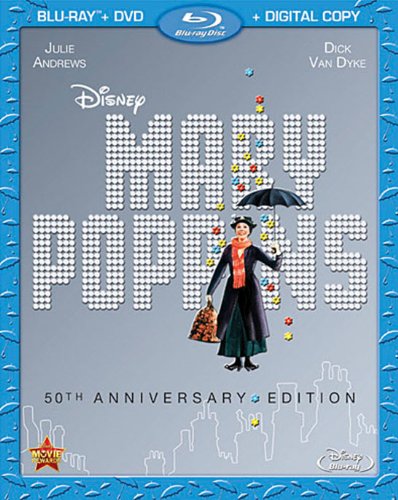
And so the call goes out for Mary Poppins. It was 1964 and Walt Disney had a terrible time convincing writer P.L. Travers that Walt Disney Studios should be the ones to bring her flying nanny to life in a feature film. Those trials and tribulations are the subject of a new film out by Disney called Saving Mr. Banks. And so the Blu-ray release of Mary Poppins has been timed to the box office release of Mr. Banks.

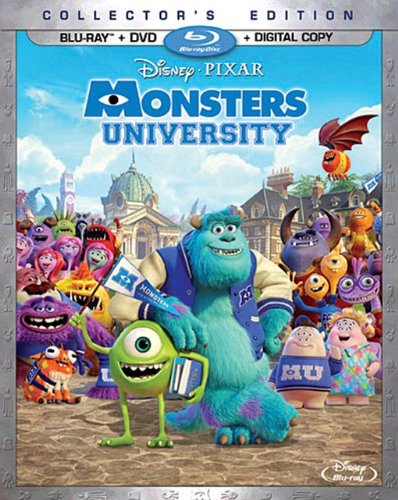
The boys are back, and I only have one question. What the heck took so long? I have a lot of respect for Pixar and the groundbreaking films they've created over the last couple of decades, but I have to question someone's marketing good sense when they get a sequel to Cars out before anyone bothered to look towards what is arguably the studio’s best creation to date. For me it's all about Monsters, Inc. I hadn't fallen so hard for an animated film since The Lion King, and so I was thrilled when I got the invitation to graduate early from Monsters University.

Who are "the boys", you might ask. If you're serious, then you might actually be reading the wrong piece. For the rest of you, "the boys" are Mike Wazowski (Crystal) and James P. "Sulley" Sullivan (Goodman). And it's been a dozen years since we last saw them in Monsters, Inc. A sequel to that film might be a bit problematic. We learn that laughs provide far more power than screams, and we leave the power structure of Monsteropolis on its head. Pixar's imaginative team took the best route available to them and decided to go the prequel pathway, and we get to see Mike and Sully as college students. Both have their sights on becoming master scarers. For Sulley, it's in the blood. He comes from a long line of successful scarers, and he's not really taking the college scene very seriously. For Sulley it's about fun. Mike, on the other hand, has stars in his eyes and works harder than anyone else on campus. But he might have to come to grips with the fact that he just might not have what it takes.

All good things must come to an end, and so it was at Walt Disney Studios. The Golden Age of feature film animation had started with Snow White And The Seven Dwarves in 1937. By the end of the 1970's it was all but gone. As the studio entered the 1980's the things had gone from bad to worse. Walt was gone, and so it seemed was the magic. Most of The 9 Old Men had either retired or passed away. The studio leadership was considering closing the animated studio and moving on to live-action films only. It was a dark time for the artists and creative folks at the Mouse House. A shadow had fallen. Sounds pretty much like the beginning of a Tolkien tale, doesn't it?

Enter a new regime. Michael Eisner became the new head of the company, and Jeffrey Katzenberg teamed up with Walt's brother Roy Disney to head the new studio. The first thing they did was banish the animation studios from the Disney lot and set them up in warehouse-like trailers in the middle of industry nowhere. It looked like the axe had finally fallen. But the exile turned out to be the best thing that ever happened to this new generation of Disney talent. Under the new leadership the creative forces banded together and began to do something they hadn't in a long time. They began to dream once again.

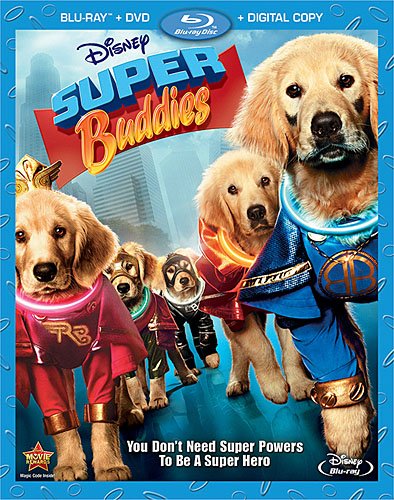
"You don't have to have super powers to be a superhero."

I know that's right. Hi. I'm Baby, and I'm the German Shepherd / Chow mix that runs security here at Upcomingdiscs. We call it Baby On Board Security, and if you want to know what my superpower is, just try and deliver one of your Fed Ex or UPS packages when I'm on duty, which is all the time. And that spells F A N G S.

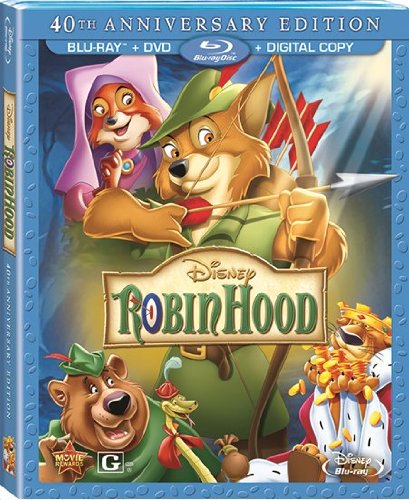
"You know, there's been a heap of legends and tall tales about Robin Hood. All different, too. Well, we folks of the animal kingdom have our own version. It's the story of what really happened in Sherwood Forest."

It didn't even start as a Robin Hood story at all. Walt Disney had many ideas and plans for fables and fairy tales that he hoped to bring to life with a feature animation film. It's no surprise that most of these ideas and plans simply never went beyond the dreaming stage. A few were caught up in production struggles, and remnants of those efforts can still be found in the treasure trove that is the Disney Archives. Some of these projects, however, were reinvented and became something very different from what was originally planned.

The time was that following the death of a good king, England was left without a clear heir to the throne. During the time without a king, England had descended into dark times. Suddenly as if through divine intervention a sword appeared in an anvil of stone. An inscription decreed that whosoever could remove the sword would become king. Think you’ve heard the story before? Well, of course you have. It is none other than the story of King Arthur. Most of us have heard the many stories. It shouldn’t have come as a surprise to anyone that Walt Disney himself was quite taken with the tale, when you consider it it’s about as natural a fit as one can find. Disney’s early works were replete with tales of seemingly ordinary people with extraordinary destinies. From Sleeping Beauty to Cinderella, Walt had put his own touch to many such tales.

Our story begins in this England of dark times. A wizard named Martin… eh, that’s Merlin … is sitting in his humble room awaiting the arrival of a special lad. Gifted with the ability to see forward in time, Merlin knows that this lad will soon be arriving, and it will be his responsibility to educate the boy. When the young man referred to as The Wart does arrive, it seems unlikely he could be destined for much of anything. He’s rather physically awkward and appears none too ambitious. Still, Marvin, that is to say, Merlin, takes on the task with an eagerness that becomes somewhat annoying to his companion, the owl Archimedes. The lessons involve for the most part magical transformations and a few catchy tunes. Before long “The Wart” aka Arthur finds and fulfills his destiny. This story is more about the journey than the destination. Arthur doesn’t have his encounter with the sword, often erroneously identified as Excalibur, until the last minutes of the film. There is a hint that more stories would follow, but they never really did.

“Once upon a time in New York City…”

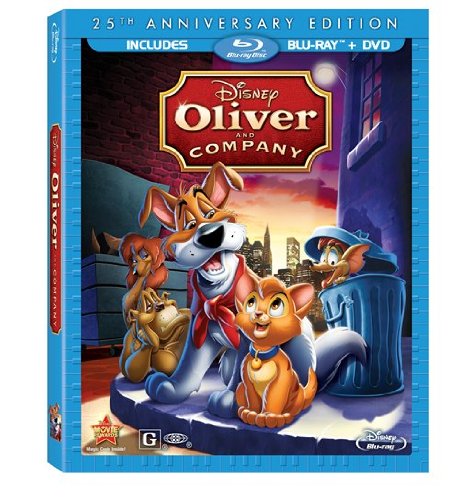
Walt Disney might well have been the storyteller of more than one generation of kids. Is it any wonder that when we think of such characters as Winnie The Pooh or Peter Pan our minds conjure the images wrought by Disney animators and not necessarily the classic literature descriptions? That might not be the case with this Charles Dickens story, retold through Disney’s trademark animal point of view. Oliver & Company doesn’t appear to have had the staying power of films both before and after its time. After watching the film again, perhaps for the first time since its release 20 years ago, I can’t imagine why it has never quite caught on. From a popular culture standpoint the film has all of the elements that have led to other more beloved Disney classics. The Dickens story is a familiar one, read by most literature students as a matter of course. Many of the era’s biggest names lent their voice talents to the characters, including Billy Joel and Bette Midler. The songs are about as catchy as anyone might have hoped for. Just what was it that relegated this little seen Disney adventure to the bargain bin of animation classics?

"You're capable of more than you know."

Walt Disney was always fascinated with the world of Oz. After his Snow White experiment proved that fantasy films were economically possible, he was planning to journey to Oz next. Unfortunately, he was a victim of his own success. It was the very box office magic that Snow White brought in that inspired MGM to purchase the rights to The Wizard Of Oz and create their iconic film. Because of that turn of events, the rights were not available for Walt and his magic studio.

"I'm bad, and that's good. I will never be good, and that's not bad."

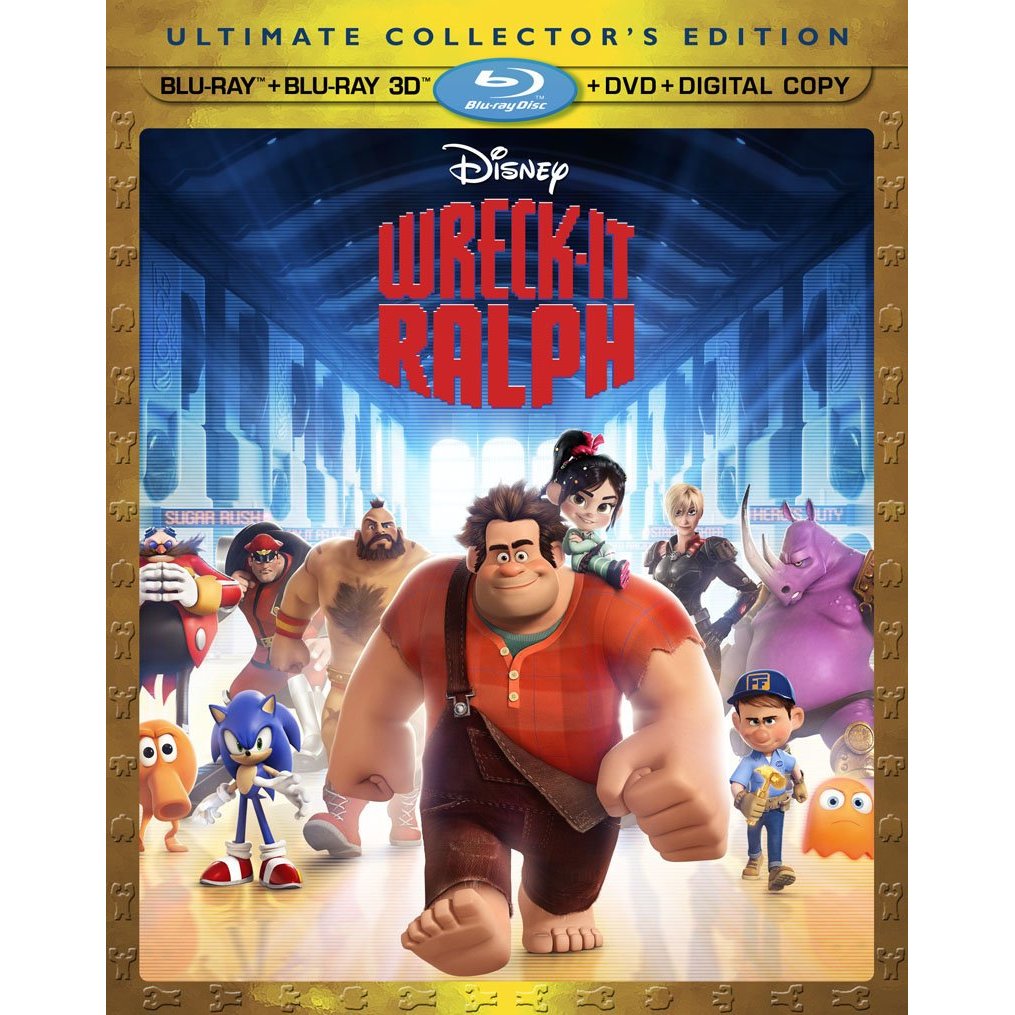
One of the easiest ways to let your age show is to talk about your favorite video games. If you're old enough, you even remember a time when there weren't any video games at all. Most people refer to this era as The Dark Ages. But I'm willing to admit that I put a deposit down on an Atari 2600 system these many years ago. If you have a love of all things video games and a great appreciation for the history of the field, Wreck-It Ralph was built just for you.

"All this has happened before and will all happen again. But this time it happened in London. It happened on a quiet street in Bloomsbury. That corner house is the house of the Darling family, and Peter Pan chose this particular house because these were people who believed in him..."

In 1953 with a little help from some Walt Disney magic, generations of children, and adults, of course, would learn to believe in the boy who never grew up. Peter Pan began in the imagination of writer J. M. Barrie. He appeared in a number of works from the Scottish author beginning in 1902 with The Little White Bird. The character had always been a favorite of Walt Disney himself, and it was originally intended as his second animated feature following Snow White. It became quickly apparent that the technology wasn't quite where he needed it to be to tell the story he wanted to tell. It was put on a shelf, but never forgotten. The rights to the character were willed to the children of a Children's Hospital in London, and it was from there that Walt managed to obtain the film rights for the animated feature we have today. Peter Pan has enjoyed success in pretty much every medium possible. There have been hugely popular stage productions where Peter was usually played by a woman. The character has appeared in film, music, comics, television, radio plays and, of course, printed form. He's an endearing and certainly enduring character who has now added high-definition Blu-ray to the list.