Studio

"We just shoot you. Less paperwork."

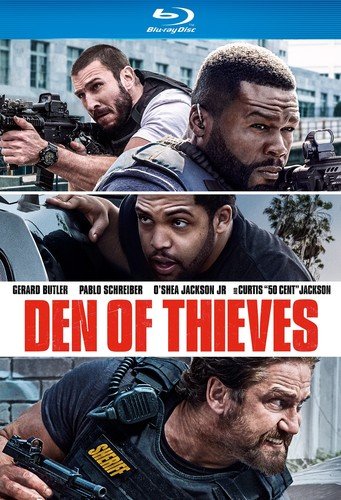
Most of us like a good heist film. It's fun to watch clever crooks work out complicated plans and then execute them. It's not hard to root for the crooks if they're likable enough characters. With me I almost have a kind of reluctant respect for criminals who are able to outsmart sophisticated systems. There's something about the perfect crime that fascinates a film lover like me. Logan Lucky was one of the better heist films I've seen in years, and I was ready to spend an hour and a half being impressed by ingenious crooked plan that runs like clockwork once again. What I ended up with was a horribly overlong 2 hours and 20 minutes. And the only thing that was running like clockwork was my impatience to get to the end. Logan Lucky was clever and a lot of fun. Den Of Thieves? Let's just say I was not amused.

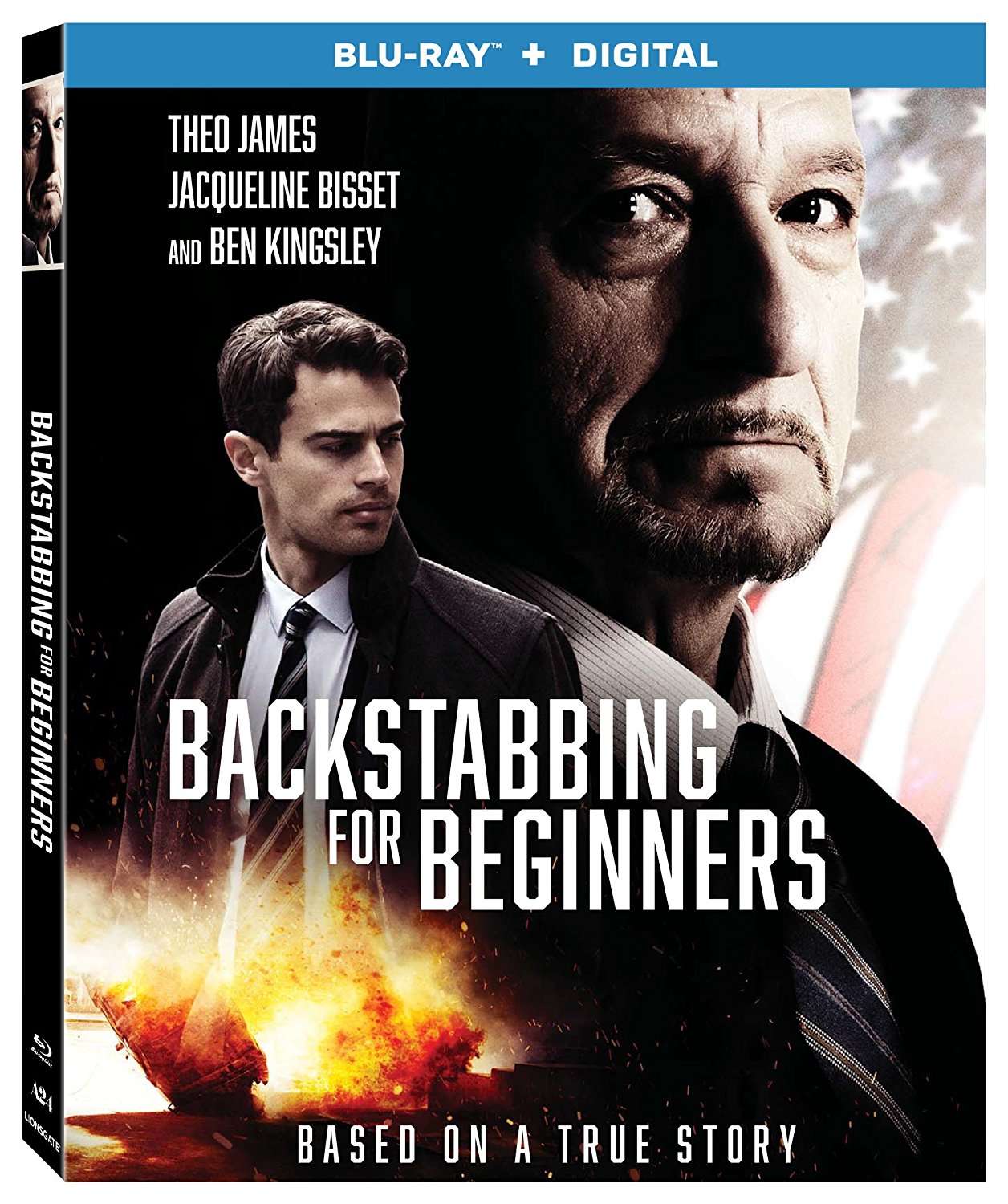
Like probably most folk out there in the real world, I learned everything I know about foreign diplomats from television and film. They dress in expensive suits, usually have a drinking or smoking problem, and harbor some immense secret that could bring about the fall of a whole country or even the world. They don't have friends or associates, instead they have pawns that they move around a theoretical chess board for influence and money. Finally, they would sell out their own grandmother if it meant a little more information at the bargaining table. Today, I review Backstabbing for Beginners, a movie that deals with UN Diplomats and the country of Iraq. Somehow, I don't think my opinion is going to change.

The New York skyline, September 2003. We are at the Wall Street Journal building and Michael Sullivan (played by Theo James) has a story to tell. We fade to black and then see an Iraqi propaganda piece before arriving at the United Nations Building in October of 2002. Michael has been called in for an interview, actually the fourth time he's tried to find work as a diplomat.

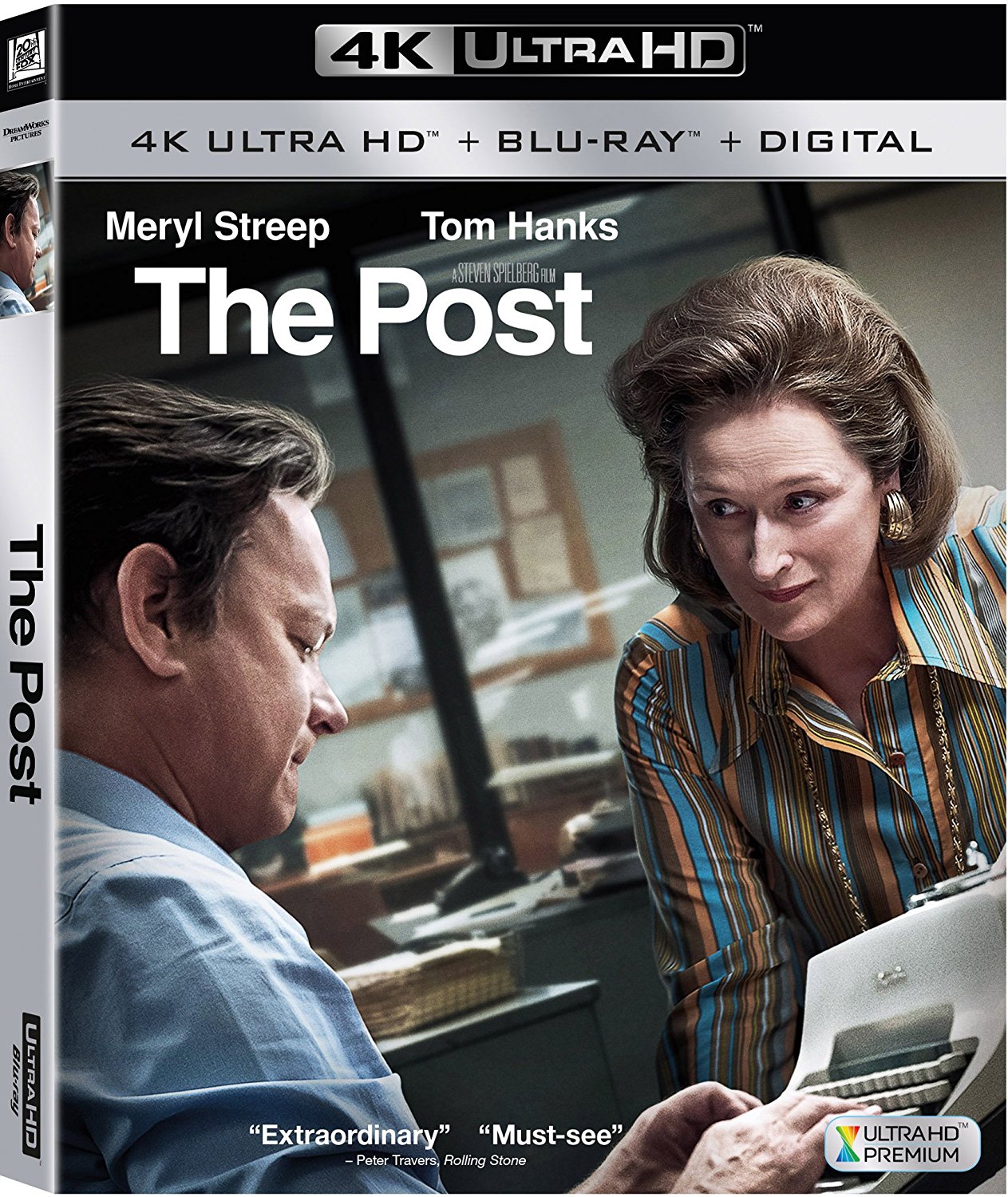
Several movies have been released over the past three decades that defend the press or show the importance of the media to inform the public.  This is one of them that for the most part does reveal the inner sanctum of one newspaper as it deals with exposing the government for wrong decisions leading to the death of thousands in the Vietnam War. While the script does reveal the sadness of human life losses that could have been avoided, unfortunately the film uses it to glorify newspapers using old news.

A platoon starts taking heavy fire in a wooded area, and the body bags start to fill at a high rate.  It’s the Vietnam War in 1966, and Assistant Secretary of Defense Daniel Ellsberg (Matthew Rhys) has just returned from a bloodbath after an ambush by the Viet Cong. Inserted as a military strategist under the Pentagon’s Assistant Secretary of Defense for International Security Affairs John McNaughton, he’s observing the war firsthand.

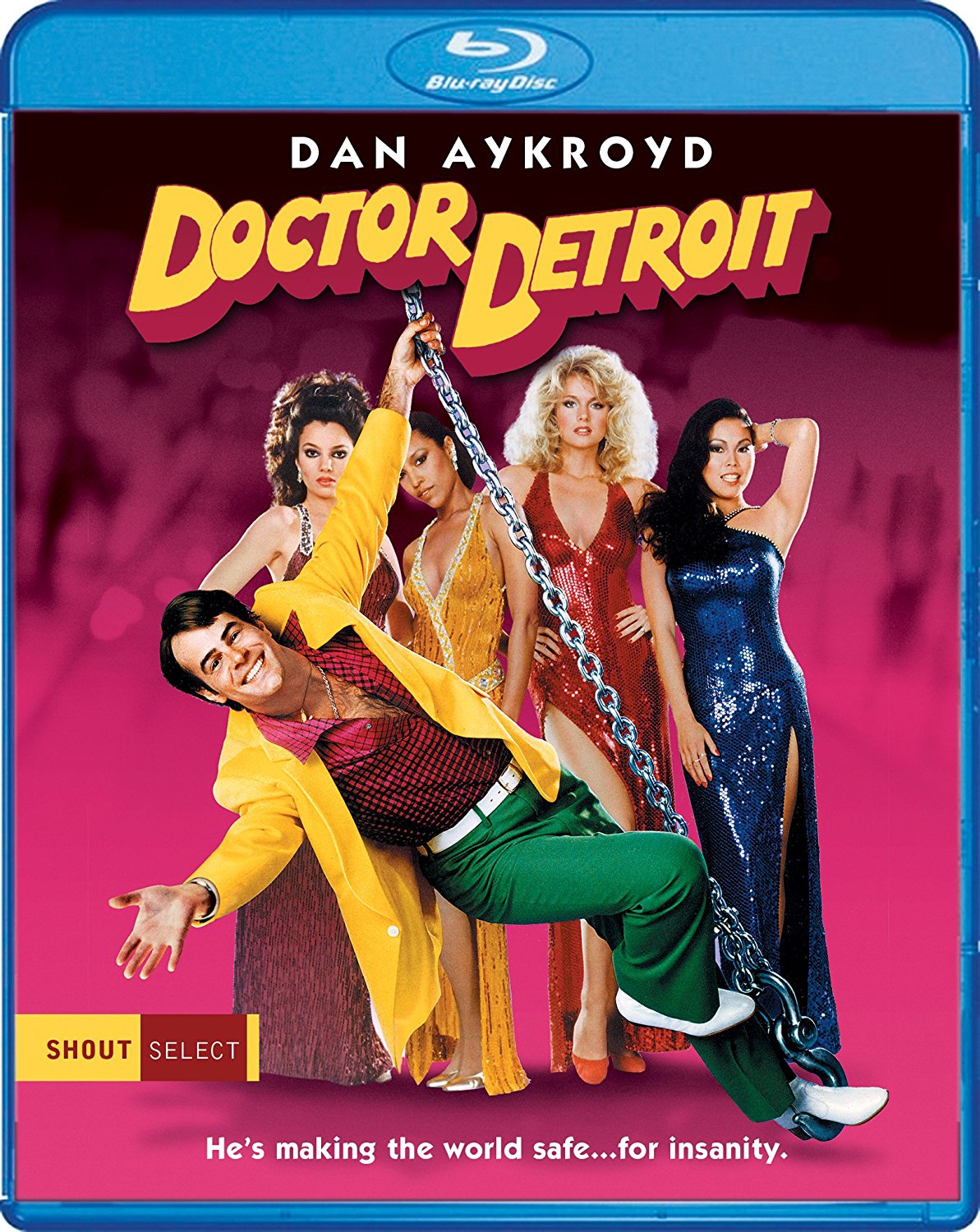
As I was working on this review, I came across a term that might just turn out to be a new pet-peeve. I am referring to the term or phrase, "Dated". This term is often used with movies that could have only existed and made in that time period. It gets used even more when it involves a comedy, especially one with jokes or concepts that could only occur in a certain decade. What's worse is that it is almost never used in a positive light, it solely exists to be negative and demeaning. Well, perhaps I can slowly change the connotation of that reference as I explore Doctor Detroit on Blu-Ray. Is it dated? Perhaps, but unlike other dated comedies of the 80's, it is wonderfully so.

A little Devo hits our speakers, hey it's the theme from Doctor Detroit. Except we are in Chicago. Professor Clifford Skridlow (played by Dan Aykroyd) is power walking down the street through everything in his path. It doesn't matter if it is a kissing couple, children playing or even speeding cars. He stops (and power walks in place) next to a swanky car driven by Diavolo (played by T.K. Carter). In the back is Smooth Walker (played by Howard Hesseman) and his four ladies of the night.

Wonder what he's been smoking.”

When it comes to Cheech and Chong, you hardly have to wonder. What better way to celebrate 420 today than by revisiting Cheech and Chong's Up in Smoke, the OG stoner comedy? The film is celebrating its 40th anniversary this year, which Paramount has commemorated with this new edition. But how well does this high-larious comedy classic hold up in 2018?

When David Ayer's Suicide Squad film was released a couple of years ago, the reviews were certainly mixed. One of the biggest complaints from the diehard fans was that Warner opted for a PG-13 version of the film, which took away much of the edge of the material. One only need look at the success of Deadpool to understand that there is a place for a comic film that pushes envelopes and doesn't shy away from an R rating. It almost appears that the new Warner/DC animated feature film Suicide Squad: Hell To Pay would attempt to make up for that decision. This may very well be an animated "cartoon" film, but it's a hard-edged R-rated experience that doesn't shy away from brutality, blood, and violence. But if you're thinking that maybe this is the film the live-action movie should have been, you are in for a disappointment of the epic kind.

The film begins with a bloodbath before the title credits even roll. A squad of Tobias Whale (Fennoy), Count Vertigo (Pirri), Punch (Devall) and Quinn lookalike Jewlee (Nathanson) are betrayed on a mission and graphically slaughtered. What was their mission, and what were they after? Amanda Waller (Williams) quickly puts together an A-team of criminals to follow up. In this film the team is made up of Deadshot, voiced by a badly-cast Christian Slater, Harley Quinn, voiced by Tara Strong, who has the unenviable job of following Margot Robbie's performance, Flash rouge Captain Boomerang, voiced by Spartacus himself, Liam McIntyre, Killer Frost, voiced by Kristin Bauer van Straten, Copperhead, mostly slithered by Gideon Emery, and Bronze Tiger, voiced by Billy Brown. They are sent after an object sought by a few bad guys, most notably the not-so-immortal Vandal Savage, voiced by Jim Pirri. The object is where the film wastes its violent mayhem. The object of such desire is literally a "Get Out Of Hell Free" Card. Yeah, that's what I said. It's a card that says "Get Out Of Hell Free" on its surface. The idea is that anyone who dies in possession of said card gets to bypass the eternal flames and head directly to the Pearly Gates. It can only be used once, and in the film's final crimson massacre, a few characters attempt to meet their end with the card.

- “We’ll get another chance…to go home. It wasn’t the right time.”

- “What’s the right time?”

Lin Oeding has been involved with stunt work in film and TV for nearly two decades; it should come as no surprise that his first feature film would showcase some excellent stunt work throughout.  Before Braven, I knew Jason Momoa had done work on Game of Thrones and had his bit as Aquaman in Justice League, but I had never gotten the chance to see him genuinely flex those acting muscles of his till now.  I’m not about to say Momoa delivers a tour-de-force performance here, but it’s nice to see that he’s attempting to show a little range while beating up on the bad guys in the process. One would think the pairing of Oeding and Momoa would equal a surefire action hit, but instead we get an action film that unfortunately lacks any substance beyond some of its unique kills.

Joe Braven (Momoa) is a logger but is also a family man who seems to go days at a time without seeing his wife or daughter, so their time together you’d think would be more precious.  Momoa does a good job at playing the loyal husband and loving dad, but the relationship that the film focuses on most is between Joe and his father, Linden (Stephen Lang) whose mental health is deteriorating. After Linden gets into a bar fight that has him leaving the hospital in stitches and a warning from the police that next time Linden will be serving some jail time, Joe decides it’s time to have some one-on-one time to decide what he needs to do about his father. The problem is, rather than use this as a springboard to move the plot along and give us a chance to see this father-and-son relationship play out, it’s clear the film only used this as a device to get the characters from point A to point B.

by John Delia, Jr.

"Everyone has an act."

Did you hear what the teacher wants?”

We’ve all had that especially demanding teacher whose class we quietly dreaded. Yet instead of pushing her students toward academic excellence, the educator at the center of The Teacher is infinitely more interested in what her kids’ parents can do for her. This Czech/Slovak drama hints at some interesting points about compliance. But like a student — or perhaps even a certain movie reviewer — who uses too many flowery words before finally getting to the point…the movie ultimately can’t get out of its own way.