Studio

"Space...the final frontier. These are the continuing voyages of the Starship Enterprise. Its five-year mission: to explore strange new worlds, to seek out new life and new civilizations, to boldly go where no one man gone before!"

Of course, we never did get five years from that original show when it ended after just three years in 1969. The new film series has tried to fix that for us. The latest film picks up the five-year mission just after three years have gone by. It's a double homage to the original show. The number of days reflected the series start, and it picks up where they left off...kind of. But we did get a fourth and partial fifth year of the original voyages, and while it has never been considered truly canon, the original cast joined many of the original writers in 1973 to bring Star Trek back to the small screen. It was Filmation's Star Trek: The Animated Series, and it appeared on Saturday mornings from 1973 until 1974.

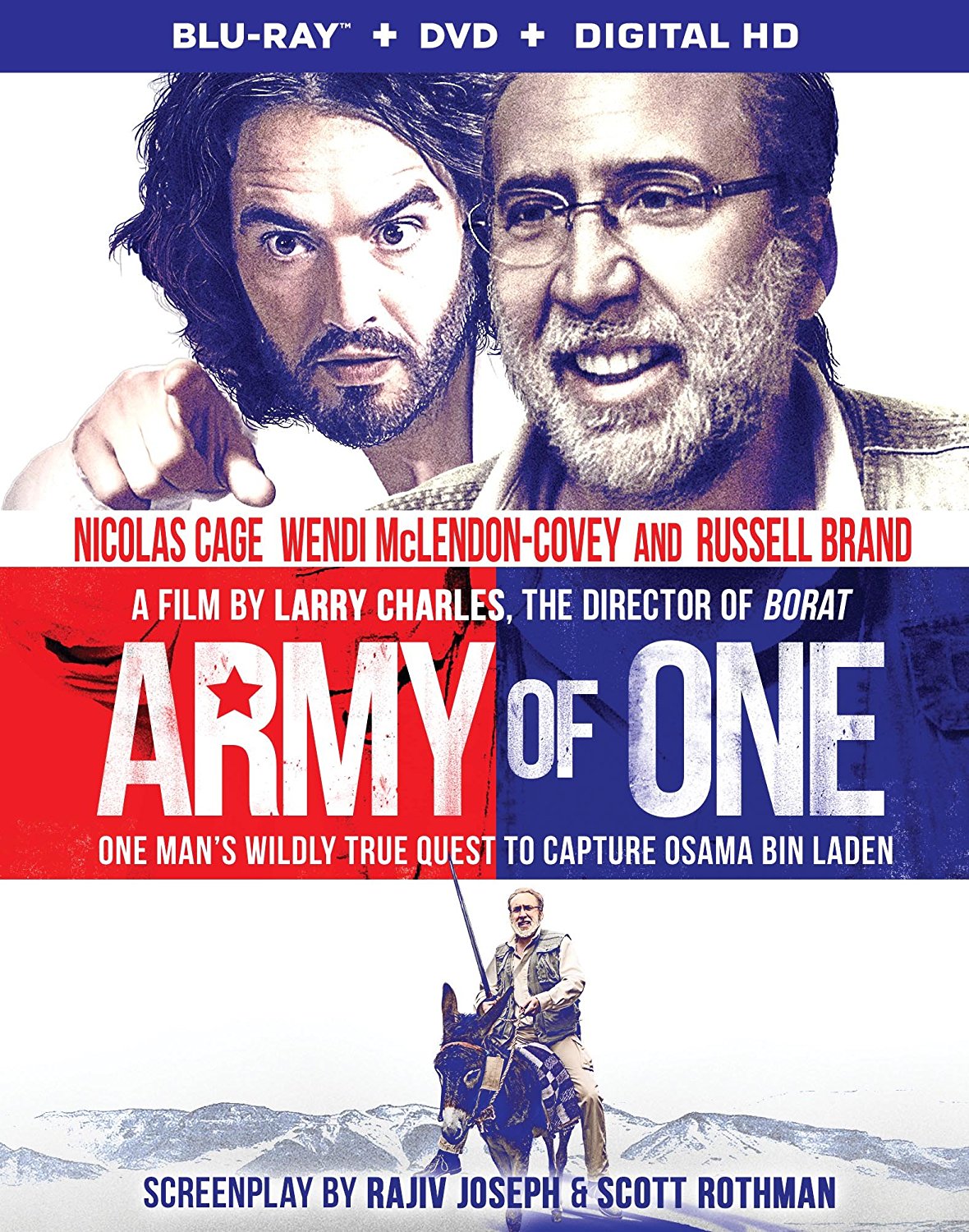
It’s been a while since Nicolas Cage has been in a big studio-released film.  It doesn’t mean he’s doing bad movies; it just means he’s not doing any tent-pole releases that flood the multiplex.  Seeing Nicolas Cage in a film like Army of One is simply a snapshot of how modern cinema has to evolve for better or for worse.  Really, I don’t mean to come off as though this is a bad film or inferior to any other films past or present, but ten years ago this is a film that would have had a much wider release and would easily have gotten more attention.  After all, who could resist Nicolas Cage in a film helmed by the director of Borat?

I vaguely remember hearing the story in the news. American Gary Faulkner (Cage) decides to set off on his own to capture Osama Bin Laden and bring him back to the US.  It was a story that was a little more than a blip in the headlines, but thankfully we have Army of One that delivers a film that embraces the insanity of the scenario and takes some liberties with the true story, all in the name of comedy.

Does death only come for the wicked and leave the decent behind?”

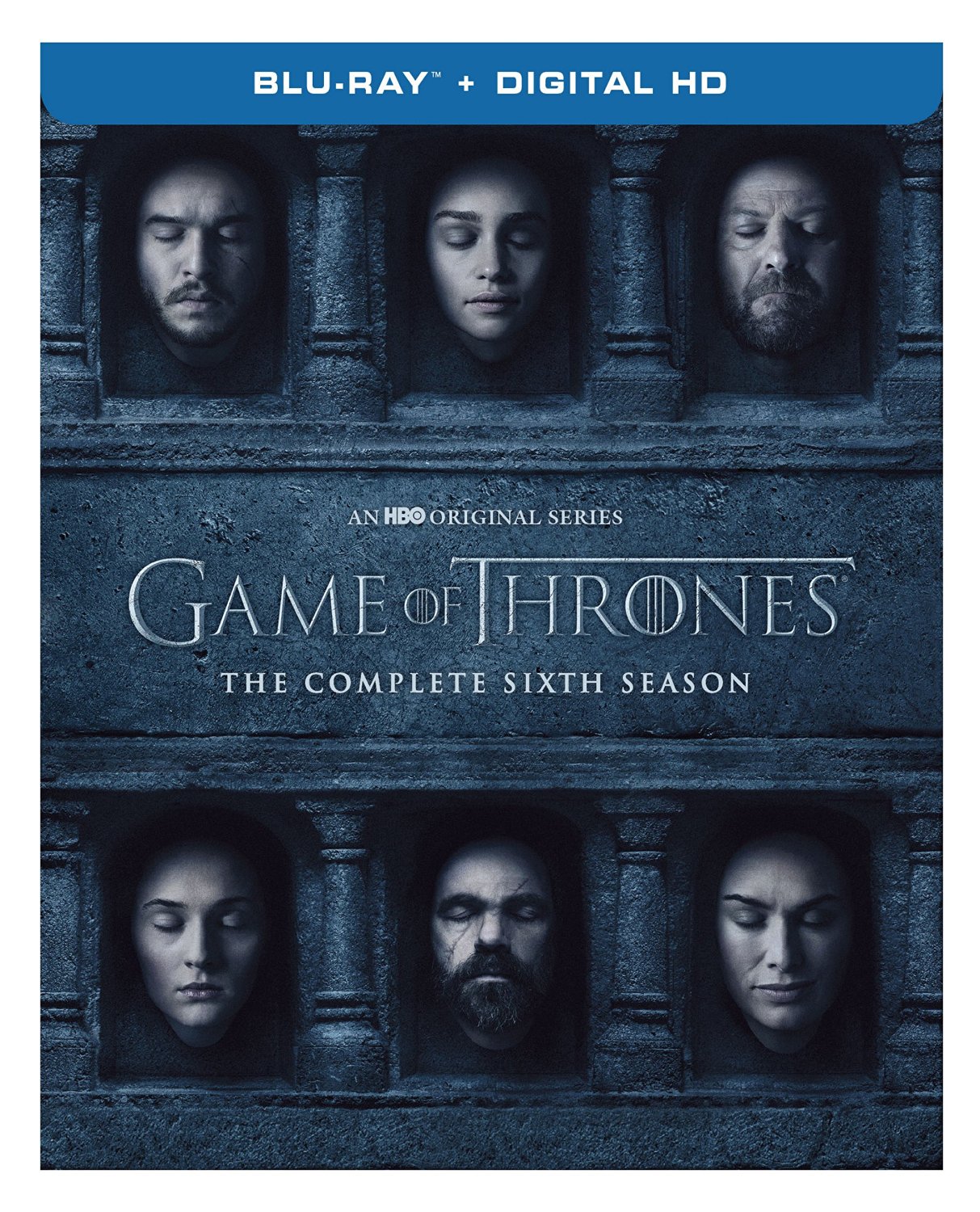
Throughout its first five seasons, Game of Thrones has been relentlessly cruel to its viewers heroes in a way that shocked audiences and upended genre expectations. But as Thrones edges toward its conclusion — and as the TV adaptation becomes more unmoored than ever from the George R.R. Martin novels that inspired it — certain storytelling conventions seem to be inevitably taking over. I seriously doubt this saga will have a traditional “happy ending,” but season 6 is as close as the show has ever come to being a full-blown crowd-pleaser.

"What we do has consequences, intended and unintended. The decisions we make, the actions we bring have weight." 

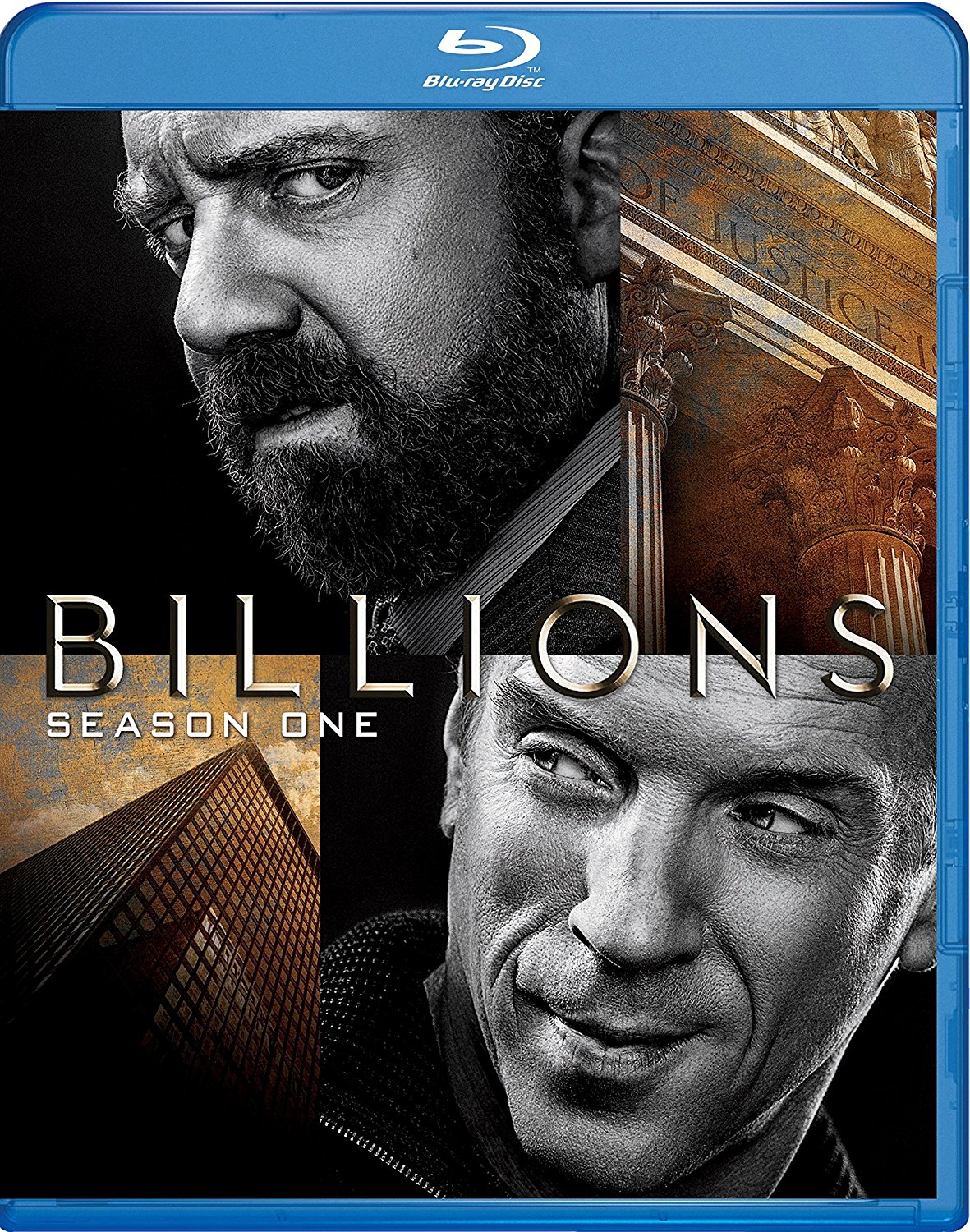
When upcoming heavyweight contenders like Brian Koppelman, David Levien, and Andrew Ross Sorkin get together, you have reason to expect big things. And Billions is very much about heavyweights. The entire show is one big metaphor for a heavyweight prizefight. In one corner you have U.S Attorney Chuck "The Scholar" Rhodes, played by Paul Giamatti. He's the reigning world champion with a record of 80+ to 0. In the other corner is Bobby "Axe" Axelrod, played by Damian Lewis; he could also be considered undefeated. He runs a sexy brokerage firm. He's the people's champion because he gives very freely to notable charities and particularly to first responders because his wife's brother was a fireman killed at ground zero on 9/11. Both of these guys walk and talk like champs. There's a lot of trash-talk between them, but both have very lurid and potentially devastating skeletons in their perspective closets. And most of the first season plays out like the traditional preliminaries of the big fight. They are headed to an ultimate collision, and it's even-money who, if anyone, walks away with the belt.

No rules, no ref. Just your wit and skill to keep you alive.”

Last year, Creed became a critical and audience favorite by reviving a beloved dormant franchise and re-casting its brawny original star in a supporting role as a mentor. I'm not going to pretend that 1989's Kickboxer (starring Jean-Claude Van Damme) is anywhere near as beloved — or as good — as Rocky. But Kickboxer: Vengeance, a reboot/remake of Van Damme's campy action favorite, hits some of the same notes as Creed...except for the part where it's a critical and audience favorite.

"This train don't stop." That's what we're told in an Elton John ballad. But it doesn't matter if it's that Midnight Train to Georgia or a freight train, you can bet the farm that it's going to run out of track.  That's for sure, and you can expect more than a little crying over it all. The saddest news, however, is the show's final year. You really should not even think about joining the series from this point. I suspect it will still be quite entertaining, but for the full experience you do have to start from the beginning. The evolution of the Cullen character from Civil War veteran out for vengeance to the man who we see in the fifth season is a rather nice journey to witness. So saddle up for the first four. You can find the reviews for other seasons here.

We start with the second part of the final season. These are basically the last seven episodes of the show's run. It's a rather interesting place to start. I'd say this is the episode where things begin to be resolved. Cullen must race to protect his family from The Swede, who has been defeated and will lash out by killing his wife and son. This marks the final confrontation between the two enemies. It won't go where you think it is going, and it's a turning point in the Cullen character. We then turn to his final confrontation with Chang (Mann), so that within just a couple of episodes Cullen's enemies are no longer a problem.

You're no spring chicken anymore.”

It's been more than four years since Jackie Chan — the legendary Hong Kong superstar who has been kicking butt and scoring scoring laughs on screen since the 1970s — announced he was retiring from action movies. Sure, Chan quickly backpedaled, but I don't know that anyone would've held it against the actor (who is now 62) if he'd stuck to his word. After decades of grueling injuries, Chan has noticeably slowed down. That being said, the old man still has a few tricks up his sleeve in Skiptrace.

"Space... The final frontier. These are the voyages of the Starship Enterprise. Its continuing mission, to explore strange new worlds. To seek out new life and new civilizations. To boldly go where no one has gone before."

Every Star Trek fan knows the words by heart. For 50 years they've heralded the promise of something special. From the television show that couldn't but did anyway to 12 feature films. Would #13 be the lucky one? The trailers left many of us worried that it would more than likely be unlucky. And we needed so much for this one to be great. Since the last film we lost Leonard Nimoy, who was most certainly the heart of the franchise on the screen. He was also the gateway between the two incarnations. That loss was eventually expected. Then we tragically lost Anton Yelchin, who was one of the industry’s rising stars. It's the 50th anniversary, and with all this we really needed something good. Trailers said we were out of luck. They say you shouldn't judge a book by its cover. I'm here to tell you that you can't judge a film by its trailers. Star Trek Beyond turns out to be not only what the fans wanted... but what we desperately needed.

There's a black man in our kitchen cooking eggs!”

The kitchen-bound black man in this case is Eddie Murphy in Mr. Church, which on the surface appears to be the latest in a sneakily long line of movies (Driving Miss Daisy, The Help, The Butler) where saintly, subservient African Americans enlighten their white counterparts. Those movies can be cloying at best and downright insulting at worst if placed in the wrong hands. But if done right, they can really resonate with audiences. (As evidenced by the fact that the movies I mentioned earlier were pretty big hits.) Mr. Church falls somewhere in between.

When it comes to spy novelist John le Carre (Tinker Taylor Soldier Spy, The Night Manager), his books seem to produce great films and mini-series but are far from being box-office darlings. Each production of one of his novels seems to be filled with talent in front of and behind the camera.  When it comes to the release of Our Kind of Traitor, despite the impressive cast it’s a film that managed to slip through the cracks and seems to have limped its way to a DVD/Blu-ray release when really it’s a film that deserves to be appreciated more on the big screen.  While it may not be filled with the spectacle of special effects and explosions, it’s a film that garners some impressive performances throughout and has a story that quickly pulls the viewer in.

Perry (Ewan McGregor) and his wife Gail (Naomie Harris) are supposed to be on a romantic holiday.  It’s the kind of holiday a couple takes together to try to salvage their relationship before throwing in the towel and heading to divorce court.  Perry is a professor with infidelity issues, while his wife is the breadwinner of the family as an overworked attorney.  For them it seems the vacation has worked and the intimacy in their relationship has been rekindled, that is until Perry accepts an invitation from a Russian stranger.  Dima (Stellan Skarsgard), is an overpowering presence as he convinces Perry to tag along with him as he goes to a lavish house party and later for a morning tennis match.  What Perry believes is nothing more than generous hospitality is instead a charade to pull him into doing something very dangerous.