1.78:1 Widescreen

"They have assembled here from the four corners of the earth. Fifty-five warships, among them the newest and most sophisticated ever produced. The United States is here. Great Britain, India, Japan, Canada, Australia, Germany. Twenty-six nations together; each will introduce the latest in naval technology in their arsenals."

And this is actually the true subject and focus of the latest IMAX/4K release from Shout Factory. If you came strictly to spend 45 minutes on an aircraft carrier, you went away a little disappointed. But now that you can have it at home to watch in UHD whenever the mood strikes you, there's less to be disappointed in here.


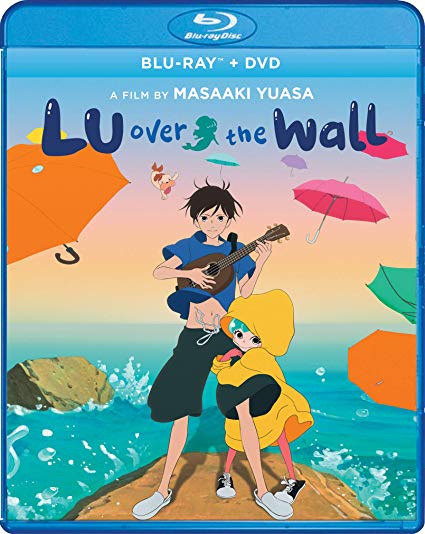
It is interesting to see two or more of a director's works in a short period of time.  One sees similarities, differences, and how the filmmaker hones his craft as they improve with every production.  Masaaki Yuasa is certainly one of those directors, and if you enjoyed my review on Night is Short, Walk on Girl,  then you will want to go ahead and read my review today on Lu Over the Wall.  While there are similarities, I can safely say that is quite the departure from the previous film.  Let us take a look in the animated world of merfolk and the people who live around them.

A boy taps his fingers next to a microphone for an Internet streaming session as we read the comments below his video.  There seems to be a lot of interest below his post including the potential for some band-mates should he ever want to expand his horizons.  We soon meet the boy named Kai as he shuffles downstairs to have breakfast with his grandpa and father.

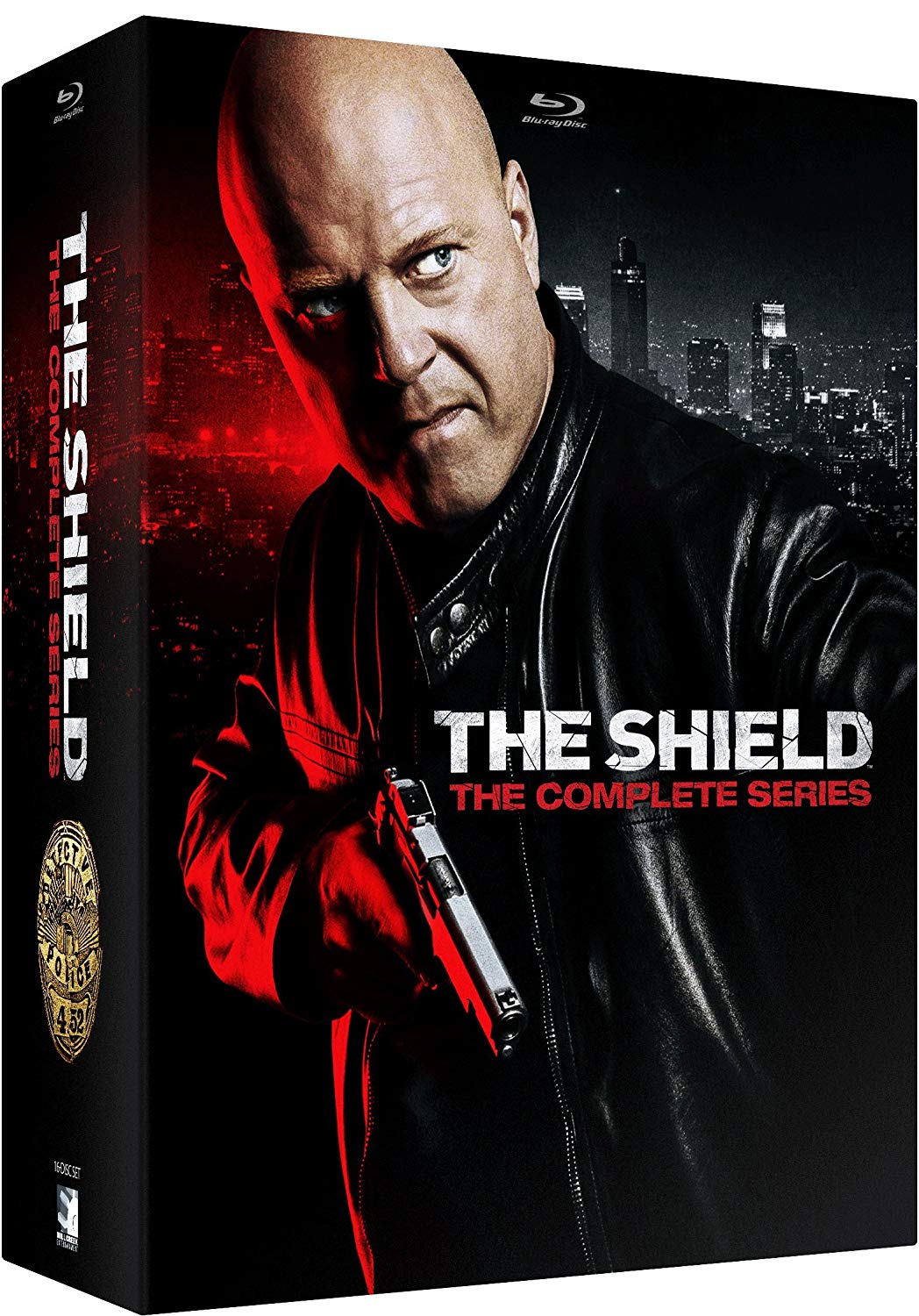
When did it become mainstream to root for the bad guys? Certainly our pop culture has been propagated with colorful villains since Shakespeare, goons we love to hate or even just love. Still, the rule always seemed to be that the white hats always win and the black hats get what’s coming. Television once demanded that shows follow that simple code. When Alfred Hitchcock did his television show, the stories often ended with the bad guys appearing to win. To comply with the code, he developed a habit of offering us a usually humorous sidebar about the unfortunate fate of the stories’ bad guys. It became a trademark that was created to keep to a moral code. But when did all of that change? Was it with The Sopranos? We all became enamored by this lovable teddy bear of a guy in Tony. We don’t have to spoil it by pointing out he’s a killer, adulterer, and all-star criminal sociopath. The Shield places us squarely in that same situation. Vic Mackey has a lot in common with Tony Soprano. He’s guilty of the entire litany just made. But he wasn't the first dirty cop we rooted for. Dennis Franz created two of the best between Hill Street Blues and NYPD Blue. He was as brutal as they come. But even Buntz couldn't kill a fellow cop in his unit or even worse. So why do we love him so much?

The answer most certainly lies in the compelling writing both of these shows share. Perhaps we’re not so much in love with Tony or Vic, but the stories that are told around them. It just might be that superior drama rivets us to our sets. We root for the bad guy because, to be frank, when they go down, the ride’s over. As with The Sopranos, we don’t want our moments with The Shield to end. Therefore Vic simply has to stay just one step ahead of his just desserts, or the story's over. It finally did end, but Mill Creek has brought Vic back, and he's as good as he's ever been. But now he's in HD and on Blu-ray. This is the kind of show binge-watching was invented for. I dare you to watch just one.

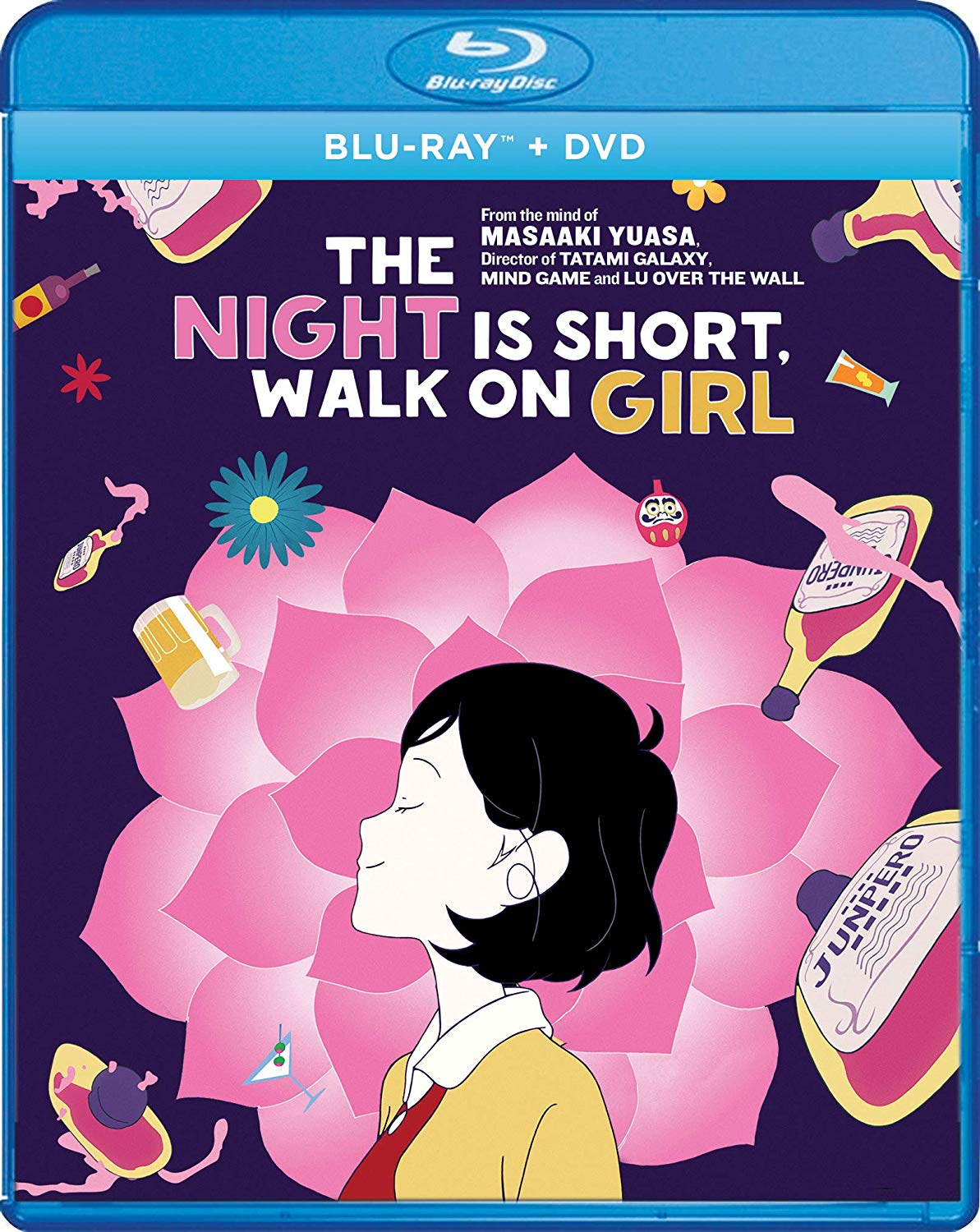
I have had many story ideas in my head for quite sometime.  Putting them on paper is indeed another thing.  One such story is a road trip between some friends that starts out normally, but little by little it becomes unraveled until it represents a tremendous and crazy affair.  Unfortunately, I only got through nine chapters, and it hasn't seen a word since.  Today's review is focused on an anime that is named The Night is Short, Walk On Girl.  It involves the story of a girl who starts a normal night drinking through town.  However, little by little the people and events around her become more extraordinary and bizarre as the night carries on.  Hopefully this one makes it well past the ninth chapter.

We visit a restaurant. A girl with black hair is drinking with her friends.  She stares endlessly into a bowl of soup until it turns into a bunch of eyeballs, and then we hear a train whistle.  The girl wishes to be out on the town instead of watching time pass.  The scene moves to another table where we meet Senpai, a teenager obsessed with the girl with black hair.  The School Executive Festival Head (who also apparently cross-dresses when the mood suits him) confronts Senpai with this accusation, but he denies it.

"Our Milky Way Galaxy is just one among billions of galaxies in the universe. In every way an ordinary galaxy. It's 100,000 light years across. There are hundreds of billions of stars here. Lost inside this huge swarm is one average-sized star. As stars go, it's quite unremarkable. Nevertheless, it's the most special place in all the cosmos. Orbiting this star is the only place we know in all the universe to harbor life."

Of course, that place is Earth, and while we can't say for certain, it is truly unlikely to be the only place in this vast universe or even this galaxy to contain life. We might one day have to rethink exactly what that term means one day. But for now, Earth is the only place we know that supports life.

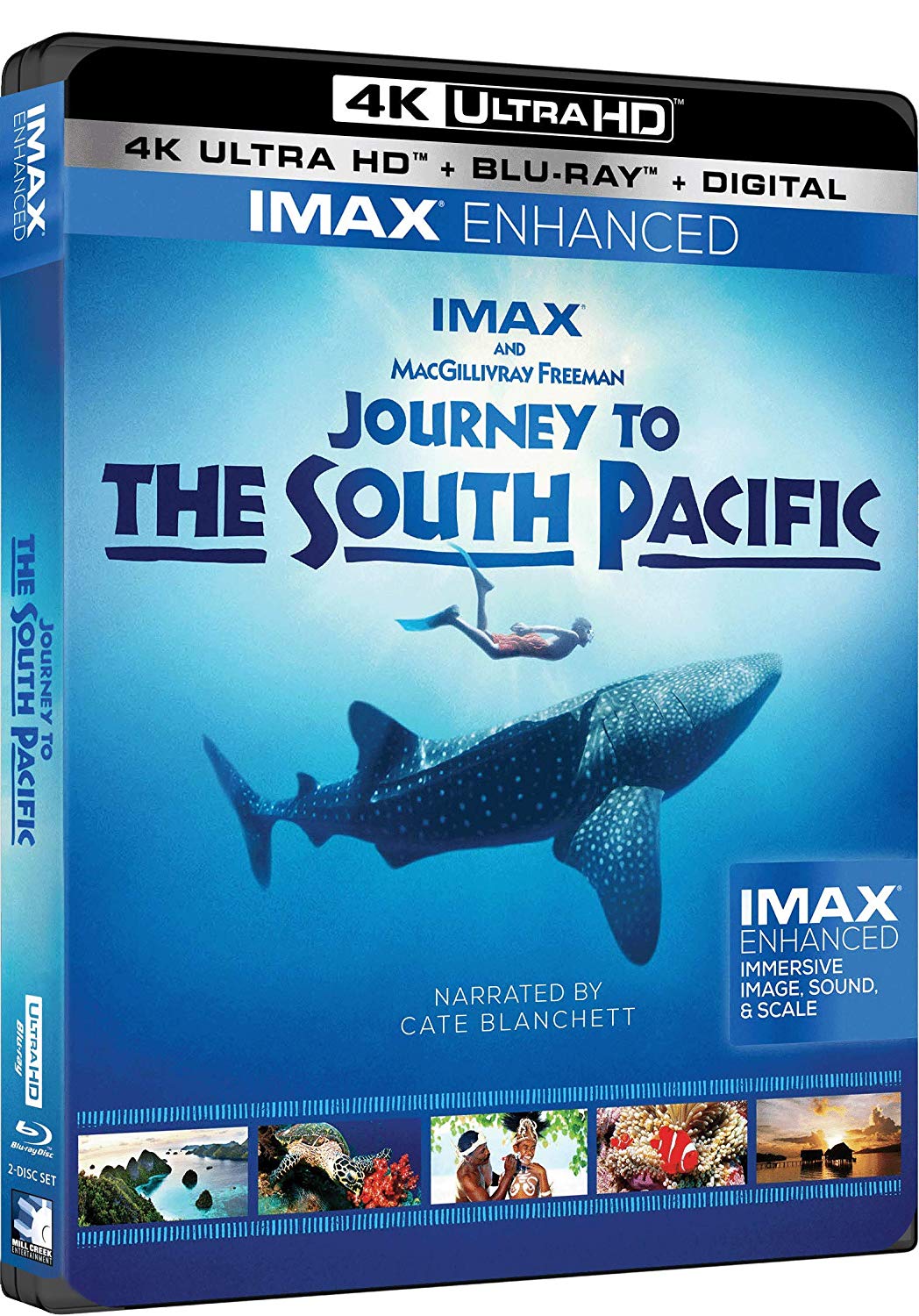
IMAX films are the perfect source material to show off the capabilities of the UHD Blu-ray/4K format. Most of the films we watch in theaters today have been shot around 2.8 K and mastered at just 2K. A 35mm film actually shot on film has a native resolution of 4K. The IMAX film format uses 65mm and 70mm film that increases its native resolution well beyond our 4K televisions and players. They are relatively short and have a ton of bandwidth to deliver the best possible image and audio. Shout Factory discovered this as soon as the format was launched, and Upcomingdiscs was there to check them out. Now there's a new player in the IMAX UHD business, and it's Mill Creek Entertainment. They get it, and so now you can expect a few of those gems coming your way from Mill Creek. The first one that I've had a chance to see is Journey To The South Pacific, and it's sweet.

The film takes us to a local village in West Papua. We get some wonderful shots of the residents living their lives that depend so much on the sea. It's the only real resource they have left. Because of overfishing and other obstacles, the big fish the natives so rely on are disappearing, and the health of the reef has been getting critical.

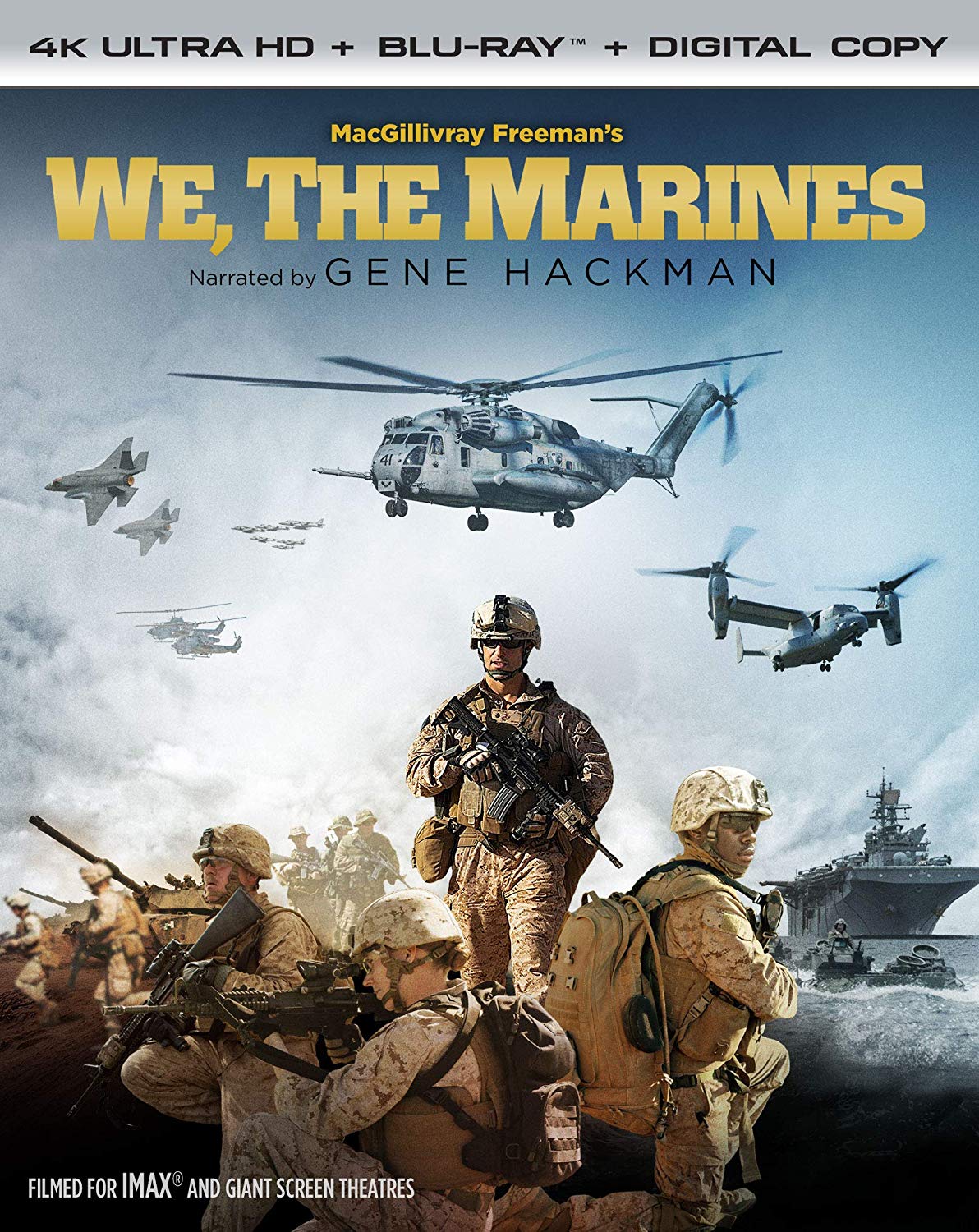
"These young men and women are going on a long journey. One that goes around the globe and back to the foundations of our nation. Once you're in the Corps, you're in the Corps all your days on Earth."

Gene Hackman narrates an IMAX look into what it means to be a United States Marine. He's the perfect choice, and not because he has such a distinctive and authoritarian voice, but because he was also once a Marine. There's an element of pride in the narration that just can't be faked.

"There's no such thing as luck, but I sure as hell believe in stupid."

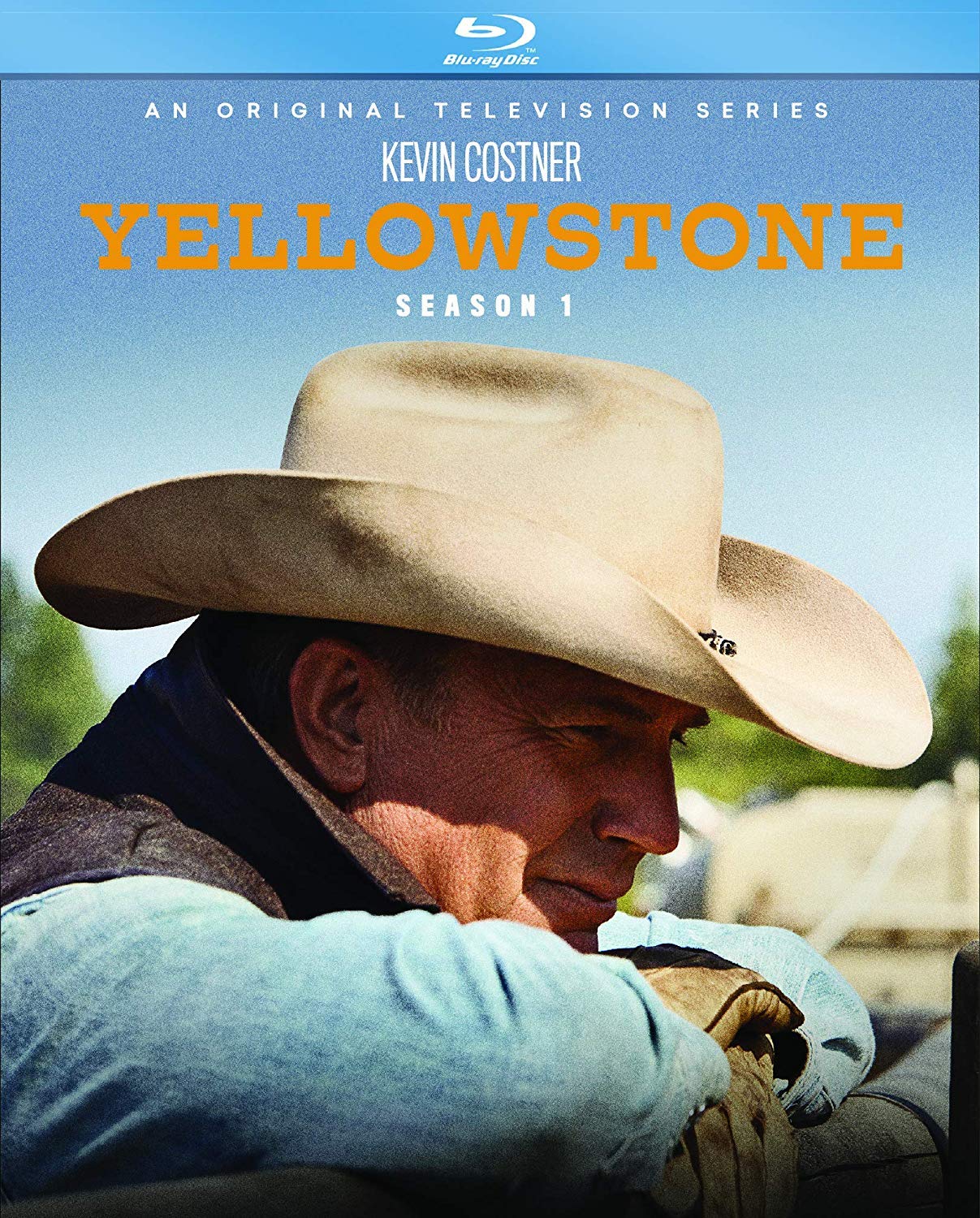
We're a visual people, and so most of you will recognize Taylor Sheridan from his role as a chief of police in Sons of Anarchy when the controlled puppet regime had finally left the scene. It's not a remarkable role, and it's not a complete surprise that Sheridan found his calling more recently behind the camera. As a writer his first script did hit it out of the park. Sicario is an awesome film populated with compelling and interesting characters who thrived on a broken system. That theme appears to have stuck with him, because the first season of Yellowstone appears to take us back in time to the days of open frontiers and cattle barons who struggled to keep their land amid lawless communities and raiding parties of American Indians who were portrayed as savage beasts who kill women and children in the middle of the night to become to shadows of nightmares and the stories told to keep children in line. These themes are all there, but it takes place in a modern 2018 setting that does indeed make for an interesting new twist on an old idea. This is the dawning of the modern western where lands still stretch for miles and are still owned by a single family. It's Bonanza in the 21st century, and Kevin Costner thought enough of the idea to star in this television drama series for The Paramount Network.

“I'm sorry there is so much pain in this story. I'm sorry it's in fragments, like a body caught in crossfire, pulled apart by force, but there is nothing I can do to change it.”

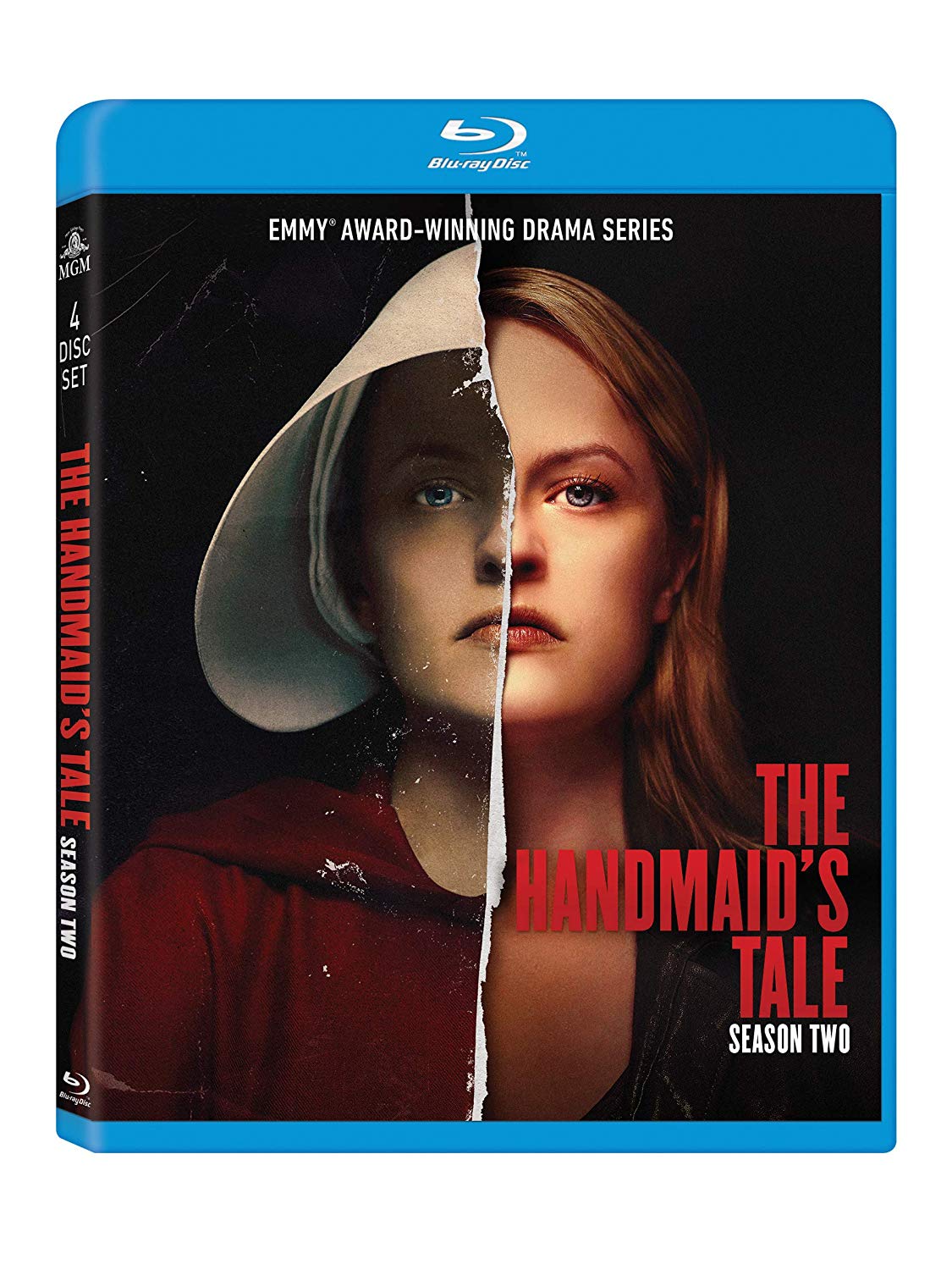
To say there is pain in The Handmaid’s Tale might be the biggest understatement of 2018. The series is set in a dystopian near-future in which women — even the ones who are supposedly part of the ruling class are enslaved and tortured in a variety of heinous ways. Handmaid’s Tale immediately became Hulu’s flagship show and picked up an Emmy for Best Drama Series last year. So expectations were high for this second season, which too often proves to be torturous for viewers as well.

“They destroyed the man I was, but then I was reborn. And this time I came out breathing fire.”

Season 1 of Westworld — HBO’s mega-budget adaptation of Michael Crichton’s 1973 film of the same name — spent a lot of time exploring the nature of reality and humanity through a high-tech theme park’s robotic hosts. And while the show still has plenty of time for those themes, the second season can be tidily summed up with a phrase that nods to another Part II of an iconic sci-fi franchise: The Hosts Strike Back.