Posted in: Disc Reviews by Gino Sassani on April 3rd, 2012
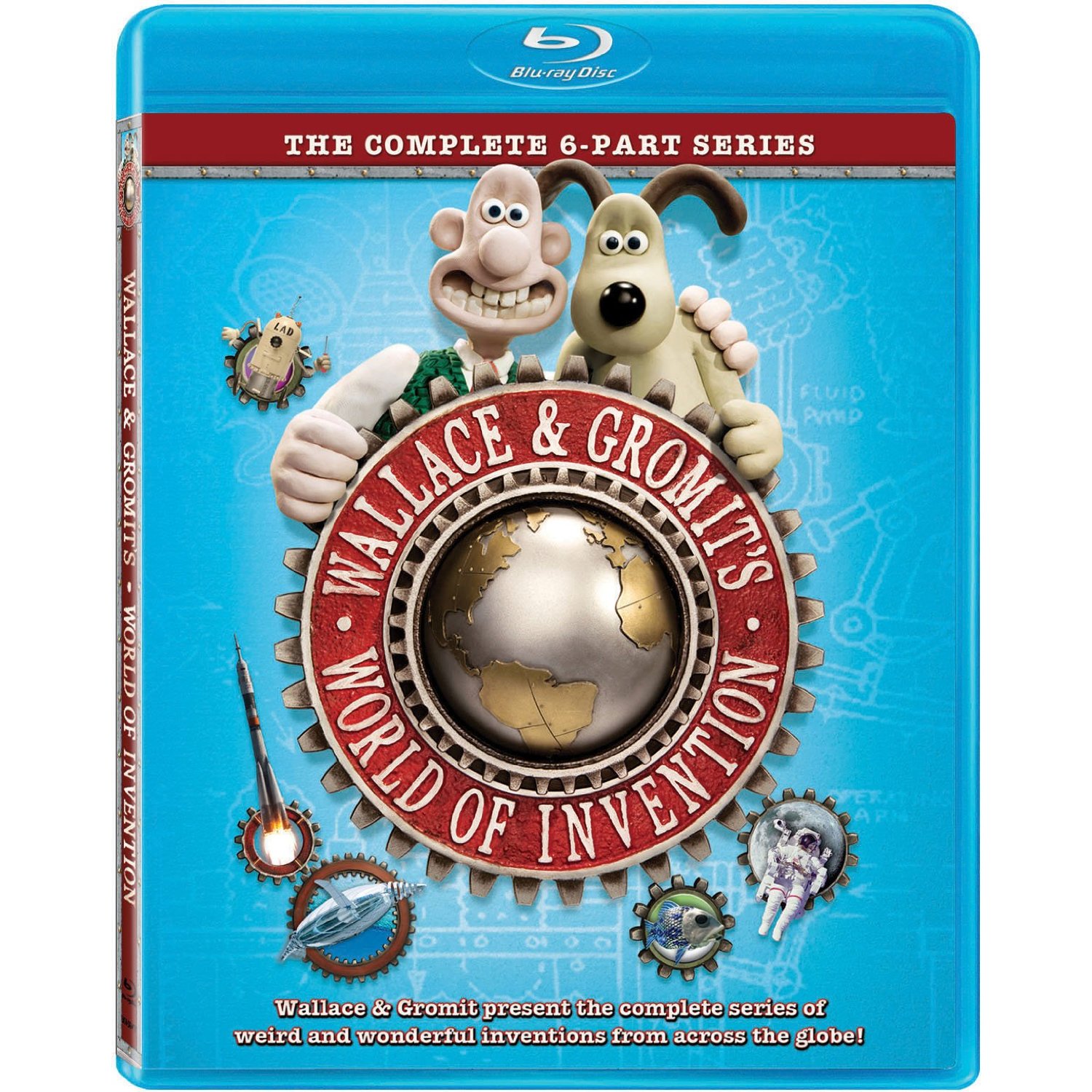
Wallace and Gromit is the brainchild of animator Nick Park. The British filmmaker tried for years to bring his clay creations alive, but on his own finished a mere 10 minutes in a little over two years. When he met up with Aardman Animations, he was teamed up with the creative talents he needed to make his dream come alive, and come alive these two characters did indeed. They’ve become an overnight sensation in the UK and now all over the world. I was introduced to the characters with the full length feature Wallace And Gromit In The Curse Of The Were-Rabbit.
I have to admit that I was completely won over by the magic of this creation. It’s so simple-looking that it almost appears to be child’s play. The truth could not be further from the perception. Stop-motion animation goes back to the beginning of the cinema itself. Pioneered by the genius Willis O’Brian and perfected by Ray Harryhausen, it is one of the most painstakingly tedious tasks in the film industry today. It has been all but abandoned except for a select few who still follow in the footsteps of greatness. Give Nick Park credit for keeping the art alive and making it look effortless.
Posted in: Disc Reviews by Gino Sassani on April 3rd, 2012
If you haven't heard of South Park by now there is certainly something wrong with you. You're just not paying attention. More important, you've got a lot of catching up to do. The show is entering its 16th season on Comedy Central, and Paramount is now giving us the 15th season on high definition Blu-ray. And, if you are just hearing about South Park for the first time, what a wonderful journey you have ahead of you. You might need an airline sickness bag on occasion, but you are in for a solid treat.
After 15 years you would think any show might have to start losing steam. It's true that South Park did appear to suffer some during the middle years, and I was one of those critics asking how much longer the show could go on. But the series experienced something of a renaissance in the last couple of years and is better than it has ever been.
Posted in: No Huddle Reviews by Michael Durr on April 3rd, 2012
Much like a relief pitcher, sometimes a substitute has to fill in for a movie review. The person is usually a specialist, one who can write up a review in a snap, the blink of the eye. Well, sometimes the relief pitcher runs into a tough power hitter or a wiry runner. I find myself in a similar situation with the dreaded foreign film. It sounds clichéd and uncultured perhaps, but I did not even want to read today! Okay, anyway on to the show of Sidewalls.
The sun rises upon Buenos Aires. We get some depressing narration about the city and how overpopulation has basically made the city a shell of the splendor it once held. The narrator compares this to the humans within the city and how their lives have no direction, the same as an ill-built skyscraper. This narration concludes with a discussion of how letters and numbers in apartments represent class status.
Posted in: Disc Reviews by Gino Sassani on April 3rd, 2012
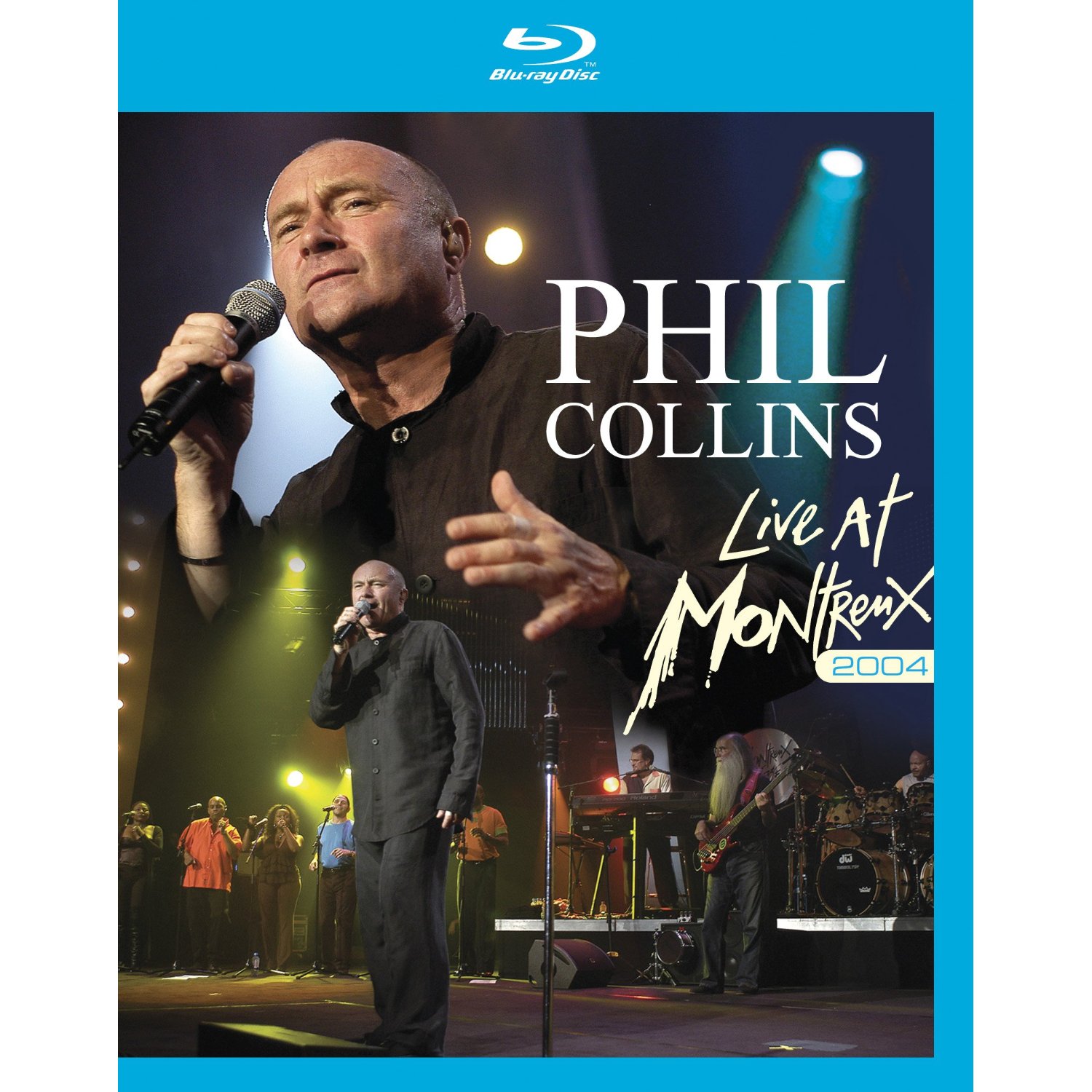
When Peter Gabriel left the band Genesis to pursue his own solo career, it was the break of a lifetime for the band's drummer, Phil Collins. He took over the front-man duties with style, and before long Genesis was enjoying the most commercial success of their lives. Collins provided the smooth, easy-to-listen-to voice that Gabriel really never had. The tunes were instantly more recognizable and stuck with you for a long time. Of course, that meant that Collins would go out and work on that solo career as well. He didn't quite abandon Genesis and managed to keep both careers on the charts for quite a long time. If anything, the two entities became more and more the same. It's hard to distinguish the band's Invisible Touch from anything Collins released under his own name. No problem, as long as the records were selling. And sell they did.
We haven't heard a ton from Collins in recent years. He's always been there. He's toured under both names a few times in recent years. But the releases became less and less successful. Much of this can be traced to Collins' wish to become a one-man band. The last few CD's were produced in his own home studio with Phil filling in for most of the instruments. The lyrics lost much of their creativity, and it seemed that the British rocker had waded deep into stagnant waters.
Posted in: Disc Reviews by J C on April 2nd, 2012
They came back to tie the game five different times. They were down by two runs in the bottom of the ninth and facing a closer who had been a perfect 6 for 6 in save situations during that postseason. They were down to the last strike of their entire season two different times. I guess what I'm trying to say is, at a certain point, it became obvious — painfully obvious, if you happen to be a fan of the Texas Rangers — that there was no effing way the St. Louis Cardinals were losing Game 6 of the 2011 World Series.
Personally, I didn't have a horse in the race when I originally watched this game live on October 27, 2011. (I'm a Yankees fan. Before you boo me, you should know I was born in 1982, which is the exact year they stopped making the playoffs for 13 straight seasons, the longest drought since the franchise became the Yankees. So they've been lousy for a really good chunk of my life, including during some of my most formative years as a sports fan. You may commence booing me.) The fact that I couldn't have cared less who won, but I also didn't dare go to sleep until it was over — and I suspect I was far from the only one — tells you how objectively thrilling this game was.
Posted in: Disc Reviews by J C on March 31st, 2012
I think most of us can agree that being buried alive would be a horrible way to go. Several movies — Kill Bill: Vol. 2, The Vanishing (not the soft American remake) and, of course, Buried — have exploited that terror to varying degrees of success. Though the action in A Lonely Place to Die centers around a girl found buried in the Scottish Highlands, the camera frequently pulls way back to show us the desolate beauty (and danger) of the mountainous setting. I really wish director Julian Gilbey had kept the action on those mountains.
A group of climbers, led by Melissa George (The Amityville Horror, TV's Alias), discover an Eastern European girl named Anna buried in an underground chamber. Anna is unable to explain what happened because she can't speak English, but the group correctly surmises that the girl was kidnapped and being kept alive by the breathing pipe sticking out of the ground. Eventually, the group has to deal with the vicious pair of kidnappers, as well as the mercenaries hired by the girl's war criminal father to get her back.
Posted in: Disc Reviews by Gino Sassani on March 30th, 2012
"It's going to be like old times..."
Well... not exactly. The Lion King began with The Circle Of Life and a newborn prince to the royalty of Pride Rock. That prince was Simba, and we all know by now how that ended up. The circle of life continues in The Lion King 2: Simba's Pride. Of course, it's not really the second Lion King film since the first sequel was cleverly called The Lion King 1 1/2 and pretty much covered the events of the first film from a different perspective. Now we get down to the real ongoing events, and once again a child to the Pride Rock royal couple is being presented to the kingdom. This time it's a princess, and her name is Kiara, voiced by Neve Campbell.
Posted in: Disc Reviews by Gino Sassani on March 29th, 2012
"We're going way back to before the beginning..."
In 1994 Disney's second golden age climaxed with, perhaps, their greatest animated film of all time. The Lion King broke every animation record, and those records still stand today. The film appealed to old and young alike and told a compelling story that included some rather memorable songs from Tim Rice and Elton John. It was never a question of if there would be a sequel, but merely a question of when and in what form that follow-up would take. There was simply too much money at stake for there to be any other outcome.
Posted in: Disc Reviews by Gino Sassani on March 29th, 2012
Bugs Bunny and his special Looney Tunes friends have been around for a long time. He first appeared in 1938 in his most familiar form. During the second World War he was a popular choice with the fighting men. Many of the cartoons of the era were patriotic, and some might even call them propaganda. They certainly pushed the war effort in a supportive way. When the war was over Bugs and his pals took on a wide range of subjects. Often movie stars were spoofed, and the series of shorts soon became a satire on the pop culture of the time. It's hard to really see it now, but Bugs and Looney Tunes were the South Park of their time, and no institution or celebrity was safe from being spoofed.
The cartoons have evolved over the years and have practically given Warner Brothers their identity for over 80 years. The characters still thrive. They do advertisements, and every now and then a new Looney Tunes cartoon show makes its debut. The Looney Tunes Show was one of those more recent entries in the franchise.
Posted in: Disc Reviews by William O'Donnell on March 28th, 2012
Frida Kahlo's life was tragic, romantic, epic, and inspiring. This film takes on the immense challenge of telling the story of such a complex life in the time frame of a stand-alone feature film. Frida is about art just as much as it is about an artist. Often stylized, but never unapproachable, Frida is a rare success by the way it managed to capture and display a part of Frida Kahlo's artistic soul.
Director Julie Taymor is widely known for her stylized approach to any production, be it on film (Titus, Across the Universe) or on stage (Lion King, Spiderman: Turn off the Dark). It is no small wonder that Taymor expresses her own artistic flair through her direction without comprising the work of her subject. Taymor uses dreams as her platform to inject the strangest visuals that are not the direct work of Frida. There is even one scene that is not the composition of Taymor or Frida, but the a dream sequence inspired by Mexico's day of the dead, created by the enigmatic animation duo, the Brothers Quay. As I suggested, the injection of other artist's unique style and creations into a film about an artist is not as disruptive as one may imagine. Both Taymor and the Brothers Quay honour Frida's life and work with their own contributions. Neither attempt to mimic Frida, save for one painting at the very end, but rather, they include something about Frida's life that she herself may not have expressed in her work. That is to say, not explicitly in any particular piece.