Video

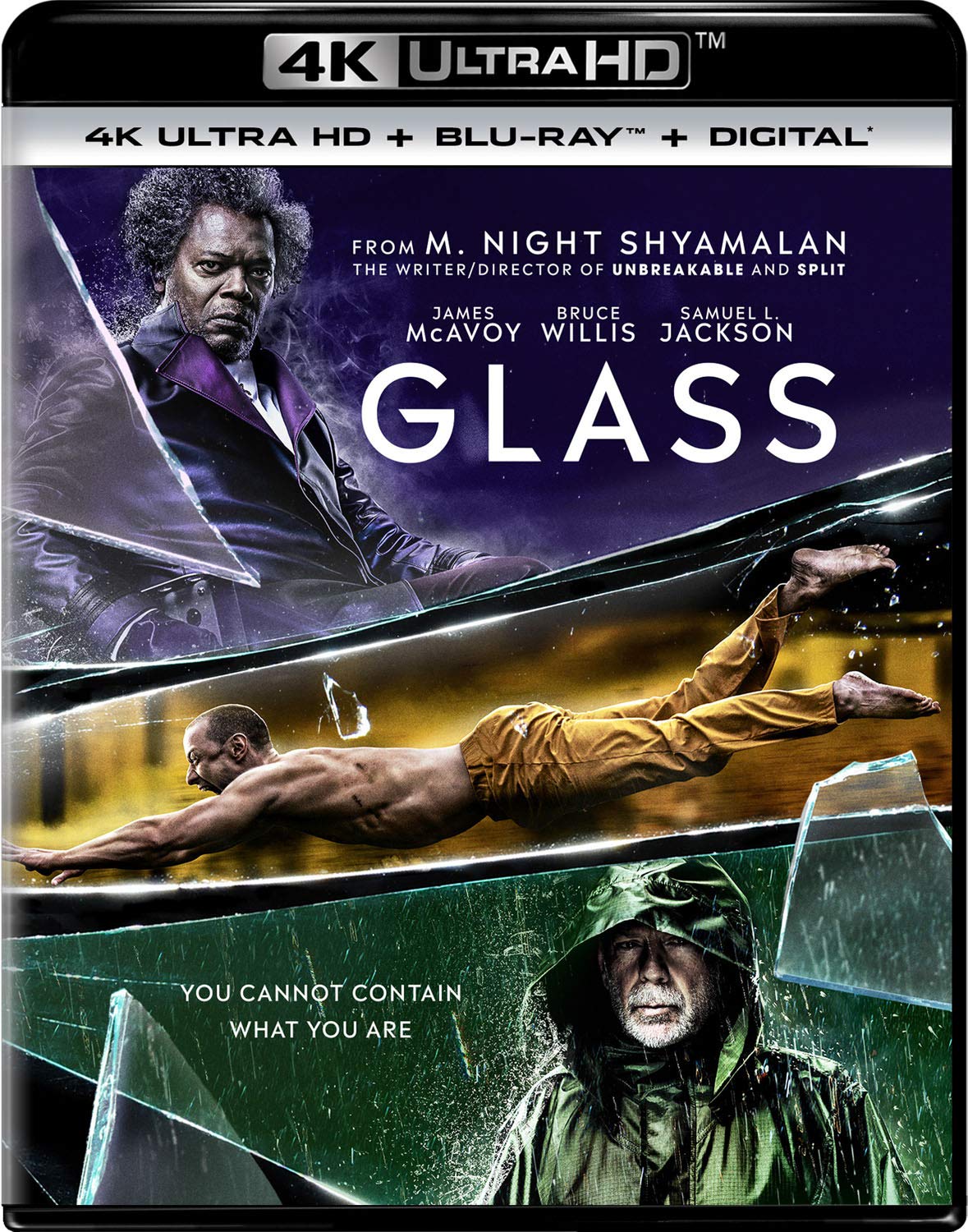
One of 2019’s most anticipated releases is M. Night Shyamalan’s conclusion to his superhero trilogy with Glass. This has been a trilogy 19 years in the making, following the release of Unbreakable and then 2016’s Split. When I first saw Unbreakable, I was a projectionist, and I had to screen it the night before it was released to make sure everything was spliced together and the film played properly, and I just remember not really liking the movie at first.  I ended up giving the film another try, and I found I liked it a little more. Now over the years I’ve seen it several times, and the film has grown on me.  I’ve grown to appreciate the film to the point that when that final scene in Split plays and we got the reveal of David Dunn (Bruce Willis) I was extremely excited at the prospect of seeing this character revisited.  Before I get much further, if you haven’t seen Unbreakable or Split, if you plan on seeing Glass, do yourself a favor and watch the previous films first, and even if you have seen them, it wouldn’t hurt re-watching them just so the films are fresh in your mind while experiencing the conclusion of this trilogy.  With all that out of the way, how was the film?  It’s time to suit up and find out.

As the film opens up, it takes place not long after the events in Split, and we see that Kevin (James McAvoy) is under the control of his 24 personalities, and “The Beast” is responsible for numerous murders.  The media has been following the killer and has been calling him “The Horde”. Also in pursuit of the killer is David, who with the aid of his son, Joseph (Spencer Treat Clark, who played his son in the first film) are fighting crime together, with their home base being a security shop that they run together.  The opening act of this film is great. It flows nicely, and when we get to see David have his showdown with “The Beast”, it’s hard to not get excited for what is to come.  It’s the direction the film goes from here where I can see there being disappointment in what follows from this point up to the end of the film.

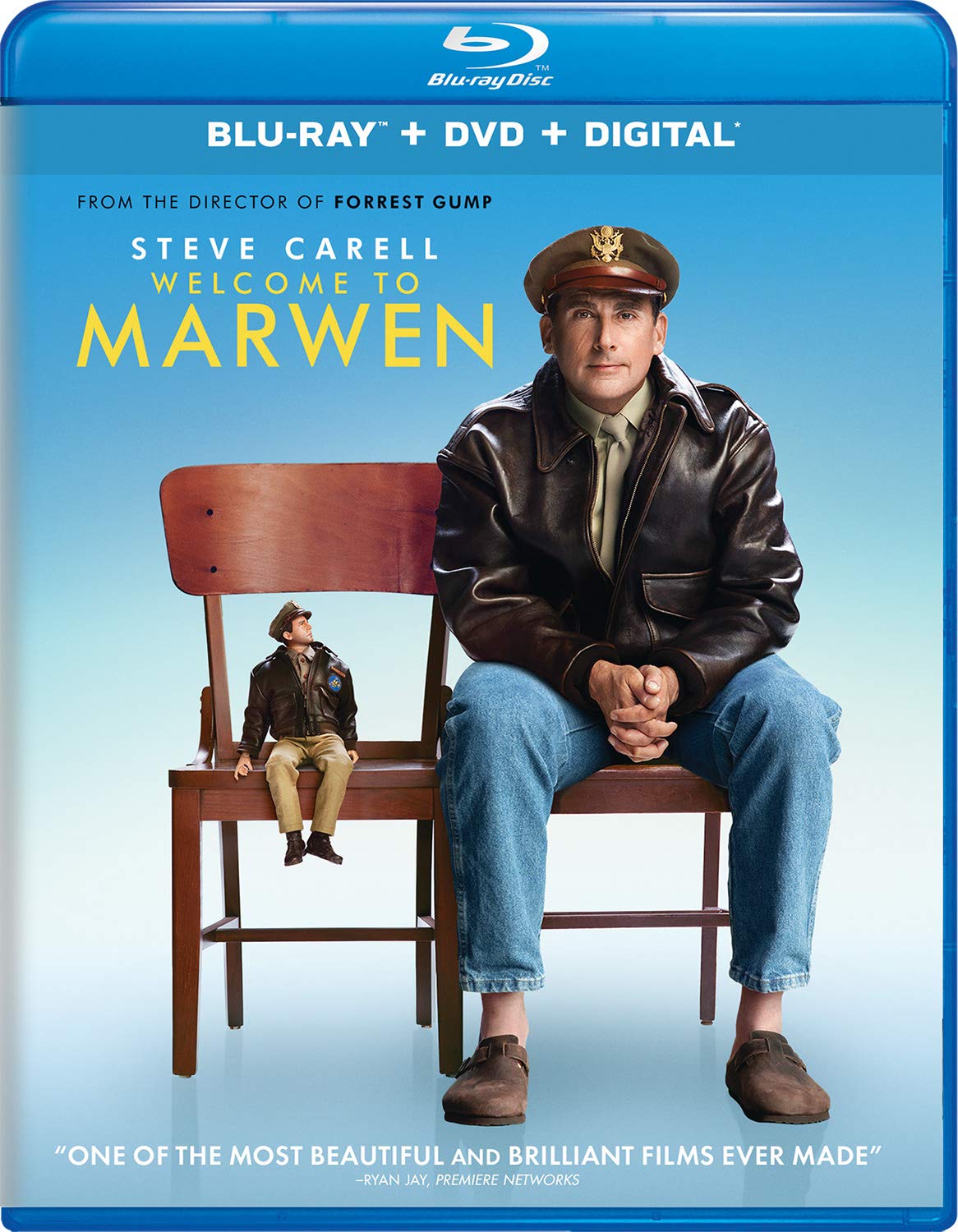
When it comes to Robert Zemeckis films, you never know what you’re going to get.  Like most, I’m a fan of his Back to the Future trilogy, and then there is Who Framed Roger Rabbit that to this day I feel is his best work.  While he’s churned out many good films, there are films of his that I’m simply not a fan of. Forrest Gump happens to be one of those films.  For the most part he makes audience-friendly films, but what I’ve always admired about the guy is how he’s always attempting to integrate new technology into his films.  Zemeckis has become one of the pioneers of motion-capture technology. Ever since The Polar Express (2004), he’s been making improvements with the technology, and now with Welcome to Marwen, it is stunning to see just how far he has come.

The funny thing about Welcome to Marwen is that it may be one of the biggest-budget art films produced in a long time.  Though the film is very much in tone with Zemeckis’s style, at the same time there is enough quirkiness in the characters and story that it may be a bit jarring for some.  Because of this, it’s no surprise that it will have a divided audience that will love or hate this film.

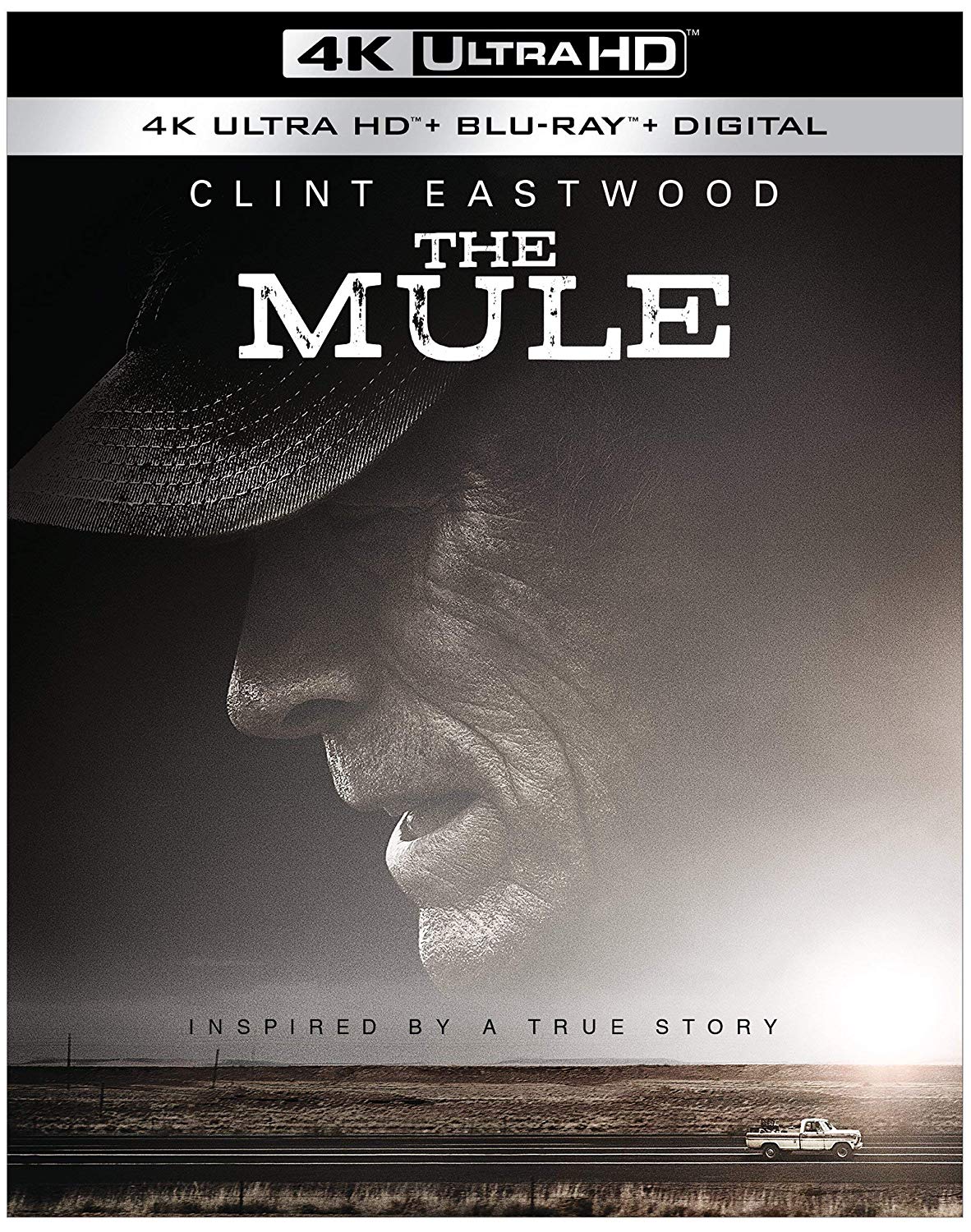
Ever since I was a kid I used to love to hear and read stories about the iconic filmmakers from the days before I was born. I soaked up material on John Ford and Hitchcock. Fritz Lang and James Whale were superhuman, it seemed. Meeting Robert Wise was a dream come true, and getting an invitation by Ray Harryhausen himself to attend his Hollywood star ceremony was an honor. But all of these folks were either already gone or at the end of their careers by the time I got to this planet. Since that time there have been plenty of great talents, but the only one in my lifetime who ever seemed to live up in that rarified air was Clint Eastwood. As both an actor and director, I'm not sure anyone has made more of a mark during my generation. Clint's approaching 90, and reality dictates that his days of directing movies are coming to a close. As an actor every film has the potential to be his last. So I have to ask myself why Warner Brothers would give this potential swansong such unfair treatment. Critics were not given a chance to attend screenings when the film came out. As a voting member of SEFCA, I received over 150 films for awards consideration as 2018 came to a close. None of them happened to be The Mule. When I asked a Warner rep about the slight, I was admonished to forget about the film and just move on. I was even told by a SEFCA co-member that I shouldn't be so greedy for screeners. I'm not ordinarily a conspiracy nut. But something doesn't pass the sniff test here, and after finally seeing the film in 4K, I'm convinced of it.

The Academy Awards are no longer what they once were. What used to be an extraordinary celebration of the art of film and filmmaking is now a political rally. I suspect the "powers that be" didn't want Clint Eastwood anywhere near that political rally. He's got nothing to lose at this point, and I don't think he's the kind of guy to just shut up and take it. I can't prove any of this, of course. And I might even catch some flack for proposing the idea. But if it's true, there are a lot of folks who should be ashamed of themselves. Warner Brothers bears the greatest shame, if true. I doubt anyone has made as much money for Warner over the years than Clint Eastwood  and he's owed better treatment. This is not about my or anyone's political beliefs, but about a legend who won't be here for decades to come, and it's unfortunate if the fact his politics don't align with the Hollywood establishment caused this movie to be treated like the crazy uncle you lock away in the attic when company comes. 'Nuff said.

by John Delia, Jr.

The world of the Transformers is back with more action, adventure, and science fiction fun for everyone. The most-loved Autobot from this world has a history that explains where these troubled characters all began. As the battle of Cybertron comes to a conclusion, the Autobots make their move to flee from the Decepticons to an unknown location to later meet up and regroup. Optimus Prime (Peter Cullen) tells B-127/Bumble Bee (Dylan O’Brien) that he must flee and head to Earth and hide until it is safe to meet up again. Once on Earth, Bumble Bee must find a place to be unnoticed. He must find a secure safe location for his fellow Autobots and defend Earth until Optimus Prime returns. During his landing on Earth, he encounters a team of soldiers training for battle called Sector 7. This team, led by Agent Jack Burns (John Cena), fear for their lives when the capsule transporting B-127 crashes in the forest nearly on top of his team.

As one might guess from my film reviewing resume, I watch a lot of Asian movies.  Unfortunately, judging by the same resume, it would appear that most of that is anime and drama.  But in my spare time, I do watch a lot of popular Asian cinema, especially with the likes of Donnie Yen or Jing Wu. In addition to contemporary favorites, I certainly have not forgotten the roots of martial art cinema in the likes of Bruce Lee and others.  Well, today I received a box set featuring one of the legends of Asian cinema: Shin'ichi Chiba, better known to most American audiences as the one and only Sonny Chiba.  That set of films would be of course, The Street Fighter Collection.  Let us take a look.

The Street Fighter begins with Tateki Shikenbaru (played by Masashi Ishibashi) in a jail cell, a murderer about to be executed for his crimes.  He is visited by a Buddhist monk who is presumably there to give him his last rites.  That's no monk, but he might be there to give him his last rites.  His name is Takuma Tsurugi (played by Sonny Chiba), karate man for hire, and he takes out Shikenbaru with a special punch that throws him into a coma.  As the convict is rushed to the hospital, Tsurugi and his faithful sidekick Rakuda (played by Goichi Yamada) free him and send him off to Hong Kong.

"My father was a lighthouse keeper. My mother was a queen. They were never meant to meet. But their love saved the world. They made me what I am: a son of the land, a king of the seas. I am the protector of the deep. I am ... Aquaman."

It’s been a rough year for the DC Universe, losing both Henry Cavill and Ben Affleck as Superman and Batman respectively. In a time when Marvel is heading towards a big finale of sorts, this should be when DC goes full steam towards capitalizing on any residual momentum. The loss of two members of the Justice League is going to put a crimp in that plan; however, thanks to the release of Aquaman, DC does not have to start from scratch. Jason Momoa returns as the titular character in this origin story of sorts. One of the breakout stars of the critical failure that was the Justice League movie, Momoa proves that he was made to command the seven seas.

“Everything is possible…even the impossible.”

To be clear, the fact that Disney has delivered a big-budget, star-studded follow-up to one of the most beloved family films in its staggering catalog is *exceedingly* possible. This is, after all, the age of reboots and live-action remakes of movies we already love. What seems impossible is that Mary Poppins Returns and its sensational leading lady both live up to and (re)capture the spirit of the Walt Disney-produced Julie Andrews classic from more than 50 years ago!

"60 minutes is all it took for the ancients to bring humanity to the brink of destruction."

It only took Peter Jackson's crew along with director Christian Rivers 128 minutes to bring their audience to the bring of falling asleep with their Star Wars rip-off of Mortal Engines based on a series of books by Philip Reeve. Universal was likely looking for a franchise hit here. Hugo Weaving couldn't save it. Impressive visual f/x couldn't save it. When I discovered the film had been in some kind of production phase since 2008, it all started to make a little sense. Sometimes the harder you work on something, the more you lose sight of the simple aspects of the film. Most importantly, you lose the connection to emotional characters, and you stop telling their story, but force them into telling yours.

This is one of those films where the cast had me equally excited and concerned with how the film would turn out.  On one hand it has Harvey Keitel; the guy is a living legend between his roles in Reservoir Dogs, Bad Lieutenant, Taxi Driver, Mean Streets, and countless others.  Keitel is one of those actors who elevates just about any film he’s in, and he’s in several films I’d even call classics.  Then on the other end of the spectrum there is Hayden Christensen, one of the most lifeless performers to ever grace the screen in my opinion. I still have bouts of anger when I see him as Anakin Skywalker.  But I’m always ready to have an actor surprise me, and I always go into a film with an open mind once I sit down and start watching it.  Unfortunately The Last Man is a dud and was a film I struggled with so many of you won’t have to.

The film opens up with a dream sequence that looks more like a first person shooter scene in a video game.  Apparently this is a dream that Kurt (Christensen) has been having quite often. This is told to us through the film’s narration, and I’d just like to come out and say I really hated the voice-over work on this film.  I get that they were trying to go for a neo-noir style, but the narration is delivered with such a monotone delivery it felt more like a voice track someone would listen to while trying to sleep.  Another issue with this narration is that it is so on-the-nose with the information that it is telling us things we can obviously see and figure out for ourselves.  It was fine when giving us a little back story, telling us how the western civilization collapsed, but as you continue watching, everything you hear just begins to seem redundant.

Green Book represents an historical milestone for me as a critic. In my decades of reviewing and more decades following films, I have never selected a personal Oscar Best Picture two years in a row. I tend to be somewhat out of touch with the voting members of the Academy or even my fellow SEFCA (Southeastern Film Critics Association) members. But it finally happened. Last year my selection was The Shape Of Water, and it took the top prize. This year I went against the grain of the SEFCA members who chose Roma as the best film, and Green Book meandered to # 7 on their list. Fortunately, the Academy saw it my way for the second consecutive year, and Green Book took home the statue. Spike Lee threw a temper tantrum, and I'll talk about that in my conclusion. Take it from me, Green Book was the Best Picture of 2018, and now Universal has released the film in all of its newly-minted glory in UHD Blu-ray in 4K. You shouldn't even be waiting to read the rest of my review. Let me summarize it for you here. Click on the "purchase at Amazon" link to your right and order the disc now. Finished? Good. Now while you're waiting for that shipment, you can read on and find out why you just bought the best film of the year.

Lord of the Rings alumnus Viggo Mortensen plays Tony Lip. He's a bouncer at the legendary Copacabana night club in New York in the early 1960's. He's a typical son of Italian immigrants and fancies himself a kind of tough guy who just skirts the world of mafia mobsters and their like. We early learn that he's a product of his age and a racist. When two black plumbers drink water from glasses at his home, he throws out the "tainted" glasses. His life fits him well until a disagreement with a mobster to which he was a party gets the iconic night club closed for two months "for repairs". He's looking for an opportunity when he's recommended as a driver for a "doctor" making some kind of tour that coincidentally will last two months.