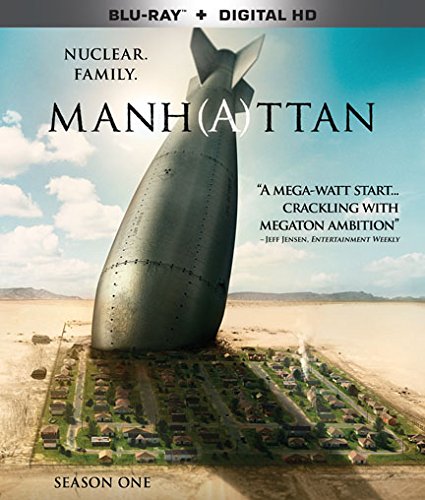
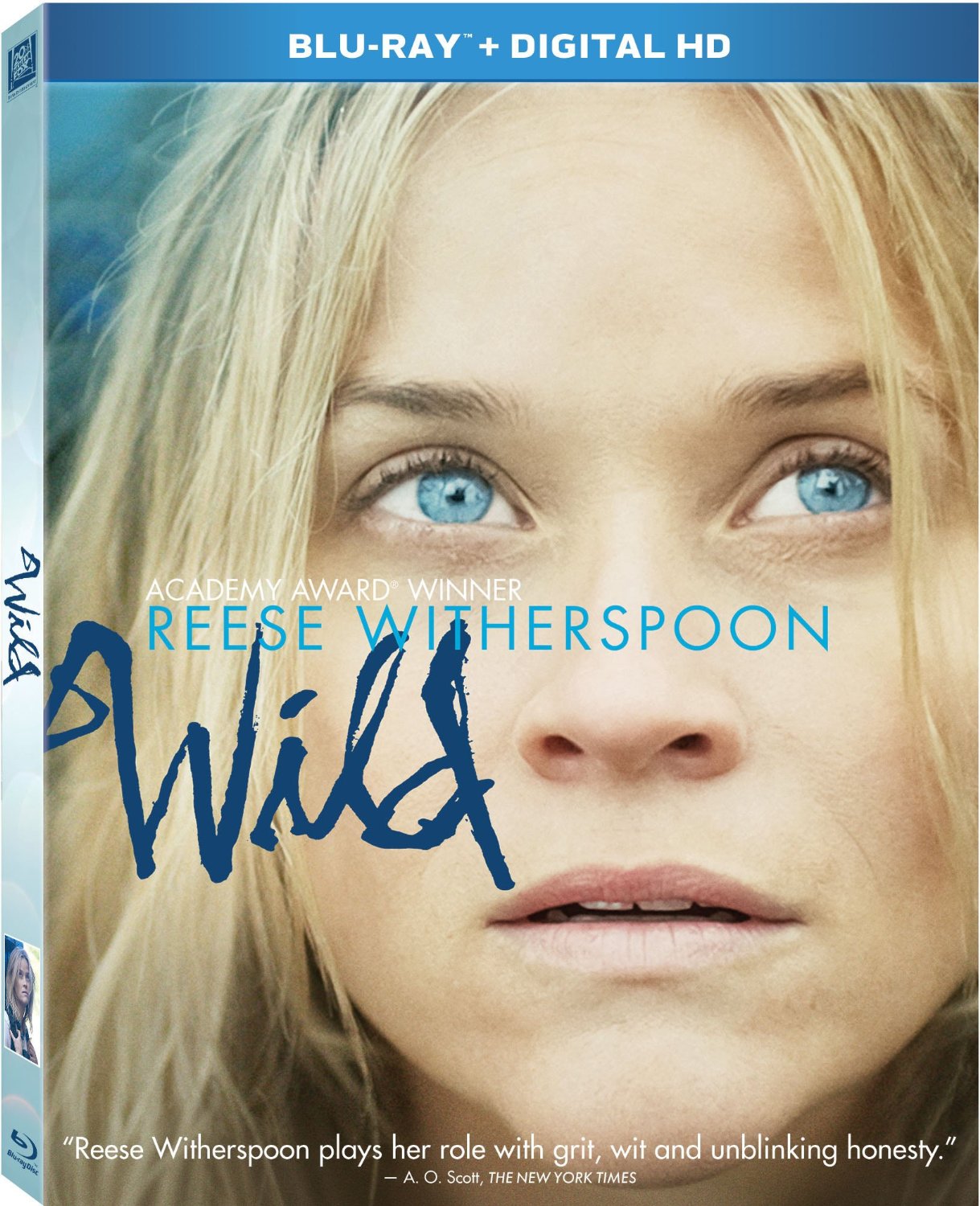
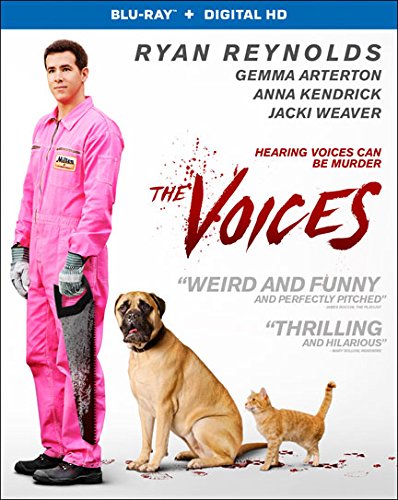
The cop here thinks he's The Bodyguard.”

At first glance, Beyond the Lights could easily be dismissed as an updated, less starry version of the Kevin Costner/Whitney Houston romantic blockbuster. Both feature a glamorous pop star falling in love with her strait-laced protector. But while The Bodyguard became a bona fide pop culture phenomenon, Beyond the Lights had a much less dazzling run in theaters, grossing just over $14 million. It’s a shame because the flawed newer film has some interesting ideas about celebrity, artistic integrity, and…black women’s hair.

"The world has indeed gone topsy turvy".

It's as inevitable as death and taxes. When you review movies that come out on home video, you will see a lot of zombie films. Every wannabe filmmaker with a camcorder and 20 bucks thinks they can break into the business with a few staggering zombies, bare breasts and a screaming hero laying down profanities and head shots for 80 minutes. So you can understand that I release a little moan each time a studio ships me their latest zombie acquisition. Why do it? Because once in a while you find a gem in all of that trash. Every so often something surprises you, and it's like Christmas...or maybe it's more like Halloween. Zombieworld was one of those unexpected treasures.

"We are assembled here today to pay final respects to our honored dead. And yet it should be noted that in the midst of our sorrow, this death takes place in the shadow of new life, the sunrise of a new world; a world that our beloved comrade gave his life to protect and nourish. He did not feel this sacrifice a vain or empty one, and we will not debate his profound wisdom at these proceedings. Of my friend, I can only say this: of all the souls I have encountered in my travels, his was the most... human."

Many of the headlines read: "Spock is dead". Of course, that's not really true. Spock is a fictional character that will live on likely longer than any of us. But fans of science fiction in general and Star Trek fans in particularly have lost a friend today who was very human. Leonard Nimoy was 83. 

“That’s what you get when you hire a con man.”

As much fun as it is to watch clever, cagey characters try to outsmart one another on screen, the real appeal of movies about con artists is watching filmmakers try to pull the wool over the audience’s eye. It’s an especially tricky proposition when you consider that — thanks to the Internet — moviegoers might be more sophisticated than ever in terms of knowing how movies are supposed to work. (Or at least *thinking* they know how movies are supposed to work.)

Despite being a fan of just about everyone involved with Horrible Bosses, I was more than a little disappointed by the first film.  It wasn’t awful or unwatchable by any stretch of the imagination, but I felt with a cast like Jason Bateman, Charlie Day, and Jason Sudeikis, it just should have been better.  But the movie gods have spoken and decided that the first film performed well enough that it deserved a sequel.  What worked for the first film was the idea behind finally having enough of your bosses and being pushed to the point where murder seems like a viable option.  We’ve all had bosses at some point that pushed our buttons to the point that these thoughts may enter our daydreams, so a movie that takes it to the next level will of course have its appeal.  Sadly, the sequel doesn’t have that appeal.

This time around Dale (Day), Kurt (Sudeikis), and Nick (Bateman) are working together to release a new shower product, and after the trio make an appearance on a morning news broadcast they get the call from an interested investor.  Rex (Chris Pine) claims to see promise in their product, as does his father Bert (Christoph Waltz). The father and son duo end up scheming the trio out of their product, which results in them going $500,000 in debt.  With their options limited, the trio decides the best way to avoid going into debt is to kidnap Rex and hold him for ransom.  It doesn’t take much thought to realize how bad an idea this scheme is, but the film wouldn’t be much of a comedy if this were a good scheme to begin with.

"There's been some trouble with the women hereabouts...it's bad." 

What exactly is a Western? That's the question that the cast and crew of The Homesman struggle with here. They appear to be divided on the subject, and the same sentiment will likely make this one a little harder to pigeonhole. That's not necessarily important except when it comes to marketing a film. An audience wants some kind of an idea what they're getting when they see it on the shelf of their local video store. Tommy Lee Jones wrote, directed and stared in this period piece, and he'd rather you not call it a Western. Others connected with the film are on board with the genre label. I guess I fall somewhere in the middle. Westerns often deal with cowboys and Indians. Well... there are some brief Indians here. They don't figure too prominently in the story, however. Other times the genre deals with gunslingers, bandits, or outlaws of one kind or another. Not so much in The Homesman. There are horses, and the cinematography certainly lends itself to the wide open spaces of the traditional Western. Usually Westerns take place in the period just after the Civil War to about the end of the 19th century. The Homesman takes place earlier, in 1854. One thing is for certain. It's a frontier movie with Western elements that, in the end, might not really matter. Let's call it a redemption story and leave it at that, shall we?

Zombieworld is like no other zombie film you've ever seen. It's a clever adaptation of independent zombie shorts. It's out now on DVD from Image Entertainment. I got to talk briefly with director Jesse Baget and Producer Steven Barton. These guys were primed and ready for action. Bang it hear to listen to my chat with the guys behind Zombieworld.

Sometimes in film the drama behind the scenes can be more interesting than the actual film we see up on the big screen. For writer/director Paul Schrader, having drama behind the scenes that effects the final project that we get to see is something he is more familiar with than he’d care to admit to.  The firestorm that occurred with the release of 2005’s Dominion: The Prequel to the Exorcist became so intense that the studio insisted upon a new director to come in and do extensive reshoots that subsequently led to the release of a separate film directed by Renny Harlin.  Once shooting wrapped for Dying of the Light, almost a decade later Schrader found himself in the same position where the producers took the film away from him only to release a cut of the film that Schrader seems to have disowned.

When you have the credits to writing films like Taxi Driver, co-writing Raging Bull, Rolling Thunder, and Affliction, you would imagine some respect would be paid to the man.  When you even have the cast standing in support to their director wearing shirts and your cast and crew has virtually disowned the film, as a critic and a fan, feelings do have to be separated as I go in to review this project.

What do you do with your life when your Dad is Chucky? You star in your own films. Of course, some of those are going to be of the horror variety. That's the story with Fiona Dourif who stars with Robert Englund and Thomas Dekker in Fear Clinic out from Anchor Bay. I got the chance to talk to her about her new film. Certainly, we had to touch on father Brad Dourif and her experiences in the Chucky franchise. Want to know what she had to say? Of course, you do. Bang it here to listen in on my chat with Fiona Dourif.

When it comes to haunted house films, despite how often the plots seem to be retold time after time, it is still hard for me to say no to giving them a shot. After all, you never know when you may stumble upon a gem.  I wouldn’t go so far as to say Altar is a gem or a groundbreaking entry in the genre, but for some late-night thrills the film has all the ingredients to deliver a case of the late-night creepy crawlies. The Hamilton family arrives at a large country house in Yorkshire, where Meg (Olivia Williams) is tasked with restoring the home to its original condition.  With her husband, Alec (Matthew Modine), an artist, the pair tries to make the best of their situation along with their two kids, Penny (Antonia Clarke) and Harper (Adam Thomas Wright).  The major takeaway I found with the film from the start is that clearly the director Nick Willing is a fan of the Stanley Kubrick version of The Shining. As a fun drinking game, any time you catch reference to the film, take a drink, and you’ll be snookered out before the film reaches the final act.

It’s a simple prick of a nail that seems to awaken the spirits trapped inside the home.  Alec pays little attention to this trivial wound at first, but as time passes we see a change come over him as he obsesses over his own blood, which he later incorporates in a sculpture that he is working on.  He becomes obsessed with his work in a very Jack Torrance sort of way, but Modine manages to keep his character relatively likeable while becoming creepier as the film progresses.