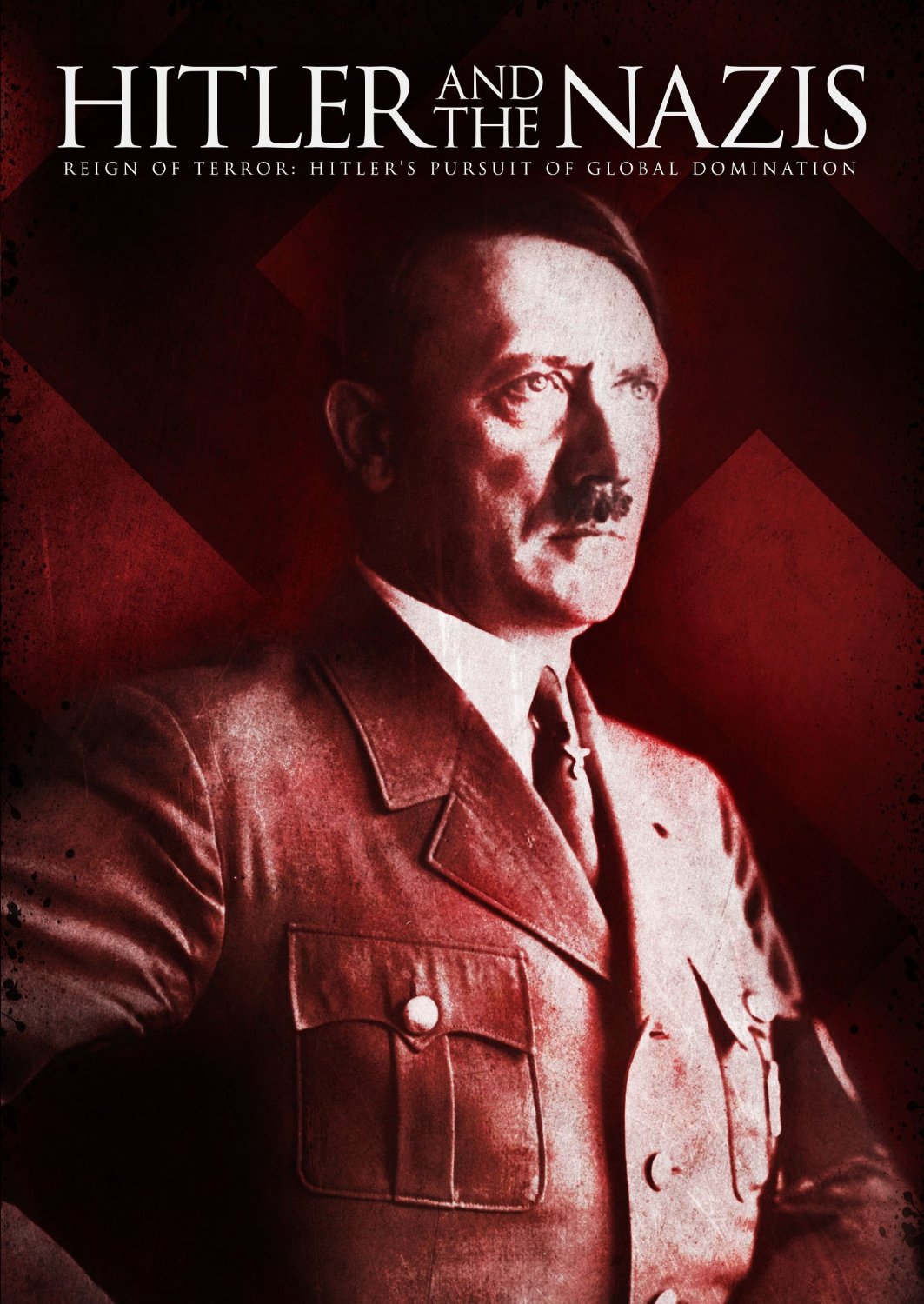
"The First World War shaped the 20th century. It sparked the Russian Revolution, and it launched America as a world power. The fault lines from its failed peace settlement led to a second terrible world war barely 20 years later. We all live with its unresolved consequences..."

The First World War long existed in the shadow of the second. When it was fought, the term World War was not yet in existence. Until after the Second World War, it was referred to mostly as The Great War. The footage from this war is far more rare. Most of us have seen little of it. Clips from the Second World War have been used over and over for countless documentaries. There are no longer any survivors left alive from that Great War. You won't find them interviewed on television, and you won't hear their stories told to the extent you've heard accounts of other conflicts. The results of that war do still live with us today, but how many of us truly understand any of it? The First World War: The Complete Series changes all of that. It's appropriate as we honor our brave soldiers on Memorial Day and as we begin to live through the 100 year anniversaries of that war to look back... and remember.

There is a famous painting from 1779 of Dido Elizabeth Belle with her cousin Lady Elizabeth Murray which is owned by the present Earl of Mansfield and rests in Perth Palace. It is the inspiration for the movie Belle. The history of events that swirled around Belle are pertinent to this day. The film doesn't always hold to historical accuracy, but mostly in matters that do not aid the excellent story being told. The historical inaccuracies are minor and mostly irrelevant. Here is what is true. Belle is the daughter of Admiral Sir John Lindsay and an enslaved African, Maria Belle. Lindsay had his uncle, William Murray, take care of her at his estate. Murray was the first earl of Mansfield and chief magistrate of England. He also took in Lady Elizabeth Murray, another niece, when her mother died. Mansfield may have been the most powerful man in England at the time and presided over many monumental decisions of British law. The decision that this film deals with is based on the Zong massacre and its ramifications. A slave ship threw its slaves overboard chained together to claim the insurance. The thing that is remarkable about the film is that it navigates all these issues with intelligence and clarity. The historical inaccuracy I mentioned that was wisely circumvented was to make Belle the epitome of a Jane Austin heroine. Belle, in this movie, is sheer perfection and a joy. It isn't possible that the real Belle could have been so wonderful.

The cast is superb led by Tom Wilkinson, Emily Watson, Miranda Richardson, Penelope Wilton, Tom Felton and Matthew Goode. Belle is played by Gugu Mbatha-Raw, who has been around for a while in things like Larry Crowne and British television but is holding center stage here. She is the picture of aristocracy and intelligence and sensitivity and grace. She weathers the small and big slights that her unique situation delivers to her. Lord Mansfield (Wilkinson) comes to love her as if she was his daughter, but he also must navigate through mores of English society. The story plays out like an Austin novel with courting and marriage as a goal and full of complexities in execution. That is when the Zong case starts to figure more prominently in the story. The son of a minister, John Davinier (Sam Reid) is given the opportunity to clerk for Lord Mansfield. He demonstrates strong feelings about the morality of this case. He also encounters the fiercely intelligent Belle who looks down on him in her early meetings. Belle, despite being a mulatto, is part of the aristocracy. When her father dies, she is left a fortune, which entices a member of a good family to court her.

"You and I have a lot of catching up to do. What's the last thing you remember?"

In 2006 director Bryan Singer appeared to have turned his back on the film franchise he had brought to life. After two successful runs at the X-Men universe Singer was primed and ready for a third when a certain Man Of Steel caught his eye. At seemingly, the last minute Singer dropped out of the third X-Men film to direct the dubious return of Superman. I actually like Superman Returns better than most. I wonder how much of the film's hatred might have been directed at its director, considered a traitor by many fans. I never really looked at it quite that way. It's a business, after all, and people come and go. Still, I'm not sure that Singer didn't feel a need for redemption or at least that he might have had some unfinished business. X-Men: Days Of Future Past should wash away any hard feelings fans might still harbor. This is one heck of an apology!

Jackie Mabley, the trailblazing subject of this HBO Films documentary, earned plenty of superlatives during a comedy career that spanned more than 50 years. She was touted as “the funniest woman in the world.” The DVD cover art crowns her as “the Original Queen of Comedy”, and one of the film's interview subjects calls her “the original cougar” thanks to her on-stage predilection toward younger men. Of course, Mabley would probably prefer it if you just called her “Moms.”

Whoopi Goldberg Presents Moms Mabley examines how the comic shattered gender and racial boundaries. The list of comedians she influenced — and who lined up to offer their thoughts for this movie — includes Bill Cosby, Eddie Murphy, Arsenio Hall, Joan Rivers, Kathy Griffin, Jerry Stiller and Anne Meara. (Murphy admits Granny Klump from The Nutty Professor was a direct nod to Mabley’s stage persona.)  Sidney Poitier turns up to praise her material as “familiar and honest.” Leading the charge is actress/comedian/talk show host Whoopi Goldberg, who used to recreate Mabley routines on stage early in her own career.

Ever since Elijah Wood completed filming Lord of the Rings, it would seem that he has done everything in his power to not be locked down with the label of simply being Frodo.  From playing a mute psychopath in Sin City, to voice work in Happy Feet, a suicidal pot-head that is best friends with a talking dog in Wilfred, and even the killer role in Maniac, it’s clear that he’s an actor that likes to challenge himself.  With Grand Piano Wood delivers his most dynamic performance as the brilliant concert pianist Tom Selznick who suffers from stage fright.  It’s a film that didn’t see much of a theatrical release but shone in the film festivals it did play at, most notably Fantastic Fest in Austin, Texas.  But it’s not just the performance that sells me on this film; instead, it’s the beautifully shot and constructed thriller that seizes its grip from the opening moments of the film and doesn’t release until the end of its 90-minute-plus running time.

It’s been five years since Tom has performed for the public, ever since his meltdown while trying to perform a piece written by his mentor Patrick Godureaux.  The piece titled, “La Cinquette” is believed to be an unplayable piece and is considered to be Godureaux’s master work.  But it’s on this one night, an event organized by Tom’s wife Emma (Kerry Bishe), a Hollywood socialite who has bloomed into superstardom during Toms retirement; the event has been put together to help Tom recover from his disastrous performance.

Most action pictures have an aura of super-seriousness, or they are filmed as comedies and everything is meant to be ridiculous. It definitely is a difficult task to mix the two effectively. On some level most action pictures are ridiculous, since most of us will never experience the close proximity to death and danger that is depicted on the screen. Also, life and death are often cheapened with high body counts but little consequence for our hero. In 3 Days To Kill, all sorts of elements are brought to bear in order to reinforce the average everyday family experience and not the lone killer. Early on, a different sort of danger affects our hero. It's not bullets and bombs but a rare disease that is likely to kill him in the very near future. As a spy, he has always neglected family to the extent that his teenage daughter barely knows him. Ethan Renner (Kevin Costner) is intent on changing that.

The film is directed by McG and written by Luc Besson, both filmmakers with impressive credentials, but I'll get back to that later. The real focus is Kevin Costner as an aging and battle-weary veteran CIA agent who is always counted on to take out whatever targets are assigned him. During a particularly explosive encounter in a Serbian hotel, he begins to get dizzy after chasing one surviving member of a gang. He is subsequently hospitalized and told he has maybe six months to live, and thanks for his service. He leaves the hospital determined to reconnect to his wife, Christine (Connie Neilsen), and daughter Zoey (Hailee Steinfeld).

When it comes to locations in horror films, insane asylums seem to be one of the go-to spots, and with good reason.  From watching numerous ghost-hunting shows over the years, it would also seem that there are numerous “haunted” asylums out there that are nothing more than rundown relics of what they once were.  So getting into House of Dust and seeing it is yet another haunted asylum film, the expectations went down, and I hoped for the best.  In the end it turned out to be a fun little film.

When we first meet Emma (Inbar Lavi), her family is dropping her off at her new school.  She’s the quiet type who just wants to fit in with the other college students, and it’s not long after her arrival that she catches the attention of Kolt (Steven Grayhm).  The two hit it off at a late night bonfire where the two go off with Kolt’s friends, and they eventually find their way into an abandoned section of the campus that at one time was a facility for mental patients.  Of course there is an urban legend attached to the location, but thankfully the film avoids following the local stories and goes its own path when Kolt and his friends have ashes spilled on them while they are investigating the location.

“You just never know who’s gonna be at the door.”

A virginal babysitter with bad cell phone reception is terrorized by a masked killer in Mischief Night. You don’t have to be a gorehound to know this is basically the plot of every slasher movie ever made. So it’s natural for viewers to expect some sort of swerve to differentiate this horror flick from all those that came before it. With the flawed, micro-budgeted Mischief Night, that swerve comes courtesy of the film’s intriguing assertion that a “boogeyman” can come from anywhere.

American Jesus is an intelligent film. It does not judge. It is balanced in its approach to some basic questions. It shows many sides to a very large and ill-defined subject. It attempts to understand in a comprehensive way Christianity in America. Right from the beginning it uncovers unique splinter churches that are part of why America approaches religion differently than other countries. It visits the Cowboy Church in Amarillo, Vintage Faith for surfers in Santa Cruz, Bikers for Christ in Middletown , N.Y., and Team Impact for body builders in Crosby, Texas. This leads into Mara Einstein talking about her book Brands of Faith: Marketing Religion in a Modern Age. It is about the competitive nature of religion in America. There is no state religion, so it has always allowed people to follow there own inner callings.

This film tries to show a very broad cross section of the wide variety that has resulted. The most successful are the mega-churches which can have over 10,000 people at a service. Something like that only becomes successful if they create enormous excitement with rock bands and video screens and TV. On the other extreme, you have small grassroots churches that have members dancing with torches burning their skin and snakes biting them. One such church is in Matoaka, West Virginia, the Full Gospel Apostolic House of the Lord Jesus, run by Pastor Mack Wolford. Wolford is interviewed and explains it is in the hands of the Lord what happens. A caption reveals that Wolford died in 2012 from a snakebite at age 44.

Shelter Island is not a movie about the place but about two people who made a connection. Jimmy Olinkiewicz found Harold Olson one day, and a unique friendship was born. Jimmy is a very basic hardworking guy with a Long Island accent who does anything and everything, and he sees some potential in Harold. Harold is obsessed with painting and will frequently listen to one song hundreds of times for 48 hours straight until he finishes a painting. Jimmy seems like a very normal, average guy, and Harold does not seem very normal. But what is normal? And what is art? Is what Harold does great art? Is art important? Is Harold important? These are the kinds of questions that come up when watching this unpretentious little film.

Jimmy and Harold are two very unpretentious guys. Jimmy is just an average guy who runs a gas station and a construction business and an antique collectables business, all while taking care of his son who has autism. My Mind, a short film by Alex Olinkiewicz about his problems with Asperger's syndrome is included in the DVD and has generated 1,300,000 hits on YouTube. Probably some of Jimmy's compassion comes from Jimmy wanting to help someone like his son but much later in life. Jimmy is 16 and Harold is probably in his 50's, but who knows. Harold probably is autistic and a savant of some type. Harold bicycles everywhere, lifts weights and eats sparingly, which is probably why he is bone-thin. Harold is clearly hyperactive. He also sees things in his dreams that are translated into his paintings. Harold has no knowledge or training about art but clearly has natural talent. Harold doesn't know why he does what he does except to try to please people. Jimmy collects all kinds of junk and sells it on EBay. Some times Jimmy gets huge returns. Maybe Jimmy is hoping for huge returns on Harold. Jimmy with his boundless energy and good will enlists a successful artist near by.