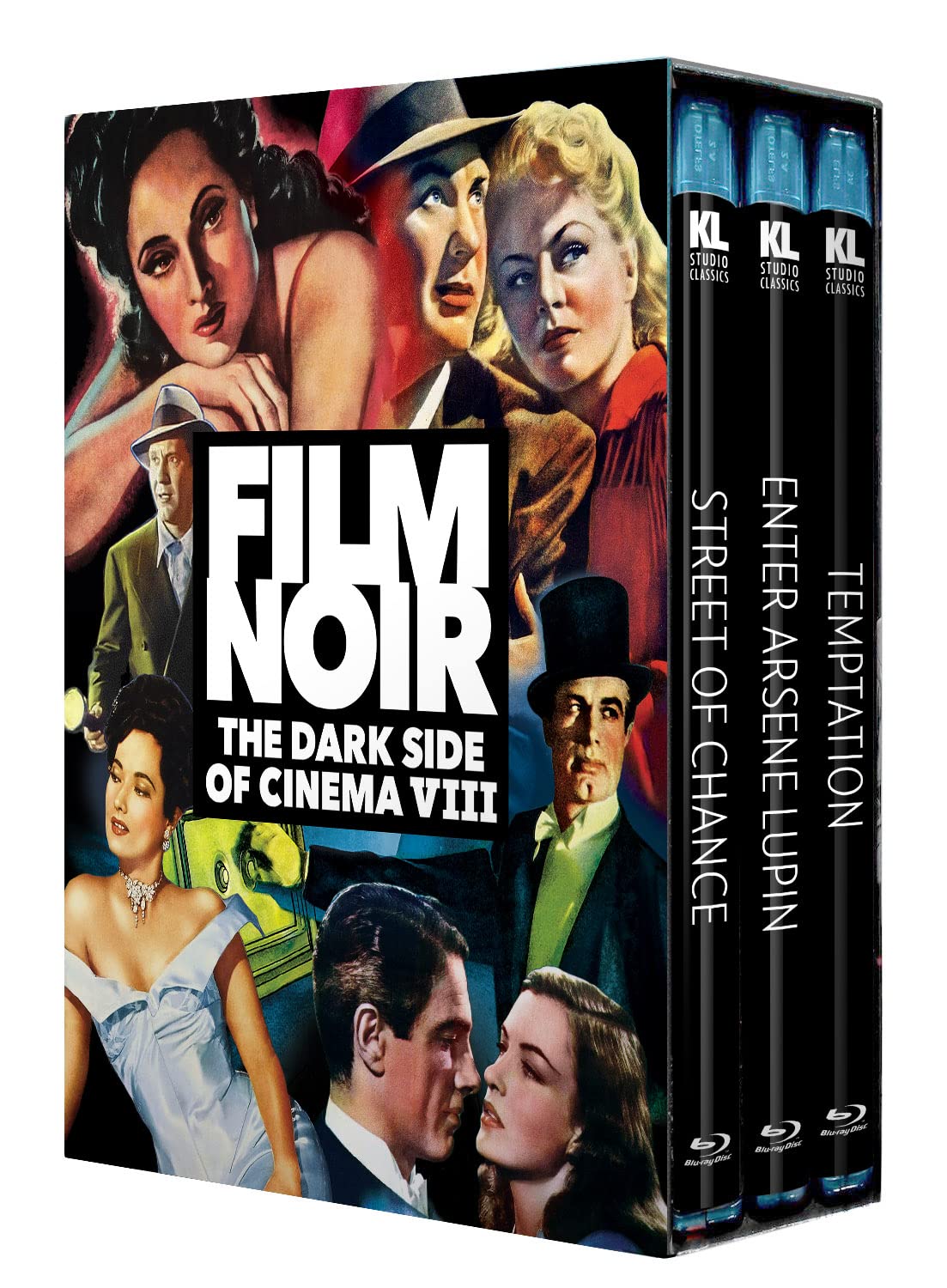
Edgar G. Ulmer started his career working for the early German masters of Expressionism like Fritz Lang and F. W. Marnau. He set out on his own doing ethnic films in the Ukraine before coming to America and trying his hand here. His most notable film has to be the 1934 The Black Cat, which brought Boris Karloff and Bela Lugosi together for the first time and remains a classic to this very day. Unfortunately for Ulmer, he fell in love with the wife of Carl Laemmle, the head of Universal Pictures. He later married Shirley, but the result was he was barred from every major studio in Hollywood. He had a huge box office success in 1934 with Universal, but his affair in 1936 ended any chance he would get to ride that future. He was relegated to the independent studios where he had little money and a hard time getting good actors or distribution.

Now his films are pretty much cult classics and have inspired future big names like Joe Dante and Steven Spielberg. If you've seen any of his films, it’s from late night television edits or bad bootleg VHS copies you bought at horror conventions. Kino Classics has brought three of these films together in one collection of three discs that include many historical audio commentaries and a few nice features on the director. This is going to take you back to a different era in small-budget films. Edgar G. Ulmer knew how to use a small budget, and now you get to discover, or if you're like me, rediscover these classics in HD for the first time.

"What's the word for when you're bad at expressing yourself...  Speechless."

The story has been around for centuries. After Dickens' A Christmas Carol and Shakespeare's Romeo And Juliet, it might well be one of the most imitated stories on film and television. There have been countless plays on the Cyrano themes, from The Brady Bunch to Friends. It's a timeless story first portrayed in a stage production by Edmund Rostand in 1897, but the story goes back to the life of an actual historic figure from the mid-17th century. Of course, his life has been highly made up and likely little to nothing remains of fact from the actual person. The play was a hit, and the general ideas presented there remain popular to this very day. Now there's yet another screen version based on a play written by Erica Schmidt, who happens to be the wife of Peter Dinklage's wife. I was honestly not looking forward to the new film adaptation of Schmidt's adaptation of Rostand's adaptation of literary works going back to the 17th century. It's frankly been done to death, and the last thing I wanted to see was Peter Dinklage, as good an actor as he is, with a huge nose walking around trying not to be laugh-your-butt-off funny. Unfortunately, it was awards season, and I needed to see anything I could get the chance to see before my own votes were due. Fortunately, the film wasn't anything like I expected, and if I had checked out the modern play in which Dinklage also played the character on stage, I would have known that and been much more open to seeing the film. It was duty that brought me to that press screening. It was the chance to see a truly great film again that led to me jumping at the opportunity to review this Universal Blu-ray release. And by the way, there aren't any large noses to be found anywhere in the film.

So, I fully expected this movie to be one of those films that I would have to subject myself to in order to appease my wife. I mean, I was familiar with nearly every member of the cast, but given the film’s plot, I expected to be bored and to find it cheesy. It just seemed like a clash. Like it should be two separate movies: one that deals with the secret daughter of the king, and the other a story about a mermaid. However, it would appear that I’m eating my words, as The King’s Daughter proved to be a far more entertaining tale than initially advertised. Based on the 1997 novel of The Moon and the Sun, the story follows Marie-Josephe (Kaya Scodelario, Pirates of the Caribbean: Dead Men Tell No Tales), a rebellious, free-spirited young woman who grew up in a convent. Her days are normally spent giving the Abbess a hard time. Unbeknownst to her, she is actually the daughter of the legendary monarch, King Louis XIV (Pierce Brosnan). See that in itself a full plot with much to explore. You’ve got the initial shock of learning one another’s identity and their relationship; you’ve got all the feelings and emotions that come along with that, and then there is the eventual prospect of the king falling under the young woman’s spell, all while attempting to use her as a political pawn. Now all those elements generally come standard with a film of this type, and they are of course featured here, but with one addition that at least seemed outlandish to me, but actually seemed to bring the whole story together: mermaids.

Yes, I said mermaids, as the film features a subplot involving the capturing of a mermaid for nefarious purposes. Now while the two plots do seem to clash at times, for the most part I’d say that they found a way to coexist without pulling focus. Naturally, Scodelario’s character is featured heavily and integral in both plots. Scodelario gives the character strength which is displayed in every scene, but shines prominently on several occasions, any time her character is challenged; no matter the challenger, whether it be a member of Marseilles court or the King himself. There was no better advocate for the mermaid than Scodelario. Her chemistry with the other members of the cast was also at the highest levels, such as with Benjamin Walker, her eventual love interest. I say eventual, because there was a period of time when I wondered whether their relationship would become romantic or remain platonic. It gave the story a great will-they-won’t-they vibe for a time. Scodelario also managed to save her scenes with Brosnan, as his character felt stifled and wooden at times. Thanks to Scodelario’s energy, these scenes were not unbearable.

Fair warning to anyone who isn’t fluent in Spanish; you’re going to need to make sure the subtitles are on. There is an English dub, but I wouldn’t recommend it in my humble opinion, as it sounds very automated. That aside, this was a very interesting film that deals with a very emotionally complex issue. Two women, both expectant mothers, share a room at the hospital and form a deep connection with one another. Their backgrounds are very different, including the conception of their children. Both were not planned, but one has a more traumatic experience. Penelope Cruz serves as the prominent focal point of the film as well as the film’s heart, as much the emotional context of the film is seen through her perspective. Despite that momentous responsibility, she delivers an award-worthy performance as Janis, a photographer who finds herself pregnant following an affair with a married man. On the other side is Milena Smit as Ana, a young minor struggling to take care of her child. The two women’s connection is clear early on, and while their relationship takes a turn that I was not initially expecting, it is their connection that fuels the overall plot.

I’m going to do my best not to give away too many details, but the biggest reveal of the film is the film’s central construct. It was a direction that I wasn’t expecting the film to go in, but once it did, it made a lot of sense for the overall story. It added elements of tragedy, as the characters attempt to be there for each other. However, the element that I most enjoyed was the element dealing with Janis’ struggle of conscience. She has knowledge that she would give anything to forget, but can’t, and as a result she in a no-win situation. On one hand, if she does the right thing, it will be at a great cost; but if she makes the selfish choice, it will be at the expense of someone that she has grown to care about.

Easter 2021.  I'm sitting in a hotel room.  My wife and son are asleep in the adjoining room.  Meanwhile, I'm sitting in a chair flipping through channels on the television.  I come upon PBS where music is typically opera or symphony-based.  However, on this particular occasion, I am witnessing something far different.  A lady dressed in a red vinyl dress is playing guitar at the Austin City Limits.  It's clearly rock with a bit of indie and pop thrown in for good measure.  But it's unique all its own and familiar at the same time.  At first, I'm drawn in by her beauty, but I stay far longer once I hear her music and captivating sound.  Within days, I'm buying Masseduction  (and have bought several of her other CDs since then).  Her name is St. Vincent.  As it turns out, even before I was in that hotel room late at night, she was working on a mockumentary called The Nowhere Inn.  After the film falling victim in part to COVID for its release, it finally made it's way to Blu-ray.  Let's take a look.

A long, desolate highway.  A limo passes by with Annie Clark, also known as musician St. Vincent.  She is as it turns out doing just that: listening to music.  The driver up front rolls down the windowed partition and asks who she is, because he's never heard of her.  Annie tries to explain, but the limo driver just goes on and on about how neither he nor his friend have ever heard of her.  Eventually he rolls up the partition and Annie goes back to listening to her music.

When you look back on the impressive 40-year career of Nicolas Cage, it’s pretty hard to pick a favorite performance. I can’t even think of another actor who has such a diverse batch of performances. Sure, the man is known for being a bit over-the-top, but that’s part of the charm of a Nicolas Cage film. People can be quick to point out that in recent years his “movie star” appeal has been fading with the amount of direct-to-video films he’s put out in the past decade. It even seems like there just isn’t a movie he’ll say no to so long as the check clears. Most likely you’d be half right in thinking that the man’s been through some financial issues, BUT at the same time he’s been in some fun and wild movies in the past decade as well. Mandy (2018) has become a bit of a cult success. Color Out of Space is another film in recent years to gain a cult following; then there is the fun Willy’s Wonderland, the bonkers Prisoners of the Ghostland, and the critically acclaimed Pig, which has a near-career-best performance from Cage. Basically, he’s stayed busy and put out some great work even if none of these films created anything close to a blip on the box office charts. When it comes to The Unbearable Weight of Massive Talent, it takes not just this past decade of Nicolas Cage’s career but the last 40 years and delves into the myth and the legend of the man off screen and creates a hilarious meta-film that comes so close to greatness that it’s hard to not feel this may be one of Nicolas Cage’s best films.

The film starts things off with a kidnapping. Just who this girl is is something we don’t find out till later in the film, but it’s a strong opening that then cuts to Nicolas Cage (obviously playing himself) taking a meeting with a director about what could be a career-defining role. In the film’s version of Nicolas Cage, we see him as a man struggling with his ex-wife Olivia (Sharon Horgan), while being an out-of-touch father to his teenage daughter, Addy (Lily Mo Sheen). It’s his relationships in his personal life that really work with connecting the audience to the character. We see he’s genuine in his own way with trying to maintain these relationships. It’s just that his passion towards his career just seems to get in the way. The heart of this film is about Cage needing to learn how to shift these priorities to be a better person. It seems simple, and we’ve seen this trope in many films before but never quite executed in this fashion.

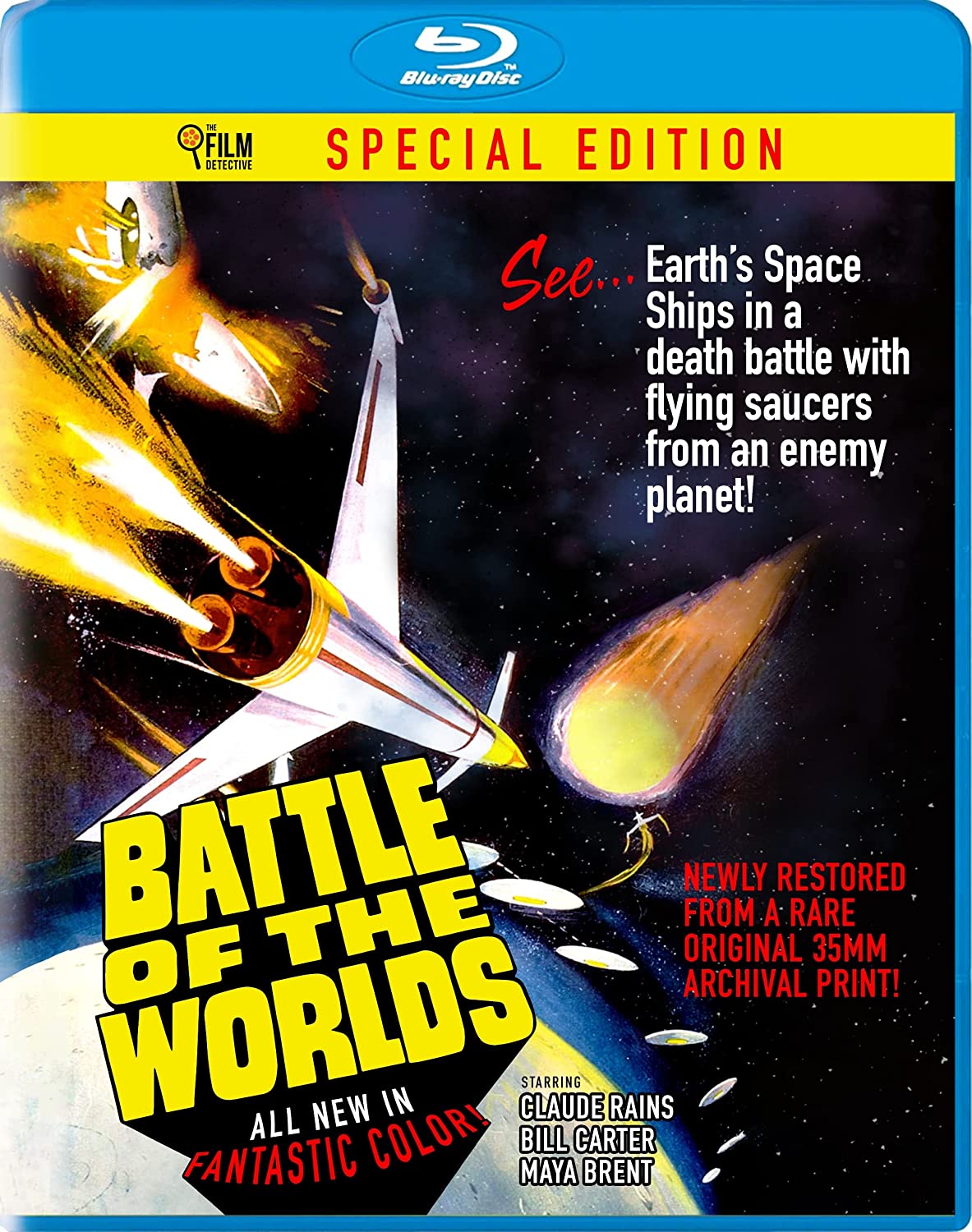
"There are some aspects of the life of an Earth savage that are exciting and rewarding; things that are missed by the brains on my planet Arous."

When I was a kid going to the drive-in movies was a pretty big deal. In those days your parents would hide you under a blanket on the back seat floor or even in the trunk just to shave off a buck from the admission price. I don't think the guys running those things really minded. It was kind of an open secret, and after saving a dollar or two, my pop would blow ten times that at the concession stands. He thought he was pulling one over on the management, but I think he was the one getting snookered. Still, it was a good time, and my mom and sisters usually fell asleep before the first of what was always a double feature even started. They were getting a little sleep, but I was getting an education. It was there along with the Friday night Shock Theatre shows on television that I was first introduced to Hammer's horror films, AIP's Poe classics, and countless schlock features from the likes of Roger Corman and William Castle. Someone at Corinth Films must have shared that kind of experience as a kid, because they've done the old double-feature nights one better with the release of Drive-In Retro Classics: Science Fiction Triple Feature. It's three low-budget science fiction gems that predate my years at the drive-in. These films go back to the decade of the birth of low-budget sci-fi: the 1950's. They're all found on a single DVD, so don't expect great picture or audio quality here. But if you're like me, you've been watching these things on fourth-generation bootleg VHS copies for the last 20 years. Corinth goes one better there, too. Each of them only runs 10 minutes or so over an hour, so it's not as cramped on this disc as you might expect. These are films that were curated by Wade Williams back in 2000 and found together for this entertaining release.

"You know, things change. Sometimes not so much ..."

Someone at CBS must have eaten a lot of alphabet soup as a kid. Today the longest running show is NCIS, about to enter it's 20th season along with a couple of sibling shows, one of which is also in double-digit seasons. It also happens to be their highest rated show over many of those 20 years. Before NCIS was crowned champ it, was another assortment of letters that reigned supreme at the eye network. That was CSI. It was the show that never looked like it had a chance. The series substituted lab work montages for car chases and explosions and featured a lot of talking heads that delivered some of televisions deepest techno-babble. Didn't stand a chance. The flagship series lasted 15 years, while three sibling shows tacked on another 15 years before the franchise left the airwaves in 2015 after a television film appeared to wrap up the original series. Now it's seven years later, and television has been swept by a new trend. It's called the revival series. A ton of once popular shows have come back for "limited" runs. It all started with 24, and Fox was the king of the revival series at the start, bringing back The X-Files and Prison Break for the same treatment. And while CBS has made their own trend of remaking older shows like Hawaii Five-O, MacGyver and Magnum P.I. they have only recently entered the revival market. Criminal Minds will be back for at least a limited run of episodes and CSI is returning as a full-fledged series by going back to where it all started in Vegas. The result is the release of CSI:Vegas Season 1 on DVD from CBS Home Entertainment.

When watching this 1980 classic, it’s impossible to not notice its influence on films that would come later, most notably American Beauty (which would also win Best Picture in 1999). I bring this up not because Hollywood has a habit of recycling ideas, but more to point out that sometimes all it takes to make a great movie is to keep it simple, focus on issues that everyone deals with, and give it one hell of a cast that is willing to pour their hearts out onto the screen. The film is about 42 years old, and you could release it today, and it would still resonate with audiences; that’s what I feel makes a film great and where it merits the term classic. Paramount is dusting this title off from its catalog to release it under its Paramount Presents umbrella, and it’s definitely one of the standout releases they’ve put out. If it’s a film you haven’t seen yet, this is one that I consider a bucket list film everyone should see before dying.


"If you expect disappointment, you will never be disappointed."

That's the trouble with sequels. The filmmakers feel this great responsibility to give us more than they've given us before with no thought to the idea that more is often less. There has never been a truly great comic book hero film that had extra villains. It just doesn't work. You can't give enough time and back story to everybody, so you have to cheat somewhere and cut a few corners. Those corners are things like characterization and heart. But what if you could? I mean, seriously. What if it were possible to do a multi-villain comic book movie that was really good? Until just now, I would have thought it was impossible. But isn't that what the Marvel Cinematic Universe (MCU) has been doing for over 20 years now? Isn't that what comic books have been delivering since the 1930's when an alien baby stole the hearts of millions? Aren't they in the business of doing the impossible? Spider-Man: No Way Home has done the impossible. There are five ... count them ... five villains, and this is the best Spider-Man film of them all. The pandemic might not be over, but the box-office drought will be. Spider-Man is set to break all post-COVID records, and there's just one reason why. This movie reminds us why we used to go there in the first place. A movie that feeds the 10-year old Spider-Man comics fan inside of me and the adult looking for some real entertainment from my center seat in an IMAX theater. Run. Don't walk. Run. Take your precautions, of course. But run. Run to the box office, and remember: