They say that timing is everything. When Dreamworks released The Croods back in 2013, it performed rather nicely both at the box office and on home video. The combined take brought the studio over a billion dollars and a bit of a comeback for their animated studio branch. It appeared to be the anchor for a new franchise that could hold its own against such juggernauts as Ice Age, Shrek, and pretty much anything Pixar puts out. I expected there to be a follow-up, but I didn't expect it to take over seven years. Kids have relatively short attention spans, and sequels really need to strike while the box-office iron is hot. That wasn't the case here. I'm not sure what the holdup might have been. The project was quickly greenlit by Dreamworks, and we should have seen something in a couple of years at the longest. Instead it took the better part of a decade, and the film faced a double whammy when it finally was ready for release. Of course, no one could have predicted the last year with its closed-down theatres and worldwide panic. The film just didn't have a chance to bring in anything close to what the original took. Now it's out on home video, which hasn't been hit quite so hard by the pandemic. It's a chance for the franchise to find some legs and allow for the chance that there will be more.

The film finds the Guy (Reynolds) pretty much becoming a part of the Croods’ family. It's a bit of an irritation to patriarch Grug (Cage), who doesn't appreciate that his daughter Eep (Stone) has become quite close to the newcomer, and fears the family will fall apart if the two youngsters decide to leave and venture off on their own. It's pretty much the same emotion most modern fathers get when the boys start to show interest in their daughters, and worse yet, when their daughters start showing an interest in the guys. That's the dynamic within the family when they come upon a huge obstacle in their path in the form of a gate, the likes of which they have not encountered before. A series of pratfalls finds the family inside what was believed to be an impregnable barrier where another family resides in a world that is paradise. There is plenty of food and water. There are no dangerous animals trying to eat them, and this land of milk and honey appears to extend out forever. And in control of this new world are the Bettermans. Phil (Dinklage) is the father and patriarch here. Hope (Mann) is the mother, and there's teen daughter Dawn (Tran). The Croods are mesmerized by their massive treehouse and abundant resources. Of course Grug feels threatened by it all. He sees his family tempted by this new life and sees the family traditions lost forever. Instead of sleeping in a giant pile, they have their own bedrooms. It appears the Bettermans have it all, but there's one Eden-like taboo. You can't eat any of the plentiful bananas. Just the kind of restriction that Grug is going to rebel against. So he eats ALL of the bananas and is told later that they appease a terrifying creature that leaves them in peace in exchange for the fruit. Yes, it's King Kong being told here, and with predictable results. The story leads to a moral of family, and for Grug, the ability to let go, at least a little bit.

“Violence as a way of achieving racial justice is both impractical and immoral. It is impractical because it is a descending spiral ending in destruction for all. The old law of an eye for an eye leaves everybody blind. It is immoral because it seeks to humiliate the opponent rather than win his understanding; it seeks to annihilate rather than to convert. Violence is immoral because it thrives on hatred rather than love.”

This quote is one of two featured at the end of the film, the other coming from another prominent civil rights leader, Malcolm X. In his quote speaks about how though there are good people in the world, there are also a good many bad, and those bad people tend to be in positions of power that grant them protections from their misdeeds. In this current political climate, there is a lot of truth in both views. Do The Right Thing, arguably Spike Lee’s greatest and most cultural relevant film, does a good job of displaying both views. However, what I am most impressed by is how a movie made over thirty years ago can still have relevance in today’s society. The issues portrayed in the film are things that we as a nation still struggle with to this day, and though I like to believe that things are improving, it would be naïve of me to suggest that the themes of this film no longer apply. In addition to its cultural relevance, this film served as the film debut for Rosie Perez and Martin Lawrence. A testament to Lee’s eye for talent, the film has received several accolades over the years, including a Academy Award nominations for Best Supporting Actor for Danny Aiello and Best Original Screenplay. I do not believe that I can upsell this movie enough, so if you haven’t seen it, let this be your figurative kick in the butt to do so.

For a while now it has been accepted that cartoons are no longer for kids, and it can be argued that most of the popular animated shows now are more geared towards adults rather than kids these days.  I’ve grown up with The Simpsons, and I’ve enjoyed the run that Family Guy has had, but really these have been the only animated shows I’d consider myself loyal to.  Upon seeing some ads promoting Rick and Morty as well as hearing my friends talk about the show, I couldn’t help but think perhaps this could possibly be a new animated series I could get excited about. At first glance Rick and Morty seems like the perfected animated blend of Family Guy and The Simpsons, and for the other-worldly locations even Futurama.  The comparisons are hard to look past; after all, the family dynamic is just about the same, and the shows both are filled with their pop-culture references throughout, so what is that makes Rick and Morty stand out from the other shows?

The title characters, both voiced by their creator Justin Roiland, Rick (an elderly, alcoholic inventor) and Morty (well, let’s just say he’s slow-witted), are an unlikely duo who find themselves getting into trouble and adventures together, usually at the fault of an experiment gone wrong.  These adventures take them into multiple realities as well as distant planets (or not planets, in the argument of them travelling to Pluto).  The dynamic between the grandson and grandfather is one that is intentionally odd and uncomfortable at times but does allow for plenty of humor to arise.  For instance when Rick believes he and Morty are trapped in a simulator and the only way they can talk is if they strip down and take a shower together, it’s so wrong, but you can’t help but laugh.

The argument about violence in entertainment has been going on for decades.  Groups have always wanted to point the finger at music, television, books, and movies for being the cause of violence or inciting crime, and typically the creators of this art are the ones being blamed.  In the 90’s I remember the uproar about how Natural Born Killers  was going to create a generation of serial killers but had people been paying attention to the film and how the violence of real life was being exploited, but by the media.  Then even Metallica and Marilyn Manson were thrown under the bus for “creating” murderers in regards to the infamous West Memphis 3, who were accused of murder simply because of the music they listened to. Then there were the Columbine shooters, who were guilty because of the music they listened to and the movies they watched.  Only recently does it seem that the finger-pointing has gone the direction where it’s deserved -- towards mental illness.  That’s not to say that life doesn’t ever imitate art.  There is definitely some responsibility an artist has, and when they get into some more extreme topics, there is a fine line you have to walk.  Random Acts of Violence shows what can happen when the subject matter is put in the wrong hands, especially when art is exploiting real life and in turn is exploited again to create heinous acts of violence.  At first glance this may appear to be a simple slasher film, but there is certainly more to unpack as you look more closely at what is happening.

Though we may be used to seeing Jay Baruchel in comedy roles, he’s been establishing himself as a writer, director, and producer for some years now.  With Random Acts of Violence we get to see him not just act, but co-write, direct, and produce his first horror film, and it’s a doozy.  At first glance it seems over-stylized and filled with over-the-top violence and gore, but it’s something that is very necessary to achieve what he was going for with this film.  “Slasherman” is a very successful comic in this world, and the comic’s creator, Todd (Jesse Williams) is ready to put the character to rest, only he’s struggling to give the character the proper sendoff.  To get those creative juices flowing, Todd’s partner, Ezra (Baruchel) has arranged for a road trip/ publicity tour that happens to run through the real-life locations where the murders that inspired “Slasherman” occurred.  Along for the ride is Todd’s girlfriend, Kathy (Jordana Brewster), who is writing a book of her own that will focus on the victims of the real life I-90 killer, aka “Slasherman”; and then there is the assistant, Aurora (Niamh Wilson).  To a degree the setup sort of gave me vibes of the road-trip-serial-killer film Kalifornia (if you haven’t seen that film it’s one definitely worth hunting down), but the film definitely is going a different direction.

Ammonite was a very hard movie to stay interested in. In its defense, I don’t believe that I was the target audience for the film; I’m not really interested in period dramas, and the only things I know about paleontology I learned from Ross on Friends. There is also the fact that as a film it is very slow and dry, and the most interesting angle was the relationship that developed between characters Mary Anning and Charlotte Murchison. Granted this was an intriguing development, but before we are treated to this, we have to survive an hour of poignant silences broken up with very little dialog. There is also the fact that my research has shown that their historical accuracy of the characters’ relationship in the film has been called into question. So now as a audience member I am forced to question the only truly interesting thing about the film. Kate Winslet and Saiorse Ronan are top-level talents, but I fear that even they weren’t enough to make the film worthwhile for me. Essentially, Ammonite is only for those who enjoy slow-building period dramas.
If there is one thing this movie taught me, it’s patience. Watching the film, I really struggle with my commitment to finish the film. It was just difficult to find anything to enjoy about it, because as I mentioned earlier, there wasn’t a lot of dialog, and for the first part of the film, there wasn’t really much going on. I will say that the one line I did enjoy was when Winslet’s Anning, whose demeanor shows that she only barely tolerates other people, gets a sort of revenge on an obnoxious character by telling him that a prized specimen he collected was nothing more than fossilized feces. I will confess that made me chuckle, but that one instance aside, this was a really boring film for me. I initially hoped to share the film with my wife, but circumstances didn’t allow that opportunity. Even so, I have my doubts that she would have been interested either; perhaps by the later relationship, but she would have likely stopped watching long before we got to that.

Gerard Butler vs. Comets. Well, I suppose Butler has been making a habit of overcoming insurmountable odds in recent years. I mean, he has managed to save two different presidents in three movies, and it’s not like this is his first time facing down a natural disaster (remember Geostorm), but even with that said, this is quite the thing to have to overcome. Greenland tells the story of the Garrity family as they try to make it to an underground bunker in Greenland before an extinction-level event. While this premise does have some intrigue, I’m pretty sure that most of us would have been trying to find a place to survive a little closer to home. Needless to say, that wouldn’t make for a very good movie, so here we are. Normally we watch Butler face adversity alone, but this time he has help in the form of Deadpool’s Morena Baccarin, as they both have odds to face separately as well as together. While I did struggle with the overall concept of the movie quite a bit as well it mainly just feeling like a rehash of former disaster movies, I was never bored, as the special effects go a long way to creating a realistic and intense experience.

Yes, the film is very reminiscent of another disaster film (2012), right down to the family estrangement and the attempts to get to safety on in transports deemed for the special people. Granted, the Garrity family was one of those deemed special people until they weren’t because of their son’s condition. That right there was a clever device to further the plot as well as send the characters on their individual journeys. While I did find it cruel, I also found it logical that something like that could occur in a situation like this. In the event of an extinction-level event, human courtesy gives way to cruelty. I can completely believe that.

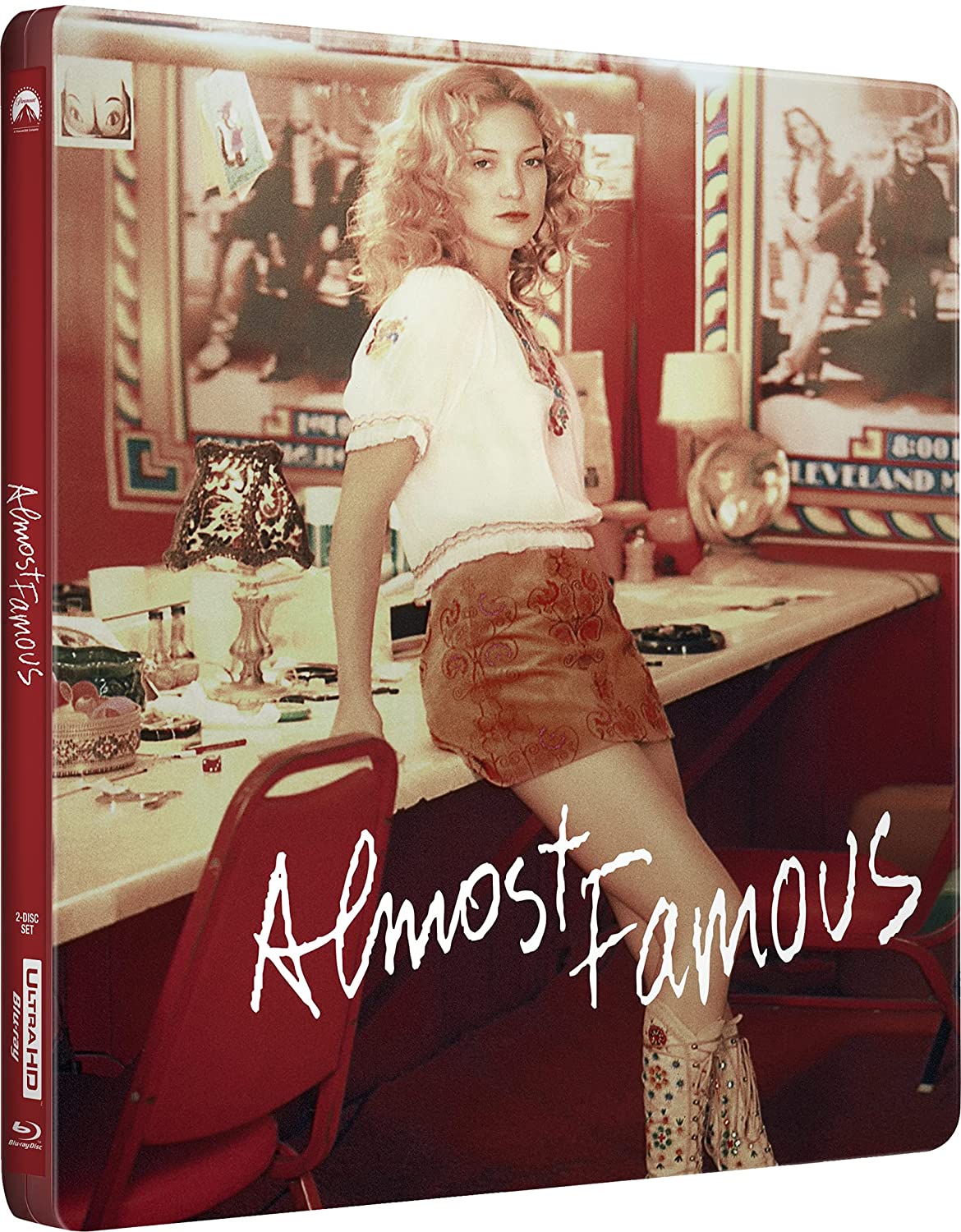
When it comes to Elizabethtown, I feel this is one of Cameron Crowe’s most divisive films.  Say Anything, Jerry Maguire, and Almost Famous tend to be at the top of people’s lists when they discuss their favorite films by the filmmaker.  Personally, Almost Famous is my favorite film by him, but Elizabethtown isn’t too far behind.  When it came out in 2005, the film seemed to get trashed by a lot of critics, but oddly enough, I didn’t care much about what they thought, Crowe at the time had a great track record for good films, and there was nothing that could sway me from seeing the film, except it was in and out of theaters pretty fast, so I had to see it on DVD.  It’s become one of my go-to films over the years, and I’ve found myself connecting to it more as I’ve been able to relate to various situations in the film (definitely not the near-billion-dollar fiasco Drew got himself in, thankfully).  Despite my love for the film, I can acknowledge it’s not without its flaws, so I’ll be as objective as I can be.

I’ll say right from the start my biggest complaint with the film is the story with Drew  Baylor (Orlando Bloom) working at a shoe company and being responsible for designing a shoe that will potentially cause the company to lose nearly a billion dollars.  For the most part Cameron Crowe is pretty good at creating relatable characters, but honestly, it takes a little time to warm up to Drew in this film.  He spends most of the first act brooding. The only time we see him smile is when he is successful in creating a bike he plans to use to kill himself, and that’s before he even finds out his dad has died.  I’m just simply not a fan of the first ten minutes of the film, but everything changes once Claire (Kirsten Dunst) enters the film. The use of “It’ll all work out” by Tom Petty and The Heartbreakers is one of the best uses of a song in relation to a character and to a story, and in this film music is so vital to the moments of the story.

Despite the pandemic going on, 2020 managed to deliver when it came to the horror genre. The Invisible Man and The Dark and the Wicked were definitely some of the highlights, and then there was Freaky, a horror comedy that was delivering a twist on the body-swap story.  I’ll admit I was a little hesitant with embracing this idea, but when I saw it was being helmed by Christopher Landon, who brought us the Happy Death Day films; well, it gave me a little more confidence.  This is one of the few films that managed to get a theatrical release, but I’m still a bit hesitant on actually returning to the theaters.  Now that I’ve seen the film, I have to admit I’m a little bummed I didn’t get too see this with an audience. This is definitely one of those films that is a little more fun when you see it with an enthusiastic audience.  It’s pretty much Freaky Friday meets Friday the 13th, and, well, slashers always tend to play better with crowds.

From the opening sequence you pretty much know what you’re getting into.  It starts up like a very standard (clichéd even) situation with teenagers talking about a local serial killer and whether homecoming will be cancelled because of him.  How this sequence plays out reminded me of Scream, mostly in how it was self-aware and how that opening sequence with Drew Barrymore stands alone a well crafted cinematic slice of horror.  From the get-go, the humor is well mixed with some nicely done gore effects.  What’s slightly problematic, and what I feel some horror fans may take issue with, is that the film is very much a riff on the mainstream 90’s horror style.  It’s really my biggest issue, but I’m slightly more forgiving of this, because this is a style choice that’s obviously done in a tongue-in-cheek manner.  As a reminder, Vince Vaughn also played a serial killer in the 90’s when he took on the role of Norman Bates in the awful remake of Psycho.  Thankfully, just from the opening sequence alone, Vaughn redeems himself and actually plays a great menacing killer.

Come Play is the most recent film to be expanded to feature length following a successful short project. With the moderate success of Lights Out, it’s no big surprise that a studio would want to take a chance on Come Play, whose short film, “Larry”, worked as a prototype for the feature it would become.  This kind of thing happens quite often with genre projects, but sometimes you have to wonder is there really enough story to expand a 5-minute short into a 90-minute feature.  Using the addiction to technology and its ever-expanding AI features, there is plenty of story to be mined from this.  Recently there was the update to Child’s Play that had AI technology seeking a new best friend it would kill to have, and in that film, Chucky was able to manipulate the technology around him.  Come Play somewhat takes the same approach but instead creates a boogeyman for the age of modern tech. Then factor in that it’s a film under the Amblin umbrella, a company that is responsible for Poltergeist, ET, and numerous 80’s and 90’s genre classics … well, it’s hard to not have some raised expectations.

Oliver (Azhy Robertson) is a young boy who has autism. This has made his life at home and school rather challenging and has made it difficult for him to make friends.  At home he spends his time watching Spongebob on his phone while his parents fight.  It’s easy to feel for the young boy, and the performance Robertson delivers is quite impressive for his young age. Most importantly, though, from the start of the film these characters feel grounded, and the result makes for many intense moments.  It doesn’t take long for Oliver to find a children’s story that seems to just appear on his phone. The story talks about a creature that like Oliver is rejected by society and simply wants to find a friend.  The creature calls himself Larry, but though his intentions seem innocent enough, very quickly we discover he’s simply up to no good.  Then there is the struggling mother, Sarah (Gillian Jacobs). Despite all her efforts, she can’t seem to help her son, and her marriage is falling apart.  Her struggles with her son have even affected her friendships, so when her husband prepares to move out, she feels even more alone.

When it comes to the DC universe on television, I feel like Warner Bros. knows exactly what they are doing and truly understands the comics as well as their audience. Now that WB has merged with HBO, I was worried about whether some of the DC TV shows would continue on, since I’ve been impressed with the first two seasons of Titans and the first season of Doom Patrol.  I was even more curious about whether Doom Patrol could continue to deliver it’s WHAT THE F*** moments that were sprinkled throughout the first season. Now that I’ve come to the abrupt end that Season 2 delivered, I’m happy to say the show has managed to outdo itself.  One thing I want to get out of the way before I delve into this review: the season is only nine episodes long due to the pandemic, so the show does end with many story threads left wide open.

You think you’ve seen some weird and off-the-beaten-path shows? Well, Doom Patrol is without a doubt the most fun and unique show I’ve seen.  It makes Twin Peaks seem normal, and calling the show bonkers is putting it lightly.  Oh, and for those of you with young kids, you definitely may want to steer them clear of this show until you’ve seen what it offers. Where the first season delivered town-swallowing donkeys, asses with feet that can eat you, and talking streets, Season 2 steps up its oddball nature with sex ghosts and robots on ecstasy, and that is just a tiny glimpse at the oddball fun this show has in store for its audiences. I haven’t even gotten to some of the more absurd aspects of the show. But please don’t let this scare you off, because this motley crew of misfit superheroes are a hell of a good time to watch, and even more surprising is how lovable they all are.