Posts by Dan Holland

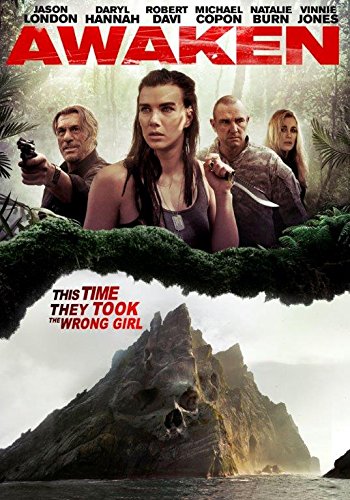
Awaken is a fantastic example of the idea that less is more. The film has a great deal going for it: an intriguing story, a rather noteworthy cast, and a strong leading actress, among other things. But at what point do filmmakers decide to say, “when”? Each of the film’s strengths I have listed end up overflowing, causing a rather disappointing mess that could have been avoided with just a little less of everything. Beginning with the interesting concept, the basic plot is as follows: Billie Kope (Natalie Burn) wakes up on an island with no recollection of how she got there. Upon further exploration, she meets a group of people who are being hunted by military personnel for an unknown reason. Once they regroup, she learns that each individual of the group similarly woke up on the island without recollection of getting there. The plot thickens when we learn that they have been carefully selected by their rare blood type and brought to the island as “donors” for clients who are willing to pay top dollar to harvest needed organs for either themselves or their loved ones.

While the idea of “strangers mysteriously appearing somewhere” is a frequently used plot device, I think the initial intervention of harvesting the organs was unique enough to carry the film where it needed to go. However, the writers did not. Instead, they introduce a parallel plotline for Billie’s character. She ends up on the island while following clues, leading to her long-lost sister. Ultimately this plotline was rather weak, and when combined with the more intriguing story, it feels as if it were an awkward juggling act. This hurt the climax of the film, as the falling action involved an underdeveloped bond between Billie and her sister. I appreciate the eagerness to bring more originality into the aforementioned “strangers” formula, but much of the additional plotline didn’t blend well with the initial intriguing concept.

It is always a privilege to watch an Official Selection of the Sundance Film Festival.  I have had the pleasure to screen a few films from Sundance 2013, and I have not been disappointed. Soldate Jeanette (‘Soldier Jane’ translated to English) is not the most captivating I have seen from Sundance, but with its digital camera aesthetics and visually striking images, it definitely carries a certain charm. Director Daniel Hoesl’s first feature-length film focuses on Fanni, an aging woman who is faced with eviction from her apartment. Fanni considers rent an unnecessary expense after twenty long years of living in her home, so she has refused to pay rent for the last three. Instead she spends her money on leisurely activities such as Tae Kwon Do classes or going to the Cineplex to watch silent films. Eventually her ignorance of standard living expenses catches up to her, and she escapes to the country, evading every necessary payment possible, be it a train ticket or a rental car (she takes a dealership car for a “test drive”).  Soon Fanni finds herself at a farm run by a group of men and a woman named Anna, who begins to look at Fanni with jealousy. Eventually, Fanni and Anna develop a meaningful friendship.

This film’s biggest enemy is its pace. While it has very intriguing content, the amount of time it takes to either resolve conflict or introduce new conflict is very difficult to sit through. I am normally a fan of long takes or lingering shots, but in this film they are a dime a dozen. Because they are so frequent, it is hard to find a solid purpose in their existence (if they have any purpose at all). Largely, they are frustrating. If viewer frustration was Mr. Hoesl’s goal in consistent lingering scenes or long takes of minimal activity, he certainly achieved it. This is unfortunate, as the film has such incredible strength behind the snail-like pace.

As a member of the Upcomingdiscs family, it probably isn’t a surprise that I am a fan of David Hewlett. Yes, Dr. Rodney McKay is a role we are most familiar with, but my appreciation of the good doctor goes a little deeper than the Stargate universe. I first became a fan of David Hewlett after watching him in Vincenzo Natali’s low-budget feature Cube (1997) and began looking to other films in which he was featured, such as Pin (1988) and Nothing (2003). His body of work as an actor goes much deeper than these films, but they are largely responsible for my fandom. With the release of his directorial debut A Dog’s Breakfast in 2007, David Hewlett graced us with a dark comedy that adequately demonstrated his knowledge of filmmaking. Seven years later, he tackles the sci-fi/horror genres with Debug.

The film follows criminal computer hackers and their supervisor, who are assigned to debug a neglected prison ship. Upon their arrival, we learn of a tension between squad members Mel (Kerr Hewitt) and Kaida (Jeananne Goossen) who quarrel over being squad leader. Ultimately their supervisor, Capra (Adrian Holmes), delegates this position to Mel, and the crew begins their mission. Unbeknownst to the team, the ship’s AI (Jason Momoa) has taken over the ship by killing all the prisoners, absorbing their life forces. Soon the squad realizes that their debugging mission’s stakes have risen from finally returning home, to leaving the ship alive.

There are few things that are more bothersome than cheap marketing gimmicks. Private Number is no exception. While sites like IMDb have Tom Sizemore and Judd Nelson as the highest-billed actors in the film, the cover of this DVD is very misleading. Perhaps part of the deal for Nelson and Sizemore was to be featured primarily on the cover, but I really doubt that is the case. The relationship of the DVD’s cover to the film itself feels like producers that have little faith in their project. So instead of promoting the interesting concepts of the film on its cover, they plaster the familiar faces of Nelson and Sizemore onto it, in hopes of making a few extra bucks. So if you are going to watch this movie for those actors, save yourself the trouble: they have a total screen time of 8 minutes. 

Private Number is a peek into the life of Michael Lane (Hal Ozsan), a writer struggling with sobriety and writer’s block after the success of his first book. Stop me if you’ve heard this before. Soon he and his wife (Nicholle Tom) begin receiving strange phone calls at early hours in the morning from a private number, all with the same message: “Remember me?” When bringing the issue up to Sheriff Stance (Judd Nelson) doesn’t resolve it, Michael takes matters into his own hands. As the phone calls persist, Michael begins to hallucinate, making his investigation spiral out of control.

La cena delle beffe, or The Jester’s Supper (1942), is an Italian period drama that was produced in Cinecittà (Cinema City). Before WWII and its aftermath, Italy’s film industry was more like what you would see in Hollywood during the same time. Spanning from the 1930’s to the early 1940’s, this movement was characterized by light comedies and historical films. The Jester’s Supper is no exception, telling a tale of a love triangle, vengeance, and madness. Directed by Alessandro Blasetti, The Jester’s Supper follows the drama between Neri (Amedeo Nazzari), Giannetto (Osvaldo Valenti), Ginevra (Clara Calamai), and their love affair. Gianetto and Neri are rivals who compete for the love of the beautiful Ginevra, but when Neri succeeds in taking Ginevra for his own, Gianetto finds a new love in vengeance. Swearing to win Ginevra back, Gianetto develops a plot to frame Neri as a madman so he will be incarcerated, leaving Ginevra to himself. Ridden with guilt, Gianetto releases Neri, prompting Neri to seek his own revenge.

If you watch this movie for nothing else, it has to be for Amedeo Nazzari’s acting. Known to Italy primarily as a hero, Nazzari is cast in a role of a villainous, arrogant playboy with many friends and thugs. While this casting may be against his typical roles, he stops at nothing to deliver his best performance. Though falsely accused of being mad at first, slowly throughout the film you watch him sink into an actual madness. The range of emotion that Nazzari is able to portray is incredible: Arrogance, anger, sadness, defeat, and madness. Nazzari’s presence took me by surprise, much like Toshiro Mifune’s did when I first watched Rashomon years ago. I’d go as far as to say that Mifune watched The Jester’s Supper in addition to the behavior of lions to prepare for his iconic role in 1950’s Rashomon.

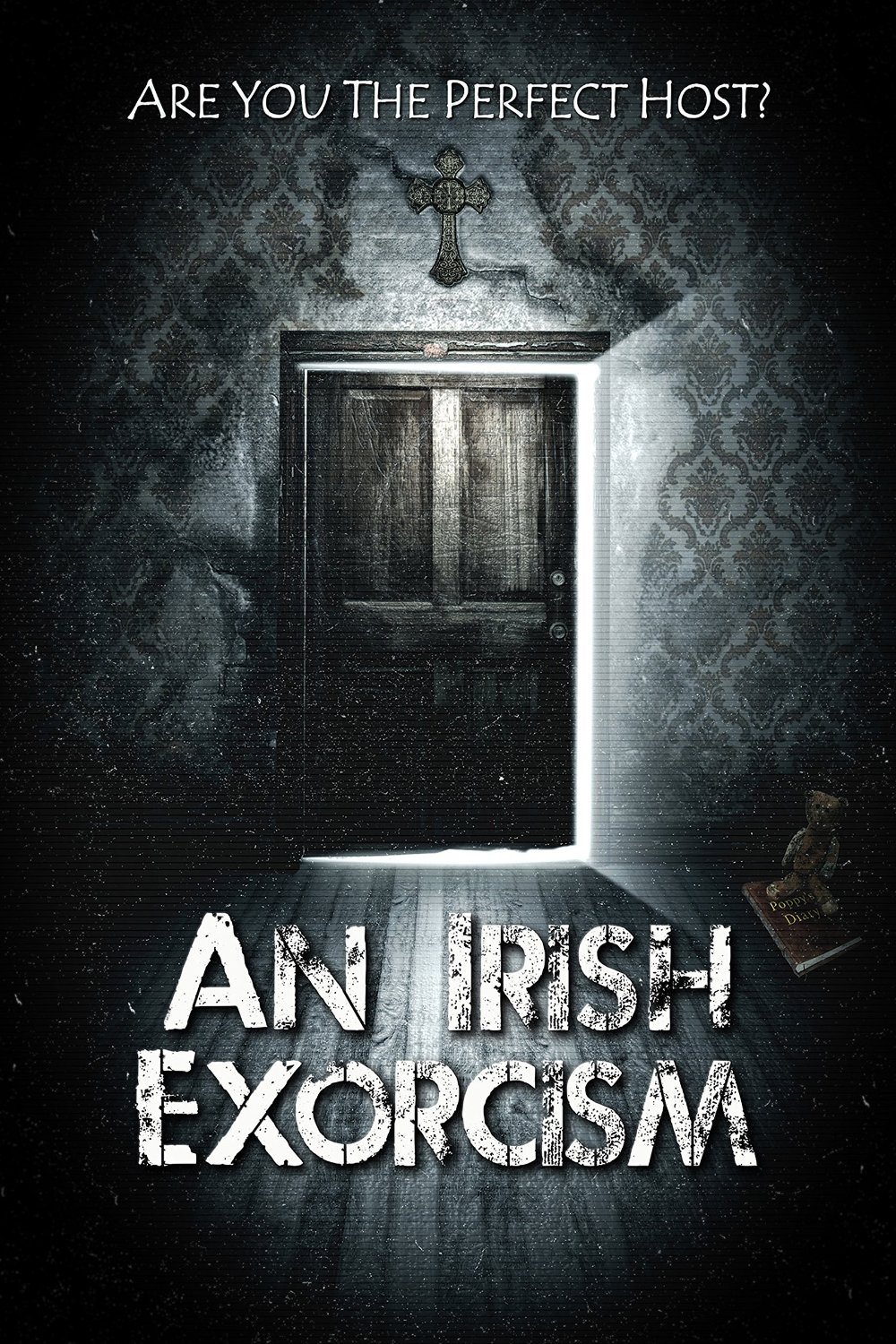
Once more I dive into the deep chasm that is filled with contemporary, independent exorcism films. Reading the title, An Irish Exorcism, what can be expected of this film? I was hoping for the film to bring focus to what it means for an exorcism to be “Irish.” Do Irish Catholics perform exorcisms differently than other Catholics? Is there a world-famous exorcist who travels to Ireland in order to succeed in saving a child’s life, where countless priests have failed? Wherever your imagination takes you after reading the title is a step toward a more creative film. The only thing that sets An Irish Exorcism apart from other cookie-cutter exorcism films is that it is set in Ireland. 

An Irish Exorcism tells the story of Lisa (Anna Davis), a college student researching exorcisms, as she pieces together video interviews and other evidence for her final class project. Father Quinn (Paddy C. Courtney), a more progressive priest, helps Lisa get in touch with the more traditional Father Byrne (Brian Fortune) for her project. Father Byrne is reluctant to help, but allows Lisa to document the possession and subsequent exorcism of a local girl in order to finish her project. As you may have guessed, the film is presented to us as “found footage,” complete with an introductory disclaimer stating the “credibility” of the images that follow.

“Have we heard from the devil yet?” 

Perhaps we have, given the cunning deception of the DVD’s front cover. I take joy in walking into films relatively blind, only having seen the attention-grabbing image that prompted me to pick it up. Let it be known that the cover of the DVD I received differs greatly from the one that is advertised on Amazon; however, both covers are severely misleading as to what the film actually entails. That being said, knowing absolutely nothing about this film may not be the best way to approach it.

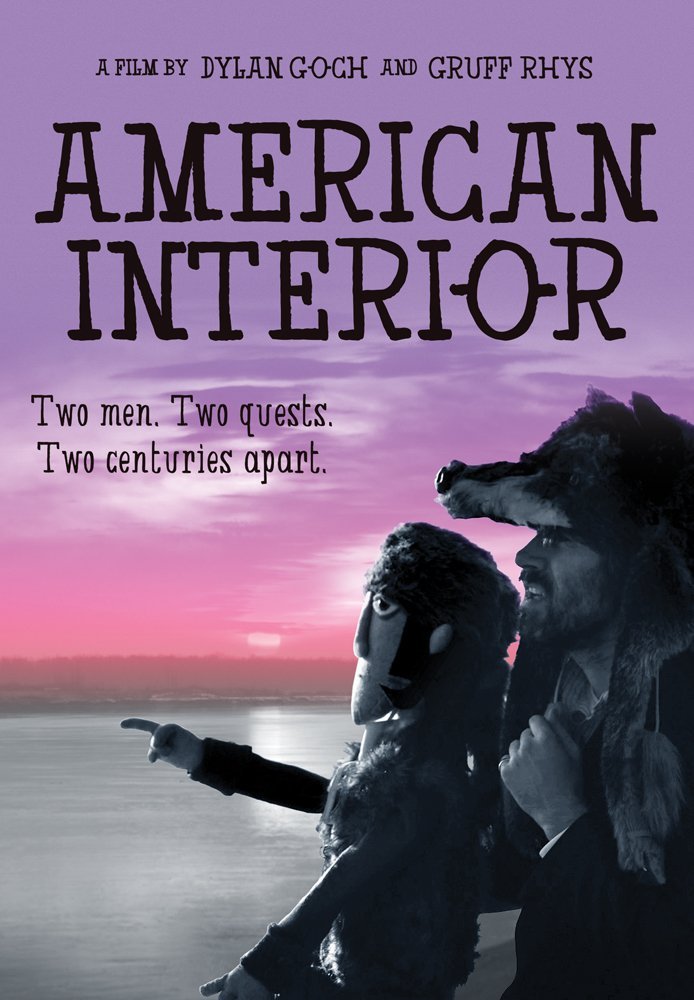
Who was John Evans? That is one of the many questions that American Interior addresses that you never knew you wanted to be answered. The more you learn about John Evans and his story, the more you will come to appreciate the beautiful intricacies woven into the tapestry that is our country’s history. In addition to a unique history lesson, the film also treats you to very stylized images and color schemes, keeping spectators engaged in both story and screen. Part narrative documentary, part concert film, part animation, and part music video: this charming film is a surprisingly pleasant ride with a Welsh musician and a dead-eyed puppet. 

Directed by Dylan Goch, American Interior stars Gruff Rhys (front man of the band Super Furry Animals), who also wrote the film’s content. Having learned he is the descendent of the Welsh explorer John Evans, who came to America in search of a specific tribe of Native Americans, Gruff embarks on a unique concert tour that follows his ancestor’s trail. The concert consists of songs inspired by John Evans, as well as a slideshow about his story, as narrated by Gruff. The farther Gruff follows the specter of John Evans, the more content he adds to his performances.

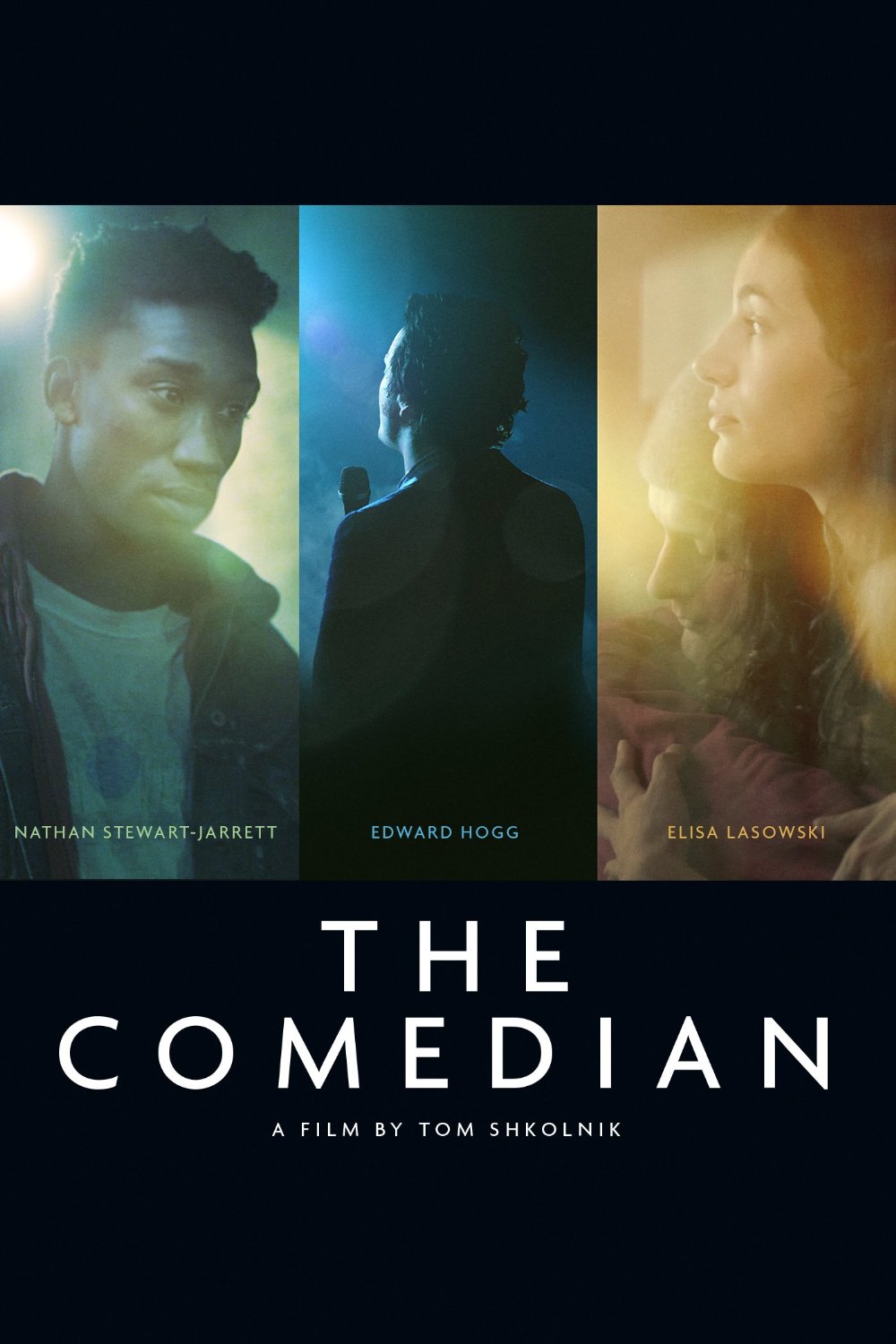
If I were to tell you The Comedian is a dramatic character study, you would expect it to have some comedic elements, right? Unfortunately, that is the exact mindset I entered the film with. While the film does provide characters and concepts, it left me feeling disappointed. Written and directed by Tom Shkolnik, The Comedian tells the story of Ed (Edward Hogg), a middle-aged man who feels himself slipping away at his dead-end job. In order to cope with his unfulfilling lifestyle, he performs stand-up comedy at his local nightclub. One night, Nathan (Nathan Stewart-Jarrett) approaches Ed and praises his performance. The two quickly develop an intimate relationship, livening up Ed’s daily monotony.  Eventually drama unfolds when Ed’s flat-mate Elisa (Elisa Lasowski) confesses her love for him.

Ed is a rather peculiar character. Yes, he has an unfulfilling job, but what really draws you into the character is his standup routine (or lack thereof). You see, Ed seems to be a regular comic at the nightclub, but all he ever does on stage is scream at the top of his lungs. At times people laugh, but more often than not, they stare at him intently, as if listening to a lecturer. That being said, I was looking forward to a character study involving this angry, enigmatic comedian. Unfortunately, the film did not satisfy.

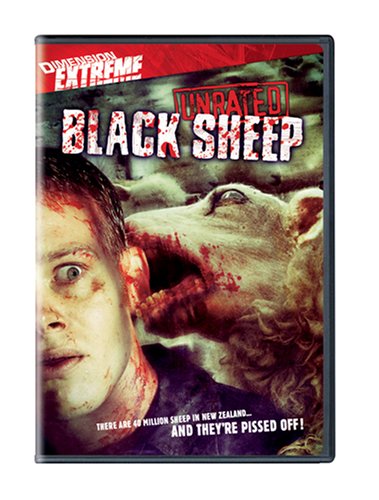
When picking up a copy of Jonathan King’s Black Sheep, you know exactly what you are getting into: a lot of bloodthirsty sheep. For about 83 minutes, the film delivers exactly what is promised on the front cover. That being said, the film is definitely catered to a rather specific audience, consisting of people who would actually want to watch Black Sheep. However, hiding under the implied lunacy, is a rather intelligent pastiche of the genre tropes put forth by its many predecessors.

King’s directorial debut focuses on the Oldfield brothers, Henry (Nathan Meister) and Angus (Peter Feeney). Still traumatized by a childhood incident involving his pet lamb, Henry (now terrified by sheep) returns home to sell Angus his inheritance of the farmland, in hopes of leaving his trauma behind him. Unbeknownst to Henry, Angus has turned the once beautiful farm into a laboratory dedicated to genetically modifying the DNA of sheep.