Posts by Dan Holland

“Backslidin’, how do you do? These slippery people gonna see you through.” 

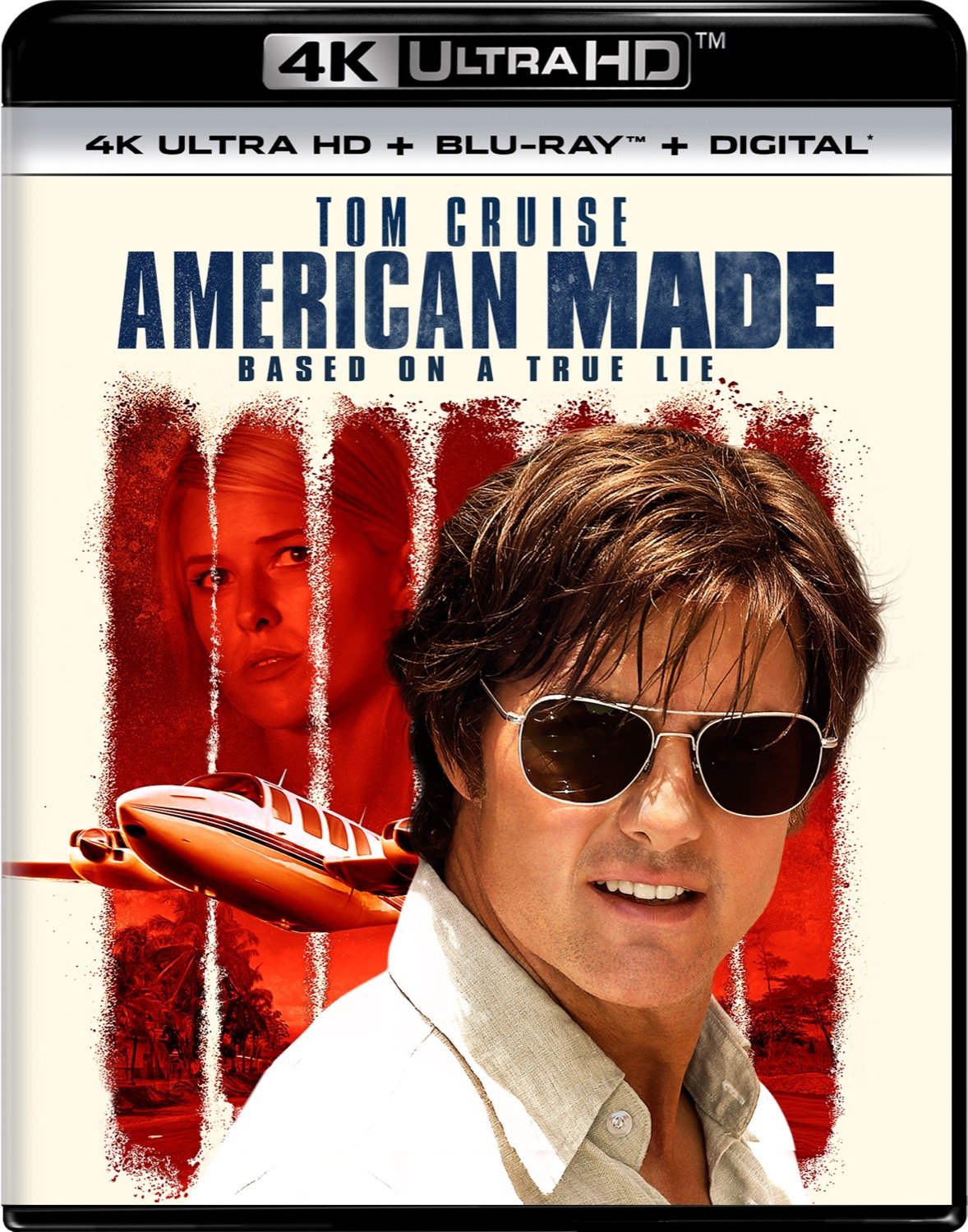
It has been a long while since I have witnessed a pop song’s lyrics fit so poetically into a feature film. “Slippery People” is a track off the groundbreaking Talking Heads album, Speaking in Tongues, released in 1983. Not only does this song fit the plot of American Made within its lyrics (hints of backsliding with a lot of slippery people), but it also represents a specific aesthetic for one of the many years shown throughout the film. Which, by and large, is what American Made does very well: appreciates the nostalgia of the 70’s and 80’s without exaggerating to extremes. More often than not, the “nostalgia aesthetic” very quickly becomes a parody of itself. However, what director Doug Liman offers audiences is bold moves in film form, lightly garnished with relevant nostalgia.

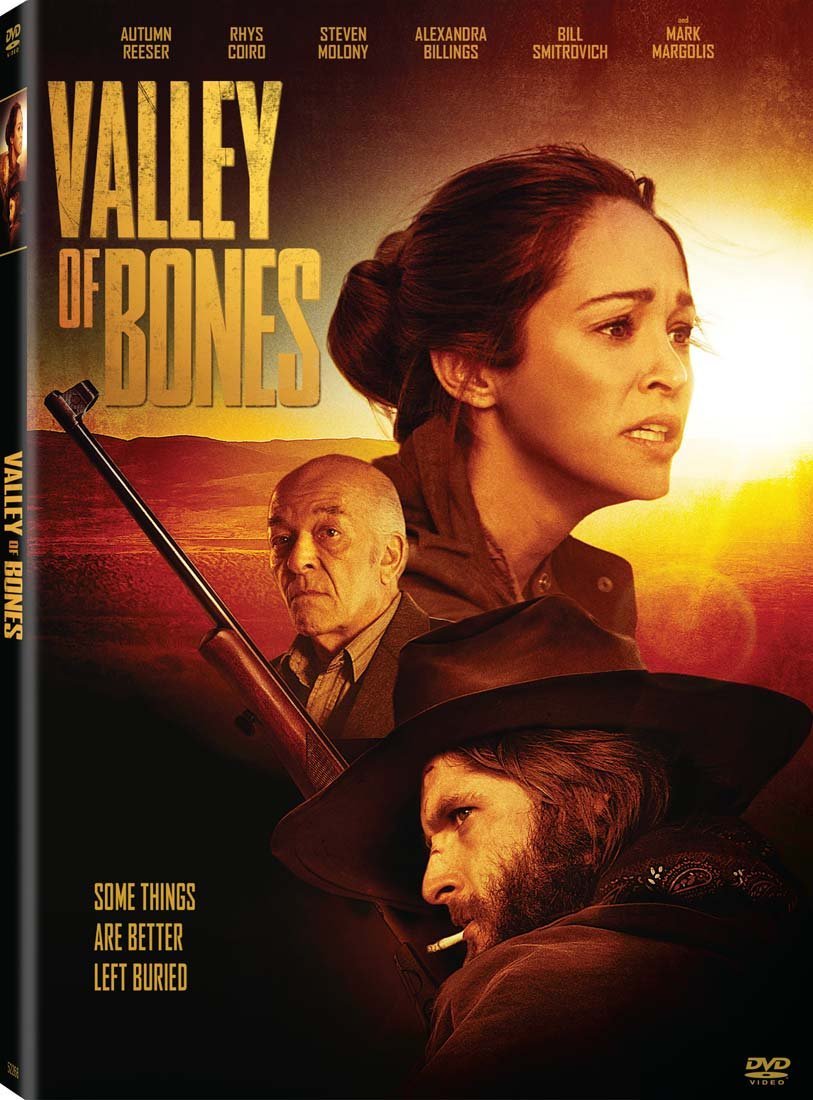
Valley of Bones is one of the most interesting films I’ve seen recently, simply because it takes an old B-movie trope and transforms it into a decent drama. However, rather than unearthing some soon-to-be-live prehistoric beast in the desert (a la The Mole People, Tarantula, or The Black Scorpion), Valley of Bones keeps the excavation underground and the real danger way out of the control of the characters. Where the trope is to have the fault of having a monster on the loose lie with the excavation team, this film develops the danger and drama as an outside force imposing upon the excavation team. While this form of external conflict can be found in countless films, this is the first I’ve seen it as it applies to a family-run archeological dig.

The film takes place in a portion of the Badlands within the United States, where it is rumored that a large, complete Tyrannosaurus Rex fossil has been discovered. Anna, a paleontologist first and a mother second, is tipped off to this astonishing find by McCoy, an unsavory drug addict. McCoy owes a large sum of money to the notorious gang run by El Papá, but his tenacity will not let him go down without a fight. McCoy cons Anna into helping him unearth the “dead lizard” so that he can pay off his debt and save his own daughter from being collateral damage. As a result, Anna, her son, and her team must survive what has come to be the most dangerous dig they have performed.

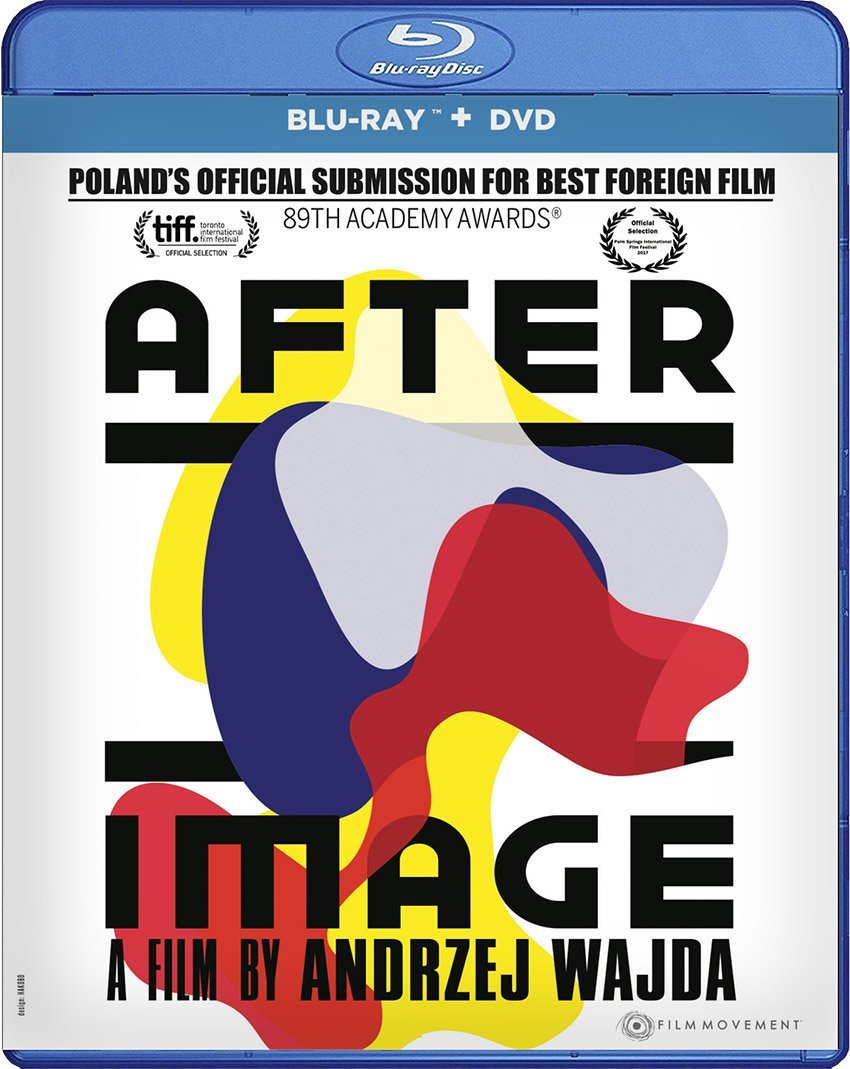
Afterimage is the final film of Andrzej Wajda, prior to his death in late 2016. Though I am not familiar with the cinematic stylings of Wajda, I researched enough to know that he typically helms projects that are historical and biographical, and cover very controversial topics taking place in Poland. Specifically, the ways in which occupation affected Poland during WWII. If this film has done anything for me, it has given me a curiosity to seek out more films from Wajda’s oeuvre. Afterimage is very methodic in its narrative and its set designs. Which is necessary given the film’s source material.

The film studies the twilight years of internationally renowned abstract painter, Wladyslaw Strzeminski (Boguslaw Linda), as Stalin’s socialistic ideologies permeate Poland, leaking into the world of fine arts. Not only is Strzeminski a gifted visionary, he teaches Art History and Analysis at the Academy of Fine Arts in Lodz, Poland. His charisma and teaching style causes his students to develop into an almost cult-like group of followers. However, these followers are interested in keeping the tradition of abstract art alive through the difficult times of Stalin’s call for socially uniform realism among all of the fine arts, including painting. As the film progresses, Strzeminski faces many bouts of artistic discrimination and he continuously rebels, no matter the cost.

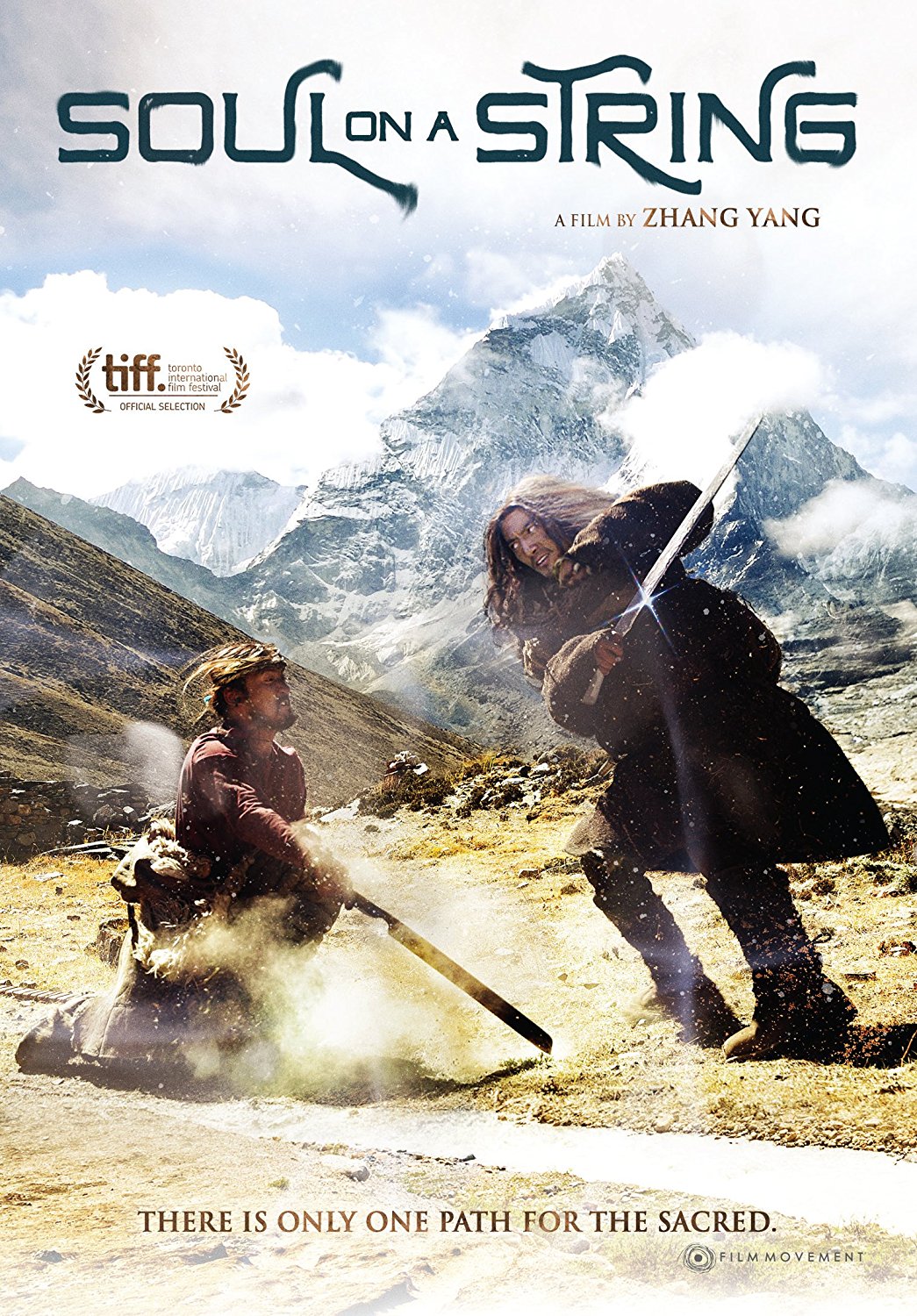
Soul on a String is the latest from director Yang Zhang, a very methodical filmmaker from Beijing, China. Now, I say methodical for two reasons: he’s been making films since the late 90’s and has only released a total of nine, and the ones I have seen are very slow-paced, but absolutely deliberate when paying attention to narrative, editing, and cinematography. To be fair, I have only seen two of his films. My first exposure to his work was in graduate school, as one of my colleagues who came from China invited me to watch Zhang’s 2005 film, Sunflower. Where I had some solace in recognizing the lead actress, Joan Chen (from Twin Peaks, of course), I was very surprised at how much I enjoyed the intense and complex emotions that the narrative drew out of me. Now, a few years later, Zhang managed to captivate me once again, only this time through his appreciation for cinema as an art, as well as his respect for the grand locations he captures with his camera.

The narrative follows Tabei, a man brought back from the dead to fulfill an important spiritual mission: return a sacred jewel from whence it came. Having been resurrected and encouraged to turn his life around by a monastery of monks, he agrees to begin this journey. However, no adventure is without its pitfalls. Two sons of a man Tabei killed long ago are of age to seek revenge for their father, so they begin pursuing Tabei, challenging him at every chance they get. Also, a group of bandits have heard of this sacred jewel being discovered in the area, and they begin to pursue Tabei for its value. Along the way, Tabei also picks up a lover, who in turn shows empathy for a mysterious child, creating an almost instinctual sense of protection that compels Tabei to complete his mission.

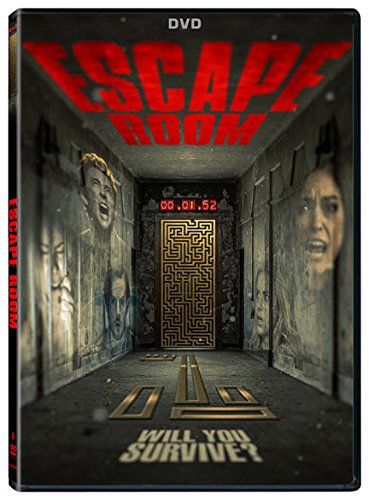
The subgenre of horror film that entails a group of friends, coworkers, or even strangers, being trapped in an area that they must escape from might be a tired cliché, but it is a tremendous guilty pleasure of mine. Especially the films where the characters willingly or forcefully band together to discover why they have been placed there in the first place, or how they can use their combined strengths to find the exit. Whether their strengths or their histories are coincidental (as is the case with Cube, 1997) or if they are gathered for a very specific mission of revenge (9 Dead, 2010), these films play with narrative connections in such a way that is irresistible to me.

In 2004, James Wan arguably reinvented this subgenre to his torture porn feature Saw. Not only are people trapped in an area together, they are taunted with the reason “why” and tasked with grueling challenges that, more often than not, end in some form of bodily mutilation. With Saw’s seven sequels and upcoming reboot, the subgenre I have enjoyed so much has plateaued, largely failing to reinvent itself since Wan’s intervention in the early 2000’s. Escape Room does not reinvent the franchise, but it does offer a new the possibility for reinvention through narrative: the victims actually want to be there.

“Backslidin’, how do you do? These slippery people gonna see you through.” 

It has been a long while since I have witnessed a pop song’s lyrics fit so poetically into a feature film. “Slippery People” is a track off the groundbreaking Talking Heads album, Speaking in Tongues, released in 1983. Not only does this song fit the plot of American Made within its lyrics (hints of backsliding with a lot of slippery people), but it also represents a specific aesthetic for one of the many years shown throughout the film. Which, by and large, is what American Made does very well: appreciates the nostalgia of the 70’s and 80’s without exaggerating to extremes. More often than not, the “nostalgia aesthetic” very quickly becomes a parody of itself. However, what director Doug Liman offers audiences is bold moves in film form, lightly garnished with relevant nostalgia.

A Blast just might be one of the ‘smartest’ movies I have ever seen. Unfortunately, I am not the smartest person to watch it. Heavily soaked in allegories about Greece’s recent financial crisis, the film begs to be understood, but if you do not have any background knowledge about the crisis, you are lost from the start. The film feels it was made specifically for Greek viewers, as all of the allegorical elements feel poignant and intentional, but not knowing anything about contemporary Greek society leaves you with the feeling of “this means something; I just don’t know what it is.”

Maria lives a seemingly great life. We learn she has succeeded in grad school, keeps up with her health, has the most sensual relationship with her husband, and has raised two young children. Behind all of this, Maria’s role as a “dutiful daughter” puts her close to her family’s business and its failing finances. The story is told through flashbacks as a distraught Maria barrels down the highway, reflecting on the older good times being hijacked by the recent traumatic memories of her family crisis.

The blues has had a tremendous impact on our contemporary popular culture, as it is largely the foundation of what we have come to understand as “pop music.” Without the blues, cultural phenomena such as Rock N’ Roll, Beatlemania, the British Invasion, heavy metal, hip-hop, gangsta rap, grunge, and contemporary pop would have evolved much differently. Even as I look over that list, I can’t make an argument for any one of those cultural shifts to be as impactful or as lasting as the blues. Perhaps I am a little biased as a rock enthusiast and musician, but every good guitar player knows that most of their stylistic flair can be traced right back to the Deep South.

I Am the Blues takes audiences through some of Louisiana’s bayous and parts of the Mississippi Delta in order to capture what can be described as the spirit of the blues. Daniel Cross managed to film multiple powerful performances and develop a narrative that provides a philosophical cohesion the emulates the blues itself: simple enough to understand, yet complex enough to be just out of reach. With Bobby Rush’s guidance, Cross takes viewers on a pilgrimage to the Chitlin’ Circuit, grabbing interviews and performances of local blues legends along the way.

In the early 1870’s the residents of Labette County, Kansas, lived alongside a family of serial killers. Known later as “The Bloody Benders,” their modus operandi was to lure travelers into their grocery store, invite them to stay for dinner, crush their skull with a hammer, and slit their throat to ensure death. Afterward, they would bury the remains somewhere on their property. Just as soon as they had been discovered, they vanished without a trace, making it difficult to ascertain if all the details we know are factual or fictional. However, stories like these are the perfect playground for filmmakers, as they are able to take as many creative liberties as they would like, and in the end, they need only say its “inspired by true events.” That being said, Bender is one of many adaptations of these events, but it looks to be one of the only films that explicitly deals with the actual Bender family and their specific victims.


Dr. William York is the only physician in the town of Independence, Kansas. After a local woman dies in his arms, her children run away from the town. Feeling responsible for their loss, he ventures into the wilderness to bring them back to the safety of independence. Along the way, he finds a peculiar “grocery” store in the middle of nowhere. The doctor enters and enjoys the hospitality provided, never knowing that the children did the same, but never left.

Having studied and enjoyed the works of Freud, Lacan, Kristeva, and other great psychoanalytical thinkers in school, the term “psychoanalysis” carries a significant weight for me. That being said, I had quite a few expectations when picking up this film. Expectations that were not met. Now to be fair, etymologically, “psychoanalysis” means ‘mental (psyche) loosening/break apart (analysis),’ and that is most certainly delivered. However, I believe that the only relationship that this film has to the writings and theories of psychoanalysis is that literal definition of the title. Otherwise, it is a tremendous mystery to me as to how this film received its name.

Dr. Paul Symmonds is a young, successful psychologist who is making great strides in his field: he is scheduling big conferences, his book is about to be published, and he is about to finally settle down with his partner. Then, in one week, five of his patients commit suicide without warning. Soon, Dr. Symmonds begins to speculate that a rival psychologist, Dr. Andew Fendell, has murdered his patients in an effort to sabotage his career. Soon thereafter, an independent documentary crew catches wind of the story, and they decide to observe Dr. Symmonds as he searches for his answers.