Posts by Dan Holland

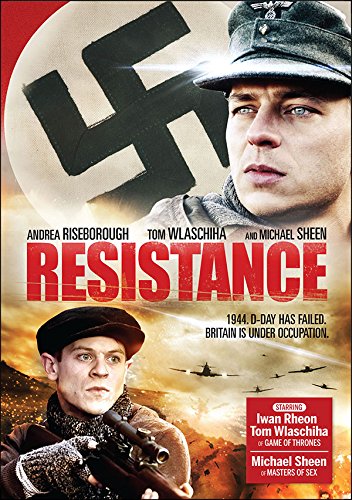
Resistance was first released in the UK in 2011, and it saw its first DVD release two years ago in Finland. Now in 2017, the US is finally getting DVD distribution. However, like most distribution marketing strategies, the cover, DVD home screen, and advertised star power are an inaccurate depiction of what the film actually offers. While the film has many strengths, all the imagery that you get prior to actually watching the film (the cover and home screen), prepare you for what you think is going to be an interesting WWII-themed thriller with possible action sequences. Instead, Resistance is an interesting, yet severely slow-paced character study that doesn’t necessarily follow its own plot description.

The film claims to be about a small community of wives in a Welsh valley whose husbands mysteriously disappear one morning. The film implies that they have left to join the allied resistance against Germany, but realistically, that is a huge MacGuffin. There is also an interesting subplot involving an inexperienced Allied assassin that also is rather underwhelming, but realistically, that is the point. The film is actually about the internal and external struggles faced by Captain Albrecht (Tom Wlaschiha) as he must balance the morale of his men, the superiority over the women in the community, and his own personal philosophies regarding the war.

Contemporary horror films are in a really strange position. Gone are the days of the formulaic slasher flick or creature feature. Today we have filmmakers who only seem interested in breaking genre conventions in order to try something new and be deemed “relevant.” As  a result, we are treated to an intellectually-driven horror renaissance with films such as It Follows or The Babadook, or we must sit through the onslaught of torture-porn-infused sequels to 70’s and 80’s classics such as Evil Dead (2013), I Spit on Your Grave (2010), or The Last House on the Left (2009). If the filmmaker is trying to break genre conventions, it is important to note that they do not always succeed, as is the case with Slasher.com.

Opening the film with what seems to be a great social commentary regarding modern dating apps such as Tinder, Slasher.com offers a reasonable plot: some deviant is prowling the net, preying on the helpless women of St. Louis, Missouri. Then that concept just sort of changes. After about five minutes of news stories, the film clumsily takes you away from that concept via a blossoming relationship between a young couple who just met. In an effort to make it a “first date to remember,” they rent a cabin somewhere in the backwoods of Missouri. Their experience becomes more and more disturbing as you learn more about their creepy hosts. But what of the online dating killer? He comes back, but in a way that fails to surprise.

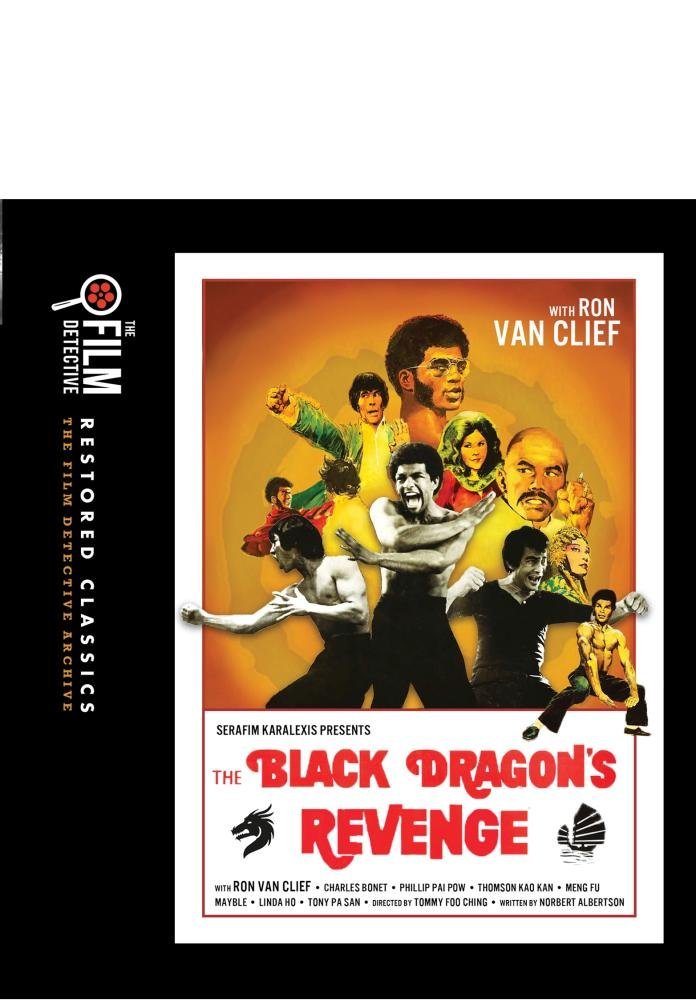
Exploitation film has reached a point where there are just too many subgenres to count, or to care about for that matter. This film combines three of the subgenres into one incoherent amalgamation of boredom: Blaxploitation, Kung Fu flicks, and “Brucesploitation.” While the two former concepts should be familiar outside of the realm of cinephilia, Brucesploitation may be a little more difficult to grasp. Basically, after the death of Bruce Lee, filmmakers began to capitalize on Lee’s image posthumously, by using barely passable lookalikes such as Bruce Le or Bruce Li as lead martial artists. In the case of The Black Dragon’s Revenge, only Bruce Lee’s name was used, but he was an important concept to the ideas given by the plot of the film. However, with the three subgenres combined, a paper-thin plot, and abnormally slow pacing, The Black Dragon’s Revenge manages to transcend the concept of “leaving much to be desired.”

The film’s protagonist, Ron Van Clief, or The Black Dragon, plays himself in a plot that suggests a quasi-reality in which Bruce Lee had written a secret martial arts style before he was killed. It is up to The Black Dragon to find this manuscript and discover the reason that Bruce Lee was killed. That is what the film’s box and other reviews suggest to be the story’s plot. However, when watching, it is incredibly easy to get lost, considering each character has an insanely limited agency. As the film progresses, you are introduced to more characters that don’t have a perceived logical contribution to the advancement of the story, yet they stick around, and you are expected to understand why. Unfortunately, the poorly written plot is the first step towards a very unbalanced ratio concerning bad to good.

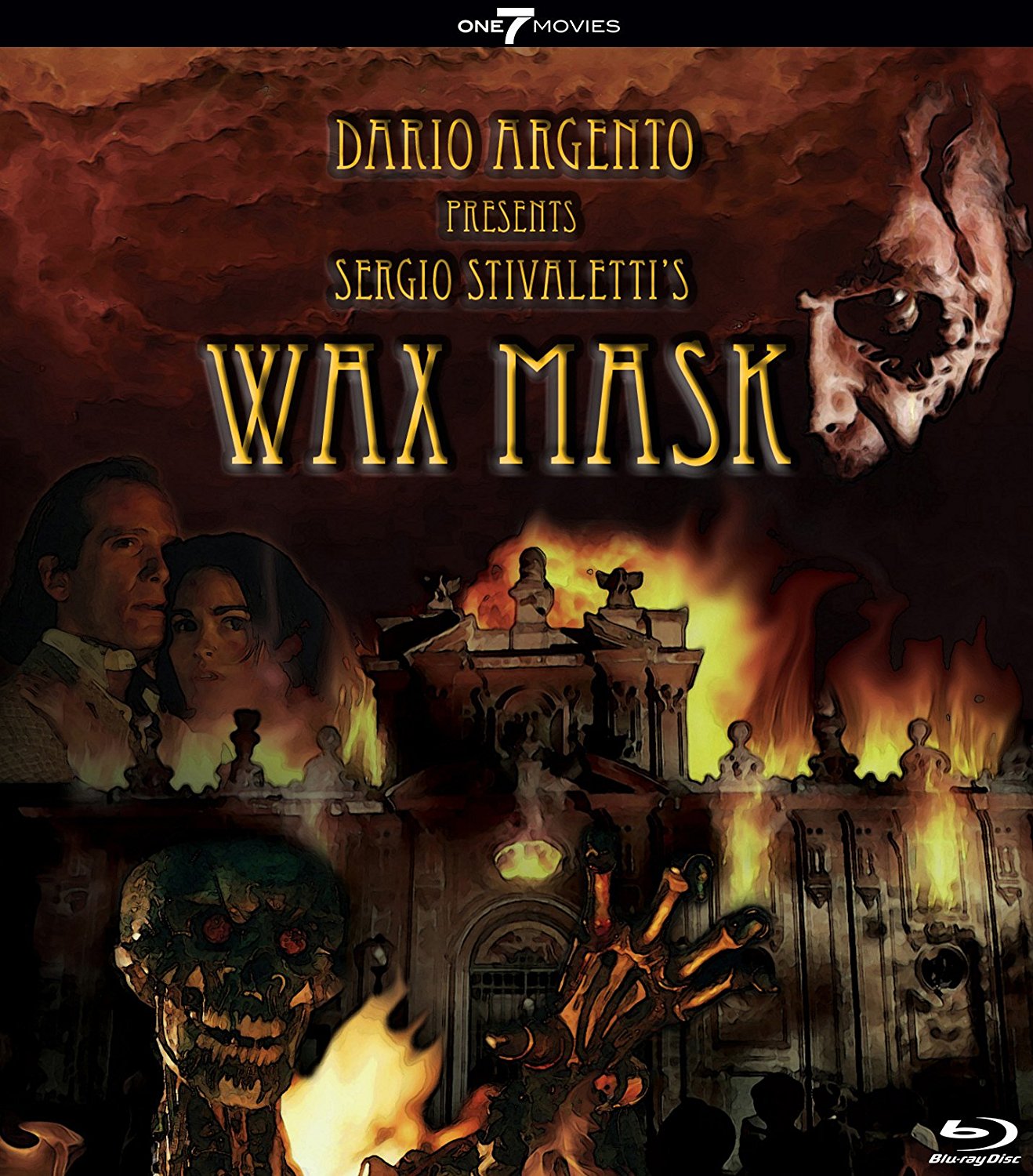
If you have any love for Italian horror films, then you know the names Dario Argento and Lucio Fulci are the ones that cause the most excitement. Both directors have made a name for themselves in horror cinema, each providing their own authorship within their own interests. Much like debate concerning The Beatles or The Stones, cinephiles typically side with one over the other. Yes, Argento has conjured dreamlike, character-driven horror that has haunted our minds over the decades (Suspiria, Phenomena), but the late Lucio Fulci has a seemingly innate ability to create landscapes of terror that consistently push the envelope of realistic gore (Zombi, The Beyond). While I do tend to favor Fulci, I am well aware of both of their contributions and influence to horror cinema as a whole. Even though they have notable differences, The Wax Mask offers a collaboration between the two greats prior to Fulci’s death in 1996.

The story, written by both Argento and Fulci, is an adaptation of Gaston Leroux’s “The Waxwork Museum.” The plot involves a mysterious wax museum in 1922 Italy, whose curator has an interesting fetish for the macabre: he only creates scenes of famous murders. Whether it is the slaying of the gorgon Medusa, the mysterious case of Jack the Ripper, or a more contemporary double murder, he creates the scenes for his museum. However, as the film progresses, a reporter and the museum’s newest employee discover the curator’s unorthodox methods of creating his sculptures, as well as the dark history surrounding the curator’s family.

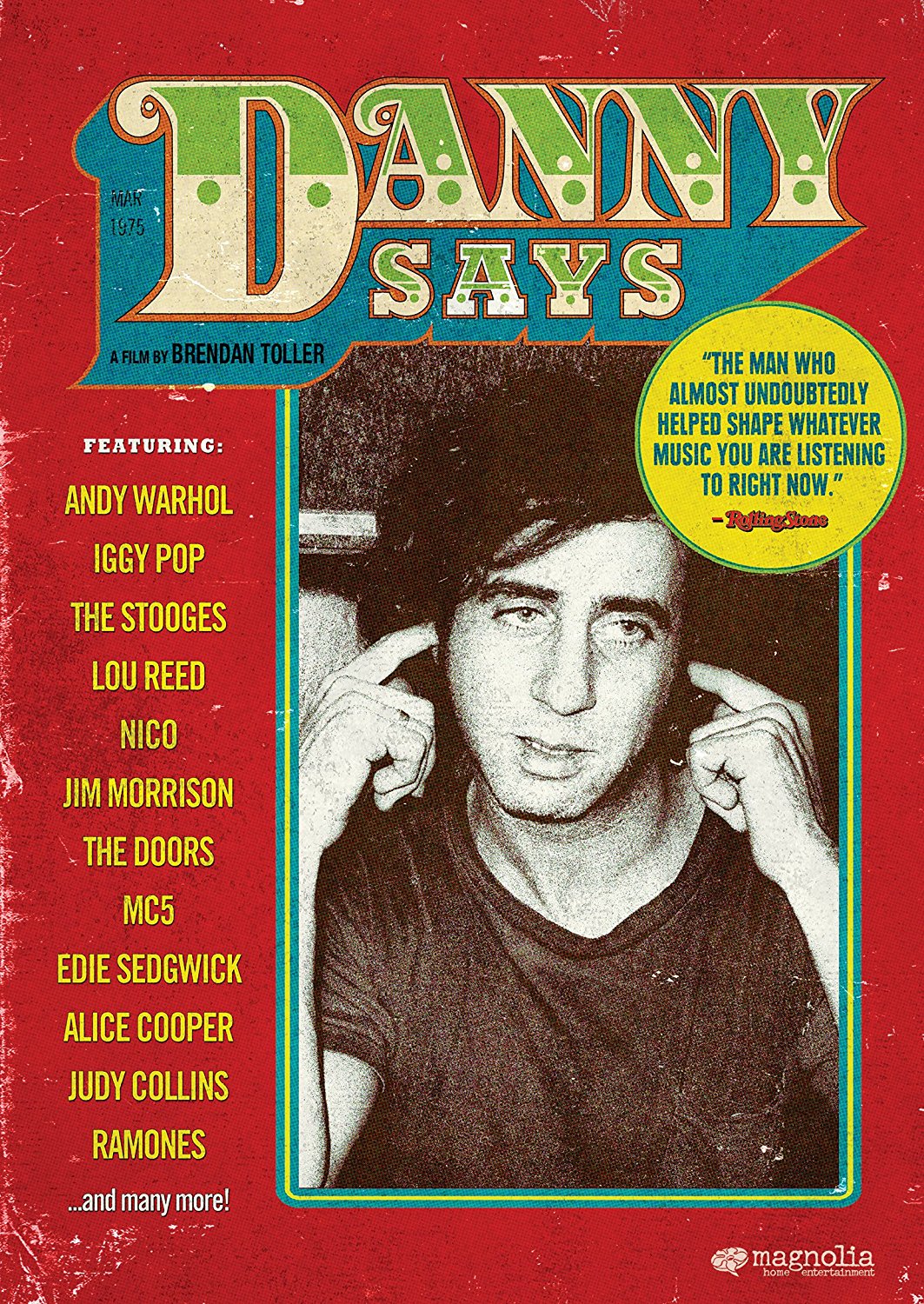
The 1960s were very important to the counterculture movement in the United States, most notably the artists of New York City. Whether it be future rock stars such as Iggy Pop and The Stooges and The Doors, or the enigmatic Phenom Andy Warhol, New York was at the crux of a lot of influential ideologies that have inspired us in the succeeding decades. However, there is only so much you can read about when it comes to discovering the cultural history of New York. That’s what makes documentaries like Brendan Toller’s Danny Says so fascinating: Sure, you know the history, but can you glean what the experience would be like? Danny Says takes you on a journey beyond the facts and delves into the personal experiences of one of the most significant music journalists New York has seen.

Danny Fields (born Daniel Fienberg) is a fascinatingly pivotal individual for the music scene that defined a generation. As the documentary unfolds, you cannot help but be struck by his connection to the counterculture movement: he spent some time within the walls of Andy Warhol’s factory, he befriended Alice Cooper and Iggy Pop, and he singlehandedly started the press division of Elektra Records. These are impressive feats and awe inspiring facts that really would not carry the same weight if I had read them in a history book. Danny Says is a medium that aided Danny Fields in getting his story told the right way.

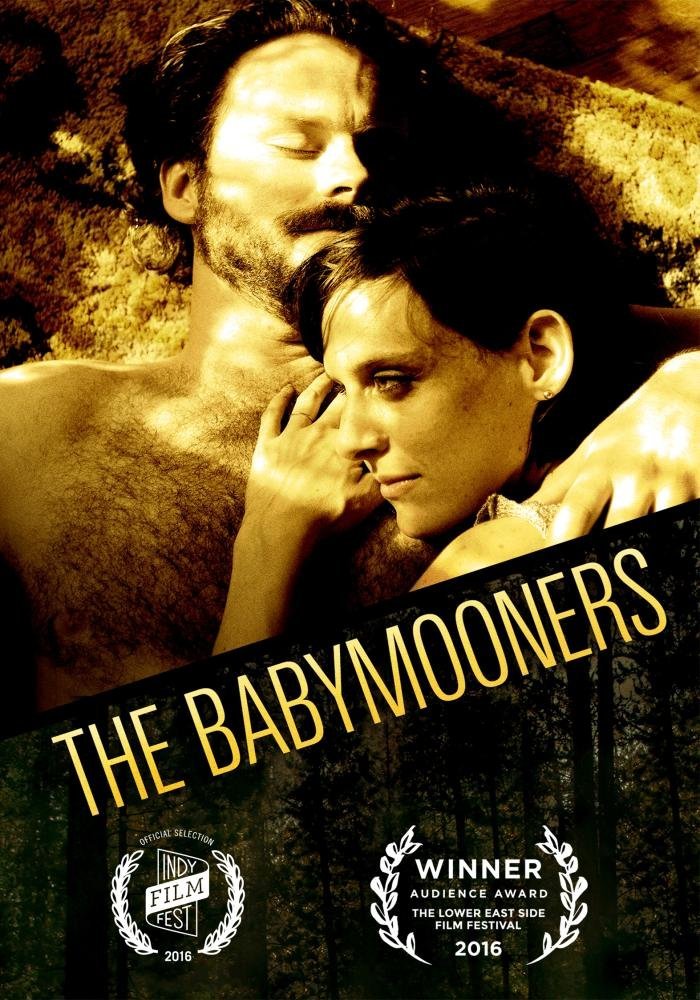
If asked about my favorite genre of film, romantic comedies would not be close to the top of the list. However, I have seen enough rom-coms that I wouldn’t mind watching a second time. The Babymooners would be a film that I’d give a second watch, simply because of its charming energy. Most of this charm can be attributed to Shaina Feinberg and Chris Manley, who co-wrote and directed the film. Through explicitly stating in the synopsis that the film is “clearly influenced by old Woody Allen films,” the filmmaking duo alert audiences to exactly what they should be expecting, and they are not far off. So if you are a fan of Woody Allen, rejoice, as that is not an empty promise.

Part documentary, part sketch comedy, part smart storytelling, The Babymooners is a story about a middle-aged artistic woman named Shaina, who is concerned about losing her creativity with the coming child. Set up as a video letter to her unborn son, she recounts the events that led to the conception, as well as details the complexities within the relationship between her and her partner. These events are largely told in vignettes, that are prefaced by either Shaina talking to her computer, or a talking-heads-style interview with Shaina’s parents recounting their experience with her.

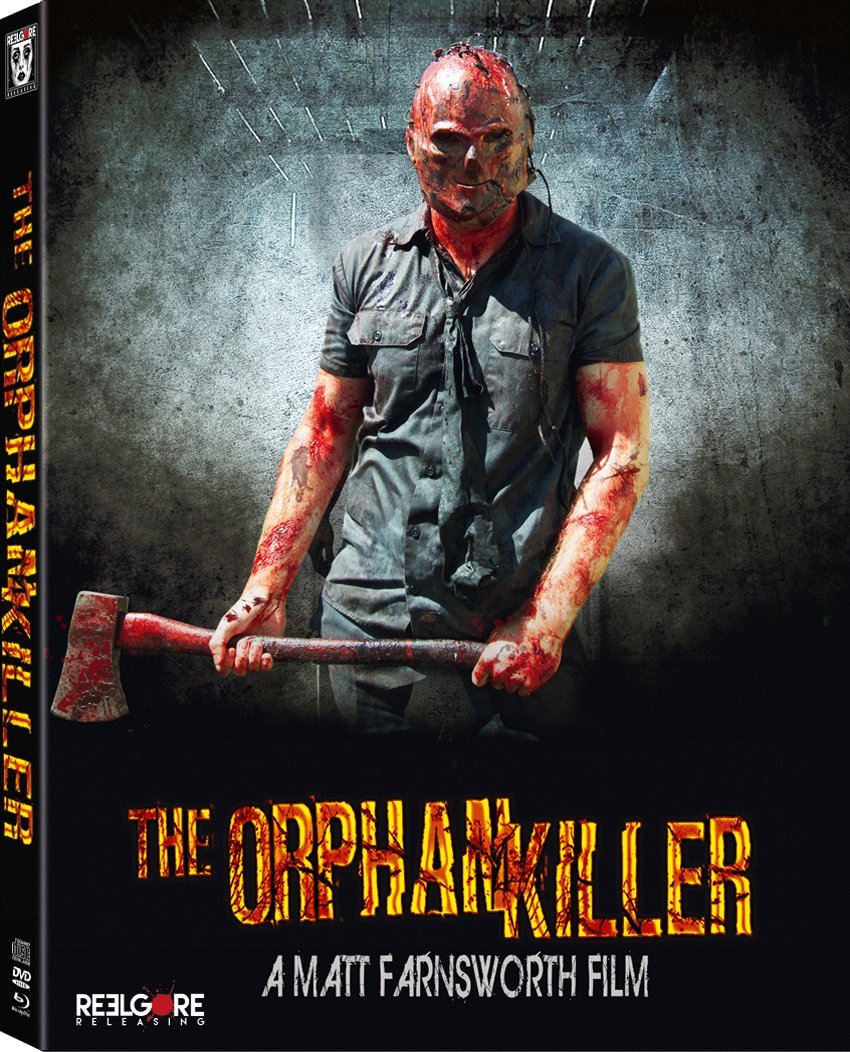
When a movie makes a bold claim such as being “a tour de force murder flick that defies classification,” it is inviting a hefty amount of preconceived criticisms prior to anyone actually viewing the film. It’s like titling a horror film This Will Scare You. Naturally, your first thought would be something along the lines of “Yeah, whatever, movie.” Needless to say, that want to criticize burns within you until you watch it. Then, with all the satisfaction in the world, you get to say “No, that wasn’t scary at all.” In the end, you are stuck with a movie that wasn’t what it promised to be, but realistically, you knew that would be the case anyway. It is a cheap marketing ploy that entices you to watch for all the wrong reasons.


On the surface, The Orphan Killer has a lot more in common with the Halloween franchise than it realizes. A homicidal maniac churns out an impressive body count in an attempt to destroy his own bloodline. The only difference is the plot of The Orphan Killer is anchored down to a Catholic orphanage, where the killer grew up. So in terms of being a film that “defies classification,” I would argue that is an objectively erroneous statement. It is a horror film, a slasher specifically, that uses a little more blood than its competition.

Road to the Well is about what you would expect from an independent thriller: atmospheric and character-driven, sporting a slow pace. While the pacing was indeed slow, it was most certainly deliberate and aided in the storytelling. I can’t necessarily say that I would watch the film again, but I can say I understand why it has won awards while on the festival circuit, especially given the fact that it is writer/director Jon Cvack’s first feature length film. It is a good movie. It satisfies. And even though good movies have their faults, Road to the Well succeeds in balancing its failures with tremendous amounts of successful feats.

Jack (Micah Parker), is a drifter who wanders into the town of his youth and starts to look up old friends. He convinces Frank (Laurence Fuller) to spend a night out with him, which ends in the murder of a prostitute. Together, the two strengthen their bond through the initial trauma and must make a series of difficult choices together in order to relieve themselves of the dead body. Along the way they encounter characters who add a unique flare to the story, including an intimidating seasoned military chaplain, played by Marshall R. Teague. With each new character comes a new set of choices, a subtle theme that is rather important to the development of each character.

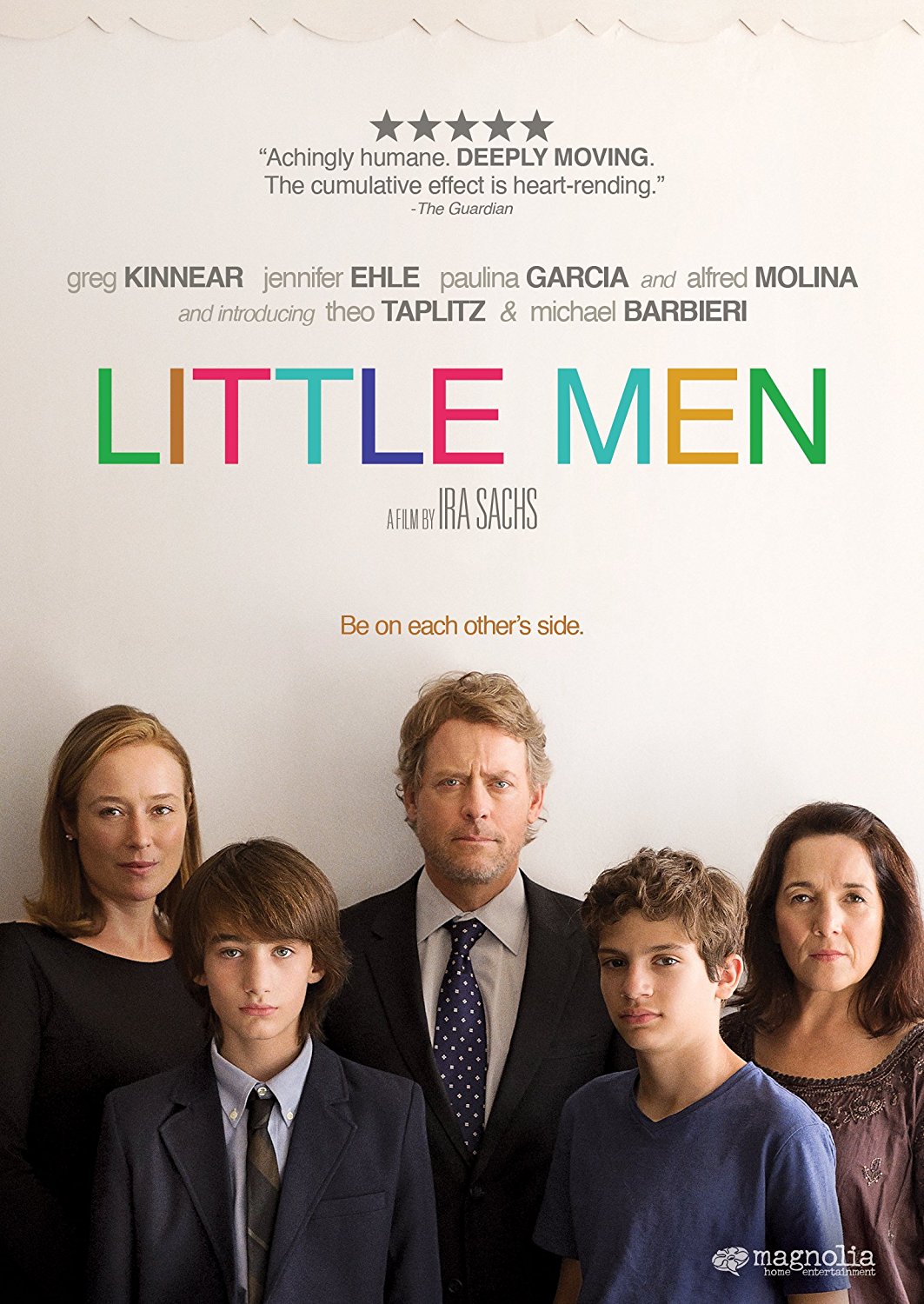
All too often do indie films fall under the category of “character study”. It’s almost as if that the entire “independent” genre has divided itself into these dramas focusing on painfully slow character development or budgetless, empty husks of action films riddled with terrible CGI. I have seen independent films that held my attention with captivating writing, but they seem to be few and far between. Little Men is no exception to the trend: it did have some interesting character development, but the story had great opportunities for intense conflict that just never followed through.

The story takes place in New York, where a failed actor, Brian (Greg Kinnear), and his mildly successful wife, Kathy (Jennifer Ehle), are trying to make ends meet. All the while, they are trying to put their young son, Jake (Theo Taplitz) through school. After the death of Brian’s father, the little family sees a glimmer of hope with the inheritance of a tailor shop run by Leonor (Paulina García), assumed to be the deceased’s old flame. During the slow process of figuring out how to legally take the business away from Leonor, Jake befriends her son, Tony (Michael Barbieri), setting up the primary anxieties of the film.

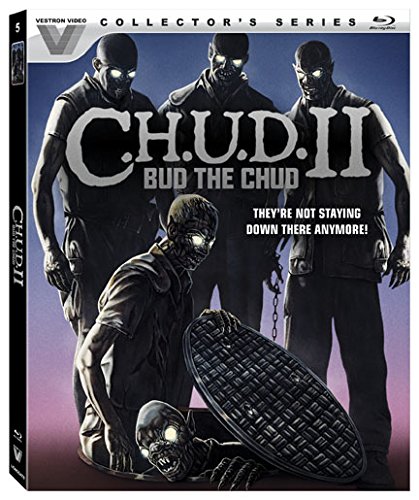
The first time I saw C.H.U.D., I was deathly afraid I was going to be watching yet another zombie movie. C.H.U.D. is an acronym for ‘Cannibalistic Humanoid Underground Dwellers,’ so with only that description, my assumption wasn’t unreasonable. For the readers who have actually seen C.H.U.D., you probably know that I was pleasantly surprised: it was actually a very fun monster movie. Yes, they were humanoid, but they were rather creepy, with bright glowing eyes and scaly skin. C.H.U.D II apparently forgot how amazing the original creatures were, because they are absent from the entire film (even though they are proudly displayed on the front cover of the Blu-ray case). Instead, we are treated to a zombie film with glam metal transition music and only the worst brand of tongue-in-cheek silliness.

The film begins within a no-name military hospital, where the ‘higher-ups’ are determining what to do with the last C.H.U.D. specimen, named Bud (Gerrit Graham). This entire meeting summarizes the absolute basic elements of the original plot line (essentially creating an information dump consisting of what the writers may have remembered from that one cool movie that they had seen a couple years ago). Now, Colonel Masters (Robert Vaughn) seeks to utilize the C.H.U.D Virus for biological warfare, but his funding is suddenly cut. He orders the body to be frozen and sent to a CDC facility in a small town. Upon arrival, the body finds its way into the hands of teenagers who need it for their school project. The fun ensues.