Posts by Gino Sassani

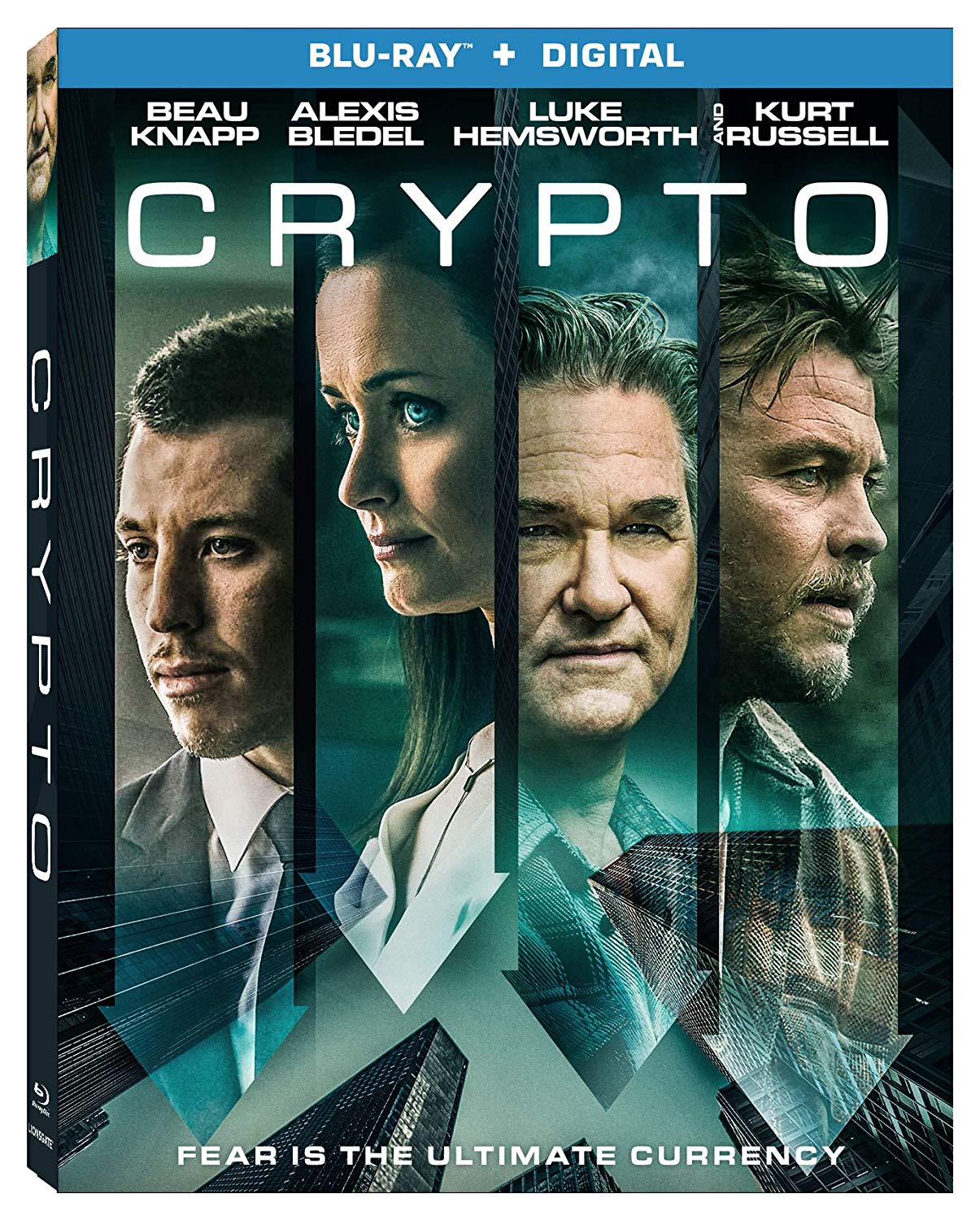
The youth of today don't appear to understand that movies and pictures used to be taken on a physical medium called film. The problem, of course, was that you didn't get to see your masterpieces immediately. You had to take the film to be developed. So perhaps that little generational disconnect explains why some filmmakers don't get that plots, like old film stock, also need to be developed. We live in a world of instant gratification, but the only trouble with instant gratification is that it takes too dang long. The same can be said for film plots. Today there are writers and directors who begin and end that process by throwing in some trending words and concepts from Google, and you have an instant plot that's sure to bring in an audience. At least that's what it appears happened with Crypto, directed by John Stalberg, Jr. What amazes me is that it took three writers to do the Google searches. Let's see... you punch in crypto-currency, Russia, and corporate greed, throw it into your computer word processor, and out comes a script. Let's call it, I know, Crypto. You have to have a mysterious-sounding one-word title.

"You know kids lose their toys every day. Sometimes they get put in the wrong box, and that box gets taken away."

In 1995 Pixar didn't just put themselves on the computer animated feature film map. They completely created a new map. Yes, there were works before Toy Story, but that was the film that changed everything in an entire industry. It also began a push-and-pull relationship between the independent studio and its distribution partner, Walt Disney Studios. It was a disagreement over Toy Story sequels that found Pixar shopping for a new partner for their future output, and before you know it Disney wrote a check, and Pixar was a part of Disney. The small studio's chief, John Lassiter, ended up in charge of the Mouse House animation department, and those disputed Toy Story sequels became box office gold and examples of the right way to continue a film franchise. Now, a lot's changed in that 25 year interval.

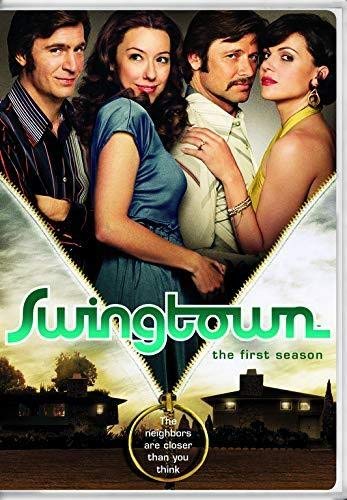
Let me begin by saying that I was a child of the 1970’s, which tends to make me approach these era shows with some caution. After such shows as That 70’s Show, to name the likely most popular, I find myself not recognizing the setting as the same 70’s I remember living. Granted I was pretty young, so the subject of swingers and sexual revolution were not exactly part of my everyday culture. So, I might be a little more forgiving if Swingtown doesn’t exactly hit on all of my memory circuits. I was 15 in 1976, living near Philadelphia, where we were all pretty much obsessed with that whole Bicentennial thing. The last thing on my mind was whether the neighbors, or, God forbid, my parents, were doing the bump and tickle with rotating partners. I’m pretty sure I’ll leave that question unanswered.

"You are a diversity hire. The important part is that you're here now."

Mindy Kaling knows a little bit about diversity hiring in the television industry and attempts to spread her wings a bit wider by staring in Late Night, an "inside baseball" look at the workings of a late-night talk show television program. Kaling not only stars in the independent film but was the writer as well. She certainly knows a thing or two about life behind the scenes on a television show. Her The Mindy Project has provided her with firsthand experience on that score. The film pulls in heavy hitters like Emma Thompson and John Lithgow, so there is no lack of star power to surround the young actress/writer in her first real chance at a prominent role in a feature film. So why does Late Night feel somewhat unfocused and incomplete? The answer might just lie at the feet of Mindy Kaling.

"Does announcing your identity help with the covert part of the job?" 

Let me begin by saying that actress Brie Larson doesn't want me to write this review. It's not that I didn't like the film and intend to cut it down. Actually I rather liked the movie, and while it isn't going to crack my top five Marvel films, it's a very entertaining film that adds wonderfully to this always evolving world of the Marvel Cinematic Universe, or as we fan geeks like to refer to it, the MCU. So she wouldn't take much if any umbrage with my evaluation of the film. It turns out that I happen to be a white male, and she has made it known that she doesn't want to see reviews for this film written by white males. Sorry, Brie. I suggest you skip this one.

For many years Acorn Media has been the best source for a lot of those classic British drama shows that you've seen reviewed here and elsewhere. They've brought us some of the best British stars in some landmark work spanning decades of British broadcast. These shows were always something produced by someone else, most notably the BBC itself. So while we can be thankful to Acorn for distributing these shows particularly here in the United States, they haven't actually been responsible for the actual content. That all changes with the release of London Kills Series 1 from Acorn Media. For the first time the company has created its own straight-to-series production. If this first effort is any indication of what we might expect in the future, I'd say there is great promise here, and while I didn't find it quite as compelling as favorites like the George Gently series, I saw a ton of potential. There are some very good reasons why I didn't enjoy this as much as many others, and I'll get into that in a moment.

In the late 1980’s Batman was in trouble. No, he wasn’t tied to a table saw by The Joker. Catwoman didn’t have her claws on him. It was the camp residue of the 1960’s television series. The idea of a Batman film was clamored after by fans, but the studios couldn’t get the Adam West series out of their minds. And, while the success of Superman might have awaken the studio bosses to the appeal of comic book films, there was surprisingly very little interest in a Batman film. Since DC Comics had become a part of the Warner Empire, it seemed only logical that they would want to do the film. But even Warner resisted for several years as a team tried to get the Caped Crusader back on the movie screen.

"What happens in Palm Springs stays in Palm Springs."

That's not exactly true. Since the 1950's, the small town of Palm Springs has been home to many celebrities looking to escape the bustle of Hollywood, yet remain close enough to work there. It was 1947 when Jimmy Van Heusen introduced Frank to the desert community, and he fell in love with the town. His own home was built in time for his wedding to Ava Gardner, and while that relationship lasted only seven years, Sinatra's relationship with Palm Springs lasted 50 years. He was the best advertisement a town could have. In 1954 he built the massive Rancho Mirage and invited all of his close friends to join him.

"...One day when the lady met this fellow, and they knew that it was much more than a hunch
That's this group must somehow form a family. That's the way we all became the Brady Bunch."

Has it really been 50 years? Nothing make me feel as old as when a film or television show I watched as a kid celebrates some grand anniversary milestone. It's like birthdays without the ice cream cake. On September 26th, The Brady Bunch will celebrate its 50th anniversary, and the folks at Paramount/CBS have given yours truly a little homework to do before that date hits. We're talking about The Brady Bunch 50th Anniversary TV & Movie Collection. They call it the Bradiest collection ever, and that's no exaggeration. The 31-disc collection features just about anything that was ever associated with the name Brady. I'm surprised there isn't a complete collection of New England Patriot games for the last decade or so. What you will get is pretty impressive:

"All you have to do is learn to connect the dots and get ready."

Noble Lincoln Jones hasn't had any real feature experience in the director's chair. He's notable for some rather well-known country music videos, and now he's made the jump to the feature film world. It shouldn't come as any complete surprise that his first effort would be a rather small-budget independent film like The Tomorrow Man. The movie offers a pretty simple premise with a limited cast, so there aren't a lot of moving parts here. It's the kind of playground where a young filmmaker gets to show us what kind of a storyteller he is without the grand distractions of a seasonal anchor film and all of the trimmings that entails.