Posts by J C

“Few screenwriters could’ve invented the story of Grace Kelly.”

I don’t think it’s a stretch to say there’s never been a movie star quite like Grace Kelly. Within the space of just 11 films, the actress won an Oscar and starred in a handful of bona fide classics on her way to becoming Hollywood royalty. Of course, the reason Kelly made less than a dozen films and retired from acting at the ripe old age of 26 is because she became *actual* royalty after marrying Prince Rainier III of Monaco.

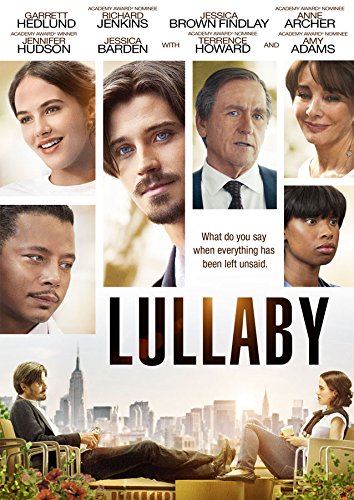
The impending death of a loved one tends to dredge up a complex mix of emotions. (Unfortunately, I speak from relatively recent personal experience.) In addition to the obvious sadness, there can be guilt, resentment, anger, relief, and other sentiments that combine to create a messy stew of feelings. Putting those feelings on the page or on a screen is an emotional minefield, since you risk veering jarringly from one tone to the next. The task becomes even trickier when you attempt to introduce humor into the equation. Lullaby stumbles over a few of those mines, but is otherwise a well-acted, modestly-affecting dramedy.

The movie opens with a close up of Lowenstein family black sheep Jonathan (Garrett Hedlund) taking a long, luxurious drag off a cigarette. Soon enough, we learn the gesture functions as a middle finger on a couple of different levels. On one hand, Jonathan is smoking on an airplane lavatory, which almost gets him arrested by a strict flight attendant. On top of that, it turns out Jonathan is on his way to visit his well-to-do New York City family because his father Robert (Richard Jenkins) is dying of lung cancer.

No matter how far removed you may be from Sunday school — or even if you never attended in the first place — chances are you know that God spoke to Noah. You also know He told him to build an ark in anticipation of a catastrophic flood meant to wipe out mankind. What you may not have realized (or remembered) is that, in the Bible, Noah himself doesn't speak at all until well after that rain starts. So in adapting the famous Book of Genesis story to the screen, any filmmaker is going to have to take a certain amount of liberties. And when that filmmaker is Darren Aronofsky, the result is a strange, uncommonly thoughtful blockbuster that is as flawed as the hero it presents.

In the beginning, there was nothing...”

Don't you ever get tired of vanilla?”

There's a special breed of '80s movie that appears hopelessly dated on the surface yet remains impulsively watchable. (Insert your own, “So you mean *every* '80s movie?!” joke.) The Legend of Billie Jean — with its hilarious-in-hindsight fashion and Pat Benatar theme song — certainly fits the “trapped in the '80s” bill. However, the 1985 film — now making its Blu-ray debut courtesy of Mill Creek Entertainment — still manages to entertain by tapping into the timeless spirit of teenage rebellion.

One of the miracles of modern technology is its ability to shrink the world down so you can practically (well, proverbially) hold it in the palm of your hand. The cheerily square Smithsonian Channel series Aerial America goes the other way. In fact, the best thing about the show is how it uses technology to fill every inch of your screen with some of the most famous — along with some of the more underappreciated — U.S. landmarks, employing a larger-than-life/bird’s-eye point of view most of us wouldn’t otherwise be able to enjoy.

A quick primer if you’ve never seen the show (as I hadn’t prior to popping in this Blu-ray): the series debuted in 2010, and each hour-long episode is devoted to a different U.S. state or region. Every one of those episodes is solely comprised of stunning, leisurely aerial shots of that respective state’s natural and man-made landmarks, along with a brisk history lesson courtesy of narrator Jim Conrad.

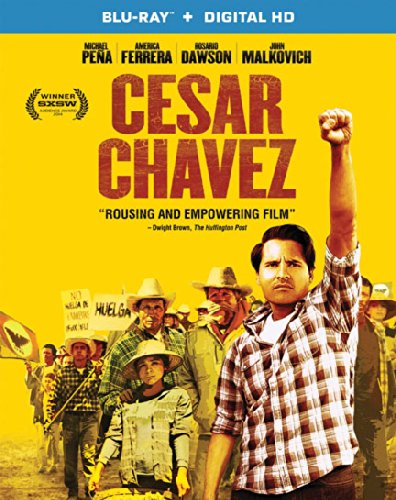
The fact that we haven’t gotten a movie about Cesar Chavez until now is both surprising and not all that shocking. It’s surprising because the Mexican American labor leader was arguably as big of a civil rights icon to Latino workers as Martin Luther King, Jr. was to the country’s black community in the 1960s. On the other hand, the extended wait for a Chavez movie isn’t all that shocking when you consider his efforts took place in the largely un-cinematic realm of grape boycotts. The bland, well-meaning Cesar Chavez makes the case for his impactful deeds, even if it doesn’t totally present him as a vibrant, complex man worthy of the biopic treatment.

The film opens with Chavez (Michael Pena) explaining his life story to an unseen interviewer; so he’s really addressing us in the audience. He talks about being born in Yuma, Ariz., and his family losing its farm during the Great Depression. They subsequently migrated to California, where Cesar began working the fields at age 11. (Farmworkers had been excluded from the National Labor Relations Act, which had been enacted in 1936.) This sort of “tell-don’t-show” sequence is not what you’d typically want to see out of a movie. But here it’s a brisk way of running through the early part of Chavez’s life and sharpening the film’s focus.

- “Are you some kind of big deal?”

- “Yeah, I’ve been around.”

What a difference a year makes. It was just last summer that The Purge came out of nowhere to become an unexpected smash. The film piqued my interest with a killer marketing campaign that smartly sold its outrageous concept: for one night out of the year, any and all crime is legal in the U.S. Unfortunately, the filmmakers squandered that novel idea by making the most cliched, claustrophobic thriller imaginable. A little more than a year later, this follow-up arrives under considerably different circumstances. Instead of canny summer counter-programming, The Purge: Anarchy is the latest sequel in a summer that seems particularly heavy on franchise films.

What about you? What were you doing outside?”

“Who cares about a bunch of birds?”

Well, judging by the fact that the original Rio grossed $484 million worldwide, it seems more than a few people were invested. The avian adventure from Blue Sky Studios may not have soared as high as Disney/Pixar or DreamWorks Animation’s best efforts — or even Blue Sky’s own Ice Age juggernaut — but it proved to be a dazzling, lucrative diversion in the spring of 2011. This charming sequel, which arrived almost three years to the day later and grossed a near-identical $487 million worldwide, retains the disposable, toe-tapping charm of its predecessor.


The West — once a land of awesome but tranquil beauty — had become a battleground for a hundred diverse reasons.”

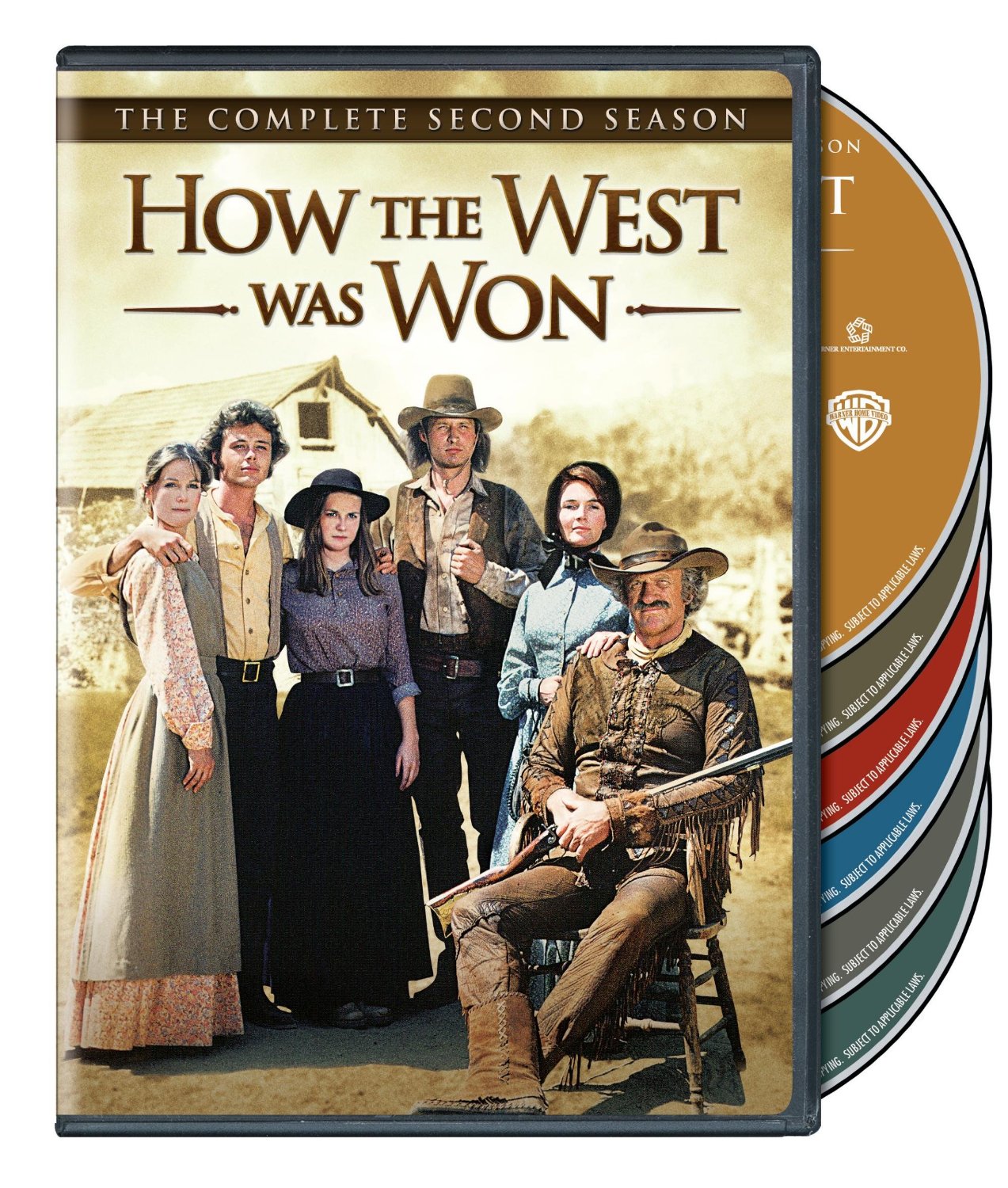
The “second” season of How the West Was Won — and I'll explain in a bit why the word “second” deserves to be in quotation marks — does a strong job dramatizing the myriad dangers of the Old West. This batch of episodes showcases vengeful gunfighters, greedy gold prospectors, a taxing cattle drive, and the tenuous relationship between frontiersmen and Native Americans. Of course, at the center of it all is one particularly intrepid clan.