DTS HD 5.1 MA (English)

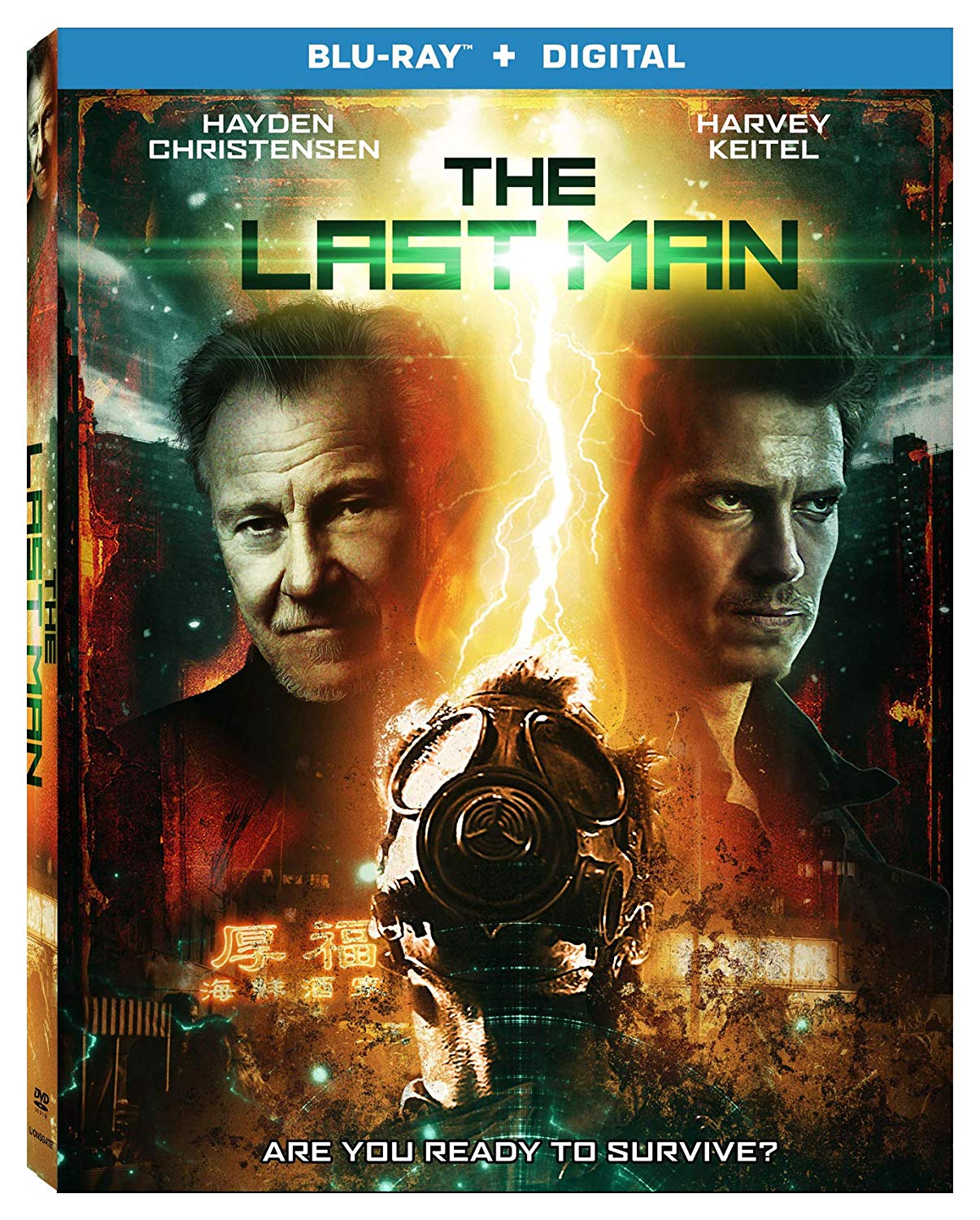
This is one of those films where the cast had me equally excited and concerned with how the film would turn out.  On one hand it has Harvey Keitel; the guy is a living legend between his roles in Reservoir Dogs, Bad Lieutenant, Taxi Driver, Mean Streets, and countless others.  Keitel is one of those actors who elevates just about any film he’s in, and he’s in several films I’d even call classics.  Then on the other end of the spectrum there is Hayden Christensen, one of the most lifeless performers to ever grace the screen in my opinion. I still have bouts of anger when I see him as Anakin Skywalker.  But I’m always ready to have an actor surprise me, and I always go into a film with an open mind once I sit down and start watching it.  Unfortunately The Last Man is a dud and was a film I struggled with so many of you won’t have to.

The film opens up with a dream sequence that looks more like a first person shooter scene in a video game.  Apparently this is a dream that Kurt (Christensen) has been having quite often. This is told to us through the film’s narration, and I’d just like to come out and say I really hated the voice-over work on this film.  I get that they were trying to go for a neo-noir style, but the narration is delivered with such a monotone delivery it felt more like a voice track someone would listen to while trying to sleep.  Another issue with this narration is that it is so on-the-nose with the information that it is telling us things we can obviously see and figure out for ourselves.  It was fine when giving us a little back story, telling us how the western civilization collapsed, but as you continue watching, everything you hear just begins to seem redundant.

"I love a comedy. Is there cake?"

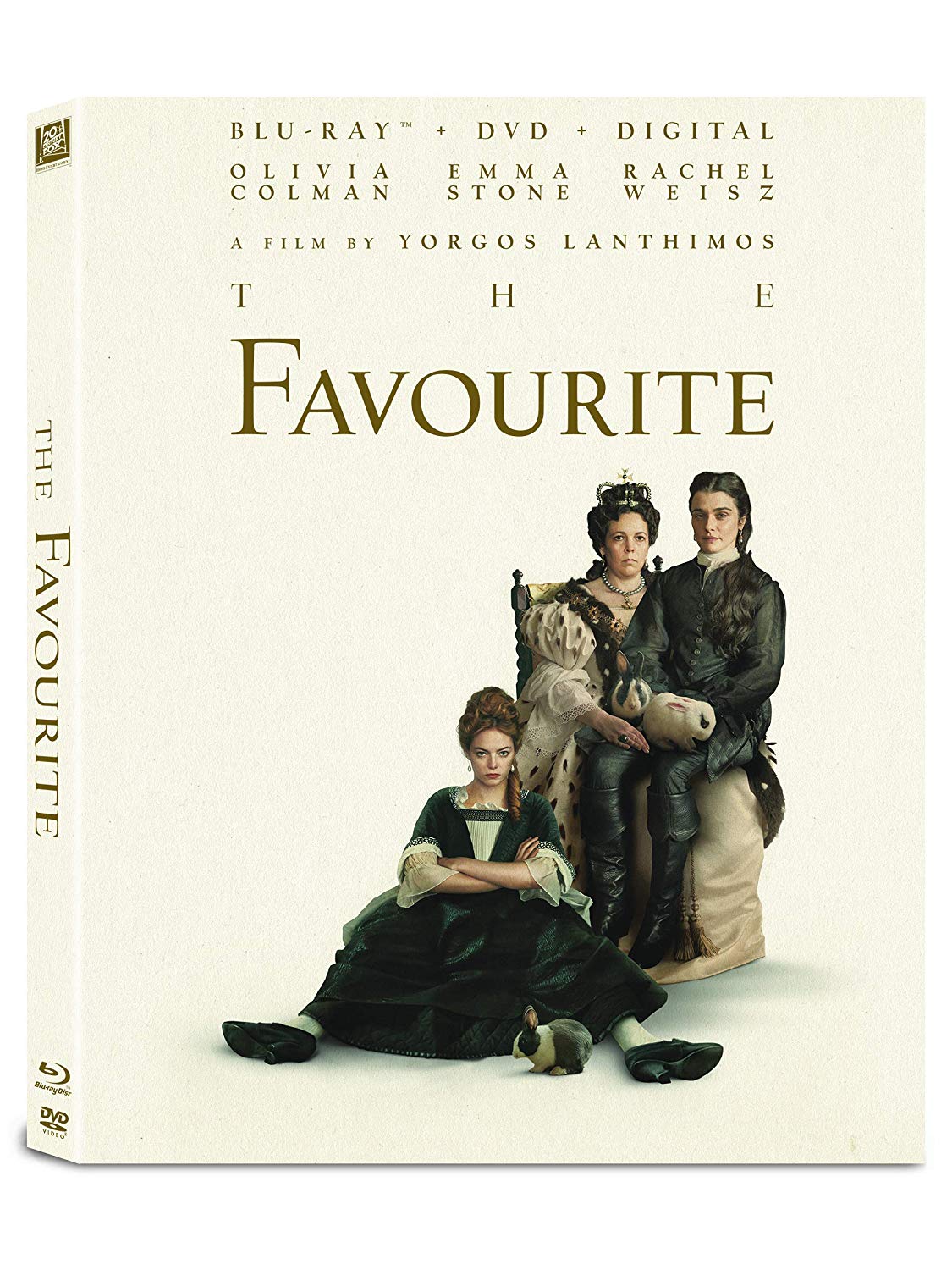
The Favourite is a somewhat awkward film. Director Yorgos Lanthimos took on a rather brave but dangerous task when he decided to create a farce. Most audience members don't understand the term. They use it rather synonymously with comedy or spoof, but it is truly something very different. A comedy is meant to deliver as many laughs as possible. You get pratfalls, one-liners, slapstick, and other over-the-top methods to bring about those laughs. Spoofs take a specific subject or genre and expose some of the more innate aspects of the material, all in good fun. Leslie Nielsen was a master of the spoof with his Airplane and Naked Gun films. All of these are popular and understood forms of entertainment. The farce is a totally different thing altogether. While there might be laughs to be had, the primary directive of a farce isn't to actually be funny. The farce is a world of the absurd. It's a ridiculous portrayal in which everyone involved plays it completely straight. The actors/characters don't know they are in a farce, so there aren't any clever one-liners or overt attempts at humor. The film is presented as a serious attempt, and there is no one winking at the audience. It's a difficult thing to pull off, and The Favourite pulls it off wonderfully, but the unfortunate result is that most people merely shook their heads, not knowing what to make of the entire thing. So the film is misunderstood, and that in itself is a bit of a tragedy. It's somewhat appropriate, I suppose, because Shakespeare was a master of both farce and tragedy. Go figure.

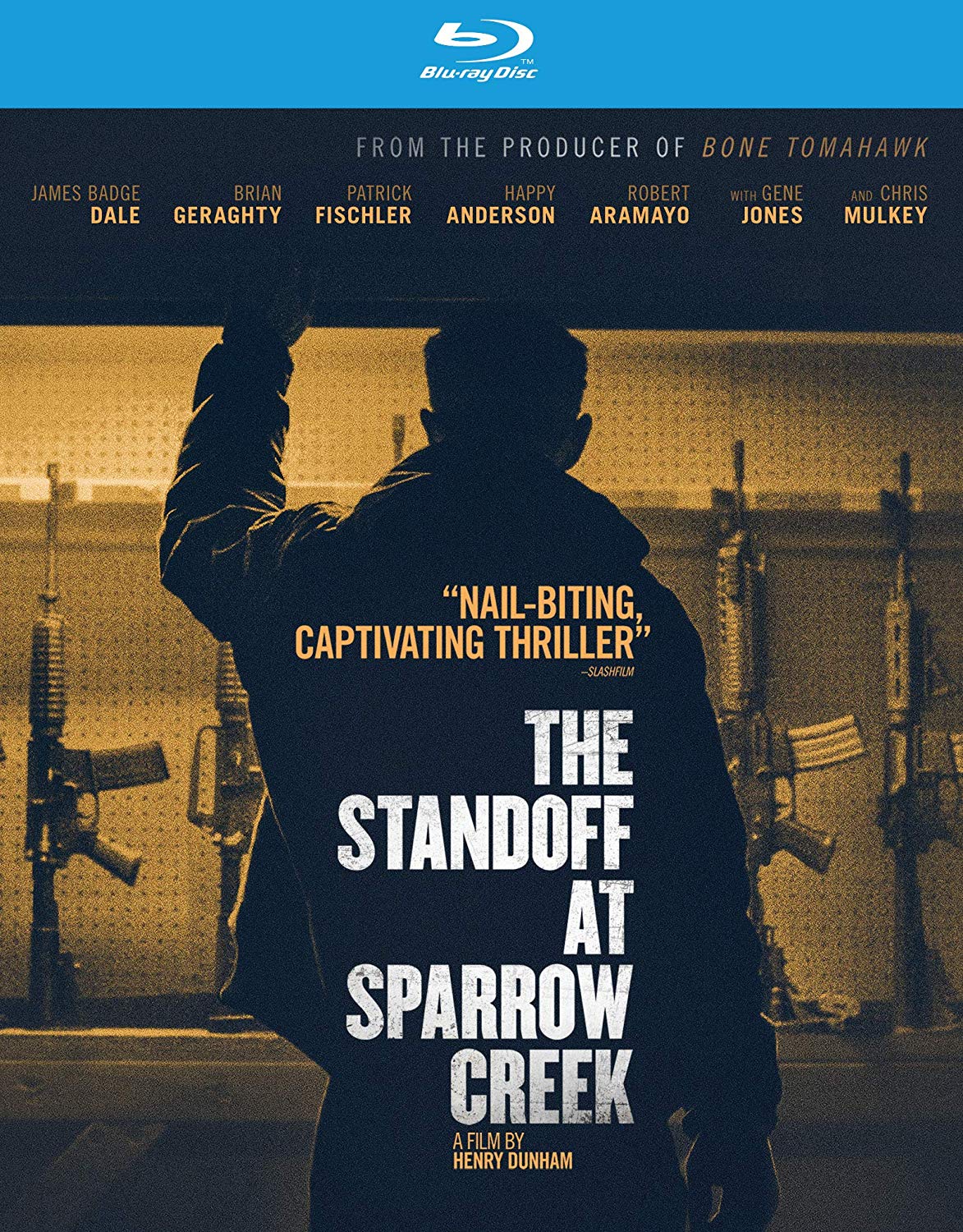
It may only be March, but I’m willing to bet The Standoff At Sparrow Creek will make the list of my top films of 2019.  I’m going to go out on a limb and say that this is the next breakout film people will be talking about, because it’s just that damn good.  Think about what Reservoir Dogs mashed up with Glengarry Glen Ross would be like if they were mashed together and the characters were all members of a militia; then you’ll somewhat have an idea of what The Standoff at Sparrow Creek has in store for you. We’ve all heard rumblings about militia groups, the kind that have their hidden bunkers that have stockpiles of weapons and ammunition that are ready to go into battle at a moment’s notice. At the same time we live in a world where it’s heavily frowned upon to want to own an automatic assault rifle, and those involved with these groups are often depicted as country bumpkins who are military washouts or just “gun nuts”. Well, writer/director Henry Dunham has decided to offer up a new look into this group and even dares to get into their heads and what motivates them.  But Dunham isn’t trying to make any political statements, but instead he’s crafted a well drawn out thriller that explores each of these characters and gives them each motivation for their actions, keeping them human despite their actions at times.

What kicks off the film is a shooting at a police funeral, In a panic to find out who may be responsible, Gannon (James Badge Dale) has all the members of his group meet up at a lumber mill to sort things out.  It’s at the mill where Gannon discovers that a gun and other materials are missing and that the person responsible for the shooting is one of the members of his group.  Knowing the police are going to be out for blood, Gannon decides to interrogate the members of his group in hopes of finding the rogue killer and offering them up in order to preserve the safety of the militia.

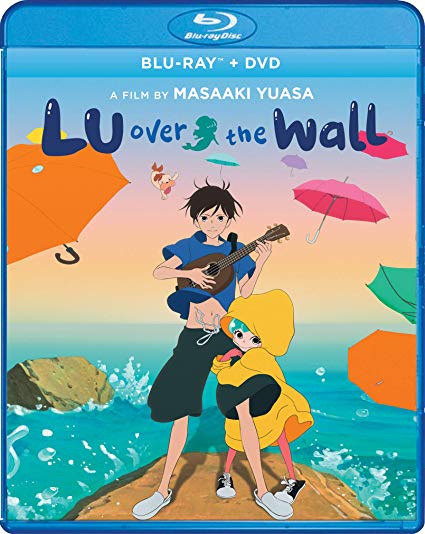
It is interesting to see two or more of a director's works in a short period of time.  One sees similarities, differences, and how the filmmaker hones his craft as they improve with every production.  Masaaki Yuasa is certainly one of those directors, and if you enjoyed my review on Night is Short, Walk on Girl,  then you will want to go ahead and read my review today on Lu Over the Wall.  While there are similarities, I can safely say that is quite the departure from the previous film.  Let us take a look in the animated world of merfolk and the people who live around them.

A boy taps his fingers next to a microphone for an Internet streaming session as we read the comments below his video.  There seems to be a lot of interest below his post including the potential for some band-mates should he ever want to expand his horizons.  We soon meet the boy named Kai as he shuffles downstairs to have breakfast with his grandpa and father.

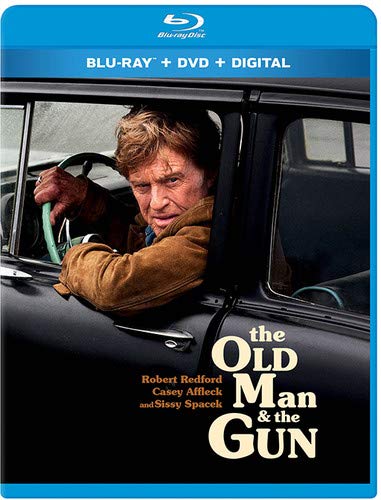
When Robert Redford first announced that The Old Man and the Gun was going to be the last film he was going to be acting in, it became a film that shot to the top of my must-see list.  Since that announcement he’s backed off on his comment, but if this were his last film, this would be one heck of a way to close out an amazing career. What writer and director David Lowery has delivered here is sort of a love letter to all of Redford’s greatest hits, and by the time the credits end, well, you simply know you’ve watched something special.  It’s a film from another era, when special FX didn’t come out of a camera and cinema just was different.  Most of all this film reminded me why Redford will always remain a cinematic icon, but what was missing here is the void Paul Newman left behind.  This would have been a perfect film for them to both be in and ride off into the sunset together, and it’s a reminder of how many greats we have lost and those other greats who may not have passed, but it seems Hollywood just doesn’t seem to have a place for anymore.

The film is mostly a true story based on the criminal Forrest Tucker (Redford), who has spent his life in and out of prison. He’s been incarcerated 18 times, and each of those times he’s managed to find a way to escape.  But the film isn’t about his entire life, but instead about when his criminal life may be coming to an end.  When he meets Jewel (Sissy Spacek), he’s actually on the run after a bank heist, and he pulls over on the highway to help her when he sees her car is broken down.  Of course it seems this is just a tactic to throw the cops off his tail, but the more he talks with Jewe,l you can’t be sure if that twinkle in his eye is part of the con or if he is sweet on the woman.

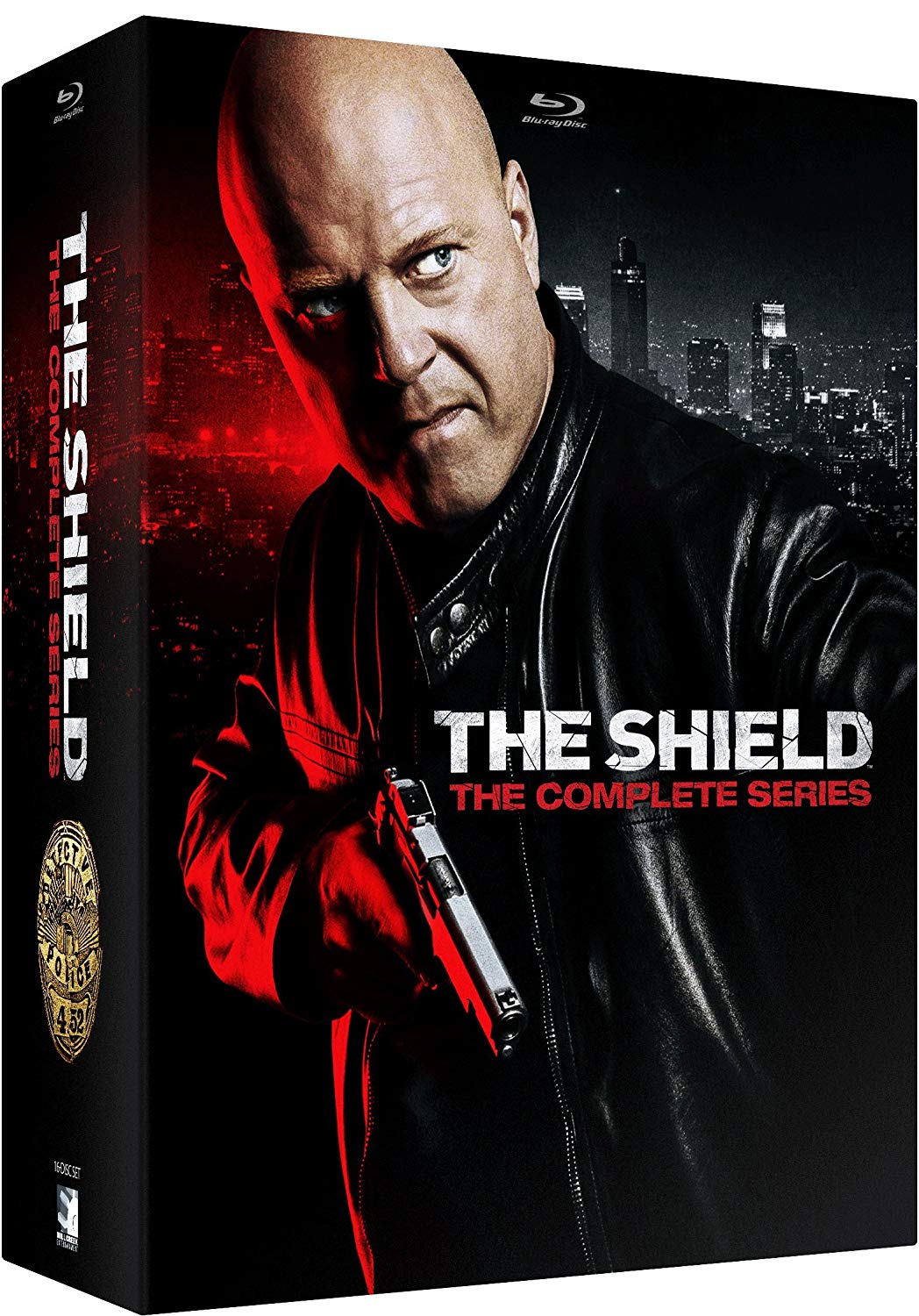
When did it become mainstream to root for the bad guys? Certainly our pop culture has been propagated with colorful villains since Shakespeare, goons we love to hate or even just love. Still, the rule always seemed to be that the white hats always win and the black hats get what’s coming. Television once demanded that shows follow that simple code. When Alfred Hitchcock did his television show, the stories often ended with the bad guys appearing to win. To comply with the code, he developed a habit of offering us a usually humorous sidebar about the unfortunate fate of the stories’ bad guys. It became a trademark that was created to keep to a moral code. But when did all of that change? Was it with The Sopranos? We all became enamored by this lovable teddy bear of a guy in Tony. We don’t have to spoil it by pointing out he’s a killer, adulterer, and all-star criminal sociopath. The Shield places us squarely in that same situation. Vic Mackey has a lot in common with Tony Soprano. He’s guilty of the entire litany just made. But he wasn't the first dirty cop we rooted for. Dennis Franz created two of the best between Hill Street Blues and NYPD Blue. He was as brutal as they come. But even Buntz couldn't kill a fellow cop in his unit or even worse. So why do we love him so much?

The answer most certainly lies in the compelling writing both of these shows share. Perhaps we’re not so much in love with Tony or Vic, but the stories that are told around them. It just might be that superior drama rivets us to our sets. We root for the bad guy because, to be frank, when they go down, the ride’s over. As with The Sopranos, we don’t want our moments with The Shield to end. Therefore Vic simply has to stay just one step ahead of his just desserts, or the story's over. It finally did end, but Mill Creek has brought Vic back, and he's as good as he's ever been. But now he's in HD and on Blu-ray. This is the kind of show binge-watching was invented for. I dare you to watch just one.

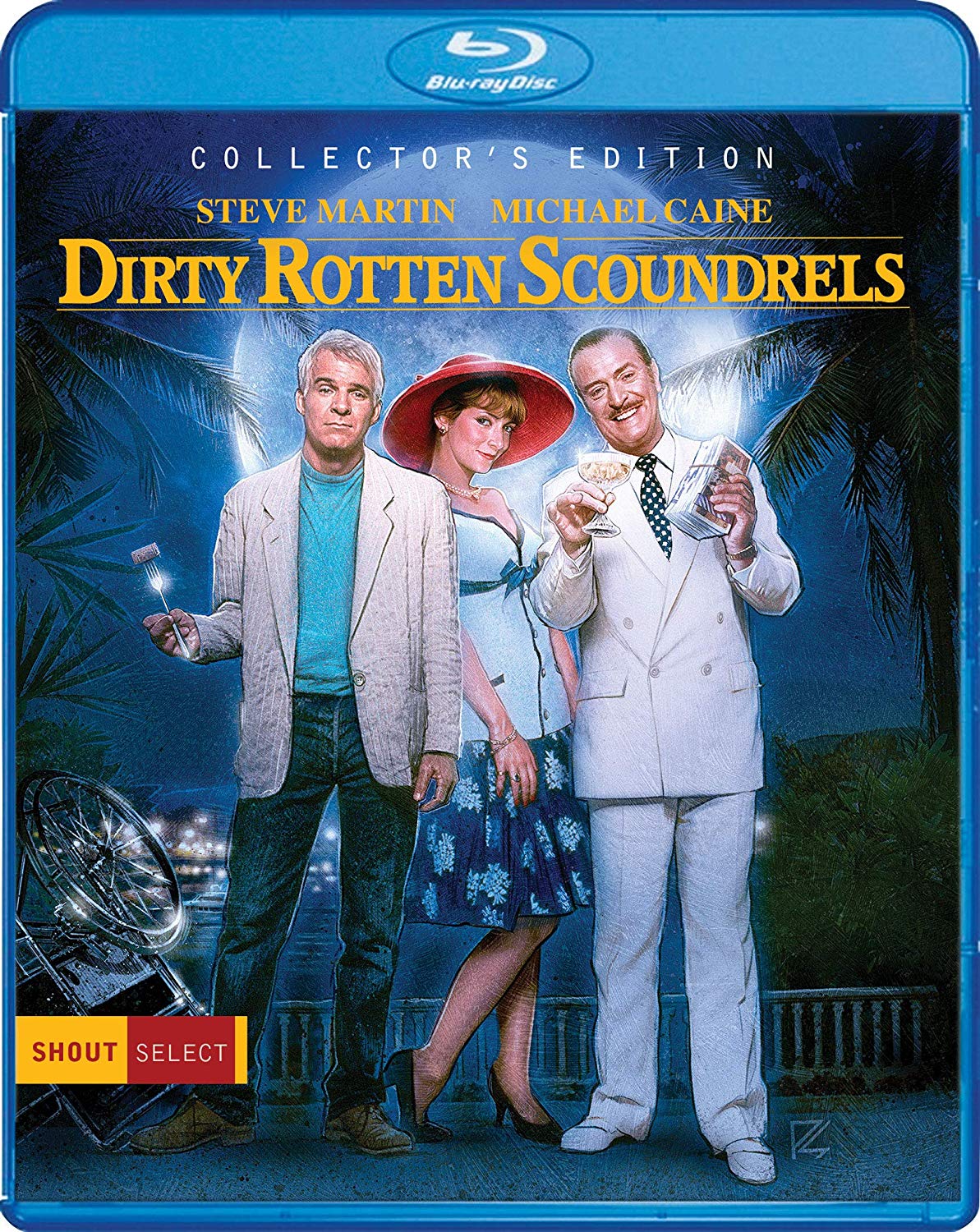
“Extremely rich, very married, eminently corruptible, and a willing infidel.”

That description is used to describe the unwitting marks targeted by the titular con men in Dirty Rotten Scoundrels. But except for the “very married” part, it’s also a pretty accurate depiction of the Scoundrels themselves, played here by Steve Martin and Michael Caine in a pair of very different but equally winning performances. The movie was released a little more than 30 years ago — Christmastime 1988 — which makes this a fine time to revisit the breezy, sleazy con men comedy thanks to this Collector’s Edition from Shout Select.

John Travolta is one of those guys I like, but it seems like it has been ages since he’s done a great film.  Sure, he was great in The People vs. OJ Simpson where he played attorney Robert Shapiro, but apart from that role, it’s been a while since we’ve seen Travolta really make a splash at the box office. Personally I love seeing the guy on screen. Blow Out, Get Shorty and Pulp Fiction are just a few of my favorite films that he has been in, and I keep hoping his career will bounce back, but unfortunately it doesn’t look like it’ll be happening any time soon. Speed Kills is a film that has a story that is oozing with so much potential that if it were put in the hands of Brian De Palma or Michael Mann you could almost guarantee this film would be destined for greatness.  Unfortunately the result is a frustrating mess that manages to make boat racing and drug smuggling in the age of the “cocaine cowboys” seem boring.

One of the film’s biggest faults is to open where the story ends, where we see Ben Aronoff (Travolta) being the target of a hit.  The film then wants to take us back in time, where we have Aronoff narrating his story of how he had his rise and fall in Miami that reeks of a bad imitation of Henry Hill from Goodfellas.  Seriously, in less than 10 minutes this film manages to sabotage itself, and it doesn’t get much better from here.  This isn’t Casino where by some miracle our narrator manages to escape an exploding car. Having this given away so early on in the film is simply a giant mistake. If you eliminate this opening sequence, instantly you have a better film, but apparently even with over 40 named producers connected to the film, no one seemed to have realized this.

“You know, the first time we met, I really didn’t like you that much.”

I didn’t become acquainted with When Harry Met Sally… until well after the Billy Crystal/Meg Ryan flick had established itself as a bona fide romantic comedy classic. (I was 7 when the film came out in 1989.) So when I finally got around to watching it in my late teens, the “I’ll have what she’s having”  punchlines and general set-up involving an unlikely romantic pairing felt overly familiar. I enjoyed it just fine, I definitely appreciated it, but I wouldn’t quite call what we had love. Shout Select, an imprint of Shout! Factory, has released a 30th anniversary Blu-ray of When Harry Met Sally… And after revisiting this film years later, I’m asking myself the same question that Harry and Sally ponder after being friendly for years: is this love?

The Jerk, released in 1979, is a rags-to-riches-to-rags comedy film of belated self-discovery. This was Steve Martin’s first starring role in a feature film and was also written by him. It's hard to watch the film and quite picture Martin as the unknown he really was at the time. Since then Steve Martin has come and pretty much gone from our collective experience. When this film was released, much of this kind of humor was somewhat unique and clever. Today that is not so much the case, and it looks and feels quite a bit dated.

Carl Reiner directs Steve Martin (who co-wrote the script with Carl Gottlieb) in this gag-laden comedy about an idiotic white man, raised by a poor family of black sharecroppers, who doesn’t realize he’s not black. Navin R. Johnson (Steve Martin) is told the horrible truth when he finds himself instinctively tapping his f…et to an easy listening tune on the radio, instead of a low-down blues. His mother (Mabel King) tells him he’s white and Navin takes to the road (in a World War II bomber helmet and goggles) to start a new life in St. Louis. A filling station owner, Harry Hartounian (Jackie Mason), give Navin his first break, hiring him to pump gas. One day at the station, Navin has a brainstorm, concocting an invention called “The Opti-grab,” a combination handle and nose-brace for eyeglasses. But Navin runs into trouble when a crazed killer (M. Emmet Walsh) picks out his name at random from the telephone book and tries to kill him. Navin escapes to a traveling carnival, where he wrangles a job as the “guess-your-weight” man. At the carnival, he discovers his sexual nature, thanks to stunt rider and S&M enthusiast Patty Bernstein (Catlin Adams). But Navin meets the beautiful Marie (Bernadette Peters) and he quickly falls in love. In the meantime, the “Opti-grab” has taken off, and soon Navin is a millionaire.