DTS HD 5.1 MA (English)

I don't care about winning. I just like to play, I really do.”

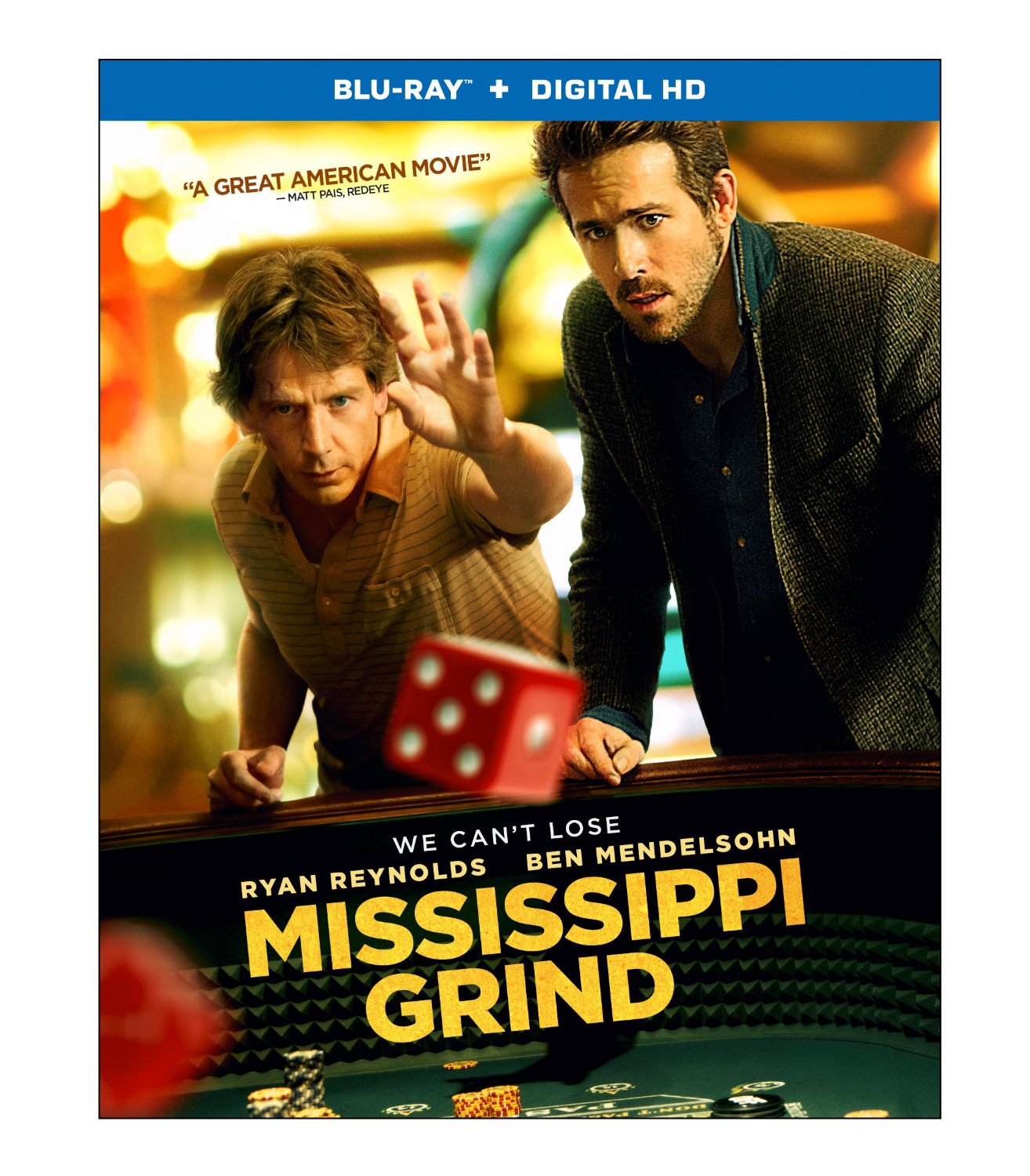
In Mississippi Grind, a pair of damaged gamblers hustle their way through the American South so they can buy into a high-stakes card game in New Orleans. That's technically the “plot” of the movie, but it's not really the point...nor is it where the film's true charms lie. Instead, this well-made, low-key character dramedy feels like a welcome throwback to the sort of buddy/road films that have mostly been pushed out of multiplexes.

I don’t think I’m going to be at all famous. I don’t think I could handle it. I’d probably go mad.”

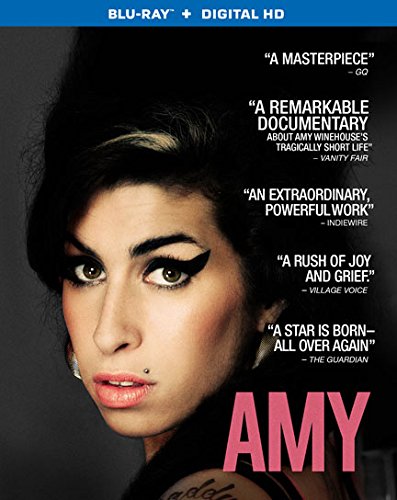
Amy Winehouse — the troubled English soul singer who died of alcohol poisoning at age 27 — says these sadly prophetic words early on in Amy. Hearing them almost five years after her 2011 death only adds to the powerfully haunting quality of this documentary. At its core, Amy is like every Behind the Music episode you’ve ever seen…except it is also a masterfully told story with thrillingly original flourishes.

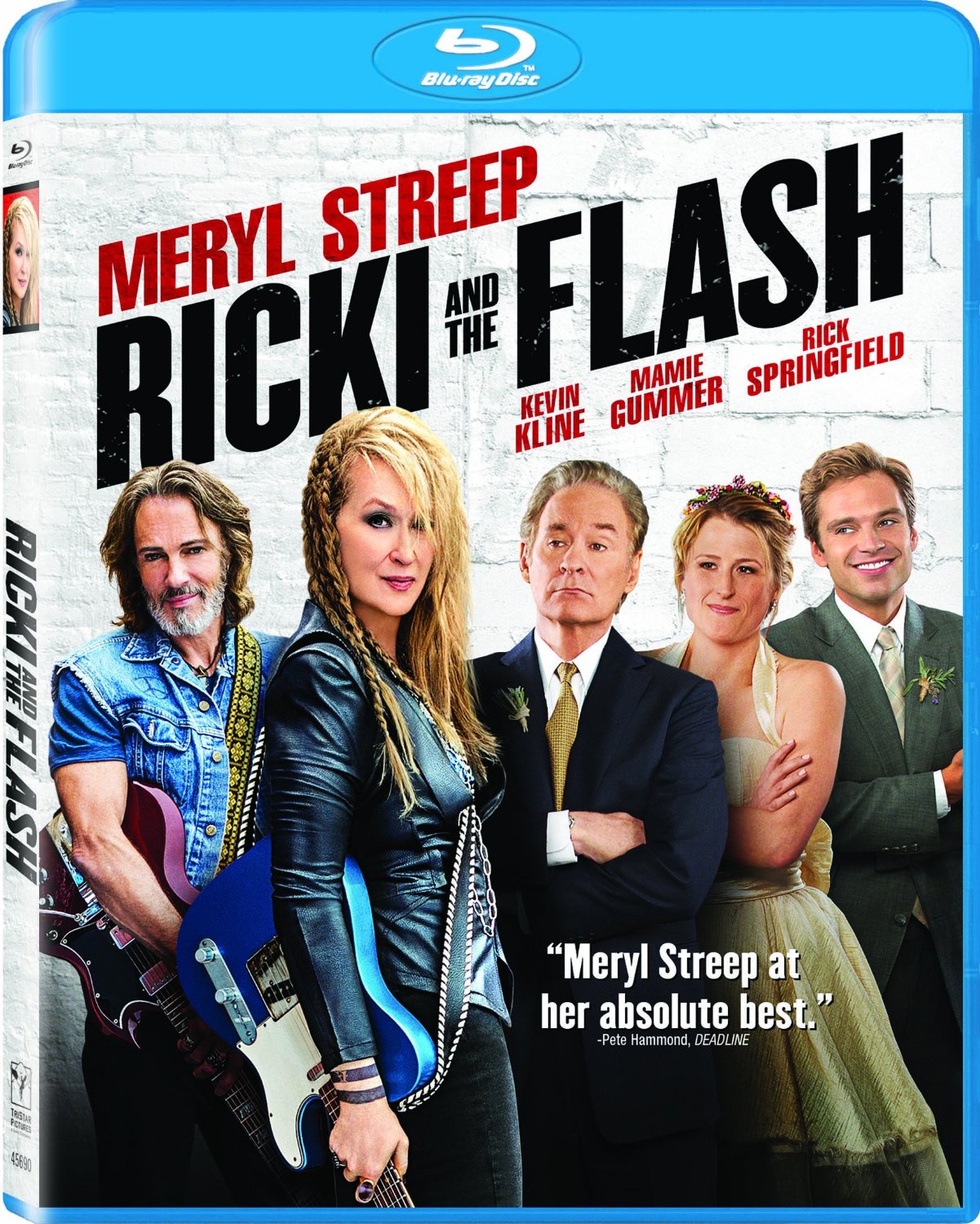
I'm going to start by listing a number of names that make up a kind of extended family. The names don't have a lot in common at first, and it seems like a hodgepodge. I'm sure I'm going to leave someone out, but let's start with Kevin Kline, Johnathan Demme, Diablo Cody, Sebastian Stan, Mamie Gummer, Audra McDonald, Joe Vitale, Rick Springfield, Bill Erwin, Bernie Worrell, Rick Rosas, and Charlotte Rae. I'm forgetting someone. Oh yeah, Meryl Streep. It's that kind of a movie which is being sold as a star vehicle for the most praised and beloved actress of the modern era, but is really an ensemble piece. We can debate who is as beloved as Meryl Streep in the history of cinema, but let's not, because Ricki and the Flash is not that kind of movie. It really isn't about the star turn by Meryl, but a collective, communal experience by all involved. All the names I mentioned are part of this experience, more so than in most movies. It's about the connections we try to make and the ones we fail at. It's about reaching for things and not getting them but doing it anyway. It's about failure and celebration, often within a breath of each other. It's about moving on but not forgetting the past. It's about loving someone when they are far from perfect. It's about forgiving and accepting.

I'm going to start with Rick Rosas. He died before the film was released and plays the bassist in Ricki's band, the Flash. In real life, he played in three bands with Neil Young (Crosby, Stills, Nash and Young, Crazy Horse, and Buffalo Springfield) as well as with Joe Walsh, Ron Wood, Etta James, Jerry Lee Lewis, and Johnny Rivers. Bernie Worrell, who plays the keyboardist, was a founding member of Funkadelic and Parliament as well as playing with The Talking Heads. Joe Vitale is the drummer; he has played with The Eagles, Joe Walsh, Ted Nugent, Dan Fogelberg, Crosby, Stills and Nash, and many others. Ricki and her band play to a few die-hard faithfuls in Tarzana every night, as well as doing her day job as a cashier at Whole Foods. I should mention that her frazzled boyfriend and lead guitarist is Rick Springfield. I should also mention Streep is 66 years old and is singing Bruce Springsteen and Tom Petty.

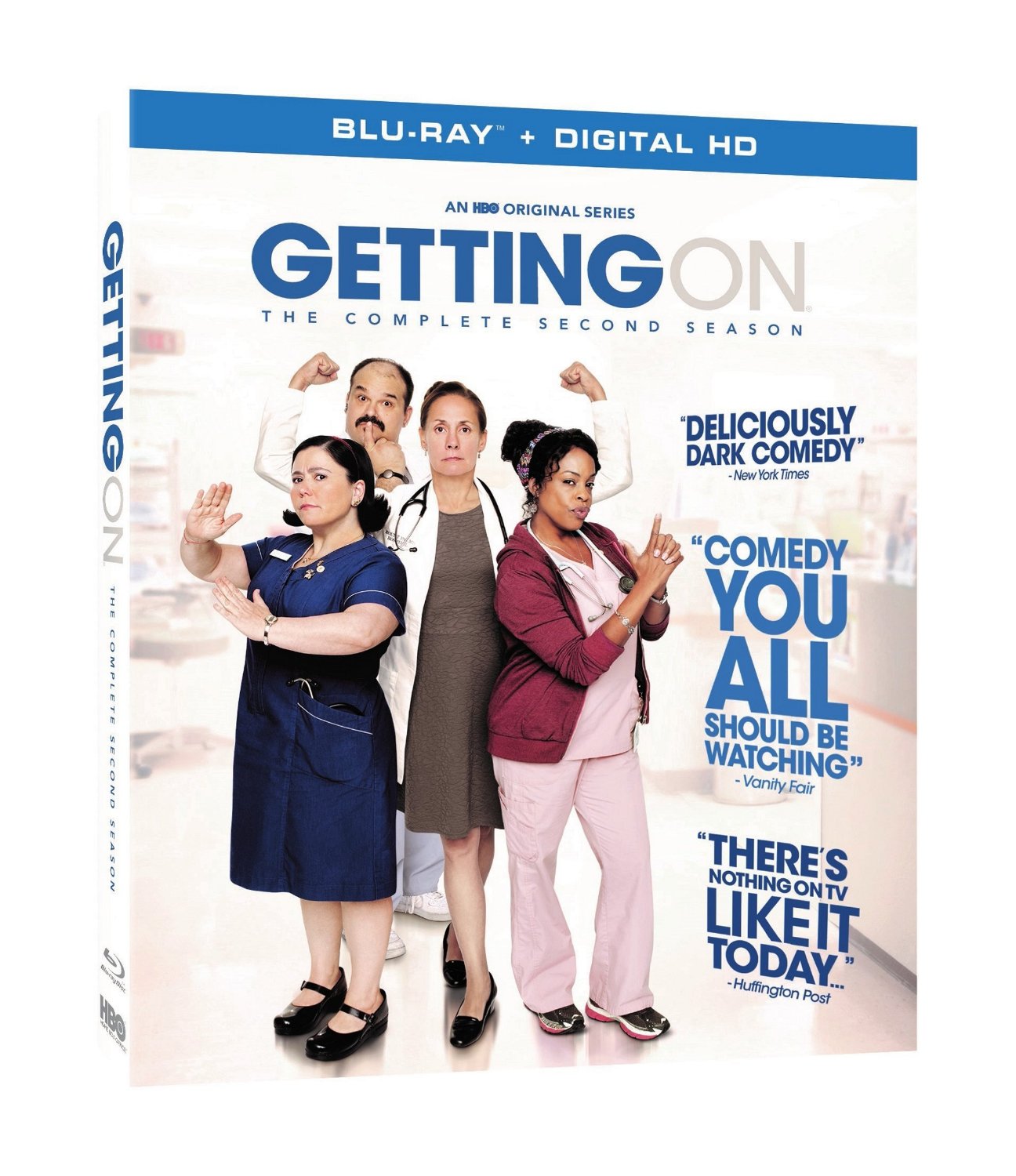
The geriatric care wing of a hospital — where the employees are undermanned and overworked, and many of the patients are in a near-catatonic state — is not the most obvious sitcom setting. That's partly the reason it took me a while to warm up to the first season of HBO's Getting On, an adaptation of the British series of the same name. The biggest drawback, however, was that those initial episodes didn't seem very interested in shaking the grim specter of the original show. But what a difference a year makes!

Before I get into all the ways Getting On improved during its second season, let's do a quick summary. The show is exclusively set within the Billy Barnes Extended Care Unit at Mount Palms Hospital in Long Beach, California. The staff includes Dr. Jenna James (Laurie Metcalf), the unit's spectacularly off-putting and self-centered director of medicine. Dawn Forchette (Alex Borstein) is the eager-to-please head ward nurse who is a professional doormat for Dr. James and a romantic doormat for on-again/off-again flame Patsy de la Serda (Mel Rodriguez), the unit's supervising nurse/resident stickler. Finally, there's overwhelmed, underpaid DiDi Ortley (Niecy Nash), who remains the most openly compassionate staff member.

"Different, entirely." 

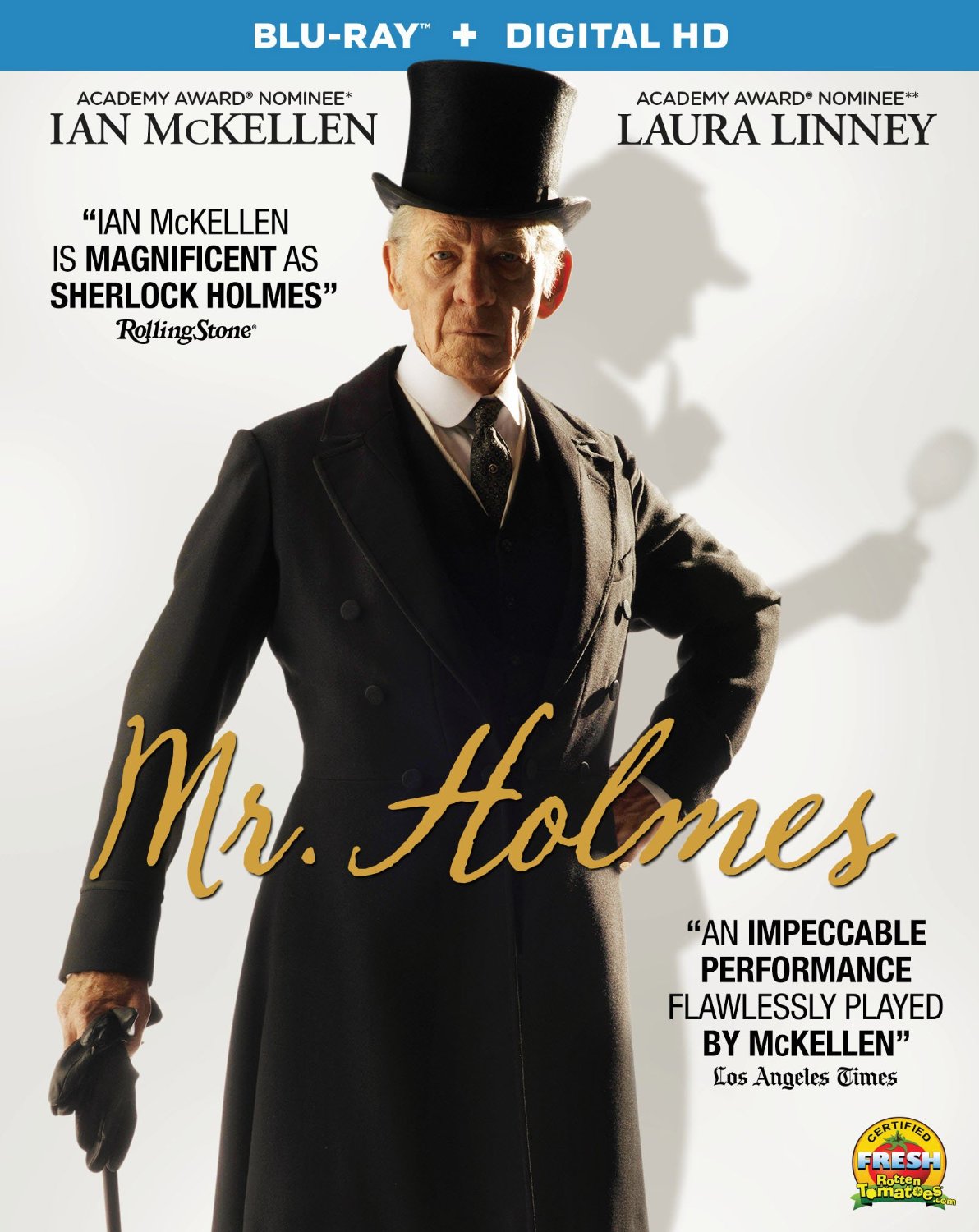
I have been a fan of Sherlock Holmes since I was a kid. Mixed amidst those Universal horror films I watched with my Pop on weekend chiller shows was an occasional Universal Holmes film with Basil Rathbone as the master of deduction. Soon followed the Doyle books, and a new world was opened for me forever. Since those days we have seen every kind of incarnation of the character possible, or so I thought. I've seen Holmes as a child in Spielberg's Young Sherlock Holmes. There have been several comedies and even a musical or two. Robert Downey Jr. has turned him into an action hero, and Benedict Cumberbatch has brought him into the modern world. I even remember Larry Hackman's television version of a motorcycle cop who has a head injury and believes he's the famous detective, gaining the requisite deductive skills in the process. It was called The Return Of The World's Greatest Detective. Star Trek fans reveled in Data's immersion in the detective's world, even bringing back his infamous nemesis as one of The Next Generation's more sympathetic bad guys. But in all of these incarnations I have never seen anything as truly remarkable as Mr. Holmes. It is most decidedly something different entirely.

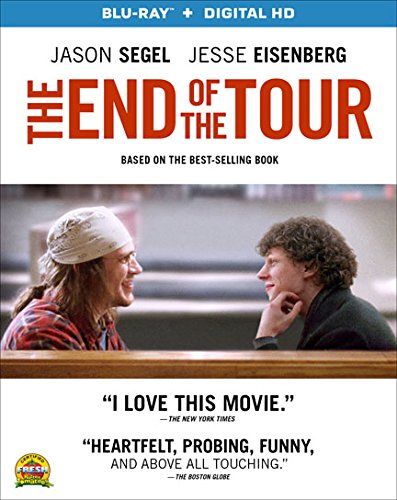
I don't think there has ever really been a great film about a great writer. We naturally compare their lives to works of great fiction. Great fiction tends to distill the tedium and awkwardness out of real life. Real life can be exhausting in the day-to-day disappointments that can sometimes be wrapped in small victories. David Foster Wallace was a great writer. This is almost universally acknowledged. David Foster Wallace no longer is because he hung himself in 2008 at age 46. Many people who were in his life are now very protective of him and his privacy. They are angry at the idea of a movie being made about his life. Authors like J.D. Salinger and Thomas Pynchon have spent their lifetimes being reclusive, but the fact that they had published and provoked our thought means we are entitled to explore their lives. The problem always will be rising to the occasion and doing justice to the thoughts they provoked.

The End of the Tour is about five days a reporter for Rolling Stone spent with Wallace. The journalist was David Lipsky, who had written a novel of his own and was clearly in the grips of some hero worship. The hero he met was self-conscious to a nearly painful degree. He also seems to be struggling to be an average guy. I don't think the movie is a good indication of what Wallace was really like. But then, let's just look at this as a movie first. As I said, I don't think the author should be protected and hidden from us because he had faults and deficiencies. I think we should keep an open mind as to what the truth really is. I have listened to interviews done with Wallace, and he always comes off as reflective, thoughtful, truthful, intelligent, profound, and open-minded. I think the intention of this movie was to reveal a more unvarnished view of the writer.

Argument is sugar, and the rest of us are flies.”

By now, we've grown numb to the fact that there are simply too many TV channels to count. So it's not surprising that many of them have to take increasingly extreme measures to get our attention. Unfortunately, that line of thinking has extended to television news, which began trending toward sensationalism — and away from reasonable discourse — a long time ago. However, the idea that noise and conflict attracted eyeballs wasn't the status quo during the late 1960s, when viewers had only three channels to choose from. Best of Enemies tells the story of how two towering intellectuals (and one desperate network) helped alter the TV landscape forever.

For me Haven has always been a quiet-storm series. It was a show that I had heard nothing about when I first started watching, but when I got started, I found it compelling. It’s a mystery series (or at least it used to be) based off a novella from Stephen King. In the beginning, one question was paramount to the series’ lead character: who is the Colorado King? That question took many seasons to answer, but now that the show’s time is limited due to Syfy announcing its decision to cancel the series, with the final episodes to air later this year, another question has arisen as the paramount question: who is Audrey Parker?

Brief recap: Audrey last season for the good of the town went into the barn in order to stop the Troubles, the generational affliction that grants the residents of Haven equally extraordinary and chaotic abilities. Nathan does everything in his power to stop her but ultimately fails, but despite Audrey’s sacrifice the Troubles do not go away, and a destructive meteor shower threatens to destroy the town. Concluding that they need Audrey in order to stop the chaos, they open a portal between worlds with the help of two new faces, Jenny and William. However, William turns out not to be what he represents himself to be and is soon revealed to be one of the original architects of the Troubles. As he continues to bestow dangerous and uncontrollable new Troubles on the masses , he also reveals that the reason that Audrey also returns to Haven to help the Trouble is a punishment because as her original self, Mara, she is the other architect of the Troubles. Eventually, William is captured and thrown into an abyss, but before being thrown he manages to bring back Mara.

There are no tigers — or any other large cats — to be found in Tiger House. The closest we get is a rather hefty guard dog whose screen time is tragically cut short. (Figured I’d give the animal lovers out there a fair warning.) Instead, the only prowling we see in this low-budget home invasion thriller comes from the violent gang of thieves who bust into a suburban home and hold the unsuspecting family inside hostage. Unfortunately for the crooks, there’s already an uninvited visitor in the house.

That visitor is Kelly (Kaya Scodelario), who has snuck over to see her grounded boyfriend Mark (Daniel Boyd). The movie opens with a flashback to the crossbow-related accident between the young couple that ruined Kelly’s aspirations of becoming a gymnast. Now Mark’s mom Lynn (Julie Summers) considers down-on-her-luck Kelly to be a bad influence on her straight-arrow son, which explains all the sneaking around. Meanwhile, Mark’s stepdad Doug (Andrew Brent) is some sort of financial bigwig, which makes him an attractive target for the group of crooks looking to rob a bank.

"Dogs have been used by the military since World War I. Over 3000 dogs have served in Iraq and Afghanistan. 26 dogs and 25 handlers have been killed in the service of their country since 2003. This story is dedicated to their memory."

Baby here. Usually this is where I tell you that I'm the Shepherd/Chow mix who runs security here at Upcomingdiscs. Looks like I really did make that part up. No, I'm still in charge of security. Just ask AJ from Fed Ex. It's the Shepherd/Chow part. I took a test the other day and Gino didn't give me any time to bone up on it. OK, he did give me a bone, but it was all about something called a DNA test. I don't know what that spells, but it turns out that I'm also something called an Alaskan Malamute. Now, Gino's been asking me to go mute for years. Now I finally understand what that means. So while it looks like I didn't know who I really was, I do know something about the latest dog film Max. You see, Max is a hero, kinda like me. And just when I finally get to review a dog movie about a fellow German Shepherd, I find out about this Malamute thing. OK, I did make that last part up. Max is something called a Belgian Malinois but looks a lot like a German Shepherd, and that spells B A B Y.   Looks like I just can't win. But what about Max?